
Email: ainlbusshelter@gmail.com | WhatsApp: +86-18800607527
Views: 210 Author: Ainl Bus Shelter Publish Time: 2026-09-29 Origin: Site


Content Menu
● Understanding the Two Platforms
>> What Should Count as Transit Revenue?
● Static vs Digital: Revenue Drivers
>> When a Static Shelter Earns More
>> When a Digital Shelter Earns More
● Calculate Net Revenue, Not Screens
>> A Worked Break-Even Example
>> Questions to Put in the Forecast
● Lessons From Operating Networks
● Design Choices That Protect Returns
>> Prioritize Access and Comfort
>> Specify Digital Systems for the Site
● Choosing a Format for Each Stop
>> Does digital bus shelter advertising always produce more revenue?
>> Is a static advertising shelter still worthwhile?
>> How can a transit authority benefit if it does not sell ads itself?
>> What information is needed before ordering a digital shelter?
>> Can solar power run a digital advertising shelter?
>> What is the most useful performance metric?
An advertising bus shelter can generate dependable income with relatively simple upkeep. A digital advertising shelter can sell more campaigns from the same location, but its higher purchase price, power needs, and operating costs can erase that advantage. For transit authorities and media operators, the right question is not which format has the higher rate card. It is which format produces more dependable net revenue at a specific stop.
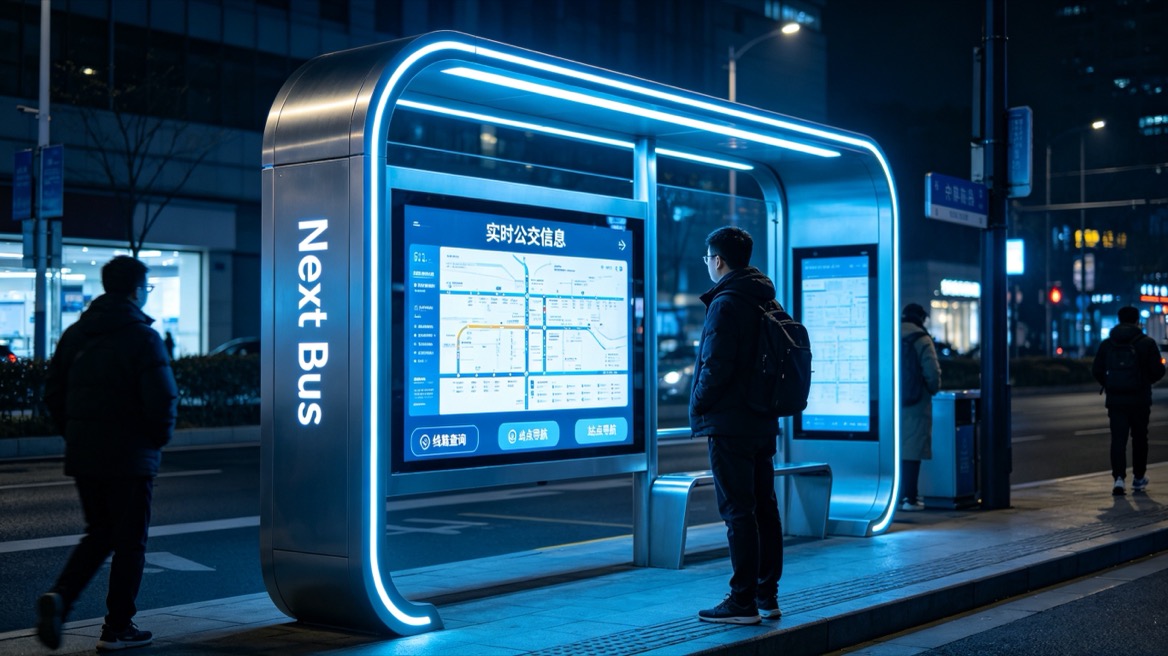
An advertising bus shelter usually displays a printed poster in a fixed or illuminated panel. One advertiser may occupy that panel for several weeks. A digital advertising shelter replaces or supplements the poster panel with an electronic screen that can rotate campaigns and update them remotely.
Both platforms can fund passenger amenities. Neither guarantees a profit. A busy interchange with reliable power and strong advertiser demand may justify digital screens. A neighborhood stop with modest demand may earn a better return from a static panel—or may need a shelter even if advertising cannot cover its cost.
The wider market shows why operators are considering both. U.S. out-of-home advertising revenue reached $9.46 billion in 2025. Digital formats represented 36.3% of that total, while transit advertising grew 9.2% year over year. These are industry-wide figures, not bus-shelter revenue forecasts. They show demand for the medium, but they do not predict the performance of an individual stop.
Three figures are often mixed together:
- Gross advertising revenue: Payments received from advertisers before costs.
- Net operating contribution: Advertising revenue after sales, content, utilities, connectivity, cleaning, repairs, and other operating expenses.
- Public-authority value: Contract payments plus agreed benefits, such as shelters, maintenance, passenger information, or public-service advertising.
The distinction matters. A digital shelter might bill more advertisers while costing considerably more to operate. A city might receive a guaranteed concession payment while the media company carries the commercial risk. Define whose return you are measuring before comparing formats.
| Decision factor | Advertising bus shelter | Digital advertising shelter |
|---|---|---|
| Saleable inventory | Usually one advertiser per panel during a booking period | Multiple advertisers can share a screen through scheduled slots |
| Campaign changes | Printing and on-site installation are usually required | Approved content can be changed remotely |
| Commercial flexibility | Strong for long-running local campaigns | Strong for short campaigns, changing messages, and timed placements |
| Main operating costs | Printing, installation, cleaning, lighting if fitted, and repairs | Electricity, connectivity, software, screen servicing, cleaning, and repairs |
| Common revenue constraint | Limited inventory per panel | Unsold slots, discounted bookings, and screen downtime |
| Best initial fit | Stable demand or limited infrastructure | Proven demand and reliable technical support |
A digital screen creates more inventory, not automatically more demand. If advertisers will only buy one campaign at a stop, additional slots have little value. Conversely, a static panel may sell consistently because it offers a clear, uninterrupted presence for a local brand.
A static advertising bus shelter can outperform digital on net return when installation budgets are tight, electricity is difficult to secure, or advertisers prefer long-term visibility. It also avoids screen failure and software-related downtime.
The format still has costs. Posters must be produced and replaced; illuminated panels need electricity and maintenance. Physical installation requires site visits. These expenses should appear in the operating model rather than being dismissed because the panel itself is simple.
A digital advertising shelter has greater commercial potential when a location attracts several advertisers willing to pay for different times or campaigns. A retailer may want a weekend promotion, while another buyer wants weekday commuter exposure. Remote changes make that combination practical.
Its advantage depends on sell-through and uptime. An operator needs a sales plan, approved content procedures, dependable connectivity, and technicians who can respond when a screen fails. Selling more slots also does not mean each advertiser receives the same continuous visibility as on a static panel. The rotation, share of voice, and display hours must be clear in the offer.
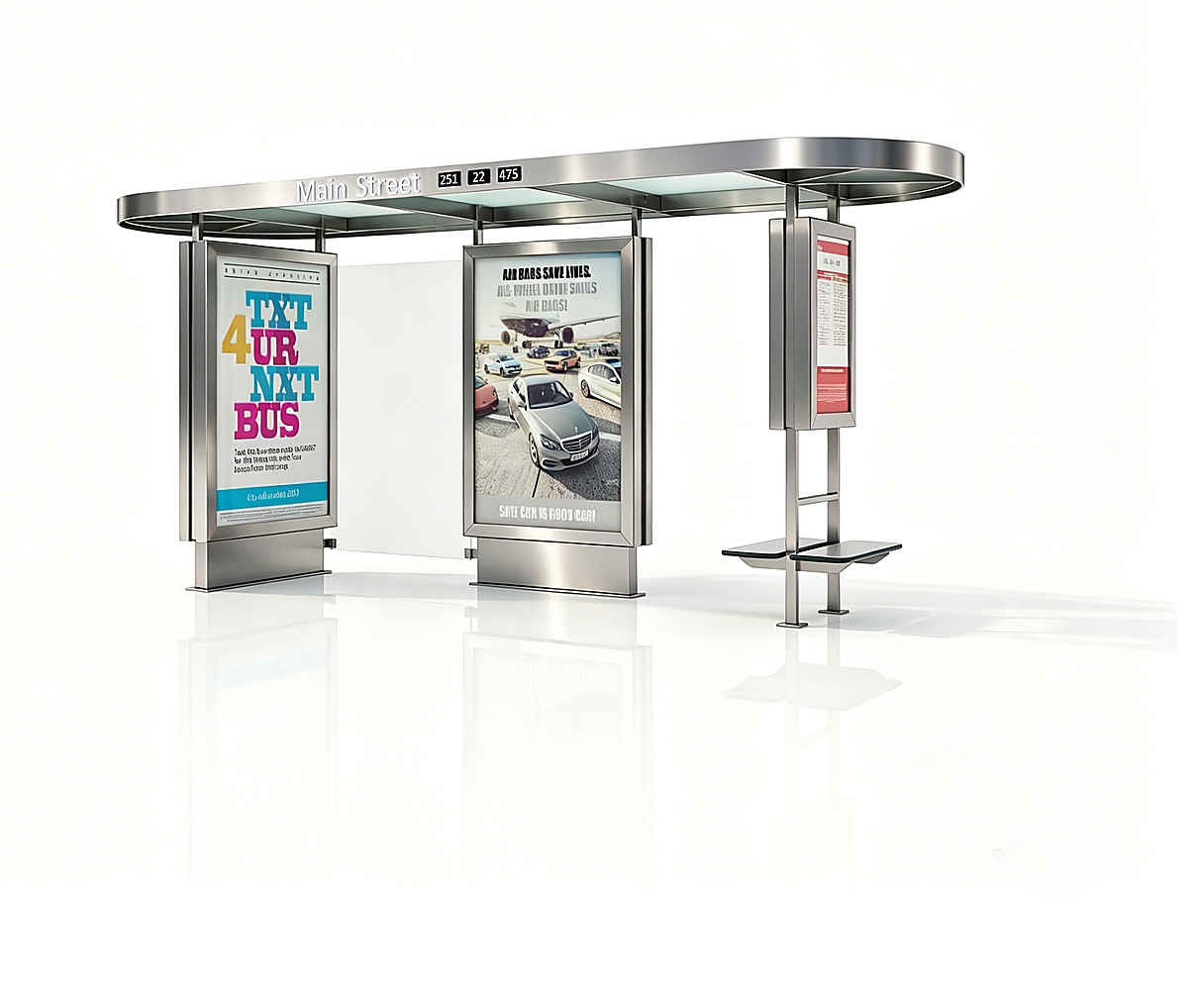
The most useful comparison is a site-level business case covering the proposed contract term. Build separate forecasts for static and digital, then use the same assumptions for location, audience, selling period, and public-service obligations.
For each option, calculate:
Annual net operating contribution = annual advertising receipts − annual sales and operating costs.
Then account for the difference in upfront investment. Include shelter fabrication, foundations, installation, permits, power connection, screens, controllers, and commissioning where applicable. If an existing shelter will be upgraded, include removal and retrofit costs. Compare the resulting cash flows across the contract term rather than treating a single strong sales year as the answer.
Consider an illustrative stop—not a market benchmark. Assume its static panel produces $12,000 in annual advertising receipts and costs $3,000 a year to sell and operate. Its annual net operating contribution is $9,000.
Suppose a digital replacement is expected to bring in $24,000 annually, with $9,000 in annual sales and operating costs. Its contribution is $15,000, or $6,000 more per year. If digital conversion requires $30,000 more upfront than the static option, that extra investment takes five years to recover at the assumed operating difference, before financing, taxes, or later replacements.
That result is sensitive to sales. If receipts are lower than forecast, the payback period lengthens. If power connection or screen repairs cost more, it lengthens again. The example demonstrates a method, not a promised return.
- How many paid campaigns can the sales team realistically secure at this stop?
- What share of screen time is reserved for passenger information or public messages?
- Who pays for printing, electricity, software, connectivity, cleaning, and repairs?
- How quickly must a failed panel or screen be restored?
- Does the contract guarantee a city payment, share actual receipts, or provide both?
- When might a screen, controller, battery, or other component need replacement?
Large networks illustrate commercial possibilities, but they should not be copied into a small-project forecast.
In London, a bus-shelter advertising contract announced in 2024 covered more than 4,700 shelters and included 612 digital screens alongside 9,400 non-digital poster sites. The mix is instructive: an operator with substantial digital inventory still uses extensive static inventory. The announcement does not disclose a per-shelter return or prove that either format earns more at a given stop.
New York City offers a different lesson. Its street-furniture franchise allows a private operator to sell advertising within defined limits in exchange for designing, installing, and maintaining public facilities. A city audit reported a 20-year franchise commitment valued at $1.39 billion, comprising cash and non-cash compensation, across a package that included shelters and other street furniture. That is not a bus-shelter-only revenue figure. It shows why authorities must examine the entire contract, including maintenance and public benefits, instead of comparing screen prices alone.
TransitCenter advises agencies to use advertising contracts to secure amenities, maintenance commitments, performance measures, and access to operating data. It also cautions against treating shelters merely as revenue generators. A profitable downtown location may help support passenger facilities at stops where advertising demand is weak.
Revenue depends on whether the shelter works well as a public facility. A prominent display is of little value if its placement blocks movement, creates complaints, or makes the stop difficult to use.
Set the passenger layout before selecting an advertising panel. Review walking clearance, boarding space, sightlines, seating, lighting, drainage, and exposure to weather. New York City's transport department, for example, publishes shelter siting criteria and offers different shelter sizes for different locations.
Accessibility requirements vary by jurisdiction. In U.S. projects, applicable standards address clear space inside a shelter and an accessible connection to the boarding area. For an international project, the buyer and designer should verify the local rules rather than reuse dimensions from another city.
A digital shelter needs more than an outdoor screen. The project brief should define the operating hours, brightness controls, electrical supply, network arrangement, content management, access for servicing, and responsibilities when components fail. It should also specify how passenger information and paid advertisements share screen time.
Solar power can be considered where a grid connection is difficult, but it is not a default substitute. The design must account for the proposed screen load, available sunlight, shading, battery storage, and periods of poor weather. Ask for a site-specific power plan before assuming an off-grid digital shelter will operate reliably.
A booking report should distinguish a scheduled campaign from a campaign actually displayed. For digital inventory, request playback records and screen-uptime reports. For static inventory, record installation dates, inspection results, and any periods when a poster was damaged or obscured.
Audience claims also need a stated method. Industry measurement standards distinguish traffic near a display from opportunities to see an advertisement. A screen play is not, by itself, proof that someone saw the ad. Consistent reporting makes the inventory easier to evaluate and helps prevent disputes between authorities, operators, and advertisers.
The strongest network strategy is often selective deployment, not a citywide choice of one format. An operator can test demand at high-potential stops while using static advertising elsewhere and funding non-commercial shelters where passengers need them.
1. Map each stop. Record passenger activity, surrounding businesses, pedestrian conditions, power access, and installation constraints.
2. Check advertiser demand. Ask the sales team which locations buyers request, what campaigns they would purchase, and at what realistic price.
3. Price both builds. Obtain comparable quotes for the complete installed shelter, not just the poster cabinet or digital screen.
4. Forecast conservatively. Model unsold periods, public-message time, downtime, maintenance, and component replacement.
5. Pilot and review. Compare actual receipts, operating costs, uptime, and passenger feedback before expanding digital inventory.
This process gives procurement teams a defensible answer. It also lets manufacturers design the shelter around a real operating plan instead of adding technology without a clear commercial use.
A digital advertising shelter has the higher revenue ceiling at a well-sold, well-maintained stop. A static advertising bus shelter can deliver the stronger net return where advertiser demand, power access, or operating capacity does not justify digital investment. Both must first serve passengers safely and comfortably.
Ainl develops and manufactures bus stop shelters and other public facilities for customized projects. Based on the capabilities supplied for this article, its OEM/ODM scope can cover shelter dimensions, structure, finish, display configuration, lighting, solar-power options, and city identity elements. Send Ainl your site list, local requirements, preferred advertising model, and operating assumptions to request a static-versus-digital shelter proposal built around the locations you actually plan to serve.
No. A digital screen can sell multiple campaigns, but those campaigns must be booked and delivered. Higher power, software, maintenance, and upfront costs can outweigh the additional receipts.
Yes. It can suit locations with consistent demand for long-running campaigns, limited power infrastructure, or a budget that cannot support digital operation. Compare its net contribution with the digital alternative at the same stop.
An advertising concession can provide contract payments and agreed public benefits, such as shelter installation, cleaning, repairs, passenger information, or reserved public-service space. The agreement should make those obligations measurable.
Start with site dimensions, local access requirements, expected screen hours, power and network availability, content rules, maintenance responsibilities, and a realistic sales forecast. Screen specifications should follow those requirements.
Potentially, but feasibility is site-specific. Screen consumption, operating hours, shade, sunlight, and battery capacity must be assessed together. Request an engineered power proposal rather than assuming a solar roof will cover every load.
For a commercial comparison, examine net contribution over the contract term alongside uptime and actual sales. For a public authority, also measure the condition and availability of the passenger facilities promised in the contract.
1. [Out of Home Advertising Association of America — "Out of Home Advertising Revenue Reaches Record $9.46 Billion," March 2026]. Source for 2025 U.S. out-of-home revenue, digital share, and transit-sector growth.
2. [JCDecaux — "JCDecaux Wins Transport for London Iconic Bus Shelter Advertising Concession," September 2024]. Source for the London contract's shelter, digital-screen, and non-digital poster-site figures.
3. [New York City Comptroller — Audit of Cemusa's Coordinated Street Furniture Franchise]. Source for the franchise structure and stated cash and non-cash commitments.
4. [New York City Department of Transportation — Coordinated Street Furniture]. Source for New York City shelter siting practices and the advertising-supported street-furniture arrangement.
5. [TransitCenter — *From Sorry to Superb: Everything You Need to Know About Great Bus Stops*]. Guidance on passenger amenities, maintenance, and advertising-contract design.
6. [U.S. Access Board — ADA Standards, Chapter 8]. U.S. technical provisions concerning bus shelters and boarding areas; project-specific applicability requires local review.
7. [Media Rating Council — *Out-of-Home Measurement Standards, Phase 1*, April 2024]. Measurement framework distinguishing location traffic, rendered impressions, and opportunities to see.


