
Email: ainlbusshelter@gmail.com | WhatsApp: +86-18800607527
Views: 258 Author: Ainl Bus Shelter Publish Time: 2026-10-01 Origin: Site


Content Menu
● What Counts as Traditional Outdoor Advertising?
● Which Format Reaches More People?
>> Side-by-Side Audience Comparison
● How Viewing Conditions Change Results
>> Dwell Time Is Opportunity, Not Attention
>> Speed, Distance, and Creative Matter
● What Current Industry Data Shows
● How to Compare Inventory Fairly
● Shelter Design Is an Audience Decision
● When Each Channel Makes Sense
>> Are shelter ads better than billboards for local businesses?
>> Do longer waits guarantee more ad attention?
>> Can a shelter ad reach people who do not ride buses?
>> Is a digital shelter panel always more effective than a static one?
>> Which metric best answers "who reaches more"?
>> What should a city check before installing advertising shelters?
Transit shelter advertising and traditional outdoor advertising both reach people away from home, but they work at different scales. Billboards often win on broad, fast-moving visibility; bus stop shelters can win on repeated contact with pedestrians and riders in a specific neighborhood. The better choice depends on whether "more urban audiences" means more unique people across a city, more encounters among likely customers, or more opportunities to notice a message near the point of action.
This distinction matters to advertisers, transit authorities, and city planners alike. A high-traffic road can deliver substantial exposure without reaching the people who live or shop near a destination. A shelter may produce fewer citywide impressions yet place a relevant message directly along a commuter's daily route. Comparing the formats fairly requires a defined audience, identical campaign dates, comparable measurement, and a clear understanding of how each asset is actually seen.
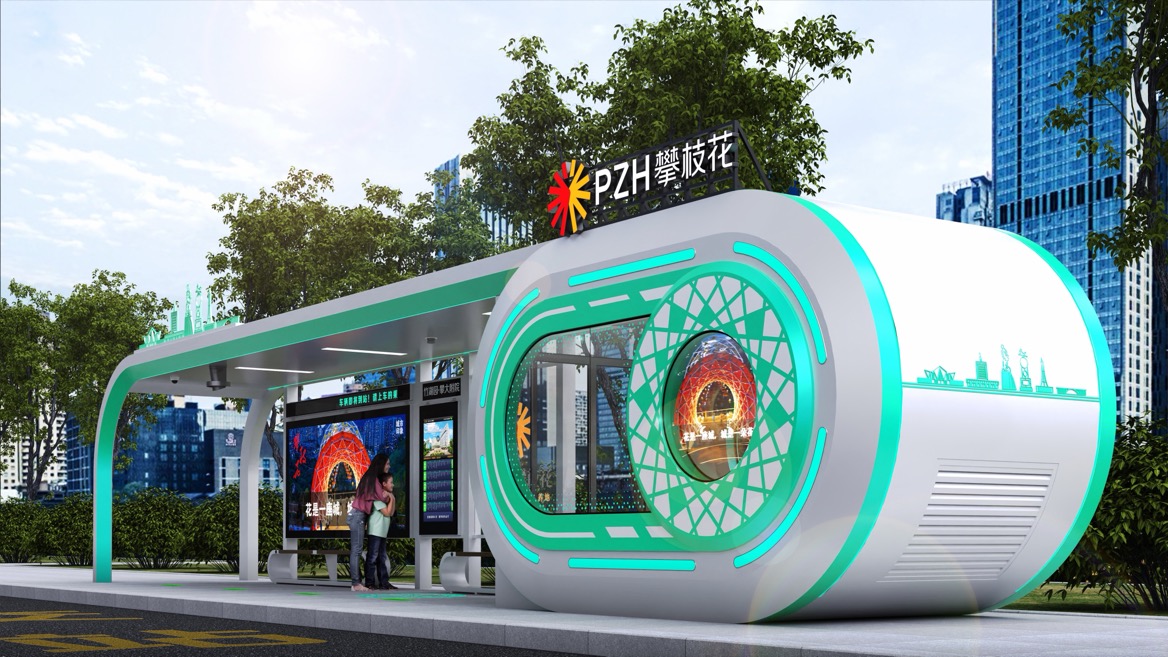
For this comparison, traditional outdoor advertising means stand-alone roadside billboards and large-format posters, whether printed or digitally displayed. Transit shelter advertising means static or digital panels integrated into curbside passenger shelters. Both belong to out-of-home advertising. In industry classifications, shelter panels are often grouped with street furniture rather than moving-vehicle transit ads. Calling every shelter panel a "transit ad" can therefore confuse budget or market-data comparisons.
The formats do not compete on identical viewing conditions. Billboards generally address drivers and passengers from farther away, often while they are moving. Shelter panels sit closer to eye level. Their audience may include waiting riders, passing pedestrians, nearby cyclists, and occupants of vehicles traveling past the stop. A shelter's waiting audience is only one part of its potential audience. The size of each group depends on the panel's orientation, the street layout, and actual travel patterns.
If a campaign aims for the largest unduplicated audience across a metropolitan area, a well-selected billboard network may outperform a small group of shelters. Large faces on major routes can encounter people traveling between many districts. That is a planning hypothesis, not a universal rule: a dense shelter network can also deliver substantial reach, and a poorly positioned billboard can underperform.
If the objective is repeated neighborhood exposure, shelters become more compelling. People who use the same stop or walk the same commercial street can encounter a message across multiple days. That repetition suits a nearby store opening, a local service, or a public-information campaign. It does not automatically create unique reach: ten sightings by one commuter are still one person reached.
A useful decision question is: Reach among whom, where, and over what period? Compare weekly unique reach among a defined audience, not just the number of vehicles that pass a site. Then review frequency, estimated noticeability, and geographic fit. Without those details, claims that one format "reaches more" are too broad to support a purchase or infrastructure decision.
| Planning factor | Transit shelter advertising | Traditional billboards |
|---|---|---|
| Primary strength | Neighborhood presence and repeated route exposure | Broad corridor visibility and potential citywide scale |
| Typical viewing context | Waiting, walking, passing the curb | Driving or riding along a road |
| Useful message style | Short local offer, wayfinding, concise service information | Simple brand cue or memorable headline |
| Main risk | Limited coverage if stops are concentrated in one corridor | High traffic that poorly matches the target audience |
| Format options | Static lightbox or appropriately specified digital panel | Printed, illuminated, or digital roadside face |
| Best measurement question | How many target people can notice this face near relevant destinations? | How many target people can notice this face across the intended market? |
These are tendencies, not performance guarantees. The same shelter may serve a busy shopping street, a low-ridership residential stop, or a transfer point. Each will have a different audience profile. Similarly, a billboard near a commuter route and one beside a bypass may serve very different campaign goals.
Waiting at a stop creates a possible longer encounter than passing a roadside display. It can support a slightly more informative design: a service benefit, a nearby address, and a clear next step. Yet waiting time is not equivalent to time looking at an ad. A rider may face away from the panel, stand outside the shelter, use a phone, or see only one side of the structure.
Digital panels introduce another distinction. If an ad appears for part of a rotating loop, the planner must account for screen activity and ad timing, not simply total footfall during operating hours. A crowded stop does not ensure that every person was present while a particular creative played. Ask the media owner what the impression estimate represents and whether it refers to the unit, the ad slot, or a specific audience.
A billboard seen from a moving vehicle needs an exceptionally simple message. A shelter panel can be read from nearer range, but its viewing angle may be narrow. Glass reflections, parked vehicles, trees, street furniture, or people standing directly in front of a face can reduce visibility. Illumination changes what can be seen after dark, while digital brightness and reflections need to be assessed in the actual streetscape.
From a planning perspective, message-to-moment fit matters as much as panel size. "Open around the corner" makes sense at a walkable shelter near the business. A distinctive logo and short phrase may work better on a billboard serving several neighborhoods. Neither format benefits from squeezing a brochure into a display that people may only glance at.
In the United States, out-of-home advertising revenue reached $9.46 billion in 2025, up 3.6% from the previous year. Digital out-of-home accounted for 36.3% of that revenue, and the industry association reported 9.2% annual growth for its transit category. These figures show continuing investment in outdoor media; they do not establish that shelter panels outperform billboards in audience reach. The reported transit category is not a shelter-only measurement.
There is another reason to avoid an easy winner. Industry terminology separates circulation, impressions, reach, and frequency. Circulation describes passing traffic; it is not the number of distinct people who noticed a campaign. Reach concerns people exposed at least once in the defined market and period. Frequency describes repeated exposure. A buyer who compares a shelter vendor's footfall count with a billboard vendor's modeled impressions is comparing unlike quantities.
The practical lesson is to request a consistent measurement basis. If a market lacks credible, comparable audience estimates for both formats, treat any projected reach as an estimate with stated assumptions. Revenue growth is evidence of advertiser spending, not proof of audience superiority. Local traffic, stop usage, visibility, and placement still decide the campaign-level result.
Consider a hypothetical clinic with one location beside a shopping street. Its goal is not to become known throughout the entire city; it wants awareness among people who can realistically visit. A billboard on a cross-city road could generate a large estimated impression total. Three shelter panels near the clinic, a transfer stop, and a nearby residential route might generate fewer total impressions but better geographic relevance and repeat encounters.
Now change the objective: a new consumer brand wants broad recognition across the metropolitan area. A network of billboards spread across major corridors might create wider unduplicated coverage than those same three shelters. Neither result is a measured case study. It illustrates why planners should judge inventory against the objective, rather than infer campaign performance from format alone.
A sensible mixed plan may pair the two. Billboards introduce the brand across wider travel routes; shelters reinforce it near shops, stations, or service locations. The creative should share a recognizable identity while changing the call to action for each viewing context. Deduplicate audience estimates across formats before reporting combined reach, or the same traveler may be counted multiple times.
1. Define the target. Specify the market, campaign dates, relevant demographics or destinations, and whether success means unique reach, repeat exposure, visits, or inquiries.
2. Map actual faces. Obtain each unit's address, facing direction, photographs, screen specifications, and operating hours. A stop location alone does not tell you which way the ad faces.
3. Request like-for-like estimates. Ask for target-audience reach, frequency, and likely-to-see impressions over the same period. Distinguish passing traffic from people likely to notice an actual ad.
4. Check delivery. For digital inventory, request loop length, ad duration, share of voice, uptime, and proof-of-play. For static inventory, agree on installation and inspection records.
5. Price the real outcome. Compare cost per relevant thousand impressions and incremental target reach, not the cheapest face or the largest raw traffic count.
6. Validate in the field. Inspect sightlines at the hours that matter, including morning and evening. Review obstruction, glare, pedestrian flow, and the route from the panel to the destination.
For example, a lower-cost shelter face beside a clinic may be more useful than a pricier highway face if the campaign values nearby patients. But if the shelter has a blocked pedestrian-side panel or limited operating visibility, its apparent location advantage may vanish. Site inspection turns a map-based media plan into a realistic one.
Advertising on a bus stop is not just a media purchase. The shelter is public infrastructure. It must support boarding, waiting, visibility, and circulation before it can function as an attractive ad surface. A panel that blocks a driver's view of waiting riders or narrows an accessible route can undermine the stop's purpose, even if the advertising position appears commercially desirable.
In U.S. transit guidance, shelter access and connections to boarding areas receive specific attention, as do pedestrian circulation and sightlines. Requirements differ by jurisdiction, so an overseas installation needs a review against the project's local accessibility, electrical, structural, and permitting rules. A design suitable for one city cannot simply be assumed compliant elsewhere. Public agencies should approve panel position, clearances, and maintenance access before fabrication.
From a manufacturer's viewpoint, early coordination avoids an expensive mismatch between the ad concept and the installed asset. Screen size affects power demand and heat management. Glazing and panel position affect visibility through the shelter. Lighting affects nighttime legibility and operating cost. Solar power may be useful where conditions support it, but the design needs a site-specific energy assessment rather than an assumption that a small panel will power every screen year-round.
Ask the supplier to document:
- Structural design criteria, materials, coating system, and corrosion protection appropriate to the site.
- Accessible route, boarding clearance, seated and standing sightlines, and emergency access.
- Static or digital face orientation, viewing distance, glare control, and service access.
- Electrical protection, display enclosure, power calculations, and maintenance responsibilities.
- City colors, identity elements, passenger information, and advertising-panel separation.
These details shape both public usability and commercial value. An attractive custom shelter may strengthen a city's visual identity, but its advertising performance still depends on measured audience delivery and the quality of the final installation.
Choose transit shelter advertising when the campaign depends on walkable proximity, repeat encounters along a known corridor, or a message that benefits from a near-eye-level display. It is especially worth testing around shopping streets, hospitals, universities, and transfer points—provided inventory is permitted, visible, and accessible.
Choose traditional billboards when the priority is broad-market awareness, coverage across several road corridors, or a highly simplified message designed for longer viewing distances. A billboard can be a poor substitute for neighborhood precision, just as a handful of shelters may be a poor substitute for metropolitan coverage.
For many urban campaigns, the strongest answer is a planned combination. Assign each placement a different job, then measure total unduplicated reach and incremental contribution. Avoid declaring victory from estimated impressions alone; pair delivery data with an appropriate outcome measure, such as a local brand survey, location-specific inquiry trend, or a carefully designed visit study. Outcomes require a sound baseline and should not be attributed to a display simply because they occurred during the campaign.
Ainl develops and manufactures bus stop shelters and other smart-city public facilities for transit, municipal, and commercial projects. Its stated capabilities include OEM/ODM customization of dimensions, structures, finishes, display configurations, lighting, solar-power options, and city-branding elements. If you are planning an advertising-enabled shelter project, send Ainl your site plan, target audience, panel requirements, local standards, and desired rollout schedule to request a site-specific design and manufacturing proposal. A proposal can address the physical asset; campaign reach should still be estimated independently from local audience and inventory data.
Often they are worth considering when the business sits near a relevant stop and wants repeat neighborhood exposure. A billboard may be stronger when customers come from a much wider area. Compare the actual sites and target-audience estimates rather than relying on the format label.
No. Waiting creates an opportunity to see a panel, but orientation, obstructions, phone use, and creative design all affect whether a person notices it. Digital ads must also be visible while the person is present.
Yes. Depending on panel orientation and location, pedestrians and passing road users may also have an opportunity to see it. Estimate those audiences separately where possible and avoid double-counting them.
No. Digital offers creative flexibility, but actual delivery depends on loop share, uptime, brightness, viewing conditions, and cost. A well-positioned static panel may be more suitable for a sustained local message.
Use unduplicated target-audience reach over the same dates and geography to compare unique people. Review frequency and likely-to-see impressions alongside it. Raw traffic alone cannot answer the question.
Check accessible circulation, boarding access, sightlines, structural and electrical requirements, display orientation, upkeep, and local advertising permissions. Approve the public-service function of the shelter before optimizing the ad face.
- Out of Home Advertising Association of America. ["Out of Home Advertising Revenue Reaches Record $9.46 Billion," March 17, 2026, corrected March 26, 2026]. Source for U.S. 2025 revenue, growth, digital share, and transit-category growth; not a shelter-specific performance study.
- Geopath. ["Glossary of Terms"]. Definitions and format classifications for circulation, reach, frequency, impressions, billboards, street furniture, and transit shelters.
- Media Rating Council. ["Out-of-Home Measurement Standards, Phase 1 & 2 Combined," December 2025]. Measurement framework for location traffic, impression levels, and audience qualification.
- U.S. Federal Transit Administration. ["Stops, Spacing, Location and Design"]. Guidance on bus stop siting, shelter design, pedestrian circulation, surveillance, and mobility-aid access.
- U.S. Federal Transit Administration. ["FTA Circular 4710.1: Americans With Disabilities Act Guidance," November 4, 2015]. U.S. guidance on bus stop accessibility, shelter clear space, and connections to boarding areas.


