
Email: ainlbusshelter@gmail.com | WhatsApp: +86-18800607527
Views: 215 Author: Ainl Bus Shelter Publish Time: 2026-10-20 Origin: Site


Content Menu
● Bus Shelter with Digital Screen vs Traditional Advertising Shelter: Key Differences
● Which Bus Shelter Generates More Advertising Revenue?
>> Digital Screens Create More Sellable Inventory
>> Flexible Scheduling Can Broaden Advertiser Demand
>> Traditional Posters Offer Uninterrupted Presence
● What Does an Established Bus Shelter Network Reveal?
● Compare Lifecycle Costs, Not Just Purchase Prices
>> Operating and Replacement Costs
>> Downtime and Serviceability
● A Practical Profit Model for Comparing Commercial Benefits
>> The Occupancy Threshold Matters More Than Slot Count
● How Location Changes the Best Investment
>> Where Digital Advertising Shelters Are Strong Candidates
>> Where Traditional Advertising Shelters Make Sense
>> When a Hybrid Bus Shelter Network Works Best
● Passenger Experience and Compliance Protect Commercial Value
● How Ainl Supports Project-Specific Bus Shelter Solutions
● A Five-Step Procurement Plan
>> 1. Validate Demand Before Selecting Screens
>> 3. Build Three Financial Scenarios
>> 4. Specify Measurable Acceptance Tests
● Choose the Shelter Around the Business Model
>> 1. Does a digital bus shelter always earn more money?
>> 2. Can an existing traditional shelter be upgraded?
>> 3. Are digital bus shelter screens suitable for solar power?
>> 4. What should buyers include in a maintenance agreement?
>> 5. Can digital screens show transport information alongside advertising?
>> 6. Which format is better for a new advertising operator?
A bus shelter with digital screen generally offers greater advertising revenue potential through flexible scheduling, multiple advertisers, and remote content updates. A traditional advertising shelter can deliver stronger returns where advertising demand is limited, budgets are tight, or power and maintenance access are unreliable. The commercial winner depends on profitability, not screen technology alone.
For transport authorities, outdoor advertising operators, and project developers, the decision should balance revenue, lifecycle costs, passenger experience, and operational risk. From Ainl's manufacturing and solution-planning perspective, the best investment is not always the most technologically advanced shelter. It is the shelter that fits its location, operating model, and long-term service requirements.
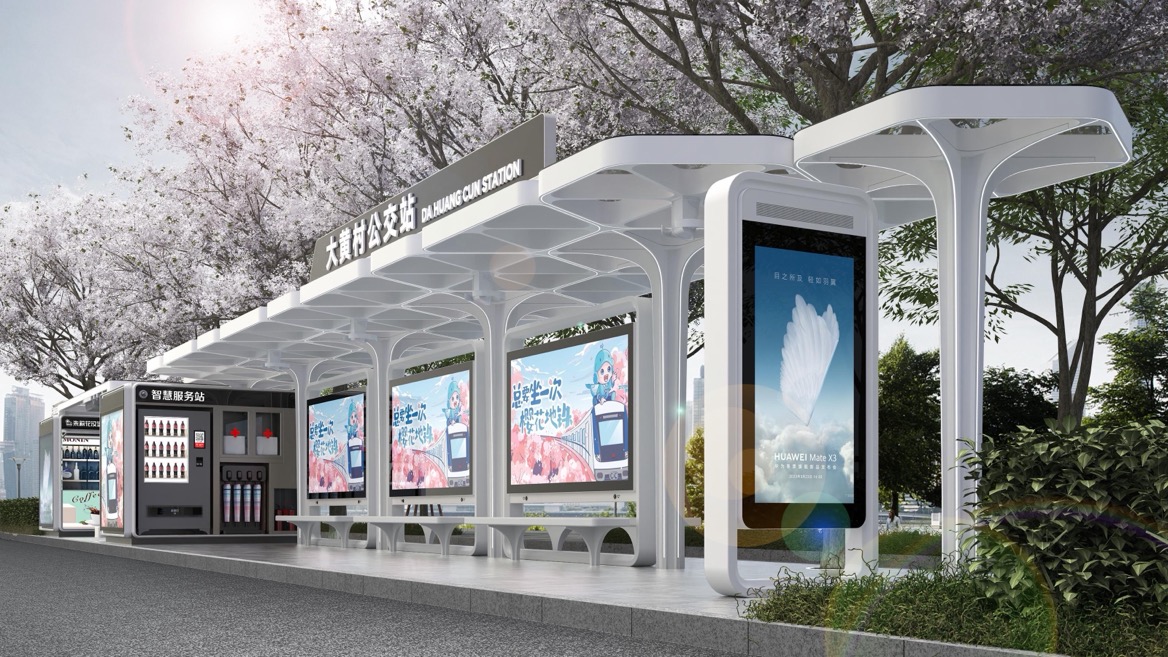
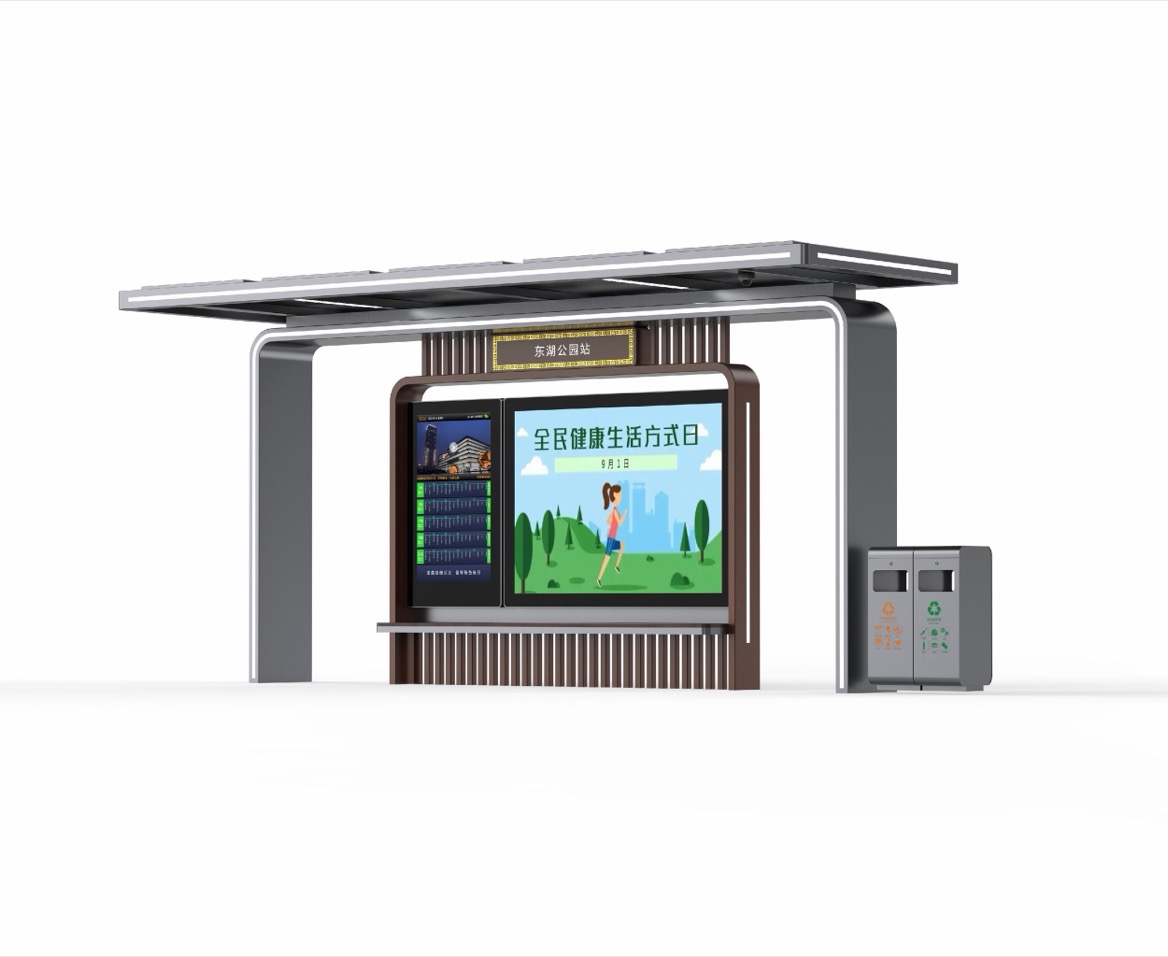
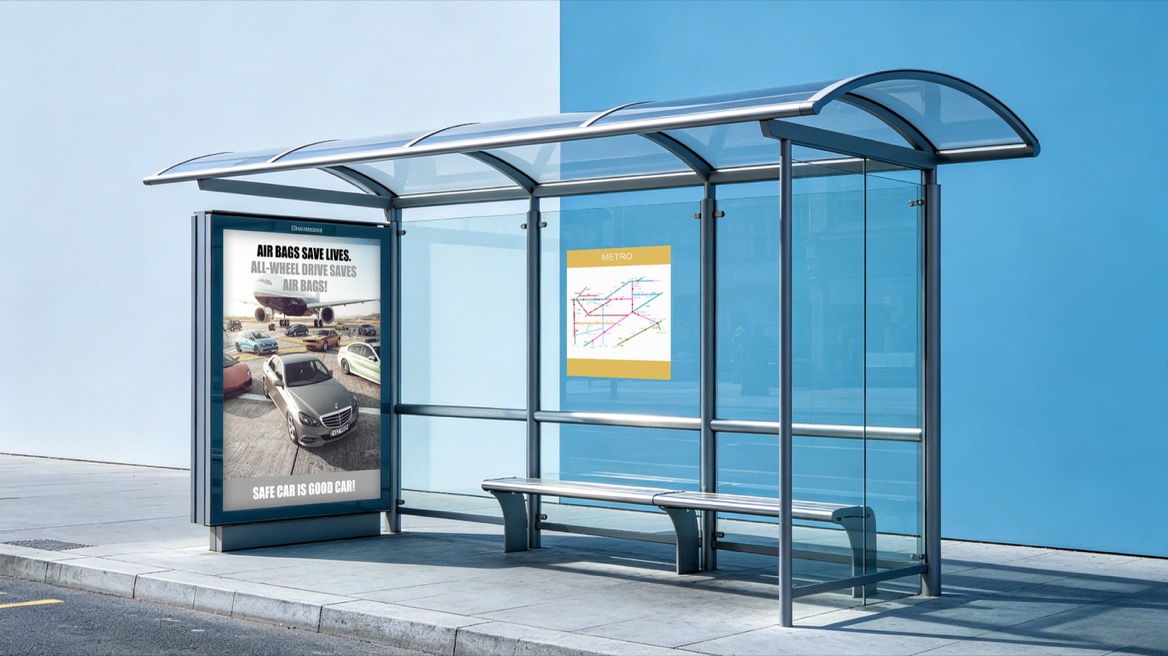
A digital advertising bus shelter incorporates an electronic display for advertising and potentially passenger information. A traditional advertising shelter typically uses printed posters, either unlit or illuminated.
Both provide weather protection and advertising space. Their commercial models differ substantially.
| Comparison factor | Bus shelter with digital screen | Traditional advertising shelter |
|---|---|---|
| Advertising inventory | Multiple scheduled campaigns per display | Usually one campaign per poster face |
| Content changes | Remote updates when connected | Physical printing and replacement |
| Initial investment | Typically higher | Typically lower |
| Operating requirements | Electricity, connectivity, software, technical support | Cleaning, poster replacement, lighting where fitted |
| Campaign flexibility | Time-based and location-based scheduling | Primarily location and booking-period based |
| Brand exposure | Shared across an advertising loop | Continuous presence during the booking |
| Main commercial risk | Insufficient sales to cover higher costs | Limited inventory and slower campaign changes |
| Best-fit locations | Strong advertiser demand and reliable infrastructure | Cost-sensitive sites and long-duration campaigns |
These are planning distinctions, not universal pricing rules. Final performance depends on the specification, concession agreement, local market, and sales capability.
A traditional poster face usually displays one advertiser throughout its booking period. A digital screen can rotate several campaigns within a repeating sequence.
For example, a 60-second loop could contain six 10-second advertising slots. An operator could sell those positions to different businesses or allocate them across advertising and public information.
However, six slots do not automatically produce six times the revenue. Each advertiser receives a share of display time, and some slots may remain unsold.
Public-service messages, emergency notices, and transport information may also reduce commercially available airtime. Revenue forecasts must use sellable inventory rather than total screen operating hours.
A digital bus shelter advertising system can support different messages throughout the day.
Potential applications include:
- Breakfast promotions near commuter routes.
- Retail offers during shopping hours.
- Restaurant advertising before evening travel.
- Event campaigns approaching a scheduled performance.
- Weather-responsive creative when appropriate data integration exists.
This flexibility may make advertising relevant to businesses that cannot justify a full-month poster booking.
Nevertheless, scheduling capability creates value only when the sales team can package it into products advertisers understand and purchase.
Traditional advertising shelters retain an important advantage: continuous visibility.
An advertiser occupying a poster face does not share that face with a rotating sequence of competing messages. For local businesses seeking sustained neighborhood recognition, this can be commercially attractive.
The practical distinction is flexibility versus exclusivity—not simply modern versus outdated.
London provides a useful example of digital and traditional formats operating together.
In its September 2024 announcement, JCDecaux stated that its renewed Transport for London advertising contract covered more than 4,700 advertising bus shelters. At that time, the estate included 612 digital 86-inch screens and 9,400 non-digital poster sites.
These figures count different inventory units, so they should not be treated as a direct screen-to-shelter conversion ratio.
The important lesson is that a major advertising network retained substantial printed inventory alongside digital screens. Digital expansion did not require every advertising face to become electronic.
For smaller operators, this supports a practical strategy: evaluate each location individually and consider a mixed network rather than assuming complete digitization will maximize returns.
A digital screen bus shelter requires more than a display.
Depending on the project, its budget may include:
- Outdoor-rated screen and protective enclosure.
- Electrical distribution and protective devices.
- Cooling or other thermal-management provisions.
- Media player and content-management platform.
- Connectivity equipment.
- Foundations, installation, and commissioning.
- Permits and utility connection work.
Traditional shelters still require structural engineering, foundations, glazing, poster cabinets, and potentially lighting. Their lower electronic complexity, however, can simplify procurement and servicing.
Compare equivalent structures and installation scopes before comparing quotations.
Digital systems introduce recurring electricity, connectivity, software, inspection, and repair costs. Traditional formats incur printing, distribution, poster replacement, and related transport costs.
Neither format is maintenance-free.
For digital signage energy planning, request measured operating consumption under representative brightness settings. Maximum rated power alone does not show likely annual electricity use.
ENERGY STAR guidance also distinguishes display power requirements across operating modes. Buyers should assess the specific product and installation rather than assume all digital signage has similar energy performance.
A failed screen can interrupt all campaigns scheduled on that display.
A printed poster can remain visible without a functioning content-management system, although lighting failures may weaken nighttime visibility.
From a procurement perspective, serviceability deserves as much attention as appearance. Ask how technicians access components, which parts are replaceable, and whether replacements remain available throughout the intended operating period.
The following example is hypothetical. It is not an Ainl quotation, a market benchmark, or a guaranteed return.
It compares one advertising face, excluding financing, tax, depreciation, and concession payments.
| Annual planning input | Traditional poster face | Digital advertising face |
|---|---|---|
| Initial installed investment | $8,000 | $24,000 |
| Available advertising positions | 1 | 6 |
| Monthly price per position | $500 | $250 |
| Average paid occupancy | 85% | 65% |
| Annual advertising revenue | $5,100 | $11,700 |
| Annual operating costs | $1,200 | $3,600 |
| Annual operating contribution | $3,900 | $8,100 |
| Simple payback | Approximately 2.1 years | Approximately 3.0 years |
Under these assumptions, digital generates more annual operating contribution, but the traditional option recovers its initial investment sooner.
The digital upgrade requires an additional $16,000 and produces an additional $4,200 annually. Its incremental simple payback is approximately 3.8 years.
Using the same assumptions, digital revenue at full occupancy would be $18,000 annually.
To match the traditional shelter's $3,900 annual operating contribution, digital must cover that contribution plus its own $3,600 operating costs.
Its required paid occupancy is therefore approximately 41.7%.
That threshold only matches annual operating contribution. It does not compensate for the additional initial investment.
This distinction prevents a common forecasting mistake: proving that digital earns more revenue without proving that the upgrade creates sufficient financial value.
Digital becomes more attractive where several conditions align:
- Strong pedestrian or passenger exposure.
- Clear sightlines and useful viewing time.
- Nearby businesses with recurring advertising budgets.
- Reliable power and communications.
- An established advertising sales operation.
- Practical access for maintenance.
A busy location alone is insufficient. High footfall without paying advertisers may still produce disappointing returns.
Traditional shelters can be a better fit for:
- Lower-demand suburban or regional routes.
- Long-duration local advertising campaigns.
- Locations with difficult electrical connections.
- Networks with limited technical support.
- Projects prioritizing low capital expenditure.
- Sites subject to restrictive digital-display conditions.
A traditional format is not necessarily a compromise. In the right market, operational simplicity is a competitive advantage.
A hybrid approach places digital displays at commercially promising locations while retaining poster faces elsewhere.
It can also combine digital and printed advertising within selected shelters, subject to layout and local approval.
This approach limits exposure to weak digital demand while preserving flexible inventory where advertisers will pay for it.
A shelter remains public infrastructure, even when advertising funds part of its operation.
Poor seating, obstructed access, uncomfortable glare, or difficult maintenance can undermine a visually impressive installation.
Project reviews should address:
1. Passenger circulation and accessible boarding space.
2. Seating, weather protection, and visibility.
3. Display brightness and nighttime operating settings.
4. Separation of advertising and passenger-information functions.
5. Local rules governing movement, dwell time, and roadside displays.
6. Responsibility for emergency messages and content approval.
Do not assume animated advertisements or every screen configuration will be permitted. Confirm requirements with the relevant authority before finalizing the commercial model.
Digital scheduling records can help verify when content played. They do not, by themselves, prove how many people saw an advertisement or how many purchases it generated.
Likewise, cameras and audience analytics should not be treated as essential features. Where proposed, they require separate privacy, security, and legal assessment.
Ainl's company-provided background describes 16 years of experience developing, manufacturing, and selling smart city public facilities and outdoor advertising products.
Its stated manufacturing footprint covers more than 260 mu—approximately 17 hectares—with around 150,000 square meters of factory space. Supporting capabilities include a provincial-level hardware and software R&D center, CNC sheet-metal processing, large-scale coating facilities, and an electrical testing laboratory.
Ainl also reports national high-tech enterprise status, Grade III qualifications for steel-structure and municipal general contracting, three management-system certifications, and Level III safety-production standardization certification.
For buyers, these credentials should support supplier due diligence, not replace it. Request current certificates, applicable scopes, engineering documentation, and project-specific acceptance criteria.
Ainl's OEM/ODM scope can accommodate shelter dimensions, structures, colors, screen configurations, lighting, solar-power arrangements, and city-branding elements.
Solar power requires particular care. A solar solution suitable for lighting may not support a large screen operating for extended hours. Generation, battery capacity, seasonal conditions, and the full electrical load must be assessed together.
Identify likely advertisers, realistic rates, booking periods, and seasonal demand.
Record access, visibility, utilities, environmental exposure, installation constraints, and maintenance arrangements.
Compare conservative, expected, and strong occupancy. Include concession fees, revenue sharing, replacements, and downtime.
Define structural requirements, coating expectations, electrical protection, screen readability, content scheduling, and service access.
Test a representative group of locations. Track paid occupancy, realized revenue, operating consumption, faults, and repair times before committing to wider deployment.
A bus shelter with digital screen offers greater commercial upside when advertising demand and operating capability justify the additional investment. A traditional advertising shelter remains compelling where continuous exposure, lower costs, and simplicity matter most.
For a project-specific comparison, send Ainl your site locations, shelter quantities, dimensions, advertising model, utility conditions, environmental requirements, and branding guidelines. Request matched traditional, digital, and hybrid proposals with clearly separated equipment, installation, operating, and maintenance assumptions.
No. It can accommodate more campaigns, but profitability depends on paid occupancy, achievable rates, operating costs, and initial investment.
Sometimes. A structural, electrical, and dimensional assessment must confirm whether it can safely accommodate the display, enclosure, maintenance access, and additional loads.
Potentially, but feasibility is site-specific. Screen consumption, operating hours, local solar conditions, battery storage, and backup requirements must be calculated together.
Specify inspection schedules, cleaning, response times, spare parts, software support, warranty exclusions, and responsibility for connectivity and power faults.
Yes, when the system supports the required content and integrations. Reserve that airtime explicitly so advertising forecasts do not overstate available inventory.
Traditional shelters can reduce financial and technical complexity. Digital may be appropriate where the operator already has validated demand, reliable infrastructure, and the resources to manage sales and maintenance.
- JCDecaux. "JCDecaux Wins Transport for London (TfL) Iconic Bus Shelter Advertising Concession for 8 Years." September 10, 2024. Primary source for the contract scope, digital-screen count, and non-digital poster inventory discussed above. [jcdecaux]
- Transport for London. "Advertising Estate." Freedom of Information response, reference FOI-2064-2425. Source describing the role of media partners in selling, maintaining, and operating advertising on the transport estate. [tfl.gov]
- ENERGY STAR. "Signage Displays." Guidance on certified signage displays and energy requirements across operating modes. [energystar]
- U.S. Department of Energy, Federal Energy Management Program. "Purchasing Energy-Efficient Displays and Monitors." Procurement guidance covering monitors and signage displays. [energy]
- JCDecaux. "City." Explanation of the advertising-funded street-furniture business model. [jcdecaux]


