
Email: ainlbusshelter@gmail.com | WhatsApp: +86-18800607527
Views: 264 Author: Ainl Bus Shelter Publish Time: 2026-10-24 Origin: Site


Content Menu
● Bus Shelter with LED Display vs Printed Advertising Shelter: Key Differences
● Which Format Creates Greater Advertising Impact?
>> LED Displays Offer Context and Creative Flexibility
>> Printed Advertising Offers Uninterrupted Presence
>> What Audience Research Actually Shows
● Campaign Flexibility vs Share of Voice
>> Digital Screens Make Frequent Updates Practical
>> Printed Panels Avoid Advertising-Loop Dilution
● Comparing Total Cost of Ownership
>> Look Beyond the Shelter Purchase Price
>> Calculate the Incremental Revenue Requirement
● Reliability, Maintenance, and Outdoor Performance
>> Specify the Complete Digital System
>> Evaluate Printed Shelters as Engineered Products
● Energy Use, Solar Power, and Environmental Trade-Offs
● A Practical Field Test for Advertising Effectiveness
>> Measure Business Outcomes, Not Just Playback
● Industry Insight: Digital and Printed Shelters Can Coexist
● Choosing a Custom Bus Shelter Manufacturing Partner
● Select the Shelter Around the Campaign
>> Is a bus shelter with LED display always more effective?
>> Can printed bus shelter advertising work at night?
>> Can LED bus shelters operate without internet access?
>> Which option is easier to maintain?
>> Can one shelter combine digital and printed advertising?
>> What should buyers provide when requesting a quotation?
A bus shelter with LED display is usually the stronger marketing solution for frequently changing promotions, time-sensitive messages, and locations that can support multiple advertisers. A printed advertising shelter often delivers better value for continuous brand exposure, simpler maintenance, and campaigns with a consistent message.
The deciding factor is fit: how well the advertising format matches the location, audience, campaign objectives, and operating resources. A digital screen is not automatically a better investment, and a printed poster is not necessarily outdated.
From a manufacturing and project-planning perspective, the right comparison goes beyond visual impact. Buyers must consider advertising exposure, lifetime costs, weather protection, maintenance access, and the shelter's primary purpose: serving passengers.

A bus shelter with LED display uses an electronic screen to present advertising and potentially passenger information. A printed advertising shelter uses physical posters or graphics, sometimes illuminated by a backlit lightbox.
One technical distinction matters: a direct-view LED display uses LEDs as image-producing pixels. An LCD screen with LED backlighting is a different technology. Buyers should clarify which system a quotation includes.
| Comparison factor | Bus shelter with LED display | Printed advertising shelter |
|---|---|---|
| Content changes | Remote updates with compatible software and connectivity | Physical poster replacement |
| Advertising exposure | Usually shared among scheduled messages | Continuous display of one message |
| Creative options | Static graphics, animation, or video where permitted | Static artwork |
| Initial investment | Generally higher | Generally lower |
| Operating requirements | Electricity, software, monitoring, and technical maintenance | Cleaning, poster replacement, and lighting maintenance if fitted |
| Best campaign fit | Frequent promotions and time-based messages | Long-term branding and consistent local messages |
| Revenue approach | Multiple scheduled advertisers | Usually one advertiser per panel |
| Main risk | Downtime, underfilled inventory, or operating complexity | Outdated artwork, fading, or replacement delays |
Digital bus shelter advertising can change with the time of day, weather, or campaign schedule when supported by suitable software and data integrations.
A restaurant could promote breakfast during the morning commute and dinner offers later. A retailer could replace expired promotions across several shelters without arranging separate poster-installation visits.
This flexibility has practical value when relevance changes quickly. However, advertisers still need readable creative. A crowded animation is not automatically more effective than a clear static message.
The advertising operator must also confirm whether animation or video is permitted at each roadside location.
A printed panel keeps the same message visible throughout its booked period. It does not disappear between other advertisers' messages.
This makes printed bus shelter advertising attractive for:
- Local businesses building neighborhood recognition.
- Property developments with long sales cycles.
- Public information campaigns.
- Brands seeking exclusive occupation of a particular panel.
An illuminated printed poster can remain visible after dark. Nighttime visibility is therefore not exclusive to digital screens.
A 2024 U.S. survey commissioned by the Out of Home Advertising Association of America and conducted by The Harris Poll reported that 73% of respondents viewed digital out-of-home advertising favorably. Among recent digital out-of-home viewers, 76% reported taking action because of an advertisement.
The survey covered 1,023 adults aged 18–64. It supports the potential of digital outdoor advertising, but it does not establish that LED bus shelters outperform printed shelters.
These are self-reported findings across digital outdoor formats, not a controlled comparison of identical shelter locations. Buyers should not convert them into guaranteed sales forecasts.
Remote scheduling can reduce the logistics of changing advertisements across a distributed shelter network.
Potential applications include:
- Launching a promotion across multiple locations.
- Scheduling different messages by daypart.
- Replacing incorrect or expired artwork.
- Reserving screen time for approved public information.
These functions depend on the content management system, connectivity, permissions, and operating arrangements. They are not automatic features of every screen.
Consider an illustrative digital schedule: six advertisers each receive a 10-second slot within a 60-second loop. Each advertiser receives one-sixth of the scheduled screen time.
A printed advertisement occupies its panel continuously.
That does not mean the printed panel produces six times the results. Audience movement, waiting times, visibility, and message quality also matter. It does mean buyers should compare scheduled exposure rather than assuming that every passerby sees every digital advertisement.
Ask operators to disclose slot length, loop duration, operating hours, and public-information allocations before comparing media prices.
For a bus shelter with LED display, lifecycle budgeting should include:
1. Shelter structure and display equipment.
2. Foundations, installation, and electrical work.
3. Connectivity and content-management fees.
4. Electricity consumption.
5. Cleaning, inspections, and technical servicing.
6. Replacement components and potential downtime.
For a printed advertising shelter, include the structure, poster enclosure, printing, installation visits, cleaning, and replacement graphics. Illuminated panels also require electrical and lighting maintenance.
Neither format has a universal payback period. Local labor rates, electricity prices, advertising demand, and site conditions determine the result.
A useful financial test is:
Required additional monthly contribution=Additional digital capital cost/Target recovery period in months+Additional monthly operating cost
Suppose, purely for illustration, digital equipment and installation cost $12,000 more than a printed alternative. Recovering that difference over 60 months requires $200 monthly. If additional operating costs are $150 monthly, the digital option must generate $350 more monthly contribution.
This is not a supplier quotation or an industry average. It is a framework for testing project assumptions.
Use revenue after selling costs and other relevant deductions—not headline advertising rates.
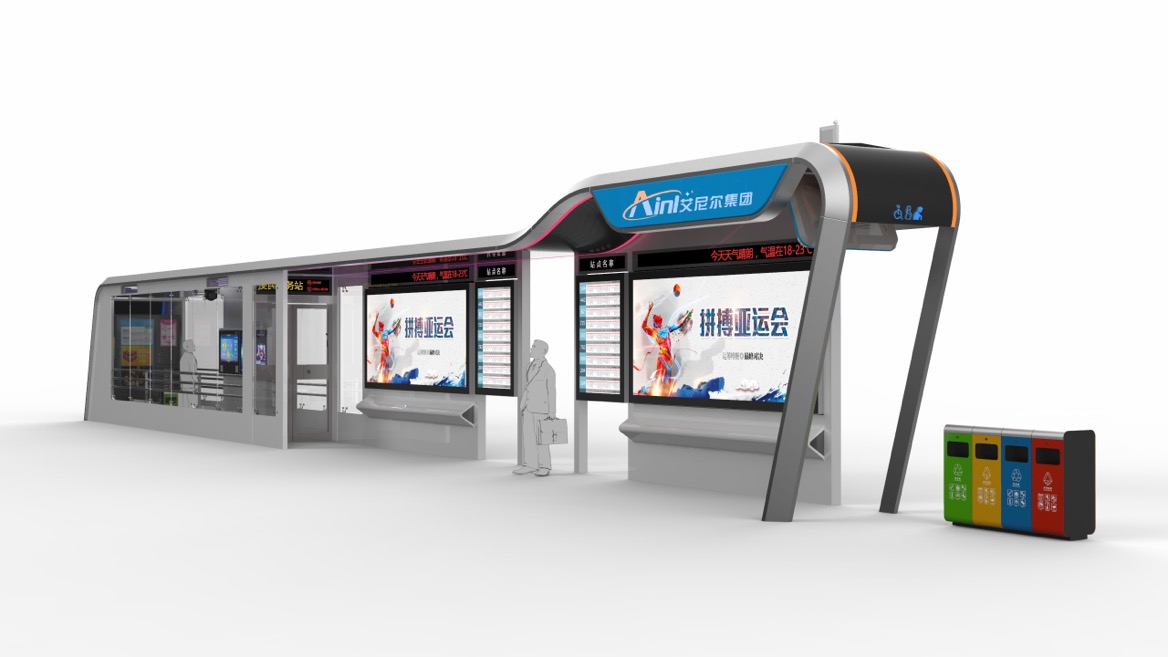
Outdoor display procurement should address more than screen size and brightness.
Request documented specifications for:
- Readability at the intended viewing distance.
- Brightness adjustment and nighttime dimming.
- Weather protection of the completed assembly.
- Thermal management for local conditions.
- Electrical protection and service isolation.
- Front or rear maintenance access.
- Replacement-module availability.
- Offline playback and recovery behavior.
A component's protection rating does not automatically establish the weather resistance of the entire shelter installation.
Also distinguish screen power ratings from expected operating consumption. Ask suppliers to identify the assumptions behind average-power estimates.
Printed advertising shelters still need careful specification. Water ingress, damaged seals, faded graphics, and difficult poster access can undermine campaign quality.
Check the poster-retention mechanism, glazing, drainage, enclosure security, and compatibility between graphics and illumination.
Both formats need an appropriate structural design, corrosion-protection system, foundation arrangement, and maintenance plan. Local engineering and approval requirements should guide the final specification.
A non-illuminated printed panel does not consume electricity to display its message. A digital display requires power, while a backlit printed panel also has an electrical load.
However, electricity alone does not determine the complete environmental comparison. Printing, replacement journeys, equipment manufacture, service life, and end-of-life handling also matter.
Avoid claiming either option is universally greener without a defined lifecycle assessment.
Solar-powered bus shelter advertising requires particular care. A roof-mounted solar system should not be assumed capable of running a large display continuously.
A feasibility assessment should consider:
- Measured or realistically modeled daily loads.
- Local solar conditions and shading.
- Available roof area.
- Battery autonomy and replacement planning.
- Seasonal operation and backup power.
Automatic dimming and operating schedules may reduce demand, but their effectiveness depends on the selected equipment and actual settings.
A controlled pilot offers more useful evidence than comparing unrelated case studies.
Choose locations with similar pedestrian activity, passenger waiting patterns, nearby businesses, and sightlines. Keep the offer and creative message as consistent as possible.
Where practical, rotate formats or use matched comparison locations to reduce site-selection bias.
Use several complementary indicators:
- Estimated audience exposure using a consistent method.
- Campaign-specific short URLs or QR codes.
- Redeemed promotional codes.
- Incremental store visits or enquiries.
- Cost per qualified response.
- Equipment uptime and maintenance expense.
Playback logs show that content ran. They do not prove that a person noticed it.
Likewise, QR scans capture only one response pathway. Someone may remember the advertisement and visit later without scanning anything.
Agree on measurement definitions before launch, including how repeated visits and overlapping campaigns will be handled.
JCDecaux's New York City bus shelter offering includes backlit posters with full share of voice alongside digital screens supporting motion and dynamic content.
This provides a useful market example: established operators offer both formats rather than treating one as universally superior.
For a mixed shelter network, a practical approach may be to:
- Install digital displays at commercially attractive locations.
- Use printed panels where consistent exposure and simpler operation matter more.
- Combine digital and printed advertising within selected shelter designs.
A hybrid strategy can match investment to demand. It should still be checked against local advertising permissions, service capacity, and realistic occupancy forecasts.
Advertising effectiveness begins with a reliable physical platform.
Ainl's supplied company profile describes 16 years of experience developing, manufacturing, and supplying smart city public facilities and outdoor advertising products. It reports a manufacturing footprint exceeding 260 mu, approximately 150,000 square meters of factory space, and supporting research, sheet-metal fabrication, coating, and electrical-testing facilities.
The profile also identifies national high-tech enterprise status, relevant construction qualifications, and management and safety certifications. Buyers should request current documents and confirm their applicability to the proposed contract.
Ainl offers OEM/ODM customization covering shelter dimensions, structures, colors, screen configurations, lighting, solar-power arrangements, and city branding.
For procurement, translate these capabilities into project deliverables: approved drawings, material specifications, inspection criteria, electrical documentation, installation responsibilities, spare-parts commitments, and warranty terms.
Manufacturing capability is valuable when it produces a shelter that is maintainable, compliant with project requirements, and suited to its operating environment.
Choose digital when content flexibility and realistic additional advertising contribution justify the investment. Choose printed when continuous exposure, straightforward operation, and cost control are the priorities.
Send Ainl your site information, preferred dimensions, campaign objectives, and power conditions. Request comparable digital, printed, and hybrid proposals with clearly stated specifications, exclusions, operating assumptions, and maintenance provisions.
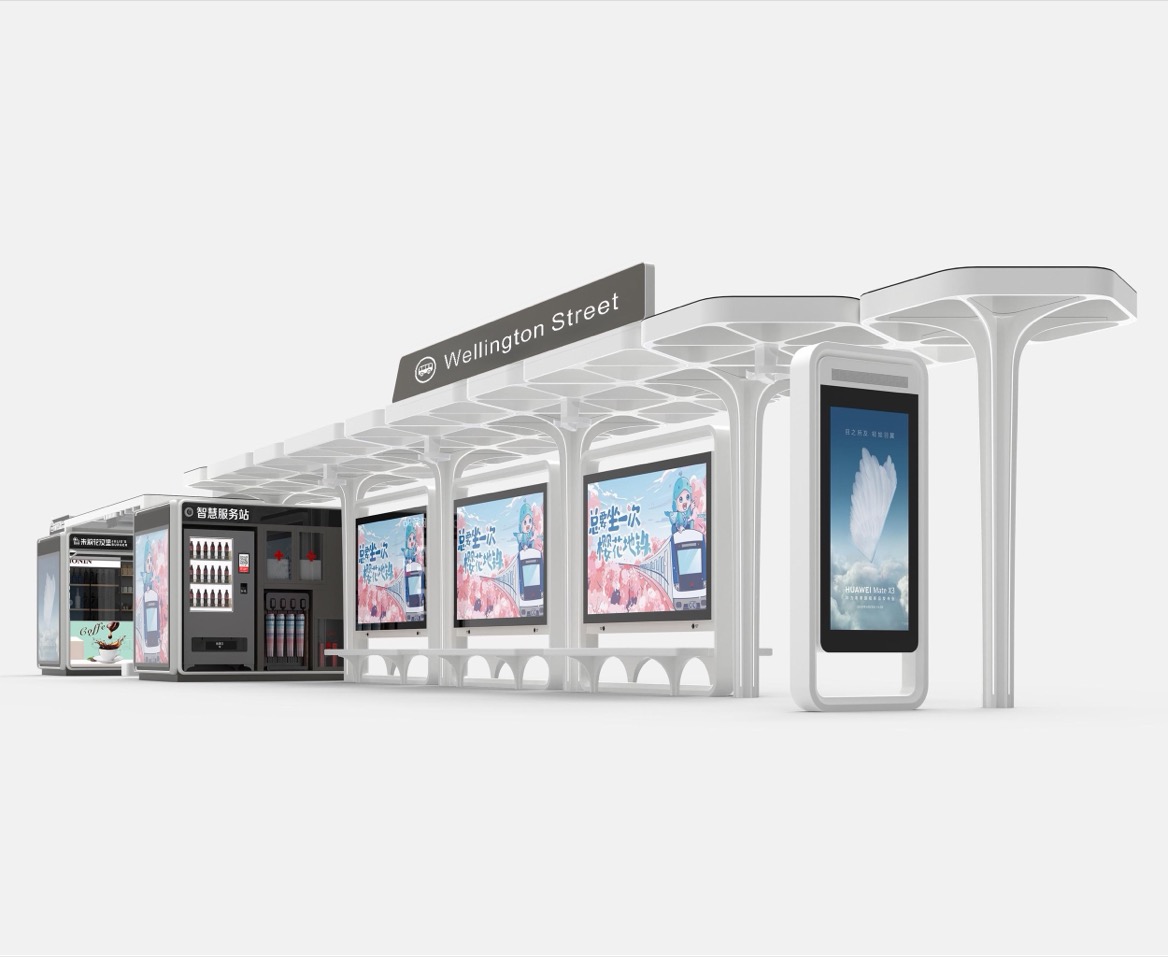
No. Digital is particularly useful when messages change frequently or several advertisers share a location. Printed panels may provide better value for continuous branding and simpler campaigns.
Yes. A backlit or appropriately illuminated printed panel can provide nighttime visibility. Performance depends on the lighting design, artwork, installation, and maintenance.
Some systems support locally stored content. Remote updates, monitoring, and live information may be unavailable during an outage. Confirm the proposed system's offline behavior.
Printed shelters generally involve fewer electronic systems. However, poster changes and lighting repairs still require work. Digital maintenance depends heavily on equipment quality, access, and local technical support.
Yes, subject to design and local approval requirements. A hybrid shelter can allocate different surfaces to scheduled digital messages and continuous printed campaigns.
Provide the installation location, shelter dimensions, advertising objectives, electrical supply, environmental conditions, display requirements, expected operating hours, and maintenance arrangements.
1. Out of Home Advertising Association of America. "New Study Finds Digital Out of Home Advertising Surpasses Other Media in Driving Favorability and Action Among Consumers." Research conducted by The Harris Poll, April 2–9, 2024, among 1,023 U.S. adults aged 18–64. Source for the audience-attitude figures and research limitations discussed above. [oaaa]
2. JCDecaux North America. "NYC Bus Shelter Advertising." Source for the real-world comparison between continuously displayed backlit posters and digital shelter advertising with motion and dynamic integration. [jcdecauxna]
3. JCDecaux. "Programmatic at JCDecaux." Source for automated digital advertising buying and connected campaign-management capabilities. These require an appropriate technology and commercial ecosystem. [jcdecaux]
4. JCDecaux UK. "Bus Shelter Advertising | Digital Out-of-Home." Source for examples of time-, weather-, and context-responsive street-furniture advertising. [jcdecaux.co]
5. Samsung VXT. "LED Outdoor Signage: What to Consider." April 22, 2025. Manufacturer guidance on outdoor readability, adaptive brightness, energy considerations, and local signage restrictions; not independent proof of comparative financial performance. [vxt.samsung]


