
Email: ainlbusshelter@gmail.com | WhatsApp: +86-18800607527
Views: 264 Author: Ainl Bus Shelter Publish Time: 2026-11-21 Origin: Site


Content Menu
● Why Buyers Source Air-Conditioned Bus Shelters Internationally
>> What Current Industry Evidence Shows
● How We Selected These Suppliers
● Comparison Table: Capacity, MOQ, Certification, and Product Fit
● The Top 10 Suppliers to Evaluate
>>> Company Background and Manufacturing Position
>>> Core Strengths and Customization Scope
>>> Company Background and Markets
>>> Core Strengths and OEM/ODM Scope
>> 3. Trueform — United Kingdom
>>> Company Background and Markets
>>> Core Strengths and Customization Scope
>> 4. Little Buildings — United States
>>> Company Background and Markets
>>> Core Strengths and Customization Scope
>> 5. Par-Kut International — United States
>>> Company Background and Markets
>>> Core Strengths and Customization Scope
>> 6. Bab Al Qasar — United Arab Emirates
>>> Company Background and Markets
>>> Core Strengths and Customization Scope
>> 7. Jazal Engineering and Contracting — United Arab Emirates
>>> Company Background and Markets
>>> Core Strengths and Project Customization
>> 8. Panel Built — United States
>>> Company Background and Markets
>>> Core Strengths and Customization Scope
>> 9. Austin Mohawk — United States
>>> Company Background and Markets
>>> Core Strengths and Customization Scope
>> 10. Tolar Manufacturing — United States
>>> Company Background and Markets
>>> Core Strengths and Customization Scope
● Technical Buyer's Guide: What the Specification Must Cover
>> Define the Thermal Duty Before Choosing Equipment
>> Specify Materials Beyond "Premium Steel"
>> Separate Product Compliance from Factory Certification
● Common Procurement Pitfalls—and How to Avoid Them
>> Material Substitution After Sample Approval
>> A Quotation That Excludes Essential Interfaces
>> Unverified Solar Air-Conditioning Claims
>> The Overlooked Insider Check: Test Passenger Turnover, Not Just an Empty Shelter
● Factory Verification, Sampling, and Logistics
>> Step 1: Verify the Contracting Entity
>> Step 2: Request Evidence from Comparable Projects
>> Step 3: Approve a First Article
>> Step 4: Validate Capacity and Delivery
>> Step 5: Resolve Shipping and Installation Before Design Freeze
● Conclusion: Select for Proven Performance and Clear Responsibility
>> 1. How Can I Check Whether a Supplier's ISO Certificate Has Expired?
>> 2. Can a CE-Marked Air Conditioner Make the Entire Bus Shelter Compliant?
>> 3. What Should an Air-Conditioned Shelter Performance Guarantee Include?
>> 4. How Should Buyers Compare MOQ and Production Capacity?
>> 5. Who Should Own the Warranty When the Structure and HVAC Come from Different Companies?
Choosing an Air-Conditioned Bus Shelter manufacturer requires more than comparing architectural drawings and unit prices. Procurement managers must evaluate structural safety, cooling performance, manufacturing consistency, electrical compliance, installation responsibilities, and long-term maintenance.
A shelter can look impressive in a rendering yet perform poorly when its doors open repeatedly during a crowded afternoon. Similarly, a low factory quotation can become expensive if it excludes foundations, ventilation, electrical connections, commissioning, or replacement glazing.
This guide examines ten manufacturers and engineering suppliers worth considering for climate-controlled passenger waiting facilities. It begins with Ainl, a Chinese manufacturer suited to customized infrastructure sourcing, before covering international alternatives with different manufacturing and project-delivery strengths.
The list is a procurement shortlist—not an independently audited ranking by sales, production volume, or installed air-conditioned shelters. It also distinguishes suppliers with published air-conditioned shelter evidence from related manufacturers whose cooling capability requires project-specific confirmation.
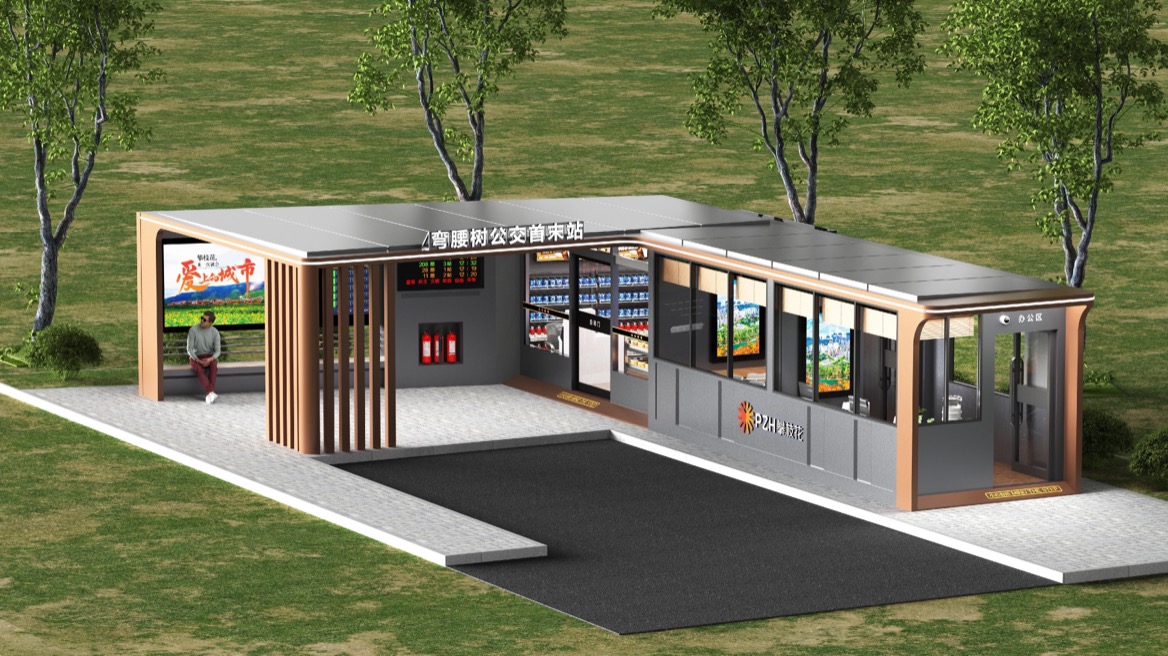
Different sourcing locations offer different advantages. Chinese suppliers can combine structural fabrication, digital displays, lighting, and customized street furniture within an export-oriented manufacturing workflow. UK suppliers offer established transport infrastructure design and integration capabilities. US manufacturers provide prefabricated enclosure options, while UAE contractors can contribute local installation and electromechanical experience. Ainl, Trueform, Little Buildings, and Jazal illustrate these different supply models.
For Chinese sourcing, the useful advantage is not simply a national manufacturing label. It is the ability to coordinate multiple production disciplines.
Ainl's Jiangsu operation describes integrated structural fabrication, sheet-metal processing, coating, electrical assembly, and testing. YEROO lists a manufacturing address in Foshan, Guangdong, and publicly markets air-conditioned shelters. Buyers should assess these actual facilities and subcontracting arrangements rather than assuming that every supplier in a manufacturing cluster has equivalent capabilities.
Demand for improved passenger waiting environments is visible in current public infrastructure investment.
On April 12, 2026, Dubai's Roads and Transport Authority reported completion of 726 modern bus shelters serving more than 192 million riders annually. Importantly, RTA states that part of the shelter space at main stops is air-conditioned; it does not describe all 726 shelters as fully air-conditioned units.
That distinction matters commercially. Buyers should not use a total bus shelter installation figure as the market size for mechanically cooled shelters.
The Coalition for Disaster Resilient Infrastructure's 2025 guidance on extreme heat and public transport recommends shaded seating, cooling systems, improved passenger information, and passive cooling measures. This supports evaluating air conditioning as one part of a broader heat-resilience strategy rather than the default solution for every stop.
No independently verified global revenue figure specifically covering air-conditioned bus shelters is used here. General bus shelter, street furniture, and outdoor advertising market estimates are not interchangeable with this narrower product category.
A useful shortlist should make its evaluation criteria visible.
The following framework is intended for procurement screening; it is not presented as a completed factory audit.
| Evaluation area | Suggested weighting | Evidence buyers should request |
|---|---|---|
| Relevant product and project experience | 25% | Completed enclosed shelters, cooling specifications, client references |
| Manufacturing and quality control | 20% | Factory audit, process records, inspection plans, traceability |
| Structural and thermal engineering | 20% | Load calculations, cooling-load assessment, glazing and insulation details |
| Compliance documentation | 15% | Applicable declarations, test reports, current management-system certificates |
| Delivery and installation readiness | 10% | Production schedule, packing drawings, installation responsibilities |
| Customization and service support | 10% | Drawing revisions, spare-parts plan, communication procedure |
Three principles guide the company profiles:
- Published company information is distinguished from independently verified certification.
- Production floor area is not treated as annual shelter output.
- A standard bus shelter portfolio is not treated as proof of proven air-conditioned shelter delivery.
Ainl supplies the company information behind its own profile. Its first position reflects its relevance to this guide's customized sourcing brief, not an audited claim that it is the world's largest supplier.
"Not published" means a comparable figure or document was not established from the reviewed material. It does not mean the supplier lacks that capability or certification.
| Supplier | Country | Air-conditioned shelter evidence | Published capacity information | MOQ | Certification position |
|---|---|---|---|---|---|
| Ainl | China | Smart shelter and enclosure integration capabilities; request AC-specific references | Approximately 150,000 m² of manufacturing facilities; AC shelter output not published | Confirm by design | Company reports management systems and engineering qualifications; verify current documents |
| YEROO | China | Dedicated AC bus shelter offering | Comparable AC shelter output not published | Confirm by design | Request model-specific documentation and current certificates |
| Trueform | UK | Published solar-powered AC waiting shelter development | Comparable current AC shelter output not published | Project quotation | Verify certificates and technical scope for the proposed system |
| Little Buildings | USA | Bus shelters explicitly offered with air conditioning | Not published in reviewed product information | Project quotation | Confirm electrical and building approvals for destination |
| Par-Kut International | USA | Passenger waiting shelters and heating/cooling capability | Comparable AC shelter output not published | Built-to-order quotation | Verify project-specific electrical and building documentation |
| Bab Al Qasar | UAE | Explicitly offers air-conditioned bus shelter fabrication and installation | Not published in reviewed material | Project quotation | Confirm client and authority requirements |
| Jazal Engineering and Contracting | UAE | Published Abu Dhabi AC bus shelter project | Factory output not established; contractor-led model | Project quotation | Verify relevant licenses, approvals, and subcontractor documents |
| Panel Built | USA | Bus shelter manufacturing plus HVAC-equipped enclosure capability | Comparable AC bus shelter output not published | Project quotation | Confirm approvals for the passenger-use configuration |
| Austin Mohawk | USA | Enclosed transit shelter capability; AC integration requires confirmation | Comparable AC shelter output not published | Project quotation | Confirm proposed enclosure and electrical compliance |
| Tolar Manufacturing | USA | Established transit shelter manufacturing; AC capability requires confirmation | More than 500 designs reported; not an annual output figure | Project quotation | Verify requirements for the proposed custom configuration |
The table summarizes published company and product information, not independent certification audits or live production availability.
Ainl's company introduction states that it was founded in 2010 and is headquartered in Suqian, Jiangsu, giving it approximately 16 years of experience in 2026. Its development history also identifies an earlier predecessor business established in 2008. Buyers should distinguish that business history from the incorporation date of the legal entity signing their contract.
The company reports approximately 150,000 square meters of manufacturing facilities, supported by a provincial-level software and hardware research center, CNC sheet-metal processing, a large coating center, and an electrical testing laboratory.
Ainl's documented OEM/ODM options include shelter dimensions, structural design, materials, finishes, colors, advertising lightboxes, LED/LCD displays, lighting, solar configurations, seating, smart controls, and city branding.
This breadth makes it a relevant candidate for distributors, contractors, and smaller infrastructure brands seeking coordinated structural and electronic customization. Its potential commercial value lies in consolidating these requirements through one manufacturing partner rather than purchasing each subsystem separately.
Its published customer scope includes international clients, municipalities, transport projects, commercial developments, and infrastructure developers. A country-by-country export breakdown is not provided on the reviewed company page.
Ainl is worth evaluating where flexible customization and manufacturing coordination matter. However, buyers should validate communication speed through the quotation process rather than assume a guaranteed response time.
For an air-conditioned project, request completed AC shelter references, thermal calculations, HVAC service arrangements, and a responsibility matrix. The reviewed company page establishes broad smart shelter capabilities, but it does not independently demonstrate a standardized, tested AC shelter range.
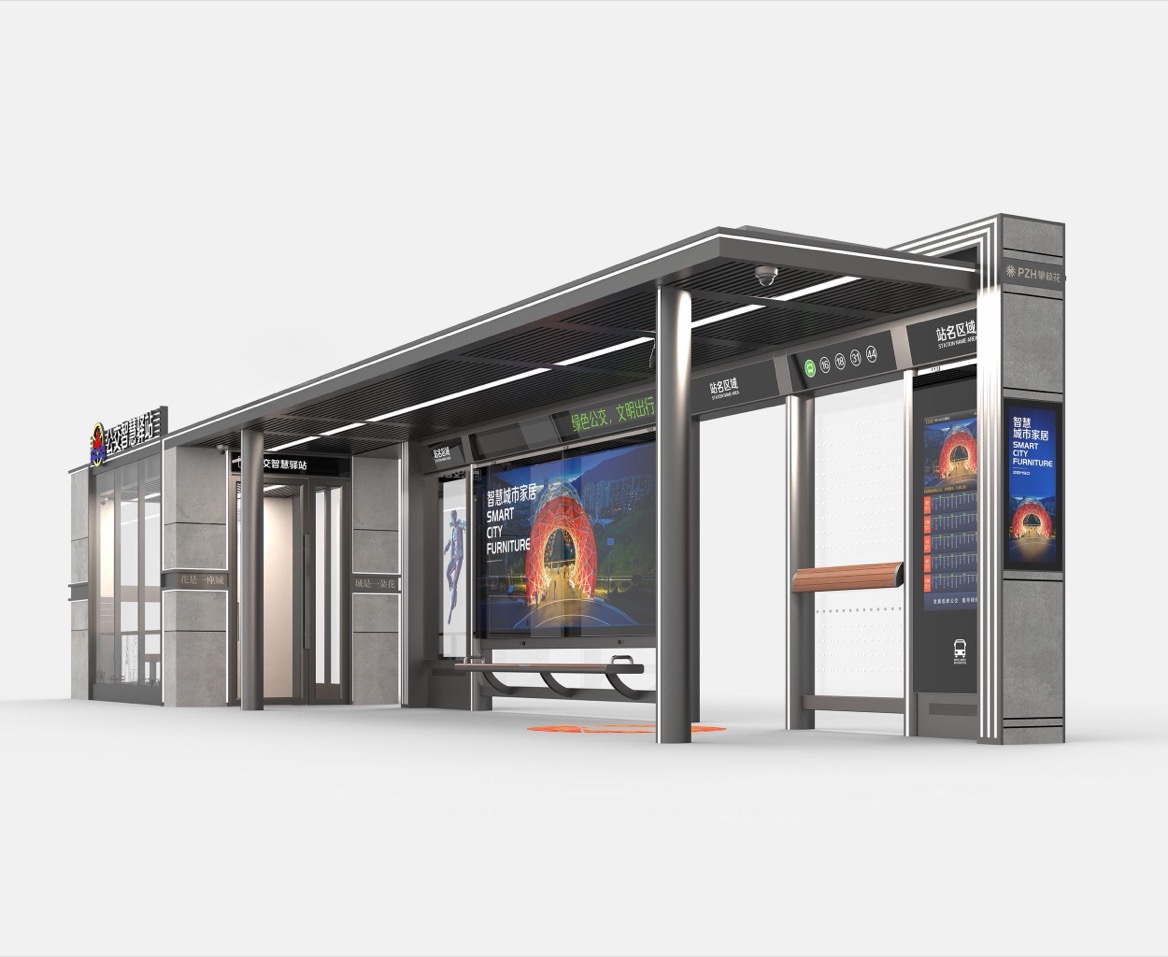
YEROO states that it has manufactured enclosed, climate-controlled shelters since 2001 and identifies installations across the Gulf region, North Africa, Southeast Asia, and tropical Australia. These are supplier-published statements and should be checked through reference projects.
Unlike manufacturers whose public portfolios focus only on open shelters, YEROO explicitly markets an AC Bus Shelter product. Its wider shelter offering includes galvanized steel, tempered glass, customized structures, digital signage, and solar integration.
This makes it relevant for buyers seeking an export-oriented air-conditioned bus stop supplier with advertising and digital-display options.
Ask for thermal test conditions, actual HVAC models, enclosure drawings, and operational references from climates similar to the destination. Published temperature-reduction or price claims should not become contractual guarantees without defined test conditions.
Trueform's current company profile dates its formation to 1977. It supplies passenger transport infrastructure, manufactured structures, and digital information systems, with documented operations across the UK and North America.
Trueform published a solar-powered air-conditioned waiting shelter development in 2007, describing a three-year engineering program. Its wider capabilities include bespoke shelters, architectural metalwork, digital signage, installation, and transport infrastructure integration.
Its main attraction is therefore system engineering and transport-sector integration rather than a straightforward private-label purchasing model.
The historical AC product announcement establishes relevant development experience, but buyers should confirm present availability, current specifications, service coverage, and recent operational references. A product launched years ago should not automatically be treated as a current catalog item.
Little Buildings offers factory-assembled bus shelters and shuttle waiting rooms from a US manufacturing base. A founding year was not confirmed in the reviewed product information; buyers requiring that detail should obtain the company's legal registration history.
Its bus shelter page explicitly includes heating, lighting, and air conditioning. Published sizes range from 4 × 6 feet to 10 × 20 feet, with custom designs also available. Options include dual air conditioners, tinted glazing, benches, and different canopy arrangements.
This is a direct product fit for enclosed passenger waiting areas, particularly where factory assembly is preferred.
Request the exact wall and roof insulation specification, HVAC duty, lifting requirements, and site connection drawings. Confirm whether the quoted configuration meets the destination's accessibility, electrical, and building requirements.
Established in 1954, Par-Kut manufactures portable steel buildings and customized enclosures. Its published applications include public transportation waiting shelters, with heating/cooling systems available within its modular building capabilities.
Par-Kut emphasizes welded steel construction and made-to-order configurations. Its shelter literature includes transit waiting applications, insulation, doors, lighting, and customization to project specifications.
It is a relevant option where the requirement resembles a durable, fully enclosed prefabricated waiting room rather than a lightweight streetside canopy.
Confirm the complete passenger-use configuration, including ventilation, accessible circulation, emergency exit arrangements, and cooling performance. Its broader modular enclosure experience should be assessed against the actual transit operating conditions.
Bab Al Qasar describes itself as a Sharjah-based porta cabin and prefabricated building manufacturer operating since 2004. Its transport building offering addresses the Dubai market.
The company explicitly states that it fabricates both open and air-conditioned bus shelters and installs them in Dubai to client or authority specifications.
Its relevance lies in combining fabrication with local installation, especially where buyers need coordination between the shelter enclosure and site works.
Clarify which activities are performed in-house, which are subcontracted, and which approvals are included. Buyers outside the UAE should separately establish export packaging, remote installation support, and spare-parts arrangements.
Jazal is a UAE-based engineering and contracting organization with offices in Abu Dhabi, Dubai, and Sharjah. Its published capabilities include civil works, electromechanical contracting, installation, and maintenance. A founding year was not established from the reviewed company page.
Jazal lists the design, supply, and installation of an air-conditioned bus shelter in Abu Dhabi among its projects.
Its main distinction is project execution. It should be evaluated as an engineering and delivery partner rather than automatically classified as a factory-direct OEM exporter.
For turnkey tenders, ask who manufactures the structure, who supplies the HVAC equipment, and which entity warrants each subsystem. Its strongest fit is likely to depend on the project location and required local delivery scope.
Panel Built was founded in 1995 and manufactures customized modular buildings. Its published scope includes government, commercial, industrial, and specialist enclosure applications.
Industry listings identify prefabricated bus shelter design and fabrication among its capabilities. Separately, the company has documented HVAC-equipped technical enclosures with insulated construction and configurable mechanical systems.
This combination makes it a potential engineering candidate for enclosed passenger waiting facilities.
The evidence supports bus shelter manufacturing and HVAC enclosure experience separately—not a confirmed standardized air-conditioned bus shelter product. Require an integrated proposal, passenger-use references, and clear design accountability before shortlisting it for an AC-specific tender.
Austin Mohawk manufactures prefabricated structures and transit shelters in the United States. A supplier directory lists its establishment in 1977.
Its shelter range includes aluminum, steel, and stainless-steel structures, enclosed bus stops, and passenger waiting facilities. Steel and stainless-steel shelters can ship fully assembled, while aluminum designs use modular wall panels.
These options are useful where material selection, enclosure design, and installation format are important.
Air-conditioning integration was not established from the reviewed shelter page. Treat Austin Mohawk as a conditional candidate and request written confirmation of insulation, HVAC integration, ventilation, and commissioning responsibilities before proceeding.
Founded in 1991, Tolar supplies transit shelters and street furniture to public transport agencies, municipalities, and advertising companies across North America. It reports more than 500 designs and numerous customized solutions.
Its documented strengths include custom shelter architecture, solar solutions, advertising displays, and locally manufactured transit infrastructure.
These capabilities make it relevant to buyers prioritizing shelter design and North American project compatibility.
Tolar is included as a related manufacturer, not a verified AC shelter specialist. The reviewed material does not establish a current mechanically cooled product range. Buyers with mandatory air-conditioning requirements should obtain written technical acceptance before investing in detailed commercial evaluation.
An air-conditioned shelter is an occupied enclosure with frequent passenger movement—not simply an outdoor structure containing an air conditioner.
Include the following in the design brief:
- Destination summer dry-bulb temperature and humidity.
- Peak occupancy and expected waiting time.
- Door-opening frequency and opening duration.
- Required indoor operating range.
- Glazing area, orientation, shading, and roof exposure.
- Ventilation requirements and operating hours.
- Heat generated by displays, lighting, and other equipment.
Treat these as design inputs requiring a documented engineering response. A nominal HVAC capacity alone is not an acceptance criterion.
Current heat-resilience guidance also supports passive measures such as shading and heat-resistant infrastructure, so procurement should compare enclosure and shading improvements alongside mechanical cooling.
For quotation consistency, require suppliers to identify:
| Component | Specification to request | Verification evidence |
|---|---|---|
| Structural frame | Exact material grade, section size, and base-metal thickness | Material certificates and dimensional inspection |
| Corrosion protection | Surface preparation, coating system, repair method | Process records and inspection results |
| Glazing | Safety construction, thickness, thermal properties | Glass documentation and approved drawings |
| Roof and walls | Insulation type, thickness, fire-performance requirements | Product documentation and assembly details |
| Fasteners | Material grade and compatibility with surrounding metals | Approved bill of materials |
| Electrical system | Voltage, protection, earthing, enclosure arrangement | Schematics and inspection records |
These are recommended purchasing controls, not universal specifications. The appropriate steel grade, corrosion system, glazing construction, and fire requirements must be selected for the destination and project.
Where a tender cites standards for structural steel, galvanizing, protective coatings, safety glazing, or enclosure protection, specify the applicable edition and acceptance criteria. Do not accept a list of standard numbers without supporting scope and evidence.
CE marking is not a general award for factory quality, and it does not mean that an EU authority has approved the product as safe. The European Commission explains that CE marking applies only to products covered by relevant legislation.
Similarly, RoHS concerns restricted substances in applicable electrical and electronic equipment. Its relevance must be assessed for the equipment and configuration being supplied; it is not a blanket certificate covering every aspect of a steel shelter.
Request a project-specific compliance matrix identifying:
- The destination requirement.
- The relevant product or subsystem.
- The responsible manufacturer.
- The declaration, calculation, or test report.
- Any site inspection or approval still required.
A sample does not control later production unless the contract fixes the approved materials and change procedure.
Attach the agreed bill of materials, critical dimensions, coating system, glazing construction, and key equipment models to the purchase order. Require written approval before substitutions.
Compare quotations using the same scope. Separately identify foundations, anchor bolts, lifting, electrical connections, drainage, data connectivity, HVAC commissioning, and site acceptance.
Otherwise, a cheaper factory price may simply represent a smaller supply obligation.
Trueform's published development demonstrates that solar-powered AC waiting shelters are a genuine engineering concept. However, it does not establish that every shelter roof can support continuous off-grid cooling under every operating schedule.
Require a project energy assessment covering cooling demand, available solar area, expected generation, storage, backup power, and reduced-output conditions.
A useful procurement safeguard is to define how the shelter must perform when doors open repeatedly.
Do not accept a demonstration consisting only of an empty enclosure reaching a low temperature with closed doors. Ask the engineer to establish a representative test involving passenger heat loads, door cycles, ventilation, and the agreed outdoor conditions.
Also inspect the interaction between the shelter and its surroundings: condenser airflow, service access, condensate drainage, and the position of outside-air intakes.
The commercial point is straightforward: acceptance should measure the occupied waiting environment, not merely the air-conditioner outlet temperature.
Match the quotation, registration documents, bank beneficiary, certification holder, and warranty issuer. If these differ, document the relationship before payment.
Prioritize references with similar climate, passenger volume, enclosure size, and installation conditions. A successful open shelter is not equivalent evidence for a sealed, mechanically cooled unit.
For a repeat-order program, consider one fully configured first article before batch production. Approve drawings, interfaces, finishes, service access, documentation, and agreed functional testing.
Ask for current workload, production milestones, bought-in component lead times, inspection dates, and packing readiness.
Ainl's factory area and Trueform's installed-structure history are useful background indicators, but neither substitutes for a current production schedule for the buyer's specific order.
Compare assembled, modular, and flat-pack delivery. Require package dimensions, weights, lifting points, unloading requirements, glazing protection, installation sequence, and the division of site responsibilities.
Confirm the applicable Incoterms rule and named place, while keeping commissioning and acceptance obligations explicit in the contract.
A defensible supplier decision combines relevant references, engineering evidence, manufacturing control, destination compliance, and service accountability.
Ainl is a relevant starting point for buyers seeking customized structural fabrication, smart-city integration, and coordinated OEM/ODM development. YEROO, Trueform, Little Buildings, Par-Kut, and UAE-based project suppliers offer different forms of documented product or delivery experience. Other established shelter manufacturers should remain conditional candidates until they confirm the complete air-conditioned configuration.
For an Ainl proposal, submit the project location, shelter dimensions, peak occupancy, climate conditions, power supply, display requirements, target quantity, and required delivery date. Request a preliminary technical proposal covering the enclosure, cooling approach, customization scope, inspection plan, and installation responsibilities before comparing final prices.
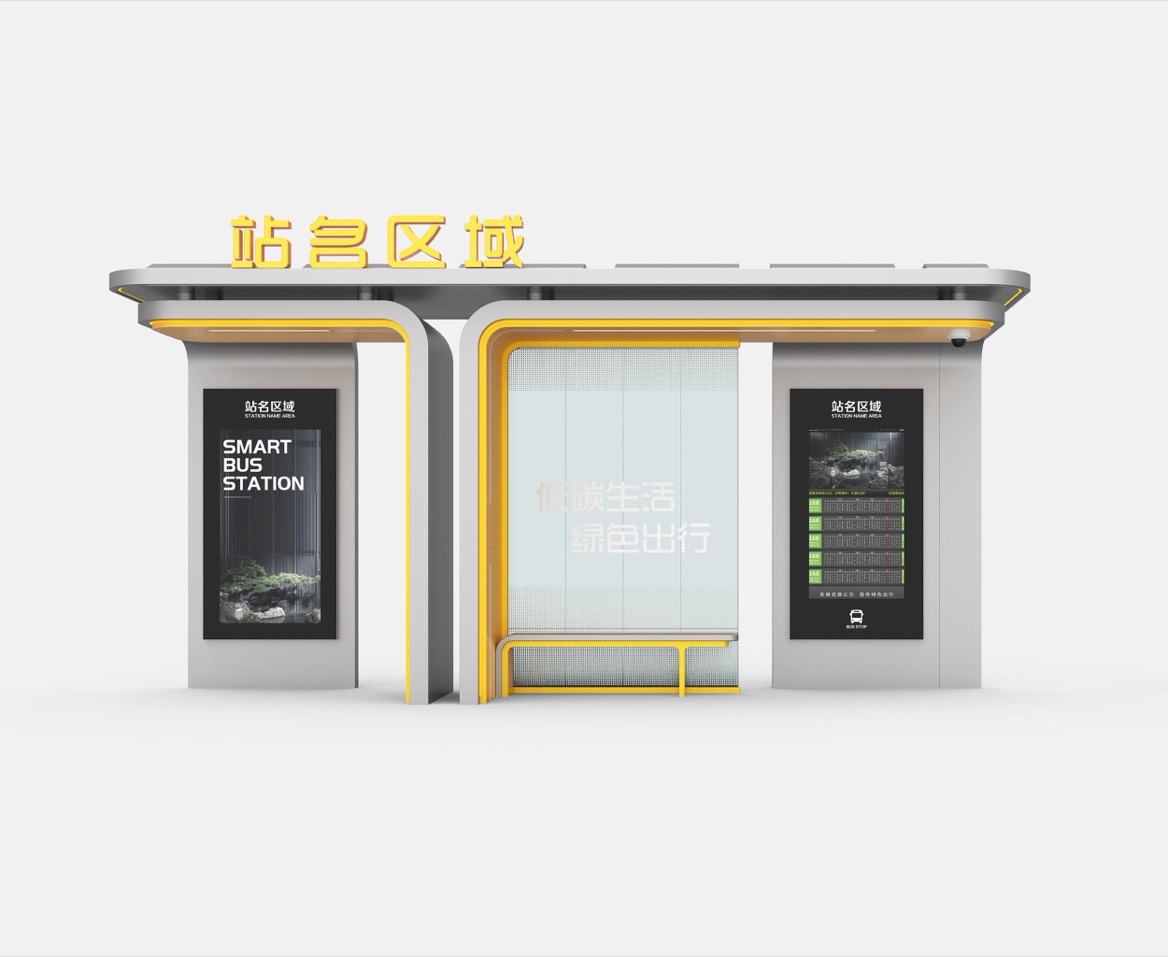
Search the company name or exact certificate number in IAF CertSearch. Check the legal entity, covered site, standard, scope, status, issuing certification body, and accreditation information—not just the printed expiry date.
If the record cannot be located or details conflict, seek direct confirmation from the issuing certification body before relying on the certificate. Also confirm that the certified activities cover the manufacturing operation relevant to your order.
Not automatically. CE marking concerns the relevant product and applicable legislation; it is not transferred to an entire assembled facility merely because one installed component carries the mark.
Request an assessment of the complete supplied configuration, including electrical integration, structural obligations, accessibility, and destination-specific site approvals.
Define the outdoor conditions, internal occupancy, door cycles, ventilation, operating schedule, measurement locations, allowable temperature range, and recovery period.
Have the engineer distinguish equipment performance from occupied-space performance. Avoid a guarantee expressed only as "the air conditioner works" or "the outlet air is cold."
Compare the same product configuration and delivery scope.
Request separate quotations for a prototype, a pilot batch, and the planned rollout. For capacity, ask about the bottleneck process and available production allocation rather than relying on total factory area or output across unrelated products.
No comparable verified AC shelter MOQ or annual output was established for all ten suppliers in this guide.
The contract should identify one coordination lead while retaining clear subsystem responsibilities.
Specify who diagnoses failures, supplies replacement components, pays labor and freight, performs local service, and closes the defect. Include exclusions, response procedures, spare-parts availability, and the treatment of faults involving more than one subsystem.
- Dubai Roads and Transport Authority: April 2026 completion announcement for 726 bus shelters, including the distinction between air-conditioned main-stop space and other shelter types. [rta]
- Coalition for Disaster Resilient Infrastructure: 2025 extreme-heat guidance covering transit-stop shading, cooling, passenger information, and resilience planning. [dymez6ioe12by.cloudfront]
- UITP: Public transport climate-adaptation framework covering risk assessment, adaptation selection, implementation, and monitoring. [uitp]
- European Commission: Official explanation of CE marking, its application, and its limitations. [single-market-economy.ec.europa]
- Ireland Environmental Protection Agency: Guidance on RoHS obligations for applicable electrical and electronic equipment. [epa]
- IAF CertSearch: Certificate verification guidance covering company identity, status, scope, issuing bodies, and accreditation details. [iafcertsearch]


