
Email: ainlbusshelter@gmail.com | WhatsApp: +86-18800607527
Views: 219 Author: Ainl Bus Shelter Publish Time: 2026-10-30 Origin: Site


Content Menu
● How We Selected These Smart Bus Shelter Suppliers
● Why Europe Is an Important Smart Bus Shelter Market
>> Established transport demand supports infrastructure investment
>> Different European supply ecosystems offer different strengths
● Supplier Comparison: Capacity, MOQ, and Certification Transparency
● 1. Ainl: A Manufacturing Alternative for Configurable OEM/ODM Projects
>> Background and manufacturing position
>> Core strengths and customization scope
>> Markets and procurement considerations
● 2. Trueform: Bespoke Shelters and Integrated Passenger Infrastructure
>> Background and market coverage
>> Core strengths and customization scope
● 3. Team Tejbrant: Modular Shelters and Solar-Lighting Applications
>> Background and market coverage
>> Core strengths and customization scope
● 4. Euroshel: Maintainable Stainless-Steel Shelter Structures
>> Background and market coverage
>> Core strengths and customization scope
● 5. JCDecaux: Advertising-Funded Shelters and Network Operations
>> Background and market coverage
>> Core strengths and customization scope
● Technical Buying Guide: What a Smart Bus Shelter Specification Should Include
>> Specify materials precisely
>> Separate company certification from product compliance
>> Define how the system behaves when something fails
● Common Procurement Traps and How to Avoid Them
>> Material substitution after sample approval
>> The overlooked trap: a compliant component is not a verified finished system
● Factory Verification, Samples, and Logistics
>> Qualify the manufacturing entity
>> Approve a representative prototype
>> Plan transport around installation
● Conclusion: Choose the Supply Model Before Choosing the Supplier
>> 1. How can I verify whether a supplier's ISO certificate has expired?
>> 2. Does a CE-marked display make the whole shelter compliant?
>> 3. Can a solar smart bus shelter operate a large digital screen throughout winter?
>> 4. How can we avoid being locked into one software or maintenance supplier?
>> 5. What should a quotation specify to prevent disputes over OEM design ownership?
Europe offers a mature market for smart bus shelters, supported by established public-transport networks, specialist street-furniture manufacturers, and long-term municipal maintenance contracts. For professional buyers, however, selecting a supplier requires more than comparing shelter designs or digital-screen specifications.
A dependable Smart Bus Shelter must combine structural durability, reliable passenger information, accessible maintenance, and documented compliance. The manufacturer's ability to deliver repeatable quality—and support the equipment after installation—often matters more than the number of features in the initial proposal.
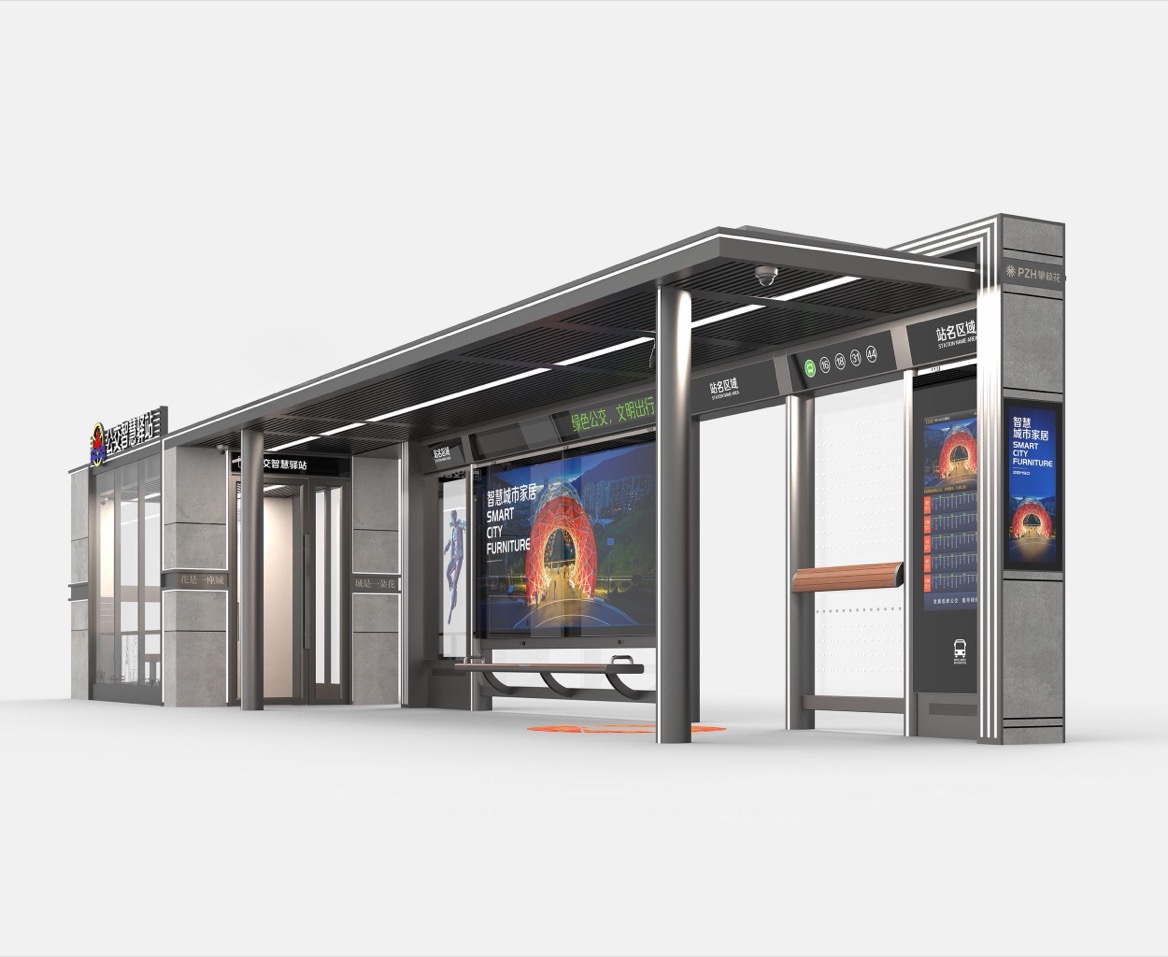
The central selection principle is verifiability: buyers should be able to connect each important supplier claim to a document, manufacturing process, operating reference, or contractual commitment.
The companies below were selected for their documented involvement in bus shelters, customization, passenger infrastructure, or connected street furniture. Publicly available information was reviewed across six areas:
| Selection criterion | Evidence buyers should request | Why it matters |
|---|---|---|
| Manufacturing capability | Factory address, equipment list, production routing, subcontracting disclosure | Establishes who actually manufactures the product |
| Engineering resources | Structural drawings, design calculations, electrical diagrams, revision records | Reduces integration and installation risks |
| Quality control | Inspection plans, material traceability, coating records, final-test reports | Helps prevent differences between approved samples and production |
| Delivery reliability | Project schedule, material lead times, capacity allocation, reference projects | Shows whether the supplier can support phased deployment |
| Compliance documentation | Applicable declarations, test reports, certificate scope and validity | Supports market access and tender acceptance |
| Lifecycle support | Spare-parts policy, maintenance instructions, software access, service responsibilities | Limits downtime and dependence on a single supplier |
Public information does not establish an audited annual shelter capacity, standard minimum order quantity, or current certification package for every company. Where those details are unavailable, this guide identifies the gap rather than estimating.
The European Commission's 2025 Statistical Pocketbook provides an official reference for transport activity and passenger-transport performance. The European Environment Agency separately reports that buses and trains together accounted for 16.9% of EU inland passenger-transport demand in 2023, measured by passenger-kilometres. This figure describes transport use, not the size of the smart shelter market.
Recent industry publications reinforce the need to evaluate shelters as transport assets rather than isolated advertising structures. The 2025 EMTA Barometer covers major European metropolitan transport systems, while UITP's 2026 Global Urban Mobility Indicators publication draws on 2024 data from 53 cities and compares 33 indicators. Neither source should be presented as a dedicated smart bus shelter market forecast.
For procurement teams, these reports provide useful context for network planning. They do not justify unsupported claims about shelter-market revenue or annual growth.
Rather than one dominant manufacturing cluster, the shortlist illustrates several specializations:
- The United Kingdom has established shelter-design, manufacturing, and replacement-infrastructure businesses, represented here by Trueform and Euroshel.
- Sweden provides examples of modular shelter engineering and off-grid solar integration through Team Tejbrant.
- France has a long-established advertising-funded street-furniture model associated with JCDecaux.
These distinctions matter because a manufacturer supplying equipment under a purchase order is not commercially equivalent to an operator managing advertising rights and maintenance under a concession.
The following table distinguishes published information from details that still require direct verification.
| Supplier | Base and operating history | Main procurement fit | Published capacity evidence | MOQ position | Certification and compliance position |
|---|---|---|---|---|---|
| Ainl | China; predecessor established in 2008, Ainl entity established in 2012 | Configurable manufacturing and OEM/ODM projects | Company describes multiple manufacturing facilities; audited annual bus shelter capacity not established | Not publicly stated; obtain prototype and production quotations | Buyer-supplied credentials require current documentary verification; project-specific European compliance must be established |
| Trueform | UK; founded in 1977 | Bespoke shelters and integrated passenger infrastructure | Reports more than 150,000 products supplied worldwide; this is cumulative, not annual shelter capacity | Not established in reviewed sources | Request current certificates and product-specific evidence |
| Team Tejbrant | Sweden; established in 1982 | Modular shelters and solar-lighting applications | Annual shelter capacity not established in reviewed sources | Not established in reviewed sources | Request current certificates, calculations, and electrical documentation |
| Euroshel | UK; shelter-manufacturing history documented from 1978 | Modular stainless-steel shelters and maintainable structures | Annual shelter capacity not established in reviewed sources | Not established in reviewed sources | Confirm material grades, project documentation, and current management-system certificates |
| JCDecaux | France; business origins in 1964 | Advertising-funded infrastructure and network operation | Network installations are not comparable to factory output | Concession or project terms, rather than conventional factory MOQ | Review local tender, operating, and equipment-compliance documentation |
The company histories and capability statements above derive from supplier publications. They should not be treated as independent factory audits or guarantees of current production availability.
Ainl manufactures smart-city public facilities and outdoor advertising products in China. Its published history traces the business to a predecessor established in 2008, followed by Jiangsu Ainl Urban Furniture Technology in 2012 and the group's development in 2014. Using these dates is more precise than applying an undated experience claim to every corporate entity.
Its product range includes bus shelters, electronic bus-stop signs, LED/LCD advertising displays, smart seating, and other urban facilities. The company describes integrated design, steel processing, sheet-metal fabrication, assembly, and project customization capabilities.
According to the company information supplied for this article, the manufacturing footprint exceeds 260 mu, with approximately 150,000 square metres of factory buildings. The same information identifies provincial research resources, coating facilities, electrical testing capabilities, construction qualifications, and management-system credentials. Buyers should confirm the relevant legal entities, facility coverage, certificate numbers, and validity dates during qualification.
Ainl's documented customization scope includes:
- Shelter dimensions, appearance, and structural configuration.
- Materials, colours, and city-branding elements.
- Display systems and electronic information modules.
- Lighting and solar-power options.
- Coordinated design across shelters and related public facilities.
This makes Ainl relevant to regional distributors, smaller street-furniture brands, and project integrators that need an adaptable manufacturing partner rather than a fixed catalogue product.
Its proposed value-for-money position should be tested through a like-for-like quotation. Buyers should compare material specifications, engineering deliverables, packaging, spare parts, and landed installation cost—not simply the factory price.
Ainl identifies transport, municipal, commercial, and smart-city projects as target applications and describes international expansion in its company history. The reviewed page does not establish a detailed European installation record. Buyers should therefore request comparable export references before assuming local experience.
For smaller brands, flexibility and communication efficiency are especially important. Evaluate these through the quotation process: require a named project manager, a drawing-response deadline, a documented change-control process, and separate prototype pricing. Public information supports Ainl's customization offering, but does not establish a standard low MOQ or guaranteed response time.
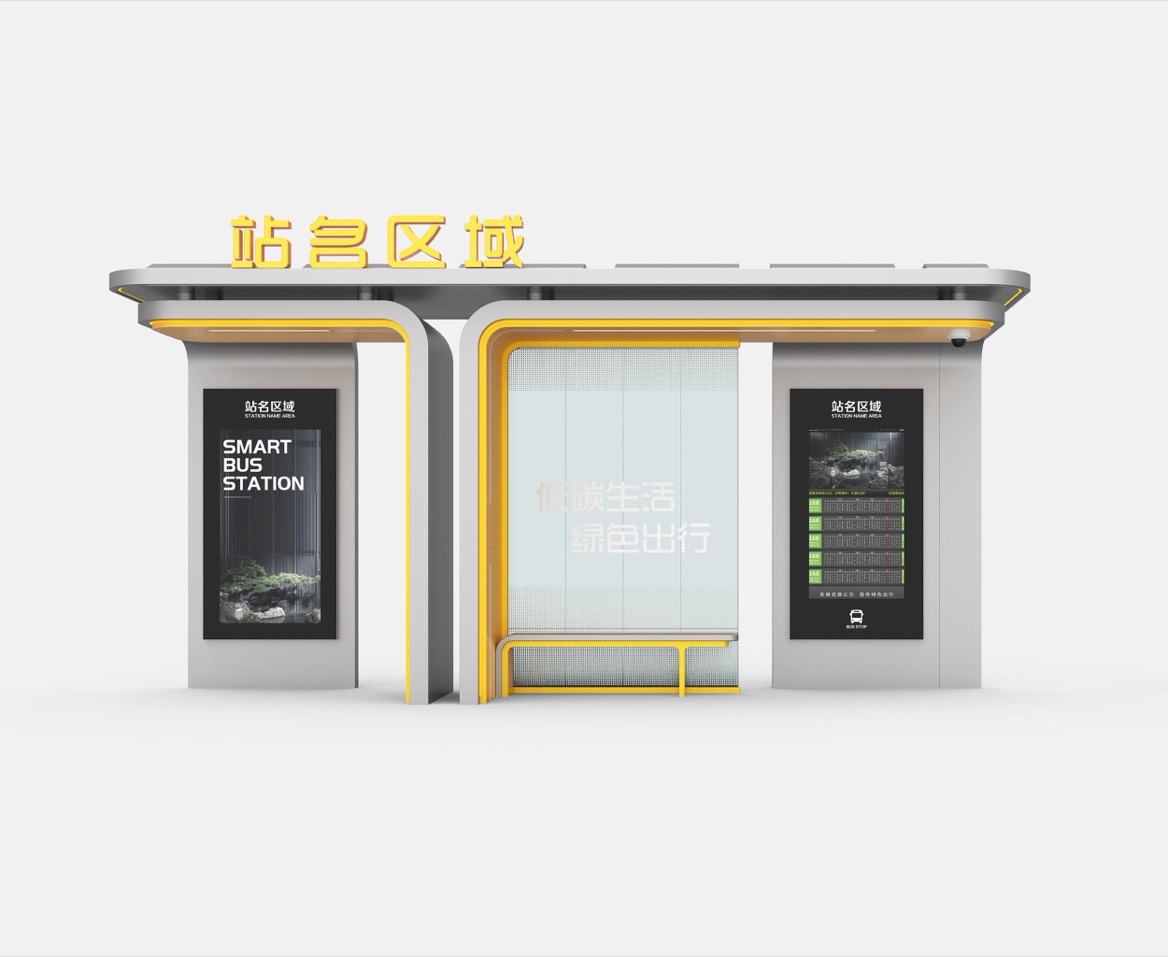
Founded in 1977, UK-based Trueform supplies shelters and passenger infrastructure for transport environments. Its shelter website reports more than 150,000 products supplied to towns and cities worldwide. That figure should not be interpreted as 150,000 smart bus shelters or as annual manufacturing capacity.
Its documented transport applications include bus, bus rapid transit, rail, light rail, pedestrian wayfinding, and airport-related infrastructure.
Trueform offers bus shelters, bespoke shelter design, bus-stop poles, flags, temporary stops, and associated accessories. Its wider passenger-infrastructure portfolio makes it relevant where the shelter must coordinate with stop identification, information displays, and network branding.
The company also describes designing, manufacturing, and installing intelligent on-street infrastructure. This supports its consideration for integrated projects, although buyers still need to confirm the exact hardware, software, and installation scope in each proposal.
Trueform is a suitable candidate when the project prioritizes coordinated infrastructure and experienced transport-sector delivery.
Its published bespoke-design capability should not automatically be interpreted as unrestricted private-label OEM production. Confirm ownership of drawings, branding permissions, software licences, and replacement-part rights before commissioning a custom design.
Team Tejbrant's published history dates the business to 1982. Its documented product activity includes weather shelters, bus shelters, terminal structures, and passenger-information products.
Sweden is a clearly documented market for its solar shelter work. Buyers considering projects elsewhere should request destination-specific references and local support arrangements rather than assuming identical service coverage.
The company's published solar product sheet describes an off-grid solution for bus shelters, including LED illumination within advertising boxes. A separate project account documents cooperation with Solar AdTek on solar-powered shelter lighting in Sweden.
This makes Team Tejbrant particularly relevant for buyers evaluating sites where trenching and grid connection are expensive or impractical.
Customization discussions should focus on shelter profiles, dimensions, information panels, lighting loads, and solar-system integration. Private-label rights and unrestricted OEM manufacturing were not established in the reviewed material and require confirmation.
Do not interpret a solar-lighting reference as proof that the same roof can support a continuously operating digital advertising screen.
Ask the supplier to separate the energy budget for lighting, communications, passenger information, advertising displays, and auxiliary equipment. The accepted design should reflect local winter conditions and the intended operating schedule.
Euroshel documents producing its first vandal-resistant bus shelter for a local authority in 1978. The company describes itself as a designer and manufacturer of stainless-steel bus shelters, with a strong emphasis on UK infrastructure applications.
That date establishes a documented shelter-manufacturing milestone; it should not be substituted for a verified legal incorporation date.
Euroshel's principal strength is its modular framing system, designed to deter vandalism and simplify panel replacement. Its product range addresses different budgets and appearance requirements, and it offers sedum-roof options, including retrofit possibilities for some existing shelters.
This is relevant where lifecycle maintenance, replaceable glazing, and structural consistency take priority over a large electronics package.
Euroshel is better assessed as a shelter-structure specialist than automatically treated as a turnkey connected-platform provider.
For a smart installation, confirm who supplies the display, controller, communications equipment, and power system. Also establish who is responsible when an electrical modification affects access, drainage, warranty coverage, or structural detailing.
Its published design and manufacturing capabilities support project configuration, but do not establish a general-purpose private-label OEM programme.
JCDecaux's business origins date to 1964, when Jean-Claude Decaux developed an advertising-funded street-furniture model. Its published history describes providing and maintaining public facilities in exchange for advertising rights. The current corporate entity's registration history is distinct from that operating origin.
The company operates internationally, with documented shelter projects in European markets including France and the United Kingdom.
JCDecaux is relevant where the procurement includes advertising operation, asset maintenance, and a long-term relationship with a municipality.
Its Camden contract announcement described a ten-year arrangement covering shelters, advertising operations, maintenance, and the installation of 84 digital screens. Separately, a Grenoble prototype combined rooftop solar generation, presence-responsive lighting, USB charging, and an e-paper information screen. These are specific project examples, not standard specifications for every deployment.
JCDecaux is not a direct substitute for a conventional OEM factory.
Customization generally belongs within a negotiated infrastructure and operating project. Buyers should assess advertising rights, asset ownership, service levels, revenue arrangements, maintenance obligations, and end-of-contract handover.
A concession may reduce initial municipal capital expenditure, but its commercial commitments differ fundamentally from purchasing shelters outright.
Avoid descriptions such as "premium steel" or "outdoor stainless steel" without measurable acceptance criteria.
A practical specification should identify:
- Steel or stainless-steel grade and applicable material standard.
- Nominal thickness and permitted tolerances.
- Weld inspection requirements.
- Corrosion-protection system and repair procedures.
- Glass type, thickness, edge treatment, and fixing arrangement.
- Fastener materials and isolation between dissimilar metals.
- Replaceable panels, access doors, and drainage paths.
For coastal or de-icing-salt exposure, require the supplier to justify the proposed material and coating system for the actual location. A generic outdoor designation is not an exposure assessment.
An ISO management-system certificate is not a product approval. Likewise, CE marking is not a general quality award.
European guidance states that CE marking applies only where relevant harmonised legislation requires it. The responsible manufacturer must identify applicable requirements, complete the necessary conformity assessment, maintain technical documentation, and issue the required declaration.
For an electrically equipped shelter, the compliance review may need to address electrical safety, electromagnetic compatibility, radio equipment, and hazardous-substance restrictions, depending on the configuration. RoHS applies to electrical and electronic equipment within its scope; it should not be described as a blanket environmental certification for the entire steel structure.
For structural components, establish whether the supplied product falls within an applicable construction-product route. Do not assume every shelter requires the same CE documentation or that an electronics declaration covers the supporting structure.
A procurement specification should answer operational questions, not just list features:
- What appears when the passenger-information feed stops?
- Can lighting continue if the advertising controller fails?
- Who controls remote administrator accounts?
- Can another maintenance contractor replace the display?
- What happens when the cellular connection is unavailable?
- Are software subscriptions transferable?
- How long will replacement components remain available?
Turn the agreed answers into witnessed acceptance tests and contractual deliverables.
A showroom sample does not establish the specification of every production unit.
Require an approved bill of materials, batch traceability, material documentation, and inspection hold points. For critical projects, include independent pre-shipment checks of material identity, thickness, dimensions, and coating condition.
A low shelter price may exclude foundations, anchors, lifting, grid connection, display software, mobile data, commissioning, or local reinstatement.
Issue a responsibility matrix with the quotation request. Every major item should be marked as included, excluded, or supplied by another party.
Ask for a site-specific energy model rather than accepting a panel wattage as proof of autonomy.
The proposal should state the operating hours, individual equipment loads, battery assumptions, shading allowance, winter-generation basis, and low-energy operating strategy.
One particularly important procurement risk is accepting certificates for individual components as evidence for the final assembled shelter.
A tested screen can be installed in a cabinet with inadequate ventilation. A rated enclosure can be altered with unsealed cable penetrations. An approved electrical module can be combined with unsuitable wiring or earthing.
European conformity obligations concern the relevant finished product and its applicable requirements, not merely the presence of marked components. Request documentation and testing that correspond to the actual delivered configuration.
Also require an as-built record. If the production unit differs from the approved prototype, the supplier should explain the effect of those changes before shipment.
Confirm the contracting company, manufacturing address, payment beneficiary, and certificate holder. Where these differ, request a written explanation and identify which entity carries the warranty and compliance responsibilities.
During a factory audit, follow an actual order through material receipt, cutting, welding, finishing, assembly, testing, and packing. Establish which processes are subcontracted.
The prototype should include the proposed glass, display, controller, power equipment, access arrangements, and fixings.
Agree a factory acceptance test covering dimensions, assembly, maintenance access, lighting, communications, alarms, and recovery after power loss. Record approved deviations before authorizing production.
Request packing dimensions, gross weights, lifting points, unloading requirements, and a package-by-package contents list.
For international sourcing, compare both assembled and knock-down delivery options. Reduced shipping volume may create additional site labour, alignment work, or inspection requirements.
Confirm the Incoterms rule and named place, customs responsibilities, cargo insurance, glass protection, spare-parts packing, and installation sequence before dispatch.
The strongest shortlist depends on the project's purchasing model.
Ainl offers a configurable international manufacturing option. Trueform is relevant to coordinated passenger infrastructure. Team Tejbrant merits consideration for modular shelters and solar-lighting applications. Euroshel emphasizes maintainable shelter structures. JCDecaux addresses advertising-funded infrastructure and long-term operation.
For an Ainl OEM/ODM enquiry, prepare the destination, quantity, site conditions, shelter dimensions, display requirements, power source, branding, and required documentation. Request an itemized proposal, drawing schedule, prototype plan, inspection procedure, and spare-parts package.
A well-defined enquiry makes supplier comparisons more meaningful—and helps turn an attractive shelter concept into a maintainable public asset.
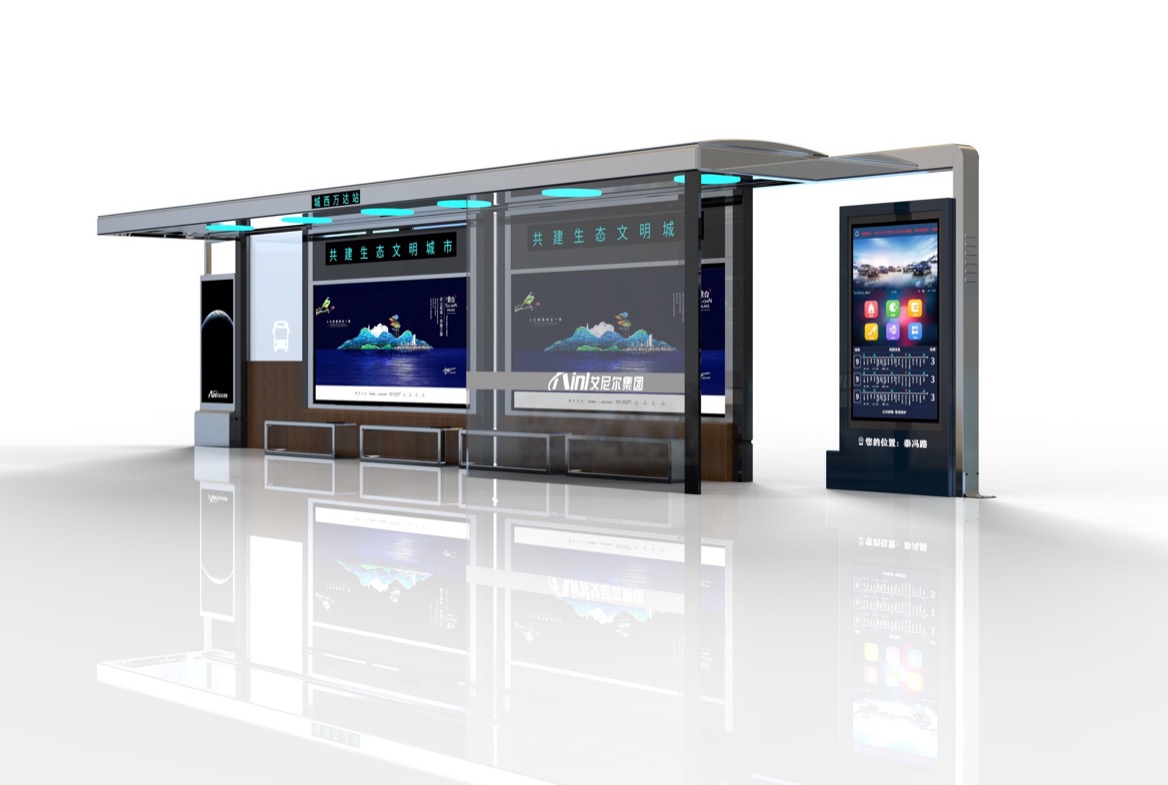
Check the certificate number, legal entity, manufacturing location, scope, issuing body, and expiry date. Validate the status through the issuer and, where available, IAF CertSearch. The database supports verification of accredited management-system certifications. If a record is missing or inconsistent, obtain confirmation directly from the certification body rather than relying on a PDF alone.
No. A display's documentation does not establish compliance for every other applicable part of the project. The relevant responsible party must assess the delivered configuration against the legislation that applies to it. Structural documentation and local installation approvals may also need separate consideration.
Do not accept an unconditional yes. Require a location-specific energy calculation based on the actual display, operating schedule, solar resource, shading, storage, and auxiliary loads.
If the calculation does not support continuous operation, consider reduced operating hours, lower-energy passenger information, grid assistance, or a revised display specification.
Before ordering, define data-export rights, administrator access, documented interfaces, licence transfer, subscription costs, and service-provider replacement procedures.
Also negotiate access to wiring diagrams, configuration backups, replacement-part specifications, and agreed software handover materials.
Separate ownership of pre-existing supplier designs from ownership or permitted use of project-funded drawings, tooling, branding, software, and modifications.
State whether the buyer can reorder through another manufacturer, authorize replacement-part production, or continue using the design after the commercial relationship ends. Put these rights in the signed agreement, not only in email discussions.
- Ainl: company history, manufacturing capabilities, and customization scope. [ainlgroup]
- Trueform: company background, transport applications, and bespoke shelter offering. [trueformshelters]
- Team Tejbrant: operating history and off-grid solar shelter documentation. [teamtejbrant]
- Euroshel: manufacturing history and modular shelter systems. [euroshel]
- JCDecaux: business origins, Camden contract, and Grenoble smart shelter example. [jcdecaux]
- European Commission: Statistical Pocketbook 2025, an official transport-data source rather than a shelter-specific export dataset. [transport.ec.europa]
- European Environment Agency: passenger-transport modal-share indicator. [eea.europa]
- EMTA: 2025 public-transport barometer. [emta]
- UITP: Global Urban Mobility Indicators, published in 2026 using 2024 data. [uitp]
- European Union: CE-marking responsibilities and applicability. [europa]
- European Commission: RoHS guidance for electrical and electronic equipment. [environment.ec.europa]
- IAF CertSearch: accredited certification-verification guidance. [scribd]


