
Email: ainlbusshelter@gmail.com | WhatsApp: +86-18800607527
Views: 237 Author: Ainl Bus Shelter Publish Time: 2026-10-21 Origin: Site


Content Menu
● How to Evaluate an Outdoor Planter Box Manufacturer
● Why Source Outdoor Planter Boxes from China?
>> What Recent Market Research Actually Shows
● Selection Criteria for This Shortlist
● Comparison Table: Capacity, MOQ, and Certification Evidence
● The Top 10 Outdoor Planter Box Manufacturers in China
>> 1. Ainl — A Project-Oriented Option for Customized Urban Planters
>> 2. Arlau — A Practical Choice for Coordinated Public-Space Furniture
>> 3. Gnee Garden — A Metal-Fabrication Candidate for Bespoke Planters
>> 4. AHL Group — A Weathering-Steel Landscape Specialist
>> 5. HNJBL — A Candidate for Planters and Matching Garden Metalwork
>> 6. Foshan QUANGUI — A Composite-Planter Option for Decorative Projects
>> 7. Sundi — A WPC Option for Coordinated Landscape Systems
>> 8. Hanfa / HF Planters — A Fiberglass Container Specialist
>> 9. JIAJI Steel Solutions — A Custom Steel-Fabrication Candidate
>> 10. Xiamen Co-Arts — A Design-Led Option for Branded Planter Collections
● Technical Buying Guide: What Determines Outdoor Performance?
>> Specify Material Grades, Not Just Material Names
>> Match the Corrosion Strategy to the Installation
>> Understand CE and RoHS Without Overbuying Certificates
● The Overlooked Procurement Trap: Approving the Outside but Ignoring the Inside
● How to Verify a Factory Before Placing an Order
>> Establish Who Makes the Product
>> Use a Three-Stage Sample Process
>> Test Delivery Claims Against a Real Schedule
● Logistics: Compare Delivered Value, Not Just Unit Price
● Conclusion: Select the Manufacturer Around the Project
>> 1. How Can I Verify Whether a Manufacturer's ISO Certificate Has Expired?
>> 2. How Can I Check Whether "Corten Steel" Is Genuine Weathering Steel?
>> 3. Does a Solar-Lighted Planter Require the Same Documentation as a Passive Planter?
>> 4. How Should I Compare Capacity When One Factory Quotes Units and Another Quotes Containers?
>> 5. What Should a Commercial Planter Warranty Cover?
Choosing an outdoor planter box manufacturer requires more than comparing designs and unit prices. Procurement managers need to evaluate material traceability, structural design, finishing quality, production capacity, certification validity, and delivery control.
China offers several relevant supply chains: urban street furniture, fabricated steel landscaping products, fiberglass containers, and wood-plastic composite systems. However, these manufacturers serve different purchasing needs. A factory producing decorative fiberglass pots is not automatically the right partner for reinforced municipal planter boxes or integrated smart-city installations.
This guide compares ten China-based suppliers, explains their different capabilities, and identifies the evidence buyers should request before placing an order.

A useful supplier assessment starts with six questions:
1. Can the manufacturer document its legal identity and actual production location?
2. Can it provide material specifications and traceable purchasing records?
3. Does its engineering team understand drainage, soil loading, corrosion, and installation?
4. Are quality checks documented from incoming materials to final packing?
5. Can the factory demonstrate available capacity for the proposed order?
6. Are certificates current, relevant, and issued to the correct manufacturing entity?
For commercial projects, traceability matters more than a long list of promotional certifications. The manufacturer's legal name, production site, material records, approved drawings, inspection reports, and shipping documents should form a consistent evidence chain.
China's principal advantage is the ability to combine different manufacturing processes within an established supplier network.
The companies reviewed here illustrate several relevant locations:
- Jiangsu supports public-facility manufacturing and engineered WPC products, represented by Ainl and Sundi.
- Anyang, Henan, has a concentration of steel-processing and weathering-steel suppliers, including AHL, HNJBL, and Gnee-related operations.
- Foshan and Chaozhou, Guangdong, offer decorative planter and composite-product manufacturing, represented by QUANGUI and Hanfa.
- Xiamen offers design-led home and garden export services, including Co-Arts.
For buyers, this creates opportunities to consolidate customized fabrication, finishing, packaging, and related landscape products. Nevertheless, geographic proximity does not prove that every process is performed in-house.
A March 2025 garden planters and pots report distributed by Research and Markets forecasts that the global market will expand by USD 1.04 billion between 2024 and 2029, at a compound annual growth rate of 6.8%. This provides a useful demand indicator for the broader category. It is not a measurement of China's outdoor planter box exports or municipal metal planter demand specifically.
That distinction matters. "Flower pots," "garden planters," "raised beds," and "commercial outdoor planter boxes" are not interchangeable market categories.
For trade verification, China's General Administration of Customs provides an official statistics platform. Buyers should first establish the appropriate product classification with their customs broker rather than assume all planters fall under one universal customs code. This article does not claim a verified China-only export total for outdoor planter boxes.
The following screening framework is intended for procurement teams. It is not a claim that each company received a completed factory audit.
| Evaluation area | Suggested weighting | Evidence to request |
|---|---|---|
| Materials and outdoor durability | 25% | Material grade, thickness tolerance, corrosion-protection specification |
| Manufacturing and quality control | 20% | Factory walkthrough, process records, inspection equipment |
| Engineering and customization | 20% | Drawings, prototype revisions, drainage and reinforcement details |
| Delivery and capacity planning | 15% | Production schedule, bottleneck analysis, subcontracting disclosure |
| Compliance and documentation | 10% | Relevant certificates, current status, applicable test reports |
| Communication and after-sales support | 10% | Named project contact, change-control procedure, warranty terms |
A supplier should not receive additional credit simply for displaying certification logos. The certificate must apply to the correct entity, site, activity, and current period.
The table separates published company claims from independently verified information. "Not established" means the reviewed sources did not provide sufficient evidence—not that the supplier lacks the capability.
| Manufacturer | Main purchasing fit | Published scale or capacity indicator | MOQ evidence | Certification position |
|---|---|---|---|---|
| Ainl | Customized municipal planters and coordinated street furniture | Client-supplied information states approximately 150,000 m² of factory buildings; planter-specific output not established | Project quotation required | Company reports high-tech enterprise recognition; client also reports management-system and construction qualifications; current documents require verification |
| Arlau | Planters supplied with benches, bins, and public-space furniture | Company states approximately 130,000 pieces annually across its product range—not planters alone | One marketplace planter listing states 5 pieces; not a universal MOQ | Current certificate scope and validity not established |
| Gnee Garden / Gnee-related fabrication operations | Customized metal and corten steel planters | Company describes multiple manufacturing facilities; planter-specific output not established | Quotation required | One product page references ISO 9001:2008; request current evidence |
| AHL Group | Weathering-steel landscape products | Company describes steel-processing capabilities; comparable planter output not established | Quotation required | Current certification not independently established |
| HNJBL | Metal planters and matching garden steelwork | Steel-fabrication background documented; planter-specific output not established | Quotation required | Request certificates for the contracting and manufacturing entities |
| Foshan QUANGUI | Fiberglass, fiber-clay, and fiber-cement containers | Marketplace profile claims 20,000 m² factory land and approximately 500 containers annually; unverified | One listing states 30 pieces; SKU-specific | Marketplace certification claims require document-level checking |
| Sundi | WPC planter kits and coordinated landscape products | Company history identifies four factory developments by 2018; planter-specific capacity not established | Confirm kit, profile, and color minimums | A Sundi-branded certificate page lists ISO 9001, ISO 14001, and FSC; verify entity and scope |
| Hanfa / HF Planters | Lightweight fiberglass containers | Company LinkedIn profile states 6,660 m² and 10 containers monthly; unverified | Quotation required | Current certification not established |
| JIAJI Steel Solutions | Custom-fabricated steel planter boxes | Steel fabrication product range documented; planter-specific output not established | Quotation required | Current certification not established |
| Xiamen Co-Arts | Design-led decorative planters and branded collections | Multi-material product development documented; planter-specific output not established | Design and material dependent | Current manufacturing-site certification not established |
Sources for the comparison: Ainl company history and client-provided details; Arlau company and marketplace pages; Gnee company and product pages; AHL, HNJBL, QUANGUI, Sundi, Hanfa, JIAJI, and Co-Arts disclosures. None of these figures constitutes an audited comparison of available planter production capacity.
Ainl manufactures smart-city public facilities and outdoor advertising products, including urban planter boxes, bus shelters, smart seats, digital displays, and modular public-service facilities. Its published capabilities cover design, steel-structure processing, sheet-metal manufacturing, assembly, and project customization.
- Established: Its predecessor dates to 2008; Jiangsu Ainl Urban Furniture Technology was established in 2012, followed by the group company in 2014.
- Market focus: Municipal, transportation, commercial, and smart-city projects; its website describes international expansion but does not disclose a verified country-by-country sales breakdown.
- OEM/ODM scope: Dimensions, structure, materials, colors, city branding, lighting, display configuration, and solar-power options.
Ainl is particularly relevant when a planter must match other public-space products rather than function as a standalone decorative container. Its engineering-led approach also makes it a candidate for smaller brands seeking distinctive designs without developing every manufacturing detail internally.
The commercial case should be tested through a pilot quotation: ask for alternative material specifications, design-for-manufacturing feedback, prototype terms, and a named technical contact. This is how buyers can evaluate cost-effectiveness, flexibility, and communication efficiency without relying on unsupported price or response-time claims.
The approximately 150,000 m² factory-building figure, provincial research resources, and additional qualifications supplied for this article should be supported by current documents during qualification. Factory area is not equivalent to reserved planter production capacity.
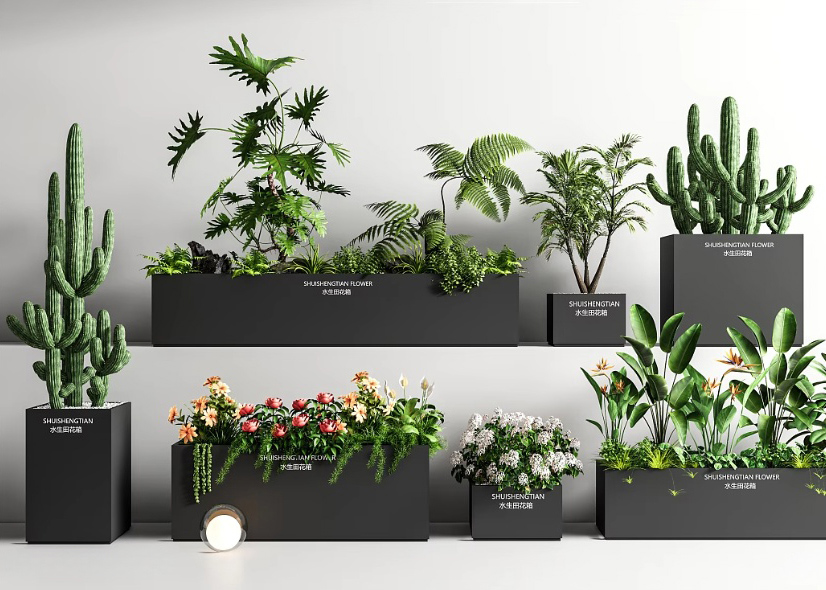
Arlau offers planter boxes alongside benches, litter bins, picnic furniture, bollards, bicycle racks, and other site furnishings. Its website describes planter options using stainless steel, galvanized steel, and wood-plastic materials.
- Established: The brand traces its origins to Shenzhen in 1999; its history records relocation to Chongqing in 2005.
- Main markets: The company reports exports to more than 80 countries and regions.
- OEM/ODM scope: Customized outdoor furniture and planter designs across multiple materials.
Arlau merits consideration when a contractor wants a consistent appearance across an entire public-space package. Consolidating related products can simplify finish approval and project coordination.
Its stated annual output of approximately 130,000 pieces covers the broader product range. Buyers should request a planter-specific production plan, particularly when large welded boxes compete for the same fabrication and coating resources as other furniture.
Gnee markets corten steel garden products and customized metal planters. Its published manufacturing description includes laser cutting, bending, welding, powder coating, and assembly.
- Established: Gnee's group-level history states 2008; buyers should distinguish that history from the incorporation date of the entity signing their contract.
- Main markets: Its garden website describes international projects and customers, but does not provide a verified regional sales split.
- OEM/ODM scope: Custom drawings, dimensions, metal selection, fabricated structures, and finishes.
The main attraction is fabrication breadth. This may suit distributors developing a coordinated collection of planters, screens, edging, and related landscape metalwork.
One planter page references ISO 9001:2008. Treat that as a documentation issue requiring clarification, not proof of current certification. Request the current certificate, issuing body, validity status, and covered manufacturing address.
AHL's published product range includes corten steel planters, edging, screens, fire pits, and water features. Its location in Anyang and focus on processed steel products make it relevant to architectural landscape purchasing.
- Established: An exact incorporation year was not established from the reviewed sources; published experience statements should not substitute for a business-registration record.
- Main markets: The company describes a wholesale and international-export orientation, without an independently verified geographic breakdown.
- OEM/ODM scope: Customized corten steel landscape products and planter fabrication.
AHL is worth evaluating for projects where multiple weathering-steel elements must achieve a coordinated appearance.
Ask for a written pre-weathering specification, acceptable color variation, drainage details, and measures to protect nearby paving. Its own maintenance guidance discusses internal liners, drainage, and coastal salt exposure—issues that deserve attention before the finish is approved.
HNJBL, associated with Henan Jinbailai Industrial, supplies metal garden products including planters, screens, water features, and other fabricated steel items. Its company material describes OEM sheet-metal work.
- Established: Published company information identifies 2012.
- Main markets: Its planter website names the United States, Europe, and Australia.
- OEM/ODM scope: Customized metal planters and related garden steelwork.
This makes HNJBL relevant to importers developing coordinated landscape collections.
An important qualification point is production ownership. Its published description also mentions combining other manufacturers' resources. Buyers should therefore identify which operations are performed internally and which are subcontracted, especially coating, accessory production, and packing. Resource coordination can be useful, but it should remain transparent.
Foshan City QUANGUI Construction Decorative Building Material specializes in fiber-clay, fiberglass, and fiber-cement planters, alongside other decorative products. Its catalog includes rectangular outdoor containers.
- Established: 2009, according to its company introduction.
- Main markets: International supply is described in its marketplace profile; leading destination markets are not clearly established.
- OEM/ODM scope: Customized shapes, sizes, colors, and finishes within its composite-product range.
QUANGUI is relevant when buyers prioritize large-format decorative containers rather than welded municipal steelwork.
Before approving an order, request the exact material construction. "Fiberglass," "fiber clay," and "fiber cement" should not be treated as equivalent specifications. The supplier's marketplace scale and certification claims also need supporting records rather than acceptance at face value.
Sundi manufactures wood-plastic composite products, including decking, cladding, railings, pergolas, and garden products. Its product listings include planter kits.
- Established: Its company history begins with the Baohua factory in 2009.
- Main markets: A supplier profile lists Eastern and Western Europe, Northern Europe, Southeast Asia, and Africa.
- OEM/ODM scope: Customized WPC products, profiles, and integrated landscape solutions.
Sundi is a logical candidate when planters must coordinate with decking or other WPC installations.
Procurement should separate the visible WPC enclosure from the complete planter structure. Ask the engineering team to document the frame, liner, drainage system, connections, and installation clearances.
A Sundi-branded page lists ISO 9001, ISO 14001, and FSC certifications. Confirm that each document belongs to the relevant legal entity and covers the purchased product or activity.
Hanfa, presented as HF Planters or HF China Fiberglass Pot Factory, describes a fiberglass planter manufacturing operation in Chaozhou, Guangdong. Its company LinkedIn profile lists handcrafted containers for importers, retailers, and garden customers.
- Established: 2006, according to that profile.
- Main markets: Global export customers are described; a reliable country-level sales breakdown was not established.
- OEM/ODM scope: Shape and size options for fiberglass planter collections; custom tooling, branding, and finish terms should be confirmed directly.
This is a relevant candidate for lightweight decorative ranges and commercial interiors or exterior projects requiring large containers.
The profile states a 6,660 m² factory and capacity of ten containers per month. Because container output depends heavily on product dimensions and nesting, buyers should request a proposed packing list before comparing that figure with another supplier's unit-based capacity.
JIAJI describes an evolution from steel-door manufacturing into four product lines: steel doors, planter boxes, roller shutters, and art steel plates.
- Established: 2008, according to its company introduction.
- Main markets: A substantiated regional sales breakdown was not established.
- OEM/ODM scope: Its steel fabrication and planter-box range make it a candidate for drawing-based enquiries; detailed engineering and customization limits require confirmation.
JIAJI may suit buyers whose priority is a particular fabricated steel form rather than a broad decorative planter catalog.
Qualification should focus on planter-specific experience: reinforcement, drainage, lifting provisions, coating access, and protection of internal surfaces. General steel-fabrication experience is relevant, but it does not by itself establish long-term performance in soil-contact applications.
Co-Arts supplies decorative planters in materials including fiberglass, resin, and metal. Its published services cover customized styles, colors, surface effects, patterns, and logos.
- Established: Its published company-profile document identifies "Since 2009"; the current website contains differing experience statements, so incorporation details should be checked.
- Main markets: Its company page identifies Europe and North America.
- OEM/ODM scope: Product design, decorative finishes, branding, packaging, and multi-material collections.
Co-Arts is relevant to brands and distributors developing coordinated assortments rather than heavy-duty municipal infrastructure.
Its published bilingual sales and design support may help buyers manage development. However, purchasers should still identify the factory responsible for each material category and arrange inspection at the actual production location.
"Metal planter" is not a sufficient purchasing specification.
For stainless steel, 304 and 316 are common outdoor choices. A specialist planter manufacturer recommends 316 for coastal, marine, or heavily chlorinated environments because it offers greater resistance to relevant corrosion mechanisms. This does not eliminate the need for suitable fabrication, cleaning, and maintenance.
For weathering steel, established commercial planter suppliers identify grades such as ASTM A588 and A606. Buyers should request the specified grade and material documentation rather than accept "corten color" as proof of alloy identity.
A purchase specification should identify:
- Material grade and permitted alternatives.
- Nominal thickness and acceptance tolerance.
- Base, sidewall, and reinforcement construction.
- Weld appearance and functional requirements.
- Internal protection and liner details.
- Drainage outlets and maintenance access.
- Surface-finish acceptance criteria.
Weathering steel is not a universal answer for every outdoor location. Patina development depends on environmental conditions, and salt exposure can affect corrosion behavior. Rust runoff can also stain adjacent surfaces.
For coastal hotels, rooftops, and premium paved plazas, require a site-specific proposal covering material selection, drainage, runoff management, cleaning, and maintenance.
For coated steel, ask the supplier to document the complete system—not merely the final paint color. The quotation should state surface preparation, pretreatment, coating products, inspection method, and repair procedure.
An ordinary non-electrical planter should not automatically be sold as "CE certified." European Union guidance states that CE marking is required only where applicable harmonized legislation mandates it, and must not be used where no such requirement exists.
RoHS concerns restricted substances in electrical and electronic equipment. It is not a universal environmental certification for every passive planter.
Where a planter integrates lighting, displays, control electronics, or other electrical functions, request a product-specific compliance assessment. The applicable requirements depend on the complete configuration—not simply on whether one purchased component carries a compliance logo.
A visually convincing planter can still have a poorly engineered base, trapped-water pockets, inaccessible seams, or inadequate separation between wet soil and the outer shell.
This is particularly important with weathering steel. Its attractive exterior patina does not establish that concealed, persistently damp surfaces will behave in the same way. Supplier maintenance guidance specifically emphasizes drainage and, where appropriate, an internal liner to reduce soil-to-metal exposure.
The practical lesson is simple: approve a cross-section and drainage drawing before approving the color sample.
Ask the supplier to show:
1. Where irrigation and rainwater enter.
2. Where excess water exits.
3. Whether water can collect between the liner and shell.
4. How outlets can be cleaned after planting.
5. Whether the base and internal protection can be inspected.
6. How runoff will avoid damaging surrounding finishes.
A liner without a functioning drainage arrangement can create its own waterlogging problem. It should be part of an engineered system, not an accessory added at the end.
Request the Chinese business license, registered company name, manufacturing address, and identity of the export-contracting entity.
Then arrange a live walkthrough or independent visit that follows the actual process: raw materials, cutting or forming, assembly, finishing, inspection, and packaging.
Ask which processes are subcontracted and where. A transparent supplier should explain the arrangement and allow inspection at the relevant site.
A practical qualification sequence is:
1. Material and finish approval: Agree on substrate, color, texture, and visible workmanship.
2. Functional prototype: Inspect drainage, structure, fit, installation provisions, and handling.
3. Pre-production approval: Confirm the production drawing, packaging, labels, and acceptance checklist.
Retain a signed approval sample or documented reference set. Changes to material, thickness, coating, or construction should require written authorization.
Instead of accepting "30-day delivery," ask for separate dates for:
- Drawing approval.
- Material availability.
- Prototype completion.
- Production start and finish.
- Inspection.
- Packing and dispatch.
Clarify what starts the lead-time clock and how drawing changes affect it. Factory completion and arrival at the destination are different contractual milestones.
For large outdoor planter boxes, request a packing proposal alongside the quotation.
The proposal should include:
- Packed dimensions and gross weight.
- Units per pallet or crate.
- Proposed container quantity.
- Nesting arrangement and surface protection.
- Unloading and lifting instructions.
- Replacement-part packing.
- Packaging responsibility under the agreed trade terms.
Compare an assembled version with a knock-down alternative where appropriate. However, evaluate destination assembly labor and installation risk before assuming reduced freight volume produces the lowest total cost.
Also distinguish empty product weight from installed service loading. Rooftop and podium projects should have the filled planter system reviewed by the responsible project engineer.
These ten suppliers represent different purchasing routes rather than interchangeable factories.
Ainl offers a project-oriented route for customized urban planters and coordinated public facilities. Arlau is relevant to broader site-furniture packages. Gnee, AHL, HNJBL, and JIAJI are candidates for fabricated metal requirements. QUANGUI and Hanfa address composite containers, Sundi offers a WPC route, and Co-Arts emphasizes design-led decorative collections.
For an Ainl enquiry, send the installation location, drawings or reference dimensions, required quantities, material preferences, drainage expectations, branding requirements, and target delivery date. Request a technical proposal, itemized quotation, sample plan, and supporting qualification documents.
A clear specification makes supplier comparison more reliable—and gives the selected manufacturer a stronger basis for delivering a repeatable product.
Search the company name or exact certificate number in IAF CertSearch. Review the status, standard, scope, covered locations, issuing certification body, and accreditation information. Match the result against the company supplying your order.
If the record is missing or unclear, contact the issuing certification body directly. A PDF showing a future expiry date is not sufficient if the certificate has subsequently been suspended or withdrawn.
Do not rely on orange-brown appearance alone. Specify an accepted grade, request material records, and establish a traceability method linking those records to the production batch.
Where substitution risk is significant, include independent material verification in the inspection agreement. Established planter manufacturers identify specific weathering-steel grades, while technical guidance emphasizes that its behavior comes from the steel's composition—not merely its appearance.
No. Adding electrical functions changes the compliance assessment.
Ask the supplier to identify the legislation applicable to the complete product and provide the corresponding technical documentation and declaration where required. RoHS applies to relevant electrical and electronic equipment; CE requirements must be assessed against the actual product configuration.
Request a model-specific production and packing calculation.
A unit figure may cover an entire furniture range, while container output changes with planter size, nesting, and packaging. Arlau's published figure covers multiple product categories, while Hanfa's published indicator uses containers per month. Neither should be treated as a directly comparable planter-only capacity figure.
For the actual order, compare reserved production slots, process bottlenecks, approved quantities, and shipment milestones.
Negotiate separate terms for structural defects, coating problems, liner defects, transport damage, and electrical components where fitted.
For weathering steel, distinguish expected patina development from unacceptable defects. Also address runoff and surrounding-surface protection before installation, because continued weathering and staining are documented characteristics of this material category.
The contract should state the evidence required for a claim, response deadlines, remedies, and responsibility for freight, removal, and reinstallation.
- Research and Markets: Garden Planters and Pots Market 2025–2029, published March 2025; used for the broader market-growth forecast, not a China-only planter-box export estimate. [researchandmarkets]
- General Administration of Customs of China: Official trade-statistics query platform for classification-based research. [stats.customs.gov]
- European Union, Your Europe: Official explanation of when CE marking is required and when it must not be used. [europa]
- European Commission: RoHS Directive overview and electrical/electronic equipment scope. [environment.ec.europa]
- International Accreditation Forum, IAF CertSearch: Accredited management-system certificate verification and status checking. [iafcertsearch]
- Ainl: Company introduction, manufacturing capabilities, customization scope, and development history. [ainlgroup]
- Arlau: Product scope, company history, capacity statements, and an example marketplace MOQ. [arlau]
- Gnee: Garden fabrication capabilities, group history, and planter product documentation. [gneestainlesssteel]
- AHL: Weathering-steel product range and planter maintenance guidance. [cortengardens]
- HNJBL: Planter-market positioning and company/fabrication background. [metalgardenpot]
- QUANGUI: Product range, founding statement, and marketplace capability claims. [flowerplanterpots]
- Sundi: Factory-development history, planter-kit listings, and published certification claims. [sundi-wpc]
- Hanfa / HF Planters: Company LinkedIn profile, founding year, and self-reported scale. [linkedin]
- JIAJI Steel Solutions: Founding statement and steel product lines. [jiajifab]
- Co-Arts: Planter customization, company services, and historical company-profile document. [coartsinnovation]
- Nice Planter: Stainless steel grade selection for different outdoor environments. [niceplanter]
- Tournesol: Weathering-steel grades and environmental considerations. [tournesol]
- Straightcurve: Weathering-steel composition and environmental behavior. [straightcurve]
- Garden Edging Online: Liner and drainage considerations. [gardenedgingonline]


