
Email: ainlbusshelter@gmail.com | WhatsApp: +86-18800607527
Views: 228 Author: Ainl Bus Shelter Publish Time: 2026-10-26 Origin: Site


Content Menu
● Why Source Smart Bus Shelters for UK Projects?
>> An Established Public Transport Infrastructure Supply Chain
>> What Recent Passenger Research Says About Demand
● How These Smart Bus Shelter Suppliers Were Selected
>> 1. Manufacturing and Engineering Capability
>> 2. Relevant Product and Project Experience
>> 3. Certification and Compliance Evidence
>> 4. Customization and Delivery Control
● Supplier Comparison: Capacity, MOQ, Certification, and Procurement Fit
● 1. Ainl: An Overseas OEM/ODM Partner for Customized Shelter Programmes
>> Company Background and Manufacturing Position
>> Core Strengths and Customization Scope
>> Main Markets and Buyer Considerations
● 2. Trueform: Integrated Shelter Manufacturing and Digital Infrastructure
>> Background and Principal Markets
>> Core Strengths and Customization Scope
● 3. Broxap: Shelters Within a Broader Public Realm Package
>> Background and Principal Markets
>> Core Strengths and Customization Scope
● 4. Externiture: Configurable Shelters and Infrastructure Lifecycle Services
>> Background and Principal Markets
>> Core Strengths and Customization Scope
● 5. GW Shelter Solutions: Bespoke Shelters, Installation, and Refurbishment
>> Background and Principal Markets
>> Core Strengths and Customization Scope
● Technical Buyer's Guide: Specify the Asset Before Comparing Prices
>> Materials, Fabrication, and Corrosion Protection
>> Structural Performance and Accessibility
>> Electrical Compliance: Avoid the "One Certificate Covers Everything" Trap
>> Displays, Data, and Software
● The Overlooked Procurement Trap: Passing a Prototype With an Uncontrolled Production BOM
● How to Verify a Factory, Approve Samples, and Manage Delivery
>> Step 1: Qualify the Contracting Entity
>> Step 2: Approve an Engineering Package
>> Step 3: Use a Proportionate Sample Process
>> Step 4: Perform Factory Acceptance Testing
>> Step 5: Control Logistics and Site Interfaces
● Conclusion: Choose the Supplier Around the Delivery Model
● FAQs
>> 1. How Can We Verify Whether a Supplier's ISO Certificate Is Expired or Suspended?
>> 2. Does a CE-Marked Display Make the Entire Shelter Compliant?
>> 3. How Do We Assess a Solar-Powered Shelter Proposal Before Ordering?
>> 4. Who Should Be Responsible If the Frame, Display, and Software Come From Different Suppliers?
>> 5. How Can We Prevent Vendor Lock-In After the Initial Warranty?
Selecting a smart bus shelter supplier is not simply a matter of comparing steel frames and digital screens. Procurement managers must assess structural durability, passenger accessibility, software integration, installation responsibilities, and the supplier's ability to support equipment throughout its working life.
The UK offers an established supplier ecosystem combining shelter manufacturing, public transport infrastructure, digital signage, installation, and maintenance. However, buyers should distinguish between a UK manufacturer, a local infrastructure contractor, and an overseas manufacturing partner. Each can add value, but they carry different responsibilities and commercial risks.

The UK's advantage lies less in a single manufacturing cluster and more in a distributed network of specialist capabilities.
Examples include Trueform's UK shelter manufacturing facilities, Broxap's Staffordshire-based street furniture operations, Externiture's infrastructure business in Berkshire, and GW Shelter Solutions' Southsea-based supply and installation services. Together, these illustrate a supply chain spanning metal fabrication, public realm design, passenger information, groundworks, and maintenance.
For procurement teams, local suppliers can simplify site surveys, installation coordination, replacement parts, and ongoing servicing. Overseas manufacturers may offer a complementary route when a project requires extensive customization, coordinated production, or private-label products.
The right sourcing model depends on who will take responsibility for the complete installed asset—not merely who produces the shelter frame.
Recent research provides a more useful purchasing signal than broad forecasts for "smart city" spending.
Transport Focus's April 2025 research, conducted with Clear Channel UK and based on feedback from more than 3,000 bus passengers across Great Britain, found that only 15% considered existing shelter seating comfortable. The same research reported that 65% of visually impaired respondents and 61% of mobility-impaired respondents struggled to use shelters.
Campaign for Better Transport's 2026 bus stop campaign reports that:
- 23% of respondents were discouraged from using buses by poorly maintained shelters.
- Only 16% had access to live bus arrival updates at their nearest stop.
- 52% said better information at bus stops would encourage them to use buses more frequently.
These are passenger research findings, not estimates of manufacturing revenue or total market size. Their procurement implication is nevertheless clear: weather protection, accessibility, lighting, seating, and dependable information should take priority over decorative technology.
The shortlist uses publicly available supplier information and a practical purchasing framework. No factory inspections, independent production audits, or comparative price tests were conducted for this article.
Buyers should establish which activities occur in-house:
- Structural design and engineering.
- Steel or aluminium fabrication.
- Welding and sheet metal processing.
- Surface preparation and coating.
- Electrical assembly.
- Digital system integration.
- Final inspection and packing.
A company that outsources some processes is not automatically unsuitable. The important question is whether it controls specifications, traceability, inspection, and corrective actions.
A manufacturer of standard passenger shelters is not necessarily a complete smart bus shelter integrator.
For this guide, suppliers are identified according to their demonstrated strengths. Where comprehensive digital integration is not established in the reviewed material, it is treated as a point for clarification rather than an assumed capability.
Management-system certification, structural conformity, and electrical product compliance are separate issues.
A supplier may hold ISO certification without every proposed shelter configuration meeting the requirements of a specific UK project. Buyers must examine the certificate holder, manufacturing site, scope, current status, and product-specific documentation.
Customization should be assessed through evidence of design control, not a statement that "all sizes are available."
Useful questions include:
- Who approves structural changes?
- How are screen substitutions controlled?
- When does the production lead time begin?
- Which items require customer approval?
- How are changes priced after drawings are frozen?
A shelter's purchase price is only part of its cost. Maintenance access, replacement glazing, screen availability, software subscriptions, and component interchangeability can materially affect long-term value.
Publicly disclosed factory area is not the same as verified annual output. Likewise, a group-wide production figure should not be presented as bus shelter capacity.
| Supplier | Location and establishment | Capacity evidence available | Public MOQ | Certification information reviewed | Principal procurement fit |
|---|---|---|---|---|---|
| Ainl | China; predecessor established in 2008, Ainl operating company in 2012, group in 2014 | Multiple manufacturing developments disclosed; verified annual smart shelter output not published | Not published; request pilot and repeat-order terms | Website identifies National High-tech Enterprise status; current management-system certificates require document verification | Custom OEM/ODM shelters, displays, lighting, solar options, and coordinated street furniture |
| Trueform | UK; founded in 1977 | Reports 125,000 sq ft of UK manufacturing and production facilities; annual shelter output not disclosed | Not published | 2025 brochure lists ISO 9001, ISO 14001, and ISO 45001 | Integrated transport infrastructure, digital signage, and larger coordinated programmes |
| Broxap | Staffordshire, UK; founded in 1946 | In-house manufacturing stated; annual bus shelter output not disclosed | Not published | Lists ISO 9001:2015, ISO 14001:2015, ISO 45001:2018, and structural steel CE marking | Shelters combined with wider public realm and street furniture packages |
| Externiture | Berkshire, UK; founded in 2003 | Design, manufacturing, installation, and maintenance services stated; annual unit output not disclosed | Not published | Current certificate details not established from reviewed pages | Configurable shelters, infrastructure delivery, asset surveys, and ongoing maintenance |
| GW Shelter Solutions | Southsea, UK; precise founding year not established in reviewed material | States more than 40 years of industry experience; annual output not disclosed | Not published | Current certificate details not established from reviewed pages | Standard and bespoke shelters, installation, refurbishment, and replacement parts |
Sources: company histories, manufacturing pages, supplier service descriptions, and published certification statements. "Not published" means the reviewed information did not establish the figure; it does not mean the supplier lacks the capability or certification.
Ainl is a China-based manufacturer and solution provider serving smart city public facilities and outdoor advertising applications. Its published history traces the business to Jiangsu Youbang Advertising Technology in 2008, followed by Jiangsu Ainl Urban Furniture Technology in 2012 and Jiangsu Ainl Group in 2014.
This timeline deserves attention when preparing supplier introductions. "Established in 2008" refers to the predecessor business, while the Ainl entities have later establishment dates. Buyers should identify the exact legal entity that will sign the contract and issue the invoice.
Ainl's product range includes bus shelters, electronic bus stop signs, outdoor LED/LCD advertising displays, smart seats, modular public service facilities, and other street furniture. Its website describes integrated design, steel structure processing, sheet metal manufacturing, assembly, and project customization.
Ainl's documented customization options include:
- Shelter dimensions and structural configuration.
- Colours, appearance, and city branding.
- Display configuration.
- Lighting systems.
- Solar power options.
- Materials and functional modules.
This scope makes Ainl relevant to distributors, project contractors, and smaller brands seeking a differentiated product range without developing their own fabrication operation.
Its potential value proposition is specification flexibility and consolidated manufacturing. However, cost competitiveness, small-order suitability, and communication efficiency should be demonstrated through a comparable quotation and a controlled development project—not assumed from supplier size.
For example, a buyer can test responsiveness by requesting one coordinated submission containing drawings, an itemized bill of materials, a compliance matrix, and a revision log. That provides stronger evidence of working efficiency than an introductory sales presentation.
Ainl identifies transportation, municipal, commercial, and smart city projects as its application markets and describes expansion into international markets. The reviewed page does not establish a verified UK installation base or export-market revenue breakdown.
The company information supplied for this article also reports substantial factory space, research facilities, construction qualifications, and management-system certifications. Before using those credentials in a tender, buyers should request supporting documents tied to the contracting entity and relevant production sites.
Ainl is worth considering where extensive OEM/ODM work is central to the project. UK installation, site engineering, importer responsibilities, and local servicing should be allocated explicitly in the contract.
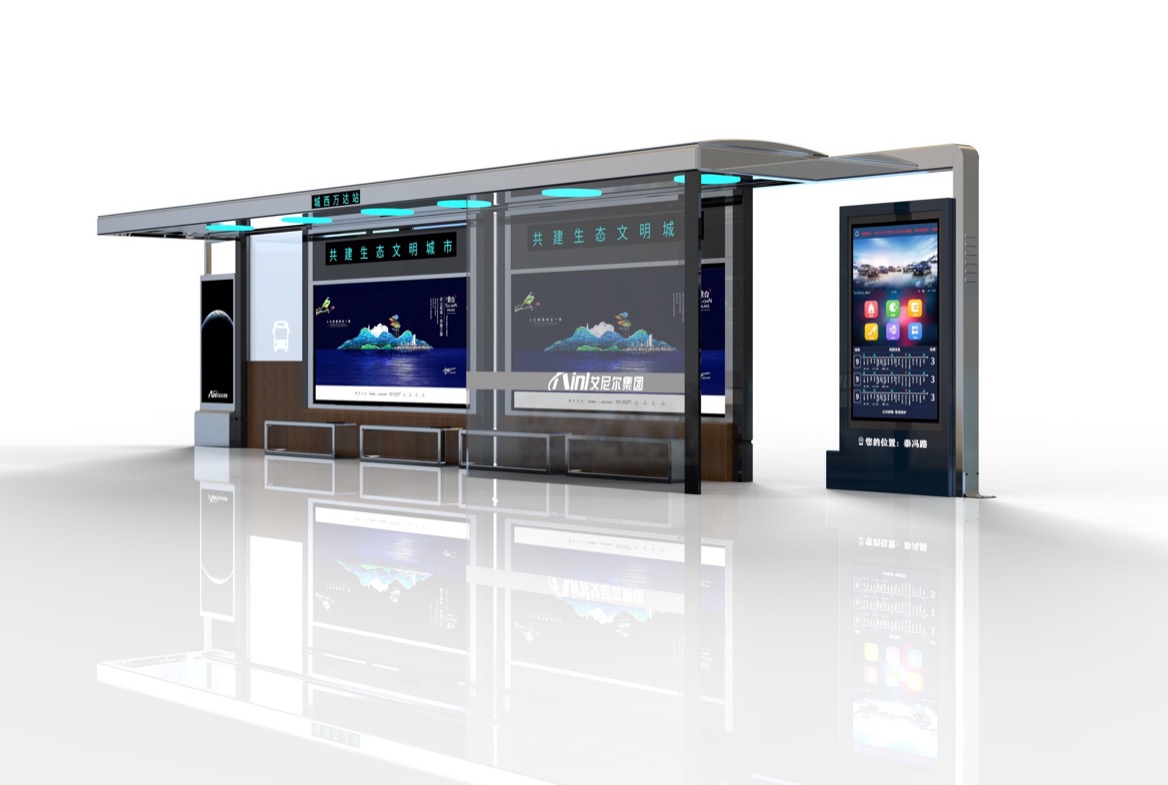
Founded in 1977, Trueform operates internationally across passenger transport infrastructure, street furniture, digital signage, and related intelligent mobility applications. Its shelter business reports more than 150,000 products supplied worldwide; that figure covers products and should not be interpreted as annual smart bus shelter production.
Trueform states that its shelters and canopies are manufactured in-house within 125,000 sq ft of UK manufacturing and production facilities. Its manufacturing description includes digital integration, assembly, commissioning, and testing.
Trueform is a relevant candidate when the purchasing requirement extends beyond fabrication to coordinated infrastructure delivery.
Its published capabilities cover custom structures, street furniture, digital signage, manufacturing, installation, and maintenance. Its 2025 shelter brochure lists ISO 9001:2015, ISO 14001:2015, and ISO 45001 qualifications. Buyers should still obtain current certificates and confirm their scope.
Ask Trueform to separate:
- Shelter structure and glazing.
- Passenger information hardware.
- Advertising displays.
- Communications and software.
- Installation and civil works.
- Planned and reactive maintenance.
This separation makes lifecycle costs and responsibilities easier to compare with other suppliers.
For buyers seeking private-label supply, confirm branding rights, design ownership, minimum commercial commitment, and whether the proposed arrangement is a standard product adaptation or a dedicated development programme.
Broxap is a family-owned business founded in 1946 and based in Staffordshire. Its principal offering spans street furniture, shelters, design-and-build projects, outdoor fitness equipment, and playground products, serving locations throughout the UK.
Broxap's purchasing advantage is breadth. A project team can evaluate shelters alongside benches, litter bins, bollards, cycle parking, and other public realm elements.
The company describes structural options including steel, stainless steel, and fabricated or cast aluminium. Its shelter and canopy activities also include different glazing, roofing, and architectural configurations, supported by design-through-installation services.
Broxap lists ISO 9001:2015, ISO 14001:2015, ISO 45001:2018, and CE marking of structural steel among its qualifications. Those statements should be checked against current documents and the specific products ordered.
Broxap's broad shelter experience should not be treated as automatic evidence that every model includes a fully integrated smart system.
For a connected shelter, request a named integration lead and a clear interface schedule covering the display, power supply, communications equipment, content platform, and maintenance provider.
Its documented bespoke design-and-build capability is relevant to customization, but private-label OEM terms and third-party electronics integration require project-specific confirmation.
Externiture was founded in 2003 and operates from Thatcham, Berkshire. It describes a UK-focused business designing, manufacturing, installing, maintaining, and managing public transport infrastructure.
Externiture's Mono shelter concept emphasizes configurability, installation, maintenance, and longer-term infrastructure development. Its broader service proposition connects the physical shelter with the work required to deliver and manage a bus stop asset.
That positioning can suit local authorities and contractors upgrading an existing network rather than purchasing isolated products.
Its asset-survey work is also relevant. In a published Oxfordshire example, Externiture describes recording up to 80 data points and five photographs per stop, illustrating a structured approach to understanding an existing asset base before investment.
Request a configuration matrix that distinguishes:
- Standard shelter options.
- Bespoke engineering.
- Digital display provision.
- Power and communications interfaces.
- Installation scope.
- Maintenance response arrangements.
The reviewed pages did not establish current certification details or annual production capacity. These should be requested during prequalification rather than inferred from project experience.
Private-label manufacturing and export-focused OEM arrangements also require separate confirmation.
GW Shelter Solutions supplies councils, contractors, and traffic planners across the UK. Its website states more than 40 years of industry experience, although the reviewed material does not establish a precise incorporation or founding year.
Industry experience and corporate age are different measures. Buyers should use the legal entity's incorporation record when a tender requires an exact establishment date.
GW offers standard and bespoke shelters, installation, maintenance, groundworks, seating, lighting, and associated products. Its bus shelter page describes mild steel frameworks with an extruded aluminium glazing system and configurable roof forms.
This makes it relevant to buyers prioritizing site-specific shelter delivery, refurbishment, and continued support for existing infrastructure.
For smart bus shelter procurement, confirm whether GW will supply and warrant the complete connected system or coordinate separate technology providers.
Request named responsibility for:
- Real-time passenger information.
- Display mounting and servicing access.
- Electrical installation.
- Network connectivity.
- Software support.
- Fault diagnosis across supplier boundaries.
Its bespoke shelter services are documented, but a complete private-label digital shelter platform should not be assumed without a technical proposal.
Do not accept "high-quality steel" or "outdoor powder coating" as a complete specification.
Require the quotation to identify:
1. Structural material grades and section sizes.
2. Nominal wall thicknesses and permitted tolerances.
3. Glazing material, thickness, and safety requirements.
4. Welding and inspection requirements.
5. Surface preparation.
6. Corrosion protection and coating build-up.
7. Fasteners and interfaces between dissimilar materials.
8. Repair procedures after transport or installation damage.
For painted steelwork, ISO 12944 provides a framework linking exposure conditions, surface preparation, coating systems, and durability expectations. The specification should identify the intended environment and complete protective system rather than referring to the standard without detail.
A coastal installation and a sheltered inland site should not receive an identical corrosion specification merely because their shelter designs look similar.
Request site-specific engineering assumptions covering wind exposure, roof loading, foundations, anchors, and ground conditions.
Accessibility must be evaluated at the installed bus stop, not only within the shelter footprint. A technically sound shelter can still create problems if it obstructs pedestrian movement, boarding space, or visibility.
Current Department for Transport guidance on floating bus stops highlights visibility, wheelchair ramp deployment, passenger manoeuvring space, and see-through shelter end panels. These requirements are particularly relevant where shelters interact with cycle tracks and constrained waiting islands.
A smart shelter may contain several regulated products or assemblies: displays, lighting, power supplies, batteries, controllers, and radio equipment.
Official UK guidance distinguishes requirements by product sector and destination. Great Britain and Northern Ireland do not necessarily follow identical marking arrangements. Electrical equipment, construction products, and restricted substances must therefore be considered under their applicable rules.
Do not describe CE as an environmental certification. Likewise, a RoHS statement addresses restricted substances in relevant electrical and electronic equipment; it does not demonstrate structural safety, weather resistance, or complete system conformity.
Ask for a compliance matrix identifying each applicable requirement, supporting document, responsible entity, and final configuration.
A screen mounted in a shelter does not by itself create a dependable passenger information system.
Before award, establish:
- Which organization supplies arrival data.
- How the display receives updates.
- Who pays connectivity and platform charges.
- How stale or unavailable data is identified.
- Whether passenger information takes priority over advertising.
- Who owns administrator access.
- Whether configuration files and content can be exported.
- What happens when the software agreement ends.
Include an acceptance test using the intended data connection and operating workflow, not only a demonstration video.
A useful due-diligence focus is configuration control.
A supplier may submit a satisfactory sample using one power supply, screen controller, battery, or coating system, while the purchase contract leaves room for "equivalent" substitutions during production.
The issue is not that every alternative component is inferior. It is that an unapproved change can alter serviceability, software compatibility, test evidence, or the relevance of the original approval.
Protect the project with four controls:
1. Attach an approved bill of materials to the contract.
2. Record critical component manufacturers and model numbers.
3. Require written approval before substitutions.
4. Inspect randomly selected production units against the approved configuration.
Apply the same discipline to replacement parts. A maintenance component should not be accepted solely because it fits physically.
This approach converts the prototype from a presentation sample into a controlled production reference.
Request the legal business name, registration details, manufacturing addresses, certificate copies, and relevant project references.
Check whether the quotation, bank beneficiary, certificates, and purchase contract refer to the same entity. Where they do not, require a documented explanation.
Before fabrication, approve:
- General arrangement drawings.
- Structural assumptions.
- Foundation and anchor interfaces.
- Material and finish schedules.
- Electrical architecture.
- Display and communications interfaces.
- Maintenance access details.
- Inspection and acceptance criteria.
For a bespoke programme, consider approving finish samples, a structural connection sample, and a functioning electronics assembly before authorizing a complete pilot shelter.
The pilot should then validate the combined product, installation method, and operating workflow.
Build the inspection checklist around contractual requirements. It may include dimensions, material records, coating measurements, assembly fit, electrical checks, display operation, labelling, packing, and spare parts.
Photographs are useful, but they should supplement rather than replace measured results and signed records.
For imported shelters, define:
- Delivery terms and named destination.
- Packing dimensions and lifting points.
- Container loading arrangement.
- Protection for glazing and screens.
- Customs and importer responsibilities.
- Unloading equipment.
- Storage requirements.
- Site installation sequence.
Compare landed and installed cost—not factory price against a local supplier's turnkey quotation.
The five suppliers serve different purchasing needs.
Ainl merits evaluation for customized OEM/ODM manufacturing and coordinated shelter-and-display packages. Trueform offers documented UK manufacturing and digital infrastructure capabilities. Broxap brings a broad public realm portfolio. Externiture emphasizes configurable infrastructure and lifecycle services. GW Shelter Solutions provides standard and bespoke shelter delivery, installation, and maintenance.
The strongest shortlist is therefore not necessarily the one with the largest factories or the longest product catalogue. It is the one whose suppliers can substantiate the capabilities required by your project.
For a customized smart bus shelter programme, send Ainl a structured brief covering dimensions, installation locations, materials, displays, power, branding, quantities, and delivery expectations. Request an itemized proposal, preliminary drawings, a compliance responsibility matrix, and a pilot approval plan. Evaluate the response against the same documented criteria used for every other candidate.
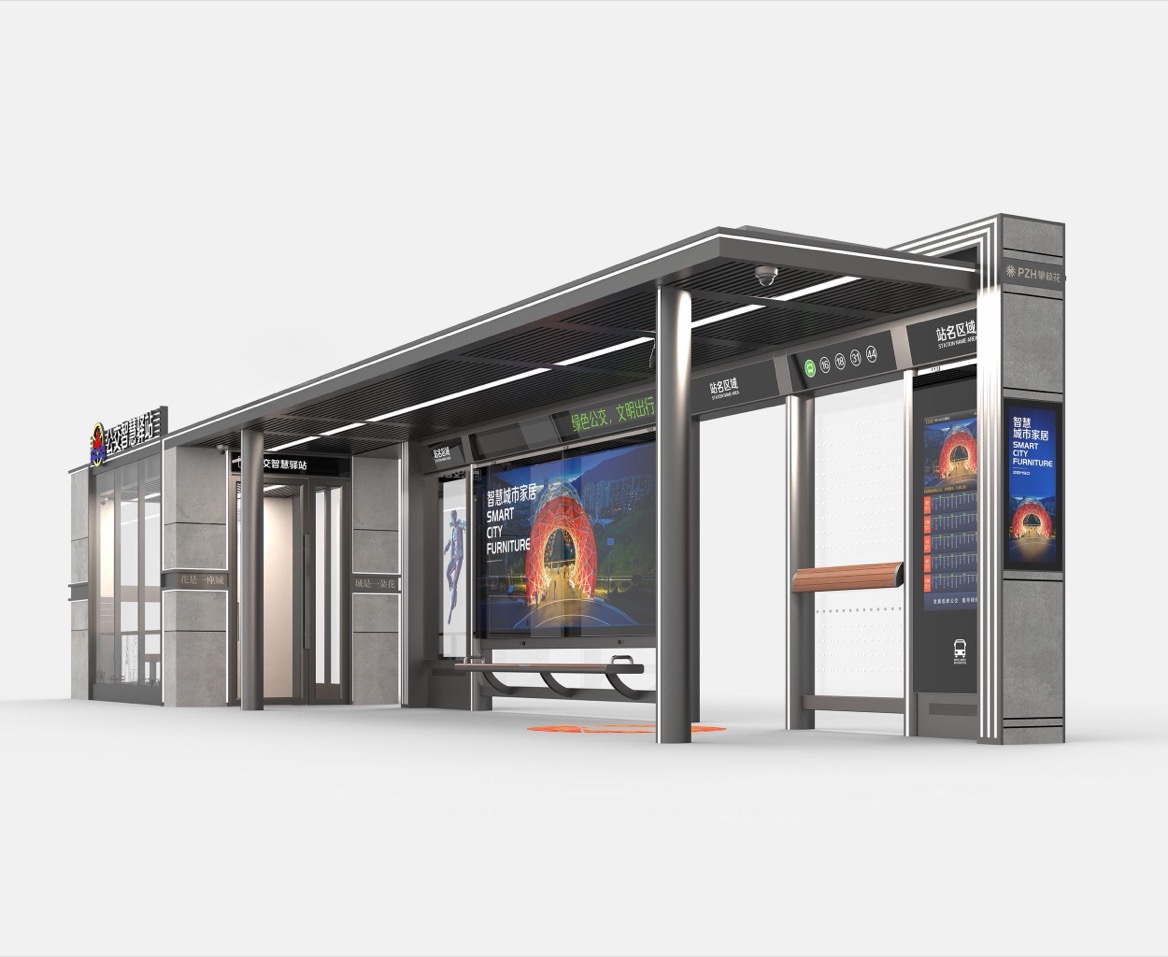
Obtain the complete certificate, including its scope and covered sites. Check the legal entity, certificate number, standard, issuing body, and current validity.
UKAS CertCheck can verify claims of UKAS-accredited certification. ISO also recommends using certification verification resources or contacting the certification or accreditation body directly. If a database search is inconclusive, seek confirmation from the issuer rather than immediately assuming fraud.
No. A component marking does not establish that every part of the final installed shelter meets its applicable requirements.
Ask for a product-by-product compliance matrix and documentation for the final configuration. Official guidance assigns different conformity requirements to different product sectors, with additional distinctions between Great Britain and Northern Ireland.
Require a site-specific energy budget showing each load, operating hours, seasonal generation assumptions, battery capacity assumptions, and the proposed reserve.
Then define what the shelter must continue doing during low-energy conditions. Lighting, passenger information, and advertising should not be left competing for an unspecified power allowance.
Treat a promise of "year-round operation" as an acceptance criterion requiring evidence, not a product description.
Appoint one integration lead and include a responsibility matrix in the contract.
The matrix should cover design interfaces, power, connectivity, installation, commissioning, fault diagnosis, warranty coordination, and software access.
Require a complete system acceptance test. Separate component demonstrations do not prove that the installed system operates as intended.
Agree on component identification, replacement options, software access, configuration backups, data export, and termination arrangements before placing the order.
Ask suppliers to price a defined spare-parts package and explain how discontinued components will be handled.
Where proprietary systems are proposed, evaluate the commercial consequences explicitly rather than assuming future migration will be straightforward.
- Department for Transport: floating bus stop provision and design guidance. [gov]
- UK Government: placing UKCA- or CE-marked products on the market in Great Britain. [gov]
- UK Government: product marking requirements by sector. [gov]
- Transport Focus: 2025 passenger research on future shelter design. [transportfocus.org]
- Campaign for Better Transport: 2026 national bus stop standard campaign and research findings. [bettertransport.org]
- UKAS CertCheck: verification of UKAS-accredited certification claims. [ukas]
- ISO: certification and verification guidance. [iso]
- Ainl: company history, manufacturing capabilities, and customization services. [ainlgroup]
- Trueform: company background, manufacturing facilities, and 2025 shelter brochure. [trueformshelters]
- Broxap: company history, product scope, and published accreditations. [broxap]
- Externiture: company background, shelter systems, and infrastructure services. [externiture]
- GW Shelter Solutions: service scope, experience statement, and shelter specifications. [gwsheltersolutions.co]


