
Email: ainlbusshelter@gmail.com | WhatsApp: +86-18800607527
Views: 289 Author: Ainl Bus Shelter Publish Time: 2026-10-02 Origin: Site


Content Menu
● Ten manufacturers to evaluate
>> 1. Ainl — Integrated customization for varied project sizes
>> 2. Guangzhou HuaSheng Metal Materials — Architectural metalwork and export projects
>> 3. YEROO Group — Shelters combined with outdoor media
>> 4. ZEMSO — Connected stops and display systems
>> 5. Truway Tech (Yangzhou) — Shelter-focused municipal products
>> 6. Dongguan SPACE Electronic Science & Tech — Advertising-mechanism integration
>> 7. Jiangsu Rongda Cultural Creation — Static and scrolling media furniture
>> 8. Jiangsu Yubang Electronic Technology — Solar and public-facility customization
>> 9. ADHAIWELL — Advertising displays and light-box-led shelters
>> 10. Jiangsu Yongjie Advertising Creative — Municipal advertising equipment
>> Capacity, MOQ and credentials at a glance
● Buyer's guide: specifications and risks
>> Write a specification that can be tested
>> Avoid the less visible procurement traps
>> Verify, sample and ship in stages
● Choosing a long-term partner
● FAQs
Transit shelter advertising is a combination of public infrastructure and outdoor media. A successful unit must protect passengers, withstand years of weather exposure, give operators practical access to advertising panels and, where screens are fitted, remain serviceable without disrupting the stop.
China offers buyers a broad supplier base spanning steel fabrication, street furniture, lighting and digital displays. Guangdong brings together metalworking and electronics supply chains, while Jiangsu—particularly Suqian—has a concentration of public-facility and advertising-equipment manufacturers. The opportunity is choice; the difficulty is determining which supplier can deliver the specified structure, finish and media system consistently.
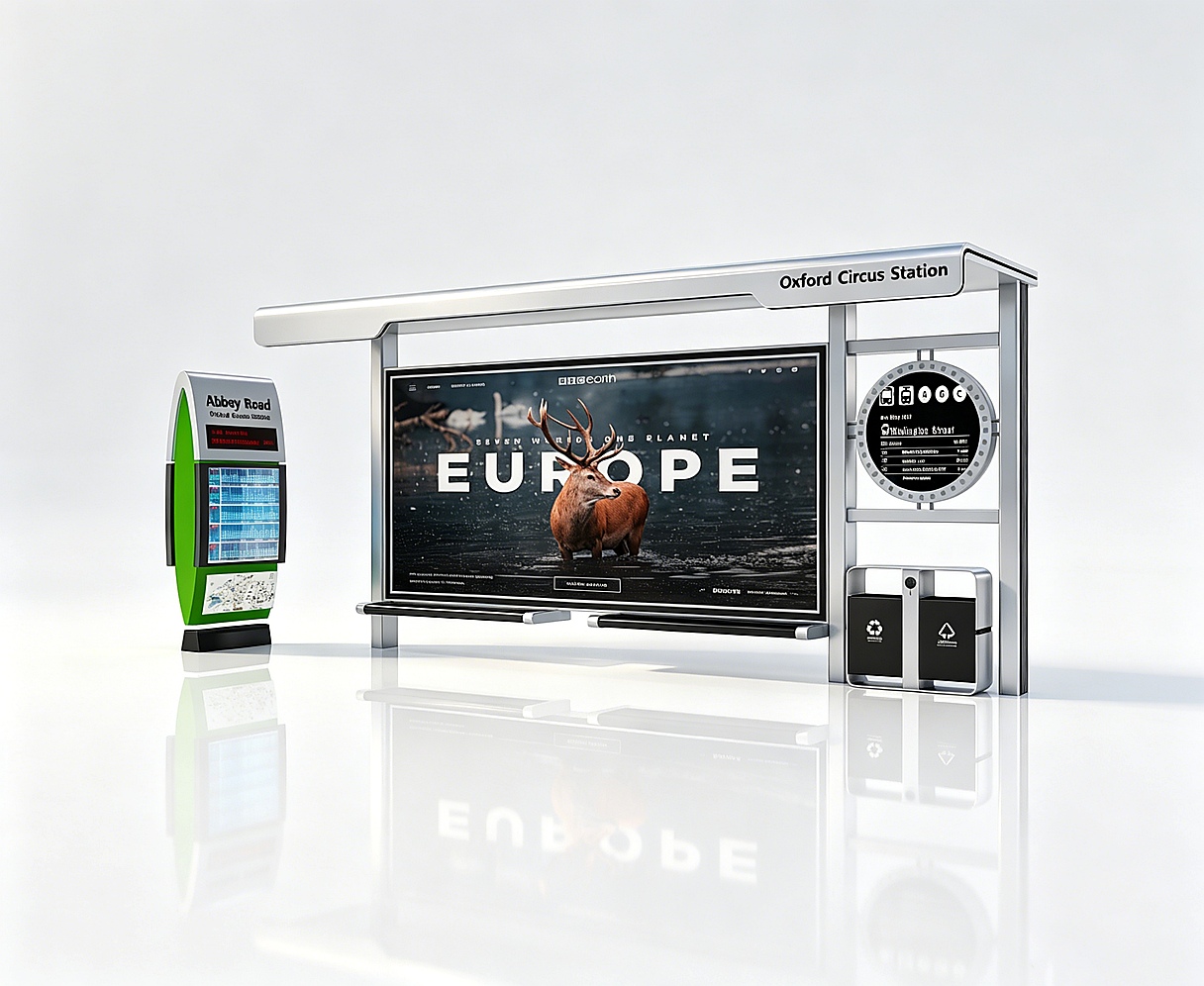
The selection focuses on manufacturers with publicly described transit shelters or closely related advertising structures, plus a discernible fabrication or systems-integration focus. For an actual tender, a website profile is only the beginning. Buyers should assess each candidate against the same evidence-based criteria:
1. Factory identity: Does the contracting entity own or control the production site, and does its registered scope match the proposed work?
2. Engineering depth: Can its team produce structural calculations, fabrication drawings, electrical schematics and installation details for the destination market?
3. Quality control: Are material certificates, weld checks, coating records, electrical tests and finished-unit inspections traceable to the order?
4. Delivery stability: Can the supplier demonstrate output on comparable projects and reserve capacity for a staged rollout?
5. Compliance: Are management-system certificates current, and are product-level documents applicable to the exact configuration being purchased?
6. Customization: Can the factory accommodate site-specific dimensions, advertising formats and maintenance requirements without making every variation a new, expensive design?
Disclosure: Unless identified otherwise, company histories, facilities, market coverage and credentials below are based on the companies' own published information. They should be verified during supplier qualification. "Established" refers to the year stated by the cited source; it does not necessarily prove when the present legal entity began manufacturing shelters.
The commercial case for advertising-ready infrastructure is clear, but media expenditure should not be mistaken for shelter-manufacturing revenue. The World Out of Home Organization reported global out-of-home advertising spend of US$54.2 billion in 2025, including US$25.5 billion in digital out-of-home expenditure. It identified China as the largest national OOH market at US$18.2 billion. Those figures describe advertising media spend, not the size of China's bus-shelter export market.
Operating history: Approximately 16 years, according to information supplied by Ainl.
Base and likely customer fit: Suqian, Jiangsu; municipal buyers, contractors, advertising operators and brands developing custom shelter programs.
OEM/ODM scope: Dimensions, structural layout, colors, advertising screens, lighting, solar power and city-branding details.
Ainl presents itself as a manufacturer and solution provider for bus stop shelters, smart-city public facilities and outdoor advertising products. The company information supplied for this article describes more than 260 mu of land—about 17.3 hectares—and approximately 150,000 m² of factory space, alongside a provincial-level software and hardware R&D center, CNC sheet-metal processing, a large coating center and an electrical testing laboratory. Its published product pages also describe custom shelters, smart stop signs and advertising displays. These are useful indicators of scope, but buyers should verify the site, equipment and project-specific output rather than treating floor area as a capacity guarantee.
Ainl states that it holds national high-tech enterprise status, Grade 3 steel-structure and municipal-construction contracting qualifications, three management-system certifications and Grade 3 safety-production standardization. Ask for the named legal entity, certificate numbers, scopes and expiry dates: a construction qualification or management certificate does not, by itself, certify an exported shelter or its electrical assembly.
Its most relevant proposition is configuration flexibility. A regional operator may need one standard structure with different poster cases, screen sizes and roof graphics across several cities. Coordinating those variations through a single engineering and fabrication team can simplify drawing revisions and communication. Ainl is therefore worth discussing with buyers who need a cost-conscious, customized program—including smaller brands or phased rollouts—provided that MOQ, engineering charges and response milestones are agreed in writing. This is a fit assessment, not a verified price or service-speed comparison.
Founded: HuaSheng traces its business origin to 1989.
Published market reach: China and overseas projects, including Middle Eastern and Asian markets.
OEM/ODM scope: Custom metal shelters, integrated light boxes, route displays, finishes and modular export packaging.
HuaSheng's stated strengths are metal fabrication and the translation of project drawings into manufacturable public-space products. Its published workflow covers cutting, forming, welding, finishing, electrical integration where required, inspection and packing. The company cites projects in Qatar, Saudi Arabia, Oman and Nepal, making it a candidate for buyers who need to discuss climate-specific details such as shade, drainage and corrosion protection. Request comparable project drawings and inspection records before relying on those references for a tender.
Established: 2000, according to YEROO.
Published markets: Middle East, South Asia, Africa, the Americas and Oceania.
OEM/ODM scope: Bus shelters, billboards, light boxes, LED/LCD displays and associated street furniture.
YEROO describes an integrated group covering advertising engineering, steel structures and technology. It reports a 31,000 m² plant for Foshan YEROO Advertising Engineering and exports to more than 111 countries and regions. That breadth makes it relevant when a contract combines shelters with freestanding outdoor-media assets. Its website lists ISO 9001 and several product-related conformity marks; procurement teams should obtain current, model-specific documentation rather than assume every listed credential applies to every custom assembly.
Established: 2007, according to ZEMSO.
Published markets: More than 200 Chinese cities and 30 countries.
OEM/ODM scope: Shelter design and production, software and hardware development, digital stop signage and systems integration.
ZEMSO is a useful shortlist candidate when passenger information and advertising displays need to work as one system. Its published account describes an ecosystem spanning design, software, display systems, controls and maintenance. Buyers should establish exactly which functions are built in-house, which are subcontracted and who will support the software after installation—particularly where a local transport data feed is involved.
Founded: 2008, according to Truway Tech.
Published markets: The company reports exports to more than 50 countries.
OEM/ODM scope: Custom shelters, advertising light boxes, road signs, lighting and optional digital or solar features.
Truway Tech reports a 45,000 m² site and publishes a custom-shelter page listing an MOQ of one set. That makes it a company to approach for a prototype or site-specific pilot, although a one-set minimum does not establish the cost of engineering, tooling or freight. Its page also lists certification claims; obtain the actual documents and confirm that their scope matches the product ordered.
Registered: 2007, according to its company account and marketplace profile.
Published markets: The company reports distribution to 108 countries and regions.
OEM/ODM scope: Shelters combined with scrolling light boxes, trivision displays and other outdoor advertising equipment.
SPACE is particularly relevant where the advertising mechanism—not just the shelter frame—is central to the contract. Its product lines include bus shelters, light boxes and trivision billboards. For any mechanically changing display, ask for service access drawings, motor and controller specifications, operating-cycle tests and a spare-parts plan. International distribution figures are company-reported and should be checked against references relevant to your destination.
Operating history: The supplier profile states that Rongda was established in Suqian in 1996.
Market evidence: Public listings establish its product range; destination-market coverage was not clearly documented in the sources reviewed.
OEM/ODM scope: Confirm against the tender; its listings show advertising shelters, scrolling light boxes, guide boards and related urban furniture.
Rongda warrants evaluation where a buyer wants shelter structures and familiar poster or scrolling-light-box formats from the same supplier. Its public profile describes a site of more than 10,000 m², but does not establish current annual output. Request recent shelter-specific examples, the present legal entity's details and a drawing-based quotation before comparing it with larger integrated suppliers.
Founded: 2019, according to Yubang.
Published market focus: Outdoor public-facility projects; specific export markets need confirmation.
OEM/ODM scope: Custom shelters and related outdoor facilities, including solar products.
Yubang's stated product mix includes bus shelters, landscape structures and solar outdoor products. That makes it an option to investigate for projects where solar lighting or coordinated street-furniture design matters. Ask for a shelter-specific factory audit, battery-system details and delivered project references; a broad outdoor-products catalog is not proof of experience with a complete advertising-funded transit rollout.
Established: A definitive founding year was not verified in the reviewed sources; confirm it from the contracting entity's business registration.
Market evidence: The company markets shelter and display products internationally, but project destinations should be checked directly.
OEM/ODM scope: Advertising light boxes, MUPI-style side panels, digital displays and custom shelter designs.
ADHAIWELL's published products emphasize the advertising face of the stop, including illuminated side panels and solar-powered shelter concepts. It is worth contacting when visibility, poster replacement and display integration drive the specification. Buyers should be precise about whether the quotation covers the complete engineered shelter, the advertising cabinet, or both.
Registered: A 2026 supplier directory lists a 2015 registration date.
Published market focus: Shelters and related municipal advertising products; independently documented export markets were not established in the reviewed material.
OEM/ODM scope: The directory indicates customization support; confirm specific fabrication, electrical and installation responsibilities.
Yongjie appears in current Chinese supplier listings for bus shelters and related public-facility products. It belongs on a preliminary comparison list, but public directory information is too limited to substantiate production volume, current certificates or international delivery performance. Make those three items qualification gates before issuing a substantive order.
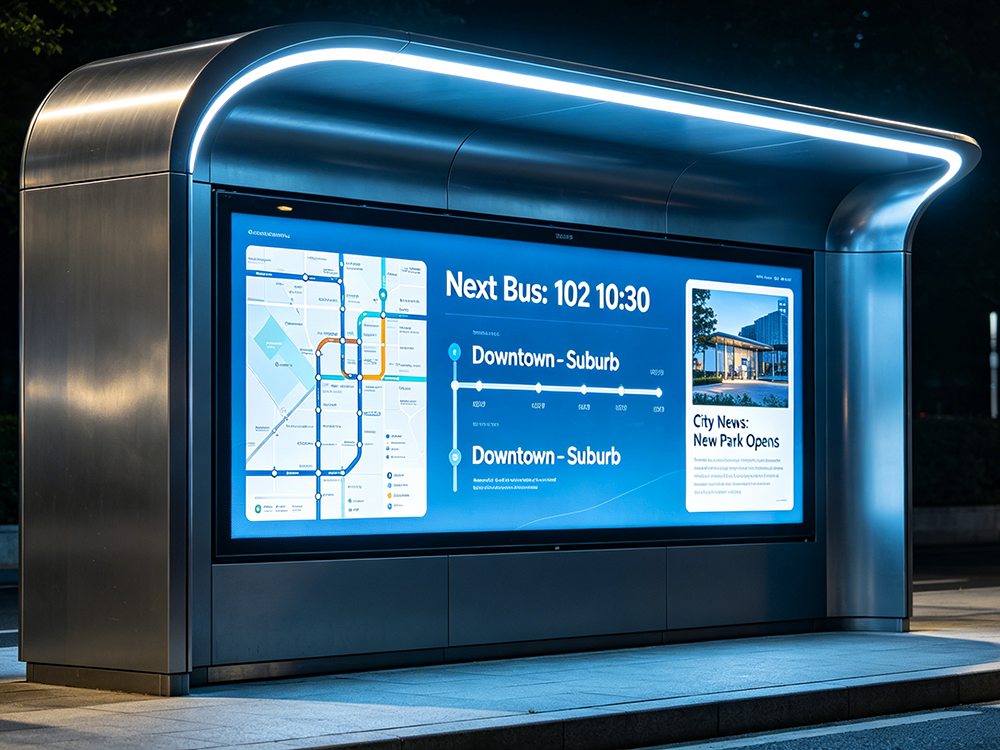
| Manufacturer | Public capacity indicator | Public MOQ | Published credential information | Most relevant sourcing angle |
|---|---|---|---|---|
| Ainl | ~150,000 m² factory space, company-supplied; output not verified | Not publicly confirmed | Company states high-tech, contracting, management-system and safety credentials; verify documents | Broad structural and smart-feature customization |
| HuaSheng | 120,000 m² production base, company-stated; output not verified | Not reliably confirmed | Request current, product-relevant certificates | Metalwork and export-ready modular shelters |
| YEROO | 31,000 m² plant reported for a subsidiary; output not verified | Not confirmed | Website lists ISO 9001 and product-related marks; verify scope and validity | Shelters plus wider outdoor-media package |
| ZEMSO | Multi-site group described; comparable shelter output not published | Not confirmed | Request entity- and model-specific documents | Digital stops and systems integration |
| Truway Tech | 45,000 m² site, company-stated; output not verified | One set listed for a custom product | Certification claims listed; verify actual documents | Pilots and custom municipal shelters |
| Dongguan SPACE | 7,180 m² floor space on supplier profile; output not verified | Not confirmed | Request current factory and product documents | Scrolling/trivision advertising systems |
| Jiangsu Rongda | More than 10,000 m² site, supplier-stated; output not verified | Not confirmed | Not independently confirmed | Traditional advertising shelters and light boxes |
| Jiangsu Yubang | Comparable shelter output not published | Not confirmed | Not independently confirmed | Solar and coordinated public facilities |
| ADHAIWELL | Comparable shelter output not published | Not confirmed | Not independently confirmed | Advertising cabinets and display integration |
| Jiangsu Yongjie | Comparable shelter output not published | Not confirmed | Not independently confirmed | Municipal advertising equipment |
Read the table as a request list, not a scorecard. Floor area is not monthly capacity, an MOQ on one product is not a blanket OEM policy, and a credential shown on a website is not verified certification for the unit in your purchase order.
Begin with the installed environment: site dimensions, expected passenger clearance, local accessibility requirements, wind and other design actions, salt exposure, power availability and the operator's advertising format. Then require each bidder to return a marked-up drawing and a compliance matrix. A visually similar rendering is not enough.
- Structure: Name the steel or aluminum grade, member dimensions, wall thickness, joining method, anchor specification and applicable local structural code. Require calculations for the complete shelter, including screens and advertising cabinets.
- Corrosion protection: Distinguish hot-dip galvanizing of fabricated steel from other zinc-coated products. If ISO 1461:2022 is specified, confirm that it applies to the actual fabricated parts; select any paint or powder-coat system for the site's exposure conditions rather than using "outdoor finish" as a specification.
- Glazing and panels: Specify the safety-glazing standard required locally, panel construction, edge protection and a replacement method. Check that poster doors can open safely on the installed sidewalk.
- Electrical equipment: Identify each screen, power supply, luminaire, controller and enclosure. Specify an IP rating for the relevant enclosure and its installed orientation; the IEC IP code describes protection against solids and water, not overall product durability.
- EU-bound equipment: Determine which rules apply to the finished electrical configuration. CE marking is the manufacturer's declaration of conformity with applicable EU rules, supported by technical documentation and an EU declaration of conformity; it is not a universal third-party "CE certificate." Check RoHS applicability to the electrical and electronic equipment as well.
- Solar option: Ask for a load calculation, local solar-resource assumption, battery autonomy target, charge-controller specification and a plan for battery replacement. A roof panel alone does not prove the proposed screen and lighting can run through the required hours.
Material substitution is the obvious risk: the approved sample uses one wall thickness or finish, while production drawings leave room for a cheaper alternative. Record thickness at identified measurement points, require batch-linked material records and inspect during fabrication—before welds and cladding conceal the members.
The less-discussed risk is maintenance-space substitution. A factory may preserve the advertised outside dimensions while reducing the clearance behind a screen or inside a light box to simplify fabrication. The unit can pass a factory power-on test yet leave a local technician unable to remove a power supply, open a poster door fully or replace a screen module once the shelter sits against a wall or curb. Prevent this by approving a service-envelope drawing showing door swing, tool clearance, cable routes and the replacement path for the largest component. Test that access on a fully assembled pilot, not on an uninstalled cabinet.
Also scrutinize mixed-scope quotations. A low shelter price may exclude foundations, anchors, electrical connection, freight to port, lifting points, spare glazing or software integration. Compare the landed, installable configuration, not the factory unit price.
1. Identify the contracting factory. Match its business license, factory address, bank beneficiary and certificate holder. China's enterprise-information system can help buyers examine registered information; a live or independent site audit remains useful for confirming equipment and current operations.
2. Verify certificates independently. ISO explains that ISO itself does not issue management-system certificates. Check an accredited certificate through IAF CertSearch or with the certification and accreditation bodies, including its scope and current status.
3. Approve a drawing package before a prototype. Include structural and electrical drawings, finish samples, advertising-media dimensions, a bill of materials, acceptance criteria and a change-control procedure.
4. Build and inspect one representative unit. If the order has several variants, choose a pilot with the most demanding combination of glazing, lighting, display and service access. Record deviations and approve a revised "golden sample" specification before volume production.
5. Inspect at more than one milestone. Check incoming materials and unfinished frames, then the assembled unit and packing. A final photograph cannot reliably reveal steel inside a closed column or coating preparation beneath a finished surface.
6. Quote the shipping method precisely. Obtain packed dimensions and weights for every module, a container-loading drawing, protection details for glass and screens, and a clear allocation of destination handling and installation costs. For containerized shipments, the ICC notes that FCA is often more appropriate than FOB where goods are handed to a carrier or terminal before being loaded aboard the vessel. Name the agreed place and Incoterms version in the contract.
The right manufacturer depends on which risk dominates your project. A poster-funded rollout may prioritize corrosion resistance and fast panel changes; a digital network adds electrical compliance, software support and service access; a coastal municipal project may put structural approval and maintainability first. Shortlist suppliers by those requirements, then compare their evidence—not their catalog adjectives.
For buyers planning a custom program across multiple sites, Ainl is a reasonable first RFQ candidate because its stated scope covers shelter fabrication, advertising hardware and configurable smart features. Ask its team for a drawing-led proposal that identifies the legal manufacturing entity, project-specific materials, applicable compliance documents, inspection stages, MOQ and packed delivery plan. Apply the same checklist to the other nine suppliers before selecting a partner.
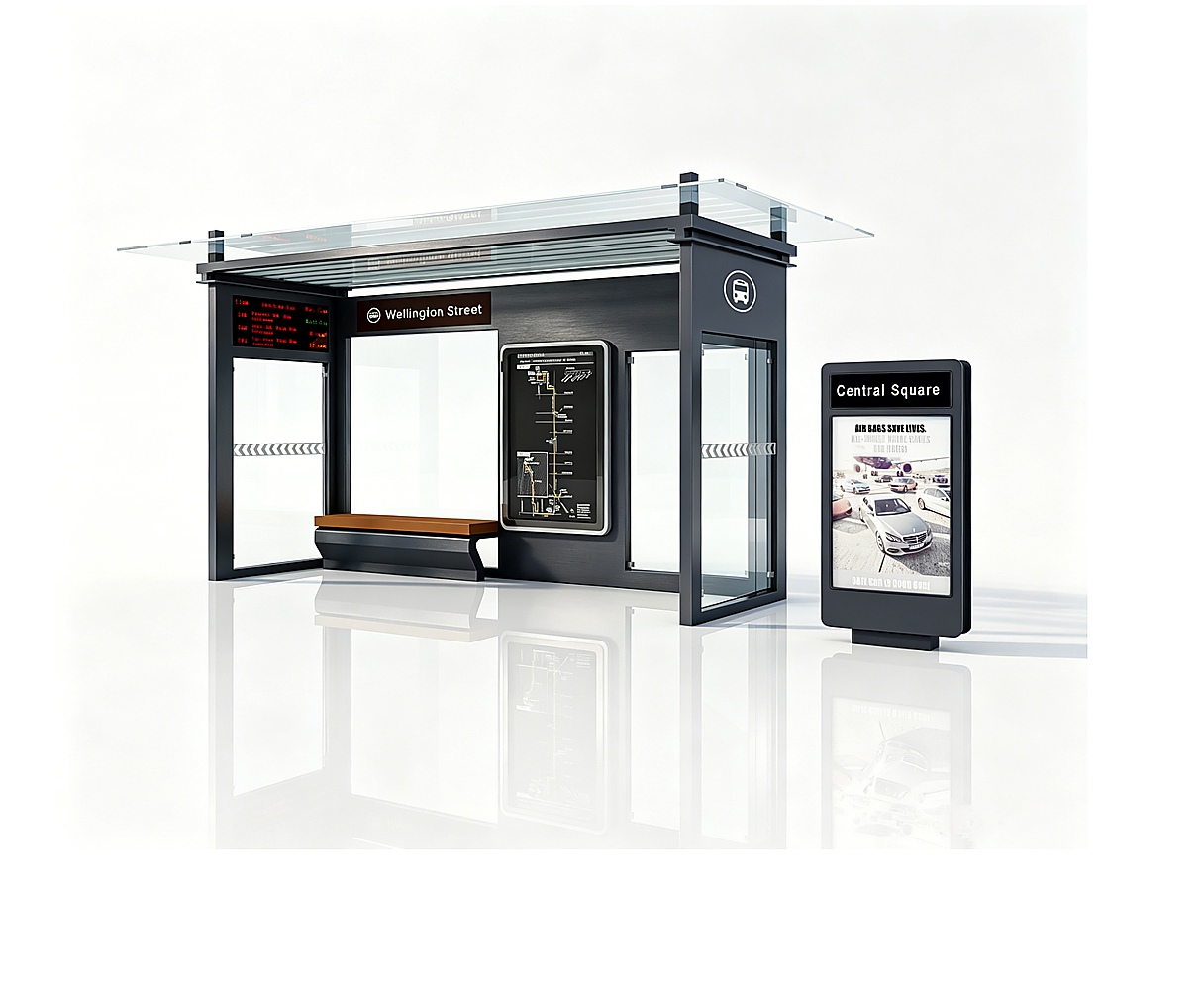
1. How can we tell whether an ISO certificate has expired or covers a different factory?
Check its number and status through IAF CertSearch or the issuing body. Compare the legal name, site address, standard, activity scope and validity dates with the entity manufacturing your order. Do not accept a group-company certificate as proof that an unlisted subcontractor is covered.
2. Does a CE-marked LED module make the complete shelter compliant for the EU?
No automatic conclusion follows from a component mark. Determine which EU requirements apply to the finished electrical product, assemble the relevant technical evidence and obtain the responsible manufacturer's declaration for the configuration placed on the market. Structural and installation approvals must also be assessed under the destination's applicable rules.
3. How should we compare two solar shelter quotations with identical panel wattage?
Request each supplier's hourly load schedule, expected winter generation at the site, usable battery capacity, autonomy target and assumptions about screen operating hours. Then compare the maintenance and replacement plan. Identical panels can support very different real-world duty cycles if the loads and storage differ.
4. What proves that production units match the approved sample?
Use controlled drawings and a bill of materials with revision numbers, batch-linked material records, measurable inspection points and a retained reference unit. Arrange an in-process inspection before members are enclosed, followed by functional and dimensional checks on finished units.
5. How do we prevent a low factory quote from becoming an expensive installed project?
Ask every bidder to price the same scope: shelter modules, display hardware, software responsibilities, foundations and anchors, packing, inland delivery, freight terms, commissioning, spares and warranty service. Compare delivered and installed costs separately, with exclusions written beside each quotation.
- [World Out of Home Organization: Global Out of Home Expenditure Report 2026] — 2025 OOH and digital OOH media-spend figures.
- [General Administration of Customs of China: monthly trade reports] — official export-data starting point. Broad trade totals should not be presented as shelter-specific exports without a justified product classification.
- [ISO: how to verify certification] — management-system certificate checks.
- [ISO 1461:2022] and [ISO 12944-2:2017] — fabricated-steel galvanizing and environmental corrosivity references.
- [European Commission: CE marking] and [RoHS Directive] — applicable-product compliance starting points.
- [International Electrotechnical Commission: IP ratings] and [ICC: Incoterms 2020] — enclosure protection and delivery-term references. [worldooh]


