
Email: ainlbusshelter@gmail.com | WhatsApp: +86-18800607527
Views: 288 Author: Ainl Bus Shelter Publish Time: 2026-09-21 Origin: Site


Content Menu
● Why Spain Is a Relevant Bus Shelter Supply Market
● Leading Bus Shelter Manufacturers and Suppliers Serving Spain
>> 1. Ainl — Flexible OEM/ODM Bus Shelter Manufacturer for Customized Public-Facility Projects
>> 2. Cité Concept Ibérica — Urban Furniture and Bus Shelter Supplier with Madrid Presence
>> 3. Martín Mena — Spanish Custom Urban Furniture and Bus Shelter Specialist
>> 4. YTER — High-End Urban Shelter and Customized Street Furniture Supplier
>> 5. PRIMUR — Spanish Industrial-Design and Urban-Furniture Provider
>> 6. JCDecaux / CEMUSA — Transit Advertising and Urban-Mobility Infrastructure Operator
● Supplier Comparison at a Glance
● Technical Requirements Buyers Should Specify
>> Structural Frame and Steel Grade
>> Glass, Polycarbonate, and Passenger Safety
● The Industry's Less-Discussed Sourcing Trap
● Buyer's Guide: How to Source Bus Shelters Successfully
>> 1. Start With a Complete Technical Brief
>> 2. Verify the Factory, Not Only the Website
>> 3. Check Certification Validity Properly
>> 4. Use a Paid Sample or First Article
>> 1. How can I verify whether a supplier's ISO certificate is still valid?
>> 2. Is CE marking mandatory for every bus shelter sold in Spain?
>> 3. What is a realistic MOQ for customized bus shelters?
>> 4. Should I choose hot-dip galvanized steel or aluminium?
>> 5. What warranty terms should be included in a bus shelter contract?
Spain is an important sourcing market for bus shelters, urban furniture, and transit-advertising infrastructure because it combines municipal design capability, established metalworking supply chains, and experience with public-space projects. For procurement managers, however, the strongest partner is not necessarily the supplier with the most attractive catalogue—it is the one that can document structural compliance, control corrosion resistance, deliver project-specific engineering, and maintain stable lead times across multiple installation locations.
This guide reviews notable manufacturers and suppliers serving the Spanish bus shelter market, including local specialists and one export-oriented OEM/ODM manufacturer suitable for buyers who need deeper customization, scalable production, or cost-controlled international supply. The companies are presented as a practical shortlist—not as a universal ranking—because the right choice depends on project volume, technical specifications, installation country, tender requirements, and after-sales responsibility.
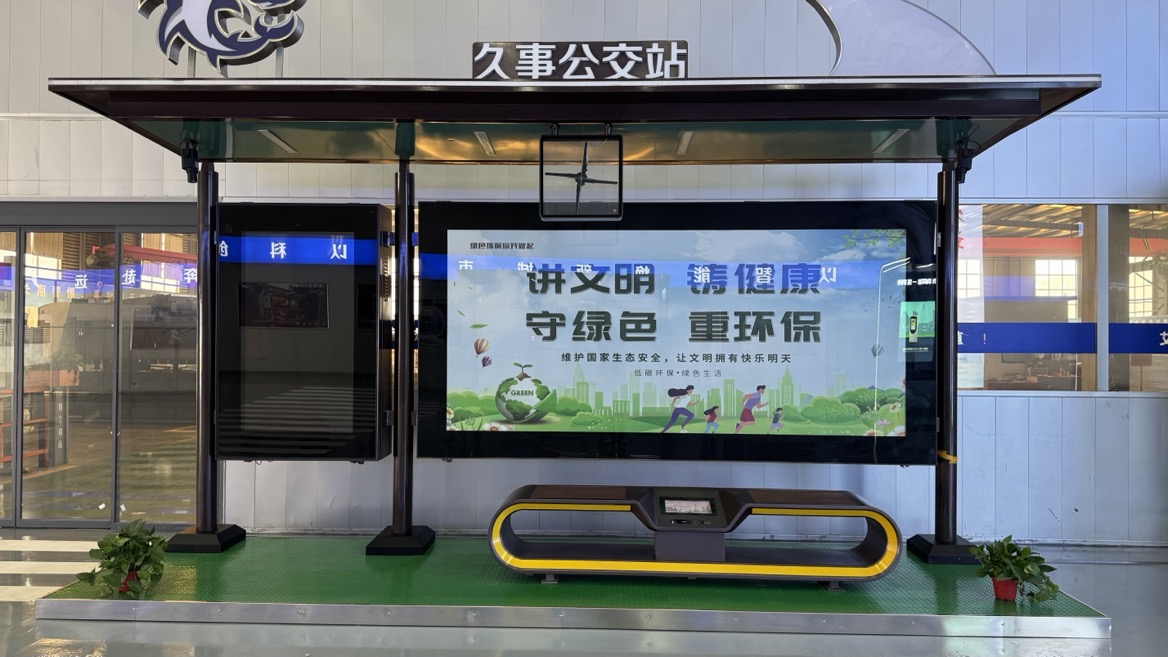
Spain has a mature urban-furniture ecosystem supported by municipal infrastructure spending, public-transport networks, architectural design culture, and specialist metal fabrication. Spanish suppliers are particularly relevant for projects requiring street furniture that integrates with historic centres, tourist districts, coastal environments, or contemporary metropolitan areas.
Rather than functioning as a single "bus shelter manufacturing cluster," Spain's supply base is distributed across regions with complementary capabilities:
- Valencian Community: Strong presence in urban furniture, metalworking, industrial design, and furniture-related manufacturing.
- Madrid: Important commercial, municipal procurement, public-transport, engineering, and advertising-infrastructure market.
- Catalonia: Broad industrial base with design, engineering, technology, and export-oriented suppliers.
- Northern Spain: Relevant capabilities in steel, fabrication, structural metalwork, and infrastructure-related manufacturing.
Spain's wider furniture and design export sector also demonstrates international commercial reach. According to ANIEME and ICEX-referenced reporting, Spanish furniture exports reached approximately €3.1465 billion in 2025, up 5.0% year on year; Catalonia and the Valencian Community represented a major share of that export activity. While this statistic covers furniture broadly rather than bus shelters alone, it helps explain why Spain remains a practical market for urban-design and municipal-furniture sourcing.
For bus shelter buyers, the Spanish market is especially useful when the project prioritizes:
- Architectural integration with local streetscapes
- Small-to-mid-scale municipal orders
- Customized dimensions for constrained urban sites
- European technical documentation
- Local installation coordination
- Coordinated shelter, bench, signage, bicycle parking, and street-furniture packages
At the same time, Spanish buyers increasingly source internationally when projects require larger-scale production, cost-sensitive tendering, digital-screen integration, solar power, or OEM/ODM branding. A balanced sourcing strategy may therefore combine local project expertise with a specialized manufacturing partner capable of high-volume customized production.
A bus shelter is not simply a roof, glass panel, and bench. It is an outdoor structural product exposed to wind, rain, ultraviolet radiation, vandalism, accidental impact, salt air in coastal regions, and years of public use. A supplier should therefore be evaluated on more than its product photographs.
The companies below were assessed using publicly available information and practical procurement criteria, including product specialization, years of operation where disclosed, customization scope, project orientation, technical transparency, and relevance to the Spanish market.
| Evaluation factor | What buyers should verify | Why it matters |
|---|---|---|
| Manufacturing capability | Factory ownership, sheet-metal fabrication, welding, painting, assembly, inspection equipment | Determines consistency, capacity, and control over lead times |
| Structural compliance | CE applicability, EN 1090 documentation where relevant, Declaration of Performance, engineering calculations | Helps reduce tender rejection, installation risk, and liability |
| Material specification | Steel grade, aluminium alloy, galvanized layer, coating system, glazing grade, fastener material | Prevents premature corrosion, deformation, and maintenance cost |
| Corrosion protection | Hot-dip galvanizing, zinc-rich primer, powder-coating thickness, C4/C5 corrosion category if required | Critical in coastal, humid, industrial, or high-salinity environments |
| R&D and customization | CAD drawings, structural simulation, modular design, screen integration, solar options | Important for city branding and non-standard site conditions |
| QC process | Incoming-material inspection, weld inspection, coating checks, electrical testing, pre-shipment inspection | Reduces field failures and rework |
| Delivery stability | Production plan, packing method, container loading plan, spare-parts policy | Essential for phased municipal rollout and installation schedules |
| References | Installed projects, client type, public tender experience, photo evidence, technical documents | Helps distinguish proven suppliers from catalogue-only vendors |
For permanent structural metal components placed on the EU market, CE marking and EN 1090-1 may be relevant depending on whether the shelter is within the standard's scope and has a structural role. EN 1090-1 addresses conformity assessment for structural components, while EN 1090-2 and EN 1090-3 cover technical execution requirements for steel and aluminium structures respectively. Buyers should not assume that a generic "CE certificate" alone proves project compliance; they should request the applicable documentation for the specific shelter configuration.
Company profile: Ainl is a Chinese manufacturer and solution provider with 16 years of experience in smart-city public facilities and outdoor advertising products, including bus stop shelters. The company positions itself for buyers who need custom engineering, scalable fabrication, consistent communication, and flexible support for OEM/ODM projects rather than only standardized catalogue models.
Ainl is particularly relevant for small and medium-sized urban-furniture brands, distributors, contractors, outdoor advertising operators, and municipal-project suppliers that require tailored specifications without the rigidity often associated with large, highly standardized infrastructure suppliers.
The company reports an industrial site of more than 260 mu and approximately 150,000 square metres of workshop space, supported by a provincial software and hardware R&D centre, CNC sheet-metal precision-processing centre, large-scale coating centre, and electrical testing laboratory. Its stated capabilities also include qualifications related to steel structure and municipal construction contracting, management-system certifications, and safety-production standardization.
Core strengths
- Deep OEM/ODM customization for shelter dimensions, frame structure, roof design, colour, glazing arrangement, lighting, screen configuration, solar systems, branding, and advertising panels.
- Integrated fabrication capability covering sheet-metal processing, welding, coating, assembly, and electrical-related testing.
- Suitable for projects combining conventional transit shelters with LED displays, digital signage, smart-city systems, solar power, USB charging, passenger information displays, and customized advertising formats.
- Flexible approach for buyers that need project-specific drawings, samples, technical revision cycles, and branding adaptation.
- Cost-efficient manufacturing for customers balancing public-project durability with budget control.
- Communication structure suited to overseas procurement teams requiring drawing confirmation, bill-of-material review, production updates, inspection coordination, packaging records, and container-loading support.
Typical OEM/ODM scope
| Custom element | Available project direction |
|---|---|
| Shelter size | Single-bay, double-bay, extended waiting-area, modular configurations |
| Structure | Galvanized steel, aluminium, stainless steel, mixed-material frame systems |
| Roof | Flat, curved, cantilevered, solar-ready, drainage-integrated designs |
| Side and rear panels | Tempered glass, laminated glass, perforated metal, polycarbonate, advertising-panel layouts |
| Lighting | LED strip, overhead lighting, solar-assisted systems, motion-sensor options |
| Smart functions | Digital displays, information screens, CCTV provision, charging ports, IoT-ready electrical cabinets |
| Branding | Municipal colour schemes, logos, route maps, tourism graphics, advertising formats |
| Accessibility | Wheelchair clearance, seating configuration, tactile or wayfinding integration, boarding-area visibility |
Who should shortlist Ainl
Ainl is a logical option for buyers seeking a high degree of customization, value-focused mass production, smart-shelter integration, and strong support for private-label or project-based manufacturing. It can be especially suitable when a Spanish distributor, engineering contractor, advertising operator, or urban-furniture brand needs a manufacturing partner rather than a purely local reseller.
For Spain-bound projects, buyers should confirm the exact applicable structural and electrical requirements before production, including wind-load assumptions, anchoring design, glazing safety requirements, CE-related documentation where applicable, and local installation requirements.
Company profile: Cité Concept is a bus shelter, advertising panel, and urban-furniture company founded in Toulouse in 1994. The company operates through Cité Concept Ibérica in Madrid, allowing it to serve customers in Spain with a more localized commercial and project interface. Its published product scope includes bus shelters, advertising furniture, and full-colour LED screens.
The company is suited to public-space projects that require a coordinated combination of bus shelters, urban advertising furniture, and visually integrated street equipment.
Core strengths
- More than 30 years of stated experience in bus shelters and urban furniture.
- Madrid-based Spanish subsidiary for proximity to local customers.
- Product focus combining bus shelters, advertising displays, and LED screen solutions.
- Appropriate for municipalities and advertising-oriented urban projects requiring design coherence across several product categories.
Main market relevance
Cité Concept is most relevant when the purchaser values European project proximity, urban-design integration, and a package that may include shelters, MUPI-style advertising furniture, and digital communication displays.
OEM/ODM suitability
Its public positioning emphasizes urban-project design and manufacture. Buyers should request confirmation of available structural customization, production location, installation responsibility, technical approval documentation, and minimum order requirements for non-standard shelters.
Company profile: Martín Mena is a Spanish urban-furniture company that states it has operated as a distributor and manufacturer of custom municipal furniture since January 2009. Its portfolio includes bus shelters, benches, bicycle parking, bollards, Corten-steel products, and other public-space equipment.
The company's bus shelter catalogue includes urban, rural, modular, wooden, and classic-style options. It also identifies itself as a specialist in customizing urban furniture, which makes it relevant for municipalities, landscape designers, and contractors that need smaller-scale adaptation to local streetscape requirements.
Core strengths
- Spanish manufacturing and urban-furniture customization focus.
- Product diversity beyond bus shelters, including benches and complementary public-space equipment.
- Experience with Corten steel and custom urban-facility elements.
- Suitable for visually distinctive, heritage-sensitive, rural, or site-specific shelter requirements.
- Useful for projects seeking a coordinated urban-furniture family instead of a standalone shelter.
Main market relevance
Martín Mena is particularly suitable for projects that need bus shelters aligned with rural locations, public squares, historic settings, parks, local tourism areas, or municipal visual identities.
OEM/ODM suitability
The company publicly highlights customization, but purchasers should verify engineering capacity for large shelters, wind-load calculations, glass specification, coating standards, lead times, and whether installation is included within the commercial scope.
Company profile: YTER presents itself as a Spanish manufacturer of bus shelters and urban furniture, with an emphasis on galvanized-steel structures, corrosion-protection treatments, safety enclosures, and customization for municipal conditions. Its product positioning covers shelters intended for streets, stations, transport interchanges, and metropolitan areas.
YTER's stated messaging focuses on making shelters durable, aesthetically aligned with the environment, and adaptable to each municipality's requirements for capacity, design, and functionality.
Core strengths
- Strong focus on urban and interurban bus shelter applications.
- Published attention to galvanized steel and anti-corrosion treatment.
- Municipal customization approach covering capacity, aesthetics, and local integration.
- Suitable for buyers prioritizing a Spanish supplier with a shelter-specific product focus.
Main market relevance
YTER is a practical candidate for Spanish public-transit projects where buyers want robust, conventional shelter structures designed around local municipal requirements and road-side environments.
OEM/ODM suitability
Buyers should clarify the degree of custom engineering available beyond catalogue variants, including non-standard roof spans, advertising modules, smart features, lighting design, and project-specific structural documentation.
Company profile: Proyectos e Instalación de Material Urbano, S.A.U., known as PRIMUR, is described in Cedinox's urban-furniture material as a pioneer in Spanish industrial design applied to urban furniture. The company is reported to have more than 25 years of experience, over 10,000 installed kiosks and booths, and approximately 2,500 bus shelters, based on proprietary or customer-led designs. Its industrial plant is located in Gijón.
PRIMUR's profile makes it relevant for buyers that need long-term familiarity with urban-infrastructure projects, design-to-installation experience, and street-furniture systems beyond standard shelters.
Core strengths
- Long-term urban-furniture project experience.
- Reported installation history of more than 2,500 bus shelters.
- Capability to work from proprietary designs or customer-provided designs.
- Experience across kiosks, booths, shelters, and other urban elements.
- Relevant for projects needing engineering coordination and a broader public-space product scope.
Main market relevance
PRIMUR is worth considering for municipal, transit, kiosk, and urban-infrastructure programs that require integrated design thinking rather than a commodity shelter purchase.
OEM/ODM suitability
Its reported ability to work with designs created by customers suggests a useful pathway for custom development. Buyers should still request a clear technical proposal defining the design authority, material substitutions, structural responsibility, certification scope, sample process, and final as-built documentation.
Company profile: JCDecaux is a global outdoor-advertising and street-furniture group with a long history in bus shelters and public furniture. In Spain, CEMUSA has been associated with urban-furniture modernization and advertising-supported public infrastructure; FCC notes that CEMUSA has focused since May 2011 on improving urban-furniture efficiency and adapting existing infrastructure.
This is a different type of supplier from a pure OEM manufacturer. JCDecaux/CEMUSA is especially relevant where the project includes advertising concessions, public-private operating models, street-furniture maintenance, and large municipal networks.
Core strengths
- Significant experience in advertising-supported urban infrastructure.
- Relevant for public authorities considering shelter deployment plus maintenance and advertising monetization.
- Strong knowledge of city-scale street-furniture networks.
- Interest in material circularity and upcycling concepts; JCDecaux has publicly presented shelter concepts incorporating repurposed glass, steel, and wood.
Main market relevance
JCDecaux/CEMUSA is a candidate for large municipal contracts, advertising-concession projects, and programs where the buyer wants an operating model rather than simply purchasing shelters.
OEM/ODM suitability
For independent distributors or private-label buyers, this model may be less suitable than working directly with a factory. Procurement teams should determine whether the commercial arrangement is based on product supply, installation, advertising rights, maintenance services, or a long-term concession structure.
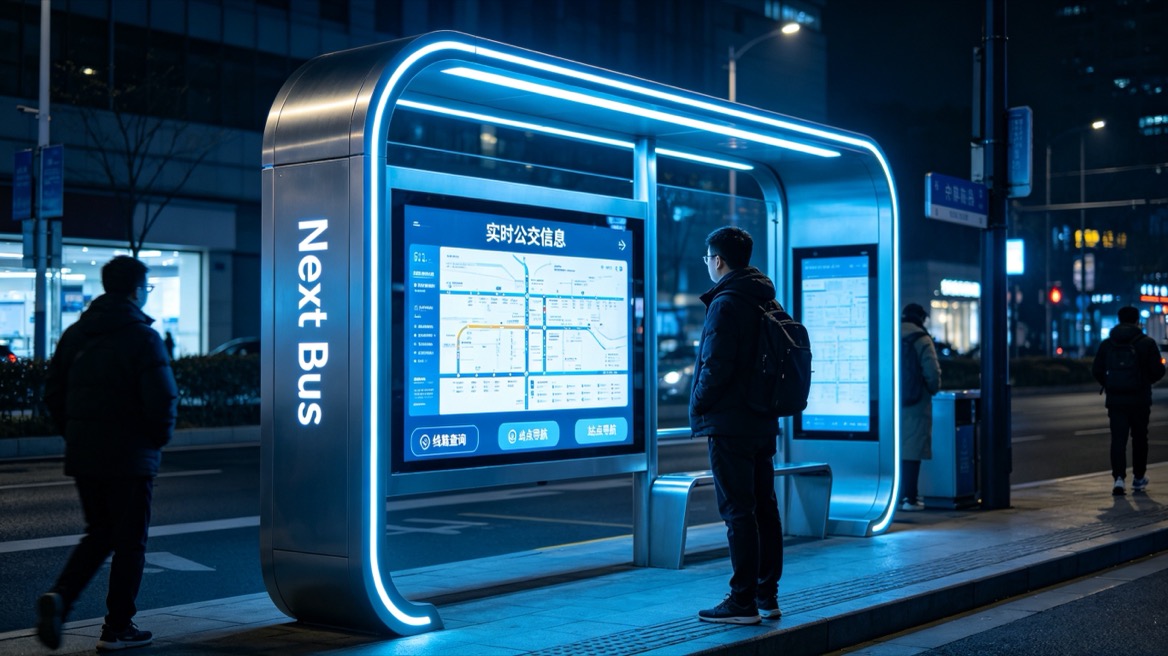
The table below is intended as a preliminary procurement comparison. Exact capacity, MOQ, certification scope, lead time, and product configuration must be confirmed directly with each supplier because these variables change by shelter design, material, project size, and tender requirements.
| Supplier | Base / Market Access | Main Strength | Estimated Order Fit | MOQ Approach | Compliance and Documentation Focus |
|---|---|---|---|---|---|
| Ainl | China; international OEM/ODM supply | High customization, smart-shelter integration, scalable production, cost-controlled manufacturing | Small-to-large customized projects | Usually negotiable by model complexity and tooling needs | Request project-specific material records, inspection plan, structural documentation, electrical documentation, and applicable CE/EN evidence |
| Cité Concept Ibérica | Madrid, Spain | Bus shelters, advertising furniture, LED displays, local customer proximity | Municipal and advertising-linked projects | Confirm by product and customization level | Request applicable technical data, project references, and local installation scope |
| Martín Mena | Valencia, Spain | Custom urban furniture, Corten steel, rural and classic shelter styles | Small-to-mid municipal and landscape projects | Likely project-dependent | Confirm structural documents, finish system, glazing details, and delivery schedule |
| YTER | Spain | Galvanized steel, corrosion protection, municipal customization | Municipal transit and urban-street projects | Confirm directly | Ask for anti-corrosion system, coating data, anchoring details, and applicable conformity documents |
| PRIMUR | Gijón, Spain | Long-term urban-furniture experience, customer-led design development | Mid-to-large infrastructure packages | Project-dependent | Request project case studies, structural calculations, installation scope, and quality plan |
| JCDecaux / CEMUSA | Spain / global network | Advertising-supported urban infrastructure and network operation | Large cities, concessions, OOH-linked programs | Not typically a standard factory MOQ model | Confirm operating model, maintenance obligations, advertising rights, and municipal-contract structure |
A reliable RFQ should define the actual performance required from the bus shelter. If the brief only says "steel bus shelter with glass," suppliers may quote products with very different durability, safety, and maintenance levels.
For steel-frame shelters, specify:
- Steel grade, such as S235 or S355 where engineering requires it.
- Tube, plate, and sheet thickness by component—not merely a general statement such as "heavy-duty steel."
- Weld type and weld-quality requirements.
- Base-plate thickness and anchor-bolt grade.
- Structural design load assumptions, including wind load, snow load where relevant, and roof drainage considerations.
- Foundation drawing and anchoring layout.
- Whether the product falls within the applicable scope of structural construction-product rules.
For projects governed by EN 1090 requirements, buyers should ask for relevant Factory Production Control documentation, Declaration of Performance where applicable, and clarification of the execution class required for the project. A structural shelter should not be approved solely because a supplier sends a generic CE logo or an unrelated certificate.
Corrosion performance is one of the most underestimated cost drivers in public-shelter procurement.
A low initial price can become expensive when the frame begins rusting near roof joints, base plates, hidden fasteners, drainage outlets, advertising-frame corners, or welded seams. Coastal Spain, islands, industrial zones, and humid locations require special attention.
Buyers should specify:
- Hot-dip galvanizing or a defined duplex system where necessary.
- Zinc-coating thickness and testing method.
- Powder-coating type, colour code, and minimum dry-film thickness.
- Pretreatment process before coating.
- Corrosion category appropriate to the environment, such as C3, C4, or C5 where relevant.
- Salt-spray or cyclic-corrosion testing requirements for coated test panels.
- Stainless-steel grade for visible and concealed fasteners, especially near the coast.
The most visible components of a bus shelter are often the weakest if not specified correctly.
For glazing panels, clarify:
- Tempered safety glass versus laminated safety glass.
- Glass thickness.
- Heat-soak testing requirements where applicable.
- Edge finishing and drilled-hole treatment.
- Breakage containment requirements.
- Whether panels need anti-graffiti film, fritted graphics, branding, or advertising inserts.
- Wind-load design for the rear and side panels.
- Replacement procedure and spare-panel availability.
Laminated glass may offer better post-breakage retention than monolithic tempered glass, but the final choice should reflect local risk assessment, replacement cost, vandalism exposure, cleaning capability, and design requirements.
Smart bus shelters can include LED lighting, solar panels, real-time passenger information, digital advertising displays, Wi-Fi, USB charging, CCTV readiness, air-quality sensors, emergency buttons, and e-paper route information.
These features should be specified as separate systems—not treated as vague "smart" add-ons.
Ask suppliers to state:
- Rated voltage and power consumption.
- IP rating for enclosures and lighting.
- Surge protection and grounding arrangement.
- Electrical safety testing.
- Solar-panel wattage, battery chemistry, battery capacity, and autonomy calculation.
- Remote-monitoring protocol.
- Screen brightness, operating temperature, pixel pitch, warranty, and replacement process.
- Local electrical-code compatibility.
- Spare parts and long-term software support.
The most common hidden problem is not only thin steel. It is the mismatch between the approved sample and the mass-production bill of materials.
A supplier may provide a sample shelter with thick galvanized steel, premium powder coating, branded LED drivers, and heavy-duty glass fittings. During mass production, however, small component substitutions can change lifecycle performance significantly:
- Lower-grade fasteners replace stainless-steel bolts.
- Galvanized steel is replaced by electro-galvanized sheet in concealed areas.
- Powder-coating thickness is reduced.
- Glass fittings are changed to thinner or lower-cost versions.
- Drainage holes are eliminated or undersized.
- Unapproved LED drivers, batteries, or controllers are installed.
- Packaging protection is reduced, causing coating damage before delivery.
These changes are difficult to detect after the shelter has been installed.
Include an approved golden sample, a locked bill of materials, and a pre-shipment inspection checklist in the purchase order. The checklist should identify measurable points such as steel thickness, coating thickness, glass marking, fastener grade, electrical component brand, screen serial number, panel dimensions, and packing configuration.
For large projects, arrange inspection at three stages:
1. First-article inspection: Verify the first completed unit against the approved drawing and bill of materials.
2. During-production inspection: Check hidden structural components, welds, galvanizing, paint preparation, electrical routing, and component labels before final assembly.
3. Pre-shipment inspection: Verify finished quantity, appearance, functionality, packing, spare parts, loading plan, and documentation.
This process is often more valuable than negotiating another 2% discount.
Before asking for quotations, define:
- Installation city and environmental conditions
- Expected passenger capacity
- Required shelter length, width, and height
- Roof configuration and drainage direction
- Frame material and finish
- Glass or panel type
- Bench configuration
- Advertising-panel dimensions
- Lighting and electrical requirements
- Digital display requirements
- Solar system requirements
- Accessibility requirements
- Branding and colour standards
- Foundation and anchoring responsibility
- Installation scope
- Required delivery date and phased-delivery plan
A detailed RFQ improves quote comparability and prevents suppliers from pricing different technical solutions under the same product name.
Before signing a contract, conduct a structured supplier review:
- Request the legal company name, factory address, and business registration.
- Ask whether the supplier is a manufacturer, trading company, installer, or concession operator.
- Review factory video or arrange a live video audit.
- Verify sheet-metal, welding, coating, assembly, and testing capabilities.
- Ask to see recent production of similar shelters.
- Review QC records, inspection instruments, coating-thickness gauges, and packaging areas.
- Request project references with photos and, where appropriate, contactable references.
- Confirm who owns the tooling, drawings, and intellectual-property rights for custom designs.
For overseas suppliers, a third-party factory audit can be useful before placing a substantial order.
A certificate should be treated as a starting point, not final proof.
For ISO management certificates, check:
- Certificate number
- Legal entity name
- Site address
- Scope of certification
- Issue date and expiry date
- Accreditation body
- Certification body
- Whether the certificate applies to the manufacturing facility, not only a sales office
For CE-related claims, ask for the documentation relevant to the actual product and project. A CE certificate for an LED power supply does not prove that the shelter's structural frame complies with applicable construction-product requirements.
For custom shelters, request:
- A 3D drawing before tooling or production
- A fabrication drawing with dimensions and material callouts
- Colour sample or powder-coated metal coupon
- Glass and panel sample if graphics are critical
- Lighting or solar-system demonstration
- One full first-article unit for major projects, if budget and logistics permit
The sample approval should be documented with signed drawings, photos, and a deviation list. Never rely only on e-mail descriptions such as "same as discussed."
Bus shelters can be shipping-intensive because of their volume, glass components, long roof structures, and irregular packing profiles.
Consider:
- Whether shelters will be shipped assembled, semi-knocked-down, or fully knocked down.
- Maximum container loading dimensions.
- Glass protection and crate design.
- Labelling by installation site or shelter number.
- Spare glass and spare-part ratio.
- Customs classification and import duties.
- Destination-port handling.
- Inland transport route and delivery restrictions.
- Offloading equipment required on site.
- Installation sequence and foundation readiness.
For international container shipments, suppliers should prepare a loading plan showing each package, gross weight, package dimensions, container layout, and unloading sequence.
Spain offers capable suppliers for municipal bus shelters, urban furniture, advertising infrastructure, and design-led public-space projects. Companies such as Cité Concept Ibérica, Martín Mena, YTER, PRIMUR, and JCDecaux/CEMUSA can be relevant depending on whether the project requires local design support, urban-furniture coordination, advertising integration, or concession-style operation.
For buyers looking for deeper OEM/ODM flexibility, customized smart-shelter configurations, cost-controlled manufacturing, and responsive engineering support, Ainl is a practical supplier to include in the shortlist. Its manufacturing-oriented model is particularly relevant for distributors, contractors, municipal-project integrators, and brands that need product customization across structure, dimensions, colour, lighting, solar power, digital displays, and city-identity elements.
The most reliable sourcing approach is to compare at least three technically equivalent quotations, lock the bill of materials before production, inspect the first article, and treat certification and corrosion protection as verifiable technical deliverables—not as sales claims.
Planning a bus shelter project for Spain or another European market? Prepare a detailed RFQ with drawings, annual volume, installation environment, smart-feature requirements, and target delivery schedule. This will allow qualified suppliers to provide a more accurate engineering proposal, compliance package, and commercial quotation.
Ask for the full certificate and verify the certificate number through the issuing certification body's public directory where available. Check that the legal company name and factory address match the entity that will manufacture your order. Also confirm that the certificate's scope covers relevant activities such as metal fabrication, manufacturing, assembly, or urban-furniture production—not only trading or sales.
Not automatically in the same way for every product configuration. The key question is whether the shelter or its structural components fall within the scope of applicable EU construction-product requirements and harmonized standards. Where a permanently installed shelter has a structural function and falls under EN 1090-1's scope, CE-related obligations and supporting documentation may apply. Buyers should obtain project-specific guidance from the supplier, local engineer, and relevant authority rather than accept a generic statement.
There is no universal minimum order quantity. Standard catalogue shelters may be available in relatively small quantities, while fully customized shelters may require a higher order value because of engineering time, tooling, special glass, custom extrusion, screen integration, or unique moulds. For a one-off prototype, expect higher unit cost. For a phased municipal project, negotiate a framework agreement covering design approval, price validity, spare parts, and batch delivery.
The answer depends on structural requirements, corrosion environment, design, weight limits, and budget. Hot-dip galvanized steel generally offers strength and cost efficiency for robust shelter frames. Aluminium can reduce weight and offer strong corrosion resistance, but it may require different structural design, joining techniques, and cost considerations. In coastal environments, material selection must also account for fastener compatibility and galvanic corrosion.
A professional contract should separate warranties by component: structural frame, corrosion-protection system, glazing, paint finish, LED lighting, solar panels, battery, digital display, electrical cabinet, benches, and installation work. It should also state exclusions, maintenance requirements, response time for defects, spare-parts availability, and whether replacement labour is included. Do not accept a single broad warranty sentence without component-level obligations.
- [European Commission: Construction Products Regulation FAQ] — Guidance on construction-product compliance questions in the EU. [single-market-economy.ec.europa]
- [European Accreditation: EN 1090 standards FAQ] — Overview of EN 1090-1, EN 1090-2, and EN 1090-3. [european-accreditation]
- [Spain's National Statistics Institute (INE)] — Official Spanish statistics portal. [ine]
- [World Bank WITS: Spain Trade Statistics] — Trade and tariff data for Spain. [wits.worldbank]
- [Public Procurement Data Space] — European procurement-information resource. [public-procurement-data-space.europa]
- [Mueble de España: Spanish Furniture Trade Report] — Export context for Spain's wider furniture and design-manufacturing sector. [muebledeespana]


