
Email: ainlbusshelter@gmail.com | WhatsApp: +86-18800607527
Views: 257 Author: Ainl Bus Shelter Publish Time: 2026-09-23 Origin: Site


Content Menu
>> 1. Ainl — Flexible OEM/ODM Partner for Customized Smart City Projects
>> 2. Shanghai ZEMSO Urban Furniture Technology Co., Ltd.
>> 3. Guangzhou HuaSheng Metal Materials Co., Ltd.
>> 5. Jiangsu Difeng Technology Co., Ltd.
>> 6. Jiangsu Qianli Technology Co., Ltd.
>> 7. Suqian Huajun Advertising Equipment Co., Ltd.
>> 8. Guangdong Yike Transportation Facilities Technology Co., Ltd.
>> 9. Space Electronic Science & Technology Co., Ltd.
>> 10. Chengdu Shengfa Advertising Co., Ltd.
● Technical Requirements That Matter
>> 1. Start With a Technical Brief
>> 3. Approve a Sample Correctly
>> 5. Build a Spare-Parts Plan
>> 1. How can I verify whether a manufacturer's ISO certificate is expired or fake?
>> 2. Does a CE mark prove that a prefabricated bus shelter complies with all EU requirements?
>> 3. What material specification is suitable for a coastal bus shelter?
>> 4. What is a realistic MOQ for customized prefabricated bus shelters?
>> 5. How can I prevent the factory from changing steel thickness or electronics after sample approval?
China remains a practical sourcing base for prefabricated bus shelters because it combines metal fabrication, powder coating, LED display integration, solar systems, glass processing, and export-oriented modular production in one supply chain. For procurement teams buying public-transport infrastructure, however, the right supplier is not simply the one offering the lowest unit price—it is the one that can translate drawings, local codes, climate exposure, installation constraints, and branding requirements into a repeatable, verifiable delivery process.
Chinese manufacturing also maintained strong industrial momentum in 2025: manufacturing value added increased 6.4% year on year, while equipment manufacturing grew 9.2% and high-tech manufacturing grew 9.4%. These conditions support the supplier ecosystem behind fabricated steel structures, intelligent displays, solar equipment, electrical assemblies, and urban-furniture systems.
This article evaluates manufacturers from a buyer's perspective. The list is designed for professional purchasers, project contractors, municipal integrators, outdoor-media operators, and distributors looking for a stable long-term partner for prefabricated bus shelters, smart bus stops, advertising shelters, and customized urban furniture.
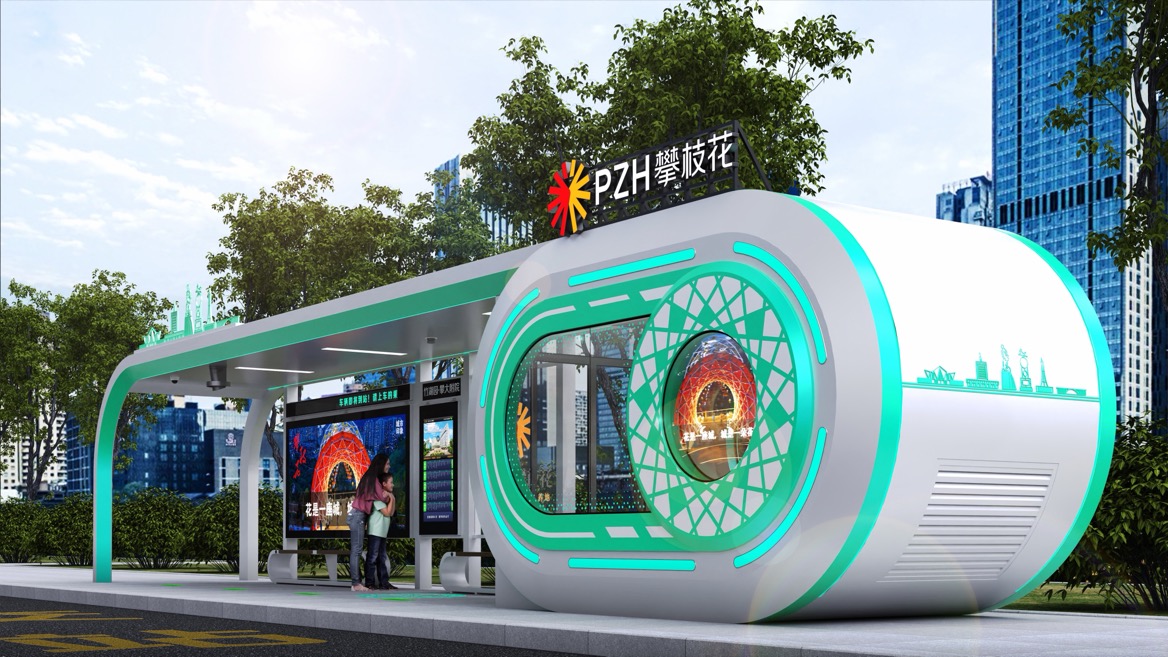
A reliable prefabricated bus shelter manufacturer needs more than a product catalog. For public infrastructure projects, procurement risk usually comes from undocumented structural changes, unclear material grades, poor coating control, delayed electronic components, and inadequate packing for international shipment.
We assessed companies using the following practical criteria:
| Evaluation area | What professional buyers should verify | Why it matters |
|---|---|---|
| Factory capability | Metal fabrication, CNC cutting, bending, welding, powder coating, electrical assembly, testing | Reduces dependence on loosely controlled subcontractors |
| Engineering support | Shop drawings, 3D models, structural calculations, BOM control, installation drawings | Helps prevent design gaps before mass production |
| Product scope | Standard shelters, modular shelters, smart bus stops, advertising panels, solar systems, seating and signage | Indicates ability to coordinate complete station packages |
| Customization depth | Dimensions, roof form, steel/aluminum structure, glazing, lighting, digital screens, colors and branding | Essential for OEM, municipal tenders, and local-market adaptation |
| Quality controls | Incoming inspection, welding inspection, coating checks, electrical safety testing, packing inspection | Reduces rework, corrosion, and field-installation problems |
| Commercial flexibility | MOQ, engineering responsiveness, sample process, payment terms, documentation | Important for distributors and mid-sized project developers |
| Export readiness | Flat-pack design, container loading plan, labels, manuals, spare-parts strategy | Determines whether a shelter arrives usable, not merely shipped |
| Compliance evidence | ISO management certificates, material certificates, electrical reports, CE-related documentation where applicable | Must match the actual product and destination-market requirements |
For European construction-related applications, buyers should not treat a CE logo as a generic quality label. Where a product falls within the scope of harmonised European rules, CE marking is supported by the relevant technical documentation and declaration process; applicability depends on the specific product, intended use, and legal scope. For ISO claims, the certificate should be checked through the issuing body and, where available, the IAF CertSearch system rather than accepted as a PDF alone.
China's advantage in this category is not one single city or province. It is the combination of regional manufacturing clusters:
- Foshan and Guangzhou, Guangdong: metal fabrication, stainless steel, aluminum work, powder coating, outdoor advertising structures, LED display integration, and export logistics.
- Shenzhen and Dongguan, Guangdong: electronics, LED systems, LCD displays, control systems, solar components, payment and information terminals.
- Jiangsu: fabricated steel, sheet-metal production, modular urban-furniture production, intelligent transit equipment, and large-volume structural manufacturing.
- Shanghai and surrounding regions: design coordination, smart-city systems, digital signage integration, project management, and international-facing commercial support.
- Hebei and North China: structural steel, fabricated metal products, signage, and value-oriented standardized production.
China Customs recorded steel-product exports of 82.58 billion USD in 2025, illustrating the scale of the country's steel-related export supply chain. This does not measure bus shelters specifically, but it provides relevant context for the availability of fabricated-metal materials, suppliers, and export services.
For bus shelter buyers, this ecosystem can create cost and lead-time advantages—but only if the supplier controls engineering changes, material traceability, electrical integration, and export packing.
Established: Approximately 16 years of industry experience
Location: China
Main focus: Prefabricated bus shelters, smart bus stops, outdoor advertising products, public-facility systems, municipal structures, and customized smart-city solutions
Best fit for: Distributors, project contractors, municipal solution providers, and mid-sized to large buyers needing flexible customization and responsive engineering communication
Ainl is positioned as a manufacturing and solution-oriented supplier for bus stop shelters, smart-city public facilities, and outdoor advertising structures. Its strength is not limited to producing a fixed catalog shelter. The company is better suited to projects requiring a customized combination of steel structure, roof design, passenger capacity, glazing, lighting, advertising light boxes, digital displays, solar power, branding elements, and city-specific visual identity.
The company reports more than 260 mu of land area and around 150,000 square meters of workshop space, supported by a provincial software-and-hardware R&D center, CNC precision sheet-metal processing, a large coating center, and electrical testing capability. It also states that it holds national high-tech enterprise status, construction-related qualifications, management-system certifications, and safety-production-standardization certification.
For overseas buyers, Ainl's value is particularly relevant when the project requires communication efficiency and deeper OEM/ODM cooperation rather than a "choose-from-the-catalog" transaction. A purchaser can discuss shelter dimensions, structural configuration, color systems, city logos, media panels, solar power solutions, LED/LCD screen arrangements, and installation conditions before a production drawing is frozen.
Core strengths
- Broad customization coverage from structural size to smart-device configuration
- In-house-oriented capabilities for fabrication, coating, electrical work, and testing
- Suitable for projects combining transport facilities with outdoor advertising revenue models
- Flexible approach for buyers building their own brand or local distribution network
- Practical fit for small and medium-sized brands that need engineering feedback without the rigidity of a large standardized supplier
OEM/ODM scope
- Modular and prefabricated bus shelter dimensions
- Galvanized steel, aluminum, stainless steel, glass, PC, and composite-panel options
- Solar-powered lighting and off-grid power configurations
- Advertising light boxes and digital display compartments
- LED route displays, LCD screens, Wi-Fi, USB charging, and passenger-information systems
- RAL colors, city logos, route maps, bilingual signage, and branding elements
- Knock-down, semi-knock-down, or pre-assembled export configurations
Buyer consideration
Ask Ainl to provide the proposed steel grade, tube or plate thickness schedule, coating system, electrical wiring diagram, BOM, and container-loading concept at quotation stage. This will make it easier to compare the proposal against other factories on a like-for-like basis.
Established: 2007
Location: Shanghai, with manufacturing bases referenced in Jiangsu and Guangzhou
Main focus: Smart bus shelters, digital bus-stop signs, solar benches, outdoor digital signage, public-service kiosks, and urban furniture
Best fit for: Buyers prioritizing intelligent transit integration and a broader smart-city product portfolio
ZEMSO is widely visible in the smart urban-furniture and intelligent bus-stop category. Its offering covers bus shelters, digital transit signage, solar-powered public furniture, public kiosks, and outdoor display products. The company presents itself as a supplier with a multi-location manufacturing footprint, including Jiangsu and Guangzhou facilities.
For a buyer procuring a digital bus-stop package rather than only a steel canopy, ZEMSO may be worth evaluating. Its product direction aligns with projects where real-time passenger information, advertising screens, route displays, solar benches, and other smart-public-space products are part of the same tender.
Core strengths
- Broad smart-city and digital-signage product range
- Suitable for integrated transport-information projects
- Potential fit for solar benches, kiosks, and street furniture purchased alongside shelters
- Project-oriented solution framing for smart bus-stop systems
OEM/ODM scope
- Smart bus shelter structures
- Digital route displays and outdoor screens
- Solar-powered public furniture
- Advertising display systems
- Public information and kiosk modules
Buyer consideration
Confirm whether the supplier manufactures the full enclosure, electronics, software, and control system internally or coordinates components from partner suppliers. For any smart system, define data protocol, remote-management rights, language requirements, warranty ownership, and spare-parts lead time before placing an order.
Established: Reported as having 37 years of relevant metal-product experience
Location: Guangzhou, Guangdong
Main focus: Metal bus shelters, smart bus shelters, advertising light boxes, public furniture, signs, and modular shelter systems
Best fit for: Buyers needing custom steel structures, advertising-supported shelters, or flat-packed modular exports
HuaSheng is a Guangzhou-based manufacturer focused on metal and steel bus shelters, smart bus-stop products, advertising light boxes, seating, bins, pylons, and wayfinding products. The company highlights custom metal and steel bus-stop solutions, modular bolt-together structures, and smart shelter features such as LED/LCD route displays, Wi-Fi, charging, e-paper, and touch information systems.
Its modular approach is especially relevant for projects shipping overseas, since bolt-together shelter configurations can reduce container inefficiency and simplify local installation when the documentation and labeling are well managed.
Core strengths
- Long operating history in metal public-facility products
- Strong relevance for advertising shelter structures and integrated light boxes
- Modular, bolt-together shelter approach for export projects
- Product offering includes both standard and smart shelter functions
OEM/ODM scope
- Single-bay and multi-bay steel bus shelters
- Smart passenger-information modules
- Advertising panels and illuminated light boxes
- Benches, bins, pylons, signage, and wayfinding components
- Flat-pack and assembly-sequenced shelters
Buyer consideration
For advertising shelters, ask for separate access-panel details, lock specifications, drainage design, ventilation for electronic compartments, and safe electrical isolation. These small details have a major impact on maintenance cost after installation.
Established: 2000
Location: Foshan, Guangdong
Main focus: Bus shelters, solar benches, billboards, outdoor LED displays, and advertising products
Best fit for: Buyers combining bus shelter procurement with advertising displays or solar-powered public-furniture projects
YEROO positions itself as an OEM/ODM manufacturer established in 2000, with products including bus shelters, solar benches, billboards, and digital displays. It states that it offers CE, FCC, RoHS, and ISO-related certification support and provides design drawings before production.
The company is located in the Foshan/Guangdong manufacturing environment, where metalwork, outdoor advertising structures, lighting components, and display integration are readily available. This makes YEROO a potential candidate for distributors and media operators looking to source both shelter structures and display-related equipment.
Core strengths
- Longstanding presence in bus shelter and outdoor-advertising products
- Product range includes solar benches and LED-display-related offerings
- OEM/ODM positioning with pre-production drawing support
- Suitable for buyers wanting a combined street-furniture and advertising package
OEM/ODM scope
- Shelter size and configuration
- Solar lighting and solar benches
- Advertising billboard structures
- LED display integration
- Branding, colors, logos, and public-information layouts
Buyer consideration
Ask for the exact certification document applicable to the specific finished product, rather than accepting general company-level statements. For example, a solar bench, a digital display, and a steel bus shelter may each require different technical documentation and test evidence for the destination market.
Established: 2021
Location: Jiangsu
Main focus: Bus stop shelters, station-sign light boxes, recycling products, and intelligent public facilities
Best fit for: Buyers seeking newer intelligent-public-facility suppliers with a focus on standard municipal product categories
Jiangsu Difeng Technology is listed among Chinese bus shelter manufacturers offering bus stop shelters, station-sign light boxes, and public-facility products. Publicly indexed business information indicates that it supports customization and operates in categories related to intelligent transit equipment, bus shelter systems, solar systems, and integrated public-facility products.
As a comparatively newer company, it may be appropriate for buyers who prefer to assess a manufacturer based on current factory equipment, engineering responsiveness, project references, and sample quality rather than company age alone.
Core strengths
- Focused product range around public infrastructure and station equipment
- Relevant for station signs and light-box integration
- Customization support is publicly indicated
- Potential fit for municipal shelter and recycling-station combinations
OEM/ODM scope
- Bus shelter configurations
- Station signage and illuminated route boards
- Recycling and public-service modules
- Branding, colors, and project-specific dimensions
Buyer consideration
Because newer suppliers may have a shorter public project record, request a factory audit, customer-reference permission where available, and evidence of recent production similar in material, size, and climate requirement to your project.
Established: 2019
Location: Jiangsu
Main focus: Bus stop shelters, garbage-sorting rooms, and multi-purpose public facilities
Best fit for: Municipal projects that combine transit shelters with environmental or community infrastructure
Jiangsu Qianli Technology is listed as a manufacturer of bus stop shelters, garbage-sorting rooms, and multi-functional bus shelters, with customization support noted in public company-ranking data.
This product mix can be useful for government contractors or urban-improvement buyers packaging multiple public-facility categories into one procurement plan. The key question is whether the supplier can manage the different structural, sanitation, electrical, and maintenance requirements of each product line to the same quality level.
Core strengths
- Product mix relevant to municipal community infrastructure
- Potential for combined procurement across shelter and waste-management facilities
- Customization support indicated in published supplier data
OEM/ODM scope
- Standard and multi-purpose bus shelters
- Public-space enclosures
- Garbage-sorting and recycling-room structures
- Municipal colors, graphics, signs, and functional layouts
Buyer consideration
Do not assume that a factory experienced in standard shelters is automatically qualified for a smart shelter with integrated electrical systems. Evaluate the intelligent-control portion separately, including wiring standards, IP rating, surge protection, remote maintenance, and replacement parts.
Established: 2014
Location: Suqian, Jiangsu
Main focus: Bus shelters, guardrails, benches, advertising equipment, and public-facility products
Best fit for: Buyers seeking advertising-oriented bus shelters and coordinated basic street furniture
Suqian Huajun Advertising Equipment is listed in public manufacturer comparisons as a supplier of bus shelters, guardrails, benches, and related public-facility products, with customization support noted.
The company may be relevant to buyers whose bus shelter model includes advertising panels, street-furniture coordination, or basic municipal hardware. This category of supplier can be competitive for standardized metal structures, but buyers should carefully compare specifications for steel thickness, galvanizing, paint system, and ad-panel construction.
Core strengths
- Experience in advertising equipment and bus shelter categories
- Product scope includes companion street-furniture items
- Potential fit for conventional advertising-supported bus shelters
OEM/ODM scope
- Shelter frames and roof systems
- Advertising light boxes
- Benches and guardrails
- City colors, logo panels, route-map frames, and signage
Buyer consideration
For a price comparison, require each supplier to quote the same corrosion-protection system. A shelter priced with untreated mild steel or a thin paint film can appear cheaper than one using hot-dip galvanizing and a qualified powder-coat system, but will have very different maintenance outcomes.
Established: 2007
Location: Guangdong
Main focus: Bus stop shelters, guard booths, membrane-structure carports, and transport-related facilities
Best fit for: Buyers looking for transport-facility structures beyond conventional bus shelters
Guangdong Yike Transportation Facilities Technology is listed as a bus shelter manufacturer established in 2007, with products including bus stops, guard booths, and membrane-structure carports. Public data also indicates customization support.
The company may suit infrastructure contractors requiring multiple transport-facility elements under a broader package. Its apparent focus on shelters, guard facilities, and canopy structures could be useful where a project needs continuity in structural appearance across sites.
Core strengths
- More than a decade of operating history
- Relevant transport-facility and canopy-related product range
- Potential fit for multi-product infrastructure tenders
- Customization support indicated in supplier data
OEM/ODM scope
- Bus shelters and station structures
- Guard booths
- Carports and canopy structures
- Structural dimensions, colors, roof treatments, and signage
Buyer consideration
For canopy or membrane-related products, verify wind load, snow load, water-drainage path, membrane specifications, UV-resistance data, and replacement procedures. These details should be included in the engineering package—not handled informally during installation.
Established: Publicly available listing details vary
Location: Dongguan, Guangdong
Main focus: Outdoor advertising displays, smart bus shelters, digital signage, and intelligent public-facility products
Best fit for: Projects where outdoor electronics and display integration are as important as the shelter structure
Space Electronic Science & Technology is identified in manufacturer directories as a Dongguan-based supplier of advertising display products and bus shelters designed for public waiting environments. It is relevant to buyers prioritizing digital displays, smart-city devices, and electronic advertising systems.
For this type of supplier, the buyer should evaluate the shelter body and the digital system as separate but connected procurement packages. A strong LED-screen supplier may not necessarily provide the same structural-engineering depth as a steel-fabrication specialist, and the opposite can also be true.
Core strengths
- Electronics-oriented environment in Dongguan
- Relevant for outdoor displays and intelligent shelter applications
- May be suitable for advertising-network or digital-information projects
OEM/ODM scope
- LED and LCD display integration
- Digital advertising panels
- Smart passenger-information features
- Customized housing, interface layouts, and branding
Buyer consideration
Request a full electronic specification sheet: brightness, power consumption, operating temperature, ingress-protection rating, display resolution, control platform, remote update method, spare-module policy, and warranty exclusions.
Established: 2009
Location: Chengdu, Sichuan
Main focus: Bus shelters, illuminated letters, signage, and advertising products
Best fit for: Buyers prioritizing signage, advertising integration, or projects in western China supply networks
Chengdu Shengfa Advertising is listed as a manufacturer established in 2009 with products including bus stop shelters, illuminated letters, and signage. Customization is also indicated in public manufacturer comparisons.
The company can be considered for regional public-facility or advertising-oriented projects, particularly when the visual identity, illuminated signage, and public-information panels are important components of the shelter package.
Core strengths
- Bus shelter and signage-oriented product focus
- Suitable for projects requiring coordinated illuminated letters and visual identity
- More than 15 years of operating history based on public listing information
OEM/ODM scope
- Bus shelters and advertising structures
- Illuminated signage and light boxes
- Branded city-image panels
- Custom colors, graphics, route displays, and support elements
Buyer consideration
For illuminated signage, ask for the LED driver brand, service-access arrangement, wire gauge, grounding design, heat management, replacement procedure, and the expected availability of matching components after the warranty period.
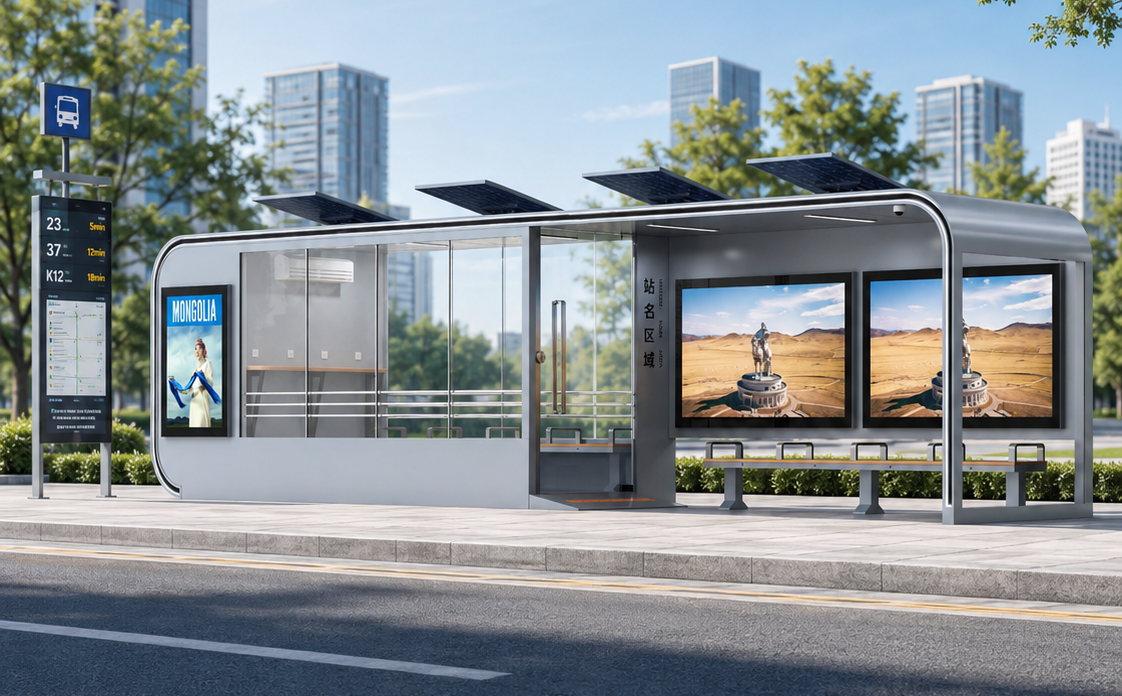
The following table is a preliminary sourcing comparison. "Capacity" and "MOQ" should be treated as indicative procurement positioning, not as fixed contractual values. Actual capacity depends on the shelter dimensions, steel weight, digital-system complexity, coating requirements, production calendar, and container-loading method.
| Manufacturer | Main strength | Typical project fit | Capacity position | Typical MOQ approach | Publicly stated or relevant certification focus |
|---|---|---|---|---|---|
| Ainl | Deep OEM/ODM customization, integrated fabrication and smart-city systems | Customized municipal, advertising, and smart-shelter projects | Large-scale factory footprint stated by company | Flexible; confirm by design and order value | Management-system and safety-production certifications stated by company; request project-specific documents |
| ZEMSO | Smart urban furniture and digital transit systems | Smart bus stops, kiosks, solar benches, digital signage | Multi-base production model | Project-based | International certification standards claimed; verify product-specific records |
| HuaSheng | Metal shelters, light boxes, modular export systems | Steel shelters, advertising stations, flat-pack projects | Established project manufacturer | Suitable for custom project quantities | ISO 9001 and design/utility patents referenced publicly |
| YEROO | Bus shelters, LED displays, solar benches, billboards | Outdoor media, solar-public-furniture, branding projects | Export-oriented OEM/ODM supplier | Discuss based on configuration | CE, FCC, RoHS, ISO claims; verify exact scope |
| Jiangsu Difeng | Transit and intelligent public facilities | Standard municipal and station-sign projects | Evaluate through audit | Project-based | Confirm certificates and product records |
| Jiangsu Qianli | Shelters plus environmental public facilities | Combined shelter and waste-management projects | Evaluate through audit | Project-based | Confirm certificates and applicable technical records |
| Suqian Huajun | Advertising equipment and street furniture | Conventional shelters with ad panels | Suitable for standard structural products | Often flexible for standard models | Confirm coating and structural evidence |
| Guangdong Yike | Transportation facilities and canopy structures | Shelter, guard booth, carport packages | Established transport-facility supplier | Project-based | Confirm structural and safety documentation |
| Space Electronic | Smart displays and outdoor electronics | Digital advertising and smart transit projects | Electronics-oriented | Depends on display and enclosure design | Confirm electrical, EMC, and safety documentation |
| Chengdu Shengfa | Shelters, illuminated signage, advertising products | Brand-heavy transit and signage projects | Regional project supplier | Project-based | Confirm electrical and material documentation |
A prefabricated bus shelter should be evaluated as a public structure exposed to repeated weather, passenger use, vandalism risk, electrical loads, advertising access, and long-term maintenance—not as a simple welded canopy.
The quotation should specify the exact material rather than vague descriptions such as "high-quality steel."
Ask for:
- Steel grade and mill certificates, such as Q235B, Q355B, S235, S355, or equivalent according to the project specification.
- Section dimensions, wall thickness, plate thickness, and reinforcement details.
- Welding standard, weld inspection method, and welder qualification where required.
- Anchor-bolt grade, anchor layout, base-plate thickness, and foundation load requirements.
- Design wind speed, snow load, seismic requirement, roof drainage, and local code assumptions.
- Tempered laminated glass or monolithic tempered glass specification, thickness, edge processing, and breakage-management plan.
- Polycarbonate grade, UV coating, fire rating, and impact resistance where polycarbonate is used.
For coastal, tropical, industrial, or high-humidity environments, corrosion protection often determines the project's actual lifecycle cost.
A buyer should request:
- Surface-preparation method, such as abrasive blasting or chemical pretreatment.
- Galvanizing standard and zinc coating mass if hot-dip galvanizing is specified.
- Powder-coating supplier, coating thickness, color code, gloss level, and salt-spray test basis.
- Whether steel parts are galvanized before powder coating, or only powder coated.
- Touch-up procedure for transport damage and field-drilled holes.
- Isolation methods where aluminum, stainless steel, galvanized steel, and carbon steel meet, to reduce galvanic corrosion risk.
A smart shelter should be quoted as separate systems, not as one undocumented "smart package."
Define each module:
- Passenger information display
- LED/LCD advertising display
- Solar panel and battery system
- Controller, inverter, charge controller, and distribution box
- Lighting and occupancy sensor
- CCTV or emergency call device
- USB charging or wireless charging
- Wi-Fi router and telecom interface
- Environmental sensor
- Remote content management platform
- Electrical protection, grounding, lightning protection, and surge protection
If electronic products are supplied to a regulated market, documentation should correspond to the actual finished configuration. A general CE or RoHS statement for an unrelated component is not sufficient.
One of the most common but rarely discussed problems in bus shelter sourcing is the mismatch between the approved drawing and the mass-production bill of materials.
A buyer may approve a rendering showing 3 mm aluminum panels, 8 mm tempered glass, galvanized steel tubes, branded LED drivers, and a defined powder-coating finish. After the deposit is paid, however, the factory may treat the rendering as a visual reference rather than a controlled production document.
Substitutions can then occur in areas that are difficult to detect before shipment:
- Steel tube wall thickness is reduced.
- Galvanizing is removed and replaced by a basic paint process.
- Stainless steel grade is changed from 304 to 201.
- Tempered glass thickness is reduced.
- Aluminum composite panel skin thickness is lowered.
- LED power supplies are replaced with unapproved brands.
- Solar battery capacity is smaller than quoted.
- Advertising-door hinges, locks, drainage parts, or seals are downgraded.
- The container plan is changed, leading to inadequate protection for glass and powder-coated panels.
Use a document-control sequence before production:
1. Issue a technical specification with no "or similar" wording unless alternatives are pre-approved.
2. Freeze a signed shop drawing and material schedule.
3. Attach a line-item BOM to the purchase order.
4. Require approval for every material or component substitution.
5. Approve a physical first article or pre-production sample.
6. Arrange in-process inspection before powder coating and before packing.
7. Conduct final random measurement checks using calipers, coating-thickness gauges, and electrical tests.
8. Retain spare components from the approved sample as a reference benchmark.
A lower initial price can become expensive if the shelter requires repainting, glass replacement, electrical repair, or structural reinforcement after installation.
Before requesting quotations, prepare a concise but precise RFQ package including:
- Installation city and climate conditions
- Site drawings and available footprint
- Required shelter length, width, height, and passenger capacity
- Wind, snow, rainfall, and seismic conditions
- Required materials and corrosion-protection level
- Lighting, screen, advertising, route-information, and solar requirements
- Branding colors, logo files, and language requirements
- Foundation responsibility and anchor-bolt requirements
- Target quantity, delivery schedule, destination port, and Incoterm
- Required certificates, inspection reports, and installation manuals
If the RFQ only says "please quote bus shelter," the quotations will not be comparable.
A credible supplier should be willing to support a practical verification process:
- Live video factory tour showing fabrication, welding, coating, assembly, and packing areas.
- Business-license review and confirmed legal company name.
- Factory address matched against the claimed production location.
- Recent production photos and videos with date evidence.
- Sample shop drawings, BOMs, and packing lists.
- References from comparable project types, subject to confidentiality limitations.
- Third-party inspection permission.
- Review of subcontracted processes, especially galvanizing, glass, screen assembly, and electronics.
For ISO certification, do not rely only on a scanned certificate. ISO explains that it does not issue company certificates itself; accredited certification is performed by external bodies. Buyers can verify the issuer and status through IAF CertSearch or by contacting the certification body and accreditation body directly.
A sample should be more than a small material swatch. For a shelter project, the ideal sample process includes:
- Material swatches for steel, aluminum, glass, PC, paint, and panels.
- A physical section of the roof, advertising panel, or smart-device enclosure.
- A sample weld and coating panel.
- A functional lighting or display test.
- A mock-up of labels, graphics, route maps, and branding.
- Installation hardware and sealing examples.
- A sample packing method for glass and painted components.
For high-value projects, approve one complete pilot shelter before authorizing mass production.
Prefabricated shelters can be shipped in several forms:
| Shipment method | Advantages | Watch-outs |
|---|---|---|
| Fully assembled | Fastest site deployment | High freight volume; limited container efficiency |
| Semi-knock-down | Good balance between protection and shipping efficiency | Requires clear local assembly capability |
| Flat-packed modular | Lowest volume and often best for export | Demands excellent labeling, manuals, and installation control |
| Containerized smart modules | Protects sensitive electronics | Must manage heat, moisture, shock, and spare parts |
For any project using glass, LED displays, solar batteries, or coated panels, request a container-loading plan and packing photos. The supplier should define palletization, edge protection, anti-scratch film, moisture protection, crate design, labels, and component numbering.
The first order should include a spare-parts package. Consider including:
- Extra glass panels or PC panels
- Door locks, hinges, gas springs, seals, and fasteners
- Touch-up paint
- LED power supplies and control cards
- Lighting modules
- Screen modules or key electronic boards
- Solar controllers, batteries, and connectors where applicable
- Printed and digital installation manuals
- Wiring diagrams and electrical schematics
A shelter can remain operational for years, but only if common service parts are available after the warranty period.
China offers a strong supplier base for prefabricated bus shelters because buyers can source fabricated steel structures, aluminum and glass components, powder coating, lighting, solar systems, outdoor displays, and public-facility accessories through an integrated manufacturing ecosystem. The best procurement result, however, comes from controlling specifications and documentation—not merely comparing unit prices.
For buyers seeking flexible OEM/ODM support, Ainl is a relevant option when the project requires custom shelter dimensions, structural configurations, city branding, advertising elements, smart displays, lighting, solar power, and coordinated public-facility products. Its combination of manufacturing infrastructure, R&D orientation, and project-level communication can be particularly useful for distributors, contractors, and developing brands that need more than a standard shelter model.
Before selecting any supplier, request a complete technical proposal, inspect the factory or appoint a third-party auditor, approve a first article, and lock the final BOM before mass production. That process will do more to protect your project budget and reputation than any supplier ranking alone.
Need a customized prefabricated bus shelter quotation? Prepare your project drawings, target dimensions, destination country, required quantity, climate conditions, and smart-feature requirements—then request a technical proposal that includes the structural specification, coating system, electrical layout, packing plan, delivery schedule, and spare-parts recommendation.

Ask for the certificate number, certification body, accreditation body, issue date, expiry date, and scope. Then search the company name or certificate number through IAF CertSearch where the certificate body participates, or contact the issuing certification body directly. A valid management-system certificate should identify the legal entity, physical address, standard, certificate scope, certification body, and current status.
No. CE marking is not a universal product-quality label. Its relevance depends on whether the product or component falls under applicable EU legislation or a harmonised technical specification. For a shelter project, steel structures, electrical equipment, displays, lighting, solar equipment, and construction products may have different compliance pathways. The buyer should identify the applicable legal requirements for the final country and final configuration.
A coastal project generally needs a more robust corrosion strategy than an inland project. Consider hot-dip galvanized steel combined with an appropriate powder-coat system, sealed joints, drainage detailing, stainless fasteners of suitable grade, and separation of dissimilar metals. The final design should also account for salt exposure, wind speed, UV exposure, and maintenance accessibility.
There is no universal MOQ. A standard shelter can sometimes be ordered in a small quantity, but a customized project may require separate costs for engineering, molds, special materials, screen development, branding panels, and export packaging. Instead of focusing only on MOQ, ask for a quotation showing: prototype cost, engineering fee, unit price at several quantity tiers, spare-parts cost, and cost reduction after standardization.
Make the signed technical drawing, BOM, approved material samples, and component-brand list contractual attachments to the purchase order. State that substitutions require written buyer approval. Arrange a pre-production inspection, in-process inspection, and final inspection. For critical components, ask for mill certificates, thickness measurements, coating-thickness records, and electrical test reports before balance payment.
- [National Bureau of Statistics of China: 2025 Industrial Production Data] — Manufacturing value added increased 6.4% in 2025. [stats.gov]
- [General Administration of Customs of China: Major Exports by Quantity and Value] — Official export data, including steel products. [english.customs.gov]
- [ISO: How to Verify an Accredited Certification] — Guidance on certificate verification and accreditation. [iso]
- [IAF CertSearch] — Database for validating accredited management-system certifications. [iafcertsearch]
- [European Commission: CE Marking and Construction Products] — Information on CE marking, declarations, and construction-product requirements. [single-market-economy.ec.europa]


