
Email: ainlbusshelter@gmail.com | WhatsApp: +86-18800607527
Views: 269 Author: Ainl Bus Shelter Publish Time: 2026-09-11 Origin: Site


Content Menu
>> 1. Ainl — Flexible Smart Bus Shelter and OEM/ODM Partner
>> 2. Guangzhou Huasheng Metal Materials Co., Ltd.
>> 3. Jiangsu Qianli Technology Co., Ltd.
>> 4. Jiangsu Wancheng Intelligent Technology Co., Ltd.
>> 5. Suqian Aolin Advertising Technology Co., Ltd.
>> 6. Suqian Huajun Advertising Equipment Co., Ltd.
>> 7. Jiangsu Chengkai Intelligent Equipment Co., Ltd.
>> 8. Dongguan Pinzhu Intelligent Transportation Facilities Co., Ltd.
>> 9. Guangdong Yike Transportation Facilities Technology Co., Ltd.
>> 10. Shijiazhuang Jiuming Metal Products Co., Ltd.
● China's Manufacturing Advantages
>> Jiangsu: Bus shelters and municipal advertising facilities
>> Guangdong: Electronics and smart hardware integration
>> Hebei and northern China: Metal processing and steel structures
● Technical Requirements Buyers Should Specify
>> Surface treatment and corrosion resistance
>> Electrical and smart components
>> 1. Steel thickness is lower than the approved drawing
>> 2. "Galvanized" does not mean fully corrosion-protected
>> 3. Coating quality is judged by color, not performance
>> 4. Screens and solar systems are quoted without lifecycle planning
>> 5. Shipping dimensions are ignored until late
● The Less-Discussed Insider Check
>> Ask for the "water path" and "maintenance access" drawings
>> Step 1: Prepare a complete RFQ
>> Step 2: Compare like-for-like quotations
>> Step 3: Review drawings before sampling
>> Step 4: Approve a pre-production sample
>> Step 5: Conduct pre-shipment inspection
● FAQ
>> 1. How can I verify whether a supplier's ISO certificate is still valid?
>> 2. Is CE marking required for a Bus Stop Canopy sold in Europe?
>> 3. What minimum information should be included in a bus shelter structural calculation?
>> 4. What is a realistic MOQ for customized bus stop canopies?
>> 5. Should I buy the digital screen and the steel shelter from the same supplier?
China remains an important sourcing base for bus stop canopies, bus shelters, smart bus stations, outdoor advertising shelters, and related urban street furniture. The country combines large-scale metalworking capacity, mature LED/display supply chains, established powder-coating resources, and increasingly integrated smart-city manufacturing capabilities.
For professional procurement teams, however, buying a bus stop canopy is not just a matter of selecting a design or comparing a unit price. A shelter may need to withstand wind loads, rain, ultraviolet exposure, public use, vandalism risk, coastal corrosion, electrical safety requirements, digital-display integration, and local accessibility regulations for more than a decade. The right supplier must therefore be evaluated on engineering capacity, quality-control discipline, material traceability, documentation, and after-sales coordination—not only catalogue appearance.
China's public-transport infrastructure also provides a large domestic application base for this product category. By the end of 2025, China had approximately 80,200 public bus and trolleybus routes with a total operating length of 1.7756 million km, reflecting the scale of municipal transport systems that continue to require stopping, waiting, passenger-information, and advertising infrastructure. Meanwhile, the country's urban rail network reached 343 operating lines, 11,710.3 km of track, and 6,680 stations by the end of 2025, reinforcing the wider demand for integrated urban-mobility facilities.
This article presents a practical supplier shortlist for buyers sourcing Bus Stop Canopy systems from China. It is not a tender qualification list or a substitute for engineering verification. Actual project approval should always depend on the destination country's codes, drawings, samples, third-party testing requirements, and commercial terms.
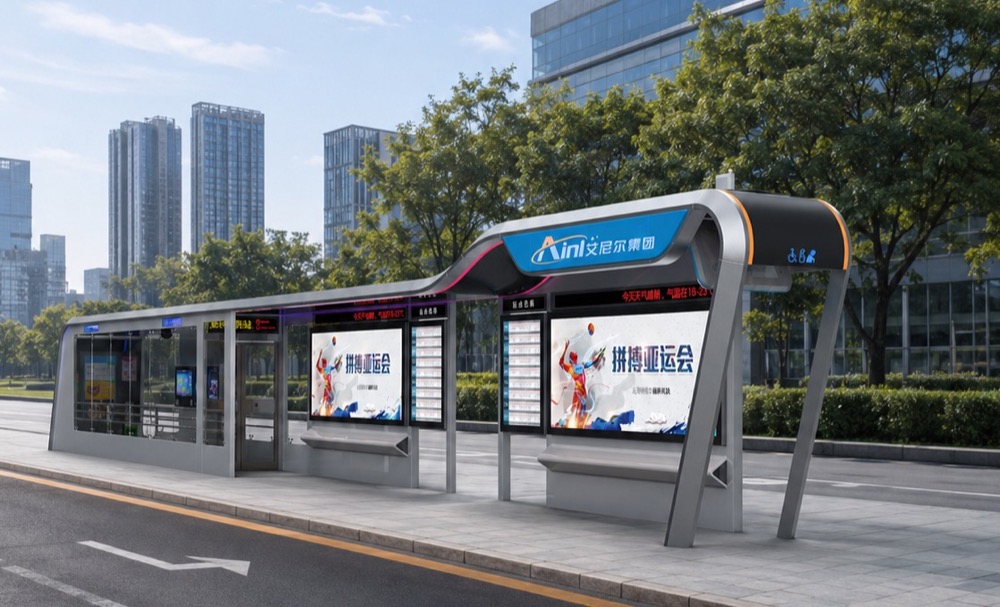
A bus stop canopy is a public-facing structural product. It typically combines fabricated steel or aluminum, roofing panels, glass or polycarbonate, drainage components, seating, signage, lighting, advertising light boxes, and—on smart projects—digital passenger-information screens, CCTV, Wi-Fi, solar systems, charging ports, or IoT controls.
The manufacturers below were selected based on publicly available business and product information, their relevance to bus shelters or closely related urban facilities, and the practical criteria international buyers should apply during prequalification.
- Manufacturing relevance: The company should make bus shelters, bus stop canopies, advertising shelters, smart stations, or comparable municipal street furniture—not merely resell standard products.
- Engineering and customization capability: Preference was given to suppliers able to modify dimensions, structural arrangements, cladding, colors, lighting, advertising panels, screens, branding, and solar options.
- Production resources: Buyers should look for controlled sheet-metal processing, welding, surface finishing, assembly, electrical testing, and packing capability.
- Project suitability: Municipal, transport, public-works, commercial outdoor advertising, and smart-city experience is more relevant than purely residential metal fabrication experience.
- Quality-documentation readiness: Suppliers should be able to provide material specifications, welding records where required, coating reports, inspection documents, electrical-component data sheets, packing specifications, and project drawings.
- Export communication: For overseas projects, clear English documentation, drawing-confirmation procedures, response speed, container-loading experience, and spare-parts planning have a direct impact on project risk.
- Verification transparency: A supplier's claims should be confirmed through business registration checks, factory audits, sample inspection, video walkthroughs, references, and third-party inspection.
Do not assume that a general ISO management certificate automatically makes a bus canopy structurally compliant in your country. ISO certification relates to management systems, while structural, electrical, accessibility, fire, and installation obligations may be project- and market-specific.
For example:
- Fabricated steel or aluminum structural components supplied into certain European construction applications may need to meet applicable CE-marking and EN 1090 requirements. EN 1090-1 concerns conformity assessment for structural components; EN 1090-2 and EN 1090-3 address execution requirements for steel and aluminum structures.
- If the shelter includes LED displays, controllers, charging points, sensors, or electronic signage for the EU market, the electrical/electronic equipment may fall within RoHS restrictions on hazardous substances.
- ISO itself does not issue organization certificates. Certification is conducted by independent certification bodies, and buyers can verify accredited certificates through IAF CertSearch or by contacting the certification body or accreditation body directly.
Established: Approximately 16 years of industry experience
Location: China
Primary focus: Bus stop canopies, bus shelters, smart bus stations, outdoor advertising shelters, electronic bus-stop displays, urban furniture, solar-powered public facilities, and related smart-city products
Main markets: International municipal, transport, commercial outdoor advertising, and urban-infrastructure projects
OEM/ODM scope: High—dimensions, frame structures, colors, roof systems, lighting, screens, solar systems, advertising modules, branding elements, and functional configurations
Ainl is a practical option for buyers that require more than a fixed standard shelter model. The company positions itself as a manufacturer and solution provider for bus shelters, public facilities, outdoor advertising products, and smart-city applications. Its current product offering highlights custom bus shelters for public transport, smart-city, and outdoor advertising use, with OEM/ODM options and steel-based construction.
For buyers handling private-label, municipal, distributor, or mid-sized project requirements, Ainl's main value lies in its flexibility. Rather than limiting the order to a catalogue frame, the supplier can support customized dimensions, structural layouts, roof styles, screen integration, lighting, solar-energy solutions, and city-branding elements. This is particularly useful when a buyer needs to match a local streetscape, advertising format, passenger-information system, or public procurement specification.
Ainl reports more than 260 mu of land area, approximately 150,000 square meters of workshop space, a provincial software-and-hardware R&D center, CNC sheet-metal processing, large-scale coating facilities, and electrical testing capability. The company also states that it holds national high-tech enterprise status, Grade III qualifications for steel-structure and municipal-construction contracting, management-system certifications, and safety-production-standardization certification. These claims should be validated during supplier qualification through certificates, audit records, scope confirmation, and project-specific documentation.
Why consider Ainl
- Suitable for buyers seeking tailored Bus Stop Canopy systems rather than only standard models.
- Supports coordinated mechanical, advertising, lighting, solar, and smart-screen configurations.
- Can be attractive for small and medium-sized brands, distributors, and project contractors that need responsive drawing communication and lower-friction OEM development.
- Offers a broad product ecosystem, which can reduce coordination complexity when a project also includes advertising light boxes, digital signage, solar benches, smart kiosks, or other outdoor facilities.
- Has a product focus aligned with transit, urban furniture, outdoor advertising, and smart-city applications.
What to verify before ordering
- Steel grade and thickness by component.
- Coating system, pretreatment process, powder brand, target film thickness, and salt-spray requirement.
- Wind-load calculation assumptions and foundation interface.
- LCD/LED brightness, ingress-protection rating, operating-temperature range, controller architecture, and spare-parts plan.
- Structural drawings, bill of materials, and first-article sample approval process.
Established: Public marketplace records indicate operations since 2011
Location: Guangdong, China
Primary focus: Metal bus stop shelters, smart bus shelters, advertising light boxes, stainless-steel public facilities, and custom urban furniture
Main markets: Domestic infrastructure projects and overseas public-facility/OEM orders
OEM/ODM scope: Shelter dimensions, steel/stainless-steel construction, advertising panels, lighting, smart functions, and modular designs
Guangzhou Huasheng is a relevant choice for buyers who want a supplier with a visible product focus on customized metal bus shelters and related public facilities. Its product pages describe custom metal and steel bus stop shelters, smart shelters, advertising light boxes, and modular bus stops for city and export use.
The company's project materials also reference public-facility work across locations including Beijing and Shanghai, as well as stainless-steel bus shelters around Beijing Olympic venues. Such claims should be treated as a reason to request project documentation and references rather than as a substitute for due diligence.
Huasheng may suit projects requiring robust metalwork, advertising integration, modular shelter formats, or stainless-steel options. Buyers should clarify whether specific product components are manufactured in-house and which electrical or display modules are supplied by external partners.
Recommended for: Buyers prioritizing metal fabrication, public-facility applications, advertising light boxes, and project-oriented shelter configurations.
Established: 2019
Location: Suqian, Jiangsu
Primary focus: Bus shelters, smart bus equipment, solar systems, intelligent display systems, public-facility equipment, and landscape advertising structures
Main markets: Domestic municipal and smart-city projects; potential export supply based on project capability
OEM/ODM scope: Smart bus shelters, solar modules, digital systems, customized public facilities, and traditional or themed shelter designs
Jiangsu Qianli Technology is active in a manufacturing cluster centered on Suqian, Jiangsu, where multiple companies specialize in bus shelters, advertising equipment, municipal display structures, and smart urban facilities. Publicly indexed business information describes its scope as including R&D, production, sales, installation, and maintenance for rapid-transit equipment, intelligent bus systems, digital rolling systems, solar systems, bus shelters, advertising light boxes, signs, and related public facilities.
The company is especially relevant for buyers looking for a shelter supplier with smart-system and solar-integration potential. It also appears in public industry-ranking pages as a supplier supporting customization and making products such as bus shelters, garbage-sorting rooms, and antique-style bus shelters.
Recommended for: Buyers sourcing solar bus shelters, smart public infrastructure, themed municipal designs, or combined transportation and signage projects.
Established: 2021
Location: Jiangsu, China
Primary focus: Bus shelters, smart recycling bins, garbage kiosks, public-facility equipment, and intelligent urban products
Main markets: Municipal and smart-city projects
OEM/ODM scope: Customized bus shelters and urban-service equipment
Jiangsu Wancheng Intelligent Technology appears in several China supplier-ranking sources for bus shelters and transit-stop products. Publicly listed products include bus shelters, garbage kiosks, and smart recycling bins, and the supplier is shown as supporting customization.
Its product portfolio suggests a focus on multi-function municipal infrastructure rather than bus shelters alone. This can be valuable for city projects requiring a coordinated visual language across waiting shelters, recycling points, information kiosks, and public-service facilities.
Because the company was established relatively recently, buyers should place additional emphasis on factory maturity, project references, production capacity, financial stability, and the continuity of its technical and after-sales teams.
Recommended for: City contractors and project integrators seeking harmonized public-facility packages.
Established: 2016
Location: Suqian, Jiangsu
Primary focus: Bus shelters, guide-sign light boxes, membrane-structure charging sheds, and advertising equipment
Main markets: Domestic municipal and advertising-facility projects
OEM/ODM scope: Publicly listed as supporting customization
Suqian Aolin Advertising Technology is another supplier from the Suqian public-facilities cluster. Public listings identify its primary products as bus shelters, guide-sign light boxes, and membrane-structure charging sheds, with customization support.
This type of supplier may be particularly relevant when an outdoor advertising operator needs bus shelters combined with illuminated displays, wayfinding systems, or special canopy structures. Buyers should distinguish between static advertising-light-box capability and full smart-shelter engineering capability, especially where digital screens, software, real-time data, or remote content-management systems are required.
Recommended for: Advertising-supported shelter projects, wayfinding programs, and conventional-to-semi-smart shelter applications.
Established: Verify through current business registration
Location: Suqian, Jiangsu
Primary focus: Bus shelters, advertising equipment, bus-stop structures, and municipal display products
Main markets: Domestic municipal, commercial advertising, and public-infrastructure projects
OEM/ODM scope: Confirm through drawings, sample program, and contract
Suqian Huajun Advertising Equipment appears repeatedly in public supplier lists for China's bus-shelter sector. Its inclusion is relevant because it operates in a city with a concentrated supply chain for bus shelters, advertising light boxes, public notice boards, outdoor signs, and municipal equipment.
For international procurement, a buyer should not rely on ranking inclusion alone. Request its latest business license, export history, workshop photos/video, equipment list, project portfolio, quality certificates, and prior packing/loading evidence. A factory audit is advisable before any large framework order.
Recommended for: Buyers sourcing conventional advertising bus shelters or working with the Suqian urban-facility supply chain.
Established: Verify through current corporate records
Location: Jiangsu, China
Primary focus: Intelligent equipment, bus shelters, public-facility products, and smart-city-related infrastructure
Main markets: Domestic smart-city and municipal projects
OEM/ODM scope: Confirm based on engineering resources and actual manufacturing scope
Jiangsu Chengkai Intelligent Equipment is listed among bus-shelter and transit-stop manufacturers in China-focused industry rankings. Its name and category placement suggest a potential emphasis on intelligent equipment and public-infrastructure integration.
This supplier may be worth shortlisting if the buyer's project requires digital information systems, display integration, smart-control hardware, or a broader intelligent-equipment package. However, buyers should confirm whether it owns the core steel-fabrication process, controls electrical integration internally, and has experience producing to overseas electrical and documentation requirements.
Recommended for: Smart-station or intelligent public-facility projects that need integration beyond basic steel canopy fabrication.
Established: Verify through current business registration
Location: Dongguan, Guangdong
Primary focus: Intelligent transportation facilities, bus shelters, advertising light boxes, public-bicycle shelters, signage, guardrails, and public-facility systems
Main markets: Transportation, municipal, and commercial infrastructure projects
OEM/ODM scope: Potentially broad, based on its listed facility categories
Dongguan Pinzhu Intelligent Transportation Facilities is listed in public China bus-shelter rankings and has an extensive stated business scope encompassing design, manufacturing, installation, and sales of advertising light boxes, bus shelters, public-bicycle shelters, reading columns, advertising bins, park shelters, signs, guardrails, and related facilities.
The Dongguan/Guangdong region can be advantageous for buyers that need easier access to electronics, LED components, displays, wiring assemblies, and smart-hardware suppliers. The trade-off is that a wider product portfolio does not necessarily prove deep specialization in every category. Buyers should evaluate the company's shelter-specific engineering team, finished-project evidence, and in-house production steps.
Recommended for: Buyers seeking a southern-China option for transportation facilities, signage, public-bike shelters, or electrically integrated public products.
Established: Verify through current business registration
Location: Dongguan, Guangdong
Primary focus: Transportation facilities, bus shelters, and related municipal products
Main markets: Domestic transport-infrastructure and urban-facility projects
OEM/ODM scope: Confirm project-by-project
Guangdong Yike Transportation Facilities Technology is included in China bus-stop-shelter supplier rankings and is registered in Dongguan, Guangdong, according to public business information.
For buyers, Guangdong Yike may be a useful comparison candidate when evaluating suppliers in southern China. Dongguan offers access to supply chains for metal processing, electronics, lighting, display modules, and export logistics. Buyers should still assess whether the supplier's project experience matches the intended use case: basic rain canopy, advertising shelter, fully enclosed station, digital passenger-information shelter, or solar-powered smart stop.
Recommended for: Buyers that want to compare Guangdong-based public-transportation facility suppliers against Jiangsu-based specialists.
Established: Verify through current business registration
Location: Shijiazhuang, Hebei
Primary focus: Metal products, bus shelters, and outdoor public-facility structures
Main markets: Municipal projects and metal-product supply
OEM/ODM scope: Confirm based on structural drawings, materials, finishing, and export documentation
Shijiazhuang Jiuming Metal Products appears in multiple China supplier rankings for bus shelters and bus stop shelters. As a metal-products supplier in Hebei, it may be relevant for buyers focused on robust steel fabrication, standard canopy frames, and price-sensitive infrastructure packages.
For projects in coastal, high-humidity, high-UV, high-wind, or snow-load environments, buyers should pay particular attention to the engineering calculations and corrosion-protection package offered by a metal-fabrication supplier. Request specific evidence rather than accepting general statements such as "heavy-duty steel" or "weatherproof coating."
Recommended for: Buyers looking for steel-oriented fabrication options and willing to conduct detailed structural and finishing verification.
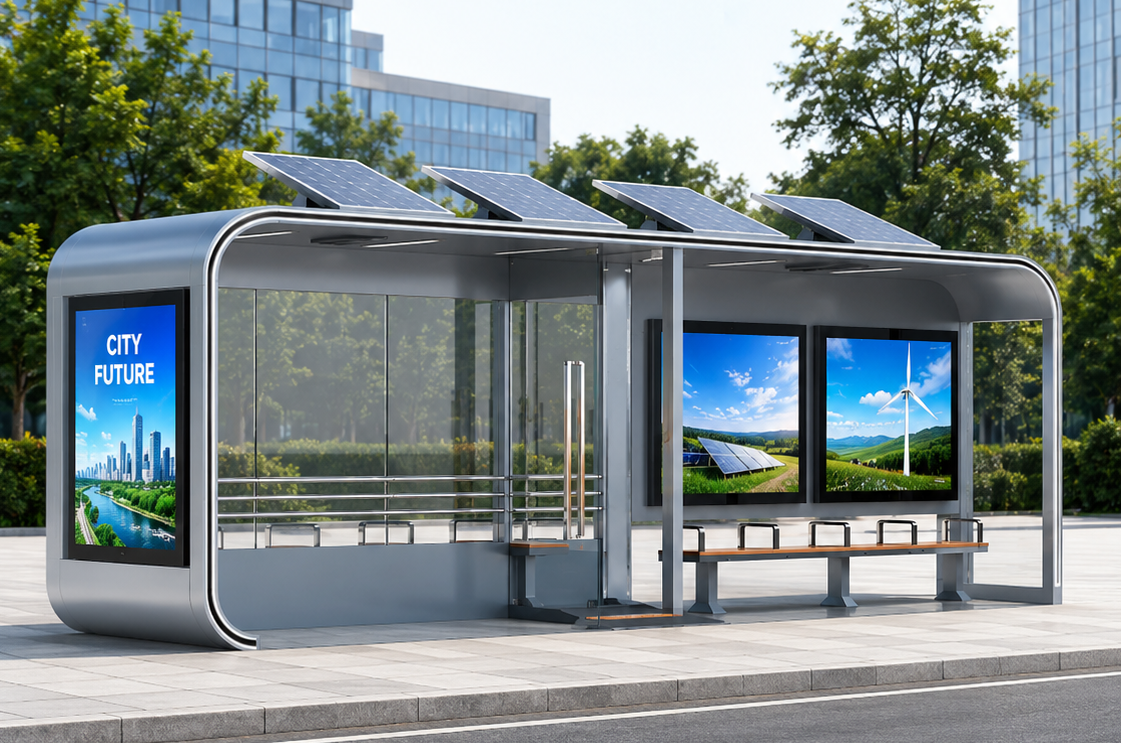
The following comparison is intended for initial sourcing. Capacity and MOQ should be treated as project-dependent until confirmed by each supplier in writing. For bus stop canopy projects, quantities vary significantly according to shelter length, roof style, digital-screen integration, local foundation conditions, and customization level.
| Manufacturer | Main Strength | Indicative Order Profile | MOQ Approach | Certifications / Documentation to Request | OEM/ODM Focus |
|---|---|---|---|---|---|
| Ainl | Smart-city integration, large-scale fabrication, flexible custom engineering | Small-to-large project orders | Negotiable by configuration and project | ISO certificates, production qualifications, material/coating reports, electrical test data, project drawings | Structure, size, color, lighting, solar, displays, branding |
| Guangzhou Huasheng | Metal and stainless-steel public facilities | Medium-to-large infrastructure orders | Confirm by model and material | Metal grade, welding process, coating reports, project records | Steel/stainless steel shelters, light boxes, modular formats |
| Jiangsu Qianli | Smart bus systems and solar integration | Municipal and smart-city orders | Project-based | Smart-system specification, electrical documents, solar component data | Intelligent shelters, solar systems, themed designs |
| Jiangsu Wancheng | Multi-category municipal facilities | Project and package procurement | Confirm | Factory audit data, quality-system certificate, inspection records | Shelters plus municipal service equipment |
| Suqian Aolin Advertising | Advertising and wayfinding products | Advertising-backed shelter projects | Confirm | Advertising panel, lighting, structure, and coating specifications | Light boxes, guide signs, charging sheds |
| Suqian Huajun Advertising | Shelter and advertising equipment | Standard and customized public-facility orders | Confirm | Latest business license, audit, material and coating documents | Bus shelters and advertising structures |
| Jiangsu Chengkai | Intelligent equipment integration | Smart-station project orders | Confirm | Electrical-system documents, software/interface details, QC records | Digital and intelligent public facilities |
| Dongguan Pinzhu | Transportation facilities and broad public-product range | Cross-category municipal packages | Confirm | Factory capability, installation history, electrical compliance | Shelters, signage, public-bike facilities |
| Guangdong Yike | Southern-China transport-facility sourcing | Standard to customized transit projects | Confirm | Structure, finish, electrical and project documentation | Transportation-facility customization |
| Shijiazhuang Jiuming | Steel fabrication and outdoor metal products | Price-sensitive and steel-based orders | Confirm | Steel traceability, coating specification, load calculations | Structural canopy and metal shelter fabrication |
China's advantage in this sector is not limited to lower manufacturing cost. Different regions have developed complementary supply-chain strengths that matter to bus stop canopy buyers.
Suqian and other parts of Jiangsu have a visible concentration of companies serving bus shelters, advertising light boxes, smart bus stations, signage, and municipal public facilities. This concentration can help buyers compare several relevant factories in a relatively focused sourcing ecosystem. Public supplier lists repeatedly feature Jiangsu and Suqian companies in this product category.
Guangdong, especially the Guangzhou–Dongguan–Shenzhen industrial corridor, can be attractive for projects requiring LED screens, controllers, sensors, telecommunications components, IoT devices, charging modules, and digital advertising systems. The region's electronics supply chain can simplify integration, although buyers must ensure that outdoor reliability, enclosure sealing, heat dissipation, and electrical compliance are engineered properly.
Northern manufacturing regions can be cost-competitive for steel-intensive shelter frames, fabricated canopies, large outdoor structures, and standardized metal assemblies. The key procurement issue is not whether steel is used, but whether the actual steel grade, wall thickness, galvanizing, welding quality, coating process, and load design match the approved specification.
A purchase order that simply says "steel bus shelter with LED light" creates avoidable risk. A serious Bus Stop Canopy RFQ should define the technical scope clearly.
Specify the following at minimum:
- Main frame material: carbon steel, galvanized steel, stainless steel, aluminum alloy, or a mixed-material structure.
- Material standard and grade: for example, require the supplier to identify the exact grade rather than writing only "high-quality steel."
- Thickness by component: columns, roof beams, purlins, advertising frame, seat brackets, base plates, and decorative panels.
- Welding requirements: weld appearance, corrosion treatment, non-destructive testing where needed, and welding-procedure documentation for major structures.
- Wind, snow, seismic, and live-load design criteria based on the final installation location.
- Foundation interface: anchor-bolt pattern, base-plate drawings, footing design responsibility, and installation tolerance.
- Roofing material: laminated glass, tempered glass, polycarbonate, aluminum composite panel, metal sheet, or insulated panel.
- Drainage design: concealed gutters can look clean but must include accessible cleaning points and sufficient downpipe capacity.
Surface preparation determines whether a canopy will remain presentable after several years outdoors.
Ask suppliers to define:
- Pretreatment system: degreasing, phosphating, sandblasting, shot blasting, or other process.
- Galvanizing: hot-dip galvanized, pre-galvanized sheet, or no galvanizing.
- Powder-coating type: polyester, fluorocarbon/PVDF system, or alternative coating.
- Target coating thickness in microns.
- Salt-spray performance requirement.
- Color standard: RAL, Pantone, or project-specific paint sample.
- Whether bolts, fasteners, internal cavities, weld zones, and cut edges receive corrosion protection.
For coastal locations, do not accept a standard inland coating package without reviewing the corrosion category, coating system, and expected maintenance plan.
If the bus stop canopy includes screens, LED signs, lighting, charging stations, CCTV, Wi-Fi, solar panels, or sensor systems, the buyer should request:
- IP rating for each enclosure and luminaire.
- Operating temperature range.
- Display brightness in nits and automatic brightness control.
- Electrical single-line diagram.
- Surge protection and grounding method.
- Cable routing and service-access drawings.
- Remote-monitoring or content-management system details.
- Spare-parts list and recommended spares percentage.
- Warranty terms separated by structure, coating, lighting, screen, controller, and software.
For EU-bound electrical/electronic components, assess whether the product falls within RoHS scope. EU RoHS rules restrict hazardous substances in electrical and electronic equipment unless an exclusion applies.
One of the most common risks is substitution after quotation. A supplier may quote a canopy based on 3.0 mm columns and later use 2.0 mm or 2.5 mm material, especially where the drawing uses general phrases such as "steel tube" rather than exact dimensions and tolerances.
How to avoid it: Include a bill of materials in the contract with material type, grade, cross-section, thickness, quantity, and allowable tolerance. Use ultrasonic thickness testing during pre-shipment inspection.
A supplier may describe a product as galvanized even if only certain sheets are pre-galvanized while welded joints, drilled holes, cut edges, and internal surfaces are left vulnerable. Hot-dip galvanizing and pre-galvanized sheet are not interchangeable solutions.
How to avoid it: Ask which components are hot-dip galvanized after fabrication, which use pre-galvanized material, and how weld zones and cut edges are protected. Request photos of production stages and coating test reports.
A canopy can look excellent at container loading but develop chalking, blistering, rust staining, or peeling after one or two rainy seasons if pretreatment and curing are inadequate.
How to avoid it: Specify the pretreatment process, powder type, film thickness, curing parameters, adhesion test, impact test, and salt-spray performance. Keep approved color panels and coating samples as contractual references.
A digital shelter may include an attractive display, but the system can become costly if the buyer has no spare power supply, receiving card, control board, brightness sensor, fan/filter set, or clear remote-support arrangement.
How to avoid it: Separate the structure price from the electronics price. Request the brand and model of every critical electrical component, a spare-parts quotation, wiring diagrams, remote-support protocol, and local-service requirements.
Long bus shelter modules can exceed standard-container loading limits. This may lead to unexpected open-top, flat-rack, breakbulk, or oversized-road transport costs.
How to avoid it: Before placing the order, obtain a packing drawing showing every module's dimensions, gross weight, container-loading plan, steel support frame, protection method, and unloading sequence.
Many buyers inspect steel thickness, glass, paint, and screens—but overlook water management and maintenance access. This is one of the most costly problems in long-term shelter operation.
A bus stop canopy may look clean because drainage channels, wiring, LED drivers, fasteners, and cable joints are hidden inside roof beams or columns. If those cavities are not properly sloped, sealed, ventilated, and accessible, moisture can collect inside. Over time, that can cause concealed corrosion, electrical faults, mold, water dripping through light fixtures, or difficult repair work.
Before approving a design, ask the supplier for:
- Roof drainage cross-section.
- Gutter slope and downpipe size.
- Inspection hatch locations.
- Access method for LED drivers and power supplies.
- Cable-entry sealing detail.
- Water-drip path around glass or polycarbonate joints.
- Cross-section of column bases and drainage holes.
- Maintenance-tool clearance around display and light-box components.
A supplier that can explain these details clearly is usually better prepared for real outdoor installations than one that only provides attractive renderings.
Your RFQ should include:
- Installation country and city.
- Intended application: municipal transit, airport, school, commercial advertising, BRT, smart city, or private development.
- Required quantity and expected annual volume.
- Shelter dimensions and passenger capacity.
- Reference photos or architectural concept.
- Wind, snow, seismic, rainfall, temperature, UV, and coastal conditions.
- Structural, electrical, branding, display, lighting, solar, seating, and accessibility requirements.
- Target delivery date and destination port.
- Required certifications and third-party inspection scope.
Do not compare unit prices until each supplier has quoted the same configuration. A lower price may omit:
- Foundation bolts.
- Tempered or laminated glass.
- Hot-dip galvanizing.
- Screen controllers.
- Solar batteries.
- Advertising light-box components.
- Electrical wiring.
- Shipping frames.
- Installation manuals.
- Spare parts.
- Technical drawings.
Create a comparison sheet that lists every component line by line.
The supplier should issue at least:
- General arrangement drawing.
- Structural drawing.
- Material list.
- Foundation/anchor-bolt drawing.
- Electrical drawing where applicable.
- Surface-finish schedule.
- Assembly drawing.
- Packing drawing.
Do not approve a sample based only on a 3D rendering. A rendering does not show material thickness, drainage slope, internal reinforcements, cable routes, or fixing points.
For customized projects, ask for one of the following:
- A full functional prototype.
- A representative module, such as one bay or one column-roof section.
- A material and coating sample board.
- A display or lighting demonstration unit.
- A first-article inspection report.
The sample approval should become part of the contract record.
A third-party inspection should check:
- Overall dimensions.
- Material thickness.
- Weld quality and weld cleanup.
- Coating thickness and color consistency.
- Glass/panel quality.
- Electrical operation.
- Drainage openings.
- Branding accuracy.
- Packing integrity.
- Quantity and spare parts.
- Container-loading plan.
China offers a broad supplier base for bus stop canopies, traditional bus shelters, advertising shelters, smart stations, and urban public facilities. Jiangsu provides a concentrated ecosystem for municipal shelters and advertising equipment, while Guangdong can offer advantages in electronics and smart-hardware integration. The most suitable manufacturer will depend on whether your priority is structural durability, large-scale capacity, advertising capability, smart-system integration, design flexibility, certification readiness, or budget control.
For buyers seeking a balanced option between manufacturing scale and customized project support, Ainl is worth including in the first round of supplier evaluations. Its broad smart-city product range, steel-processing and coating resources, OEM/ODM flexibility, and ability to coordinate structure, lighting, digital screens, solar systems, and branding elements make it especially relevant for buyers that need a tailored public-facility solution rather than an off-the-shelf canopy.
Before committing to any supplier, convert your concept into a controlled specification, validate the factory and certificates, inspect a sample or first article, and confirm the full lifecycle details—from steel thickness and coating to drainage, maintenance access, spare parts, and container loading.
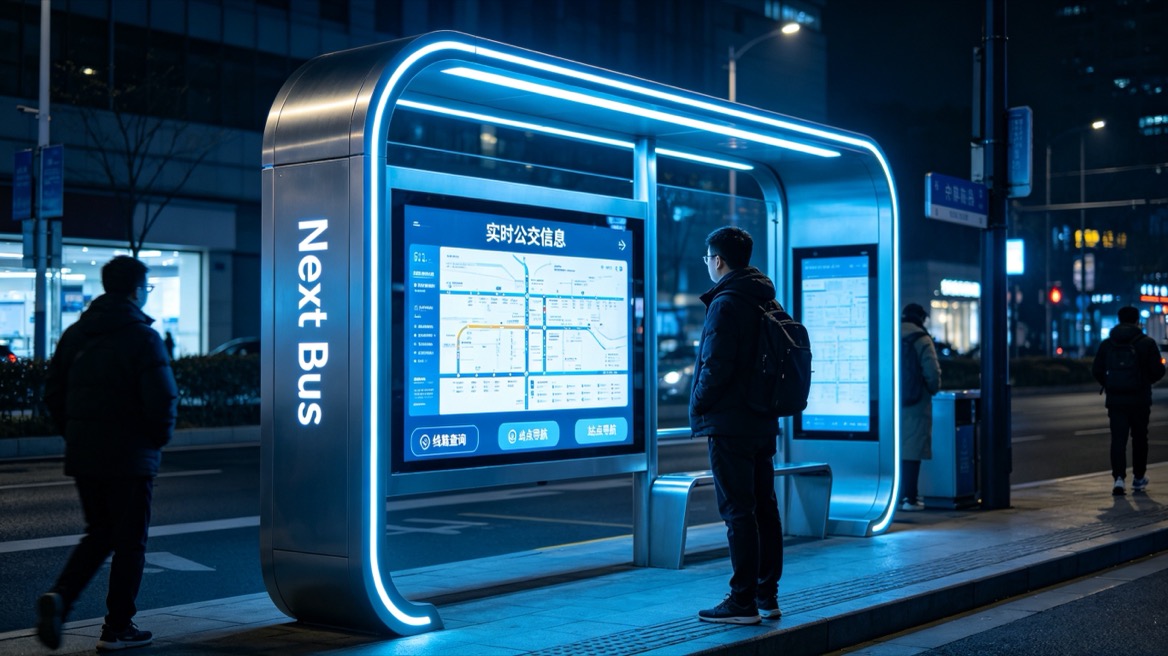
Ask for the full certificate, including the certificate number, certification body, accreditation mark, issue date, expiry date, scope, and factory address. Then verify it through IAF CertSearch where available or contact the certification body directly. ISO states that it does not certify organizations itself; certification is issued by independent bodies.
Also confirm that the address and certification scope match the actual entity signing the sales contract. A valid certificate held by an affiliated company does not automatically cover the manufacturing company or the relevant factory.
It depends on the exact product, its classification, where it is supplied, and the applicable EU rules. For fabricated structural steel or aluminum components used as construction products, EN 1090-related conformity assessment and CE-marking requirements may apply.
However, CE marking is not a generic "quality certificate" for every entire shelter. Buyers should consult their project engineer, importer, notified body where applicable, and local construction regulations before defining requirements.
At minimum, request the design code used, wind speed and exposure category, snow load, seismic assumptions if applicable, material grades, section properties, connection details, anchor-bolt design, foundation interface, glass/panel loads, safety factors, and engineering sign-off information.
Do not accept a calculation that refers only to a generic "wind-resistant design" without location-specific assumptions.
There is no universal MOQ because each shelter may differ in length, structure, roof material, screen configuration, and shipping method. For fully customized municipal structures, suppliers may accept small pilot orders or one sample unit, but unit pricing will be higher because engineering, tooling, drawings, and setup costs are spread across fewer units.
The best approach is to ask for three price breaks, such as one sample, 10 units, and 50 units, using exactly the same specification.
Buying from one integrator can reduce interface risk because the steel structure, cable paths, ventilation, mounting brackets, power distribution, drainage, and maintenance access are coordinated. However, buyers should still require transparency about the screen brand, controller, software, warranty, replacement parts, and technical support.
For high-value digital advertising or real-time passenger-information systems, some buyers choose a specialist display provider and require the shelter manufacturer to follow an approved integration drawing.
- [China Ministry of Transport: 2025 Transport Industry Development Statistical Bulletin] — National public bus and trolleybus route statistics. [xxgk.mot.gov]
- [China Ministry of Transport: National Urban Rail Transit Operations] — 2025 urban rail operating mileage and station figures. [mot.gov]
- [ISO: Certification Guidance] — Guidance on checking accredited certification and the role of certification bodies. [iso]
- [European Commission: RoHS Directive] — EU restrictions on hazardous substances in electrical and electronic equipment. [environment.ec.europa]
- [European Accreditation: EN 1090 Overview] — EN 1090 parts and structural conformity context. [european-accreditation]


