
Email: ainlbusshelter@gmail.com | WhatsApp: +86-18800607527
Views: 269 Author: Ainl Bus Shelter Publish Time: 2026-09-29 Origin: Site


Content Menu
● What Is the Difference Between a Smart Bus Shelter and a Digital Bus Station?
● Smart Bus Shelter vs Digital Bus Station Comparison
● How Real-Time Passenger Information Works
● Why Smart Bus Shelters Improve Everyday Passenger Information
>> Local Information Is More Actionable
>> The Shelter Supports the Information Experience
>> Smart Shelters Can Be Deployed Gradually
● When a Digital Bus Station Is the Better Choice
● Which Option Delivers Better Real-Time Passenger Information?
● The Most Important Design Principle: Trustworthy Information
● Accessibility Should Shape the Technology Choice
● Smart Bus Shelter Hardware: What Project Buyers Should Specify
● A Procurement Checklist for Transit Authorities
● Smart Bus Shelter vs Digital Bus Station: The Final Verdict
● FAQ
>> 1. What is a Smart Bus Shelter?
>> 2. What is a Digital Bus Station?
>> 3. Are Smart Bus Shelters better than Digital Bus Stations?
>> 4. How do real-time bus arrival displays work?
>> 5. Can a Smart Bus Shelter use solar power?
>> 6. Can Smart Bus Shelters include digital advertising?
>> 7. What should cities consider when buying Smart Bus Shelters?
Smart bus shelters generally provide the stronger solution for real-time passenger information at ordinary street-level stops, because they combine live transit data with weather protection, lighting, accessibility features, safety equipment, and city communication tools in one integrated asset. Digital bus stations are usually more suitable for high-volume transfer hubs, terminals, and complex interchanges where many routes, bays, and passenger flows must be managed at once.
For transport authorities, municipal project teams, advertisers, and urban developers, the decision is not simply about installing a screen. It is about choosing the right physical and digital infrastructure for the passenger journey. A well-designed Smart Bus Shelter turns a waiting area into an informed, safer, more comfortable public-space touchpoint. A Digital Bus Station can deliver wider network information, but it may require more space, civil works, power capacity, coordination, and operational investment.
As a manufacturer and solution provider with 16 years of experience in smart city public facilities, outdoor advertising products, metal fabrication, and customized transit infrastructure, Ainl sees one principle repeatedly in real projects: real-time passenger information is only useful when passengers can clearly see it, trust it, access it, and act on it.
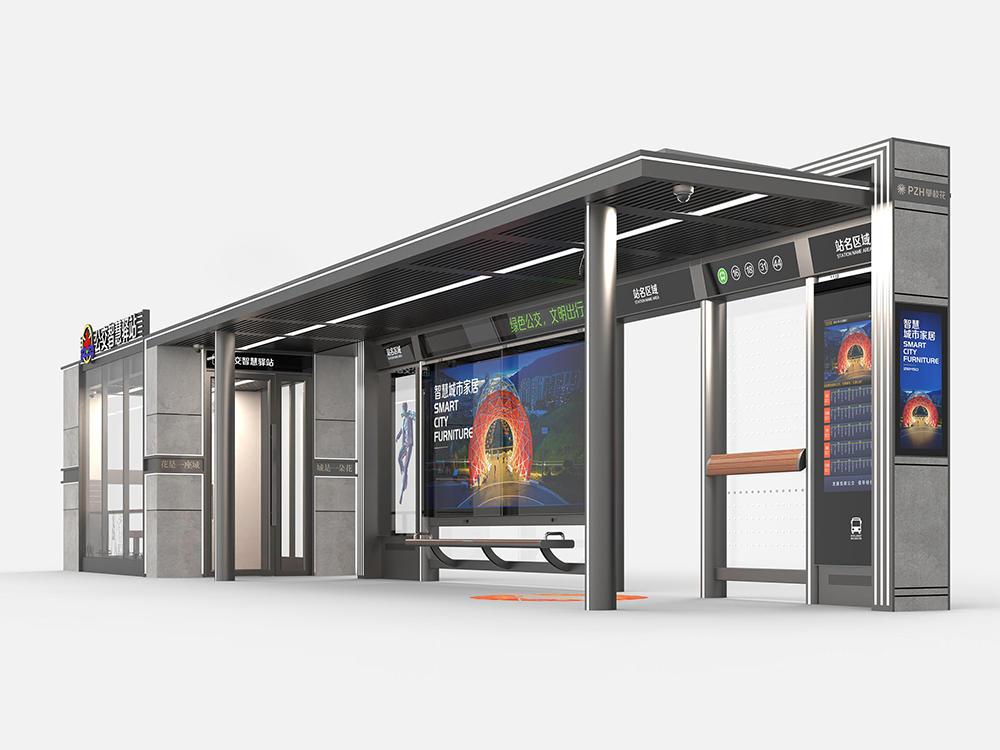
Although these terms are sometimes used interchangeably, they normally describe different levels of transit infrastructure.
A Smart Bus Shelter is a bus waiting shelter enhanced with connected technologies. It is designed for roadside stops, urban corridors, campuses, commercial districts, airports, residential communities, tourist areas, and municipal transport routes.
Typical smart bus shelter features include:
- Real-time bus arrival displays
- LED or LCD passenger information screens
- Route maps and stop identification
- Service disruption alerts
- Digital advertising panels
- Smart lighting
- CCTV or security cameras
- Emergency call buttons
- USB charging or wireless charging
- Wi-Fi connectivity
- Environmental monitoring
- Solar power systems
- Interactive touchscreen kiosks
- Audio announcements and accessible information tools
A Digital Bus Station, by comparison, is often a larger, more centralized facility. It may include multiple platforms or bays, waiting halls, ticketing systems, route directories, large-format digital boards, passenger-flow guidance, public-address systems, and commercial displays.
In practical terms:
- A smart bus shelter improves the passenger experience at the stop.
- A digital bus station coordinates information across a transport hub.
- A smart bus shelter is usually more modular and scalable.
- A digital bus station is usually more complex and site-dependent.
Both can use the same real-time passenger information platform. The key difference is how that information is delivered within the physical environment.
The following comparison helps project owners determine which option better supports live arrival information, operational efficiency, and public-space value.
| Comparison Factor | Smart Bus Shelter | Digital Bus Station |
|---|---|---|
| Primary location | Roadside bus stops, neighborhood routes, commercial areas, campuses, city corridors | Transit centers, terminals, large interchange points, major stations |
| Main function | Passenger waiting, live arrival information, comfort, safety, advertising | Multi-route coordination, boarding management, transfer guidance, passenger distribution |
| Real-time information scope | Usually focused on the stop's active routes and nearby services | Usually covers multiple bays, routes, transfers, and wider network conditions |
| Physical footprint | Compact to medium; adaptable to streetscape constraints | Large; often requires dedicated station land and civil infrastructure |
| Installation complexity | Moderate; can be modular, prefabricated, or phased | High; involves station planning, structural works, power, communications, and operations integration |
| Passenger experience | Direct, localized, convenient for everyday riders | Comprehensive, especially useful for transfer passengers and high traffic volumes |
| Comfort features | Shelter, seating, lighting, charging, ventilation options, weather protection | Larger indoor or covered waiting areas, seating zones, ticketing, retail possibilities |
| Advertising potential | Strong street-level digital out-of-home exposure | High-value hub media, but often subject to more complex space and operational rules |
| Best for | Distributed citywide deployment | Centralized transit operations and high-capacity hubs |
| Customization flexibility | Very high for size, structure, color, displays, lighting, solar power, and city branding | High, but more constrained by station architecture, engineering, and passenger-flow planning |
| Typical deployment model | Rollout by corridor, district, or priority stops | Major capital project or phased station modernization |
The best technology is not necessarily the biggest display. It is the system that gives passengers the correct information at the exact moment they need to decide whether to wait, board, transfer, reroute, or seek help.
A real-time passenger information system, often called RTPI, gives riders live operational updates rather than only showing a printed timetable. It commonly displays:
- Estimated arrival times
- Vehicle location or next-stop progress
- Route number and destination
- Delays and cancellations
- Detours and temporary stop changes
- Transfer suggestions
- Safety or emergency notices
- Weather information
- Local city announcements
The quality of a real-time passenger information system depends on the full information chain:
1. Vehicle data collection
Buses transmit location and operational information through GPS, automatic vehicle location systems, onboard equipment, or fleet-management platforms.
2. Data processing
A central platform calculates predicted arrival times based on live vehicle positions, route progress, traffic conditions, planned schedules, and service exceptions.
3. Communication network
The platform sends information to smart bus shelter displays, digital bus station boards, mobile applications, web portals, or control-center dashboards through cellular, fiber, Wi-Fi, LoRaWAN, or other suitable networks.
4. Passenger-facing display
Digital signs convert complex operational data into simple, legible, actionable messages.
5. Ongoing maintenance
Operators monitor device status, content scheduling, communication quality, display brightness, power supply, and system faults.
This is why public agencies should not evaluate a bus shelter only as a steel-and-glass structure. A smart shelter is part of a broader connected transit information ecosystem.
For citywide public transport networks, the vast majority of waiting occurs at ordinary bus stops rather than major terminals. That is where smart bus shelters create their strongest value.
At a neighborhood stop, a passenger rarely needs a large map of the entire bus network. They need answers to immediate questions:
- When will my bus arrive?
- Is the bus delayed?
- Is this the correct stop?
- Has the route been diverted?
- Which bus should I take?
- Is the next arrival accessible?
- Where can I transfer?
A smart bus shelter can prioritize this local information on an LED, LCD, e-paper, or interactive display. This reduces uncertainty and helps passengers make faster travel decisions.
Real-time displays are particularly valuable during poor weather, service disruptions, peak travel hours, and unfamiliar journeys. When passengers know that a bus is arriving in three minutes rather than twenty minutes, they can decide whether to wait, walk, use another route, or contact someone.
A display by itself does not solve the passenger experience. If the screen is difficult to read in sunlight, the stop is dark at night, the waiting area has no protection from rain, or wheelchair users cannot approach the display, the technology underperforms.
A Smart Bus Shelter combines information with the physical conditions people need to use it effectively:
- Roof coverage helps passengers read information during rain or intense sun.
- Integrated seating supports older riders, people with disabilities, and passengers with limited mobility.
- Appropriate lighting makes route information visible after dark.
- High-contrast display design improves legibility.
- Audio and visual alerts support more inclusive communication.
- Accessible clear space helps wheelchair users navigate the shelter.
- CCTV and emergency communication can improve perceived and actual safety.
For public transport projects, a strong shelter design is therefore not a decorative feature. It is part of the passenger information strategy.
A major digital bus station often requires land availability, planning approvals, station-level engineering, major electrical work, and a larger capital budget. Smart bus shelters can be deployed in phases.
For example, a city may begin with:
1. Ten high-ridership stops on a key corridor.
2. Smart shelters near hospitals, schools, government buildings, and commercial centers.
3. Solar-powered shelters at locations with difficult grid access.
4. Additional real-time screens at transfer stops.
5. Expansion to a citywide standardized shelter network.
This phased approach allows transit authorities to test passenger response, identify maintenance requirements, refine display content, and expand based on ridership and operational priorities.
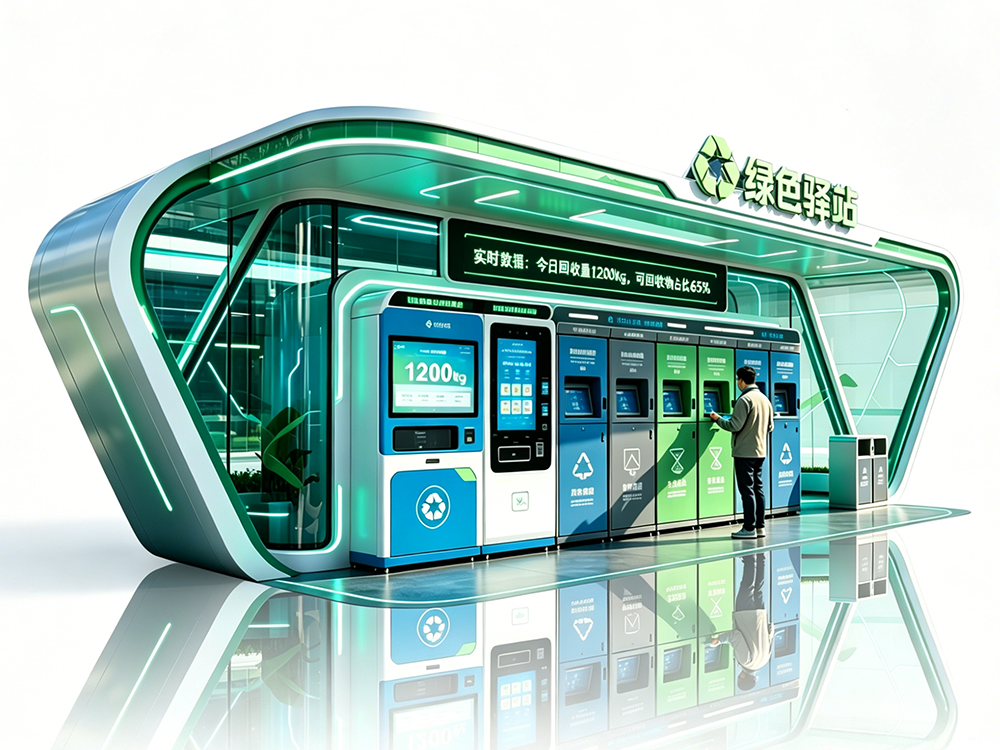
A digital bus station becomes more valuable when passengers must manage complicated transfers and multiple boarding areas.
Consider a large urban terminal where 25 routes arrive and depart from 12 bays. In that environment, a basic smart bus shelter at each bay may not be enough. Passengers may need:
- A master departure board
- Bay-specific route displays
- Transfer instructions
- Indoor and outdoor wayfinding
- Ticketing information
- Fare and payment guidance
- Platform changes
- Crowd-management notices
- Multi-language communication
- Public-address announcements
- Accessible navigation support
A digital bus station can organize this information across several screens and physical zones. It can also support operations staff by improving boarding coordination and reducing confusion during route changes.
However, a digital bus station should not be treated as a replacement for street-level smart bus shelters. The station solves the hub experience. The smart shelter solves the distributed stop experience.
The two technologies are often complementary rather than competitive.
For most citywide bus networks, Smart Bus Shelters provide better real-time passenger information coverage per deployment point. They place information exactly where passengers wait and make travel decisions.
For high-density interchange locations, Digital Bus Stations provide better information depth and network-level coordination.
The decision should be based on passenger behavior, not only on hardware specifications.
| Project Need | Better-Fit Solution |
|---|---|
| Improve ordinary roadside stops | Smart Bus Shelter |
| Add live ETA screens across a city corridor | Smart Bus Shelter |
| Create a branded smart-city streetscape | Smart Bus Shelter |
| Build a major transfer terminal | Digital Bus Station |
| Manage many routes and boarding bays | Digital Bus Station |
| Deploy off-grid or low-power transit infrastructure | Solar Smart Bus Shelter |
| Combine real-time transit information with outdoor advertising | Smart Bus Shelter |
| Improve citywide information coverage in phases | Smart Bus Shelter |
| Support central passenger-flow management | Digital Bus Station |
| Develop a combined transport hub and commercial facility | Digital Bus Station with smart shelter extensions |
The biggest risk in real-time passenger information is not the absence of a screen. It is incorrect, outdated, or unreadable information.
If a screen says a bus will arrive in two minutes, but the bus has been canceled or diverted, passengers lose trust in the entire system. Once trust is lost, riders may stop relying on digital updates, even when the information later becomes accurate.
Transport agencies should establish clear display priorities:
1. Safety alerts come first.
2. Live arrival and disruption information comes second.
3. Route and stop identification remains continuously available.
4. Advertising should never hide urgent service content.
5. Messages should be concise, high-contrast, and readable at a distance.
6. Audio, visual, and mobile-accessible formats should work together where possible.
A practical message hierarchy could look like this:
- Top area: Route number, destination, and estimated arrival time
- Middle area: Service status, delay notices, or diversion alerts
- Lower area: Weather, city notices, public-service messages, or advertising
- Side panel or QR code: Detailed route map, multilingual information, and mobile trip-planning access
This hierarchy enables revenue-generating advertising while protecting the passenger's primary need: reliable travel information.
Real-time passenger information should work for people with different physical, sensory, language, and cognitive needs.
A screen that only works for tall, sighted, smartphone-equipped users is not a complete public transport solution. Inclusive smart bus shelter and digital bus station design should consider:
- Clear and consistent route labels
- Large, legible typography
- Strong color contrast
- Reduced glare
- Appropriate display height and viewing angle
- Audio announcements where applicable
- Tactile or accessible wayfinding elements
- Wheelchair maneuvering space
- Step-free access to the boarding area
- Multi-language information where needed
- Simple wording for disruption alerts
- QR codes that provide optional expanded content rather than replacing visible information
In an increasingly digital transport environment, accessibility is not an optional add-on. It directly affects whether passengers can independently understand and use real-time information.
The quality of the enclosure, display integration, electrical system, and maintenance design directly affects long-term performance.
When specifying a Smart Bus Shelter, buyers should evaluate the following areas.
A smart shelter should withstand its local climate, public-space use, and maintenance demands.
Key considerations include:
- Galvanized steel, stainless steel, aluminum, or engineered metal structures
- Anti-corrosion treatment
- Durable powder coating or fluorocarbon finishing
- Wind-load and snow-load considerations
- Tempered or laminated safety glass
- Anti-vandal construction
- Water-resistant electrical enclosures
- Drainage design
- Replaceable components for field maintenance
Ainl can support OEM and ODM customization across shelter size, structure, color, branding, screen configuration, lighting systems, solar power solutions, and project-specific public-facility requirements. For large municipal programs, standardized modular components can improve production efficiency while allowing city-specific design elements.
The choice between LED, LCD, e-paper, and interactive display technology should depend on the site.
| Display Type | Best Use | Main Advantage | Key Consideration |
|---|---|---|---|
| LED display | High-visibility arrival information | Bright and readable from distance | Best for concise text and time-sensitive data |
| High-brightness LCD | Maps, advertising, multimedia, interactive content | Rich visuals and flexible layouts | Requires heat management and outdoor brightness control |
| E-paper display | Low-power or off-grid locations | Very low energy consumption and strong sunlight readability | Better for simpler information and less frequent visual changes |
| Touchscreen kiosk | Major stops and tourist areas | Detailed route planning and user interaction | Requires robust vandal resistance, accessibility design, and maintenance |
| Digital poster display | Advertising-supported shelter programs | Combines media revenue with public information | Passenger information must remain prioritized |
A smart bus shelter needs a realistic power strategy from the beginning.
Options may include:
- Grid-connected power
- Solar photovoltaic panels
- Battery storage
- Hybrid solar-grid systems
- Low-power display technologies
- Remote monitoring for energy use and equipment status
Solar-powered smart bus shelters are especially relevant for suburban stops, scenic areas, temporary transport corridors, parks, campuses, and locations where trenching electrical cables would be expensive or disruptive. However, solar feasibility must be assessed according to local sunlight, panel orientation, display power demand, battery capacity, seasonal conditions, and nearby shading.
Before selecting a Smart Bus Shelter or Digital Bus Station supplier, project teams should ask practical questions that affect lifecycle value.
1. Can the supplier customize dimensions, structural layout, colors, and city branding?
2. Is the shelter designed for local wind, rain, heat, snow, humidity, or coastal corrosion conditions?
3. Can real-time displays integrate with the city's existing transport data platform?
4. What display technology is appropriate for daylight, night visibility, and local energy conditions?
5. Is the equipment easy to inspect, repair, clean, and replace?
6. Are passenger information screens protected from vandalism, water, dust, and overheating?
7. Can the shelter incorporate solar power, batteries, smart lighting, and communications equipment?
8. Does the design reserve enough space for accessible circulation and boarding access?
9. How will service alerts override commercial advertising when needed?
10. Does the supplier have the manufacturing scale, quality-control capability, electrical testing capacity, and project delivery experience required for the order?
A strong solution provider should be able to support more than product drawings. It should help translate route conditions, passenger needs, visual identity, screen requirements, installation constraints, and maintenance goals into a workable transit-facility design.
Choose a Smart Bus Shelter when your priority is broad, practical, passenger-centered real-time information at the point of waiting. It is the stronger solution for city streets, bus corridors, community routes, public facilities, tourist areas, and distributed smart-city programs.
Choose a Digital Bus Station when your priority is managing large passenger volumes, complicated transfers, multiple bays, and centralized operations. It is best suited to major interchanges and terminal environments.
The most effective public transport networks use both:
- Smart bus shelters provide reliable, accessible information at everyday stops.
- Digital bus stations organize passengers at high-volume hubs.
- A shared data platform creates a consistent experience across the whole journey.
For cities planning durable, attractive, and connected public infrastructure, the right question is not "Which product is more advanced?" The better question is: Which solution gives passengers accurate information, in the right place, at the right time, under real street conditions?
Ainl supports customized Smart Bus Shelter and digital public-facility projects with integrated fabrication, coating, electrical testing, software and hardware development capabilities, and flexible OEM/ODM design support. Contact Ainl to discuss your route conditions, display requirements, power options, city branding, advertising model, and project scale—and develop a passenger information solution built for long-term urban use.
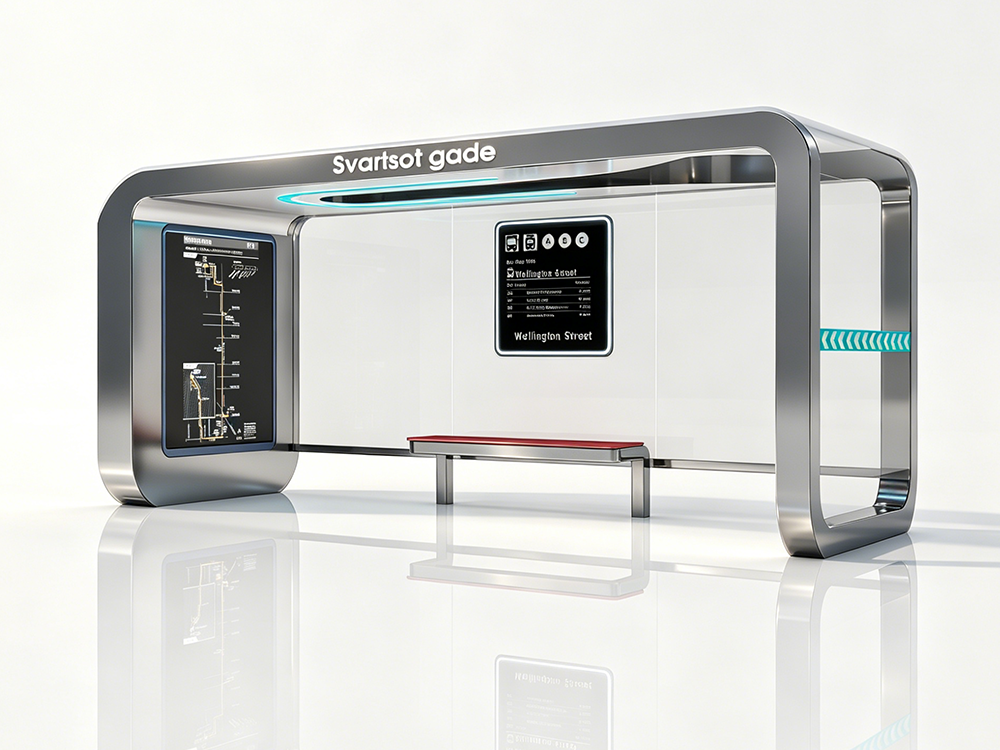
A Smart Bus Shelter is a connected public-transit waiting facility that combines weather protection with technologies such as real-time bus arrival displays, digital advertising, smart lighting, CCTV, emergency communication, Wi-Fi, charging, environmental monitoring, and solar power systems.
A Digital Bus Station is a larger transit facility or interchange that uses digital displays, route boards, wayfinding systems, passenger-flow tools, public announcements, and other connected technologies to manage multiple routes, platforms, and transfers.
Neither is universally better. Smart Bus Shelters are usually better for distributed, street-level real-time passenger information. Digital Bus Stations are usually better for large terminals and complex transfer environments with many routes and boarding bays.
They receive data from a transit operator's vehicle tracking and operational systems. The platform processes live vehicle locations, schedules, route progress, traffic conditions, and service changes, then sends estimated arrival times and alerts to passenger information displays.
Yes. Solar panels and battery storage can support smart lighting, low-power displays, communication systems, and other equipment. The final solution should be designed around local sunlight, power consumption, screen type, battery capacity, shading, and weather conditions.
Yes. Digital out-of-home advertising screens can be integrated into a Smart Bus Shelter to support commercial communication or help fund public infrastructure. However, real-time passenger information and safety messages should always receive display priority.
Cities should consider structural durability, corrosion resistance, accessibility, display brightness, data integration, power supply, solar feasibility, anti-vandal protection, maintenance access, local climate, branding requirements, and the supplier's manufacturing and quality-control capabilities.
2. [National Aging and Disability Transportation Center — Accessibility Design Guide for BRT Systems]
3. [National Rural Transit Assistance Program — Vehicle and Facility Accessibility]
4. [Real Time Information Group — Inclusive Passenger Information]
5. [WeGo Public Transit — Real-Time Information and Solar Lighting Project]
6. [Ainl Bus Shelter — Custom Smart Bus Shelter Manufacturer]
7. [Peak Transit — Fixed Route Real-Time Passenger Information]


