
Email: ainlbusshelter@gmail.com | WhatsApp: +86-18800607527
Views: 238 Author: Ainl Bus Shelter Publish Time: 2026-09-24 Origin: Site


Content Menu
● Quick Answer: Which Bus Shelter Performs Better?
● Open Bus Shelter vs Enclosed Bus Shelter Comparison
● What Is an Open Bus Shelter?
>> Advantages of Open Bus Shelters
>> Limitations of Open Bus Shelters
● What Is an Enclosed Bus Shelter?
>> Advantages of Enclosed Bus Shelters
>> Limitations of Enclosed Bus Shelters
● Extreme Heat: Why Open Designs Often Win
>> Practical Heat-Climate Recommendation
● Cold, Wind, Rain, and Snow: Why Enclosure Matters
>> Essential Features for Cold-Climate Bus Shelters
>> Wind Direction Is More Important Than Many Buyers Expect
● The Best Option: Climate-Responsive Hybrid Bus Shelters
● Materials That Affect Weather Performance
● Smart Features for Extreme-Weather Bus Stops
● A Practical Selection Checklist
● How Ainl Supports Customized Bus Shelter Projects
● FAQ
>> 1. Is an open bus shelter better than an enclosed bus shelter in hot weather?
>> 2. Are enclosed bus shelters suitable for tropical climates?
>> 3. What is the best bus shelter design for snow and strong winds?
>> 4. Can bus shelters use solar power?
>> 5. Should a bus shelter have glass side panels?
>> 6. How wide should a bus shelter opening be for accessibility?
>> 7. What should buyers provide before requesting a customized bus shelter quotation?
When cities plan a bus stop shelter for heat, cold, wind, rain, snow, or heavy sun exposure, the key decision is often whether to use an open bus shelter or an enclosed bus shelter. Neither option is universally better. The right design depends on local climate, prevailing wind direction, passenger volume, dwell time, solar exposure, accessibility needs, maintenance capacity, and the shelter's role as part of the wider urban environment.
From our experience supporting public-facility and outdoor-advertising projects, the strongest result is rarely a completely open or completely enclosed structure. In most extreme-weather locations, a climate-responsive semi-enclosed bus shelter—with targeted wind protection, an open boarding side, shaded roofing, controlled ventilation, and optional smart equipment—offers the most balanced solution.
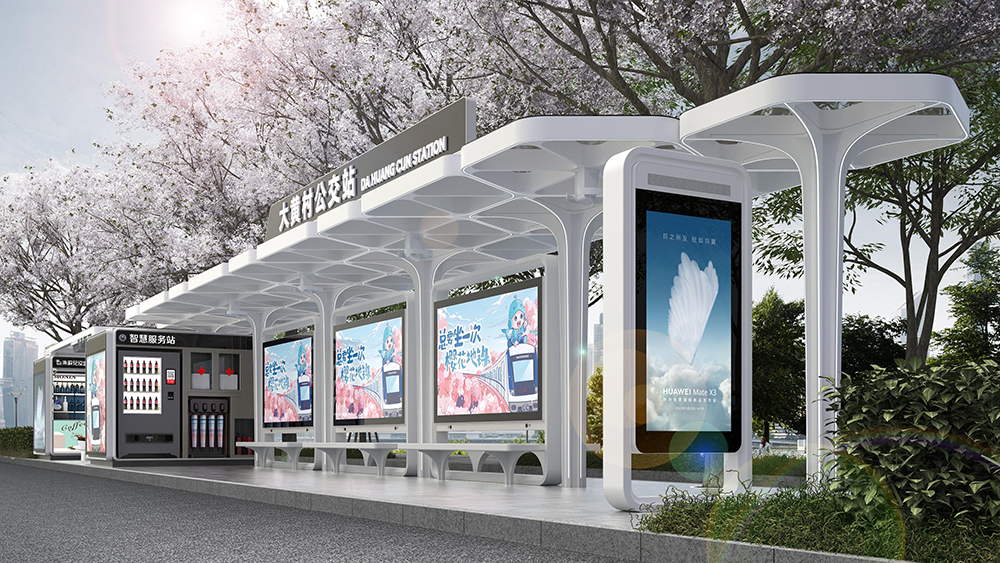
An open bus shelter usually performs better in very hot, humid, and high-solar-radiation environments because it allows air movement and reduces the risk of trapped heat.
An enclosed bus shelter generally performs better in cold, windy, rainy, snowy, or dusty climates because side and rear panels create a stronger barrier against wind-driven weather.
However, a fully enclosed design can become uncomfortable in summer if transparent panels, dark materials, metal framing, and limited ventilation trap solar heat. Recent field research on bus-stop heat exposure found that some enclosed shelter configurations can retain radiation and create hotter conditions than the surrounding unshaded space. By contrast, shade, ventilation, and surrounding trees can substantially improve pedestrian thermal comfort.
For most municipal projects, the practical answer is:
> Choose an open or semi-open shelter for hot climates, and choose a semi-enclosed or enclosed shelter for cold, wet, and windy climates—then customize the roof, panels, orientation, glazing, lighting, solar system, and smart devices around actual site conditions.
| Design Factor | Open Bus Shelter | Enclosed Bus Shelter | Best Choice in Extreme Weather |
|---|---|---|---|
| Airflow | Excellent natural ventilation | Limited unless designed with vents or openings | Open design for hot and humid climates |
| Heat buildup | Lower risk of trapped heat | Higher risk with acrylic, glass, or metal surfaces | Open or ventilated semi-enclosed design |
| Wind protection | Limited | Strong, especially with rear and side panels | Enclosed or wind-oriented semi-enclosed design |
| Rain protection | Good with a deep canopy and proper drainage | Very good if side panels block wind-driven rain | Enclosed design in rainy and storm-prone regions |
| Snow protection | Roof protects from direct snowfall, but wind may enter | Better protection for waiting passengers | Enclosed design with snow-load roof engineering |
| Visibility and safety | High visibility from all sides | Can be lower if panels are opaque or poorly lit | Transparent, marked panels and integrated lighting |
| Passenger comfort in summer | Usually better when shaded | Can be poor without ventilation or solar control | Open, shaded, high-roof design |
| Passenger comfort in winter | Can feel exposed | Usually better with windbreaks, heating, and seating | Enclosed or semi-enclosed design |
| Cleaning and maintenance | Easier access and fewer enclosed surfaces | More cleaning required, especially glass panels | Depends on maintenance resources |
| Advertising display options | Good for side-mounted or rear-mounted media | Excellent for protected digital screens and posters | Enclosed or hybrid design |
| Initial investment | Often lower | Often higher due to panels, doors, HVAC, and systems | Match scope to ridership and climate risk |
An open bus shelter typically includes a roof, supporting frame, rear wall, optional partial side panels, seating, route information, lighting, and an open front facing the roadway. Some designs also keep one or both side areas open to maximize airflow.
This structure is common in tropical, subtropical, coastal, hot-dry, and high-humidity regions. It gives passengers shade from direct sun and protection from vertical rain while allowing heat to escape.
Better natural ventilation is the main advantage. In locations with high temperatures and humidity, moving air can make a noticeable difference to waiting passengers.
Open shelters also provide:
- Lower risk of greenhouse-like heat accumulation
- Better visibility between passengers, drivers, pedestrians, and nearby businesses
- Easier access for wheelchair users, luggage, strollers, and cyclists
- Reduced condensation on transparent panels
- Faster cleaning and simpler maintenance
- Flexible layouts for narrow sidewalks and high-turnover stops
- A more open appearance that can fit parks, tourist areas, commercial streets, and heritage districts
For a hot-weather bus stop, roof geometry matters as much as openness. A shelter with a narrow canopy may technically provide shade while still exposing passengers to low-angle morning or afternoon sunlight. A wider roof overhang, side fins, sun-oriented louvers, and a reflective roof finish can make a significant comfort difference.
The same airflow that helps in summer can reduce comfort during cold or stormy weather.
Open bus shelters may perform poorly when a site faces:
- Strong prevailing winds
- Wind-driven rain
- Blowing snow
- Sand, dust, or debris
- Extreme winter temperatures
- Long passenger waiting times
- Elderly or mobility-sensitive passenger groups
A simple canopy does not automatically create a comfortable waiting environment. If rain arrives at an angle, or if cold wind enters from the open side, passengers may crowd against the rear wall or leave the shelter altogether.
An enclosed bus shelter uses a roof plus rear and side panels, and may include doors, glazing, insulated walls, HVAC equipment, heating units, lighting, CCTV, digital information displays, USB charging, advertising screens, and solar-powered systems.
The degree of enclosure varies. A three-sided shelter with an open front is usually considered semi-enclosed. A fully enclosed bus shelter may feature doors or controlled entry points, creating a more protected indoor-like waiting space.
In cold, wet, and windy areas, enclosure can provide much stronger protection.
A properly designed enclosed shelter can offer:
- Reduced wind chill for waiting passengers
- Improved protection from rain and snow
- A more comfortable microclimate during long waiting periods
- Safer seating for older passengers and children
- Space for heating equipment in cold regions
- Better protection for digital signage, ticketing systems, and electronic route displays
- Increased advertising value through weather-protected media locations
- A premium visual identity for BRT stations, airport routes, central business districts, and smart-city corridors
Transit design guidance commonly recommends considering passenger heating and cooling needs at shelter locations exposed to local climate extremes. It also emphasizes maintaining accessible pathways, clear boarding zones, adequate shelter openings, visibility, lighting, and safe placement relative to the curb.
A fully enclosed shelter is not automatically comfortable. In hot climates, it can become a solar heat trap if the design uses large unshaded transparent surfaces, poor ventilation, heat-absorbing finishes, and insufficient roof insulation.
The biggest risks include:
- Heat buildup behind glass or acrylic panels
- Reduced airflow during high humidity
- Higher cleaning frequency for transparent surfaces
- Greater condensation and drainage requirements
- More complicated maintenance for doors, ventilation, lighting, screens, and sensors
- Higher initial investment
- Potential visibility concerns if panels become scratched, dirty, fogged, or covered with posters
- Greater need for anti-vandalism and impact-resistant materials
An enclosed shelter should therefore be treated as an engineered public facility, not simply a standard shelter with more panels added.
In high-temperature environments, shade alone is not enough. Passengers experience a combination of air temperature, direct solar radiation, reflected heat from pavement, humidity, and wind speed.
An open bus shelter can improve comfort when it combines:
- A wide opaque roof
- Light-colored or reflective roof coatings
- High roof clearance for heat release
- Open front and side ventilation
- Shaded rear seating
- Solar-control side panels
- Trees or landscape shading where possible
- Non-metal seating surfaces or insulated seat materials
- Digital displays designed for high-temperature operation
A 2025 study examining heat stress at bus stops found that trees provided the strongest cooling effect among the measured strategies. It also found that certain enclosed shelter designs were less effective than more open layouts because enclosed materials could retain solar radiation. In one tested configuration, an acrylic-walled structure recorded higher heat stress than an unshaded outdoor location.
For hot, sunny, or humid cities, prioritize a ventilated open shelter with:
1. An opaque, insulated, or reflective canopy
2. Deep roof overhangs for low-angle sunlight
3. Rear and side wind panels only where necessary
4. Open gaps that support cross-ventilation
5. Solar-powered lighting or display systems where feasible
6. Shade trees or integrated green infrastructure when site conditions allow
7. Clear passenger information visible from outside the shelter
Avoid creating a full glass enclosure unless the project includes a validated cooling and ventilation strategy.
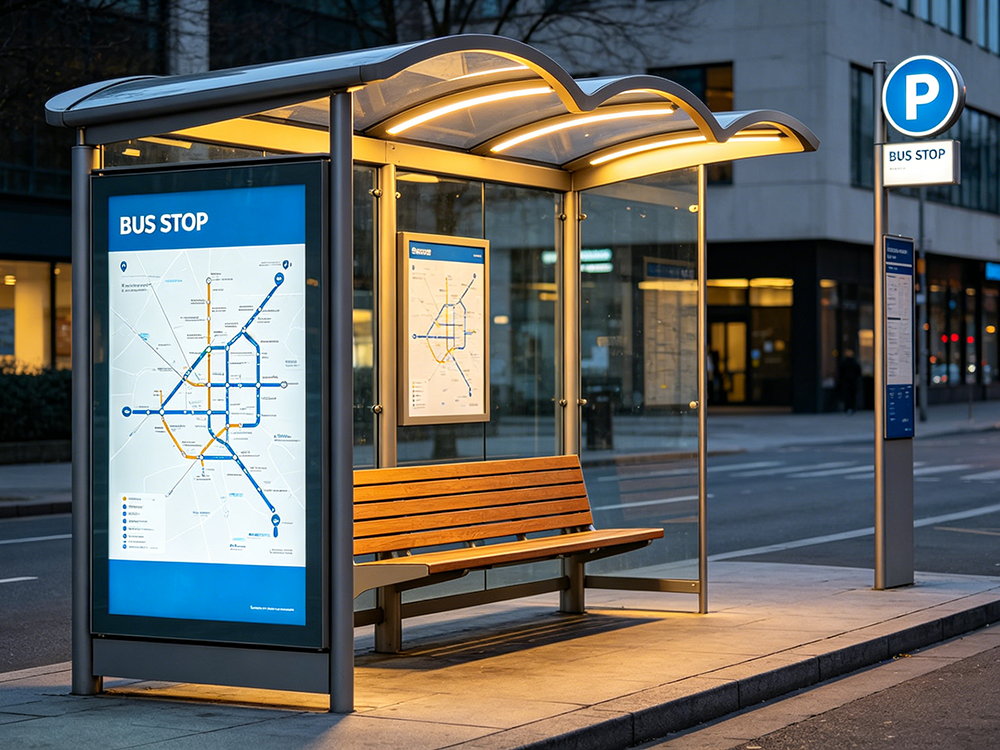
In colder climates, wind is often more uncomfortable than the ambient temperature itself. A shelter that blocks prevailing wind can improve perceived comfort far more than a roof-only structure.
A semi-enclosed or enclosed bus shelter is particularly valuable when passengers must wait for longer intervals, such as at regional transit stops, rural interchanges, terminal stations, hospital stops, industrial zones, and low-frequency routes.
A high-performing cold-weather shelter should include:
- Wind-oriented side panels based on local prevailing wind data
- A rear panel that protects seated passengers
- An open curbside or properly designed boarding opening
- A sloped roof with drainage and snow-shedding capability
- Structural engineering for local wind and snow loads
- Anti-slip flooring and drainage details
- Heating options for high-ridership stops
- Durable powder-coated steel or aluminum framing
- Laminated, tempered, or impact-resistant glazing
- LED lighting for darker winter conditions
- Sealed electrical systems for moisture and temperature changes
- Adequate clear space for wheelchairs, mobility devices, and boarding movements
Planning guidance for bus shelters stresses that shelters should not obstruct boarding and alighting areas, should maintain accessible clear paths, and should provide sufficiently wide openings for wheelchair access. It also notes that heated shelters may be considered at high-ridership stops in cold climates.
A shelter can have three walls and still fail in winter if its main opening faces directly into prevailing winds.
Before finalizing the layout, project teams should review:
- Seasonal wind direction
- Wind speed during the coldest months
- Nearby building effects and wind tunnels
- Road orientation
- Bus-door location
- Passenger queue direction
- Snow drifting patterns
- Drainage slope and runoff direction
The ideal configuration often uses a protected rear wall and a side windbreak, while keeping the boarding side open and accessible. Urban-design guidance also recommends orienting entry and exit openings to protect passengers from wind while preserving a clear street-facing side for boarding.
For many cities, the best answer is not "open" or "enclosed." It is a hybrid bus shelter customized to the actual route, climate, passenger behavior, and maintenance model.
A climate-responsive shelter may include an open front, a full rear wall, one solid windward panel, one perforated or transparent leeward panel, an insulated roof, solar-powered lighting, a digital arrival display, and optional advertising equipment.
This approach delivers several benefits:
- Better airflow than a full enclosure
- More protection than a roof-only shelter
- Stronger visual connection with the street
- Easier passenger access
- Greater flexibility for different city districts
- Lower cooling demand than sealed structures
- Better compatibility with smart-city devices
- Easier adaptation to local branding and advertising programs
For example, a coastal city with hot summers, heavy rain, and seasonal storms may use an open-front shelter with a broad opaque roof, rear glass panel, louvered side windbreak, integrated gutter, LED lighting, and solar power. A northern city with snow and wind may use the same structural platform but add larger side panels, thermal seating materials, snow-load roof reinforcement, heater provisions, and more protected passenger waiting zones.
The shelter frame and panel materials directly affect durability, comfort, maintenance costs, and visual quality.
| Component | Better Option for Hot Climates | Better Option for Cold or Windy Climates | Key Selection Criteria |
|---|---|---|---|
| Main frame | Aluminum or galvanized steel with reflective coating | Heavy-duty galvanized steel or structural steel | Corrosion resistance, local wind load, expected service life |
| Roof | Opaque insulated roof, reflective metal roof, UV-resistant canopy | Insulated steel roof with snow-load capacity | Thermal control, drainage, roof slope, structural strength |
| Side panels | Perforated metal, louvers, partial glass, ventilated panels | Laminated glass, tempered glass, solid composite or metal panels | Wind control, transparency, vandal resistance |
| Seating | Composite, treated wood, insulated metal, ergonomic bench | Composite or insulated seating with non-slip finish | Surface temperature, drainage, accessibility |
| Flooring | Non-slip, light-reflective, heat-tolerant surface | Non-slip drainage surface, frost-resistant finish | Slip resistance, drainage, cleaning |
| Lighting | High-efficiency LED with solar option | Sealed LED systems rated for moisture and low temperature | Visibility, power supply, maintenance |
For long-term outdoor deployment, a manufacturer should evaluate not only the material itself but also weld quality, corrosion treatment, coating thickness, drainage details, electrical compartment protection, glass fixing method, replacement-part availability, and transport installation requirements.
Smart-city equipment can help turn a bus shelter into a safer, more usable public asset during difficult weather.
Useful options include:
- Real-time arrival displays to reduce unnecessary waiting time
- Temperature and humidity sensors
- Rain, wind, or air-quality monitoring
- Smart lighting with time-based or motion-based control
- CCTV integration for security
- Emergency call buttons
- USB or wireless charging modules
- Solar panels and battery-storage systems
- Digital advertising screens with remote content management
- Remote equipment diagnostics
- Passenger counting sensors
- Heated seating or low-energy radiant heating in cold locations
The correct technology package should match the stop's passenger volume and service importance. A low-ridership rural stop may need robust weather protection, lighting, and printed information. A downtown interchange may justify digital displays, advertising screens, CCTV, charging, and integrated smart-city sensors.
Use the following process before choosing between an open bus shelter and an enclosed bus shelter.
1. Assess the local climate. Review summer temperature, solar intensity, humidity, annual rainfall, wind direction, snow load, and dust exposure.
2. Study the site. Check sidewalk width, curb position, bus-door zone, surrounding buildings, trees, underground utilities, drainage, and pedestrian flow.
3. Define passenger needs. Consider passenger volume, average waiting time, age distribution, wheelchair access, peak-hour queues, and night-time use.
4. Choose the right enclosure level. Use open designs for ventilation, semi-enclosed layouts for balanced protection, and enclosed designs for severe cold, long waits, or premium transit hubs.
5. Engineer the roof correctly. Confirm drainage slope, gutter design, wind uplift resistance, snow load, heat control, and roof-edge safety.
6. Design for visibility and safety. Use transparent or perforated panels where appropriate, add visible markings to glass, and provide reliable lighting.
7. Plan maintenance from day one. Ensure easy replacement of panels, lights, screens, seating, and electrical components.
8. Customize the visual identity. Integrate city colors, route branding, local cultural elements, advertising formats, and digital-information requirements.
Ainl is a Chinese manufacturer and solution provider specializing in bus stop shelters, smart-city public facilities, and outdoor advertising products. With 16 years of industry experience, Ainl supports customized OEM and ODM projects covering shelter dimensions, structural configuration, colors, roof forms, wind panels, lighting, solar power, digital screens, advertising displays, and city-branding elements.
For municipal, transportation, commercial, and smart-city projects, the most effective shelter is not selected from a catalog alone. It should be designed around local weather risks, passenger behavior, installation conditions, maintenance requirements, and the city's visual identity.
Ainl's integrated capabilities—including research and development resources, precision sheet-metal processing, large-scale coating capacity, electrical testing, steel-structure qualifications, and municipal construction credentials—support a more coordinated approach from product concept through manufacturing and project delivery.
For extreme heat, choose an open or semi-open bus shelter with strong shade, reflective roofing, ventilation, and limited heat-trapping panels.
For extreme cold, wind, rain, and snow, choose a semi-enclosed or enclosed bus shelter with windbreak panels, a snow-load roof, drainage, accessible openings, lighting, and optional heating.
For cities that experience multiple climate challenges, choose a customized hybrid bus shelter. This design provides the greatest long-term flexibility, better passenger comfort, and more opportunities to integrate smart-city technology and outdoor advertising systems.
If you are planning a bus shelter, smart bus stop, roadside advertising shelter, or municipal public-facility project, Ainl can help evaluate your climate conditions, installation environment, passenger needs, technical specifications, and customization goals to develop a durable and visually distinctive solution.
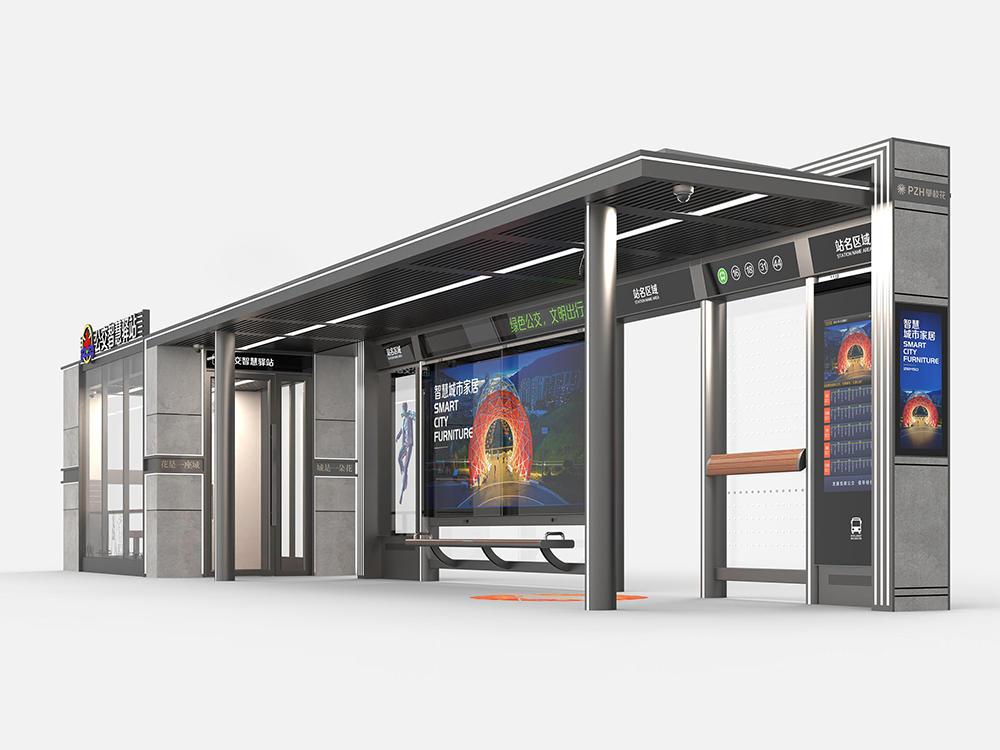
Usually, yes. An open bus shelter allows natural ventilation and reduces the chance of heat becoming trapped inside. It should still include a wide, opaque roof, shading elements, and materials that reduce solar heat gain.
They can be suitable, but only if they include effective ventilation, solar-control materials, sufficient roof insulation, and a design that avoids trapping hot air. Fully enclosed transparent structures without cooling or ventilation may become uncomfortable in strong sunlight.
A semi-enclosed or enclosed shelter with a rear wall, windward side panel, sloped snow-load roof, drainage system, anti-slip flooring, weather-resistant lighting, and accessible curbside opening is generally the most effective option.
Yes. Solar panels can power LED lighting, digital arrival displays, CCTV, USB charging, environmental sensors, and selected advertising equipment. Final system sizing depends on local sunlight, battery capacity, equipment load, and backup-power requirements.
Glass side panels can improve visibility, daylight, and visual openness. They should be tempered or laminated, clearly marked for visibility, securely fixed, easy to replace, and selected with climate conditions in mind. In hot locations, solar-control glass or partial panels may be more suitable than a fully glazed enclosure.
The opening must allow safe wheelchair and mobility-device access while preserving a clear path to the bus boarding area. Transit guidance commonly identifies a 36-inch minimum opening as a key accessibility reference, although local regulations and site conditions should govern the final design.
Buyers should provide installation drawings or site photos, required dimensions, local wind and snow conditions, climate information, expected passenger volume, desired materials, color preferences, lighting needs, solar or electrical requirements, advertising-screen requirements, branding elements, and delivery destination.
1. [Federal Transit Administration — Bus Stop Optimization Final Report]
2. [SMART — Bus Stop Design Standards Manual]
3. [Seattle — Transit-Friendly Design Guidelines]
4. [Applied Sciences — A Review of Research on the Potential of Bus Shelters]
5. [ScienceDirect — Heat Stress Mitigation by Trees and Shelters at Bus Stops]
6. [NACTO — Bus Stops]


