
Email: ainlbusshelter@gmail.com | WhatsApp: +86-18800607527
Views: 262 Author: Ainl Bus Shelter Publish Time: 2026-08-12 Origin: Site


Content Menu
● Public Bus Shelters Improve the Waiting Experience
● Weather Protection Supports Everyday Mobility
● Safe, Visible Stops Build Passenger Confidence
>> Design Features That Improve Safety
● Accessibility Must Be Designed From the Start
>> Essential Accessibility Considerations
● Smart Bus Shelters Make Waiting More Predictable
>> Useful Smart Shelter Functions
● Shelter Placement Matters as Much as Shelter Design
>> Questions to Ask Before Installation
● Durable Materials Reduce Long-Term Maintenance Burden
>> What to Look for in a Durable Shelter
● Bus Shelters Can Strengthen City Identity
● Solar-Powered Shelters Offer More Flexible Deployment
● Choose a Partner That Understands the Full Project
● Build Better Waiting Spaces With Ainl
>> 1. What is the purpose of a public bus shelter?
>> 2. What materials are best for outdoor bus shelters?
>> 3. Can a bus shelter be powered by solar energy?
>> 4. How can a bus shelter be made accessible?
>> 5. Can bus shelters include digital advertising screens?
>> 6. Can bus shelters be customized for city branding?
>> 7. How do cities decide where to install bus shelters?
A public bus shelter is far more than a roof over a bench. It is the first physical touchpoint between a passenger and a transit system—a place where people decide whether public transport feels safe, accessible, reliable, and worth using.
For cities, transit agencies, developers, and advertisers, well-designed public bus shelters help transform an ordinary roadside waiting area into a functional public asset. They protect passengers from rain, wind, snow, and harsh sunlight while improving visibility, accessibility, passenger information, and the overall identity of the streetscape.
As cities invest in smarter, more people-centered infrastructure, bus stop shelters are becoming essential components of modern public transport networks and smart city projects.
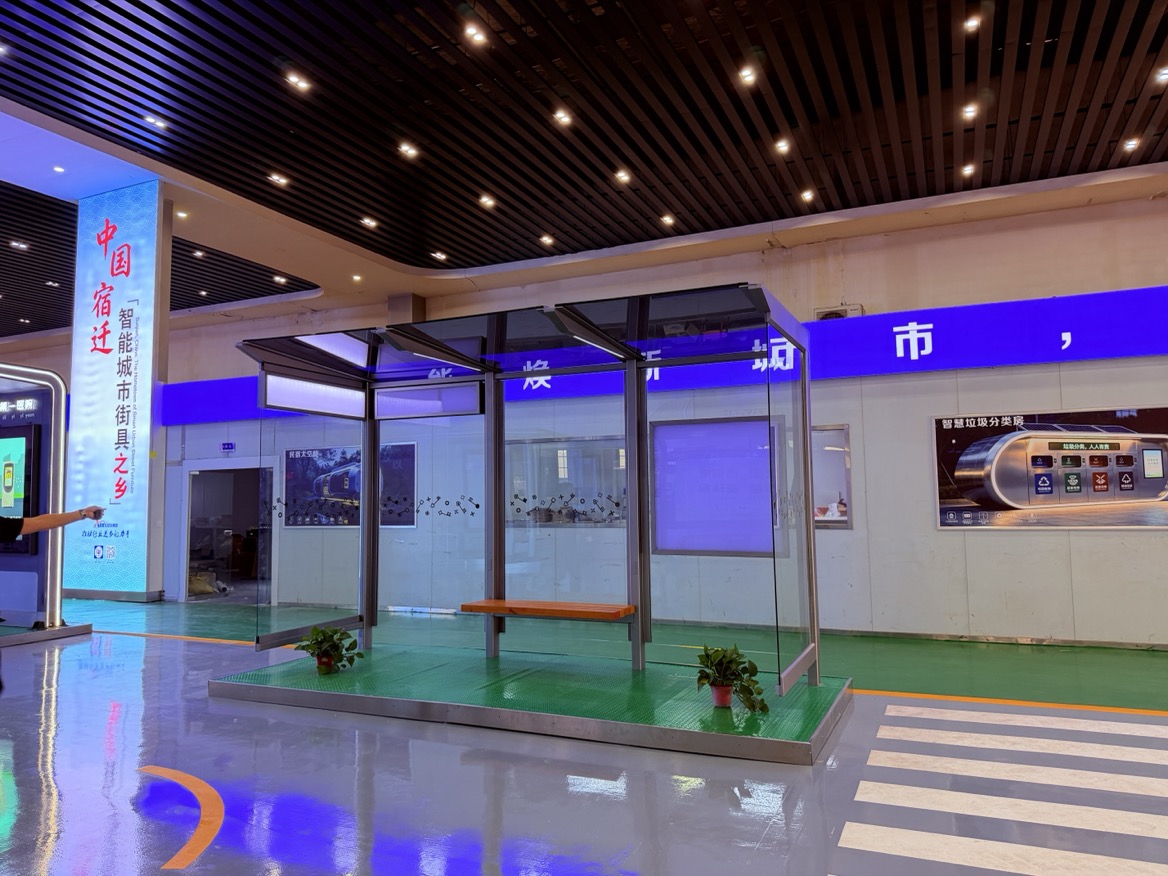
Waiting for a bus is often the least comfortable part of a journey. Passengers may be exposed to intense sun, heavy rain, cold wind, traffic noise, or poor nighttime visibility. For older adults, children, pregnant passengers, people with disabilities, and anyone carrying bags, even a short wait can become physically difficult.
A properly designed bus stop shelter gives passengers a more comfortable and dignified place to wait.
Key benefits include:
- Protection from rain, snow, wind, and direct sunlight
- Seating for passengers who cannot comfortably stand for long periods
- Clear visibility of approaching buses
- Better lighting during early-morning and evening travel
- A more organized waiting area away from moving traffic
- Space for route maps, arrival displays, public notices, and advertising
Comfort is not a luxury in public infrastructure. It directly shapes how people perceive public transportation. A shelter communicates that the city recognizes passengers as people—not simply as numbers moving through a transport network.
Weather affects every part of the transit journey. A passenger may be willing to walk to a stop in mild conditions, but heavy rain, strong wind, extreme heat, or winter snow can make the same journey feel unsafe or unpleasant.
A durable weather-resistant bus shelter helps reduce exposure during the most vulnerable stage of a bus trip: waiting outdoors.
In hot climates, a shelter roof reduces direct solar exposure. In rainy regions, roof overhangs and side panels help keep passengers and seating areas drier. In colder locations, carefully positioned side walls can reduce wind exposure without blocking visibility between passengers, drivers, and the surrounding street.
However, a roof alone is not always enough. Research on heat and transit use shows that shade from nearby trees can also support thermal comfort around bus stops. The strongest approach is often a combined one: shelter coverage, appropriate ventilation, reflective or heat-conscious materials, and surrounding landscape shade where site conditions allow.
A bus stop should be easy to find, easy to understand, and safe to use at different times of day. Without a recognizable shelter, clear sign, lighting, or route information, a stop can blend into the streetscape. This creates uncertainty for passengers and can make it harder for bus operators to identify waiting riders.
A visible public transit shelter creates a clear landmark. It tells people where to wait, where to find route information, and where buses are expected to stop.
Effective shelters typically combine several practical elements:
- Open or transparent side panels that preserve sightlines
- Integrated LED lighting for the waiting and boarding area
- Clear station names, route maps, and service information
- A layout that allows drivers to see waiting passengers
- Durable materials that resist vandalism, corrosion, and weathering
- Sufficient space around the shelter for pedestrians and mobility devices
- Optional CCTV, emergency communication, or passenger information displays
Lighting deserves special attention. A well-lit shelter can make riders more visible to approaching drivers while helping people feel more secure when waiting after dark. Solar-powered lighting can be especially valuable at locations where grid connections are difficult, expensive, or slow to install.
A shelter cannot be considered successful if it only works for able-bodied passengers. People using wheelchairs, walkers, strollers, canes, or other mobility aids need a clear, obstacle-free path from the sidewalk to the boarding area.
This means the shelter must work as part of the entire stop—not as an isolated product placed on a sidewalk.
A practical accessible bus shelter design should include:
1. A clear pedestrian path around the shelter
2. A level boarding and waiting area where possible
3. Unobstructed access to the bus door and ramp deployment zone
4. Space for wheelchair users to wait without blocking other passengers
5. Seating that supports older passengers and people with limited mobility
6. Clear visual information, with room for tactile or audio-based wayfinding where required
7. Shelter entrances wide enough for mobility devices and strollers
Transit design guidance emphasizes that shelters should not obstruct the boarding area, sidewalk circulation, or accessible landing pad. A clear travel path should be maintained around the shelter, with adequate maneuvering space for wheelchair and scooter users.
For project owners, the lesson is simple: accessibility is not an add-on feature. It is a foundation for safer, more inclusive public transport.
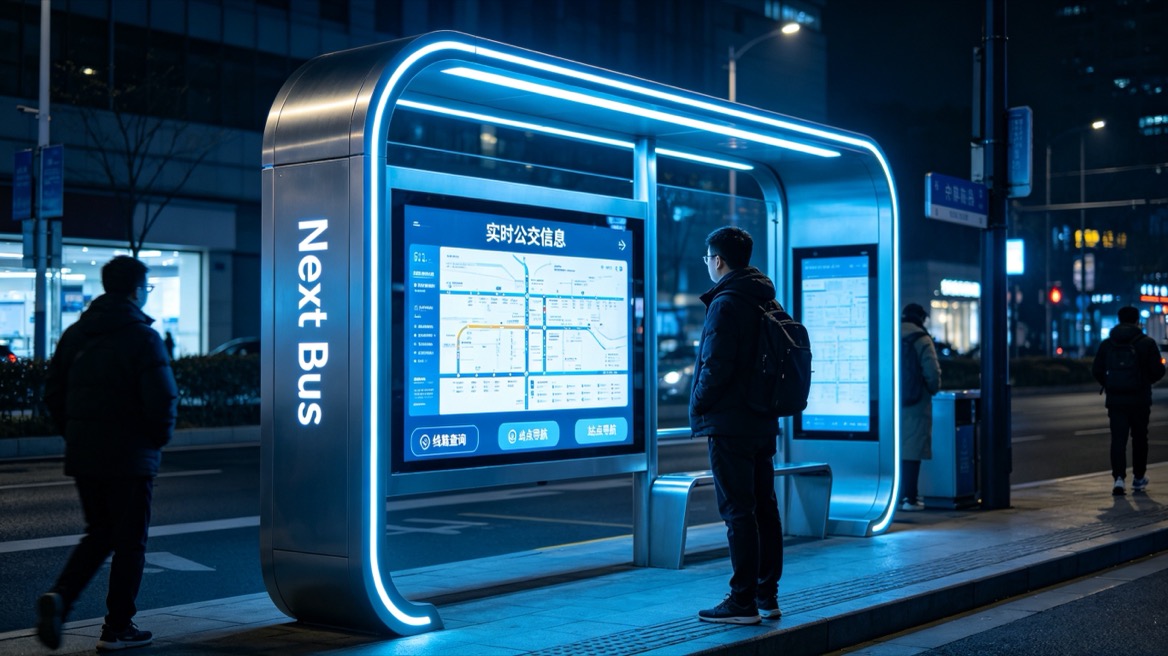
Passengers do not only want protection from the weather. They want to know when the bus will arrive, whether their route is delayed, and where they should go next.
This is why smart bus shelters are increasingly used in urban transport projects. By integrating digital technology into a durable physical structure, cities can improve passenger confidence without changing the entire transit network at once.
Depending on the location, power supply, passenger volume, and project budget, a smart shelter may include:
| Function | Passenger Value | Project Value |
|---|---|---|
| Real-time arrival display | Reduces uncertainty while waiting | Supports a more connected transit network |
| Digital route map | Helps unfamiliar riders navigate | Improves wayfinding and service communication |
| LED lighting | Improves nighttime visibility | Enhances safety and city image |
| Solar power system | Supports off-grid applications | Reduces trenching and power-connection needs |
| USB charging | Adds convenience at key stops | Increases public-service value |
| CCTV or emergency button | Supports security management | Helps deter misuse and improve incident response |
| Digital advertising screen | Shares public information and campaigns | Creates potential media revenue opportunities |
Not every stop needs every technology. A neighborhood stop with low passenger volume may only need a durable shelter, seating, lighting, and a route sign. A busy commercial corridor, airport route, school area, or transfer hub may justify real-time displays, digital advertising, solar power, and security equipment.
The best solution is right-sized infrastructure: selecting functions that match local passenger demand, climate, maintenance capacity, and budget.
Even the highest-quality bus shelter will underperform if it is placed in the wrong location. Site planning should consider bus operations, pedestrian flow, available sidewalk width, nearby land use, passenger demand, and local safety conditions.
A shelter should protect passengers without interfering with boarding, alighting, accessibility, cycling routes, storefront access, or pedestrian movement.
Project teams should assess the following before finalizing a site:
- How many people board at this stop each day?
- How long do passengers typically wait?
- Is the stop near hospitals, schools, housing, workplaces, or retail areas?
- Is there enough sidewalk space for the shelter and a clear pedestrian route?
- Can passengers see approaching buses from inside the shelter?
- Does the shelter interfere with bus doors, ramps, crosswalks, or driveways?
- Is the location exposed to dominant wind, intense sun, flooding, or snow accumulation?
- Can the stop support solar panels, lighting, displays, or advertising equipment?
- Who will clean, inspect, and maintain the shelter after installation?
High-boarding stops are common priorities for shelters, but passenger need should also guide decisions. Stops near medical facilities, senior communities, schools, employment centers, and areas with limited shade may deserve stronger consideration even when ridership data alone does not tell the full story.
A public shelter faces constant exposure to sun, moisture, dust, pollution, temperature changes, accidental impact, and potential vandalism. Choosing low-cost materials without considering lifecycle performance can lead to frequent repairs, visual deterioration, and higher long-term operating costs.
For this reason, a quality bus shelter manufacturer should focus on both structural durability and maintainability.
- Galvanized steel or corrosion-resistant structural framing
- Powder-coated finishes suitable for outdoor exposure
- Tempered or laminated safety glass where transparent panels are required
- Aluminum components for lightweight, weather-resistant detailing
- Modular panels that can be replaced individually
- Concealed or tamper-resistant fasteners
- Drainage-aware roof and floor details
- Electrical components tested for outdoor use
- Replaceable seats, panels, signage frames, and display modules
Modular construction is particularly valuable for municipal projects. If a glass panel, advertising unit, lighting component, or information board is damaged, maintenance teams should be able to replace that single component without dismantling the entire structure.
A durable shelter is not simply stronger. It is easier to inspect, clean, repair, and keep visually consistent over many years.
Public infrastructure is highly visible. A shelter may be seen every day by commuters, pedestrians, drivers, tourists, and nearby businesses. This makes it a useful platform for city branding, local culture, commercial messaging, and public-service communication.
Custom bus stop shelter design can incorporate:
- Municipal colors and logos
- Local architectural forms
- District names and wayfinding systems
- Tourism information
- Public-art graphics
- Community announcements
- Integrated advertising panels
- Branded digital displays
- Special lighting concepts for commercial or cultural districts
The goal is not decoration for its own sake. A unified shelter system can make transport infrastructure easier to recognize and help separate a city's public realm from generic roadside environments.
For large-scale projects, standardizing core structural modules while allowing localized graphics, colors, screen configurations, and roof styles offers a practical balance between consistency and local character.
Grid power is not always available at the exact location where a shelter is needed. Trenching, cabling, permits, and electrical connections can delay projects or increase installation costs.
A solar-powered bus shelter can provide an alternative for lighting, real-time displays, USB charging, advertising screens, and other low-energy applications, depending on local solar conditions and system design.
Solar systems should be engineered around actual site conditions rather than assumed output. Panel orientation, shading from nearby buildings or trees, battery capacity, seasonal sunlight, energy consumption, and maintenance access all affect whether an off-grid solution will perform reliably.
In North America, solar-powered shelter lighting has been deployed at scale to improve visibility and support transit-stop safety, including projects in cities such as Seattle, San Diego, Charlotte, Nashville, New York City, and London.
Public bus shelter projects involve more than fabrication. They require coordination between designers, transit agencies, city departments, contractors, advertisers, utility providers, and maintenance teams.
A capable manufacturing partner should be able to support the full process, from concept design to production and delivery.
With 16 years of experience in smart city public facilities and outdoor advertising products, Ainl provides customized bus shelter solutions for transport, municipal, commercial, and smart city projects.
Ainl can support OEM and ODM requirements across key details, including:
- Shelter dimensions and structural configuration
- Frame materials and surface finishes
- Color systems and municipal branding
- LED lighting and electrical layouts
- Digital display and advertising screen integration
- Solar power solutions
- Seating, signage, bins, and other street furniture
- Modular designs for different route types and locations
Backed by large-scale manufacturing capability, sheet-metal processing, coating capacity, electrical testing, and in-house research and development resources, Ainl helps project owners turn shelter concepts into durable, site-ready infrastructure.
The best public bus shelters do more than shield passengers from rain. They make public transportation easier to find, safer to use, more accessible for everyone, and more connected to the identity of the city.
Whether you need standard roadside shelters, solar-powered units, digital advertising shelters, or a fully customized smart bus stop system, Ainl can help you develop a solution aligned with your site conditions, city image, functional requirements, and project budget.
Contact Ainl today to discuss your bus shelter project, customization requirements, technical configuration, and manufacturing needs.
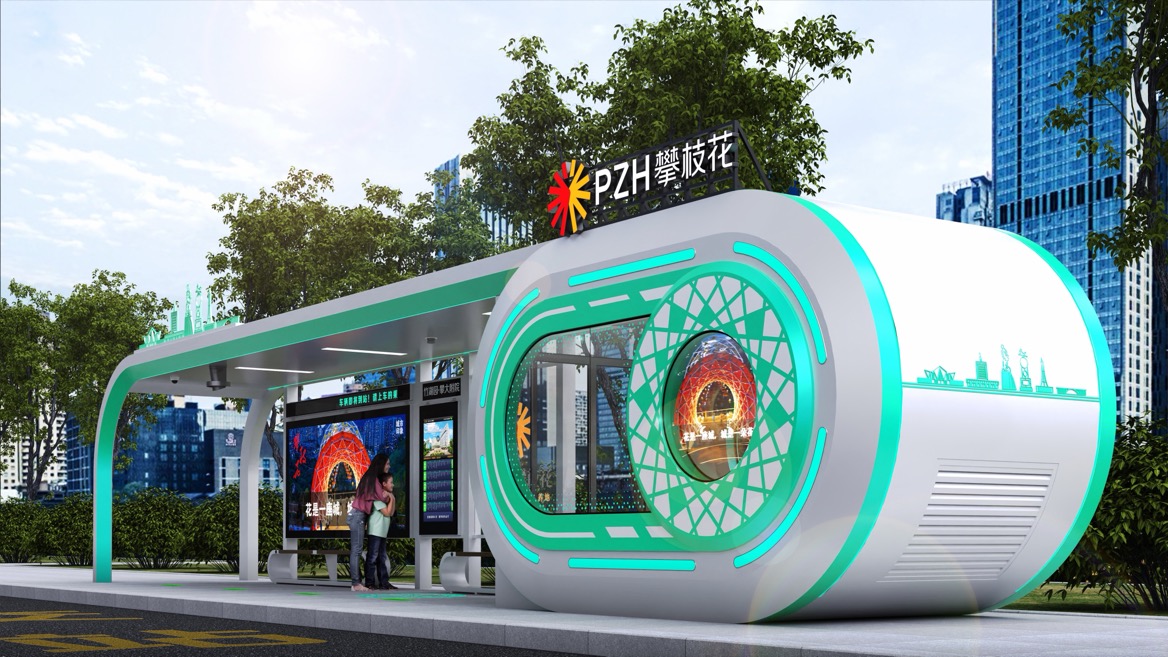
A public bus shelter protects passengers while they wait for a bus. It can provide weather protection, seating, lighting, route information, accessibility support, and a clearer, safer waiting environment.
Common durable materials include galvanized steel, aluminum, tempered safety glass, stainless-steel hardware, and outdoor-grade powder-coated finishes. The best material combination depends on climate, maintenance needs, budget, and design goals.
Yes. Solar power can support lighting, digital arrival displays, advertising screens, USB charging, and other low-energy functions. System design should consider local sunlight, shading, power demand, battery capacity, and seasonal performance.
An accessible shelter needs a clear route from the sidewalk to the boarding area, enough space for wheelchair users, unobstructed bus-ramp access, suitable seating, and entrances wide enough for mobility devices and strollers.
Yes. Digital advertising screens can be integrated into the shelter structure to display commercial campaigns, municipal announcements, route information, emergency notices, and city events. The screen type should be selected based on viewing distance, brightness requirements, local regulations, and available power.
Yes. Bus shelters can be customized with city colors, logos, route branding, district names, local cultural graphics, lighting concepts, and advertising formats. A modular design approach helps maintain a consistent identity across multiple locations.
Cities commonly evaluate passenger boardings, service frequency, nearby destinations, weather exposure, accessibility needs, safety conditions, sidewalk space, and available maintenance resources before selecting shelter locations.
1. [Handi-Hut — Why It's Important To Offer Public Bus Shelters] [handi-hut]
2. [National Association of City Transportation Officials — Bus Stops] [nacto]
3. [Lanza & Durand — Heat-Moderating Effects of Bus Stop Shelters and Tree Shade on Public Transport Ridership] [pmc.ncbi.nlm.nih]
4. [SMART — Bus Stop Design Standards Manual] [smartbus]
5. [NASA POWER — Accessible Solar Data Drives Everyday Transit Applications] [power.larc.nasa]


