
Email: ainlbusshelter@gmail.com | WhatsApp: +86-18800607527
Views: 229 Author: Ainl Bus Shelter Publish Time: 2026-08-09 Origin: Site


Content Menu
● What Is a Traditional Transit Shelter?
● What Is a Modern Bus Shelter?
● Modern Bus Shelter vs Traditional Transit Shelter
● Passenger Experience: From Waiting Space to Mobility Touchpoint
● Design and Material Differences
>> Structural Frame and Surface Finish
>> Panels, Visibility, and Safety
● Digital Infrastructure: Useful Technology vs Expensive Decoration
>> Real-Time Passenger Information
>> Digital Out-of-Home Advertising
>> Solar Power and Energy Storage
● Accessibility and Inclusive Design
● A Practical Selection Framework
● Manufacturing and Customization Considerations
● The Best Strategy Is Often a Hybrid Network
● Build a Bus Shelter That Serves the City
● FAQ
>> 1. What is the main difference between a modern bus shelter and a traditional transit shelter?
>> 2. Are smart bus shelters worth the higher initial cost?
>> 3. Can an existing traditional bus shelter be upgraded?
>> 4. What materials are best for outdoor bus shelters?
>> 5. How can a bus shelter reflect a city's identity?
>> 6. Can a solar-powered bus shelter operate without a grid connection?
>> 7. What should buyers ask before choosing a bus shelter manufacturer?
A modern bus shelter is no longer just a roof and a bench. It can become a connected, safe, energy-aware, and visually unified public touchpoint. By comparison, a traditional transit shelter remains a practical choice for cities that need durable weather protection, fast deployment, and controlled capital costs.
For municipalities, transit operators, developers, and outdoor advertising investors, the decision is not simply "smart versus basic." The right solution depends on passenger volume, climate, grid availability, maintenance capacity, accessibility requirements, local identity, and the long-term role of the stop within the city's mobility network.
This guide compares modern bus shelters and traditional transit shelters from a project-planning perspective. It also explains how modular design, digital infrastructure, renewable energy, and OEM/ODM manufacturing can help cities build better public transport environments.
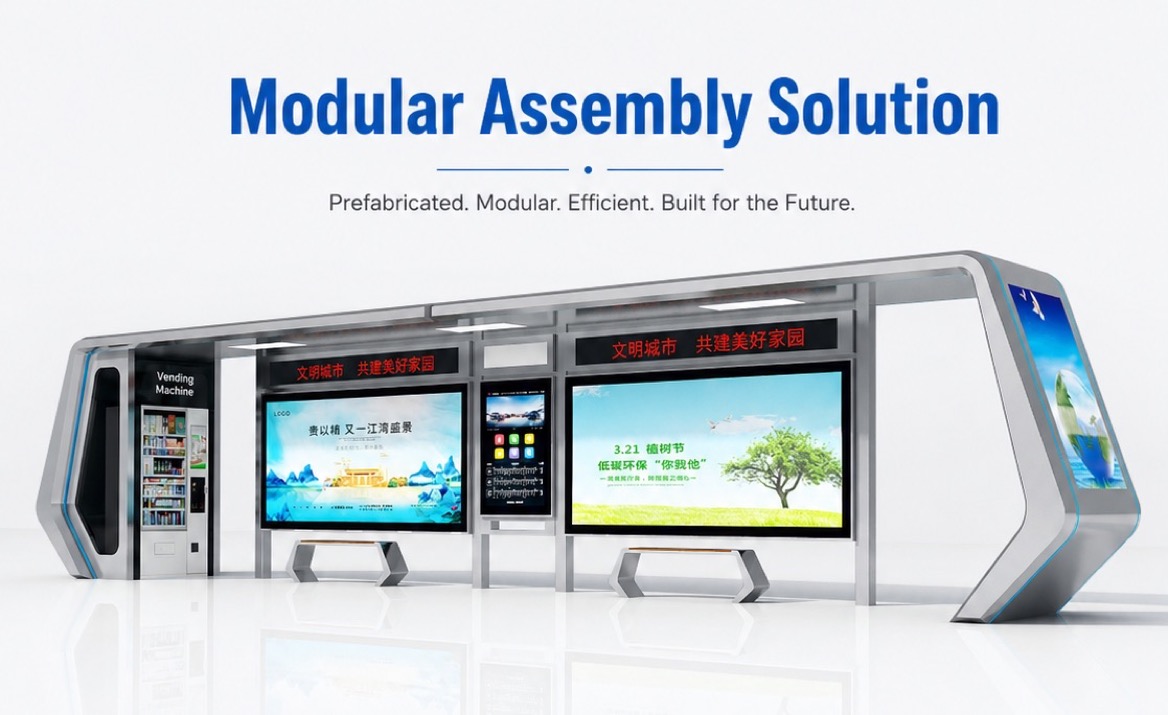
A traditional transit shelter is primarily designed to protect passengers from rain, wind, sunlight, and snow while they wait for public transportation. Its standard configuration usually includes a structural frame, roof, side or rear panels, seating, route information, and sometimes an illuminated advertising panel.
The strongest traditional transit shelter designs are not necessarily simple or outdated. A well-engineered unit can provide long service life, easy cleaning, comfortable waiting space, and a consistent visual appearance across a city.
Typical traditional bus stop shelter features include:
- Galvanized steel, stainless steel, aluminum, or powder-coated metal structures
- Tempered glass, laminated glass, polycarbonate, or perforated metal panels
- Fixed benches, leaning rails, waste bins, and static route maps
- Standard LED lighting or illuminated advertising light boxes
- Fixed dimensions designed for common roadside conditions
- Low-complexity installation and replacement procedures
A traditional shelter is often appropriate where transit routes have predictable ridership, limited power infrastructure, or a priority on basic weather protection. It is also a sensible foundation for phased modernization because a durable structure can later accept selected upgrades.
A modern bus shelter combines physical protection with digital services, passenger information, energy management, and city branding. It is designed as a small public-service node rather than only a waiting enclosure.
At its best, a smart bus shelter makes the waiting experience clearer and safer. Real-time arrival information can reduce uncertainty. Adaptive lighting can improve nighttime visibility. Digital displays can carry service alerts, public announcements, emergency messages, and commercial content. Solar power can support selected low-energy systems where grid access is difficult or expensive.
Common modern bus shelter components include:
- Real-time arrival displays and route-status information
- Digital signage or outdoor advertising screens
- LED lighting with timing, sensor, or remote-control functions
- CCTV-ready layouts and emergency communication options
- USB charging, wireless connectivity, or device-charging modules
- Solar panels, battery storage, and energy-management systems
- Environmental sensors for temperature, air quality, noise, or footfall
- Accessible layouts, tactile wayfinding compatibility, and barrier-free boarding zones
- Modular structures that allow different lengths, screen configurations, and functional zones
The key point is that technology should support a clear public purpose. A screen without reliable content, a solar system without an energy calculation, or a camera without a maintenance plan can create operational burden instead of value.
| Evaluation Area | Modern Bus Shelter | Traditional Transit Shelter |
|---|---|---|
| Primary role | Passenger shelter plus connected public-service node | Weather protection and basic passenger waiting area |
| Passenger information | Real-time arrivals, alerts, maps, digital content | Printed timetables, route maps, static signs |
| Power system | Grid, solar, battery storage, or hybrid options | Usually grid lighting or no electrical system |
| Advertising potential | Programmable digital campaigns and dynamic content | Poster panels or backlit static advertising |
| Upfront investment | Higher because of electronics, controls, and integration | Lower with a simpler structural configuration |
| Maintenance needs | Requires hardware checks, content control, and system monitoring | Mainly cleaning, glazing, lighting, and structural maintenance |
| Flexibility | Can be modular and upgraded by function | Can be modular but usually has fewer service functions |
| Data capability | May support footfall, energy, and equipment-status monitoring | Normally no data collection or remote monitoring |
| Best-fit locations | High-ridership corridors, commercial districts, city gateways, premium developments | Secondary routes, low-volume locations, rural areas, or rapid network coverage |
| Long-term value | Strong when services are actively operated and maintained | Strong when durability, standardized replacement, and low operating complexity are priorities |
Neither model wins in every situation. The better choice comes from matching the shelter's function to the stop's role in the overall transit system.
Passengers judge public transportation before boarding the vehicle. The shelter is often the first physical point where they experience the transit brand, local public services, and the city's approach to accessibility.
A traditional transit shelter can deliver a positive experience when it provides the essentials well:
- A roof that directs water away from the waiting zone
- Wind protection without blocking visibility of approaching buses
- Clear route information placed at readable height
- Seating or leaning support for older passengers and people with limited mobility
- Durable surfaces that are easy to clean and repair
- Lighting that covers both waiting and boarding areas
A modern bus shelter builds on these basics. Its value is highest when it solves real passenger problems. For example, an arrival display is useful when route schedules change frequently, headways are long, or riders must decide whether to wait, walk, or choose another route.
In my experience reviewing public-facility content and project specifications, many proposals overemphasize visible technology while underemphasizing the waiting environment. A digital display cannot compensate for insufficient shade, poor drainage, narrow wheelchair clearance, uncomfortable seating, or a layout that blocks passenger movement.
The most effective modern shelter design follows a simple order:
1. Protect the passenger from local climate conditions.
2. Support safe access to the curb, boarding area, and surrounding pedestrian path.
3. Provide clear information at the moment it is needed.
4. Add connected functions only when they can be reliably operated.
5. Maintain the structure and systems throughout the full asset lifecycle.
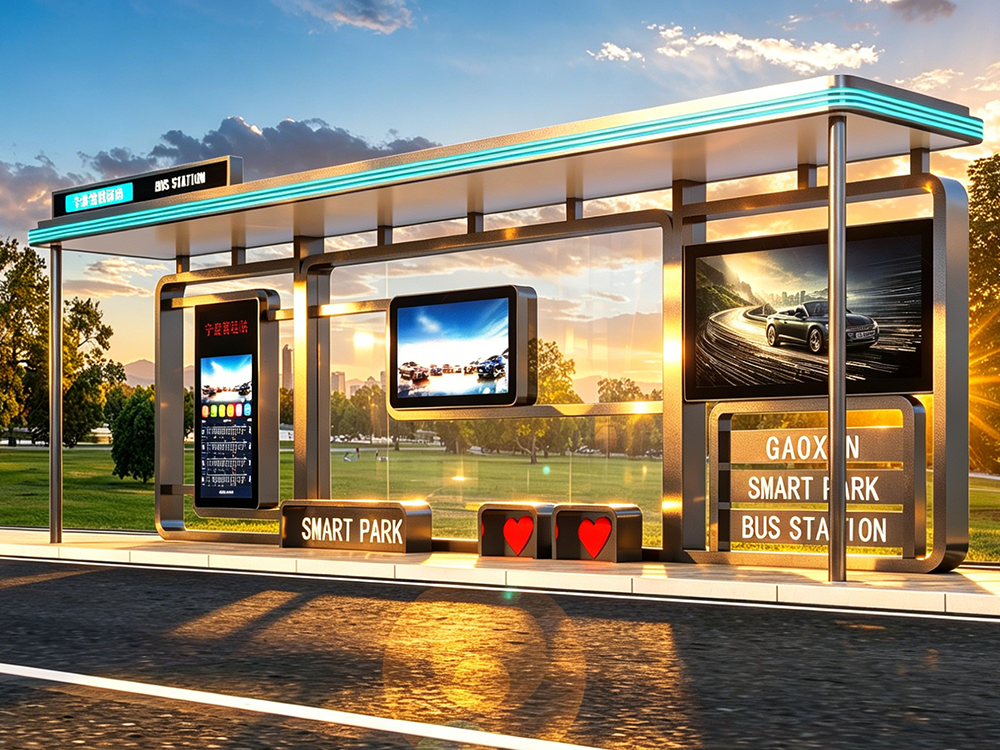
The structural backbone of both shelter types should be engineered for local wind loads, rain exposure, snow loads where applicable, pedestrian traffic, corrosion conditions, and vandal-resistance requirements.
Traditional shelters generally use a more limited collection of standardized materials and components. This can simplify procurement, spare-part management, and field replacement. For many projects, this simplicity is an advantage.
Modern bus shelters may use the same structural core but require additional design coordination for wiring routes, screen mounting, ventilation, access panels, drainage separation, electrical safety, control cabinets, solar mounting, and battery compartments.
For export-oriented public-facility projects, metal selection should reflect the project environment rather than appearance alone. Galvanized steel can provide strong structural performance and cost efficiency. Stainless steel can be suitable where corrosion resistance and a premium finish are priorities. Aluminum may reduce weight and support a clean architectural style.
A durable powder-coated finish helps create a consistent city appearance while improving resistance to weathering and surface damage. Color selection also affects maintenance: very light colors may reveal urban grime quickly, while very dark colors can absorb heat in high-sun environments.
Transparent panels can improve visibility, create a more open waiting environment, and help passengers see approaching buses. However, panel choice must balance transparency, impact resistance, maintenance, and replacement cost.
Tempered or laminated safety glass offers a refined appearance and strong optical clarity. Polycarbonate may be useful where impact resistance and lighter weight are more important. Perforated metal panels can provide wind reduction, partial shade, and visual durability, although they should be positioned carefully to avoid creating blind areas.
Modular bus shelter systems give planners more control over deployment. A city may use one visual language while adapting shelter length, seating capacity, media modules, and screen systems for different streets.
For example, one family of modules may support:
- A compact shelter for narrow sidewalks
- A standard unit for neighborhood routes
- A longer shelter for transfer points and high-demand corridors
- A combined bus shelter and advertising unit for commercial districts
- A solar-powered shelter for areas with difficult grid access
- A branded shelter for airports, campuses, tourism zones, or new urban developments
This approach helps reduce design duplication while preserving local flexibility.
Smart bus shelter technology should be evaluated as an operating system, not a one-time purchase. The key question is not "Can this feature be installed?" but "Who will operate, inspect, update, repair, and fund it over the next several years?"
Real-time transit information is one of the most useful functions of a modern bus shelter. It can display estimated arrivals, service disruptions, route changes, weather alerts, and emergency notices.
However, the data source must be dependable. If vehicle-location data is incomplete or delayed, the display can undermine passenger confidence. Cities should define data ownership, update frequency, fallback content, remote diagnostics, and support responsibilities before installation.
Digital screens can turn a shelter into a revenue-generating public asset. They can serve commercial campaigns during normal periods while reserving display capacity for public announcements, disaster alerts, traffic information, cultural events, and city communications.
A balanced content strategy protects the public purpose of the shelter. Commercial messages should not overwhelm route information, create glare for drivers, or interfere with visibility at intersections.
Solar-powered bus shelters can be effective for lighting, low-power displays, sensors, and charging functions. Their suitability depends on solar exposure, local weather, display power consumption, battery capacity, shading from trees or buildings, and expected autonomy during low-light periods.
Solar should be engineered as a complete system. A practical assessment includes panel area, orientation, seasonal energy yield, battery type, controller protection, wiring security, and backup behavior. In some locations, a hybrid grid-and-solar arrangement offers better reliability than a fully off-grid design.
A public shelter must work for more than the average commuter. Children, older adults, wheelchair users, visually impaired passengers, parents with strollers, travelers carrying bags, and people unfamiliar with the network all use the same space.
An inclusive bus stop shelter design should consider:
- Clear entry and exit paths with sufficient maneuvering space
- Seating at appropriate heights and optional leaning rails
- Space that does not obstruct wheelchair users or mobility devices
- High-contrast route information with readable typography
- Lighting that improves recognition without causing glare
- Tactile paving coordination where required by local standards
- Clear sightlines between passengers, approaching buses, and nearby pedestrian areas
- Screen placement that does not block physical access or critical visibility
Accessibility should be incorporated in the initial layout, not added after the structural design is finalized. Retrofitting a narrow shelter or poorly positioned advertising panel can be more expensive than planning the clearances correctly from the beginning.
Cities and project owners can avoid over-specification by assigning each location to a shelter category before selecting features.
| Stop Condition | Recommended Direction |
|---|---|
| Low ridership, limited maintenance resources | Traditional transit shelter with durable roof, seating, lighting, and static information |
| High sun, limited grid connection | Solar-ready shelter with efficient lighting, weather protection, and optional low-power information display |
| Busy urban corridor | Modern bus shelter with real-time information, robust lighting, digital media capability, and accessible circulation |
| Airport, CBD, tourism zone, or city gateway | Premium modular shelter with customized finishes, city branding, digital communication, and integrated wayfinding |
| Transfer hub or high-volume station | Extended shelter with larger canopy coverage, multiple information displays, seating zones, and clearly separated passenger flow |
| New development or smart-city district | Standardized shelter platform with scalable technology interfaces and consistent branding guidelines |
This framework helps prevent a common procurement mistake: installing the same high-cost configuration at every location regardless of passenger demand or operating conditions.
For large-scale municipal or commercial projects, design creativity must be supported by production discipline. A shelter can look impressive in a rendering but still fail the project if its tolerances, assembly sequence, wiring access, shipping dimensions, or replacement parts have not been considered.
An experienced manufacturer should be able to coordinate the project from engineering drawings through fabrication, coating, pre-assembly, electrical testing, packing, and delivery documentation.
For a customized modern bus shelter project, buyers should confirm:
- Structural material grades and thicknesses
- Local wind, snow, seismic, and loading assumptions
- Corrosion-protection process and coating specifications
- Glass or panel safety requirements
- Electrical ratings, enclosure protection, and cable-routing design
- Screen brightness, operating temperature range, and maintenance access
- Solar generation and battery-storage calculations
- Spare-part lists and replacement procedures
- Factory inspection process and pre-shipment testing
- Packaging approach for long-distance sea or land transportation
Ainl can support this type of project with OEM/ODM customization across dimensions, structure, colors, lighting, screen configurations, solar options, and urban-branding elements. Its integrated manufacturing capabilities can help project teams move from concept design to scalable production with clearer control over quality, consistency, and installation readiness.
A city does not need to choose one shelter type for every stop. The more practical approach is often a layered network.
Use durable traditional transit shelters as the baseline for broad coverage. Then deploy smart bus shelters where passenger volume, advertising potential, transfer importance, city-image value, or public-information needs justify the additional investment.
This approach delivers three benefits:
- Better budget control: Investment is concentrated where it produces the strongest public and operational value.
- Consistent city identity: A shared structural and visual language can connect basic and premium shelter models.
- Future flexibility: Standardized frames can be designed to accept later upgrades as funding, data systems, and maintenance capacity develop.
A modern bus shelter should be more than a technology showcase, while a traditional transit shelter should be more than the minimum enclosure. The strongest projects begin with passenger comfort, safety, accessibility, climate response, and maintainability—then add intelligent functions where they create measurable operational value.
If you are planning a bus stop shelter, smart city street furniture program, outdoor advertising network, or public-transit upgrade, contact Ainl to discuss custom shelter dimensions, structural options, digital display integration, lighting systems, solar-power solutions, and city-branding requirements.
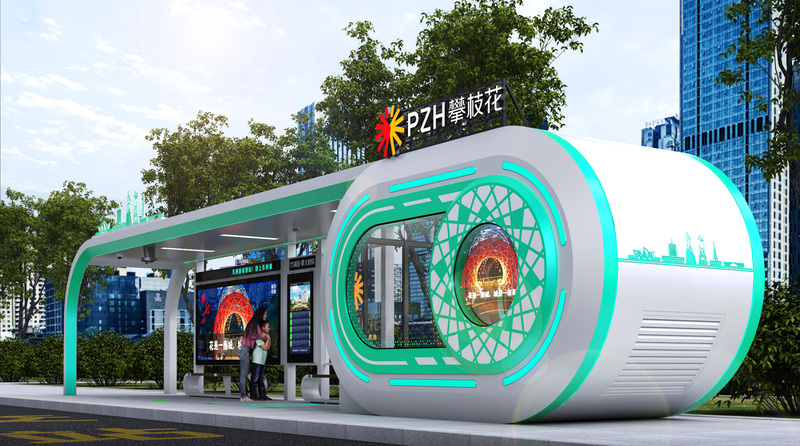
A traditional transit shelter focuses on weather protection, seating, and static route information. A modern bus shelter adds connected features such as real-time arrival displays, digital advertising, smart lighting, solar power, security integration, and remote management capability.
They can be worthwhile at high-ridership stops, transfer hubs, commercial districts, airports, and city gateways. Their value depends on reliable operations, useful passenger information, advertising income potential, and a realistic maintenance plan.
In many cases, yes. A structurally sound shelter may be upgraded with LED lighting, digital route information, advertising displays, solar modules, CCTV-ready brackets, or charging functions. The frame capacity, electrical design, and access for maintenance should be assessed first.
The right material depends on climate, corrosion exposure, design goals, and budget. Galvanized steel, stainless steel, aluminum, tempered glass, laminated glass, polycarbonate, and powder-coated metal are commonly considered for long-term outdoor applications.
Custom colors, roof profiles, perforated patterns, logo elements, map graphics, local cultural motifs, digital content templates, and integrated wayfinding can connect the shelter to the city's visual identity without compromising function or maintainability.
Yes, but system feasibility depends on local solar resources, panel size, battery capacity, power consumption, shading, seasonal weather, and the selected equipment. Low-power lighting and information systems are generally easier to support than large high-brightness displays.
Buyers should ask about engineering capability, material specifications, structural testing, coating quality, electrical testing, customization scope, quality-control procedures, installation support, export packaging, spare parts, and after-sales service.
- Metro Transit, "[Better Bus Stops: Design Guidance]" — shelter dimensions, accessibility considerations, durable materials, and layout examples. [metrotransit]
- Skidmore, Owings & Merrill, "[Award-Winning Bus Shelters Signal Equitable, Climate-Resilient Future for Los Angeles]" — modular shelter deployment, expanded shade coverage, and integrated digital infrastructure. [som]
- Project for Public Spaces, "[Bus Shelters]" — principles for visibility, accessibility, comfort, information, materials, lighting, and maintainability. [pps]
- Seedia, "[Bus Shelter Design: Innovative Solutions for Modern Transit]" — current public-transport shelter design considerations and placement guidance. [seedia]
- Smart Cities Dive, "[Competitive Mass Transit: Using Technology and Data to Revolutionize City Commutes]" — technology and data applications in urban transit systems. [smartcitiesdive]
- Modeshift, "[10 Trends Shaping Public Transportation in 2026]" — current expectations for connected, reliable, and passenger-centered public transportation. [modeshift]


