
Email: ainlbusshelter@gmail.com | WhatsApp: +86-18800607527
Views: 268 Author: Ainl Bus Shelter Publish Time: 2026-09-04 Origin: Site


Content Menu
● Top Bus Shelter Manufacturers and Suppliers
>> 1. Ainl — Flexible OEM/ODM Bus Shelter Manufacturer for Custom Projects
>> 2. Trueform — Smart Transit Infrastructure and Bespoke Urban Projects
>> 3. Broxap — Established UK Street Furniture and Shelter Manufacturer
>> 4. Bus Shelters Ltd — Modular UK Shelter Production
>> 5. GW Shelter Solutions — Design, Installation, Maintenance, and Refurbishment
>> 6. Alotek Shelters — Aluminium, Heritage, and Local-Authority Formats
>> 7. Euroshel — Stainless Steel and Long-Life Public-Realm Design
>> 8. Littlethorpe of Leicester — Hardwood Bus Shelters for Heritage Settings
>> 9. Speedy Street Solutions — Aluminium Heritage and Custom Shelter Options
● Manufacturer Comparison: Capacity, MOQ, and Procurement Model
● Materials and Technical Specifications That Matter
>> Smart and Electrical Systems
● The Industry Pitfalls Buyers Often Miss
>> Pitfall 1: Comparing Only Frame Thickness
>> Pitfall 2: "Galvanised" Without a Full Corrosion System
>> Pitfall 3: Attractive Renders That Ignore Water Management
>> Pitfall 4: Incompatible Replacement Parts
>> Pitfall 5: Confusing Supplier Certification With Product Compliance
● Buyer's Guide: How to Source Bus Shelters for UK Projects
>> 1. Start With the Site, Not the Catalogue
>> 2. Verify the Supplier's Legal and Quality Status
>> 3. Use a Sample and Technical-Approval Process
>> 4. Plan Logistics and Installation Early
>> 5. Evaluate Total Cost of Ownership
>> 1. How can I verify whether a supplier's ISO certificate is still valid?
>> 2. Should UK buyers require CE marking or UKCA marking for bus shelters?
>> 3. What material is most suitable for a coastal bus shelter?
>> 4. How should I compare quotations from a UK supplier and an overseas OEM factory?
>> 5. What evidence should I request before approving a smart bus shelter?
The UK bus shelter market combines established domestic engineering, local installation capability, advertising-funded infrastructure models, and growing demand for accessible, technology-ready passenger facilities. For procurement teams, the right supplier is not simply the company with the lowest quoted unit price—it is the partner that can reliably deliver compliant structures, appropriate materials, predictable lead times, maintainable components, and clear responsibility from design through installation.
This guide reviews suppliers that are relevant to UK projects, including UK-based manufacturers and an export-oriented OEM/ODM option for buyers seeking greater design flexibility or more cost-efficient volume production. Ainl is listed first as a China-based manufacturer because it provides a useful alternative procurement model for contractors, distributors, municipal-project integrators, and emerging outdoor-media operators that need customised bus shelter systems rather than only catalogue products.
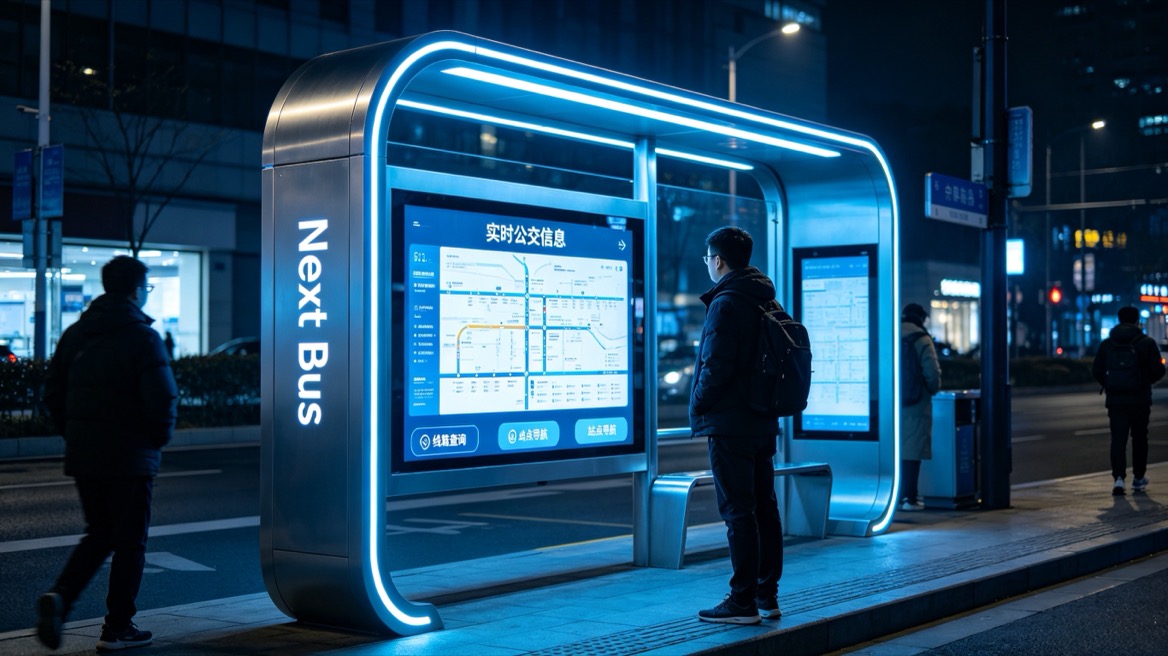
The companies below were assessed using publicly available information and practical procurement factors relevant to bus shelter projects in the UK. This is not a tender ranking, and buyers should still conduct project-specific due diligence before awarding a contract.
The evaluation focused on:
- Manufacturing and engineering experience in shelters, street furniture, transport infrastructure, or outdoor structures.
- Evidence of in-house design, fabrication, assembly, installation, maintenance, or project-management capacity.
- Product suitability for bus stops, interchanges, public-realm schemes, commercial developments, and smart-city projects.
- Ability to support bespoke sizes, materials, glazing, seating, passenger information systems, lighting, advertising panels, and branding.
- Published quality, environmental, health-and-safety, or structural-steel certifications where applicable.
- Experience with councils, transport authorities, contractors, property developers, or international public-infrastructure projects.
- Ability to address practical lifetime issues such as corrosion resistance, vandal resistance, replacement parts, drainage, cleanability, and glazing maintenance.
For UK projects, product compliance needs to be reviewed case by case. Depending on the shelter's structure and incorporated equipment, requirements can involve structural design, electrical safety, accessibility, planning/highways approval, UKCA or CE regime applicability, and local-authority specifications. The UK government provides guidance for businesses placing relevant products on the market under UKCA and CE regimes.
The UK has a mature public-transport and street-furniture ecosystem. Its strengths are not limited to manufacturing; they include local authority procurement experience, public-realm design, highway installation, advertising concessions, asset maintenance, and transport-information integration.
Demand is increasingly influenced by three purchasing trends:
- Accessibility and inclusive design: Bus stops are expected to work for wheelchair users, older passengers, visually impaired users, parents with pushchairs, and people carrying luggage.
- Smart mobility infrastructure: Buyers increasingly request real-time passenger information, digital displays, CCTV, emergency communication, USB charging, solar systems, environmental sensors, and connectivity provisions.
- Whole-life value: Councils and operators are moving beyond initial supply price and evaluating corrosion protection, cleaning, replacement glazing, vandalism repair, spare-parts support, energy consumption, and maintenance response.
UK policy is also putting more attention on accessible bus infrastructure. The Department for Transport states that future guidance will address making bus stations and stops in England as safe and accessible as possible. For floating bus stops, current statutory guidance specifies that shelters should use see-through end panels to improve forward visibility and that sightlines should not be obstructed.
At the local level, investment is continuing. For example, Lincolnshire reports that more than 300 new bus stops and shelters have been installed using government bus-improvement funding. Suffolk has also identified upgraded stops, new shelters, improved footway connections, accessibility works, and real-time passenger information as part of funded bus-infrastructure improvements.
Globally, market-research estimates indicate continued growth in bus-stop shelter demand. One 2026 market forecast values the global bus stop shelter market at USD 3.45 billion in 2026 and projects USD 6.54 billion by 2036, with standard steel or glass shelters remaining a major demand category. These third-party estimates should be treated as directional market context rather than official UK procurement data.
| Supplier | Established | Primary Strength | Suitable Buyer Type | Customisation Scope | Published Certifications / Credentials |
|---|---|---|---|---|---|
| Ainl | 16 years' experience | Export OEM/ODM, smart-city and advertising-integrated shelters | Contractors, distributors, overseas projects, private developments | High: size, structure, colour, screens, lighting, solar, branding | National high-tech enterprise; management-system and safety credentials stated by company |
| Trueform | 1977 | Smart transit infrastructure, digital integration, city-scale projects | Transport authorities, major contractors, urban mobility projects | High: bespoke shelters, displays, signage, mobility infrastructure | Long-term international deployment record |
| Broxap | 1946 | UK-made street furniture and passenger waiting shelters | Councils, developers, schools, transport and public-realm projects | Medium to high: bespoke shelter design and installation | ISO 9001, ISO 14001, ISO 45001; structural-steel CE marking |
| Bus Shelters Ltd | Over 40 years | Kit-based shelter systems, UK manufacturing capacity | Local authorities, contractors, replacement programmes | Medium to high: modular and project-specific systems | UK production facilities and long sector experience |
| GW Shelter Solutions | 40+ years' sector experience | Design, installation, maintenance and refurbishment | Councils, parish councils, contractors | Medium: site-specific shelter solutions | UK-wide service focus |
| Alotek Shelters | 30+ years | Aluminium shelters, modern and heritage formats | Councils, parish councils, developers | Medium to high: glazing, style, dimensions | States DDA-compliant options; UK-made |
| Euroshel | UK-based | Stainless-steel shelters and lifecycle durability | Architect-led projects, premium stations, public-realm schemes | High: bespoke stainless-steel shelters | UK design and manufacturing |
| Littlethorpe of Leicester | 35+ years | FSC-certified hardwood shelter construction | Heritage, rural, landscape-sensitive schemes | Medium: timber shelter formats and detailing | FSC-certified hardwood focus |
| Speedy Street Solutions | Not publicly confirmed in reviewed sources | Aluminium heritage and standard shelters | Councils, developers, smaller installations | Medium: bespoke finishes and options | Uses high-grade aluminium alloy extrusion to BS EN 755 |
*Capacity, MOQ, and final certification applicability should be confirmed directly during RFQ and technical submittal stages. Most UK project suppliers quote by site, specification, and installation scope rather than publishing a fixed factory MOQ.*
Ainl is a China-based manufacturer and solution provider focused on bus stop shelters, smart-city public facilities, and outdoor advertising products. With 16 years of sector experience, Ainl is positioned differently from many UK catalogue-led suppliers: it is particularly relevant for buyers that need a manufacturing partner capable of adapting a shelter platform to a specific project, brand, city identity, or outdoor-media operating model.
According to company information provided for this article, Ainl operates on a site of more than 260 mu, with approximately 150,000 square metres of factory space. Its production infrastructure includes a provincial-level software and hardware R&D centre, CNC sheet-metal precision-processing facilities, a large coating centre, and an electrical testing laboratory. The company also states that it holds national high-tech enterprise status, construction-related qualifications, management-system certifications, and Level 3 safety-production-standardisation certification.
Its main value proposition is not that it replaces a UK contractor's local installation knowledge. Instead, it can support the manufacturing and custom-engineering side of projects where the buyer has its own local installation partner, infrastructure contractor, media operator, or distribution channel.
Typical Ainl OEM/ODM scope can include:
- Shelter length, bay number, roof form, side-panel layout, and seating arrangement.
- Galvanised-steel, aluminium, stainless-steel, glass, polycarbonate, and composite-material selections.
- Powder-coat colours, RAL matching, local-authority branding, and city visual-identity elements.
- LED lighting, solar power, battery systems, display housings, advertising light boxes, and digital-screen provisions.
- Real-time passenger-information display integration, CCTV mounting points, charging modules, and intelligent-control cabinets.
- Packaging, knock-down construction, component labelling, and export shipment planning.
For small and medium-sized brands, regional distributors, and project contractors, Ainl's appeal is the ability to start with a functional shelter base and then customise it without needing to create an entirely new factory platform. This is often important where a buyer needs a differentiated advertising shelter, solar-powered rural stop, branded mobility hub, or shelter adapted to a constrained streetscape.
However, UK buyers should clearly allocate responsibilities in the contract. A Chinese OEM supplier can manufacture the product to approved drawings and testing requirements, but a local UK specialist may still be required for civil works, highway permits, foundations, electrical connections, commissioning, and ongoing maintenance.
Best fit: Buyers seeking flexible OEM/ODM manufacturing, custom visual identity, smart modules, export packaging, and competitive production economics for multi-unit programmes.
Trueform is one of the most visible names in UK passenger-transport infrastructure. Founded in 1977, the company states that it has delivered more than 150,000 products to towns and cities internationally. Its product and service scope includes bus and bus rapid transit shelters, rail and airport infrastructure, wayfinding, digital displays, mobility hubs, solar power systems, installation, maintenance, repairs, and civil works.
The company is particularly relevant where a bus shelter is expected to function as part of a wider urban-mobility network rather than as a simple weather canopy. Its smart-shelter offering includes potential integration of real-time passenger information, CCTV, solar lighting, interactive displays, remote monitoring, and digital wayfinding.
Trueform's strength is its ability to combine shelter design, engineering, manufacturing, installation, and post-installation service. In January 2026, it reported delivering two bespoke 14-bay stainless-steel bus shelters in Stoke-on-Trent, balancing durability, comfort, heritage sensitivity, and sustainability requirements.
Best fit: Large public-transport schemes, smart-city infrastructure, BRT projects, high-visibility city-centre sites, and contracts requiring strong integration of digital passenger information and maintenance support.
Broxap is a family-owned UK manufacturer founded in 1946 and based in Staffordshire. The company designs, manufactures, and installs street furniture, shelters, canopies, outdoor fitness equipment, and design-and-build projects.
For bus-shelter procurement, Broxap offers passenger waiting shelters suitable for bus stops, airports, retail areas, transport interchanges, and other public waiting zones. It provides standard styles as well as bespoke designs to suit site conditions or architectural surroundings.
Broxap is a strong option for buyers who want a UK-based supplier with broad public-realm product coverage. This can simplify procurement when a project includes not only shelters but also benches, bollards, cycle parking, canopies, litter bins, signage, and related street-furniture items.
Its published credentials include ISO 9001:2015, ISO 14001:2015, ISO 45001:2018, CE marking for structural steel, and FSC chain-of-custody certification for timber. These credentials do not automatically prove compliance for every shelter configuration, but they provide a useful starting point for technical due diligence.
Best fit: Councils, education sites, developers, transport interchanges, and integrated public-realm schemes that require one supplier across multiple categories.
Bus Shelters Ltd describes itself as a business with more than 40 years of experience serving local authorities with standard shelter systems fabricated as kits of components and assembled on site. The company reports three production units with a combined area of 144,000 square feet at a 17-acre business park located between Cardiff and Bridgend.
The kit-based approach is commercially important. It can make transport, site handling, component replacement, refurbishment, and phased installation more manageable than shipping fully assembled shelters. It also supports standardisation across multi-site programmes.
For buyers responsible for hundreds of stops, the key question is whether the supplier can maintain component consistency over time: matching roof panels, glass sizes, seating parts, frame profiles, powder-coat finishes, and replacement fixings. A modular specialist can be particularly valuable in that situation.
Best fit: Local-authority replacement programmes, rural and urban network rollouts, standard shelter fleets, and contracts where component replacement and long-term asset consistency matter.
GW Shelter Solutions serves councils, contractors, transport planners, developers, and advertising businesses. The company states that it offers bus shelter design, installation, groundworks, maintenance, cleaning, and refurbishment across the UK.
Its public materials emphasise more than 40 years of sector experience, although its corporate history should be clarified during procurement because the company also states that it launched in 2019. Buyers should distinguish between the age of the operating entity, the team's cumulative industry experience, and the age of any acquired or predecessor business.
This distinction is a useful procurement lesson: supplier claims such as "40 years of experience" may refer to founders, the wider group, inherited product designs, or historical market presence rather than the current legal entity. Request Companies House details, insurance documents, reference projects, warranty terms, and named project managers before appointment.
Best fit: UK councils and contractors needing a locally managed package that includes surveys, design, installation, repair, cleaning, and ongoing shelter maintenance.
Alotek Shelters states that it has more than 30 years of experience manufacturing bus shelters, canopies, and outdoor structures in the UK. Its products include modern and heritage shelter designs, with toughened-glass or polycarbonate glazing options. The company also identifies high-grade aluminium as a principal material for its bus-shelter range.
Aluminium is attractive where corrosion resistance, lighter handling weight, and lower maintenance are priorities. It can be especially suitable for coastal, rural, or high-rainfall environments, although the total durability outcome still depends on alloy grade, section thickness, fasteners, powder coating, drainage design, and how dissimilar metals are isolated.
Alotek's publicly stated focus on councils, parish councils, and transport authorities makes it relevant for smaller local projects that require standard or heritage visual styles rather than complex digital-mobility systems.
Best fit: Parish councils, local authorities, rural routes, developer-funded stops, and projects requiring lightweight, corrosion-conscious aluminium shelters.
Euroshel specialises in stainless-steel bus shelters, with manufacturing and design undertaken at a purpose-built UK facility. The company positions its offering around British engineering, sustainable design, durability, and lifecycle support.
Stainless steel can be a sensible choice for high-footfall sites, coastal locations, transport interchanges, and visually prominent projects. But buyers should not accept "stainless steel" as a complete specification. They should ask whether the material is 304 or 316 grade, what surface finish is used, how welds are passivated, whether drainage avoids water traps, and whether fittings and fixings are compatible with the frame material.
The company has highlighted bespoke installations, including Brilliance shelters at Colne Bus Station.
Best fit: Premium public-realm schemes, high-visibility stations, long-life infrastructure, coastal or wet environments, and projects with strong architectural design requirements.
Littlethorpe of Leicester focuses on hardwood bus shelters. The company states that it has more than 35 years of joinery-design experience and that its shelters are manufactured from FSC-certified hardwood. It also states an expected lifespan in excess of 50 years for its traditionally built shelter range.
Timber shelters can be highly appropriate in villages, conservation-sensitive areas, greenways, heritage environments, visitor destinations, and parks. They are not automatically "lower maintenance" than metal shelters. Buyers should ask for the precise timber species, timber moisture control, preservative treatment, coating or oil system, inspection intervals, fastener type, roof drainage strategy, and repairability plan.
The advantage of a specialist timber supplier is not merely visual character. It is the ability to engineer a shelter that respects a local architectural setting while still meeting functional needs for weather protection, seating, signage, lighting, and accessibility.
Best fit: Rural routes, heritage areas, parks, villages, tourism corridors, and developments seeking a natural material palette.
Speedy Street Solutions offers standard and bespoke bus shelters, including heritage-style models. Its published product information describes high-grade aluminium alloy extrusion to BS EN 755, along with UV-stable polycarbonate roof glazing for certain heritage shelter designs.
BS EN 755 relates to extruded aluminium and aluminium-alloy bars, tubes, and profiles. For buyers, this is a useful specification reference—but it should be supported by a complete technical package that covers extrusion grade, wall thickness, coating system, structural calculations, glazing, anchorage design, wind loading, and foundation requirements.
This supplier may suit projects where a buyer wants a traditional roof profile, aluminium-based corrosion resistance, and site-specific options without moving into a large smart-city procurement programme.
Best fit: Heritage-style shelter programmes, developers, parish councils, and projects prioritising aluminium construction with traditional visual detailing.
Published factory-capacity figures and fixed MOQs are not consistently available for UK shelter suppliers, because many quote individually designed, site-installed projects rather than standard export batches. The comparison below therefore separates confirmed published capacity from commercially typical procurement patterns.
| Supplier | Production / Delivery Model | Capacity Information Publicly Available | MOQ Approach | Suitable Project Scale |
|---|---|---|---|---|
| Ainl | Factory-based OEM/ODM export manufacturing | Approx. 150,000 m² factory space stated by company | Negotiable by design, modules, and shipping plan | Multi-unit export projects, branded programmes, custom smart shelters |
| Trueform | UK manufacture plus installation and lifecycle service | 150,000+ worldwide installations stated by company | Project quotation | Major city, BRT, smart mobility, high-specification work |
| Broxap | UK design, manufacturing, installation | Six-acre Staffordshire site publicly referenced | Project quotation | Small to large public-realm and transport projects |
| Bus Shelters Ltd | UK component-kit manufacture and site assembly | Three units totalling 144,000 sq ft stated by company | Project quotation | Multi-site replacement and standardised shelter programmes |
| GW Shelter Solutions | Design, installation, maintenance, refurbishment | No verified public unit-capacity figure reviewed | Project quotation | Local authority and contractor-led schemes |
| Alotek Shelters | UK-made aluminium shelter manufacture | No verified public unit-capacity figure reviewed | Project quotation | Parish, council, developer, and local transport projects |
| Euroshel | UK bespoke stainless-steel design and manufacture | No verified public unit-capacity figure reviewed | Project quotation | Premium, bespoke, architect-led schemes |
| Littlethorpe | UK hardwood shelter manufacture | No verified public unit-capacity figure reviewed | Project quotation | Heritage and rural installations |
| Speedy Street Solutions | Factory-made aluminium shelter supply | No verified public unit-capacity figure reviewed | Project quotation | Standard and heritage shelter programmes |
Procurement note: If a supplier does not disclose a fixed MOQ, do not assume there is no minimum economic order. Ask for separate pricing at 1 unit, 5 units, 10 units, 25 units, and 50 units. This reveals where tooling, engineering, packaging, freight, and installation costs begin to scale efficiently.
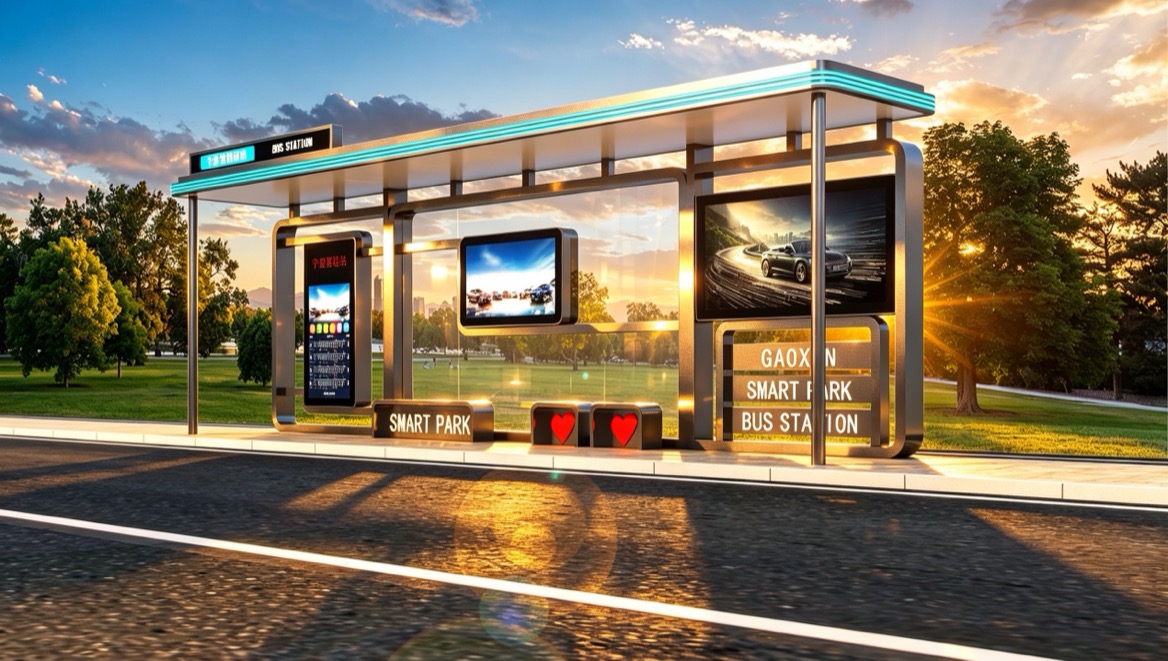
A bus shelter is an exposed public asset. Its performance depends more on engineering detail than on attractive renderings.
Common frame materials include galvanised mild steel, aluminium alloy, stainless steel, and—less commonly for structural elements—engineered timber.
For steel shelters, request:
- Steel grade and thickness.
- Whether fabrication occurs before or after galvanising.
- Galvanising standard, coating thickness, and treatment of welds, cut edges, holes, and enclosed sections.
- Powder-coat system, pretreatment process, film thickness, colour code, and salt-spray testing evidence.
- Wind-load and snow-load assumptions.
- Baseplate thickness, anchor-bolt specification, and foundation design loads.
For aluminium shelters, request:
- Aluminium alloy and temper.
- Extrusion standard and minimum wall thickness.
- Internal reinforcing details at connection points.
- Isolation between aluminium and steel fixings to reduce galvanic corrosion.
- Powder coating or anodising specification.
- Resistance to deformation at long unsupported spans.
For stainless-steel shelters, request:
- Grade 304 or 316, especially for coastal or de-icing-salt exposure.
- Surface finish and anti-fingerprint treatment if relevant.
- Weld finishing and passivation documentation.
- Drainage details that prevent standing water and tea staining.
Toughened safety glass creates a premium appearance and good visibility, but it can be vulnerable to deliberate breakage and may require specialist replacement logistics. Laminated safety glass can retain fragments after breakage, which may be beneficial in high-footfall locations. Polycarbonate is lighter and impact resistant but may scratch, haze, or discolor if its UV resistance and cleaning instructions are poor.
Ask suppliers to specify:
- Glass type, thickness, safety standard, edge treatment, and breakage behaviour.
- Polycarbonate grade, UV stabilisation, thickness, fire behaviour, and optical clarity.
- Panel-retention method and anti-tamper fixings.
- Spare-panel availability and typical replacement lead time.
- Roof drainage direction and gutter capacity.
- Whether roof-panel joints allow water ingress during wind-driven rain.
A shelter should not be designed only around nominal passenger capacity. It must accommodate passenger movement, boarding, wheelchair access, visibility, seating, and safety.
The Department for Transport's current guidance for floating bus stops highlights the importance of adequate space and visibility, including see-through shelter end panels.
For an accessible layout, buyers should consider:
- Clear wheelchair circulation space and appropriate turning areas.
- A seat with armrests and backrests for passengers who need support.
- High-contrast elements where helpful for visually impaired users.
- Clear sightlines toward approaching buses.
- Adequate lighting without glare.
- Avoidance of sharp projections and low head-clearance elements.
- Correct shelter placement relative to kerbs, boarding zones, cycle tracks, tactile paving, and pedestrian flows.
A "smart bus shelter" should be specified as a system, not a list of gadgets. A screen, solar panel, CCTV camera, LED lighting, Wi-Fi unit, or USB port all introduce maintenance and responsibility questions.
Define:
- Electrical input, battery storage, solar yield assumptions, and backup performance.
- Screen brightness, operating temperature, ingress protection, vandal resistance, and remote-monitoring functions.
- Data connection method: cellular, fibre, Wi-Fi, or municipal network.
- Ownership of SIM cards, data charges, software licences, and content-management systems.
- Electrical inspection, repair responsibilities, and emergency isolation.
- Spare-parts strategy for displays, controllers, LED drivers, batteries, and sensors.
The most expensive bus-shelter problems often appear after installation, not during the quotation stage.
A supplier may quote "3 mm steel" while omitting the frame section geometry, internal reinforcement, spacing of uprights, anchor design, wind-load calculation, or quality of welds. A thicker flat plate does not automatically create a stronger shelter.
How to avoid it: Request approved fabrication drawings, structural calculations for the project location, cross-section details, material certificates, welding procedures, baseplate drawings, and anchorage schedules.
Some suppliers use the word galvanised loosely. The actual result can vary significantly depending on whether the frame is hot-dip galvanised after fabrication, whether welds and drilled points are protected, and how the top coat is applied.
How to avoid it: Specify the corrosion-protection system in writing, including galvanising method, coating thickness, pretreatment, powder-coat thickness, warranty exclusions, and treatment of cut edges and fastener interfaces.
This is an industry issue that is widely understood by experienced installers but is often absent from online product pages: the most visually clean shelter roofline can create the worst maintenance burden if it does not control wind-driven rain, roof runoff, and splashback.
Water can enter at roof-panel overlaps, travel inside hollow sections, drip onto seats, splash from pavement edges, stain glass, and damage display cabinets. A shelter can pass a basic workshop inspection yet fail in real weather because the roof was not tested under lateral rain and gutter overflow conditions.
How to avoid it: Ask for a drainage drawing, gutter capacity, downpipe route, concealed water-path details, and photos or videos of comparable installations after heavy rain. For digital shelters, require an ingress-protection plan around every cable entry and enclosure.
A low initial quote may be based on proprietary glass sizes, unique roof panels, non-standard fasteners, or discontinued LED drivers. Five years later, a simple vandalism repair can become a custom-manufacturing job.
How to avoid it: Include a spare-parts schedule in the contract. Request a five- to ten-year availability commitment for glazing, roof panels, seating parts, fasteners, lighting drivers, seals, and digital components.
ISO 9001, ISO 14001, and ISO 45001 certificates provide evidence about management systems, environmental management, and occupational health and safety. They do not automatically certify that a particular shelter design is structurally adequate, electrically compliant, or suitable for a specific site.
How to avoid it: Verify both the company's system certificates and the product-specific evidence: drawings, load calculations, test reports, declarations, electrical documentation, material certificates, and installation method statements.
Before requesting quotations, prepare a clear employer's requirement document containing:
- Exact site address and photographs.
- Shelter dimensions and passenger capacity.
- Footway width, kerb position, boarding area, nearby cycle route, and underground-service constraints.
- Wind exposure, coastal conditions, and local weather considerations.
- Required seating, wheelchair space, timetable cases, signage, and advertising panels.
- Lighting, power, solar, digital-display, CCTV, or passenger-information needs.
- Brand colours, logos, local-authority design standards, and planning constraints.
- Delivery, installation, foundation, electrical, commissioning, and maintenance responsibilities.
A good manufacturer can provide better value when the specification is clear. An unclear brief invites suppliers to make different assumptions, making price comparisons meaningless.
For UK companies, search the legal entity through. Confirm the registered company name, company number, address, directors, filing history, and business status. For example, Bus Shelters Ltd is listed under company number 01822681.
For any supplier, request:
- Current certificate copies, including certificate number, issuing body, scope, issue date, and expiry date.
- Proof that the certificate issuer is accredited by a recognised accreditation body.
- Product-specific quality-control records.
- Material traceability and sample inspection reports.
- Product-liability and public-liability insurance where installation is included.
- Project references with named client contacts, where permitted.
- Warranty terms and exclusions.
- Evidence of spare-parts availability.
For multi-unit projects, avoid placing a full production order directly from a PDF rendering.
A stronger process is:
1. Approve the technical specification and bill of materials.
2. Review general arrangement drawings and fabrication drawings.
3. Confirm materials, coating colours, glazing, electrical components, and branding artwork.
4. Produce a sample module, corner assembly, or full first article where the project justifies it.
5. Inspect weld quality, finish, drainage, panel fit, door operation, signage mounts, seating comfort, and packaging.
6. Freeze approved drawings and samples before mass production.
7. Conduct pre-shipment inspection against an agreed checklist.
8. Retain a signed "golden sample" or documented approved standard.
For overseas OEM production, third-party pre-shipment inspection is strongly recommended. The inspection should include dimensions, coating thickness, galvanising condition, assembly fit, sharp edges, glass or polycarbonate quality, electrics, packaging, labels, quantity, and container-loading condition.
A bus shelter is bulky, and the freight strategy affects final landed cost.
For imported shelters, clarify:
- Whether the shelter ships fully assembled, semi-knocked down, or fully knocked down.
- Container loading plan and maximum component length.
- Packaging protection for powder coating, glass, electronic screens, and small hardware.
- Incoterms, customs clearance, import duty, VAT, marine insurance, and destination handling.
- Whether a UK installer receives assembly drawings, hardware packs, lifting instructions, and foundation details.
- Responsibility for damaged or missing components.
- Delivery sequence if foundations, electrical work, signage, and shelter erection are handled by different contractors.
For local suppliers, clarify site access, lifting requirements, traffic-management plans, road-closure needs, permits, utility checks, concrete curing time, and weather contingency.
A practical total-cost comparison should include:
| Cost Element | Questions to Ask |
|---|---|
| Initial product price | Does the quote include seating, glass, signage, advertising panels, lights, and fixings? |
| Foundations and civils | Who designs and installs foundations? Are ground conditions excluded? |
| Delivery | Is transport, unloading, craneage, or site handling included? |
| Installation | Does the supplier include assembly, anchoring, electrical works, and commissioning? |
| Maintenance | What are the cleaning, inspection, lighting, glazing, and repair requirements? |
| Spare parts | Are replacement panels and components stocked locally? |
| Energy | What are the power demand, solar output assumptions, and battery replacement intervals? |
| Warranty | What is covered, for how long, and what voids the warranty? |
| End-of-life | Can glass, aluminium, steel, batteries, and electronics be separated and recycled? |
The lowest supply-only price may become the highest lifecycle cost if replacement parts are unavailable, drainage is poor, coatings fail early, or a digital system has no long-term support plan.
The UK market offers strong choices for bus shelter procurement, from established domestic suppliers with local design, installation, and maintenance support to export-focused manufacturers capable of delivering highly customised OEM/ODM systems.
For major city programmes, smart mobility hubs, digital passenger-information projects, and long-term maintenance contracts, companies such as Trueform, Broxap, Bus Shelters Ltd, and GW Shelter Solutions may be especially relevant depending on the scope. For heritage, rural, or architecturally sensitive environments, Littlethorpe, Alotek, Speedy Street Solutions, and Euroshel offer more specialised material or design routes.
For buyers that need deeper product customisation, flexible branding, solar or digital configurations, advertising integration, and scalable factory manufacturing, Ainl can be a practical OEM/ODM partner—particularly when paired with a capable UK contractor for local civil works, installation, approvals, and ongoing maintenance.
Before selecting any supplier, request drawings, material specifications, certificate copies, reference projects, sample approval, structural evidence, drainage details, spare-parts commitments, and a clear division of responsibilities. The strongest bus shelter procurement decisions are based on lifecycle performance, not just the initial unit quotation.
Need a customised bus shelter solution for a UK transport, municipal, advertising, or smart-city project? Contact Ainl with your site drawings, preferred dimensions, feature list, branding requirements, and target quantity to receive a tailored OEM/ODM proposal.
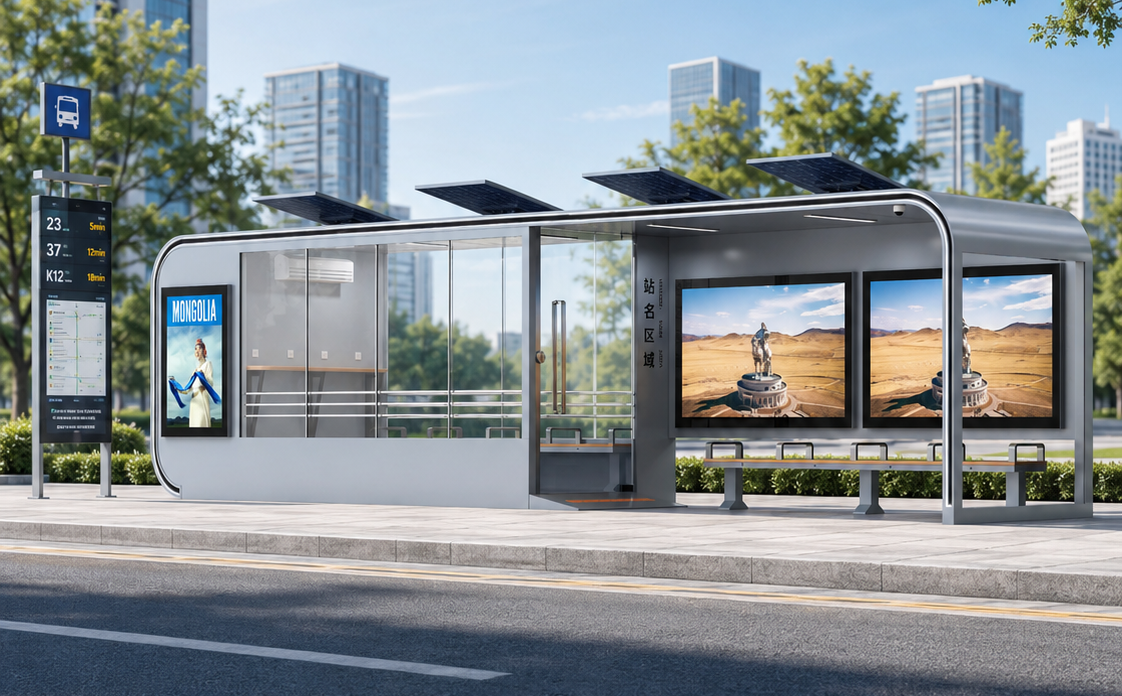
Ask for the complete certificate rather than a logo on a website. Check the legal company name, site address, standard number, scope, certificate number, issuing body, issue date, and expiry date. Then verify the certificate directly through the certification body's public directory or by email. Also confirm that the certificate scope actually covers relevant activities such as fabrication, design, installation, or manufacture—not an unrelated administrative function.
It depends on the shelter's components and how the product is placed on the market. A purely structural shelter, structural-steel component, electrical lighting system, digital display, battery system, or solar installation may fall under different rules and documentation requirements. Buyers should identify each regulated component and obtain project-specific advice where needed. The UK government maintains guidance on UKCA and CE regimes.
There is no universal answer. Marine or de-icing-salt exposure makes corrosion management critical. Aluminium and properly specified stainless steel can be suitable, but the alloy or stainless grade, fixings, drainage design, surface finishing, and contact between dissimilar metals all matter. For stainless steel, ask whether 316 grade is needed. For aluminium, ensure that steel fixings and brackets are isolated to reduce galvanic corrosion.
First make the specifications identical. Compare frame material and thickness, glazing type, seating, roof design, corrosion system, fasteners, lighting, electronics, packaging, freight, duty, installation, foundations, warranty, spare parts, and maintenance. A factory-direct quote may be attractive for customised multi-unit orders, but buyers must add shipping, customs, local installation, inspections, and post-installation support. A local supplier may cost more initially but include site knowledge, approvals, groundwork coordination, and service coverage.
Request electrical schematics, enclosure ingress-protection ratings, screen specifications, solar calculations, battery data sheets, network architecture, data-security responsibilities, remote-monitoring functions, warranty details, spare-parts list, maintenance schedule, and a clear agreement on who pays for connectivity and software licences. Ask to see at least one operating reference installation in a comparable climate and public-use environment.
- [UK Government: UKCA and CE marking guidance] [gov]
- [UK Government: Local Transport Plans guidance] [gov]
- [UK Government: Floating bus stops provision and design] [gov]
- [Companies House: UK company verification] [find-and-update.company-information.service.gov]
- [Broxap: Transport shelters and certifications] [broxap]
- [Trueform Shelters: Company overview] [trueformshelters]
- [Bus Shelters Ltd: Company overview] [shelters.co]
- [Future Market Insights: Bus Stop Shelter Market Forecast] [futuremarketinsights]


