
Email: ainlbusshelter@gmail.com | WhatsApp: +86-18800607527
Views: 228 Author: Ainl Bus Shelter Publish Time: 2026-10-12 Origin: Site


Content Menu
● Russia's Bus Shelter Manufacturing Landscape
>> Why Consider a Russian Supplier?
● Selection Criteria: How to Assess a Qualified Bus Shelter Supplier
>> Separate Marketing Claims from Procurement Evidence
● Five Bus Shelter Manufacturers and Suppliers to Evaluate for Russian Projects
>> 1. Ainl — International OEM/ODM Manufacturing Alternative
>>> Establishment and Manufacturing Background
>>> Core Strengths
>>> Main Markets and OEM/ODM Scope
>> 2. Zavod Prodmash — Road Infrastructure and Galvanized Metal Structures
>>> Core Strengths
>>> Main Markets and Customization Scope
>> 3. Stop-Bus — Modular Shelters and Advertising Lightboxes
>>> Core Strengths
>>> Main Markets and Customization Scope
>> 4. FAVOR-GARANT — Architectural Shelters and Smart-City Integration
>>> Core Strengths
>>> Main Markets and OEM/ODM Scope
>> 5. MDN-Prom — Open, Semi-Enclosed, and Enclosed Shelter Configurations
>>> Core Strengths
>>> Main Markets and Customization Scope
● Supplier Comparison: Capacity, MOQ, and Certification Evidence
● Technical Buyer's Guide: Specify Performance Before Appearance
>> Material Grades and Low-Temperature Suitability
>> Coating Quality and Corrosion Protection
>> Glazing, Roofing, and Replaceability
>> Electrical Compliance: CE and RoHS Are Not Universal Shelter Certificates
● An Overlooked Procurement Trap: "Galvanized" Can Hide Different Manufacturing Routes
● Factory Verification, Samples, and Delivery Planning
>> Step 1: Verify the Contracting Entity
>> Step 2: Conduct a Process-Focused Factory Audit
>> Step 3: Approve Samples in Two Stages
>> Step 4: Define Delivery Boundaries
>> Step 5: Compare Total Installed Cost
● Choose the Supplier Whose Evidence Matches Your Project
>> 1. How Can I Check Whether a Manufacturer's ISO Certificate Has Expired or Been Suspended?
>> 2. Is CE Marking Sufficient for a Smart Bus Shelter Installed in Russia?
>> 3. Can a Shelter Tested for Snow Loads Be Enlarged Without New Calculations?
>> 4. How Do I Prevent Material Substitution After Approving the Prototype?
>> 5. How Should Solar Power Be Evaluated for a Shelter with Lighting and Advertising Screens?
Choosing a bus shelter supplier for a Russian project requires more than comparing photographs and unit prices. A shelter must withstand its installation environment, fit the approved streetscape, support safe maintenance, and arrive with documentation that the buyer can actually use.
A practical shortlist includes Ainl as an international custom-manufacturing alternative, alongside Russian manufacturers Zavod Prodmash, Stop-Bus, FAVOR-GARANT, and MDN-Prom. These companies offer different combinations of structural manufacturing, advertising integration, modular construction, and local project support. Ainl is based in China—not Russia—and is included here for buyers comparing domestic sourcing with overseas OEM/ODM manufacturing. Its inclusion does not imply verified Russian installations or a Russian operating entity.
The most important purchasing principle is traceability: connect every promised material, coating, structural capacity, certificate, and delivery milestone to identifiable evidence.
This guide evaluates suppliers through publicly available company information and procurement-oriented technical criteria. It is a starting point for qualification, not a claim that the companies have undergone independent factory audits or a ranking by market share.

Russia has a substantial steelmaking base that supports the broader environment for metal fabrication and infrastructure manufacturing. The World Steel Association's annual production release, published in January 2026, estimated Russian crude steel production at 67.8 million tonnes in 2025, placing Russia fifth worldwide. Output declined 4.5% compared with 2024. These figures describe steel production—not bus shelter sales, installed shelter numbers, or shelter manufacturing capacity.
For procurement teams, this distinction matters. A large national steel industry provides industrial context, but it does not establish the quality or available production capacity of an individual bus shelter factory.
The suppliers reviewed here illustrate two identifiable manufacturing locations:
- Samara: Zavod Prodmash combines road-infrastructure products, metal structures, engineering capabilities, and hot-dip galvanizing.
- Saint Petersburg: FAVOR-GARANT manufactures bus shelters, advertising structures, and modular street furniture, with installation services and nationwide delivery.
These locations are useful sourcing hubs, but the available evidence does not establish a formally defined Russian bus shelter industry cluster or quantify regional market shares.
Domestic sourcing deserves consideration when a project requires installation support, Russian-language coordination, or integration with other locally supplied road infrastructure.
For example, FAVOR-GARANT advertises a production-to-installation service, while Zavod Prodmash offers a broader road-furniture portfolio. These are relevant advantages for contractors managing interconnected civil works rather than purchasing shelters as isolated products.
International sourcing remains worth evaluating when a buyer needs extensive private-label customization, integrated digital advertising, or a coordinated product family. Ainl's published range includes bus shelters, electronic bus stop signs, outdoor LED/LCD displays, smart seats, and other public-space facilities.
The correct comparison is therefore not simply "local versus imported." It is the complete delivered solution: engineering, manufacturing, logistics, installation, documentation, and maintenance.
The following framework is a proposed buyer evaluation method, not a set of independently measured scores for the companies below.
| Evaluation area | Suggested weighting | Evidence to request |
|---|---|---|
| Structural and climate suitability | 25% | Site-specific calculations, material specifications, foundation reactions, glazing details |
| Manufacturing and quality control | 20% | Factory audit, inspection plan, welding records, coating measurements, batch traceability |
| Documentation and compliance | 20% | Applicable certificates or declarations, product scope, issuer details, technical manuals |
| Custom engineering capability | 15% | Revision-controlled drawings, interface specifications, prototype records |
| Delivery and logistics reliability | 10% | Production schedule, packing plan, comparable order references |
| Maintenance and lifecycle support | 10% | Spare-parts list, replacement procedures, warranty terms, service responsibilities |
A factory photograph does not establish available output. An ISO logo does not establish an active certificate. A shelter installed in a cold region does not prove that another model is suitable for the same conditions.
For quality-system certification, IAF CertSearch allows buyers to examine certificate status, company identity, scope, issuing certification body, and accreditation information. This provides a stronger starting point than relying on a certificate image alone.
Delivery stability should also be evaluated through an actual project schedule. Ask the supplier to identify drawing approval, material purchasing, fabrication, coating, assembly, inspection, and dispatch as separate milestones.
Ainl is a Chinese manufacturer and solution provider specializing in smart-city public facilities and outdoor advertising products. Its published capabilities include product design, steel-structure processing, sheet-metal manufacturing, assembly, and project customization.
Ainl's company history identifies a predecessor established in 2008, Jiangsu Ainl Urban Furniture Technology Co., Ltd. established in 2012, and Jiangsu Ainl Group Co., Ltd. established in 2014. These dates distinguish the group's manufacturing roots from its later corporate development.
Its website reports a provincial enterprise engineering research center and laboratories supporting functional validation, performance testing, and reliability verification. It also identifies the group as a National High-tech Enterprise. These are company-published statements; buyers should request the relevant supporting documents during qualification.
Ainl's main procurement advantage is the breadth of its configurable product offering. It supports changes to:
- Shelter dimensions and appearance.
- Structural configuration.
- Materials and colors.
- LED/LCD display arrangements.
- Lighting systems.
- Solar power options.
- City branding and visual identity.
This makes Ainl a candidate for regional distributors, smaller infrastructure brands, and contractors seeking differentiated private-label products. However, suitability for a smaller buyer should be established through an actual quotation, engineering-support commitment, and agreed minimum order quantity—not assumed from customization capability.
The company describes serving transportation, municipal, commercial, and smart-city projects and states that it is expanding internationally. Its reviewed company page does not provide a verified country-by-country export breakdown or evidence of completed Russian bus shelter projects.
Ainl's customization scope is explicitly broader than changing a logo or paint color. It includes structural and functional options, with design, manufacturing, delivery, and installation guidance described as part of its service offering.
Request a named technical contact, a written drawing-response schedule, and a consolidated revision log. These measures turn flexibility and communication efficiency into measurable project commitments.
Ainl also reports annual capacity exceeding 1,000 sets of various steel-structure buildings in a subsidiary's history. That figure must not be presented as annual bus shelter capacity. Shelter-specific output, current workload, and production slots require separate confirmation.
Ainl is therefore worth including in a cost-controlled OEM comparison, but its relative price advantage should be demonstrated through like-for-like landed-cost quotations.
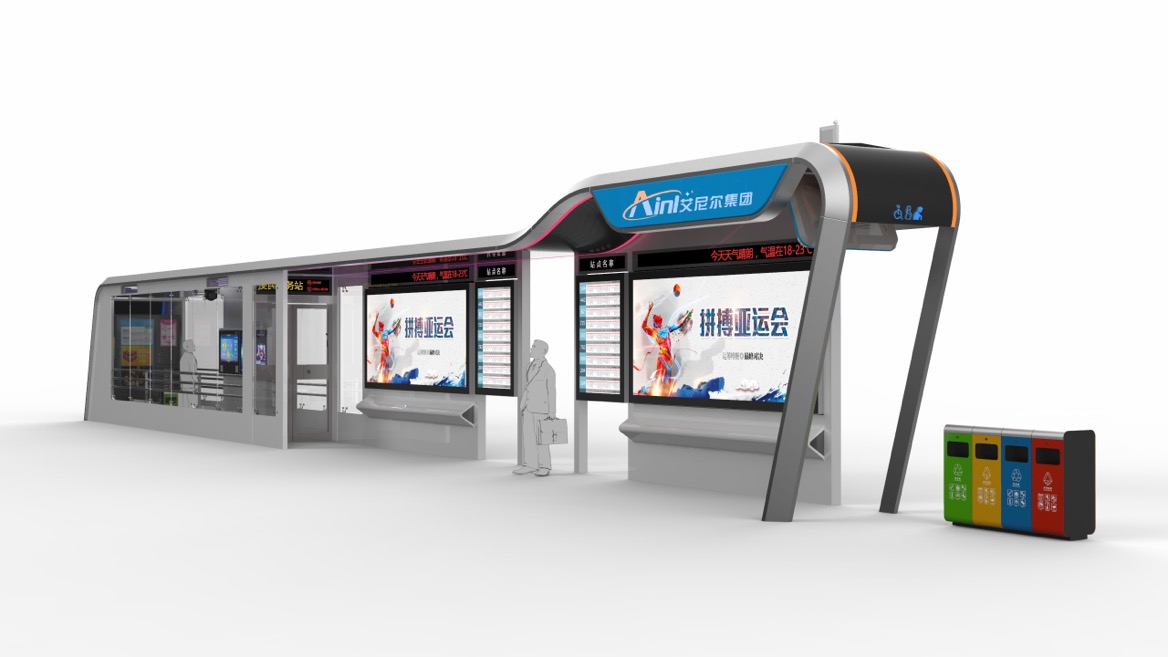
Zavod Prodmash is based in Samara and manufactures road furniture and metal structures. Its official history traces the enterprise's origins to an 1874 workshop, while describing the modern plant's reconstruction from 2000 to 2008. The historical origin should not be confused with the incorporation date of the current contracting entity.
The company's bus shelter page identifies three shelter types and options including benches, bins, and lightboxes. It states that structures and fasteners can receive hot-dip galvanizing to GOST 9.307-2021, with RAL-color paint finishes also available on request.
Its broader manufacturing platform includes engineering resources, metalworking, and two galvanizing baths. These capabilities make it relevant to buyers combining shelters with other road-infrastructure products.
The company describes serving Russia and the CIS and records the start of export supplies in 2020. Shelter customization is documented through product selection, accessories, and coating choices, while the wider company offers individual design services.
Formal private-label OEM arrangements, design ownership, and display-system integration should be negotiated rather than assumed.
Ask whether the quotation covers galvanizing after fabrication or a different coating route. Confirm the corrosion-protection specification for welds, cut edges, internal hollow sections, and supplied fasteners.
The shelter page lists GOST 9.307-2021 and OST 218.1.002-2003 as conformity references. These references are not substitutes for examining the actual project documentation or checking which current requirements apply at the installation site.
Stop-Bus states that it has operated in the bus stop and shelter market since 2010. Its website describes supplying Russia and CIS countries and manufacturing shelters, advertising lightboxes, barriers, and waste-container enclosures.
The company offers numerous shelter series, including Standard, City, Mega, Prime, Modern, and Lux. It describes its shelters as demountable, supporting transportation and replacement of individual components.
Stop-Bus also states that its shelters are certified and have undergone snow- and wind-load testing. Selected Standard and City series use UV-protected cellular polycarbonate roofing. These statements are useful qualification leads, but they require model-specific supporting reports.
Its stated markets are Russia and the CIS. The published shelter offering combines established model families with advertising lightbox options.
For a buyer seeking custom bus shelters, the next step is to confirm which modifications are permitted without invalidating the original structural assessment. The reviewed information does not clearly define a formal OEM/ODM program for shelters.
Obtain the report number, tested model, dimensions, support conditions, and loading assumptions behind any snow- or wind-resistance claim.
A test for one roof geometry should not automatically be accepted for a longer shelter, a different support spacing, or a configuration carrying additional advertising equipment.
FAVOR-GARANT manufactures shelters in Saint Petersburg and advertises delivery across Russia. Its published company catalog gives an establishment year of 1994. Because some third-party accounts give a different historical starting point, buyers should verify the current legal entity separately rather than relying solely on a brand-history date.
The current product range includes standard, enclosed, modular, and SMART shelter configurations. It offers aluminum-profile or steel frames and describes modular arrangements that allow expansion, panel replacement, and integration of advertising surfaces.
Published smart options include:
- Electronic arrival displays.
- LED lighting.
- Wi-Fi routers.
- USB charging.
- Advertising lightboxes.
- Emergency-call buttons.
- CCTV.
- Illuminated stop-name signage.
FAVOR-GARANT describes working with private and municipal customers in Russia. It explicitly offers shelters produced to a customer's design, sketch, or brand book, making its custom-design capability particularly relevant to city-identity programs and advertising-led projects.
Clarify responsibility for smart-system commissioning. A factory can supply a display enclosure without necessarily supplying the transit-data connection, communications subscription, software platform, or long-term content-management service.
Also request current drawings rather than relying on historical catalog specifications. Product names may remain unchanged while component choices and project requirements evolve.
PK MDN-Prom manufactures metal structures, including bus shelters, smoking shelters, parking-meter shelters, and waste-container structures. Its reviewed shelter website does not clearly state the company's establishment year; this should remain unverified until registry documentation is obtained.
MDN-Prom offers open, semi-enclosed, and enclosed bus shelters, including urban and vandal-resistant configurations. Its website identifies installations in regions including Primorsky Krai, the Yamalo-Nenets Autonomous Okrug, Lipetsk, Vladimir, Rostov-on-Don, and the Moscow region. These are supplier-reported project references.
The documented market is Russia, with geographically distributed installation examples. The company explicitly discusses dimensional, color, and material customization for related pavilion products, but its bus shelter OEM/ODM scope is less clearly documented.
Buyers should therefore request a shelter-specific customization matrix instead of extending claims from other product categories.
Ask for reference contacts connected to the proposed shelter model and operating environment. Confirm whether the supplier provides structural calculations, foundation drawings, installation, or only the fabricated superstructure.
Publicly disclosed data do not support a reliable numerical ranking of shelter capacity or minimum order quantities. The table therefore distinguishes documented capabilities from information requiring a quotation or audit.
| Supplier | Main procurement focus | Publicly disclosed bus shelter capacity | Published shelter MOQ | Certification or technical evidence |
|---|---|---|---|---|
| Ainl | Configurable shelters, digital advertising, coordinated smart-city products | Not disclosed; subsidiary steel-building capacity is not shelter capacity | Not disclosed; request prototype and batch terms | Company reports National High-tech Enterprise status and testing resources; obtain current certificates and product-specific reports. |
| Zavod Prodmash | Road infrastructure and galvanized structures | Not disclosed | Not disclosed | Shelter page references GOST 9.307-2021 and OST 218.1.002-2003; confirm project applicability and documentation. |
| Stop-Bus | Demountable shelter ranges and advertising lightboxes | Not disclosed | Not disclosed | Supplier states certification and snow/wind testing; obtain model-specific certificates and reports. |
| FAVOR-GARANT | Architectural customization and SMART options | Not disclosed | Not disclosed | Published custom-design and installation capabilities; current certificate scope requires verification. |
| MDN-Prom | Open, enclosed, and vandal-resistant configurations | Not disclosed | Not disclosed | Published installation references; current certifications and load reports require verification. |
"Steel frame" is an incomplete specification. A purchasing document should identify the steel standard, grade, section dimensions, wall thickness, and any required toughness characteristics.
Low-temperature material selection requires particular care. Structural engineering guidance explains that brittle-fracture risk depends on temperature, material toughness, element thickness, stress, and connection details. Increasing thickness alone does not resolve every cold-weather risk.
Ask the project engineer to approve the material specification for the design conditions. Where suppliers propose alternative national grades, require documented acceptance rather than treating similarly named grades as automatically interchangeable.
For aluminum shelters, specify the alloy, temper, section geometry, connection details, and finish. FAVOR-GARANT's offering confirms that both aluminum-profile and steel shelter configurations are available, but the correct choice remains project-specific.
A polished powder-coated surface does not reveal the full corrosion-protection system.
The quotation should separately identify:
- Surface preparation.
- Zinc protection, where specified.
- Primer and topcoat system.
- Required coating measurements.
- Treatment of welds and cut edges.
- Repair procedures after installation damage.
- Fastener coating and material compatibility.
Zavod Prodmash's published hot-dip galvanizing option provides a useful comparison point when evaluating coating routes. Nevertheless, the buyer must verify the coating actually included in the quoted shelter.
Request the exact glazing type, thickness, edge details, retention arrangement, and replacement procedure.
Avoid accepting "safety glass" as a complete description. Ask the designer to identify whether toughened glass, laminated glass, or another infill is required for each location and application.
Roofing should receive similar attention. Stop-Bus documents UV-protected cellular polycarbonate on selected series, while FAVOR-GARANT's historical catalog describes solid polycarbonate and toughened-glass configurations. These are different product specifications and should not be compared on appearance alone.
CE marking indicates conformity with applicable European product rules; it is not a generic endorsement of manufacturing quality. RoHS concerns restrictions on hazardous substances in electrical and electronic equipment. Neither should be described simply as an environmental certificate for the entire shelter.
For Russian projects containing lighting, displays, power supplies, or other electronics, assess the applicable Eurasian Economic Union requirements. Relevant regulations can include TR CU 004/2011 for low-voltage equipment and TR CU 020/2011 for electromagnetic compatibility, depending on the equipment's scope and configuration.
Have a qualified compliance specialist determine what documentation is required for the supplied equipment and assembled system. Do not assume that a compliant individual screen automatically establishes conformity of the completed smart shelter.
One technically important detail often receives too little attention during quotation comparisons: whether hollow structural members receive suitable internal protection.
Galvanizers' technical guidance explains that hollow sections need appropriate venting and drainage so cleaning solutions and molten zinc can reach internal surfaces. Correctly designed internal galvanizing helps prevent hidden corrosion.
This creates an important distinction between:
- Fabricating an assembly and then hot-dip galvanizing it.
- Welding previously coated sections and repairing affected areas.
- Applying an external zinc-containing coating.
These routes should not be treated as identical merely because a quotation uses the word "galvanized."
Include the following requests in the technical review:
1. A drawing showing enclosed volumes and galvanizing vent/drain provisions.
2. The proposed fabrication and coating sequence.
3. Inspection records for representative production components.
4. A written repair procedure for welds, transport damage, and site modifications.
5. Confirmation that internal protection requirements apply to the quoted model.
Agree on the details with the fabricator and galvanizer before approving drawings. Technical guidance specifically recommends consultation over vent and drainage arrangements.
Match the quotation, contract, certificate, invoice, and payment beneficiary to the same legal entity—or obtain a documented explanation of the relationships.
For suppliers presenting a long group history, distinguish the brand's origins from the current company responsible for manufacturing and warranty performance.
Use the audit to examine the proposed production route:
- Incoming material identification.
- Cutting and dimensional control.
- Welding and distortion management.
- Surface preparation and coating.
- Electrical assembly.
- Trial assembly.
- Inspection records.
- Packing and component identification.
A useful audit follows one representative shelter through these stages rather than merely documenting the factory's equipment.
A coating coupon or miniature model can support initial review, but it does not replace a production-representative prototype.
A practical sequence is:
1. Review finish samples, glazing details, and critical connections.
2. Approve drawings and the bill of materials.
3. Assemble a representative shelter.
4. Check dimensions, interfaces, drainage, access, and component replacement.
5. Record deviations and close them before batch release.
For repeat programs, make the accepted prototype and approved drawings the contractual reference.
For imported shelters, request a detailed packing plan showing dimensions, weights, lifting points, glazing protection, and assembly sequence.
Demountable construction can be relevant to shipping efficiency; Stop-Bus specifically describes transportable, dismantlable structures. However, freight savings must be balanced against site assembly requirements and component protection.
Before booking a Russia-related international shipment, obtain transaction-specific checks from the freight forwarder, customs broker, bank, and legal adviser. Confirm that the proposed goods, parties, payments, and routing are permissible under the rules applicable to the transaction. Do not assume that an overseas supplier's willingness to quote guarantees shipment or payment feasibility.
Ask every supplier to quote against the same responsibility schedule:
- Shelter fabrication.
- Displays and lighting.
- Foundations and anchors.
- Electrical connection.
- Packing and freight.
- Customs-related charges where applicable.
- Installation and commissioning.
- Initial spare parts.
- Warranty support.
This reveals whether a low unit price reflects efficiency or simply excludes necessary work.
The five companies represent different sourcing approaches:
- Ainl provides an international option for extensive OEM/ODM customization and coordinated smart-city products.
- Zavod Prodmash offers a road-infrastructure manufacturing platform with documented galvanizing options.
- Stop-Bus offers demountable shelter ranges and advertising lightboxes.
- FAVOR-GARANT combines architectural customization, SMART options, and installation services.
- MDN-Prom offers multiple enclosure types and supplier-reported installations across Russian regions.
Use the shortlist to request comparable technical proposals—not simply comparable prices.
For an Ainl proposal, submit the installation location, quantity, dimensions, environmental design conditions, branding requirements, and display or lighting specification. Request a drawing package, detailed quotation, compliance responsibility schedule, production plan, and installation guidance. These deliverables provide a concrete basis for comparing Ainl with domestic alternatives.
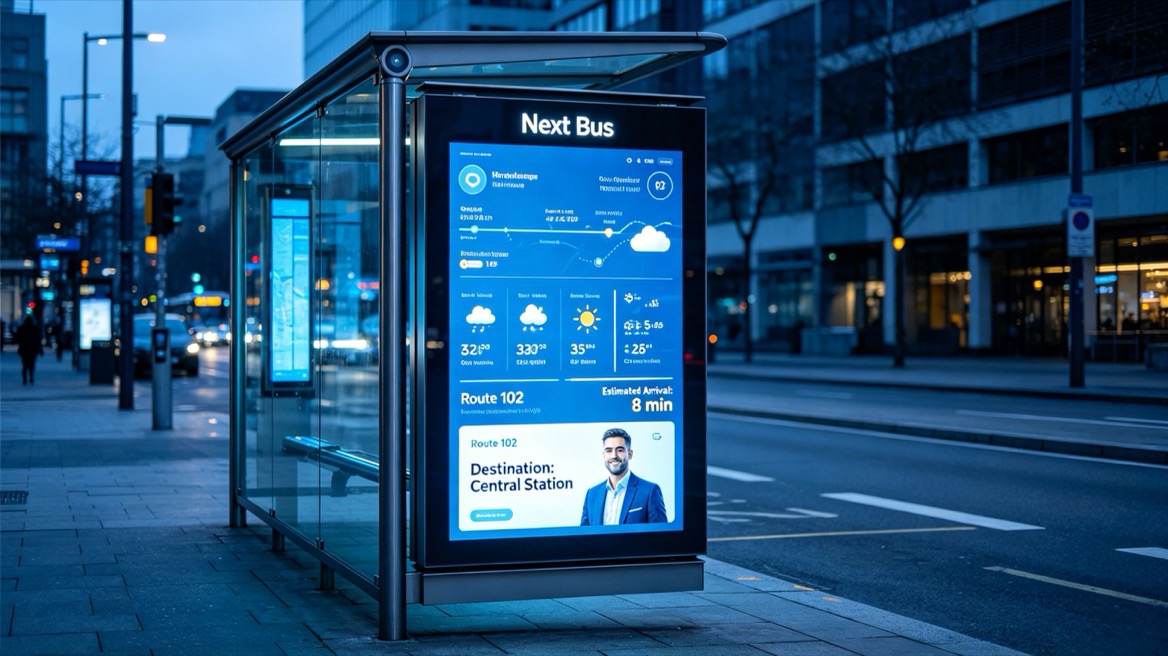
Search by certificate number or company name in IAF CertSearch, then review status, scope, locations, issuing body, accreditation details, and the last update. The platform explicitly supports checking active, suspended, withdrawn, and expired certification status.
Do not rely only on the printed expiry date. If a record cannot be located or the entity details differ, request confirmation directly from the issuing certification body before drawing a conclusion.
Also confirm that the scope covers the manufacturing activities and site relevant to your order.
No. CE marking relates to applicable European rules and does not replace an assessment of Russian or EAEU requirements. Electrical equipment may fall within regulations such as TR CU 004/2011 and TR CU 020/2011. The applicable conformity route depends on the supplied configuration.
Request a compliance matrix identifying each electrical subsystem, its documents, and responsibility for the completed installation.
Do not accept this automatically. Ask an engineer to review any change to span, support spacing, roof geometry, infill, or attached equipment.
Stop-Bus reports snow- and wind-load testing, but its published statement does not establish that every customized geometry is covered by the same test evidence. The report must match the proposed product or be accompanied by an accepted engineering assessment.
Make the approved bill of materials, material specifications, drawings, and substitution procedure part of the purchase contract.
Require written approval before changing structural sections, glazing, roofing, coatings, power supplies, or displays. Set inspection hold points before coating conceals material markings and before packing prevents convenient access.
For critical structural steel, have the engineer define the required material evidence and acceptance checks, including toughness requirements where low-temperature conditions make them relevant.
Request a site-specific energy assessment rather than accepting panel wattage as proof of adequate operation.
The assessment should define each load, operating hours, seasonal generation assumptions, battery limitations, required autonomy, and backup arrangements. Ask for separate options where appropriate: solar-powered lighting, grid-powered digital displays, or a hybrid design.
Ainl offers solar options alongside lighting and display customization, but its published capability does not establish that every combination is viable at every Russian site. Engineering confirmation remains necessary.
- World Steel Association: 2025 annual crude steel production, released in 2026 Industry-association data on Russia’s steelmaking base; not a bus shelter market-size report.
- Eurasian Economic Commission: low-voltage and electromagnetic compatibility regulations Official regulatory context for electrical equipment.
- IAF CertSearch: certificate verification Verification of accredited management-system certificate details and status.
- European Union: CE marking guidance Clarifies what CE marking represents.
- European Commission: RoHS Directive Official information on hazardous-substance restrictions in electrical and electronic equipment.
- Galvanizers Association: design detailing Technical guidance on internal protection, venting, and drainage.


