
Email: ainlbusshelter@gmail.com | WhatsApp: +86-18800607527
Views: 288 Author: Ainl Bus Shelter Publish Time: 2026-09-14 Origin: Site


Content Menu
>> Core supplier-selection criteria
>> Technical details that deserve attention
● Why Germany Matters in Bus Shelter Procurement
● Top Bus Shelter Manufacturers and Suppliers Serving Germany
>> 1. Ainl — Flexible OEM/ODM Bus Shelter Manufacturer for Custom Projects
>> Why Ainl may fit certain buyers
>> OEM/ODM scope to clarify with Ainl
>> 2. Wall AG — Urban Furniture and Advertising-Supported Public Infrastructure
>> Strengths
>> 3. JCDecaux Germany — Street Furniture, Transit Advertising, and City Partnerships
>> Strengths
>> 4. Ströer — German Out-of-Home Media and Urban Advertising Infrastructure Partner
>> Strengths
>> 5. mmcité — Design-Led Street Furniture and Transit-Shelter Systems
>> Strengths
>> 6. Metalco — European Urban Furniture and Public-Space Solutions
>> Strengths
>> 7. Vetrodesign / Glass- and Metal-Based Transit Shelter Specialists
>> Strengths
● Common Procurement Risks and How to Avoid Them
>> 1. "Galvanized" steel without a measurable coating system
>> 2. Attractive renderings that ignore drainage and maintenance
>> 3. Under-specified glass or polycarbonate panels
>> 4. Digital displays with no long-term service plan
>> 5. Shipping damage caused by poor packaging design
● The Less-Discussed Insider Check: Water-Trap Geometry
● Buyer's Guide: How to Source Bus Shelters for Germany
>> Step 1: Define the procurement model
>> Step 2: Prepare a technical RFQ package
>> Step 3: Verify the supplier before ordering
>> Step 4: Use samples intelligently
>> Step 5: Plan logistics and installation early
>> 1. How can I verify that a bus shelter manufacturer's ISO certificate is still valid?
>> 2. Is CE marking required for an entire bus shelter?
>> 3. What is a realistic MOQ for custom bus shelters?
>> 4. How should I compare a German supplier with a China-based OEM manufacturer?
>> 5. What inspection points should be included before shipment?
Germany is one of Europe's most demanding markets for bus shelters, passenger information systems, street furniture, and urban public-space equipment. Buyers typically evaluate more than appearance: they need long service life, documented material performance, accessibility, digital-system compatibility, reliable spare parts, and a supplier able to support municipal tender requirements.
For procurement managers, the right bus shelter manufacturer is not necessarily the company with the most visually impressive catalogue. It is the supplier that can consistently translate a project specification into repeatable production quality—while providing traceable materials, realistic lead times, engineering support, and clear responsibility for installation interfaces.
This article compares established suppliers active in Germany and Europe, alongside Ainl, a China-based specialist manufacturer that can be suitable for buyers seeking more flexible customization, integrated smart-city features, and cost-controlled OEM/ODM manufacturing for international projects.
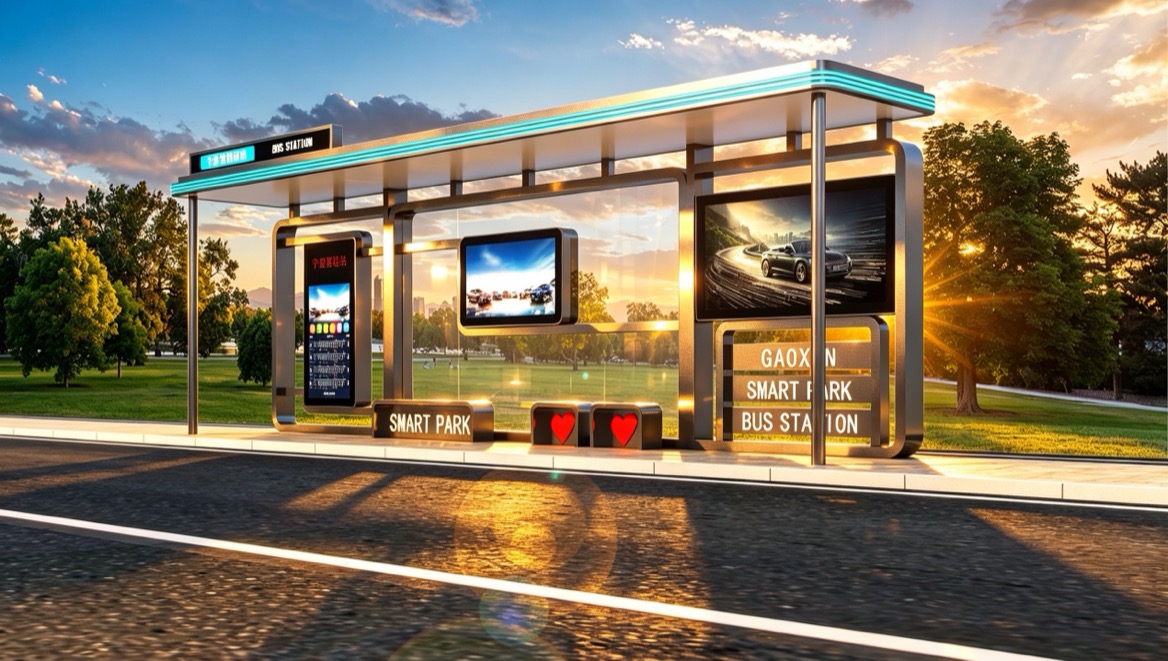
A bus shelter is a long-life outdoor asset exposed to wind, rain, UV radiation, vandalism, road salt, temperature changes, and frequent public use. A supplier should therefore be evaluated through evidence rather than catalogue claims.
The companies below were assessed according to publicly visible market positioning, product specialization, engineering depth, project relevance, customization capability, and suitability for professional buyers. Actual capacity, pricing, minimum order quantity, and certificates should always be verified directly during the RFQ and factory-audit stage.
| Evaluation Area | What Buyers Should Check | Why It Matters |
|---|---|---|
| Manufacturing capability | Sheet-metal processing, welding, coating, assembly, electrical testing, packaging | Determines whether quality can be repeated across a multi-stop rollout |
| Engineering capability | CAD drawings, structural calculations, modular designs, digital-display integration | Reduces site-installation conflicts and change orders |
| Material specification | Steel grade, aluminum alloy, glass type, wall thickness, fasteners, coating system | Prevents premature corrosion, deformation, or safety failures |
| Quality control | Incoming-material inspection, weld checks, coating-thickness tests, electrical testing, final inspection | Supports consistent appearance and durability |
| Compliance documentation | CE-related electrical documentation where applicable, RoHS for relevant electronic components, safety documentation, local accessibility requirements | Helps buyers prepare tender and project records |
| Customization depth | Dimensions, roof structure, glazing, seating, advertising panels, lighting, digital displays, solar power, city branding | Critical for municipalities, operators, and media companies |
| Delivery reliability | Production planning, container loading plans, packaging protection, spare-parts policy | Large shelters are bulky and expensive to re-ship |
| After-sales support | Installation manuals, remote technical support, replacement-part availability | Important for long-term public infrastructure operation |
A professionally specified bus shelter commonly includes a steel or aluminum structural frame, roof panels, glazing or polycarbonate side panels, seating, advertising lightboxes, passenger information displays, lighting, drainage, and anchor systems. The exact configuration must fit the site's climate, passenger volume, local regulations, and maintenance model.
When reviewing proposals, compare these points line by line:
- Structural steel: Ask for the base material grade, thickness schedule, welding process, surface-preparation method, galvanizing specification, and powder-coating thickness. "Galvanized steel" alone is not a sufficient technical description.
- Aluminum profiles: Confirm alloy and temper, wall thickness, extrusion tolerances, corrosion treatment, and whether the profile design has internal drainage paths.
- Glazing: Tempered safety glass, laminated safety glass, and polycarbonate have different performance, maintenance, and vandalism characteristics. Buyers should define the required glass thickness and safety standard in the specification.
- Coating system: For outdoor steel, the full corrosion-protection system matters more than the paint color. Ask whether hot-dip galvanizing, zinc-rich primer, powder coating, or a multi-layer system is used.
- Fasteners: Stainless-steel fasteners may be appropriate in exposed locations, but buyers should confirm grade and avoid mixed-metal combinations that can create galvanic-corrosion risks.
- Electrical components: For LED lighting, advertising lightboxes, real-time passenger information displays, and USB charging, request wiring diagrams, IP ratings, cable-routing details, earthing provisions, power-consumption data, and maintenance access arrangements.
- Solar configuration: Do not accept "solar-powered" as a standalone promise. Require a load calculation covering local solar irradiation, panel rating, battery chemistry and capacity, autonomy days, winter performance, and remote monitoring if relevant.
Germany has a mature public-transport ecosystem and a strong engineering culture in urban infrastructure, metal fabrication, industrial design, public lighting, transit information, and municipal procurement. German buyers often expect shelters to perform as durable public assets rather than short-term street furniture.
The country's market is particularly relevant for projects requiring:
- Long design life and structured maintenance planning.
- Accessible boarding environments and clear passenger circulation.
- High-quality public-realm aesthetics.
- Integration with local transport operators and real-time passenger information systems.
- Advertising-supported shelter models operated by outdoor media companies.
- Clear installation interfaces for civil contractors, electrical contractors, and municipal authorities.
German suppliers and designers are often strong in local project coordination, architectural integration, and standardized product systems. However, for projects requiring deeply customized dimensions, branded structures, smart displays, solar systems, or mixed product categories, international buyers may also compare specialist OEM/ODM manufacturers with European suppliers.
Germany's public-infrastructure supply chain is closely connected to neighboring European manufacturing and design networks. Buyers may source shelters from Germany, France, the Netherlands, Italy, Poland, the Czech Republic, and China depending on tender rules, required localization, delivery schedule, budget, and customization requirements.
For country-level trade and manufacturing context, procurement teams can consult official data from,, and the for broader industrial-sector references. For construction and public-infrastructure policy context, the is also a useful official reference point.
The following list is not a tender-approved vendor list. It is a practical starting point for procurement research. Buyers should validate each supplier's legal entity, local service coverage, production location, current product range, certifications, installation support, and project references before selection.
Founded: Approximately 16 years of industry experience
Headquarters / Manufacturing Base: Suqian, Jiangsu, China
Main Markets: International public-transport, municipal, outdoor advertising, and smart-city projects
Core Focus: Custom bus shelters, smart bus stops, outdoor advertising products, public facilities, digital signage integration, municipal infrastructure, and OEM/ODM production
Ainl is a suitable option for procurement teams that require a combination of production scale, engineering flexibility, and custom manufacturing support. Rather than positioning itself as a local German installer, Ainl is best assessed as an export-oriented manufacturer and solution provider for buyers that need tailored shelter structures, branded public facilities, advertising components, solar-powered systems, lighting, or electronic-display configurations.
According to its company information, Ainl operates as a national high-tech enterprise with a manufacturing footprint of more than 260 mu and approximately 150,000 square meters of workshop space. Its stated manufacturing resources include a provincial-level software and hardware R&D center, CNC sheet-metal processing, a large coating center, and an electrical testing laboratory. Ainl also states that it supports OEM/ODM services covering shelter dimensions, structural layouts, colors, screen configurations, lighting systems, solar-energy solutions, and city-branding elements.
- Suitable for projects requiring custom dimensions rather than only standard catalogue shelters.
- Can combine steel structures, advertising panels, LED lighting, digital displays, passenger-information elements, solar options, seating, and city identity elements into one coordinated specification.
- May be a practical option for small and medium-sized transport brands, municipal contractors, distributors, and outdoor media companies that need lower customization barriers than those often associated with very large European framework suppliers.
- Offers a manufacturing-centered model that can support project drawings, prototype confirmation, production photography, pre-shipment inspection, container loading plans, and export packaging.
- Useful for purchasers seeking a cost-controlled alternative while retaining meaningful design freedom.
Before placing an order, buyers should confirm the following in writing:
- Structural wind-load and snow-load design assumptions for the destination site.
- Steel and aluminum grades, thicknesses, glazing specifications, and fastener grades.
- Hot-dip galvanizing, powder-coating, or multi-layer anti-corrosion requirements.
- Electrical standards, voltage, plug type, IP rating, wiring layout, and maintenance access.
- Digital-display software interfaces, communication protocol, CMS compatibility, and spare-module policy.
- Solar-panel output, battery capacity, autonomy calculation, and performance in low-sunlight winter conditions.
- Prototype approval stage, inspection plan, production timeline, packaging method, and spare-parts list.
Ainl's public product positioning emphasizes custom bus shelters, durable steel construction, and OEM/ODM manufacturing for public-transport and municipal projects.
Founded: 1976
Headquarters: Berlin, Germany
Main Markets: Germany and international urban-advertising and street-furniture markets
Core Focus: Street furniture, advertising infrastructure, public information systems, city furniture, and transit-related public-space solutions
Wall AG is one of the most recognized names in Germany's urban furniture and out-of-home advertising landscape. Its relevance to bus shelter procurement comes from the intersection of public infrastructure, advertising-funded street furniture, and city-brand-sensitive design.
For municipalities and transport authorities, a Wall-type supplier model can be particularly relevant where the shelter is part of a wider concession structure that includes advertising panels, city information, street furniture, maintenance, and long-term operational responsibility.
- Strong recognition in German urban street-furniture and advertising environments.
- Relevant for cities looking for coordinated public-space products rather than isolated bus-stop structures.
- Experience with urban design, advertising assets, public communication, and maintenance-oriented deployment models.
- Potential fit for municipalities or advertising operators seeking a broader urban-furniture program.
Wall AG is generally more relevant to city-scale infrastructure and advertising-concession models than to small-volume private-label OEM procurement. Buyers needing a heavily customized shelter design should confirm the extent of available engineering flexibility, ownership of design drawings, deployment territory, advertising-rights structure, and maintenance obligations.
Founded: JCDecaux was established in 1964; German operations serve the local market
Headquarters: France, with major German market operations
Main Markets: Global, including Germany
Core Focus: Outdoor advertising, street furniture, transit media, digital out-of-home systems, and public-service infrastructure
JCDecaux is a major global player in out-of-home advertising and urban furniture. In Germany, it is relevant where bus shelters are linked with transit advertising, municipal concessions, digital information networks, and long-term maintenance frameworks.
A procurement manager should distinguish between buying a shelter as a manufactured product and entering an urban furniture or advertising concession arrangement. JCDecaux is often most relevant in the latter scenario, where the economic model can include advertising inventory, installation, servicing, and public-space management.
- Strong global experience in public-realm advertising infrastructure.
- Appropriate for large city programs where shelter design, media operations, digital advertising, maintenance, and municipal agreements are interconnected.
- Capable of supporting systems that combine passenger waiting areas, information displays, illuminated advertising, and street-furniture consistency.
- Relevant for major transport networks and local authorities assessing long-term operating partnerships.
JCDecaux is not typically the first option for a buyer seeking anonymous, factory-direct private-label production. It is better suited to concession-based urban programs, citywide networks, and advertising-led deployment models. Buyers should clarify asset ownership, contract length, advertising rights, repair responsibilities, data governance for digital displays, and public-service obligations.
Founded: 1990
Headquarters: Cologne, Germany
Main Markets: Germany and selected international markets
Core Focus: Out-of-home advertising, digital media, public-space advertising networks, and urban media infrastructure
Ströer is a major German out-of-home media company. While it is not simply a shelter fabrication factory, it is important for buyers researching the German bus shelter ecosystem because advertising-supported transit infrastructure is commonly connected to media rights, local authority agreements, maintenance, and digital-screen operations.
For municipal buyers, Ströer can be relevant when the commercial model is as important as the physical shelter. In such arrangements, the supplier's value may include media monetization, advertising network operation, installation coordination, repair programs, and digital content infrastructure.
- Strong German market presence in out-of-home media.
- Relevant to public-sector buyers considering advertising-funded public infrastructure.
- Experience in digital out-of-home systems and urban media operations.
- May be appropriate where a municipality seeks a long-term commercial partner rather than only a shelter manufacturer.
Procurement teams seeking customized, factory-direct shelter production should assess whether Ströer's role is best understood as an operator, media partner, or concession participant rather than a direct manufacturing source. The tender model, commercial rights, legal responsibilities, and maintenance scope should be defined early.
Founded: 1994
Headquarters: Bílovice, Czech Republic
Main Markets: Europe and international urban-design markets
Core Focus: Street furniture, bus shelters, seating, bicycle infrastructure, waste bins, canopies, and public-space design
mmcité is a European urban-furniture company known for design-oriented public-space products. Its geographic proximity to Germany, European market experience, and broad product portfolio make it relevant for buyers seeking bus shelters coordinated with benches, bicycle stands, bins, bollards, and other streetscape elements.
This type of supplier can be particularly useful when architecture, consistency of visual language, and public-realm integration are major selection criteria.
- Strong design focus across coordinated street-furniture collections.
- Suitable for municipalities, architects, developers, and transport projects where shelters must match broader public-space elements.
- European manufacturing and project context may simplify some regional specification and documentation processes.
- Offers modular product thinking, which can support consistency across multiple locations.
Buyers should clarify the boundary between configurable catalogue products and fully bespoke development. Design-led suppliers can offer many finishes, layouts, and modules, but a fully custom structural design may require longer engineering lead times, special tooling, or project-scale commitments.
Founded: 1984
Headquarters: Castelminio di Resana, Italy
Main Markets: Europe and international urban-furniture projects
Core Focus: Urban furniture, bus shelters, benches, canopies, lighting-adjacent public-space equipment, and architectural outdoor products
Metalco is a European supplier of urban furniture and public-space products. It is relevant to German buyers who prioritize design integration, material quality, coordinated site furniture, and established European project experience.
The company's product positioning is generally aligned with architectural urban spaces, public squares, transit areas, parks, and commercial developments. It can be suitable for buyers that need shelters to visually integrate with higher-end streetscape or landscape designs.
- Broad urban-furniture portfolio that can complement shelter procurement.
- Appropriate for public-space projects requiring a refined visual specification.
- European manufacturing context and design language suitable for architecture-led projects.
- Useful for projects where bus shelters are only one element of a larger public-realm package.
Metalco-style product ranges are often strongest when buyers use established modular systems. Confirm whether non-standard shelter lengths, advertising lightboxes, digital passenger-information displays, solar power, or country-specific structural requirements can be accommodated.
Founded: Varies by company and entity; confirm before tendering
Headquarters: Germany / European regional supply chain
Main Markets: Municipal, transport, commercial, and public-space projects
Core Focus: Glass-and-metal architectural structures, shelters, canopies, entrance covers, and custom public-space fabrication
Germany has a broad network of regional metal fabricators, glazing specialists, and architectural canopy suppliers that can produce or assemble bus shelters for local projects. These suppliers may not have global brand visibility, but they can be highly valuable when local site measurement, custom foundations, short delivery distances, and on-site installation coordination matter most.
For smaller municipal upgrades or architect-led developments, a regional supplier may outperform a large international provider in responsiveness and site-specific coordination.
- Potentially strong local installation support.
- Can be suitable for custom sites with irregular dimensions, heritage requirements, or complex interface conditions.
- May offer faster communication with local civil contractors.
- Useful for smaller tenders requiring site measurement and direct project management.
Regional fabricators vary significantly in factory capacity, design resources, coating capability, and electrical-system expertise. Buyers should not assume that a local supplier automatically has better documentation or stronger corrosion protection. Conduct the same technical review used for overseas suppliers.
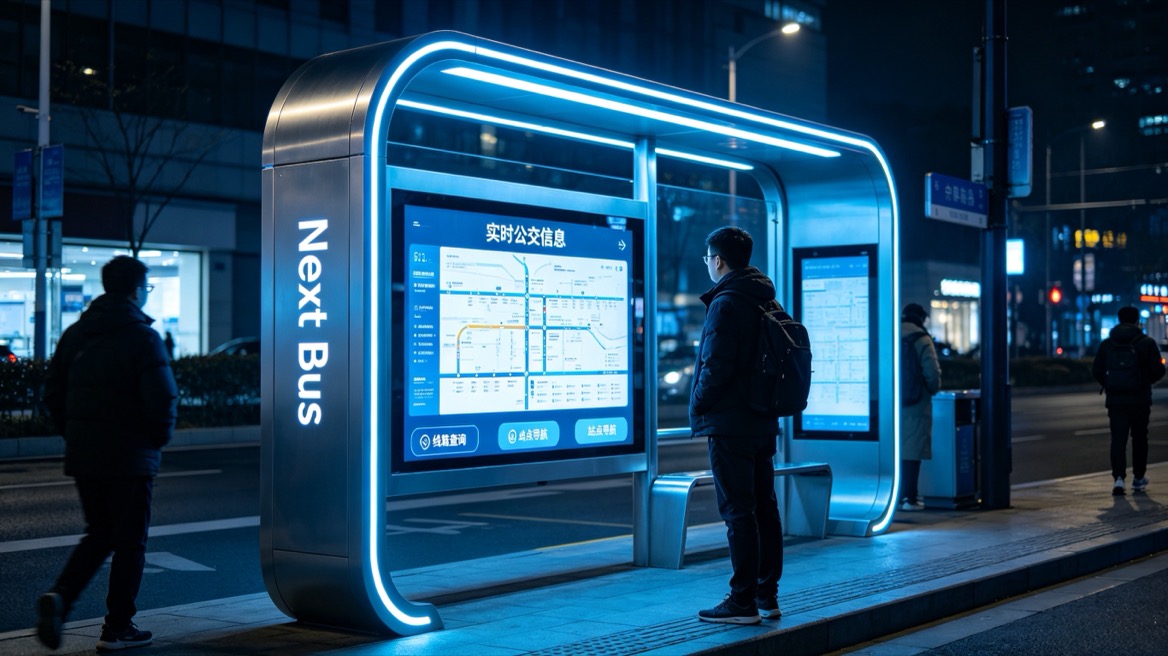
The following table is intended as a procurement-planning comparison, not a statement of guaranteed production capacity or commercial terms. "MOQ" in shelter projects is highly project-dependent because shelters are commonly engineered-to-order.
| Supplier | Primary Model | Typical Project Fit | Capacity / Scale Indicator | Typical MOQ Approach | Documentation and Compliance Focus |
|---|---|---|---|---|---|
| Ainl | Factory-direct manufacturer and OEM/ODM solution provider | Custom shelters, smart bus stops, advertising shelters, export projects, private-label programs | Large manufacturing base; stated 150,000 m² workshop area and integrated metal-processing/coating resources | Often project-based; confirm according to drawing, material, and tooling requirements | Request project-specific material certificates, inspection records, electrical documentation, and applicable CE/RoHS-related evidence |
| Wall AG | Urban furniture and advertising infrastructure | Citywide public-space and advertising-supported shelter programs | Large German urban-infrastructure presence | Usually tender-, concession-, or project-based | Municipal tender, maintenance, advertising-rights, and public-space requirements |
| JCDecaux Germany | Advertising-funded street furniture and transit-media systems | Major municipal networks, advertising concession programs, digital urban infrastructure | Global group scale | Usually concession or major project based | Public authority, advertising, digital-screen, maintenance, and operating-framework documentation |
| Ströer | Out-of-home media and urban media infrastructure | German cities evaluating advertising-linked transit assets | Large German media-network scale | Commercial model depends on concession or partnership structure | Media operation, municipal agreement, maintenance, and digital-advertising requirements |
| mmcité | Design-led European street-furniture supplier | Architect-led public realm, coordinated urban furniture, transit stations | European product-system scale | Catalogue/configuration or project-specific | Material, finish, design, modular-system, and regional project documentation |
| Metalco | European urban-furniture and public-space supplier | High-visibility plazas, commercial districts, transport-adjacent streetscapes | Established European portfolio scale | Typically project-specific | Public-space product specifications, finishes, structural details, and installation requirements |
| Regional German fabricators | Local fabrication and installation | Site-specific shelters, renovation, heritage areas, local public works | Varies substantially by firm | Often lower-volume or site-specific | Verify ISO status, welding procedures, coating process, electrical competence, and local installation insurance |
One of the most common problems in outdoor shelter procurement is a vague corrosion-protection description. A supplier may state that the shelter uses galvanized steel, but the buyer may not know whether this means pre-galvanized sheet, electro-galvanized steel, hot-dip galvanizing after fabrication, or a light zinc layer beneath a single powder-coat finish.
These options do not offer identical corrosion performance.
How to avoid the risk:
- Specify the steel grade and nominal thickness.
- State whether galvanizing occurs before or after welding and fabrication.
- Request the coating-system stack: substrate, pre-treatment, primer, topcoat, target dry-film thickness, and color standard.
- Require coating-thickness records for representative production units.
- Ask how cut edges, weld zones, drilled holes, and concealed water-trap areas are protected.
- For coastal, high-humidity, or road-salt environments, request a corrosion category suitable for the site and obtain written confirmation of the proposed system.
A shelter may look clean in a 3D rendering yet fail in daily operation because rainwater accumulates in roof channels, dirt becomes trapped behind glazing, or electrical access requires dismantling large panels.
How to avoid the risk:
- Ask for cross-section drawings, drainage paths, access-door details, and maintenance instructions.
- Require an exploded view showing replacement of LED drivers, display modules, glazing, and advertising panels.
- Verify whether the roof design directs water away from waiting passengers and boarding zones.
- Confirm that concealed fasteners remain serviceable after years of outdoor exposure.
The words "tempered glass" or "PC board" are not enough for a public-transport shelter. Thickness, impact resistance, edge finishing, fixing method, expansion allowance, and replacement method all affect performance.
How to avoid the risk:
- State the glass type, thickness, edge treatment, holes, print or frit pattern, and mounting method.
- Confirm whether safety film, laminated glass, or anti-graffiti treatment is needed.
- For polycarbonate, define UV protection, thickness, fire performance where applicable, and cleaning limitations.
- Ask the supplier to provide a sample panel or material coupon before mass production.
A smart bus shelter is not only a steel structure. It is also an electrical and software system. The display, controller, router, sensors, power supply, battery, and content-management platform may have different warranty periods and different failure modes.
How to avoid the risk:
- Separate the structural warranty from the electrical and software warranty.
- Request a bill of materials for all electronic subsystems.
- Confirm the IP rating, operating-temperature range, brightness level, remote-diagnostic capability, and replacement-module lead time.
- Specify who owns software access, data, passwords, SIM-card responsibility, and future CMS migration rights.
- Keep a recommended spare-parts package for drivers, controllers, LED modules, power supplies, and communication devices.
Bus shelters are large, mixed-material assemblies. Glass, powder-coated frames, aluminum profiles, LED modules, and bolts can be damaged if packaging is designed only for short domestic transport rather than containerized export.
How to avoid the risk:
- Request a packaging plan before production begins.
- Confirm whether shelters ship fully assembled, semi-knocked-down, or completely knocked down.
- Require edge protection for powder-coated parts and dedicated glass crates for glazing.
- Ask for container-loading drawings and estimated container utilization.
- Include a spare fastener pack, touch-up paint where appropriate, installation labels, and part-numbered cartons.
A highly practical issue that is often missed in online supplier comparisons is water-trap geometry.
Many buyers focus on visible steel thickness, paint color, roof style, and display configuration. However, premature corrosion frequently begins in places the user cannot see: closed steel sections without drainage, overlapping plates, poorly sealed fastener holes, horizontal ledges, hidden weld seams, and roof channels that retain moisture.
A shelter can pass a visual inspection at delivery and still develop corrosion problems several seasons later if the design allows water and debris to remain inside or against the structure.
Before approving a drawing, ask the supplier these specific questions:
1. Where does rainwater travel from the roof to the discharge point?
2. Are all hollow sections sealed or provided with correctly positioned drain holes?
3. How are weld seams, cut ends, and drilled holes protected after fabrication?
4. Can dirt and leaves be removed from gutters without dismantling the roof?
5. Is the electrical compartment physically separated from likely water paths?
6. Does the base detail prevent standing water around anchor plates and lower columns?
This check is particularly important for shelters installed near roads where de-icing salt, splash water, and accumulated dirt can accelerate coating damage.
Start by deciding what you are actually buying:
- A standard shelter product.
- A custom-manufactured shelter system.
- A full installation package.
- A citywide urban-furniture program.
- An advertising-funded shelter concession.
- A smart-stop system with passenger information and digital advertising.
- A private-label shelter range for resale or distribution.
This decision affects which supplier category is appropriate. A German concession partner, a European design-led supplier, and a China-based OEM factory solve different procurement problems.
A serious RFQ should include more than reference photos. At minimum, provide:
- Site plan and installation location.
- Overall shelter length, depth, height, and number of bays.
- Passenger capacity and seating requirements.
- Required materials and surface finishes.
- Glass or polycarbonate specification.
- Roof and drainage requirements.
- Advertising panel dimensions and illumination needs.
- Digital-display size, brightness, communication method, and CMS requirements.
- Lighting, electrical input, solar-power expectations, and IP rating.
- Wind, snow, climate, coastal, or road-salt exposure conditions.
- Foundation and anchor-bolt interface information.
- Target delivery date, destination port or project site, and Incoterms.
- Required documents, inspection points, and warranty expectations.
Without this information, suppliers will quote different assumptions, making price comparisons unreliable.
For a high-value public-infrastructure project, use a structured verification process:
- Check the legal company name and registration details.
- Request copies of relevant certifications and verify their certificate number, issuing body, scope, issue date, and expiration date.
- Ask whether the certificate covers the actual manufacturing site, not only a sales office or affiliated company.
- Review factory photos and videos showing CNC cutting, bending, welding, coating, assembly, and packaging.
- Request recent project references that resemble your technical scope.
- Hold a video audit or arrange a third-party factory inspection.
- Review sample drawings before discussing final pricing.
- Ask who will approve shop drawings, manage revisions, and answer technical questions after the purchase order is issued.
For a full bus shelter, a complete physical sample may be expensive and unnecessary for every project. A better approach is often a staged sample process:
1. Material samples: Powder-coated metal coupons, glass samples, polycarbonate samples, aluminum-profile sections, LED-module samples, and signage-film samples.
2. Detail mock-up: One representative roof corner, column-to-base connection, glazing detail, or illuminated advertising module.
3. First-article inspection: Review the first completed shelter or first bay before allowing full production.
4. Pre-shipment inspection: Check dimensions, materials, appearance, lighting, electrical function, packaging, and quantities before loading.
For imported shelters, first-article approval is especially valuable because changes after container shipment can be costly.
Large shelters can be shipped as fully assembled units, partially assembled modules, or knock-down kits. Each model has trade-offs.
| Shipping Method | Advantages | Limitations |
|---|---|---|
| Fully assembled | Faster site installation; fewer assembly steps | Uses more container volume; higher risk of transit damage; difficult for oversized structures |
| Semi-knocked-down | Balances container efficiency and site assembly | Requires clear labeling and moderate installation capability |
| Completely knocked down | Better container utilization; lower freight cost per unit | Requires more site labor, installation tools, manuals, and trained crews |
For Germany-bound projects, also clarify:
- Customs classification and import documentation.
- Packaging compliance and timber-treatment requirements where applicable.
- Whether foundations, anchor bolts, electrical conduits, and civil works are supplied locally or by the shelter vendor.
- Crane access, unloading space, traffic management, and site-storage requirements.
- Responsibility for installation, commissioning, and defect rectification.
Germany remains an important market for bus shelter systems because public-transport infrastructure is expected to combine reliability, accessibility, attractive urban design, and increasingly digital passenger services. The right supplier depends on whether your project is a citywide advertising concession, an architect-led public-space program, a local installation project, or a customized international procurement program.
For large concession-based municipal programs, companies such as Wall AG, JCDecaux, and Ströer may be relevant because their models combine street furniture, media infrastructure, service, and commercial partnerships. For design-led public-realm projects, European suppliers such as mmcité and Metalco can be strong candidates. For buyers seeking custom engineering, flexible private-label support, smart configurations, and factory-direct OEM/ODM production, Ainl can be evaluated as a practical manufacturing partner.
Before committing, issue a detailed RFQ, request a technical drawing package, validate materials and certification scope, approve a prototype or first article, and define the inspection and logistics plan in the purchase contract. A bus shelter is a public asset expected to perform for years; the supplier-selection process should reflect that lifecycle responsibility.
Planning a custom bus shelter, smart bus stop, advertising shelter, or municipal street-furniture project? Share your drawings, target dimensions, destination country, digital-feature requirements, and expected quantity with Ainl to receive a project-specific technical proposal and manufacturing quotation.
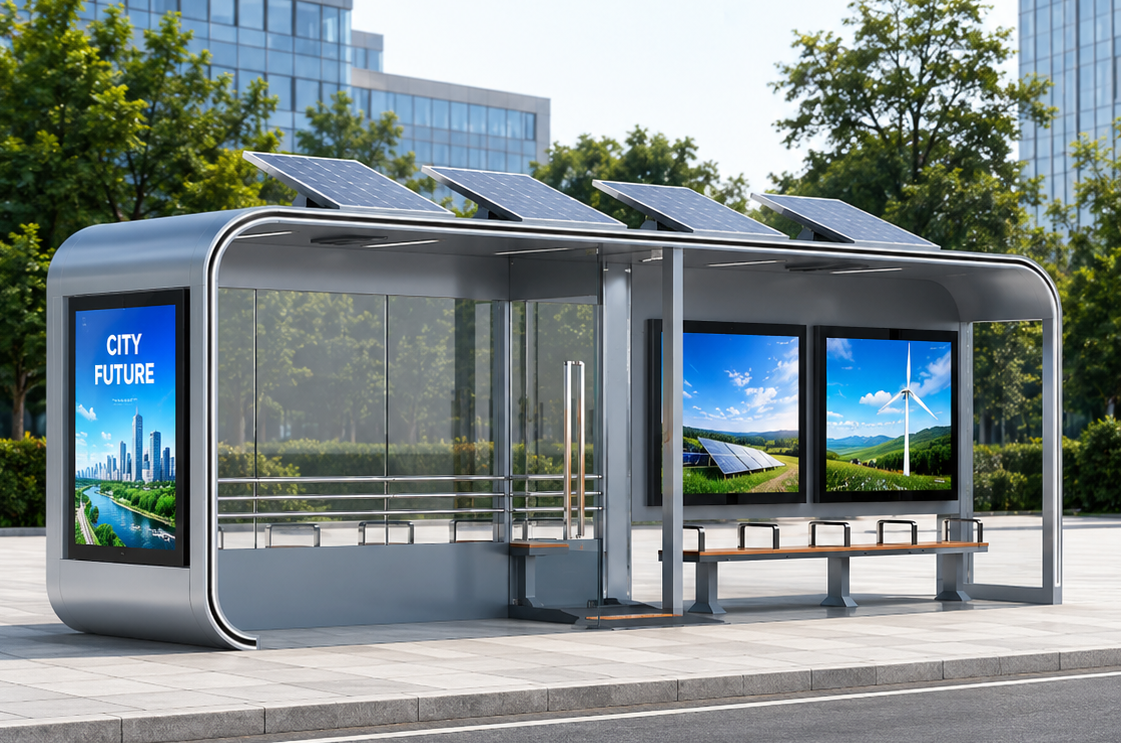
Ask for the complete certificate, not only a logo or certificate number. Check the issuing certification body, certificate number, scope, legal entity name, manufacturing address, issue date, expiration date, and surveillance status. Then use the certification body's public verification database or contact the issuing body directly. Confirm that the certificate covers the actual factory producing the shelters—not merely a trading company, head office, or unrelated affiliate.
A bus shelter is usually a structural public-space installation rather than a single consumer product with one universal CE label. However, certain incorporated components—such as electrical equipment, LED drivers, digital displays, power supplies, chargers, control systems, or wireless devices—may require applicable conformity documentation under relevant EU rules. Buyers should assess the shelter as a system and request documentation for the electrical and electronic components used in the final configuration. Seek local technical or legal advice for project-specific compliance.
There is no universal MOQ because shelters are often made to order. A supplier may support a one-unit prototype or a small pilot order, but the unit cost can be higher because engineering, material procurement, jigs, custom profiles, packaging, and testing are spread over fewer units. For a citywide deployment, buyers should request tiered pricing for prototype, 10-unit, 50-unit, and 100-unit scenarios, while confirming whether the design remains identical across volumes.
Compare the total project cost and risk—not the unit price alone. A German or European supplier may offer local coordination, installation, faster replacement support, and easier site communication. A specialized Chinese OEM manufacturer may offer stronger customization, larger production flexibility, integrated fabrication, and lower factory cost. Evaluate freight, customs, lead time, installation labor, spare parts, warranty response, drawing-control procedures, and long-term maintenance before choosing.
Your pre-shipment inspection should include dimensions, material thickness, weld appearance, coating quality, coating thickness where specified, color consistency, glass condition, fastener quality, door and panel alignment, drainage details, lighting operation, display function, electrical safety checks, labeling, spare parts, installation manuals, packaging integrity, and loading method. For smart shelters, also test remote connectivity, display brightness, controller operation, and emergency restart procedures.
- [Ainl — Custom Bus Shelter Manufacturer and Smart City Solutions]
- [Ainl — OEM/ODM Bus Shelter Services]
- [Destatis — Federal Statistical Office of Germany]
- [German Federal Ministry for Housing, Urban Development and Building]
- [European Commission — Internal Market, Industry, Entrepreneurship and SMEs]


