
Email: ainlbusshelter@gmail.com | WhatsApp: +86-18800607527
Views: 261 Author: Ainl Bus Shelter Publish Time: 2026-08-24 Origin: Site


Content Menu
● How We Selected These Suppliers
● European Bus Shelter Supplier Comparison
● 1. Ainl — Flexible OEM/ODM Bus Shelter Manufacturer for International Projects
>> Typical OEM/ODM Customization Scope
● 2. JCDecaux — Urban Furniture and Advertising-Funded Bus Shelter Projects
● 3. PROCITY — French-Made Modular Bus Shelters
● 4. Metalco — Italian Design-Led Urban Furniture Supplier
● 5. Broxap — Established UK Bus Shelter Manufacturer
● 6. Externiture — Public Transport and Mobility Hub Specialist
● 7. Prismaflex — Bus Shelters for Municipal and Advertising Projects
● 8. GW Shelter Solutions — UK Supplier with Documented Quality Systems
● Key Technical Specifications for Bus Shelters
>> Smart Bus Shelter Components
● Common Bus Shelter Procurement Risks
>> 1. Tube Size Is Listed, but Wall Thickness Is Omitted
>> 2. Powder Coating Is Presented as Complete Corrosion Protection
>> 3. The Shelter Is Difficult to Maintain
>> 4. Solar Power Is Calculated Only for Summer Conditions
>> 5. Tempered Glass Is Assumed to Be Fully Vandal Resistant
● The Often-Missed Foundation Issue
● Buyer's Guide: How to Source Bus Shelters Safely
>> 2. Request Technical Evidence
>> 3. Approve a Sample Before Mass Production
>> 4. Conduct Pre-Shipment Inspection
>> 5. Plan Logistics and Installation
● FAQ
>> 1. How do I verify whether a supplier's ISO certificate has expired?
>> 2. Is CE marking required for a complete bus shelter?
>> 3. Should I choose galvanized steel, aluminium, or stainless steel?
>> 4. What warranty terms should be included in a bus shelter contract?
>> 5. Why is one bus shelter quotation much lower than another?
Europe remains one of the most demanding markets for bus shelters, with buyers typically balancing passenger comfort, urban design, structural durability, accessibility, advertising value, and digital-service integration. For procurement managers, choosing a supplier is not simply about selecting an attractive shelter model; it is about identifying a partner that can deliver consistently across engineering, material control, project documentation, installation coordination, and long-term maintenance.
This guide reviews prominent bus shelter manufacturers and suppliers serving the European market. It is written for municipalities, public transport operators, contractors, outdoor advertising companies, urban furniture distributors, and project buyers seeking stable long-term supply rather than a one-time low-cost purchase.
The global bus stop shelter market was estimated at USD 2.15 billion in 2026 and is projected to continue expanding, driven by public transport investment, urban renewal, digital passenger information systems, and smart-city infrastructure demand. Europe is also a leading region for smart bus shelter adoption, particularly where shelters combine real-time information, lighting, advertising displays, connectivity, and accessibility features.
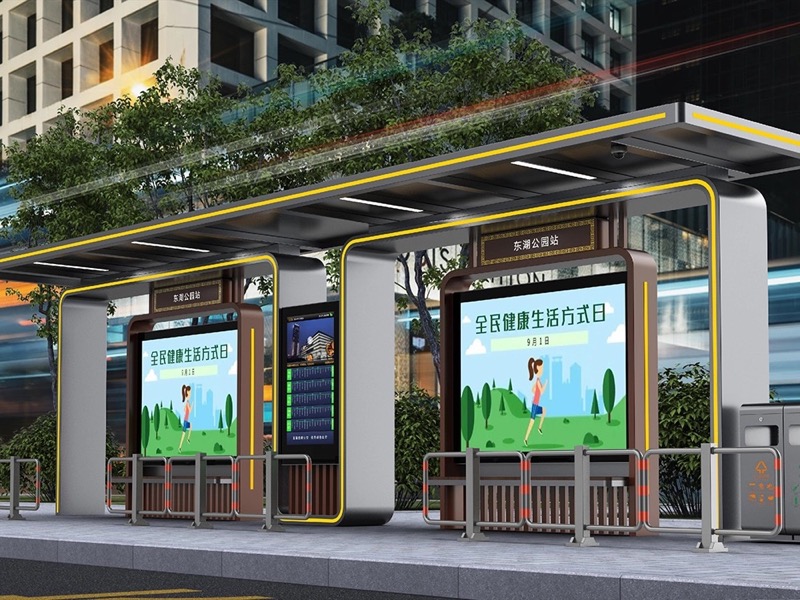
The companies below were assessed using practical procurement criteria rather than brand visibility alone.
- Manufacturing capability and production transparency
- Experience in public transport, municipal, or urban-furniture projects
- Product durability and material specification depth
- Customization support for dimensions, branding, lighting, displays, and seating
- Quality-management and compliance documentation
- Capacity to support repeat or multi-site projects
- Suitability for OEM, ODM, tender, advertising, or installation-led projects
- Ability to provide technical drawings, inspection records, and after-sales support
A dependable bus shelter supplier should be able to explain exactly what is included in its quotation: steel grade, material thickness, glass type, coating system, electrical configuration, installation interface, packaging method, warranty scope, and delivery responsibility.
| Manufacturer / Supplier | Headquarters / Main Market | Main Strength | Capacity / MOQ Approach | Compliance and Quality Focus | Suitable for |
|---|---|---|---|---|---|
| Ainl | China; international export projects | OEM/ODM customization, smart city integration, project-based production | Flexible for container orders and project quantities | Integrated R&D, CNC sheet metal processing, coating, electrical testing | Importers, contractors, private-label brands, advertising operators |
| JCDecaux | France; global | Advertising-funded urban furniture and city-wide projects | Large-scale tender and long-term concession model | Long-life street furniture, operation and maintenance | Major municipalities, transit networks, OOH concessions |
| PROCITY | France; Europe | Modular steel bus shelters and street furniture | Catalogue-based and project-based supply | French manufacturing and standardized designs | Municipal buyers, distributors, standard projects |
| Metalco | Italy; international | Architectural urban furniture and premium public-space design | Project-based | Steel, glass, lighting, integrated design | Architects, urban regeneration, premium developments |
| Broxap | United Kingdom | UK-manufactured shelters and street furniture | Standard and bespoke project orders | Established manufacturing and public-environment durability | UK councils, contractors, schools, commercial sites |
| Externiture | United Kingdom | Public transport infrastructure and mobility hubs | Modular 2-, 3-, and 4-bay systems | Accessibility, refurbishment, installation, recycled aluminium | Transit operators, local authorities, mobility hubs |
| Prismaflex | France; international | Bus shelters with advertising and street-furniture integration | City and advertising-network projects | French production and municipal infrastructure experience | OOH operators, city projects, transport authorities |
| GW Shelter Solutions | United Kingdom | Supply, installation, and project compliance | Project-based | ISO 9001, ISO 14001, contractor compliance | UK local authorities and installation-led projects |
Ainl is a Chinese manufacturer and solution provider focused on bus stop shelters, smart-city public facilities, and outdoor advertising products. With 16 years of industry experience, Ainl is suitable for buyers seeking flexible customization, integrated manufacturing support, and cost-controlled project delivery.
The company operates a large manufacturing base with approximately 150,000 square metres of workshop space across more than 260 mu of land. Its facilities include a software and hardware R&D centre, CNC sheet-metal processing centre, large coating centre, and electrical testing laboratory. This integrated production model is particularly relevant for projects that require steel structures, lighting, advertising panels, digital screens, and solar systems to be coordinated under one supplier.
Rather than focusing only on standard catalogue shelters, Ainl supports customized designs for municipal, transport, commercial, advertising, and smart-city projects.
- Bus shelter size, structure, roof profile, layout, color, and branding customization
- OEM and ODM support for distributors, contractors, and private-label brands
- Integration of LED displays, digital passenger information panels, advertising lightboxes, lighting, CCTV, Wi-Fi, USB charging, and solar systems
- CNC sheet-metal fabrication and large-scale coating capability
- Support for project-based engineering drawings and customized packaging
- Suitable for small and medium-sized brands that require responsive communication and lower development barriers
- Ability to coordinate bus shelter structures with broader public-facility and outdoor advertising product lines
- Steel, aluminium, stainless steel, or mixed-material shelter structures
- Customized shelter length, width, roof form, seating layout, and panel configuration
- City logo, route identification, municipal color system, and advertising panel branding
- LED display size, screen brightness, display enclosure, and CMS compatibility
- Solar panel, battery storage, lighting, and power-management configuration
- Tempered glass, laminated glass, polycarbonate, or perforated-metal panel options
- Flat-pack or semi-assembled shipment options for container optimization
- European importers developing their own bus shelter product line
- Contractors executing municipal, transport, airport, campus, or commercial projects
- Outdoor advertising companies requiring integrated advertising shelters
- Buyers that need customized dimensions, branding, smart features, or modular expansion
- Small and medium-sized brands that value efficient project communication and flexible order structures
For European projects, buyers should request structural drawings, material specifications, coating documentation, electrical test records, sample approval procedures, inspection plans, and shipping references before confirming mass production.
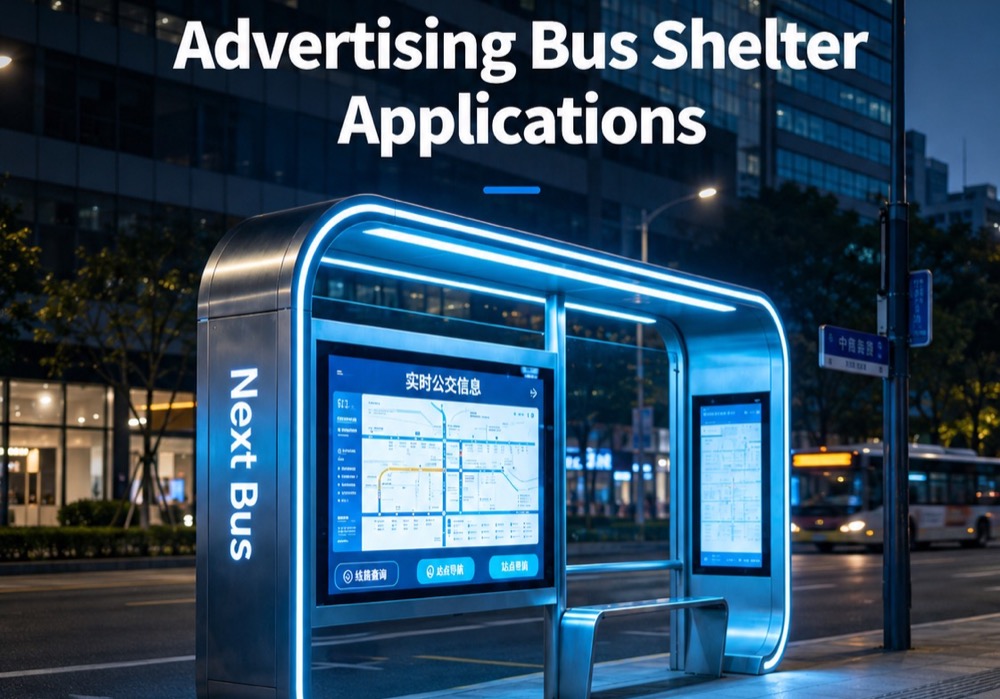
JCDecaux is a French family-owned company founded in 1964. It is widely recognized for developing the advertising-funded bus shelter model, combining public infrastructure with outdoor advertising operations. The company introduced its first advertising bus shelter in Lyon in 1964 and has since expanded into a global urban-furniture and out-of-home media operator.
JCDecaux is particularly relevant for large municipal contracts where a city seeks not only shelters but also installation, cleaning, maintenance, advertising management, and digital media services. The company's Toulouse contract, for example, covers 1,638 bus shelters, including digital and green-roof units.
- Large-scale urban-furniture network deployment
- Long-term municipal concession and operating-contract experience
- Integration of advertising panels, digital displays, and passenger information
- Maintenance and lifecycle-service capability
- Experience with circular design, refurbishment, and reuse of public-furniture materials
- Major municipalities
- Large public transport authorities
- Outdoor advertising concession operators
- Public-private infrastructure projects involving advertising revenue
JCDecaux is generally better suited to large city contracts than private-label sourcing or low-volume OEM manufacturing. Buyers seeking independent manufacturing ownership, lower-volume customization, or export-oriented bulk supply may prefer a factory-led supplier.
PROCITY is a French street-furniture manufacturer with more than 40 years of experience in developing and manufacturing public-space products in France.
Its bus shelter range focuses on steel-framed, modular systems that can be configured in different lengths and capacities. This makes PROCITY a practical option for buyers seeking standardized, repeatable shelter designs for towns, cities, and transport stations.
- Bus shelters manufactured in France
- Steel-frame shelters with modular length options
- Integrated product range including seating, signage, and passenger-information accessories
- Catalogue-based selection process for standard municipal projects
- Suitable for coordinated street-furniture procurement
- Municipal procurement teams
- Street-furniture distributors
- Standardized public transport projects
- Buyers seeking French-made modular shelter solutions
Before ordering, confirm the specific steel thickness, galvanizing process, powder-coating system, glass type, anchoring design, and local wind-load suitability. Catalogue images alone do not confirm the final technical specification.
Metalco is an Italian manufacturer of urban furniture, including benches, bins, planters, bicycle facilities, and shelters. Its bus shelter designs are often selected for public spaces where architectural appearance and integration with surrounding landscape design matter as much as basic weather protection.
Its HUT and ATLAS shelter collections combine steel structures, glass panels, seating, and optional LED lighting.
- Strong design language for modern public spaces
- Steel-and-glass bus shelter structures
- Integrated seating, lighting, and urban-furniture coordination
- Suitable for architecture-led or high-visibility public projects
- Broad product portfolio for coherent city-brand and landscape design
- Architects and landscape architects
- Urban regeneration schemes
- Cultural districts and commercial developments
- Premium municipal public-space projects
For design-focused shelters, maintenance should be evaluated early. Ask how glass panels are replaced, how drainage is cleaned, how lighting is accessed, and whether proprietary parts will remain available over the expected service life.
Broxap is a family-owned UK manufacturer founded in 1946. It designs and manufactures street furniture, shelters, canopies, outdoor gym equipment, and design-and-build public-space solutions.
Its bus shelter range includes traditional and contemporary styles using materials such as cast aluminium columns, zinc-protected steel frames, polycarbonate roofing, and glazed panels.
- Long-established UK manufacturing background
- Standard and bespoke passenger shelter options
- Broad shelter and canopy experience beyond bus stops
- Suitable for public-sector and commercial outdoor environments
- Design-and-build support for customized projects
- UK local authorities
- Transport contractors
- Schools, hospitals, and commercial estates
- Public-space projects requiring locally manufactured products
For a full project comparison, clarify whether the quotation includes delivery, installation, foundation work, site surveys, lifting equipment, and post-installation inspection.
Externiture is a UK specialist in bus shelters, cycle shelters, public transport infrastructure, signage, installation, refurbishment, and maintenance. Its product range includes modular 2-bay, 3-bay, and 4-bay shelters designed for different locations and passenger volumes.
The company also promotes its Mono SuperHUB concept for mobility hubs integrating public transport, cycling, walking, shared mobility, and electric-vehicle charging. It states that more than 65 SuperHUBs have been installed in the UK since December 2023.
- Public transport infrastructure specialization
- Modular and scalable shelter systems
- Installation, refurbishment, and maintenance support
- Accessibility and mobility-hub planning
- Sustainability initiative using 100% recycled-content aluminium billet for shelters and bus stop poles from 2025
- UK local authorities
- Transit operators
- Mobility-hub projects
- Multi-modal transport interchanges
- Projects requiring both shelter supply and ongoing maintenance
Do not assess a mobility hub only by shelter size. Review passenger circulation, wheelchair access, tactile paving interfaces, signage visibility, CCTV sightlines, cycle parking, drainage, and electrical maintenance access before approving the layout.
Prismaflex supplies bus shelters, street furniture, and outdoor advertising infrastructure. Its bus shelter solutions are manufactured in France and designed to meet municipal requirements for durability, public use, and visual integration.
The company is relevant for projects where bus shelters are expected to accommodate both passenger needs and advertising media.
- Bus shelter and advertising infrastructure integration
- French production capability
- Municipal and urban-furniture project focus
- Suitable for projects requiring coordinated advertising-panel design
- Outdoor advertising operators
- Municipal public-space projects
- City transport infrastructure projects
- Buyers seeking bus shelters with integrated media panels
Advertising shelter projects should specify more than the advertising-panel dimensions. Buyers should confirm panel illumination, electrical cabinet position, front-opening or side-opening maintenance access, glass replacement process, drainage, and future display upgrade options.
GW Shelter Solutions is a UK supplier of shelter products and project services. It highlights ISO 9001 quality-management certification, ISO 14001 environmental-management certification, and related contractor and safety credentials.
The company is particularly relevant for public procurement projects where quality documentation, installation competency, and contractor prequalification are important.
- ISO 9001 quality-management certification
- ISO 14001 environmental-management certification
- Project and installation capability
- Relevant contractor and public-work compliance credentials
- Suitable for documentation-heavy UK public-sector procurement
- UK councils
- Contractors managing public-infrastructure projects
- Buyers requiring installation-led shelter supply
- Projects with strict supplier prequalification processes
Always verify certification validity. Request the certificate number, issuing body, expiry date, certified site address, and scope statement. A certificate should apply to the actual manufacturing or project-delivery operation involved in the purchase.
A professional bus shelter RFQ should define more than "steel frame and glass panels." Vague specifications allow suppliers to substitute lower-cost materials or reduce durability without making the difference obvious in product photos.
- Carbon steel: Specify steel grade, tube size, wall thickness, welding requirements, galvanizing process, and coating system.
- Aluminium: Specify alloy, temper, extrusion wall thickness, mechanical connection method, and measures to prevent galvanic corrosion.
- Stainless steel: Define the grade clearly. Grade 304 may be suitable for many inland locations, while Grade 316 is generally more appropriate for coastal, high-salinity, or industrial environments.
- Glass: Specify tempered safety glass or laminated safety glass, thickness, edge treatment, fixing method, and replacement procedure.
- Polycarbonate: Confirm UV resistance, fire performance, optical clarity, impact resistance, scratch resistance, and expected service life.
The most common durability failure is not always the visible steel frame. It often occurs at welded joints, drilled holes, cut edges, concealed cavities, drainage points, and fastener interfaces.
A complete corrosion-protection specification should state:
- Whether the steel frame is hot-dip galvanized before powder coating
- Required galvanizing thickness
- Surface pretreatment process
- Powder-coat supplier or performance standard
- Required dry-film thickness
- Color code and gloss level
- Salt-spray or corrosion-resistance requirements where applicable
- Drainage and venting design for hollow sections
- Fastener grade and isolation method for dissimilar metals
For shelters with LED displays, digital passenger information, lighting, CCTV, Wi-Fi, USB charging, or solar power, buyers should specify:
- LED brightness and automatic brightness adjustment
- Outdoor enclosure rating, such as IP65 where project conditions require it
- Operating temperature range
- Cooling and ventilation system
- Power consumption under maximum operating load
- Remote monitoring and content-management permissions
- Data ownership and platform access rights
- Battery capacity and expected autonomy days
- Solar energy calculation based on destination-city weather conditions
- Service-door position and maintenance access route
- Spare modules, power supplies, and controller availability
For electrical and electronic components entering the European market, buyers should assess applicable conformity and environmental requirements. CE marking is not a general quality label; it applies only where relevant European legislation requires it.
Instead of asking, "Do you have CE?", ask for:
- Declaration of Conformity for the exact electrical product or module
- Product model number matching the quotation and delivered equipment
- Applicable directives or regulations listed on the declaration
- Test reports or technical-file references where available
- RoHS documentation for relevant electrical and electronic equipment
- Installation manual, wiring diagram, and maintenance instructions
- Details of the responsible economic operator where required
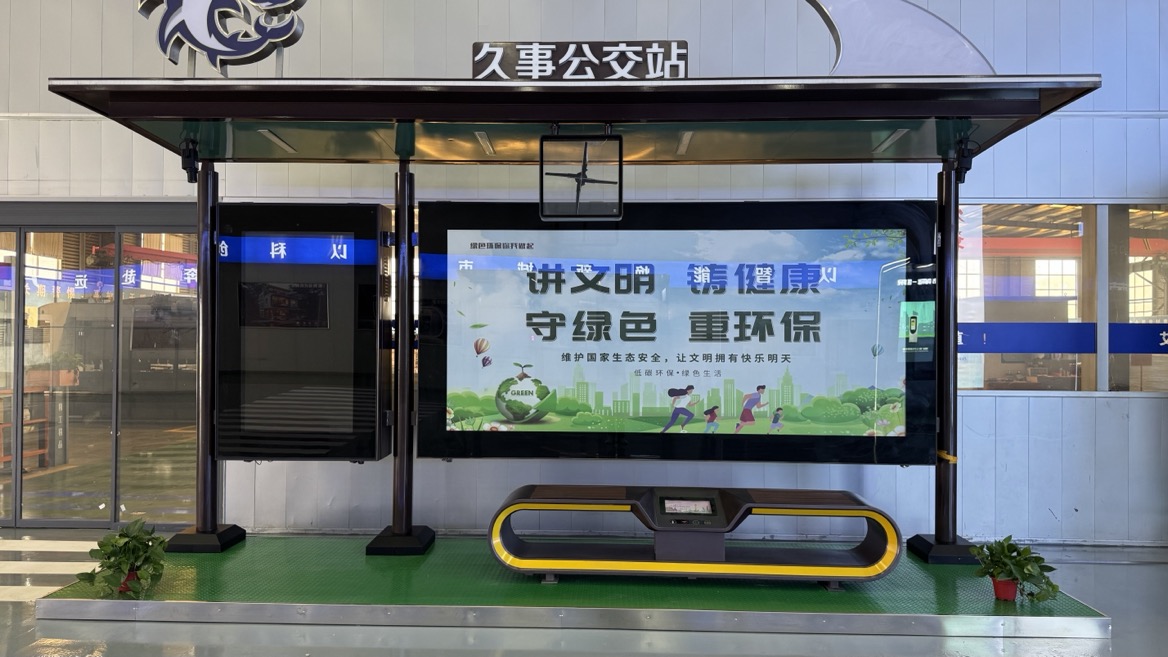
A supplier may quote "100 × 100 mm steel tube" without identifying wall thickness. A 1.5 mm wall and a 3.0 mm wall can appear nearly identical after coating, but their strength, weld performance, and long-term stiffness are significantly different.
How to avoid it: Include steel grade, tube size, wall thickness, tolerance, unit weight, and approved drawing revision in the purchase contract.
Powder coating improves appearance and protection, but a powder-coated bare-steel frame can corrode rapidly when the coating is damaged or moisture reaches welded and drilled areas.
How to avoid it: Specify the full protection sequence. For demanding outdoor use, confirm whether the frame is hot-dip galvanized before powder coating and require inspection records.
A shelter may look clean in a rendering but become expensive to operate if technicians cannot safely replace LED modules, open service doors, clean drainage channels, remove damaged glass, or access electrical components.
How to avoid it: Request maintenance drawings, access dimensions, replacement instructions, spare-parts lists, and confirmation of component availability for at least several years.
Solar-powered shelters often perform well during factory testing or summer operation but may fail in winter, especially when powering screens, lighting, CCTV, Wi-Fi, and charging equipment.
How to avoid it: Require an energy-balance calculation using local monthly solar irradiance, battery usable capacity, winter load assumptions, and required backup days.
Tempered glass is safer than ordinary glass because it breaks into smaller fragments, but it can still shatter completely after an impact. Laminated glass may provide better post-breakage retention in high-risk public locations.
How to avoid it: Define whether the project prioritizes injury protection, anti-vandal resistance, visual clarity, acoustic performance, replacement cost, or post-breakage retention.
One of the most important and least discussed risks is the foundation and anchoring interface.
A bus shelter supplier may supply the steel structure, while a local contractor installs the concrete foundation. If responsibilities are unclear, problems can occur with anchor-bolt alignment, drainage, underground utilities, pavement levels, frost conditions, wind loads, and slab strength.
Before issuing a purchase order, confirm in writing:
- Who designs the concrete foundation
- Who calculates anchor-bolt loads
- Whether anchor cages and bolts are included
- Whether local wind and snow loads are included in the structural calculation
- Who checks underground utilities and drainage routes
- Required slab flatness and anchor-position tolerances
- Who is responsible for site measurement before installation
- Who bears responsibility if the foundation does not match the shelter base plate
A shelter can be properly manufactured but still fail early if its foundation is undersized, misaligned, poorly drained, or incompatible with local ground conditions.
Include the following in your request for quotation:
- Destination city and country
- Quantity and delivery schedule
- Shelter type: standard, smart, advertising, solar-powered, or mobility-hub
- Required dimensions and passenger capacity
- Required seating, signage, advertising-panel size, and lighting
- Local weather conditions, wind zone, snow load, and coastal exposure
- Required colors, municipal identity, logos, and branding
- Electrical loads, screen size, brightness, and software requirements
- Foundation and installation responsibility
- Required Incoterm, port, or final delivery address
- Inspection requirements and target warranty terms
Shortlisted suppliers should provide:
- Company registration and factory details
- Factory photos and production-process information
- Similar project references
- Approved drawings and bill of materials
- Material specifications and certificates where applicable
- Glass, coating, and electrical-component data sheets
- Valid quality-system certificates
- Quality inspection plan
- Sample process and pre-production approval procedure
- Packaging proposal and loading plan
- Warranty and spare-parts policy
For customized bus shelters, sample approval should include more than a paint chip or product photo.
A reliable process is:
1. Approve technical drawings and the bill of materials.
2. Confirm steel, glass, coating, and electrical component samples.
3. Produce a first article, full-size module, or key structural mock-up.
4. Inspect welding, panel alignment, drainage, doors, glass fixing, and surface finish.
5. Test lighting, screens, solar charging, and remote controls where included.
6. Sign a formal sample-approval document before mass production begins.
Inspection should check:
- Overall dimensions and anchor-bolt hole positions
- Steel tube thickness and key component weights
- Weld appearance and structural alignment
- Galvanizing and powder-coating condition
- Glass type, thickness, and safety markings
- Fastener grade and quantities
- Electrical wiring, grounding, and functional operation
- LED screen operation and brightness
- Labels, manuals, spare parts, and installation drawings
- Packaging protection for coated surfaces, glass, and electronics
Bus shelters are frequently volume-sensitive products. Their shipping cost can be driven by container space rather than gross weight.
Confirm:
- Flat-pack or pre-assembled shipment method
- Maximum component dimensions for container loading
- Glass crate design and anti-breakage protection
- Separate packaging for screens and electrical modules
- Port handling and inland transport requirements
- Site unloading equipment
- Installation sequence and labor tools
- Customs documentation and destination import requirements
The right bus shelter supplier should match the project's technical, commercial, and operational requirements—not simply provide the lowest unit price. European manufacturers can offer strong local project experience, design integration, installation support, and municipal tender familiarity. Export-focused manufacturers such as Ainl can offer an attractive option for buyers requiring deeper OEM/ODM customization, integrated smart-city functions, scalable production, and responsive project communication.
For a reliable supplier-selection process, prepare a detailed technical brief, request comparable drawings and material specifications, verify quality documentation, approve a representative sample, and inspect the finished goods before shipment. This approach helps buyers reduce lifecycle cost, avoid specification gaps, and build a more dependable public-transport infrastructure project.
Ask for the certificate number, issuing certification body, expiry date, certified site address, and certification scope. Then check the certification body's online directory if available. Confirm that the certified location is the actual factory or project operation handling your order.
Not necessarily. CE marking is not a universal label for every complete shelter structure. It may apply to specific electrical or electronic products within the shelter, such as LED displays, power supplies, lighting equipment, or control systems. Buyers should request conformity documents for the exact supplied components.
The best material depends on budget, environment, structural design, maintenance plan, and project appearance. Galvanized and powder-coated steel is common for cost-effective structural strength. Aluminium can reduce corrosion risk and weight. Stainless steel can provide strong corrosion resistance but usually comes at a higher cost. Coastal projects require more detailed corrosion planning than inland projects.
Separate the warranty by component category: structural frame, corrosion protection, coating, glass, LED display, electrical system, solar equipment, batteries, and installation. The contract should define warranty duration, exclusions, response time, spare-parts availability, repair responsibility, and claim process.
The difference may come from steel thickness, galvanizing method, glass type, coating quality, lighting brand, screen configuration, solar capacity, electrical protection, foundation items, packaging, installation scope, inspection level, or warranty coverage. Compare quotations line by line before deciding.
- [JCDecaux — The Advertising Bus Shelter] [jcdecaux]
- [JCDecaux — Toulouse Bus Shelter Contract] [jcdecaux]
- [European Commission — CE Marking]
- [European Commission — RoHS Directive]
- [PROCITY — Bus Shelter Range] [procity]
- [Metalco — Urban Furniture and Shelters] [metalco]
- [Broxap — About Broxap] [broxap]
- [Externiture — Public Transport Infrastructure] [externiture]
- [Research and Markets — Bus Stop Shelters Market Forecast] [researchandmarkets]


