
Email: ainlbusshelter@gmail.com | WhatsApp: +86-18800607527
Views: 219 Author: Ainl Bus Shelter Publish Time: 2026-10-16 Origin: Site


Content Menu
● How We Evaluate Bus Shelter Manufacturers and Suppliers
● Australia's Bus Shelter Supply Landscape
>> Why Choose an Australian Supplier?
>> What the Latest Industry Data Actually Shows
● Top Bus Shelter Manufacturers and Suppliers to Evaluate
>> 1. Ainl — China-Based Manufacturing and Customization Alternative
>>> Core Strengths
>>> Manufacturing Scale and Credentials
>>> Markets and Procurement Fit
>> 2. Stoddart Infrastructure — Configurable Transport Shelters
>>> Company Background and Markets
>>> Core Strengths and Customization
>>> Certification and Verification
>> 3. Furphy Foundry — Shelter and Street-Furniture Coordination
>>> Company Background and Markets
>>> Core Strengths and Customization
>>> Certification and Verification
>> 4. Landmark Products — Integrated Public-Infrastructure Delivery
>>> Company Background and Markets
>>> Core Strengths and Customization
>>> Certification and Verification
>> 5. NEPEAN Engineering — Engineering-Led Shelter Projects
>>> Company Background and Markets
>>> Core Strengths and Customization
>>> Certification and Technical Limitations
>> 6. Combined Metal Industries — Western Australian Fabrication Option
>>> Company Background and Markets
>>> Core Strengths and Customization
>>> Certification and Verification
● Supplier Comparison: Capacity, MOQ, and Certification
● Technical Specifications Buyers Should Lock Down
>> Materials and Corrosion Protection
>> Structural Engineering and Accessibility
>> CE, RoHS, and Australian Electrical Requirements
● Buyer's Guide: From Factory Verification to Delivery
>> 1. Verify the Actual Manufacturing Chain
>> 2. Approve a Representative Prototype
>> 3. Make the Quality Plan Contractual
>> 4. Compare Landed and Installed Cost
>> 5. Define Service Responsibilities
● An Often-Overlooked Procurement Trap: The Approved Frame, Unapproved Interface
● Select the Supplier Around the Delivery Model
>> 1. How Can I Check Whether a Supplier's ISO Certificate Is Expired or Suspended?
>> 2. Can an Imported Shelter Be Approved for Use in Australia?
>> 3. How Do I Prevent Material Substitution After Sample Approval?
>> 4. Does a "DDA-Compliant Shelter" Guarantee an Accessible Bus Stop?
>> 5. How Should We Compare a Local Turnkey Offer with an Overseas Factory Quote?
Choosing a bus shelter supplier is not simply a matter of comparing roof designs and unit prices. Professional buyers must assess structural engineering, corrosion protection, accessibility, production consistency, installation responsibilities, and long-term maintenance.
Australia offers established manufacturers with experience supplying councils, transport networks, and public-space projects. International manufacturers can also provide an alternative procurement route, particularly when extensive customization or coordinated smart-city product sourcing is required.
This guide profiles six suppliers worth evaluating: Ainl, Stoddart Infrastructure, Furphy Foundry, Landmark Products, NEPEAN Engineering, and Combined Metal Industries.
Ainl appears first as a China-based manufacturing option for buyers considering overseas sourcing. The other five are Australian businesses. This distinction matters: an international factory and a local turnkey supplier may offer different prices, responsibilities, and service arrangements.
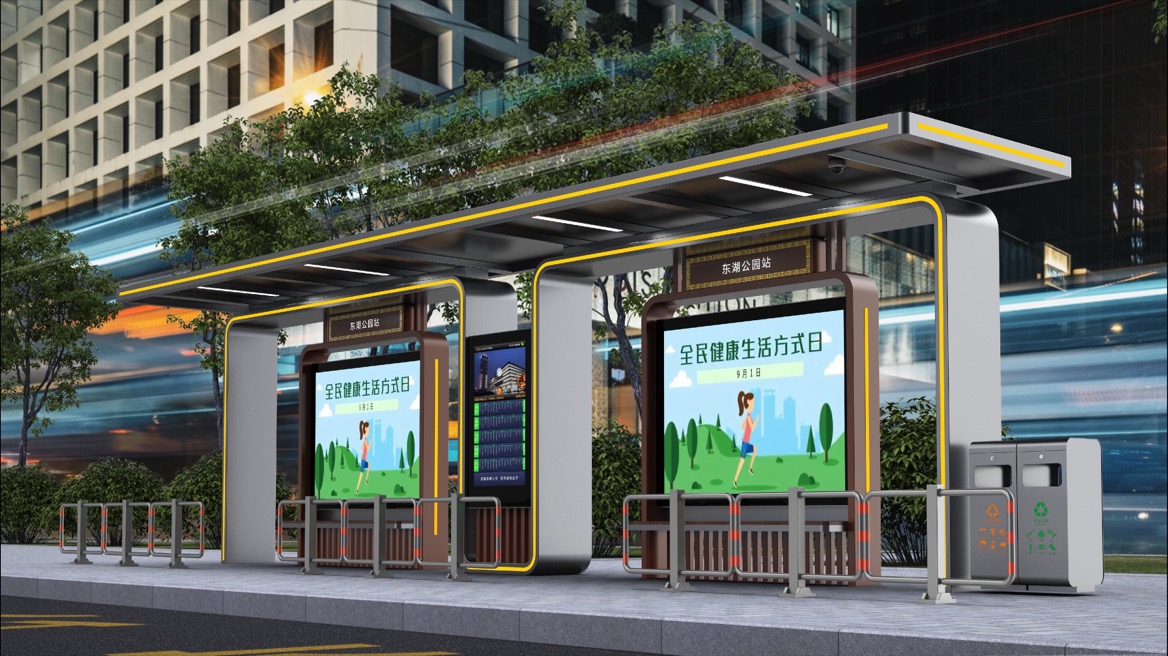
A supplier's suitability depends on the project, not its position in a list. A regional council ordering replacement shelters has different requirements from an advertising operator developing a branded shelter network.
The following evaluation framework helps buyers compare proposals consistently.
| Evaluation area | What buyers should examine | Why it matters |
|---|---|---|
| Manufacturing capability | In-house fabrication, welding, finishing, assembly, and subcontracting arrangements | Identifies who controls quality and delivery |
| Engineering and development | Structural calculations, detailed drawings, foundation interfaces, and customization capability | Reduces redesign and installation risk |
| Quality control | Material traceability, dimensional inspection, weld inspection, coating records, and final assembly checks | Prevents specification drift |
| Certification and compliance | Current management-system certificates and project-specific technical evidence | Separates company credentials from product suitability |
| Delivery reliability | Available production slots, subcontractor schedules, packaging plans, and milestone reporting | Makes delivery promises measurable |
| Maintenance support | Replaceable components, spare-part availability, access arrangements, and warranty terms | Protects whole-life value |
| Commercial flexibility | Prototype support, repeat-order pricing, design ownership, and change-control procedures | Supports long-term cooperation |
No factory audit or comparative product testing was performed for this article. Public company information supports the profiles below; the proposed purchasing checks are intended to guide subsequent due diligence.
Australian suppliers can offer practical advantages where a project requires site inspection, local engineering coordination, civil works, installation, and ongoing maintenance.
Their proximity can also simplify replacement-part supply and communication with councils, transport authorities, and contractors. However, buyers should still confirm which activities are performed directly and which are subcontracted.
The shortlisted businesses illustrate a geographically distributed supply base:
- Victoria has established public-space furniture and shelter businesses, including Furphy Foundry and Landmark Products.
- Queensland is home to Stoddart's headquarters and its infrastructure offering.
- New South Wales has engineering-led suppliers such as NEPEAN Engineering.
- Western Australia has regional fabrication capacity through Combined Metal Industries.
These locations are useful indicators of regional supply capability, not evidence of a formally defined national bus-shelter manufacturing cluster. Australia's advantage is better understood as the combination of metal fabrication, public-infrastructure design, and local project delivery.
IBISWorld's 2026 industry overview reports an Australian Urban Bus & Tramway Transport market size of $11.5 billion. This measures transport operations, not bus shelter manufacturing revenue. It provides context for the wider customer sector but should not be presented as the size of the shelter market.
Transport for NSW also publishes a Bus Stop Urban Design Guideline, available through its 2025 document directory. The guideline includes a taxonomy of bus-stop categories and shelter types, helping establish a common language for project planning.
No independently verified Australian bus-shelter-only market value is used here. For procurement teams, scheduled infrastructure programs and actual tender pipelines are more directly useful than loosely defined market-growth estimates.
Ainl manufactures smart-city public facilities and outdoor advertising products in China.
Its published history identifies a predecessor business established in 2008, Jiangsu Ainl Urban Furniture Technology established in 2012, and Jiangsu Ainl Group established in 2014. Buyers should distinguish these dates rather than assign the same establishment year to every legal entity.
The company describes integrated capabilities covering product design, steel-structure processing, sheet-metal manufacturing, assembly, and project customization. Its product range includes bus shelters, electronic bus-stop signs, outdoor advertising displays, smart seats, and other public-space facilities.
Ainl is relevant to buyers who want to coordinate shelter structures and smart modules through one manufacturer.
Its published customization scope includes:
- Shelter dimensions and structural configuration.
- Materials, colors, and appearance.
- Lighting systems.
- LED/LCD display configurations.
- Solar-power options.
- City branding and related functional modules.
These capabilities make Ainl a candidate for smaller brands, distributors, and project integrators seeking deeper OEM/ODM support. Nevertheless, small-order acceptance, engineering fees, response times, and prototype terms must be agreed rather than assumed.
Company information supplied for this article states that Ainl has approximately 150,000 square meters of factory buildings across more than 260 mu of land, together with provincial research facilities, precision sheet-metal processing, coating capacity, and electrical-testing resources.
The supplied information also reports national high-tech-enterprise status, Chinese construction qualifications, three management-system certifications, and safety-production standardization credentials. These are company-provided claims; procurement teams should request the underlying documents and confirm the certificate holder, scope, and validity.
Ainl's website separately reports annual capacity exceeding 1,000 sets of various steel-structure buildings for a subsidiary. That figure is not a verified annual bus-shelter production capacity and should not be used as one.
Ainl's published history describes Chinese projects and expansion into international markets. It does not establish a verified Australian installed base or country-by-country sales breakdown.
Its procurement appeal is the potential for coordinated customization and competitive factory-direct sourcing. Whether it offers better value depends on landed cost, local engineering, installation, and service arrangements—not the factory quotation alone.
Buyers considering Ainl should appoint a clear Australian party to manage project approvals, import obligations, foundation coordination, and any applicable electrical-compliance responsibilities.
Stoddart traces its establishment to 1959. Its infrastructure division specializes in transport shelters, outdoor walkways, park shelters, street-furniture suites, and related urban structures.
Its Evo shelter is used across Australia and New Zealand, including configurations on Melbourne's Yarra Trams network. This is evidence of transport-infrastructure experience, although tram installations should not be confused with bus-specific project references.
The Evo range offers a configurable shelter platform with a powder-coated aluminum frame. Published product information emphasizes its flexible design and multiple configurations.
A January 2026 trade listing also describes customization of seats, lighting, roofs, drainage, and footings for Stoddart bus-shelter projects. Buyers should confirm which options are standard, which require engineering, and which alter delivery time.
Stoddart is worth evaluating when a buyer prefers an established Australian transport-shelter platform with project-specific configuration rather than a completely new design.
Stoddart publicly reports a quality-management system certified to AS/NZS ISO 9001:2016 and identifies Global-Mark as the certifier. The website mentions an initial certification date in 2019; this is not proof that every current certificate remains valid. Request the latest certificate and check its scope.
Public sources reviewed do not provide a shelter-specific annual output or standard MOQ.
Furphy Foundry's manufacturing heritage dates to 1864. Its current product offering includes shelters, seating, bins, bicycle racks, drinking fountains, and other urban-design products.
Its published Surf Coast Shire project describes the manufacture and supply of ten new bus shelters, providing a specific Australian council reference.
Furphy is a useful candidate when shelters must coordinate with a wider streetscape furniture program.
This can help a buyer align appearance, finish selection, and maintenance planning across several product categories. However, the extent of bespoke shelter engineering should be confirmed for the proposed design rather than inferred from the breadth of its catalog.
Potential project discussions include:
- Shelter appearance and panel arrangements.
- Coordination with seating and bins.
- Finish and color schedules.
- Municipal identity elements.
- Replaceable components and maintenance access.
These are procurement discussion points, not confirmation of an unrestricted private-label OEM service.
Furphy publicly states that its sales business operates under an ISO 9001 quality-management system. Buyers should obtain the current certificate and confirm that relevant manufacturing activities and sites are covered.
Annual shelter capacity, standard MOQ, and project-specific customization limits were not publicly established in the reviewed material.
Landmark Products identifies its establishment year as 1988. It serves public-infrastructure customers with shelters, public amenities, pedestrian bridges, and street-and-park furniture.
Its catalog explicitly includes the Bathurst Steel Bus Shelter. Buyers should distinguish this transport-related product from its broader range of picnic and park shelters.
Landmark describes a full-service offering spanning design, manufacturing, and installation. This makes it relevant where a buyer wants a coordinated project solution rather than supply-only fabrication.
Customization discussions should focus on the exact bus-shelter model, site conditions, dimensions, finishes, and installation scope. A company's ability to customize open-space structures does not mean every catalog shelter is suitable for roadside use.
Landmark publicly states that its design team works under ISO 9001 certification. Buyers should verify the current certificate, covered entity, and relevant activities.
Its Nuvo Shelter is described as carbon-neutral certified. That claim is product-specific; it should not be extended automatically to the Bathurst Bus Shelter or the company's entire range.
No verified annual bus-shelter output or standard MOQ was found in the reviewed public information.
NEPEAN Engineering was founded in 1974 and is based in Sydney. Its bus-shelter offering includes design, manufacture, installation, and maintenance for local councils.
NEPEAN publishes a comparatively detailed shelter scope, including:
- Stainless-steel and aluminum material options.
- Galvanized, anodized, powder-coated, and anti-graffiti finishes.
- Advertising frames in preferred dimensions.
- Solar lighting.
- Electrical connection and commissioning.
- Laser-cut council logos.
- Civil works and foundation-construction management.
This makes it worth evaluating for projects with substantial engineering and site-interface requirements.
NEPEAN publicly reports ISO 9001:2015 certification and other fabrication or surface-treatment credentials. Buyers should verify the current scope and relevance of each credential to the shelter contract.
Its shelter page also publishes structural standards and a wind rating up to 45 m/s. However, the page lists older standard editions and includes an inconsistent description of one structural-actions reference. Treat this as a starting point for technical discussion, not a current project-compliance schedule.
Request updated, site-specific engineering documents before approval.
Combined Metal Industries, or CMI, is a Western Australian family company established in 1985.
Its website reports more than 160 personnel across five locations: Landsdale, Osborne Park, Bibra Lake, Busselton, and Geraldton. These figures describe the wider business, not a dedicated bus-shelter production workforce.
CMI's street-furniture offering explicitly includes bus shelters, shade shelters, viewing platforms, walkway structures, and planter boxes fabricated in Western Australia.
It is relevant to buyers seeking a regional metal-fabrication partner, particularly where local delivery and coordination are important. Its company information also describes an internal transport department serving metropolitan and regional areas.
For custom work, clarify whether CMI provides original structural design, fabricates to buyer drawings, or offers both. Confirm separately any glass, electrical, foundation, and installation responsibilities.
CMI describes its quality system using AS/NZS 9001 terminology on its street-furniture page and AS9001:2015 wording on its company page. Obtain the actual current certificate rather than relying on these website descriptions.
Shelter-specific output, standard MOQ, and repeat-order capacity remain quotation-stage questions.
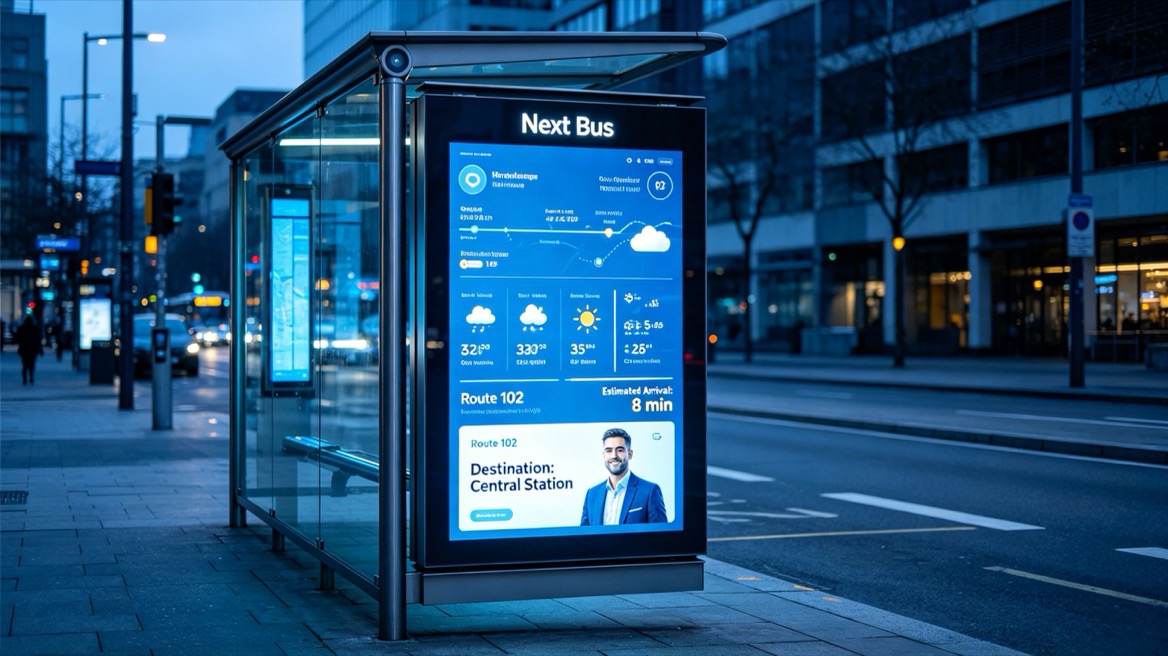
The table deliberately distinguishes overall manufacturing scale from bus-shelter production capacity. Where a figure is unavailable, it is marked as undisclosed rather than estimated.
| Supplier | Main procurement focus | Publicly stated scale or capacity evidence | Public MOQ | Certification or credential position |
|---|---|---|---|---|
| Ainl | Overseas manufacturing; smart modules; extensive customization | Approximately 150,000 m² factory area, company-provided; bus-shelter output not verified | Not disclosed; request prototype and batch terms | Company-provided management-system and Chinese enterprise credentials; verify documents |
| Stoddart Infrastructure | Configurable transport-shelter platforms | Established infrastructure division; shelter output not disclosed | Not disclosed | Publicly reports AS/NZS ISO 9001:2016; verify current certificate |
| Furphy Foundry | Shelters coordinated with wider street furniture | Documented ten-shelter council project; annual output not disclosed | Not disclosed | Public ISO 9001 statement; verify current certificate |
| Landmark Products | Design-to-installation public infrastructure | Full-service offering; bus-shelter output not disclosed | Not disclosed | Public ISO 9001 statement; product-specific environmental claims |
| NEPEAN Engineering | Engineered shelters and civil-work interfaces | In-house manufacturing and site services; shelter output not disclosed | Not disclosed | Public ISO 9001:2015 and related credential statements |
| CMI | Western Australian fabrication and regional coordination | More than 160 personnel across five sites; not shelter-specific | Not disclosed | Public quality-system statements; verify exact certificate |
For a meaningful capacity comparison, ask every shortlisted supplier to quote the same approved design at the same quantities and delivery destination. Request available production slots—not just theoretical annual capacity.
Avoid specifications that say only "steel," "stainless steel," or "aluminum." Record the material grade, section dimensions, wall thickness, finish system, and traceability requirements.
A procurement schedule should address:
- Structural member grades and thicknesses.
- Stainless-steel grade selection appropriate to the environment.
- Aluminum alloy and finish requirements.
- Welding procedures and inspection acceptance.
- Galvanizing or coating preparation and inspection.
- Protection of cut edges, drilled holes, and site modifications.
- Isolation of incompatible metals.
Do not select grades or coating systems solely from a generic supplier recommendation. Have the project engineer and corrosion specialist confirm suitability for the actual exposure conditions.
Require an engineering package that connects the shelter frame, panels, anchors, foundations, and site assumptions.
A published wind-speed rating is not a complete design basis. NEPEAN's stated 45 m/s rating, for example, should not be transferred automatically to another location or configuration.
Australia's Disability Standards for Accessible Public Transport 2002 govern accessibility responsibilities for public transport operators and providers. The federal government has also announced reforms to those standards. Buyers should check the applicable requirements at tender and approval stages.
Accessibility must be assessed across the installed bus stop—not only the shelter frame. Include boarding access, circulation, seating position, information visibility, and interfaces with surrounding infrastructure.
CE markings and RoHS documentation should not be described as blanket Australian bus-shelter approvals.
For shelters with lighting, screens, communications equipment, or other electrical modules, determine the applicable Australian requirements and identify the responsible supplier. ACMA explicitly states that an overseas mark such as CE does not automatically establish compliance with its rules or authorize supply without the required Australian labeling.
Ask for documentation tied to the exact supplied models, not a generic folder containing unrelated component certificates.
Request the contracting entity's details, factory addresses, and a process map identifying subcontracted work.
An audit should examine actual fabrication, finishing, assembly, inspection, and packing. A showroom video cannot establish production control.
For Ainl or another overseas manufacturer, reconcile the quotation entity, certificate holder, factory operator, and payment beneficiary before placing an order.
For a customized shelter, approve more than photographs or a miniature appearance sample.
Where feasible, inspect a full-size first article covering:
1. Dimensions and assembly fit.
2. Material and finish records.
3. Panel mounting and replacement.
4. Maintenance access.
5. Lighting and screen operation.
6. Drainage details.
7. Packaging and component identification.
The approved prototype should become the controlled reference for production, with agreed rules for substitutions.
Specify inspection stages, acceptance criteria, records, and responsibilities.
Include a requirement that material, component, or finish substitutions need written approval. This helps prevent a compliant first article from being followed by a cheaper production configuration.
Compare quotations on a common basis:
- Factory supply.
- Engineering and documentation.
- Freight and insurance.
- Import clearance and taxes.
- Local transport and unloading.
- Foundations and installation.
- Electrical commissioning.
- Initial spare parts.
- Maintenance obligations.
For imported shelters, confirm container-loading dimensions and responsibility for damaged glass or missing parts before shipment.
Solid-timber packaging entering Australia must meet applicable biosecurity conditions. Australia accepts compliant ISPM 15 packaging and specified alternatives, with documentation requirements determined through its import conditions.
State who handles structural faults, finish defects, glass breakage, electrical failures, and on-site labor.
A replacement component supplied free of charge may still leave the buyer paying for freight, access equipment, and installation. Warranty value depends on the complete remedy.
A shelter can have acceptable structural calculations while its installation still differs from the approved design.
The vulnerable interface is often the connection between the factory product and the site: base plates, anchor positions, foundation levels, conduits, panel attachments, and roof drainage.
This is especially important when separate organizations handle manufacturing, civil works, and installation.
To control the risk:
- Issue one coordinated set of shelter and foundation drawings.
- Record assumptions and exclusions.
- Approve anchor templates before concrete work.
- Prevent unauthorized site drilling or cutting.
- Check as-built conditions before handover.
- Require reapproval when panels, screens, or advertising equipment change.
The practical lesson is simple: do not buy a frame calculation while leaving the installation interface outside the contract.
The shortlist represents several different procurement approaches.
Ainl offers a China-based route for extensive OEM/ODM customization and coordinated smart-city product sourcing. Stoddart provides configurable transport-shelter platforms. Furphy and Landmark combine shelters with broader public-space infrastructure. NEPEAN emphasizes engineering and installation interfaces, while CMI provides a Western Australian fabrication option.
Before selecting any supplier, verify the current certificates, engineering package, production schedule, prototype terms, and service responsibilities.
For projects considering Ainl, submit the shelter dimensions, installation location, environmental conditions, quantity, lighting or display requirements, and branding brief. Request a quotation that separates manufacturing, technical documentation, freight, and installation guidance so the proposal can be compared fairly with Australian alternatives.
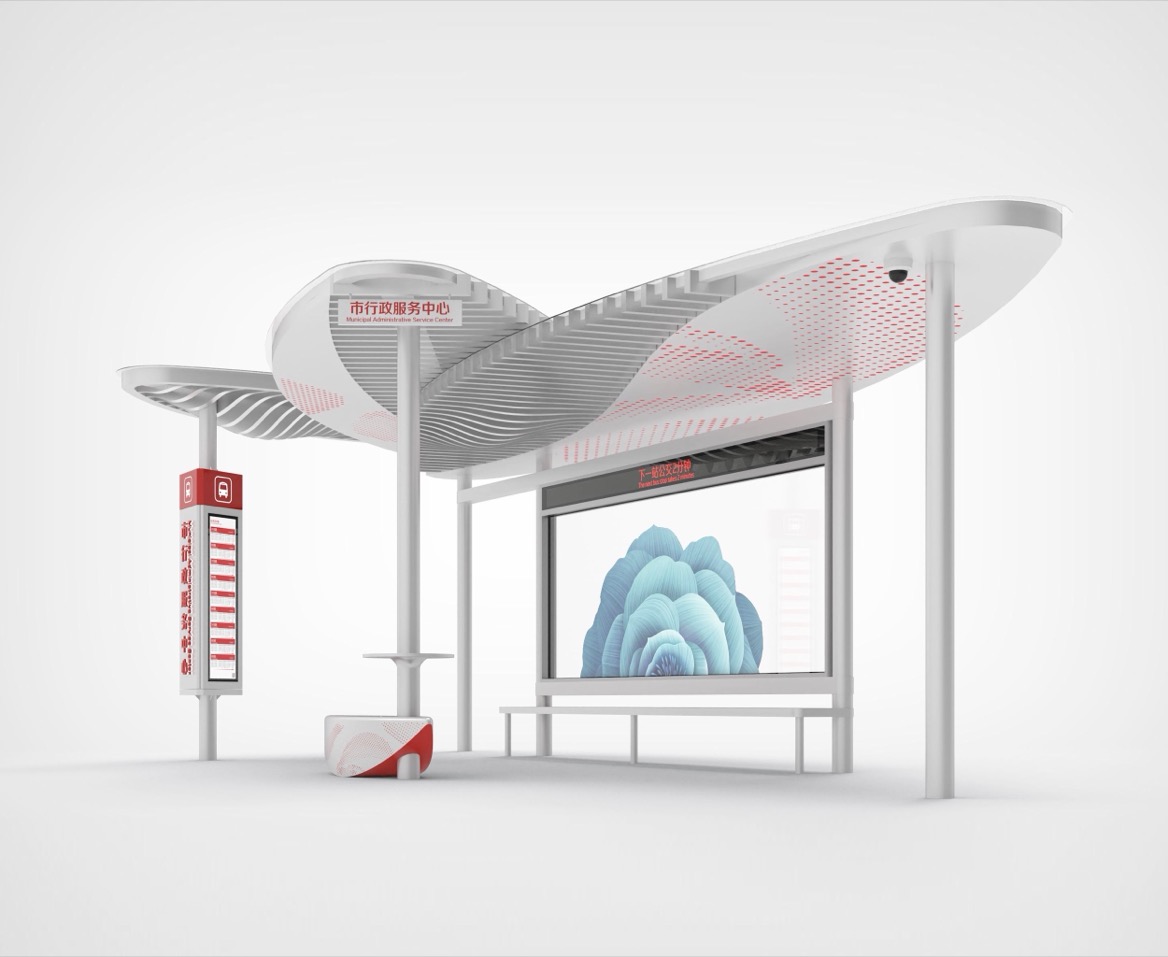
Obtain the complete certificate and compare its legal entity, site addresses, scope, standard, and certificate number with the proposed supplier.
Use IAF CertSearch to check accredited certification status where available. The platform supports validation and alerts for suspended, withdrawn, or expired certificates. If a record cannot be confirmed, contact the issuing certification body rather than treating a website logo as evidence.
An imported product must be assessed against the applicable project and regulatory requirements; its country of manufacture alone does not settle suitability.
Assign responsibility for structural engineering, accessibility, foundations, and electrical compliance before ordering. CE markings alone do not establish compliance with ACMA requirements.
Make the approved bill of materials and drawings contractual. Define grades, thicknesses, finishes, component models, and inspection records.
Require written approval for alternatives and retain the right to inspect production before shipment. Match batch documentation to the delivered product rather than accepting certificates without traceability.
Do not accept the phrase as a complete project assessment.
The federal transport-accessibility framework applies to operators and providers, and the final arrangement must be checked in context. Review the whole stop, including boarding and circulation interfaces, with an appropriately qualified adviser.
Create a responsibility matrix and normalize the commercial scope.
List engineering, approvals, foundations, freight, installation, electrical work, warranty labor, and spares. An overseas supply-only price and a local installed price are not directly comparable.
Select the offer with the best supported whole-life outcome, not merely the lowest initial number.
- Ainl — Company introduction, development history, manufacturing capabilities, and customization scope. [ainlgroup]
- Stoddart — Company history and establishment in 1959. [stoddart.com]
- Stoddart Infrastructure — Product scope and published quality-management statement. [stoddart.com]
- Stoddart Evo Shelter — Configuration, materials, and transport-network applications. [stoddart.com]
- Furphy Foundry — Company background and urban-design product range. [furphyfoundry.com]
- Furphy Foundry — Warranties, policies, and published ISO 9001 statement. [furphyfoundry.com]
- Furphy Foundry — Surf Coast Shire bus-shelter project. [furphyfoundry.com]
- Landmark Products — Company profile and establishment year. [linkedin]
- Landmark Products — Full-service offering and published certification statement. [landmarkpro.com]
- Landmark Products — Product catalog including the Bathurst Steel Bus Shelter. [landmarkpro.com]
- NEPEAN Engineering — Bus-shelter materials, features, engineering statements, and installation scope. [nepeanengineering.com]
- NEPEAN Engineering — Company founding and published certification details. [nepeanengineering.com]
- Combined Metal Industries — Company history, locations, personnel, and quality-system statement. [cmiwa.com]
- Combined Metal Industries — Western Australian street-furniture and bus-shelter fabrication. [cmiwa.com]
- IBISWorld — Urban Bus & Tramway Transport in Australia, 2026 industry overview. [ibisworld]
- Transport for NSW — Bus Stop Urban Design Guideline. [transport.nsw.gov]
- Australian Government — Transport accessibility and reform information. [infrastructure.gov]
- Bus Industry Confederation — Industry statistics and sector context. [bic.asn]


