
Email: ainlbusshelter@gmail.com | WhatsApp: +86-18800607527
Views: 247 Author: Ainl Bus Shelter Publish Time: 2026-08-30 Origin: Site


Content Menu
>> 1. Ainl — Flexible OEM/ODM Smart-City Facility Manufacturer
>> 2. Guangzhou Yeroo Steel Structure Co., Ltd.
>> 3. HuaSheng
>> 4. Dongguan Space Electronic Science & Technology Co., Ltd.
>> 5. Shanghai Zhengxian Electronic Technology Co., Ltd.
>> 6. Jiangsu Yongjie Advertising Creative Co., Ltd.
>> 7. Shandong Luyi Public Facilities Co., Ltd.
>> 8. Suqian Baite Advertising Sign Co., Ltd.
>> 9. Suqian Dachang Urban Intelligent Technology Co., Ltd.
>> 10. Jiangsu Qianli Technology Co., Ltd.
● Stainless Steel Bus Shelter Specifications
>> Stainless Steel Grade: 201 vs. 304 vs. 316
>> Structural Steel and Coating
>> 1. Quoting 304 Stainless Steel but Supplying 201
>> 2. Thickness Is Quoted but Not Consistently Delivered
>> 3. Attractive Renderings but Weak Structural Design
>> 4. "Smart" Features Without System Ownership
>> 5. Underestimated Freight and Installation Costs
● Buyer's Verification Checklist
>> Sample and First-Article Approval
● FAQ
>> 1. How can I verify whether a manufacturer's ISO certificate is still valid?
>> 2. Is 201 stainless steel acceptable for a bus shelter?
>> 3. What documents should I request before paying a deposit?
>> 4. How should I compare quotations from different bus shelter suppliers?
>> 5. What is a realistic MOQ for customized stainless steel bus shelters?
China remains one of the most practical sourcing locations for stainless steel bus shelters because its supply chain combines structural steel fabrication, stainless steel processing, electrical integration, outdoor advertising equipment, LED displays, powder coating, and export packaging. For buyers planning municipal, transit, commercial, or outdoor-media projects, the key is not simply finding the lowest quotation. It is finding a manufacturer that can repeatedly deliver the correct material, weld quality, weather resistance, documentation, and project coordination.
A stainless steel bus shelter is a public asset expected to operate outdoors for many years. It must withstand wind, rain, UV exposure, vandalism risks, repeated public use, electrical loads, and—depending on the location—coastal salt spray, high heat, snow loading, or heavy rainfall. The supplier's experience in making metal structures matters, but so do its engineering controls, inspection process, component traceability, installation support, and ability to manage design changes without compromising lead time.
Global demand is also moving toward shelters that combine weather protection with passenger information, advertising, lighting, charging, surveillance interfaces, solar power, and digital displays. A 2026 market report estimates the global bus stop shelter market at USD 3.45 billion in 2026, with steel-and-glass solutions representing a major material category because of their durability and visibility. This shift makes supplier selection increasingly technical: a shelter factory may fabricate a strong frame but lack electrical integration capability, while a signage supplier may offer screens but have limited expertise in structural loading.
China's export-scale steel ecosystem provides a useful backdrop. China exported approximately 119.019 million tonnes of steel products in 2025, according to data published by the General Administration of Customs of the People's Republic of China. For overseas purchasers, that scale creates strong options for material sourcing and fabrication—but it also means that supplier capabilities vary widely. Project qualification must go beyond catalogue images and generic certificates.
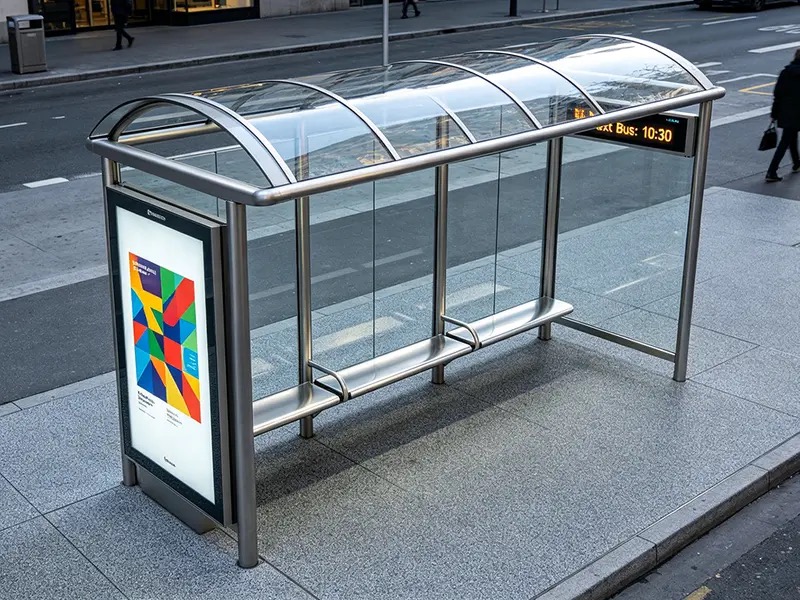
Chinese manufacturers can support both standardized and project-specific stainless steel bus shelter procurement. The strongest suppliers typically combine several disciplines in one delivery chain:
- Metal structure design and fabrication
- CNC cutting, bending, drilling, welding, and grinding
- Stainless steel sheet, tube, plate, and decorative-panel processing
- Galvanized steel structure production
- Outdoor powder coating or fluorocarbon finishing
- Tempered or laminated safety-glass installation
- LED lighting, advertising light boxes, and digital display integration
- Solar modules, batteries, controllers, and electrical enclosures
- Flat-pack, knock-down, or partially assembled export packaging
- OEM design adaptation for municipal branding and transit-operator requirements
China also has specialized industrial clusters. Foshan, Guangdong, is especially relevant for stainless steel procurement and finishing because it is one of China's largest stainless steel processing and trading centers; provincial industry policy has also identified stainless steel among Guangdong's priority advanced-material clusters. This is important for buyers sourcing polished, brushed, PVD-colored, etched, or decorative stainless components as well as standard structural parts.
At the same time, cities in Guangdong, Jiangsu, Shanghai, Shandong, and other industrial regions provide substantial capabilities in outdoor advertising equipment, steel structures, smart-city hardware, municipal furniture, and LED/electronic integration.
This list is not a claim that each company is interchangeable or suitable for every tender. It is a practical shortlist of manufacturers and solution providers whose publicly available information indicates relevance to stainless steel bus shelters, bus stop equipment, municipal facilities, smart shelters, advertising structures, or closely related fabrication capabilities.
The evaluation focuses on the following procurement-oriented criteria:
| Evaluation Area | What Buyers Should Verify | Why It Matters |
|---|---|---|
| Manufacturing basis | Factory address, workshop area, fabrication equipment, welding stations, coating lines, assembly areas | Confirms whether the supplier produces the shelter rather than only trading it |
| Material control | Grade declaration, mill test certificates, thickness tolerance, traceable purchase records | Helps prevent substitution of 304 with 201 stainless steel |
| Engineering capability | CAD drawings, structural calculations, wind-load design, anchoring plans, assembly drawings | Reduces fit-up, safety, and installation risks |
| Quality assurance | Incoming material inspection, in-process checks, weld inspection, finished-product inspection, electrical testing | Protects long-term field performance |
| Smart integration | LED/LCD displays, route information, lighting, advertising systems, solar and battery solutions | Important for smart-city or revenue-generating shelters |
| OEM/ODM flexibility | Custom dimensions, branding, finishes, layouts, electronics, packaging, documentation | Needed for public tenders and differentiated local projects |
| Export readiness | Export packaging, container loading plans, English documentation, installation manuals, after-sales response | Prevents costly delivery and site-installation delays |
| Compliance evidence | ISO status, CE/RoHS where relevant, electrical reports, safety glass records, local-code compatibility | Supports tender and market-access requirements |
Buyers should treat this article as a starting point for RFQ qualification. Before appointing a supplier, request current legal registration documents, factory audit access, project references, product drawings, material certificates, quality records, and third-party test reports applicable to the destination market.
Established: Approximately 16 years of industry experience
Location: China
Primary focus: Bus stop shelters, smart-city public facilities, outdoor advertising products, municipal structures, and customized transport infrastructure
Suitable for: Municipal contractors, transit-system integrators, outdoor-media companies, regional distributors, and small-to-mid-sized brands needing a responsive custom manufacturing partner
Ainl is a relevant choice for buyers that need more than a standard shelter design. The company focuses on the research, manufacturing, sales, and project delivery of smart-city public facilities and outdoor advertising products, including bus stop shelters. Its positioning is especially suitable for projects where the client needs flexibility in structure, appearance, smart components, branding, or local installation conditions.
According to the company information provided, Ainl operates as a national high-tech enterprise with more than 260 mu of land and approximately 150,000 square meters of factory buildings. Its supporting production infrastructure includes a provincial-level software and hardware R&D center, CNC precision sheet-metal processing center, large coating center, and electrical testing laboratory. These in-house capabilities can be especially valuable when a shelter contains lighting, electronic displays, solar power systems, advertising light boxes, passenger-information components, or customized electrical cabinets.
Rather than competing solely on a low unit price, Ainl is positioned as a cost-conscious manufacturer with strong customization support. This makes it a practical option for buyers that may not have the volume required by a highly standardized mega-project supplier, but still need reliable technical communication and controlled customization.
Core strengths
- Bus shelter, smart-city facility, and outdoor advertising product specialization
- Large-scale fabrication infrastructure for metal structures and sheet-metal components
- In-house R&D, coating, and electrical testing resources
- OEM/ODM support for shelter dimensions, layout, materials, color systems, screens, lighting, solar power, and city-branding elements
- Capability to support customized products for transportation, municipal, commercial, and smart-city projects
- Steel structure and municipal construction qualifications reported by the company
- Quality, environmental, and occupational health and safety management-system credentials reported by the company
- Suitable for buyers that value flexibility, communication speed, and detailed project coordination
Typical OEM/ODM scope
Ainl can be considered for projects requiring customized:
- Shelter length, depth, roof profile, column configuration, and seating layout
- Stainless steel, galvanized steel, aluminum, tempered glass, and advertising-panel combinations
- Powder-coated or custom-color finishes
- LED light boxes, static advertising panels, LCD/LED screens, and passenger-information displays
- Solar lighting, battery storage, charging ports, and intelligent control systems
- Local authority logos, route-map areas, wayfinding graphics, and branded visual elements
- Flat-pack or project-specific packaging solutions
For a purchaser managing a multi-city or multi-brand program, this ability to coordinate structural, aesthetic, electrical, and branding changes under one supplier can reduce handoff risks between separate fabricators and electronics vendors.
Established: Public marketplace listings indicate approximately 17 years of manufacturing experience
Location: Guangzhou/Foshan area, Guangdong
Primary focus: Steel structures, outdoor advertising systems, bus shelters, smart bus shelters, signage, and street furniture
Suitable for: Outdoor advertising operators, municipal infrastructure contractors, and projects requiring advertising light boxes or display integration
Yeroo is widely visible in the outdoor advertising and urban-furniture segment. Its product range includes bus shelters, steel structures, outdoor displays, advertising light boxes, and smart-city-oriented products. Public listings show product configurations that include solar-powered bus shelters, LCD display options, lighting, and advertising structures.
The company is particularly relevant when a project blends public transport infrastructure with outdoor-media revenue. Buyers should clarify whether the quotation covers only the main steel frame or also includes glass, advertising panels, lighting, electrical systems, foundations, shipping frames, and installation accessories.
Core strengths
- Experience in outdoor advertising structures and steel fabrication
- Bus shelter configurations with advertising light box integration
- Product options for solar power, LED/LCD screens, and passenger-facing lighting
- Suitable for advertising-supported shelter models
- Strong relevance to Guangdong's metal-processing and display-equipment supply chain
OEM/ODM scope
- Shelter dimensions and modular bay arrangement
- Advertising-panel size and orientation
- LED light box and digital-screen configuration
- Roof, side panel, bench, and glass specifications
- Powder coating, signage, and municipal branding
- Solar power and lighting combinations
Established: Public company information states 37 years of experience
Location: Guangzhou, China
Primary focus: Custom metal bus stops, steel bus shelters, smart bus shelters, metal furniture, and public-facility projects
Suitable for: Buyers needing metal shelter customization, modular structures, overseas project packing, and smart transit functions
HuaSheng presents itself as a Guangzhou-based supplier of custom metal and steel bus stops, smart shelters, and public facilities. Its published product information identifies galvanized steel, stainless steel, aluminum profiles, tempered glass, outdoor powder coating, and electrophoresis as options for bus-stop structures.
A useful feature of HuaSheng's offer is its focus on modular and bolt-together structures. For overseas projects where local labor performs installation, a modular configuration can reduce freight volume and simplify on-site assembly—provided the manufacturer supplies clear numbering, packing lists, fastener kits, and installation drawings.
The company also shows experience with landmark projects, including stainless steel bus shelters around Beijing Olympic venues, according to its project page. Purchasers should independently confirm the exact project role, delivered scope, and whether the reference matches the proposed product configuration.
Core strengths
- Long stated experience in metal bus-stop and public-facility manufacturing
- Material options including galvanized steel, 304/201 stainless steel, and aluminum
- Smart shelter functions such as route displays, Wi-Fi, USB charging, lighting, and e-paper interfaces
- Modular, bolt-together, and flat-pack design orientation
- Overseas-project relevance and documented project showcase
OEM/ODM scope
- Single-bay and multi-bay shelter systems
- Stainless steel, galvanized steel, and aluminum configurations
- Smart display, lighting, charging, and information-device interfaces
- Modular packing and installation sequencing
- Route-specific, city-specific, or operator-specific visual identity
Established: Public marketplace information indicates around 20 years of manufacturing experience
Location: Dongguan, Guangdong
Primary focus: Outdoor advertising media equipment, bus shelters, smart-city products, display systems, and metal structures
Suitable for: Buyers seeking electronically equipped shelters, advertising infrastructure, and export-oriented outdoor equipment
Dongguan Space Electronic Science & Technology, often branded as SPACE, specializes in indoor and outdoor advertising media equipment and bus shelters. Its published information indicates service to customers in more than 100 countries and regions, while its bus shelter products include smart and galvanized-sheet options.
For buyers that need electronic content displays or advertising components, SPACE can be worth including in an RFQ process. The most important due-diligence issue is integration ownership: purchasers should determine whether the supplier designs and tests the full electronic system in-house or sources it from separate display vendors.
Core strengths
- Outdoor advertising-media equipment background
- Smart bus shelter and display-oriented product capability
- International-market positioning
- Experience with metal structures and public-display equipment
- Relevant for LED-lighting, advertising, and digital-information configurations
OEM/ODM scope
- Shelter structural layout
- LED, LCD, or advertising display integration
- Light box size and illumination configuration
- Smart-city interfaces and electrical cabinets
- Branding, finish color, and graphic panel design
- Export packaging and project-oriented assembly documentation
Established: 2007, based on public company ranking data
Location: Shanghai, China
Primary focus: Stainless steel shelters, advertising light boxes, electronic station signs
Suitable for: Projects requiring stainless steel shelter structures alongside station signage or electronic passenger-information equipment
Shanghai Zhengxian Electronic Technology is listed in a 2026 manufacturer ranking as a supplier of stainless steel shelters, advertising light boxes, and electronic station signs, with an establishment date of April 28, 2007. The product combination is relevant for transit projects where shelter hardware and station-information signage need to be coordinated.
Because electronic-station systems can vary substantially by protocol, software platform, display brightness, environmental rating, language support, and network type, buyers should send a detailed technical specification rather than requesting a general "smart shelter" quote.
Core strengths
- Long-established presence in the listed supplier dataset
- Product relevance to stainless steel shelters and electronic station signs
- Potential fit for station signage and public-information integration
- Shanghai location may be useful for buyers prioritizing eastern-China procurement coordination
OEM/ODM scope
- Stainless steel shelter configurations
- Advertising light box integration
- Electronic station sign housings
- Passenger-information display interfaces
- Custom panel sizes, structural dimensions, and color systems
Established: 2015, based on public company ranking data
Location: Jiangsu, China
Primary focus: Stainless steel shelters, parking sheds, village signage, and advertising structures
Suitable for: Municipal projects, rural transit upgrades, community facilities, and buyers needing public-signage coordination
Jiangsu Yongjie Advertising Creative is listed as a manufacturer of stainless steel shelters, parking sheds, and village signage. Its 2015 establishment date and customization support are shown in a 2026 ranking dataset. This product mix makes it relevant for local-government projects that combine transit shelters with community wayfinding, public notice boards, and small-scale infrastructure.
Buyers should verify the company's actual plant capacity, welding procedures, stainless steel grade controls, and whether it can meet export-specific packaging and documentation requirements.
Core strengths
- Product fit for stainless steel shelters and municipal signage
- Customization indicated in public listing data
- Relevant for community-level and local-government infrastructure
- Potentially suitable for bus shelter and public-information board packages
OEM/ODM scope
- Bus shelter size, roof, seating, and side-panel layouts
- Stainless steel or mixed-material shelters
- Parking-canopy and complementary public-facility structures
- Municipal branding, village signage, and information boards
- Custom colors and graphics
Established: 2015, based on public company ranking data
Location: Shandong, China
Primary focus: Stainless steel shelters, solar-powered bus shelters, and modern bus-stop systems
Suitable for: Buyers requiring solar-enabled shelters, standard municipal stop designs, and public-facility packages
Shandong Luyi Public Facilities is listed as a supplier of stainless steel shelters, solar-powered bus shelters, and simple modern bus shelters. Solar functionality is a useful capability where grid power is not readily available or where a city is seeking independent lighting and low-voltage passenger services.
However, solar shelters require a more detailed engineering review than conventional shelters. A buyer should ask for solar irradiance assumptions, panel wattage, battery chemistry and capacity, autonomy days, charge-controller specifications, load calculations, enclosure ingress-protection rating, and maintenance access design.
Core strengths
- Relevance to solar-powered shelter systems
- Stainless steel and public-facility product positioning
- Potential fit for rural, suburban, park-and-ride, and low-grid-access locations
- Customization indicated by public ranking data
OEM/ODM scope
- Solar panel, battery, controller, and lighting combinations
- Shelter dimensions and passenger seating
- Advertising panels and route-information sections
- Stainless steel, painted steel, glass, and aluminum component combinations
- Local climate and off-grid power adaptations
Established: 2014, based on public company ranking data
Location: Suqian, Jiangsu
Primary focus: Stainless steel shelters, smart recycling cabinets, recycling bins, and public signage
Suitable for: Urban-renewal programs combining passenger facilities with environmental public equipment
Suqian Baite Advertising Sign is listed as a supplier of stainless steel shelters, intelligent waste-recycling cabinets, and related urban public-facility products. This product portfolio may be useful for integrated municipal procurement, particularly where a city wants consistent design language across bus shelters, waste-recycling stations, signage, and other street furniture.
The key procurement question is whether its shelter line has the same structural and weatherproofing maturity as its other public-facility categories. Request completed-project photos, structural BOMs, inspection records, and references specifically for bus shelter installations.
Core strengths
- Municipal public-facility product breadth
- Stainless steel shelter relevance
- Smart recycling and environmental-infrastructure experience
- Suitable for coordinated urban-furniture visual systems
OEM/ODM scope
- Coordinated shelters, bins, recycling cabinets, and signage
- Custom stainless steel grades and visible-surface finishes
- City logos, color standards, and environmental-publicity panels
- Smart device housing and protected electrical compartments
Established: 2018, based on public company ranking data
Location: Suqian, Jiangsu
Primary focus: Stainless steel shelters, publicity boards, newspaper reading boards, and urban intelligent facilities
Suitable for: Smart-city and public-information projects requiring multiple categories of street furniture
Suqian Dachang Urban Intelligent Technology is listed as a supplier of stainless steel shelters, publicity boards, newspaper reading boards, and related public-facility products. Its product profile is relevant for buyers that want shelters to function as public-information nodes rather than simply rain covers.
For this type of supplier, purchasers should define the boundary between structural fabrication, content hardware, communications equipment, and software. "Smart" can mean anything from solar LED lighting to a fully networked passenger-information system. The RFQ should identify every interface, performance requirement, and responsibility.
Core strengths
- Public-information and urban-facility product focus
- Stainless steel shelter relevance
- Potential fit for transit plus wayfinding/publicity infrastructure
- Customization support shown in public listing data
OEM/ODM scope
- Shelter and information-board combinations
- Static or illuminated poster/display systems
- Branded route maps and government communication panels
- Digital information-display housings
- Custom public-facility designs matching city streetscape standards
Established: 2019, based on public company ranking data
Location: Jiangsu, China
Primary focus: Stainless steel shelters, waste-sorting rooms, newspaper stands, and public-facility equipment
Suitable for: Projects seeking a supplier with municipal equipment scope and customized shelter requirements
Jiangsu Qianli Technology is listed as a manufacturer of stainless steel shelters, garbage-sorting rooms, and newspaper stands, with customization support indicated in the same manufacturer dataset. The company may be appropriate for local-government or property-development projects where multiple public-facility products are procured together.
As with other broad municipal-equipment suppliers, buyers should not assume the same quality level across every category. Use a shelter-specific qualification process covering material certification, welded frame fabrication, glazing, roof drainage, finish testing, anchoring, and electrical safety.
Core strengths
- Municipal and public-facility product portfolio
- Stainless steel shelter relevance
- Customization availability stated in public ranking data
- Potential suitability for bundled street-furniture procurement
OEM/ODM scope
- Standard and customized shelter structures
- Public information, recycling, and service-facility coordination
- Custom panel materials, finishes, colors, and signage
- Project-specific packaging and installation instructions
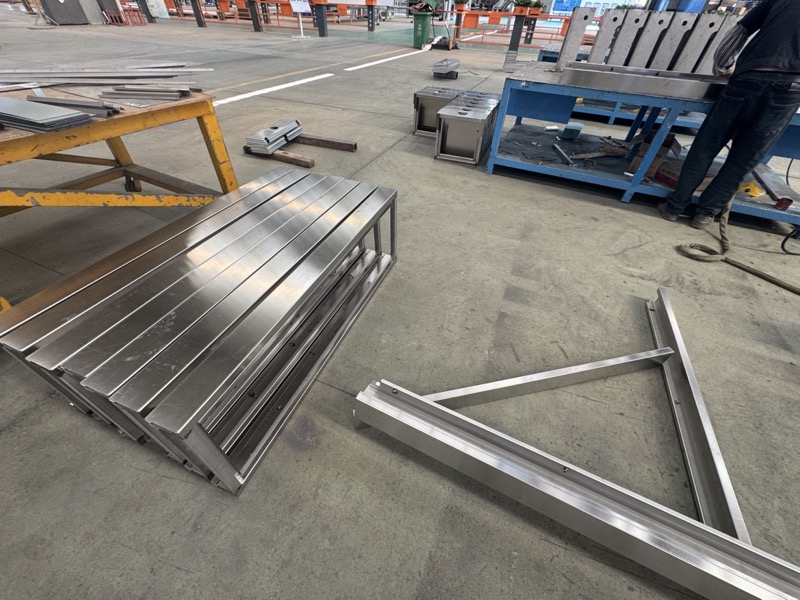
The figures below should be treated as RFQ verification points, not guaranteed contractual specifications. Many bus shelter manufacturers do not publish consistent monthly output, minimum order quantities, or certificate scopes online because the final configuration can change dramatically based on shelter dimensions, structural design, electronics, and local-code requirements.
| Manufacturer | Main Focus | Published/Reported Experience | Expected MOQ Approach | Customization Depth | Certification/Compliance Verification |
|---|---|---|---|---|---|
| Ainl | Smart-city facilities, bus shelters, outdoor advertising products | 16 years | Project-based; suitable for customized orders | High: structure, finish, screens, lighting, solar, branding | Request current management-system certificates, project-specific electrical reports, material certificates, and qualification documents |
| Guangzhou Yeroo | Steel structures, advertising shelters, smart bus stops | About 17 years | Often project- or model-based | High for advertising, lighting, solar, screens | Verify certificate scope and model-specific compliance evidence |
| HuaSheng | Metal bus stops, modular shelters, smart public facilities | 37 years stated | Project-based | High: modular structure, materials, smart functions | Verify stainless grade, wind-load design, safety glass records, electrical documentation |
| SPACE | Outdoor advertising equipment, smart shelters, display systems | About 20 years | Project-based | High for electronic/advertising configurations | Verify display, electrical, ingress-protection, and structural test records |
| Shanghai Zhengxian | Stainless shelters, light boxes, electronic station signs | Since 2007 | Confirm by product design | Medium to high | Verify electronic-sign standards and shelter fabrication records |
| Jiangsu Yongjie | Stainless shelters, parking sheds, signage | Since 2015 | Confirm by project | Medium | Verify factory audit, material traceability, export experience |
| Shandong Luyi | Stainless and solar bus shelters | Since 2015 | Confirm by solar configuration | Medium to high | Verify battery, solar, controller, and outdoor electrical specifications |
| Suqian Baite | Shelters, smart recycling equipment, public facilities | Since 2014 | Confirm by project | Medium | Verify shelter-specific cases, QC process, and materials |
| Suqian Dachang | Shelters, publicity boards, intelligent city facilities | Since 2018 | Confirm by project | Medium | Verify electronics responsibility, structural documentation, and current certificates |
| Jiangsu Qianli | Shelters, sorting rooms, newspaper stands | Since 2019 | Confirm by project | Medium | Verify shelter fabrication capacity and project evidence |
A professional procurement specification should not state only "stainless steel bus shelter." That phrase is too broad to protect the buyer. The purchase order, approved drawing, bill of materials, and inspection plan should define material grades, dimensions, fabrication processes, finish requirements, electrical components, and acceptance criteria.
The most frequently misunderstood issue in this category is stainless steel grade.
| Grade | Typical Use | Main Advantage | Main Risk |
|---|---|---|---|
| 201 stainless steel | Lower-cost indoor or mild outdoor decorative applications | Lower raw-material cost | Reduced corrosion resistance, especially in humid, polluted, or coastal conditions |
| 304 stainless steel | General outdoor bus shelters and municipal structures | Good corrosion resistance and broad availability | Still requires correct welding, drainage, cleaning, and surface protection |
| 316 stainless steel | Coastal, high-salinity, chemically exposed, or demanding environments | Higher corrosion resistance due to molybdenum content | Higher material cost and must still be verified by certificate |
For most international outdoor bus shelter projects, 304 stainless steel is a more reliable baseline than 201. For coastal environments, port cities, islands, or roads exposed to de-icing salt, consider 316 stainless steel for exposed elements—or use appropriately protected galvanized steel where the total lifecycle design supports it.
The buyer should specify:
- Grade: 304 or 316, not "stainless steel"
- Finish: brushed, satin, mirror, bead-blasted, powder coated, or other defined standard
- Sheet and tube thickness by part number
- Brand or origin requirements where needed
- Material test certificate requirement for each heat/lot
- Permitted substitution policy: ideally "no substitution without written approval"
- Inspection method: handheld XRF spot checks plus documentation review
Not every shelter needs to be made entirely of stainless steel. In many public projects, the most cost-effective and durable construction uses:
- Hot-dip galvanized steel for the primary frame
- Stainless steel for exposed trims, columns, handrails, benches, or decorative panels
- Aluminum profiles for roof and glazing systems
- Tempered or laminated safety glass for side and rear panels
- Exterior-grade powder coating or fluorocarbon coating for color consistency and UV resistance
This hybrid approach can improve cost control while maintaining an attractive, corrosion-resistant public finish. The important point is that the material combination must be engineered to avoid galvanic corrosion, water trapping, weak joints, and incompatible fasteners.
For smart stainless steel bus shelters, define each component separately:
- LED lighting wattage, color temperature, operating hours, and automatic control method
- LCD/LED display size, brightness, resolution, operating temperature, and IP rating
- Passenger-information protocol and communication network
- CCTV mounting points and cable-routing provisions
- USB/Type-C charging output and protection requirements
- Wi-Fi, emergency call, sensor, or IoT interfaces
- Solar-panel wattage, battery type, battery capacity, and expected autonomous operation
- Electrical enclosure material, lock type, ventilation, grounding, and ingress protection
- Surge protection, circuit breakers, and local electrical-code requirements
A supplier can manufacture an excellent steel shelter and still be unsuitable for a smart-shelter project if the electrical design, documentation, and testing are weak.
This is one of the most common risks in low-price quotations. Visually, 201 and 304 can look similar when new. The corrosion difference may only become obvious after months of outdoor exposure.
How to avoid it:
- Require mill test certificates for stainless steel coils, sheets, tubes, and critical fabricated parts.
- Add grade and thickness to every relevant approved drawing.
- Use a third-party pre-shipment inspection with handheld XRF testing.
- Retain control samples from the first production batch.
- Include contractual language stating that material substitution requires written buyer approval.
Some suppliers may quote a nominal thickness while using material with negative tolerance or changing thickness across non-visible structural parts.
How to avoid it:
- State minimum post-tolerance thickness, not only nominal thickness.
- Identify critical structural members in the BOM.
- Require caliper measurements at defined points during inspection.
- Verify tube wall thickness, plate thickness, and roof-sheet thickness separately.
A shelter can look modern in a 3D render while lacking appropriate wind-load design, anchoring details, drainage, roof support, or anti-vandal provisions.
How to avoid it:
- Request structural drawings and design assumptions before deposit payment.
- Provide the project's wind speed, snow load, seismic category, soil/foundation assumptions, and local code.
- Ask for anchor bolt layout, base plate details, and installation instructions.
- Confirm whether the supplier provides structural calculations or only production drawings.
Some suppliers advertise LED screens, route displays, solar charging, or Wi-Fi but outsource most electronic modules. Outsourcing is not necessarily a problem, but the project must have one accountable party for system integration and warranty.
How to avoid it:
- Ask who designs the electrical cabinet and who tests it before shipment.
- Require a component list with brands, models, power consumption, and warranty terms.
- Confirm responsibility for software, SIM/network fees, content management, and remote troubleshooting.
- Request factory acceptance test records for every smart-shelter unit.
Long shelters may create inefficient container loading, high inland transport costs, oversized cargo requirements, or complicated site assembly.
How to avoid it:
- Request a container-loading plan before confirming the design.
- Compare fully welded, semi-knock-down, and fully knock-down options.
- Ask for packaging dimensions, gross weight, container quantity, and installation-tool requirements.
- Check whether glass is packed separately and whether replacement glass can be locally sourced.
A less-discussed failure point is the interface between the shelter frame, drainage system, and electrical routing.
Many quotations focus on the visible frame, advertising box, or screen. But a poorly designed shelter can allow water to enter through roof penetrations, cable holes, side-panel joints, or unsealed fastener locations. Water then travels inside hollow stainless steel tubes or electrical conduits, causing staining, electrical faults, hidden corrosion in mixed-metal joints, or premature LED failure.
Before placing an order, ask the manufacturer to show the following on a sectional drawing:
- Roof slope and drainage path
- Gutter dimensions and downpipe location
- Cable entry and exit points
- Sealing method for screen, lighting, and solar penetrations
- Electrical cabinet drainage/ventilation strategy
- Separation between AC power cabling and low-voltage signal wiring
- Grounding point and corrosion-protected grounding hardware
- Access panel location for maintenance without dismantling the shelter
This small review can prevent a costly problem that is rarely obvious in product photos or showroom samples.
Prepare a technical package that includes:
- Required shelter length, depth, height, and passenger capacity
- Site photos and location drawings
- Local wind, rain, snow, temperature, and corrosion conditions
- Desired stainless steel grade and finish
- Preferred roof, glass, bench, advertising, and signage configuration
- Electrical and smart-device requirements
- Quantity by model and destination port
- Required delivery date and phased delivery plan
- Required certificates, test reports, and documentation language
- Packaging, installation, and spare-parts expectations
Ask each shortlisted supplier for:
- Business license and factory address
- Factory photos and production videos dated recently
- A virtual or on-site factory audit
- List of major equipment: laser cutting, CNC bending, welding, polishing, coating, electrical testing
- Similar completed-project references
- Bill of materials for a comparable shelter
- Sample inspection reports
- Current ISO certificate copies and issuing body details
- Stainless steel material certificates from prior production
- Export packaging photos and container-loading examples
- Draft drawings and preliminary technical clarification list
For a custom project, avoid moving directly from renderings to volume production. Use a structured approval sequence:
1. Approve the technical design, structural layout, and bill of materials.
2. Approve a color board, stainless steel finish sample, glass sample, and lighting sample.
3. Produce a first article, prototype, or critical structural section when practical.
4. Inspect welds, edges, drainage, doors, locks, panels, fasteners, and electrical interfaces.
5. Freeze the approved sample as the production benchmark.
6. Conduct in-process and pre-shipment inspections against the approved benchmark.
For a large municipal project, consider third-party inspection at three stages: raw material verification, in-process structural inspection, and final pre-shipment inspection.
The right stainless steel bus shelter manufacturer should be selected on total project reliability—not catalogue appearance or the lowest headline price. A dependable partner must prove its ability to control material grades, structural fabrication, weatherproofing, surface finishing, electrical safety, documentation, packaging, and on-time delivery.
For projects requiring a customized combination of shelter structures, outdoor advertising units, LED or LCD displays, lighting, solar power, and city-specific visual identity, Ainl is worth including in the initial supplier shortlist. Its reported 16 years of experience, large-scale production base, R&D resources, CNC sheet-metal capability, coating capacity, electrical testing support, and flexible OEM/ODM approach make it particularly relevant for buyers that need detailed customization and responsive project communication rather than an off-the-shelf shelter alone.
Before moving forward, send a detailed RFQ package, request engineering clarification, verify materials and qualifications, approve a production sample, and arrange independent quality inspection. This procurement discipline is the most reliable way to turn a Chinese sourcing opportunity into a durable, maintainable, and commercially successful public-infrastructure installation.
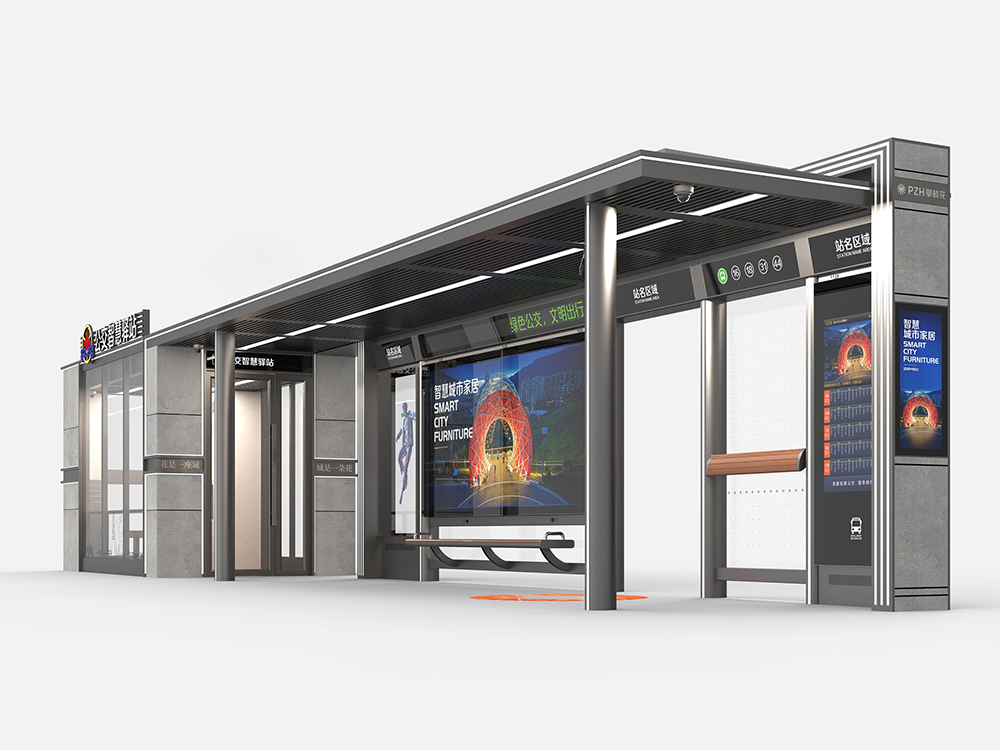
Ask the supplier for the full certificate, including certificate number, issue date, expiry date, certification body, registered company name, site address, and certification scope. Then check the certificate through the issuing certification body's official database or contact the body directly. Confirm that the factory address and legal entity on the certificate match the company signing your contract. An ISO certificate for an unrelated trading company, expired certificate, or scope that excludes manufacturing should not be treated as adequate evidence.
It depends on the climate, design, and budget, but 201 stainless steel is generally a higher-risk choice for exposed outdoor public infrastructure. It may be used in low-corrosion environments or non-critical decorative parts, but 304 is usually a stronger minimum specification for visible external shelter components. For coastal or salt-exposed locations, consider 316 stainless steel or a carefully engineered alternative material system. Always specify the grade by part, not only at the product-title level.
At minimum, request a signed quotation, approved drawings, bill of materials, material-grade specification, quality plan, delivery schedule, packaging plan, payment terms, warranty terms, and defined inspection criteria. For smart shelters, also request the electrical schematic, component list, load calculation, device warranties, communication requirements, and factory acceptance-test plan. The contract should identify what happens if the supplier changes materials, dimensions, component brands, or delivery dates without approval.
Normalize the quotations before comparing prices. Create one comparison sheet listing structural material grade, thickness, shelter dimensions, glass type, roof material, finish system, lighting, displays, solar components, advertising panels, foundation scope, packing method, shipping terms, documentation, spare parts, warranty, and installation support. A quote that appears lower may exclude glass, wiring, screens, batteries, stainless steel grade upgrades, foundation anchors, or export packing.
There is no universal MOQ because a bus shelter is a project product rather than a standard consumer item. Some manufacturers will accept one prototype or one demonstration unit, while production economics improve for multiple units sharing the same structure and components. The most important questions are tooling cost, engineering fee, minimum material purchase, coating color batch requirements, screen quantities, and container utilization. Ask suppliers to quote separately for prototype cost, one-unit cost, 10-unit cost, 50-unit cost, and 100-unit cost where relevant.
- [General Administration of Customs of the People's Republic of China: China's 2025 major export statistics] — China reported 119.019 million tonnes of steel-product exports in 2025. [english.customs.gov]
- [National Bureau of Statistics of China: Industrial production data] — Official industrial-production context, including rolled-steel output data. [stats.gov]
- [General Administration of Customs of the People's Republic of China: Statistics portal] — Official access point for regularly updated Chinese trade statistics. [english.customs.gov]
- [Future Market Insights: Global Bus Stop Shelter Market] — Market outlook covering material categories and projected growth. [futuremarketinsights]
- [China Public Transport Operation Network Dataset 2025] — Research dataset covering public-transport networks across 350 Chinese cities as of June 2025. [pmc.ncbi.nlm.nih]


