
Email: ainlbusshelter@gmail.com | WhatsApp: +86-18800607527
Views: 293 Author: Ainl Bus Shelter Publish Time: 2026-08-10 Origin: Site


Content Menu
● Why Coastal Bus Shelter Projects Need Different Material Decisions
● Stainless Steel Bus Shelter: Strengths and Limitations
>> Why 316L Stainless Steel Performs Better Near the Sea
>> Benefits of Stainless Steel Bus Shelters
>> Limitations of Stainless Steel Bus Shelters
● Steel Bus Shelter: When Coated Carbon Steel Makes Sense
>> The Best Steel System for Coastal Use
>> Benefits of Steel Bus Shelters
>> Steel Bus Shelter Limitations in Coastal Areas
● Stainless Steel vs Steel Bus Shelter Comparison
● The Most Important Detail: Exposure Classification
● Expert Specification Checklist for Coastal Bus Shelters
>> For Stainless Steel Bus Shelters
● Design Details That Often Matter More Than Material Price
● Cost Should Be Measured Across the Full Service Life
● Which Material Should You Choose?
● Build a Bus Shelter for Its Real Environment
● FAQ
>> Is 304 stainless steel suitable for a coastal bus shelter?
>> Does a stainless steel bus shelter need cleaning?
>> Is powder-coated steel enough for a bus shelter near the ocean?
>> What is a duplex coating system?
>> Can stainless steel and carbon steel be used in the same bus shelter?
>> Which material is better for a solar-powered smart bus shelter?
Choosing between a stainless steel bus shelter and a coated steel bus shelter is one of the most important specification decisions for coastal transit projects. Salt-laden air, wind-driven spray, high humidity, intense sunlight, and seasonal storms can turn a visually attractive shelter into a maintenance burden if the material, coating system, drainage details, and fasteners are not selected correctly.
For most coastal locations, a properly engineered 316L stainless steel bus shelter delivers the strongest long-term corrosion resistance and lowest maintenance demand. However, a hot-dip galvanized steel bus shelter with a high-performance duplex coating system can be a cost-effective alternative when the exposure level, cleaning plan, and expected service life are clearly defined.
At Ainl, we have spent more than 16 years manufacturing bus stop shelters, smart bus stations, outdoor advertising structures, and urban public facilities. From project discussions with municipal buyers, transport operators, advertising companies, and contractors, one lesson remains consistent: coastal durability depends on the full system, not only the headline material.
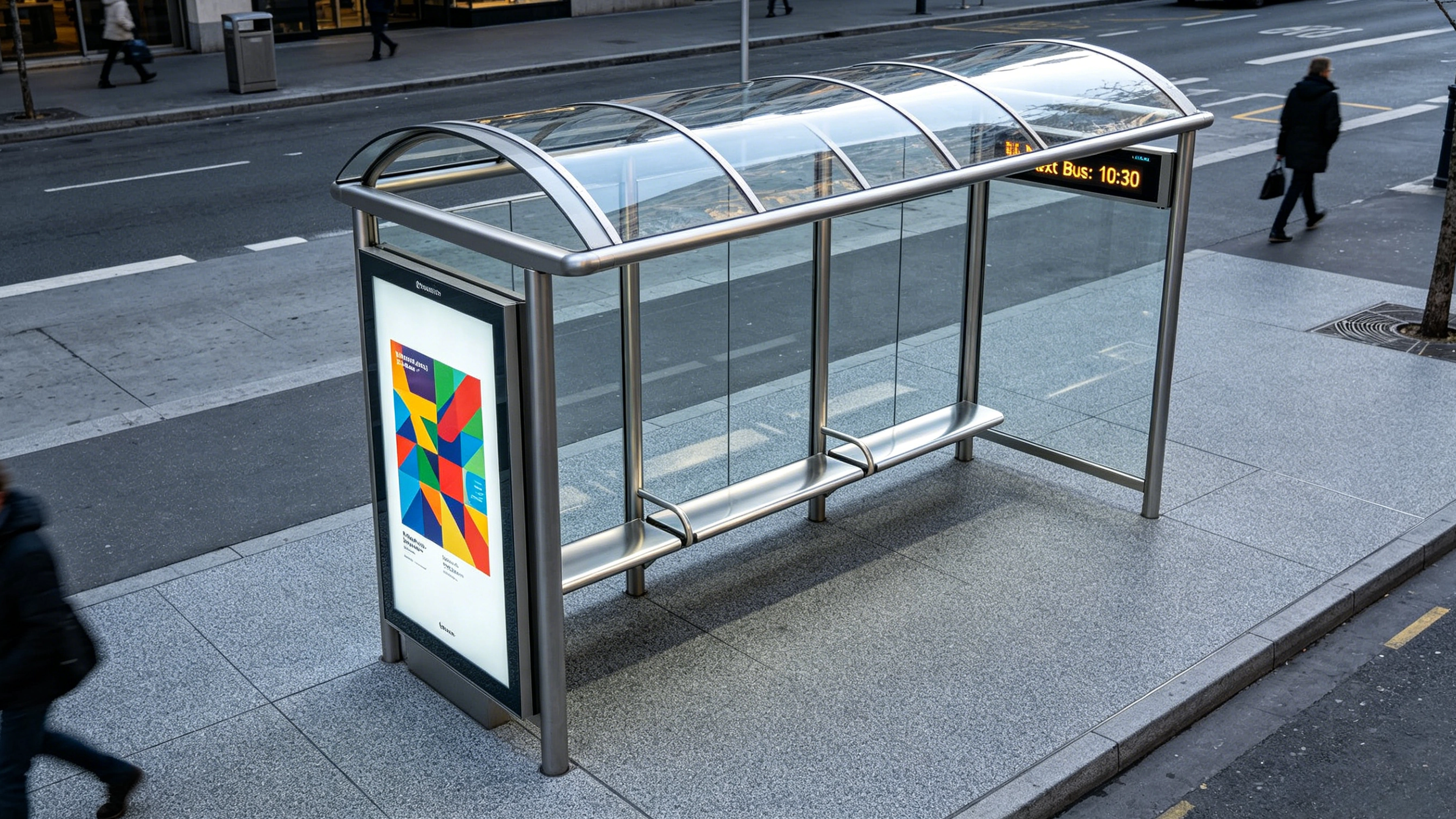
A coastal bus stop shelter is exposed to more than ordinary rain. Airborne chloride particles can settle on metal surfaces, particularly in sheltered corners, roof undersides, drainage channels, bolt connections, advertising light boxes, and areas behind panels.
When moisture is added, these deposits form an electrolyte that accelerates corrosion. A bus shelter near a promenade, harbor, ferry terminal, beach road, salt marsh, or coastal highway may face a much more aggressive environment than a shelter only a few kilometers inland.
Key coastal exposure factors include:
- Salt spray and airborne chlorides from seawater
- High relative humidity that keeps surfaces wet for longer
- Wind-driven rain that reaches joints and concealed sections
- UV exposure that can age powder coatings and sealants
- Sand abrasion that may scratch painted surfaces
- Standing water in roof gutters, base plates, and drainage channels
- Mixed-metal contact, which can create galvanic corrosion risks
The practical question is not simply, "Is stainless steel better than steel?" The better question is: Which shelter system provides the required structural safety, appearance retention, maintenance profile, and lifecycle value for this exact coastal site?
A stainless steel bus shelter is usually selected for premium coastal transport infrastructure, high-visibility city centers, waterfront districts, airports, tourist areas, and smart city projects where long-term visual quality matters.
Not all stainless steel performs equally. For a coastal bus shelter, the grade should be specified carefully rather than assuming any stainless steel will resist salt exposure.
For marine and high-chloride environments, 316L stainless steel is generally the preferred choice over 304 stainless steel. Its molybdenum content improves resistance to pitting and crevice corrosion caused by chlorides.
This matters because bus shelters contain many locations where salt deposits can remain undisturbed:
- Roof-frame overlaps
- Weld seams and heat-affected zones
- Signage supports
- Display-screen enclosures
- Stainless steel benches
- Bolted joints
- Glass-panel retaining channels
- Drainage outlets
A well-designed 316L stainless steel bus shelter can maintain a clean, modern appearance for years with routine washing and inspection. It is especially suitable where the structure is close to sea spray or where municipal maintenance teams want to reduce repainting and corrosion repair cycles.
| Performance Area | 316L Stainless Steel Bus Shelter |
|---|---|
| Salt-air resistance | Excellent when grade, finish, and fabrication are correct |
| Surface durability | High resistance to peeling, flaking, and under-film corrosion |
| Maintenance | Usually limited to periodic washing and inspections |
| Appearance | Premium architectural finish; suitable for branded urban projects |
| Long-term value | Strong lifecycle value in severe coastal zones |
| Custom fabrication | Supports laser cutting, welding, bending, integrated signage, and smart devices |
| Recyclability | Highly recyclable at end of service life |
The biggest advantage is intrinsic corrosion resistance. A stainless steel frame does not depend entirely on a surface coating to protect the base material. If minor surface scratches occur during installation or public use, the material is less likely to develop the spreading rust commonly associated with damaged painted carbon steel.
Stainless steel is not maintenance-free and not automatically corrosion-proof. Poor fabrication, rough polishing, iron contamination from tools, stagnant saltwater deposits, and unsuitable fasteners can still cause staining or localized corrosion.
A premium specification should therefore include:
1. 316L or an equivalent marine-grade alloy for exposed structural components
2. A smooth, easy-to-clean surface finish
3. Proper weld cleaning and passivation after fabrication
4. Drainage details that prevent standing water
5. Compatible stainless steel fasteners
6. Separation between dissimilar metals where necessary
7. A planned freshwater cleaning schedule
For extremely harsh sites directly exposed to surf, splash zones, or highly polluted coastal industrial areas, a higher-alloy material or duplex stainless steel may be worth evaluating for selected components. This is particularly relevant for inaccessible fixings, anchor assemblies, and locations where salt can accumulate but rain cannot wash the surface.
A steel bus shelter usually uses carbon steel as the structural frame, then relies on galvanizing, paint, powder coating, or a combination of these systems for corrosion protection. Steel offers excellent structural strength, broad design flexibility, and a lower upfront material cost than stainless steel.
For many inland, urban, and moderately coastal projects, coated steel remains a practical and widely used solution. The key is to avoid treating all "steel bus shelters" as equal.
For a coastal steel bus shelter, the recommended option is typically a duplex system:
- Hot-dip galvanized steel substrate
- Zinc-rich or suitable primer where required
- Outdoor-grade powder coating or multi-layer protective paint system
- Carefully sealed joints and edges
- Repair procedure for damaged areas after installation
Galvanizing provides sacrificial protection. The zinc layer corrodes before the underlying steel. The top coating adds a second barrier while also supporting the required city color, branding, advertising identity, and architectural style.
This combination can deliver excellent performance when coating thickness, surface preparation, pretreatment, curing, and site installation quality are controlled.
- Lower initial investment for many standard configurations
- High structural strength for large roofs, advertising panels, and wind loads
- Flexible manufacturing for custom dimensions and modular designs
- Easy integration of aluminum profiles, glass panels, polycarbonate panels, LED lighting, and digital displays
- Broad color selection for city branding
- Suitable for phased transit-network rollouts
- Repairable when localized coating damage occurs
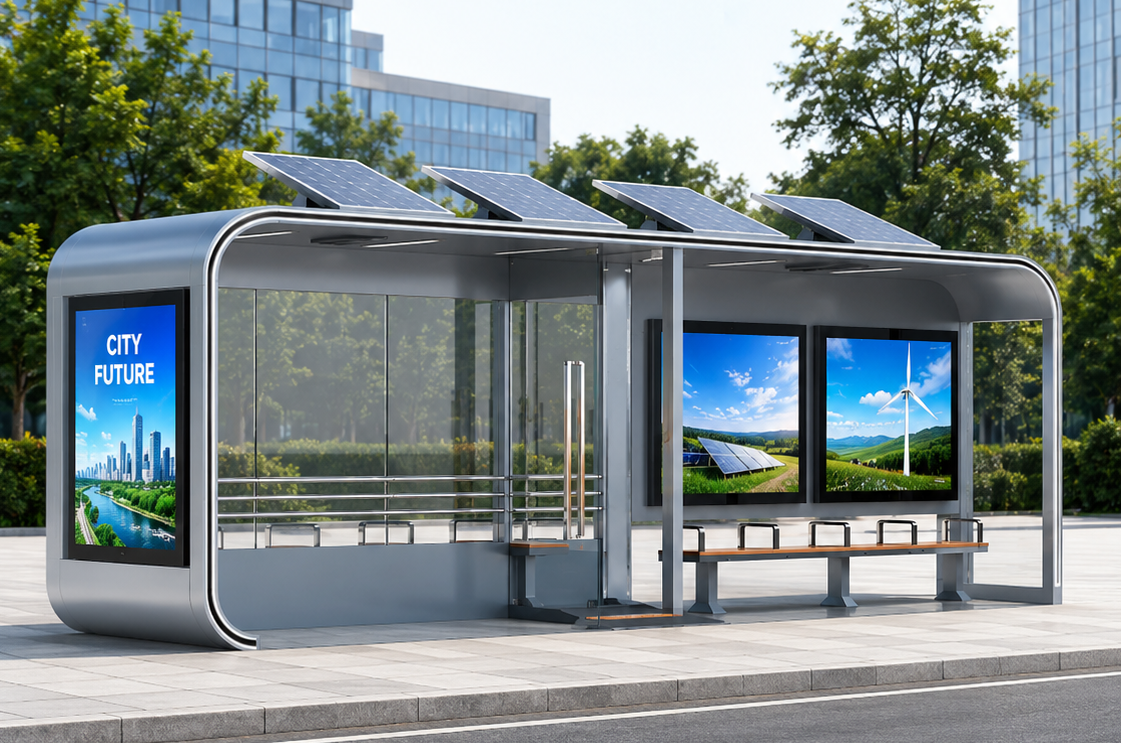
A galvanized and powder-coated steel bus shelter can be a smart choice for projects that require high visual impact but must work within a defined capital budget. It is also suitable for locations with lower salt deposition, good rainfall washing, accessible inspection conditions, and an established maintenance program.
The weakness of coated steel is that the corrosion resistance is largely dependent on coating continuity. Damage at sharp edges, drilled holes, weld areas, base plates, bolt connections, and installation scratches can become starting points for corrosion.
Once moisture reaches the underlying steel, rust can spread beneath the coating. This may lead to blistering, flaking, staining, and eventually structural repair requirements if maintenance is delayed.
For this reason, a coastal steel bus shelter should never be specified only as "powder-coated steel." The buyer should request details about galvanizing standard, coating system, dry-film thickness, salt-spray testing where applicable, corrosion category, edge treatment, drainage design, and touch-up procedure.
| Decision Factor | 316L Stainless Steel Bus Shelter | Galvanized and Coated Steel Bus Shelter |
|---|---|---|
| Initial cost | Higher | Lower to moderate |
| Coastal corrosion resistance | Excellent in most coastal atmospheres | Good to excellent with the right duplex system |
| Dependence on coating quality | Lower | High |
| Scratch tolerance | Better; no paint film required for base protection | Lower; scratches require prompt repair |
| Long-term appearance | Strong, especially with regular cleaning | Can remain attractive but may need recoating |
| Maintenance frequency | Low to moderate | Moderate, especially at joints and damaged areas |
| Color flexibility | Limited unless coated or combined with other materials | Excellent for custom city colors and graphics |
| Best project type | Waterfront, premium city, airport, tourism, severe marine exposure | Budget-led projects, moderate coastal exposure, large rollout programs |
| Smart-system integration | Excellent | Excellent |
| Lifecycle cost | Often lower over a long service period | Can be competitive if maintained properly |
A shelter installed "near the coast" can face very different conditions. A protected urban street 10 kilometers from the shore is not the same as a station on a seafront boulevard.
Before choosing materials, project teams should assess:
- Distance from the shoreline
- Direct salt-spray exposure
- Prevailing wind direction
- Local humidity and rainfall patterns
- Air pollution and industrial emissions
- Whether rain naturally washes the structure
- Availability of routine cleaning
- Required design life
- Consequences of visual deterioration or structural downtime
Areas with high salinity may fall into demanding marine corrosion categories. For these environments, material selection should be based on exposure evidence and lifecycle planning, not only purchase price.
From a manufacturing and project-delivery perspective, the following checklist helps prevent costly material mistakes.
- Specify 316L stainless steel for exposed coastal components
- Request material certificates for major structural parts
- Define brushed, satin, or polished finish requirements
- Require weld cleaning, pickling, or passivation where appropriate
- Avoid enclosed pockets that trap water and salt
- Use stainless steel fasteners with suitable corrosion resistance
- Separate stainless steel from aluminum or carbon steel where galvanic contact is possible
- Include accessible drainage and inspection points
- Use hot-dip galvanized structural steel rather than painted bare steel
- Request a defined duplex coating system
- Confirm coating thickness and curing requirements
- Round sharp edges before coating to improve coverage
- Seal or redesign water-trapping lap joints
- Protect cut edges, drilled holes, and field-welded areas
- Specify compatible fasteners and corrosion-resistant anchors
- Include a site repair kit and coating-touch-up instructions
Material selection is only one part of a durable smart bus shelter. In our experience, poorly designed details can reduce the performance of even high-quality materials.
A roof should guide water away from passenger waiting areas without creating hidden wet zones. Gutters, downpipes, roof slopes, and overflow paths must be sized for local rainfall. Drainage outlets should remain accessible for cleaning.
Fasteners are small components with large consequences. In coastal projects, ordinary bolts can stain adjacent surfaces and undermine the appearance of premium structures. Specify compatible stainless steel fasteners, washers, isolators, and concealed connection details.
Digital displays, LED route signs, CCTV cameras, USB charging modules, advertising light boxes, environmental sensors, and solar controllers require weatherproof enclosures. The enclosure design should consider heat dissipation, cable access, condensation control, corrosion resistance, and maintenance access.
Tempered glass can provide a premium look and clear passenger visibility. Polycarbonate can improve impact resistance in locations with vandalism risk. The right choice depends on safety requirements, local climate, cleaning practice, and transit operator standards.
A stainless steel bus shelter usually costs more at the procurement stage. Yet in severe coastal locations, the initial premium may be offset by reduced repainting, fewer corrosion repairs, improved appearance retention, and lower disruption to public transit operations.
A coated steel bus shelter may offer better short-term budget control, especially for a large network rollout. However, the business case should include future inspection, coating repair, labor, traffic management, replacement parts, and the potential loss of city image if rust becomes visible.
The best procurement decision comes from comparing total ownership cost, not simply comparing the factory quotation.
Choose a 316L stainless steel bus shelter when:
- The project is close to the sea, harbor, marina, or waterfront
- Salt spray or persistent chloride deposition is expected
- The city requires a premium architectural appearance
- Maintenance access is difficult or expensive
- The shelter is intended for a long service life
- The project includes high-value digital systems or advertising assets
Choose a galvanized and coated steel bus shelter when:
- The site has moderate rather than severe coastal exposure
- A strong duplex coating system is specified
- The project requires extensive custom colors or brand graphics
- Initial budget is a major decision factor
- The operator has a practical inspection and maintenance plan
- The shelter design prevents standing water and coating damage
For high-exposure coastal transit infrastructure, our recommendation is clear: use 316L stainless steel for the most exposed structural elements, critical connections, and visible premium components. A hybrid solution can also be effective, combining stainless steel in high-risk areas with galvanized and coated steel in protected structural zones.
The best bus shelter is not the one made from the most expensive material. It is the one engineered for the real conditions passengers, operators, and maintenance teams will face every day.
Ainl can support OEM and ODM bus shelter projects with customized dimensions, structural configurations, colors, advertising systems, LED displays, smart transit equipment, solar power solutions, lighting systems, and city-branding elements. Share your site conditions, drawings, local wind requirements, and target service life with our team to develop a coastal bus shelter solution that balances durability, appearance, functionality, and investment value.
304 stainless steel may be suitable for sheltered locations with low chloride exposure, but it is generally less suitable for seafront or high-salt environments. For demanding coastal installations, 316L stainless steel is usually the safer specification.
Yes. Salt, dust, pollution, and organic deposits can accumulate on any outdoor structure. Periodic freshwater washing helps maintain appearance and reduces the risk of localized corrosion, especially in sheltered areas that rain cannot naturally rinse.
Powder coating alone is usually not the preferred option for severe coastal exposure. A hot-dip galvanized steel substrate plus a suitable protective topcoat system offers much stronger protection than coating bare carbon steel.
A duplex coating system combines hot-dip galvanizing with paint or powder coating. The galvanizing protects the steel substrate, while the topcoat adds another barrier and supports the desired color and visual design.
Yes, but the connection details must be designed carefully. Direct contact between dissimilar metals in a wet, salty environment can increase galvanic corrosion risk, so isolators, compatible fasteners, drainage, and suitable coating details are important.
Both stainless steel and galvanized coated steel can support solar panels, LED lighting, route displays, CCTV, and advertising systems. For highly corrosive coastal sites, stainless steel or a carefully designed hybrid structure often provides better long-term protection for critical components and mounting points.
- [World Stainless Association — Corrosion Properties of Stainless Steel] [worldstainless]
- [Nickel Institute — Capabilities and Limitations of Architectural Metals for Corrosion Resistance] [nickelinstitute]
- [World Stainless Association — Stainless Steel and Safety] [worldstainless]
- [American Galvanizers Association — Duplex Systems for Corrosion Protection] [galvanizeit]
- [American Galvanizers Association — Hot-Dip Galvanizing in Coastal Climates] [galvanizeit]
- [AkzoNobel — ISO 12944 Corrosion Protection Overview] [international.brand.akzonobel]


