
Email: ainlbusshelter@gmail.com | WhatsApp: +86-18800607527
Views: 218 Author: Ainl Bus Shelter Publish Time: 2026-08-28 Origin: Site


Content Menu
>> 1. Ainl — Flexible Modular Shelter Partner
>> 2. YEROO Group — Advertising and Outdoor Display Integration
>> 3. HuaSheng — Custom Steel Bus Stop Structures
>> 4. ZEMSO Group — Smart Transit and Digital Signage Focus
>> 5. Jiangsu Yongjie Advertising Creative — Municipal Advertising Facility Supplier
>> 6. Jiangsu Qianli Technology — Integrated Smart Transit Systems
>> 7. Jiangsu Difeng Technology — Smart Shelter and Lightbox Supplier
>> 8. Jiangsu Chengkai Intelligent Equipment — Urban Facility Project Candidate
>> 9. Guangdong Yike Transportation Facilities Technology — Transport Facility Specialist
>> 10. Dongguan Space Electronic Science & Technology — Display-Led Shelter Projects
● Technical Requirements Buyers Should Specify
>> Structural material and corrosion protection
>> Roof, glazing, and passenger safety
>> Electrical and digital components
>> Environmental and market-access documents
>> 1. Quoted steel thickness does not match delivered steel
>> 2. "Galvanized" is used as a vague sales term
>> 3. Smart components are specified without maintenance responsibility
>> 4. Container loading is ignored until production is complete
>> 5. Foundations are treated as "local work" without interface drawings
● Buyer's Verification Checklist
>> Before requesting a quotation
>> During supplier qualification
>> Sample and pre-production process
● FAQ
>> 1. How can I verify whether a supplier's ISO certificate is still valid?
>> 2. Is CE required for a modular bus shelter?
>> 3. What is a reasonable MOQ for a custom modular bus shelter?
>> 4. How should I compare two quotations that have very different prices?
>> 5. What should be included in a third-party inspection?
China has become an important sourcing base for modular bus shelters because it combines metal fabrication, structural engineering, outdoor electronics, LED/LCD display integration, powder coating, solar systems, and export packaging within mature supply chains. Guangdong—especially Foshan, Guangzhou, Shenzhen, and Dongguan—offers strong sheet-metal and electronics integration, while Jiangsu has a concentration of large-volume smart-city and municipal-facility manufacturers.
For international buyers, the right supplier is not necessarily the one quoting the lowest unit price. A modular bus shelter is an outdoor civil-facility system: it must survive wind, rain, UV exposure, vandalism, repeated public use, shipping, installation tolerances, and—where specified—electrical safety requirements. This guide therefore focuses on suppliers that show relevant manufacturing scope, customization capability, and project-oriented product portfolios.

This list was compiled using the following procurement-focused criteria:
- Manufacturing relevance: Bus shelters, smart bus stops, outdoor advertising units, signage, steel structures, or related urban furniture must be part of the supplier's visible product scope.
- Modular engineering capability: Preference was given to suppliers able to use bolted, knock-down, or sectional designs that reduce container space and simplify on-site assembly.
- Customization depth: Evaluation included structural dimensions, roof style, color, branding, seating, lighting, advertising panels, digital displays, solar power, and local-language wayfinding.
- Production infrastructure: Strong candidates typically have in-house or controlled sheet-metal processing, welding, surface finishing, assembly, electrical integration, and quality inspection.
- Project suitability: The supplier should be capable of supporting municipal, transport, outdoor media, commercial real-estate, or smart-city procurement rather than only selling retail-style products.
- Compliance readiness: For export projects, suppliers should be able to provide material traceability and product-specific documents appropriate to the destination market. CE, RoHS, FCC, IP ratings, electrical test reports, structural calculations, and coating-test reports should be requested according to the actual project configuration—not accepted as generic marketing claims.
China's export base also provides a practical advantage for buyers managing multi-country procurement. In the first five months of 2025, China's goods exports reached USD 1.485 trillion, up 6.0% year on year, reflecting the scale of its international manufacturing and logistics ecosystem.
| Manufacturer | Established | Core focus | Suitable buyer profile | OEM/ODM scope |
|---|---|---|---|---|
| Ainl | Approx. 16 years' experience | Modular bus shelters, smart city facilities, outdoor advertising products | SMEs, contractors, distributors, municipal projects requiring flexibility | Deep structural, visual, screen, lighting and solar customization |
| YEROO Group | 2000 | Bus shelters, billboards, solar benches, digital displays | Advertising, infrastructure and branded public-space projects | Shelter structure, media panels, displays and branding |
| HuaSheng | Approx. 37 years claimed | Steel and metal bus stops, smart bus shelters | Buyers needing custom metal shelter configurations | Single/multi-bay layouts, structural customization |
| ZEMSO Group | Not independently confirmed | Smart bus shelters and urban furniture | Smart-city and digital transit projects | Digital signage and intelligent bus-stop systems |
| Jiangsu Yongjie Advertising Creative | 2015 | Smart bus shelters, advertising bins, landscape products | Municipal and advertising-facility procurement | Supported customization |
| Jiangsu Qianli Technology | 2019 | Intelligent transport equipment and solar systems | Integrated smart transit and public-facility projects | Structure, systems and installation support |
| Jiangsu Difeng Technology | 2021 | Smart bus shelters and station-sign lightboxes | Cost-sensitive smart-stop projects | Shelter and station-sign customization |
| Jiangsu Chengkai Intelligent Equipment | Not independently confirmed | Intelligent public facilities | Urban-furniture and smart-city tenders | Project-based customization |
| Guangdong Yike Transportation Facilities | 2007 | Smart bus shelters, guard booths, membrane carports | Transport and public-space contractors | Shelter, guard booth and canopy configuration |
| Dongguan Space Electronic Science & Technology | 1994 | Advertising display products and bus shelters | Digital-advertising and display-oriented projects | Advertising/display integration |
Ainl is a China-based manufacturer and solution provider with approximately 16 years of experience in bus stop shelters, smart-city public facilities, outdoor advertising products, steel structures, and prefabricated public-service solutions. Its stated production base covers more than 260 mu, with around 150,000 square meters of workshop space, supported by R&D, CNC sheet-metal processing, large-scale coating, and electrical testing capabilities.
For overseas buyers, Ainl is particularly relevant when the project requires more than an off-the-shelf shelter. The company supports customization of shelter size, structure, color, lighting, display configuration, materials, installation method, solar-power solution, and city-branding elements. Its published OEM/ODM offering also includes smart electronic bus-stop signs, LED/LCD advertising displays, prefabricated service rooms, smart benches, and planter boxes.
Core strengths
- Suitable for modular bus shelter projects requiring coordinated structural and electrical customization.
- Offers flexibility for buyers who need a customized solution but may not have the purchasing volume of a national transit authority.
- Supports city identity integration, including colors, logo applications, advertising panels, route-information areas, and modular bay extensions.
- Relevant for OEM customers seeking clear technical communication, drawing confirmation, packaging planning, and iterative product development.
- Provides a broader public-facility range, which can reduce supplier coordination when a project includes shelters, smart benches, planters, signage, or prefabricated units.
Best fit: Regional public-transport contractors, outdoor media operators, urban-furniture distributors, engineering companies, and mid-sized brands that need responsive communication and substantial OEM/ODM support rather than a fixed catalog-only model.
What to confirm before ordering
- Current production schedule and capacity allocation for the target delivery window.
- Project-specific wind-load calculation and foundation interface drawings.
- Steel grade, tube-wall thickness, aluminum profile specifications, and glass type.
- Coating system, dry-film thickness, and salt-spray test standard.
- Electrical compliance documentation for displays, lighting, charging ports, cameras, or solar equipment.
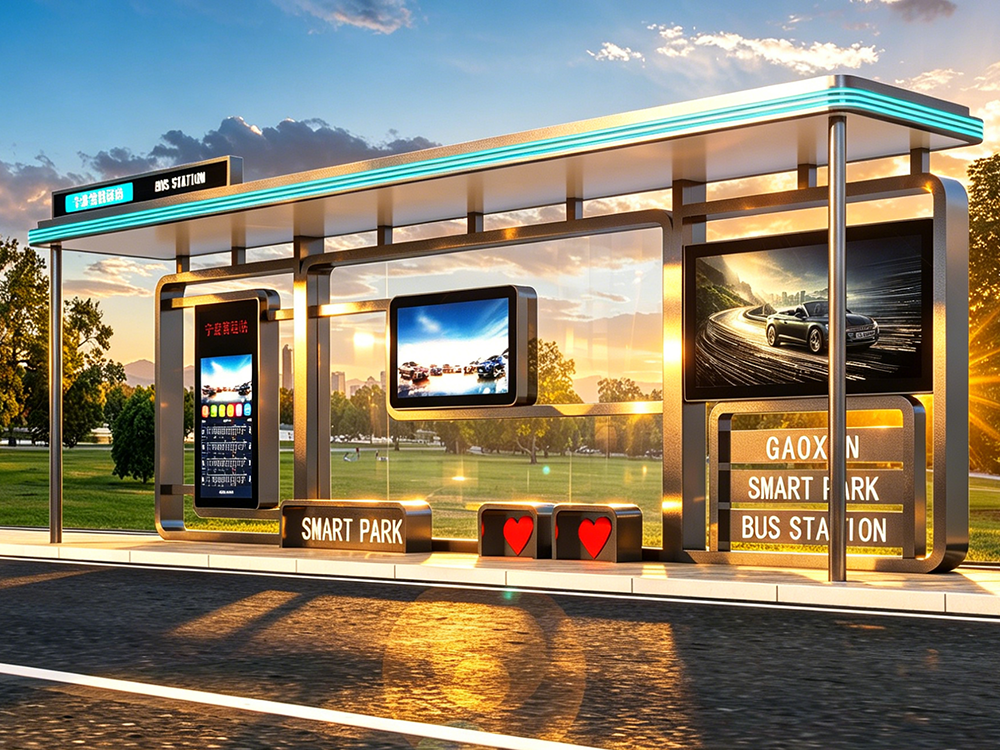
YEROO Group, established in 2000, presents itself as an OEM/ODM manufacturer of bus shelters, solar benches, billboards, and digital displays, with a factory in Foshan. Its product range makes it particularly relevant to projects combining passenger shelter with outdoor advertising, digital media, or public-information functions. The company also states that it can provide CE, FCC, RoHS, and ISO-related documentation; buyers should verify the issuing body, scope, product model, and expiration date before relying on these documents in a tender.
Core strengths
- Long-standing product focus in outdoor advertising and public-space installations.
- Suitable for advertising-financed shelters with static or digital media panels.
- Offers engineering drawing support before production.
- Strong fit for customers sourcing shelters together with billboards, LED displays, or solar benches.
Best fit: Outdoor advertising companies, media concessionaires, distributors, and contractors requiring integrated shelter-plus-display packages.
HuaSheng positions itself as a Guangzhou-based manufacturer of custom metal and steel bus stops, including single-bay, multi-bay, and smart bus shelters. It states 37 years of experience in the field. Its offering is relevant for projects in which the shelter's primary requirement is a durable steel structure adapted to route footprint, local design standards, passenger capacity, and weather conditions.
Core strengths
- Broad custom-metal and steel-structure positioning.
- Single-bay and multi-bay configurations can suit phased network deployment.
- Relevant for projects where the buyer needs a clear structural package before adding electronics.
Best fit: Municipal contractors, transport agencies, real-estate developers, and procurement teams that prioritize traditional metal shelter construction with optional smart upgrades.
ZEMSO focuses on intelligent bus shelters and urban furniture, emphasizing digital information display integration for public spaces. It is relevant for buyers pursuing real-time passenger information, digital wayfinding, media display, and smart-city interfaces rather than conventional shelter-only procurement.
Core strengths
- Product positioning around intelligent bus stops and digital public-space information.
- Suitable for city projects with passenger-information-display requirements.
- May be a fit where hardware must connect with transport or urban-management systems.
Best fit: Smart-city integrators, transport technology contractors, and buyers who already have a software platform or need a hardware partner for digital bus-stop deployment.
Jiangsu Yongjie Advertising Creative was established in 2015 and lists smart bus shelters, advertising trash cans, and landscape sculptures among its core products. Its registered business scope includes bus shelters, signage, advertising equipment, and related public-facility products.
Core strengths
- Relevant portfolio for municipal street-furniture packages.
- Suitable where bus shelters are procured with advertising bins, signs, or landscape elements.
- Supports customization according to available industry directory information.
Best fit: Local-government projects, urban-renewal contractors, and buyers sourcing several categories of standardized street furniture.
Jiangsu Qianli Technology, established in 2019, has a stated business scope covering rapid-transit equipment, intelligent bus systems, digital rolling systems, solar-energy systems, and intelligent control integration. The company also lists bus shelters, smart bus shelters, electronic station signs, public-bike shelters, and related urban facilities.
Core strengths
- Stronger relevance for buyers needing systems integration beyond shelter fabrication.
- Offers a product scope connected to transit equipment, solar energy, and public-facility systems.
- Suitable for projects with intelligent station signs and networked components.
Best fit: Smart-transport contractors and public-sector projects that combine passenger shelters, solar systems, real-time display equipment, and installation services.
Jiangsu Difeng Technology was established in 2021 and lists smart bus shelters, station-sign lightboxes, and garbage-recycling products. It is a relatively newer supplier compared with legacy metal-fabrication companies, so buyers should place extra emphasis on reference projects, production records, and quality-system verification.
Core strengths
- Relevant for smart shelter and station-lightbox procurement.
- Can be considered for buyers seeking an emerging supplier with a focused product portfolio.
- May fit standardized projects with defined station-sign and advertising-lightbox requirements.
Best fit: Buyers willing to conduct strong factory due diligence and seeking a smart-shelter supplier for clearly defined configurations.
Jiangsu Chengkai Intelligent Equipment appears in industry supplier rankings for smart bus shelter-related products and is associated with Suqian's public-facility manufacturing cluster.
Core strengths
- Relevant to buyers exploring Jiangsu-based smart urban-facility supply.
- Potential fit for projects requiring a mix of transit shelters, signage, and other municipal equipment.
Best fit: Tender-based projects where the buyer can conduct a factory audit and evaluate confirmed engineering records before supplier nomination.
Guangdong Yike Transportation Facilities Technology was established in 2007 and lists smart bus shelters, guard booths, and membrane-structure carports as core products. This broader transportation-facility focus can be useful where a project includes both passenger shelters and ancillary site infrastructure.
Core strengths
- Relevant for multi-product transport-facility procurement.
- Offers a longer operating history than many newer smart-shelter entrants.
- May suit projects involving bus shelters, security booths, and covered waiting or parking facilities.
Best fit: EPC contractors, campus developments, logistics parks, and municipal contractors requiring several types of covered infrastructure.
Dongguan Space Electronic Science & Technology was established in 1994 and is associated with advertising display products and bus shelters. Its profile suggests a stronger relevance for projects where advertising displays, electronic information systems, or commercial media functions are central to the shelter design.
Core strengths
- Longer operating history in advertising-display-related products.
- Suitable for projects with a significant digital or commercial-display component.
- Based in Dongguan, within a mature electronics and manufacturing ecosystem.
Best fit: Media operators, digital-signage integrators, and buyers seeking a shelter supplier with display-product experience.
The following table is designed as a buyer's working comparison. "Indicative MOQ" is not a confirmed commercial quotation; modular shelter orders are normally priced by project, configuration, and container-loading plan rather than a universal item MOQ.
| Manufacturer | Manufacturing emphasis | Indicative MOQ approach | Certification/document focus to request | Customization depth |
|---|---|---|---|---|
| Ainl | Steel structures, CNC sheet metal, coating, electrical integration | Project-based; suitable for customized small-to-mid-volume orders | ISO systems, material records, coating reports, electrical reports where applicable | High |
| YEROO | Shelter, advertising, digital display, solar products | Project-based; confirm by shelter type and display configuration | CE/FCC/RoHS scope, ISO certificate, IP test reports | High |
| HuaSheng | Metal and steel shelter structures | Project-based; bay quantity and structural design drive MOQ | Steel specification, welding records, coating tests, structural calculations | High |
| ZEMSO | Intelligent bus stops and digital signage | Usually project-based | Display safety, IP rating, software/interface documentation | High |
| Jiangsu Yongjie | Smart shelters and municipal advertising facilities | Confirm by standardized model | Product drawings, materials, installation references | Medium to high |
| Jiangsu Qianli | Smart transit, solar, digital systems | Project-based | Solar/electrical records, systems-integration documents | High |
| Jiangsu Difeng | Smart shelters and lightboxes | Confirm by configuration | Lightbox/display compliance documents | Medium |
| Jiangsu Chengkai | Intelligent public facilities | Confirm after technical brief | Factory audit, project references, QC procedure | Medium |
| Guangdong Yike | Transport facilities and canopies | Project-based | Structural and material documentation | Medium to high |
| Dongguan Space | Advertising display and shelter products | Configuration-dependent | Electronic safety and display-component documentation | Medium to high |
A modular bus shelter RFQ should never state only "steel bus shelter" or "smart bus stop." That creates room for suppliers to quote incomparable structures and materials.
For the load-bearing frame, specify the steel grade, tube dimensions, wall thickness, welding standard, and design wind load. Do not accept a quotation that lists only "galvanized steel" without identifying whether the material is pre-galvanized sheet, hot-dip-galvanized fabricated steel, or carbon steel with zinc-rich primer and powder coating.
For coastal, tropical, high-humidity, or de-icing-salt environments, request:
- Steel grade and thickness for every structural member.
- Galvanizing method and zinc-coating weight where relevant.
- Pretreatment process before powder coating.
- Powder brand, color code, target dry-film thickness, and salt-spray test standard.
- Corrosion warranty terms that clearly exclude or include coastal installation conditions.
The shelter roof must be assessed as a system, not merely as an aesthetic panel. Buyers should define snow load, rainfall intensity, drainage direction, roof overhang, UV exposure, and maintenance access.
For glazing, specify whether you require:
- Tempered safety glass.
- Laminated tempered glass.
- Polycarbonate panels.
- Perforated metal or mesh side screens.
For public transit sites, laminated tempered glass can reduce the risk of falling fragments after breakage. However, it adds weight and freight cost. Polycarbonate may be preferable in high-vandalism locations, but it can scratch or discolor over time if the grade and UV coating are inadequate.
For a smart modular bus shelter, separate the structure package from the electrical package in the quotation. The latter may include LED lighting, LCD/LED displays, e-paper screens, CCTV, emergency buttons, Wi-Fi, USB charging, environmental sensors, route information, solar panels, batteries, controllers, and remote-monitoring hardware.
Request the following for each electrical component:
- Input voltage and power consumption.
- IP rating and operating-temperature range.
- Surge protection and grounding arrangement.
- Screen brightness, resolution, viewing angle, and thermal management method.
- Remote management platform compatibility.
- Component brand, country of origin, warranty, and replacement policy.
- Spare-parts list for five years of maintenance planning.
CE and RoHS are not blanket certificates for an entire bus shelter. Their relevance depends on whether the supplied product includes electrical or electronic equipment and whether it is placed on the relevant market. A steel shelter frame itself may require different evidence than an LED display, charging station, or solar controller.
Buyers should ask the supplier to identify:
1. The exact product model covered by each document.
2. The issuing laboratory or notified body, where applicable.
3. The certificate number and validity period.
4. The applicable directive, standard, and test report.
5. Whether the delivered bill of materials matches the tested configuration.
A supplier may quote "2.0 mm steel" but use 1.5 mm material in secondary members, brackets, sign supports, or roof purlins. The shelter may look acceptable at factory inspection but deform over time under wind loads.
How to avoid it: Include a member schedule in the purchase order. Require a cut list showing section size, nominal thickness, material grade, and quantity. Measure randomly selected parts with calibrated tools before coating and again during pre-shipment inspection.
Pre-galvanized sheet, electro-galvanized parts, hot-dip galvanized fabricated frames, and painted carbon steel have significantly different corrosion performance. A low price may reflect a cheaper surface-treatment route rather than a more efficient factory.
How to avoid it: Define the treatment sequence in writing. For example: "fabricated carbon-steel frame, hot-dip galvanized after welding, followed by compatible powder coating," if that is what your environment requires.
A display may work during factory testing but fail in high heat, humidity, dust, voltage fluctuation, or poor network conditions. Buyers sometimes purchase an "intelligent" shelter without agreeing who supplies replacement screens, controllers, sensors, SIM cards, content-management software, or remote support.
How to avoid it: Require a system architecture diagram, component brand list, warranty matrix, spare-parts pricing, remote-support terms, and a failure-response process before issuing the purchase order.
A shelter can be modular on paper but still ship inefficiently if roof panels, glass, benches, advertising frames, and screens are not designed around container dimensions. This can materially increase freight cost and breakage risk.
How to avoid it: Ask for a packing plan before production begins, including package dimensions, weight per crate, total cubic meters, 20GP/40GP/40HQ loading estimate, glass protection method, and on-site unloading requirements.
The shelter may arrive with anchor plates or bolt patterns that do not match the civil contractor's foundation layout. Correcting concrete foundations after delivery can delay the project far more than shelter fabrication itself.
How to avoid it: Freeze foundation drawings, anchor bolt specifications, embedded-plate details, drainage paths, cable conduits, and tolerances before mass production.
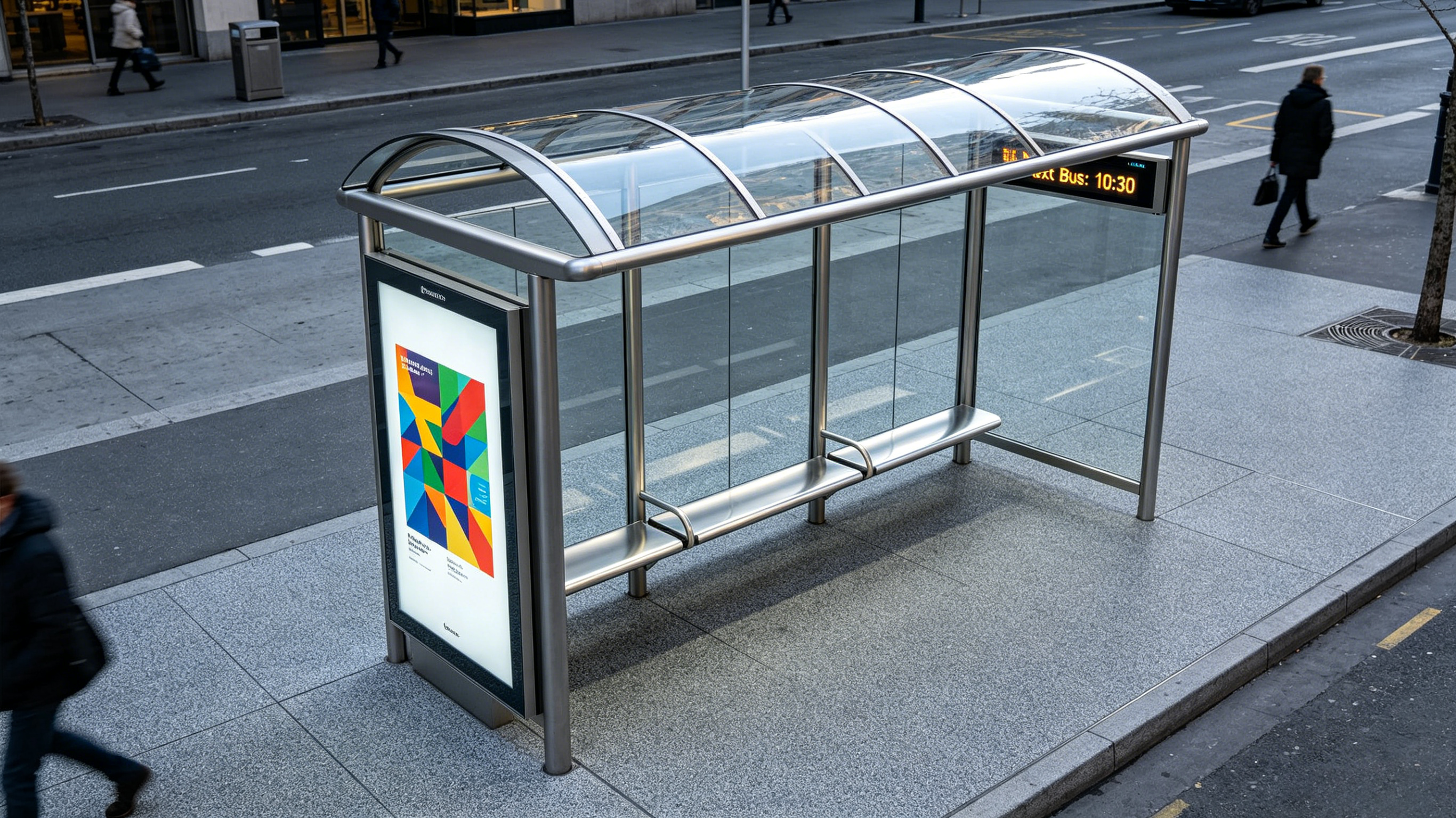
A frequently overlooked issue is the difference between factory assembly and field assembly.
A shelter can appear perfect when it is fully assembled on a flat factory floor, yet become difficult to install on site because the design lacks adjustment slots, leveling details, segmented cable connectors, clear part labels, or tolerance allowance for slightly uneven foundations.
Before signing off on a modular bus shelter design, ask the supplier to provide:
- An exploded assembly drawing.
- A bill of materials with part numbers.
- A step-by-step installation manual.
- A list of tools and lifting equipment required.
- Adjustable base or slotted-hole details.
- Site photos or videos of a comparable shelter being assembled outside the factory.
This check is especially valuable for export projects where the installer may not speak Chinese, may not have the same tools as the factory, and may only have one opportunity to complete installation during a scheduled road closure.
- Provide site dimensions, passenger capacity, climate, wind zone, snow load, local electrical supply, and required certifications.
- Clarify whether the shelter is advertising-supported, transit-authority-owned, or privately operated.
- State whether the project needs modular flat-pack shipment, fully assembled sections, or local fabrication support.
- Identify required accessories: seating, route map, timetable case, advertising panel, LED lighting, solar power, CCTV, display screen, emergency call button, USB charging, or tactile accessibility features.
- Request the business license, factory address, organization chart, and production-process overview.
- Conduct a video audit or third-party audit of raw-material storage, welding, coating, assembly, and final inspection areas.
- Ask for three comparable project references with photos, shelter quantity, destination climate, and delivery year.
- Verify every ISO certificate through the issuing certification body rather than relying on a scanned PDF.
- Review current export packaging photographs, not only product photographs.
- Confirm who owns design files, tooling, molds, software accounts, and city-branding artwork.
1. Approve technical drawings and a material schedule.
2. Confirm a physical finish sample for powder color, texture, glass, signage, and lighting.
3. Produce a first article or representative modular bay.
4. Inspect weld quality, dimensional tolerance, door access, drainage, fasteners, lighting, and display integration.
5. Conduct a packing trial when glass, screens, or long roof panels are involved.
6. Issue written approval before mass production.
- Use wooden crates or steel frames suited to the destination's import and fumigation requirements.
- Separate fragile glazing and electronic equipment from heavy structural components.
- Mark each package with project code, shelter model, bay number, and installation sequence.
- Include spare fasteners, touch-up paint, sealing materials, wiring diagrams, and replacement electrical components.
- Plan import duties, destination-port handling, inland transport limits, crane access, and local installation insurance early.
The strongest modular bus shelter supplier is the one that can translate your local requirements into a documented, manufacturable, transport-efficient, and maintainable solution. Start by comparing suppliers on engineering transparency—not just unit price—and insist on clear material schedules, sample approval, testing evidence, packing plans, and installation documents.
For buyers seeking a flexible Chinese partner for modular bus shelters, outdoor advertising units, smart bus-stop systems, and related public facilities, Ainl is worth including in the first-round supplier shortlist. Its broad manufacturing base, project-oriented customization, and support for structural, visual, digital, lighting, and solar options make it particularly suitable for customized OEM/ODM programs and mid-sized infrastructure projects.
Ask for the full certificate, including certificate number, issuing certification body, issue date, expiry date, scope, and factory address. Then search the certification body's official public database or contact the issuer directly. Ensure the scope covers relevant manufacturing activities; an ISO 9001 certificate for unrelated trading activity is not equivalent to quality-system coverage for steel fabrication and electrical assembly.
Not necessarily for a passive steel structure alone. However, CE-related obligations may apply to electrical and electronic components such as LED lighting, displays, power supplies, charging modules, solar controllers, and communication equipment when they are placed on the relevant market. Ask for compliance documentation by component and product model, not a single generic certificate for the entire shelter.
There is no universal MOQ. It depends on whether the project uses an existing modular platform or needs new tooling, custom extrusion, non-standard roof panels, special glass, electronics, and unique packaging. Many factories evaluate custom shelters as a project order. Buyers should ask for pricing at several volume bands—for example, 1 sample unit, 10 units, 30 units, and 100 units—to understand the cost curve.
Normalize them into the same bill of materials. Compare structural steel weight, material grade, wall thickness, corrosion treatment, glass type, roof material, seating, fasteners, lighting, display brand, electrical rating, packaging, freight term, installation tools, spare parts, warranty, and testing scope. A low quotation often omits items that later become variations.
At minimum, inspect dimensions, steel thickness, welding appearance, coating thickness, glass marking and packaging, fastener grade, lighting operation, screen function, grounding, door locks, drainage holes, part labels, packing-list accuracy, and container loading. For large public projects, consider witness testing of a first article and verification of material certificates before painting or final assembly.
- [General Administration of Customs of the People's Republic of China — Trade Statistics] [english.customs.gov]
- [General Administration of Customs of the People's Republic of China — 2025 Export and Import Data] [english.customs.gov]
- [Ainl — Custom OEM/ODM Smart Bus Shelter Solutions] [ainlgroup]
- [YEROO Group — Bus Shelter and Outdoor Display Manufacturing] [yeroo]


