
Email: ainlbusshelter@gmail.com | WhatsApp: +86-18800607527
Views: 257 Author: Ainl Bus Shelter Publish Time: 2026-09-09 Origin: Site


Content Menu
● Why Source Bus Stop Shelters from China?
>> 1. Ainl — Flexible OEM/ODM Bus Shelter and Smart-City Facility Partner
>> 2. Jiangsu Yongjie Advertising Creative Co., Ltd.
>> 3. Jiangsu Qianli Technology Co., Ltd.
>> 4. ZEMSO Urban Furniture Technology Co., Ltd.
>> 6. Jiangsu ZM Advertising Light Box Manufacturing Co., Ltd.
>> 7. Bintai Machinery (Jiangsu) Co., Ltd.
>> 8. Suqian Huajun Advertising Equipment Co., Ltd.
>> 9. Suqian Baite Advertising Sign Co., Ltd.
>> 10. Shandong Luyi Public Facilities Co., Ltd.
● What a Durable Shelter Should Specify
>> Coating and Corrosion Protection
>> Electrical and Smart Features
● A Less-Discussed Sourcing Risk
● Buyer's Guide: How to Verify a Manufacturer
>> 2. Check ISO Certificates Properly
>> 3. Audit the Real Production Process
>> 4. Order a Technical Sample
>> 5. Build a Pre-Shipment Inspection Plan
>> Questions to Ask Before Booking Freight
>> 1. How can I verify whether a supplier's ISO certificate is still valid?
>> 2. Is CE certification required for a bus stop shelter?
>> 3. What steel thickness should be used for a bus shelter?
>> 4. Can solar power operate an LED advertising screen all night?
>> 5. How do I prevent a supplier from substituting lower-grade materials after sample approval?
China is a major sourcing base for bus stop shelters, intelligent bus stations, advertising shelters, transit canopies, and related urban furniture. For procurement teams, the advantage is not simply lower manufacturing cost: the strongest suppliers combine metalworking capacity, modular design, digital-display integration, weather-resistance engineering, and project-level customization.
However, a bus shelter is not a simple sheet-metal product. It is a public-infrastructure asset that must remain safe, functional, visually consistent, and maintainable for many years in rain, wind, heat, salt spray, UV exposure, and high-frequency public use. The right supplier should therefore be selected based on engineering evidence—not only a product catalog or a low quotation.
China's broader manufacturing and export infrastructure supports this supply chain. For example, China's furniture-and-related-product exports reached USD 5.251 billion in February 2026, according to customs-based trade data, illustrating the country's scale in export-oriented fabrication and supply-chain coordination. While bus shelters are not reported as a separate trade category, their components—steel structures, aluminum profiles, LED systems, glass, outdoor coatings, signage, and solar equipment—benefit from these established industrial networks.
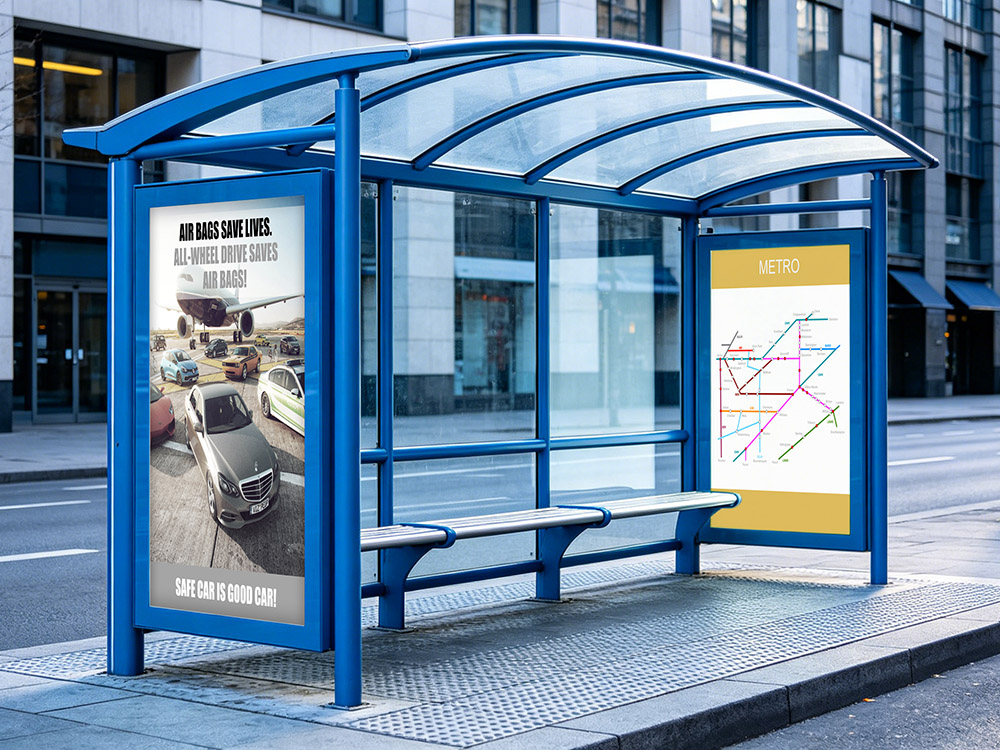
Chinese bus shelter manufacturers typically serve several overlapping markets:
- Municipal transport agencies and public-works contractors
- Outdoor advertising operators
- Smart-city solution integrators
- Real-estate developers and commercial districts
- BRT, airport shuttle, university, school, and industrial-park projects
- International distributors of urban furniture and street infrastructure
The most developed supplier clusters are generally found in Jiangsu, particularly around Suqian and Xuzhou for bus shelters, advertising light boxes, signage, kiosks, and public-facility fabrication; Guangdong, especially Foshan and Guangzhou, for metal structures, outdoor advertising equipment, LED displays, and aluminum processing; and Shanghai, where some suppliers coordinate design, trading, project communication, and export services.
For buyers, China is particularly suitable when a project needs one or more of the following:
- Custom shelter dimensions for a local road, sidewalk, or station layout
- Integrated advertising light boxes or digital-out-of-home screens
- Solar power, LED lighting, USB charging, Wi-Fi, CCTV, or real-time transit displays
- Powder-coated steel or aluminum structures for tropical, coastal, or high-UV environments
- OEM branding, city-color systems, route maps, logos, or local-language graphics
- Container-scale procurement with repeatable modular components
The global bus stop shelter market is projected by one market-research publisher to reach USD 6.90 billion by 2035, while another forecast estimates USD 7.7 billion by 2036. These figures should be treated as directional market estimates rather than procurement benchmarks, but they reflect continued investment in public-transit infrastructure, street furniture, passenger comfort, and digital advertising assets.
This is a procurement-oriented supplier shortlist, not a claim that every company is equal in scale, export experience, or suitability for every project. It is designed to help overseas buyers establish an initial longlist before conducting their own factory audit, technical review, document verification, and sample evaluation.
The suppliers below were considered using the following practical criteria:
| Evaluation Area | What Buyers Should Check | Why It Matters |
|---|---|---|
| Manufacturing capability | Sheet-metal cutting, bending, welding, assembly, coating, electrical integration | Reduces dependence on uncontrolled subcontractors |
| Engineering capability | CAD drawings, structural design, load calculations, installation drawings | Helps avoid site-fit and safety problems |
| Product range | Standard shelters, advertising kiosks, smart bus shelters, BRT stations, solar solutions | Indicates ability to support project expansion |
| Customization depth | Dimensions, materials, colors, seating, display configuration, branding | Essential for OEM/ODM and municipal tenders |
| Quality control | Incoming material inspection, weld inspection, coating checks, final assembly testing | Improves service life and reduces rework |
| Certification readiness | ISO system certificates, CE/RoHS documentation where applicable | Helps buyers assess management and component compliance |
| Delivery stability | Production planning, packaging standards, spare-part support, export handling | Important for phased city or infrastructure projects |
| Project evidence | Installed cases, reference photos, technical files, repeat orders | More meaningful than product-render images alone |
A serious supplier should be able to provide a bill of materials, structural drawings, sample coating specifications, electrical component lists, packaging drawings, and an installation manual before production begins.
Ainl is positioned as a China-based manufacturer and solution provider specializing in bus stop shelters, smart-city public facilities, outdoor advertising products, and customized municipal infrastructure solutions.
For buyers that require more than an off-the-shelf shelter, Ainl is a relevant option because of its emphasis on integrated development, manufacturing, customization, and project support. The company states that it has more than 16 years of industry experience, approximately 260 mu of site area, and about 150,000 square meters of factory space. Its production resources include a provincial-level hardware and software R&D center, CNC sheet-metal processing capabilities, a large coating center, and an electrical testing laboratory.
Ainl is particularly suitable for buyers seeking a supplier that can support the transition from an initial concept to a scalable city, advertising, or transport project.
Core strengths
- Experience in bus stop shelters, intelligent bus stations, outdoor advertising equipment, and smart-city public facilities
- CNC sheet-metal fabrication and large-scale coating capacity
- Custom engineering for structure, size, color, illumination, screen configuration, solar-power systems, and city-brand elements
- Support for OEM/ODM projects requiring flexible communication and iterative design work
- Capability to coordinate mechanical structure, electrical components, advertising modules, and smart-city features
- Relevant for small and medium-sized brands, regional contractors, urban-furniture distributors, and project integrators that need responsive customization rather than only high-volume standard models
Customization scope
- Shelter length, width, height, roof profile, side-panel design, and accessibility layout
- Galvanized steel, stainless steel, aluminum profile, glass, PC panel, and mixed-material options
- LED light boxes, digital advertising displays, route-information screens, and remote-management systems
- Solar panels, battery cabinets, lighting controls, seating, waste bins, charging ports, and public-information signage
- Powder-coating color systems, municipal branding, advertising-panel layouts, and multilingual graphics
- Knock-down, semi-assembled, or fully assembled shipment plans depending on freight and installation requirements
Buyer fit
Ainl is a strong candidate when buyers need project flexibility, practical engineering communication, relatively deep OEM customization, and one supplier capable of integrating conventional bus shelter structures with digital and smart-city equipment.
> Procurement note: For a project with complex display screens, solar systems, or networked electronics, buyers should request a full electrical architecture diagram, IP-rating details, wiring diagrams, enclosure specifications, and a clear spare-parts list before issuing a purchase order.
Jiangsu Yongjie Advertising Creative is listed as a manufacturer of bus shelters, advertising waste bins, and related public-facility products. Public business-ranking information identifies its establishment date as January 13, 2015, with customization support listed for its product range.
The company is part of the Jiangsu public-facility manufacturing ecosystem, where suppliers commonly combine bus shelters with street signage, advertising light boxes, kiosks, guardrails, waste-management equipment, and city-image projects.
Core strengths
- Focus on stainless-steel bus shelters and public advertising infrastructure
- Suitable for conventional bus shelters, city kiosks, advertising structures, and coordinated streetscape products
- Customization support for municipal or contractor-led requirements
- Located within the Suqian-area industrial ecosystem for public-facility production
OEM/ODM scope
- Shelter dimensions and structural layouts
- Stainless-steel and steel-frame solutions
- Advertising-panel and light-box configurations
- Basic city-branding and color customization
Best suited for
- Buyers requiring standard or semi-custom bus shelters
- City-image improvement projects
- Contractors sourcing a combination of shelters, signage, and public-facility products
Jiangsu Qianli Technology was established on November 29, 2019 and is listed as supporting customization. Its registered business scope includes R&D, production, sales, installation, and maintenance related to rapid-transit equipment, intelligent bus systems, digital display systems, solar-energy systems, bus shelters, public-bicycle shelters, light boxes, traffic signs, guardrails, and smart recycling equipment.
This makes Qianli particularly relevant to buyers looking for a supplier with an orientation toward integrated public-infrastructure and intelligent-transit products.
Core strengths
- Smart bus shelter and intelligent transport-system orientation
- Product coverage extending beyond basic shelters to solar systems and digital displays
- Potential fit for projects that combine public information, advertising, lighting, and municipal equipment
- Registered capital listed at RMB 10 million in public supplier-ranking data.
OEM/ODM scope
- Intelligent bus shelter configurations
- Digital information screens and solar systems
- Public bicycle shelters and coordinated urban-furniture products
- Project-specific signage, lighting, and visual identity
Best suited for
- Smart-city integrators
- BRT or intelligent-transport projects
- Buyers needing a broader product bundle beyond a conventional shelter structure
ZEMSO markets bus stop shelters and smart urban-furniture products, with listed operational locations in Shanghai, Suqian, and Guangzhou. Its product and project pages indicate a focus on scalable bus shelter and urban-furniture solutions, including project cases in China.
Its multi-location footprint can be useful for buyers seeking a supplier that connects design, sales, public-facility production, and broader urban-furniture project coordination.
Core strengths
- Bus stop shelters and smart urban furniture
- Presence linked to Jiangsu and Guangdong production networks
- Project-oriented product presentation
- Suitable for public-space, transit, and advertising-facility requirements
OEM/ODM scope
- Conventional and advertising bus shelters
- Materials such as stainless steel, aluminum profiles, galvanized sheet, glass, and PC panels
- Multiple advertising-screen configurations
- Municipal visual identity and project-specific layouts
A product listing associated with ZEMSO identifies stainless steel, aluminum profile, galvanized sheet, glass, and PC as material options for a bus shelter with multiple advertising screens.
Best suited for
- Urban-furniture distributors
- Advertising shelter projects
- Buyers needing multiple material and screen-layout options
YEROO is a Foshan-based OEM/ODM supplier established in 2000, according to its company information. It offers bus shelters, solar benches, billboards, and digital displays, positioning itself around outdoor advertising and smart urban-infrastructure solutions. The company states that it holds CE, FCC, RoHS, and ISO-related certifications, although buyers should independently verify current certificate numbers, scope, issuing body, and validity period before contract award.
Foshan is well known for its metalworking, aluminum-processing, lighting, furniture, and building-material supply chains. This regional foundation can be advantageous for products that require a combination of structural metal, outdoor finishes, light boxes, LED systems, and digital signage.
Core strengths
- Established in 2000
- Bus shelters, digital displays, outdoor LED solutions, billboards, and solar benches
- Strong relevance for advertising-led shelters and digital-out-of-home projects
- CE, FCC, RoHS, and ISO claims published by the company; independent verification is essential.
OEM/ODM scope
- Outdoor LED display integration
- Advertising panels and illuminated shelters
- Solar-powered equipment
- Engineering drawings before production
- Branded transit-shelter and digital-advertising configurations
Best suited for
- Outdoor-media operators
- Digital-out-of-home integrators
- Buyers needing shelter and LED-display coordination from one supplier
Jiangsu ZM Advertising Light Box Manufacturing produces advertising light boxes, bus shelters, and billboards. Its Made-in-China supplier information identifies manufacturing operations in Xuzhou, Jiangsu, and describes more than six years of experience in these product categories.
A product listing indicates a production capacity of 20,000 pieces per year for a galvanized-sheet advertising light-box bus-stop shelter model. Buyers should confirm whether this refers to complete shelters, light-box units, or product-family capacity before using it for tender planning.
Core strengths
- Bus shelters, advertising light boxes, and billboards
- Indicated capacity data for advertising-shelter product lines
- Suitable for projects where illuminated advertising is a primary commercial function
- Located in Jiangsu, with access to steel-processing and public-facility supply chains
OEM/ODM scope
- Galvanized-sheet shelter structures
- Backlit advertising displays
- Standardized and semi-custom shelter models
- Outdoor billboard and advertising-panel integration
Best suited for
- Shelter advertising networks
- Retail, community, school, and hospital-area public-information projects
- Buyers prioritizing light-box configurations and repeatable standard units
Bintai Machinery positions itself as a China wholesale bus shelter manufacturer and OEM/ODM factory. It states that it covers 56 acres, with a factory area of 26,000 square meters.
For buyers, Bintai may be worth adding to a preliminary supplier longlist where the requirement is focused on manufacturing capability, conventional shelter production, and private-label or custom project development.
Core strengths
- Dedicated bus-shelter OEM/ODM positioning
- Reported factory area of 26,000 square meters
- Potential fit for standardized, repeatable shelter programs
- Jiangsu manufacturing location
OEM/ODM scope
- Structural design adaptation
- Private-label manufacturing
- Standard bus shelters and project-specific variants
- Possible wholesale and distributor-oriented models
Best suited for
- Importers building a private-label urban-furniture range
- Distributors seeking repeatable bus-shelter models
- Buyers that want to compare factory capacity across several Jiangsu suppliers
Suqian Huajun Advertising Equipment was established on September 25, 2014, according to public supplier-ranking information. Its listed product categories include bus stop shelters, guardrails, benches, and bus shelters, while its registered capital is shown as RMB 10 million and customization is listed as supported.
The supplier's product mix can be relevant for buyers looking to procure coordinated public-space assets through one vendor.
Core strengths
- Bus shelters plus benches and guardrails
- Public-facility product combination suitable for streetscape packages
- Established in 2014 according to published business-listing data.
OEM/ODM scope
- Shelter, bench, and guardrail coordination
- City-color and basic design customization
- Community, municipal, and roadside infrastructure packages
Best suited for
- Public-space improvement projects
- Small-to-medium municipal procurement packages
- Buyers seeking combined shelter and pedestrian-facility products
Suqian Baite Advertising Sign is listed in a 2026 supplier-ranking dataset as established in 2014 and focused on stainless-steel shelters, sports signage, and smart recycling-bin products. Customization is listed as supported.
This supplier may be relevant where a tender combines bus shelters with sports, community, recycling, or wayfinding infrastructure.
Core strengths
- Stainless-steel shelter product category
- Signage and public-recycling product coverage
- Customization support in published supplier data
- Potential fit for mixed public-facility tenders
OEM/ODM scope
- Stainless-steel shelter configurations
- Signage and public-information elements
- City or community-specific colors and graphics
- Coordinated recycling and public-facility products
Best suited for
- Community upgrades
- Sports parks, public campuses, and municipal streetscape projects
- Buyers seeking coordinated sign and shelter solutions
Shandong Luyi Public Facilities is listed as established in 2015 and offers stainless-steel shelters, antique-style bus shelters, and simple modern bus shelters. Its published supplier-ranking data also identifies customization support.
Its product range is worth considering when the design brief requires a visual style beyond a standard modern advertising shelter—for example, heritage zones, tourist areas, parks, or town-center projects.
Core strengths
- Stainless-steel shelters
- Modern and antique-style shelter designs
- Relevant for visually themed public-space installations
- Customization support listed in supplier-ranking data.
OEM/ODM scope
- Traditional, decorative, or heritage-inspired forms
- Standard modern bus shelters
- Customized color, structure, roof, signage, and seat arrangements
Best suited for
- Tourism districts
- Historic streets
- Landscape, park, and township projects
- Buyers prioritizing visual style alongside basic shelter function
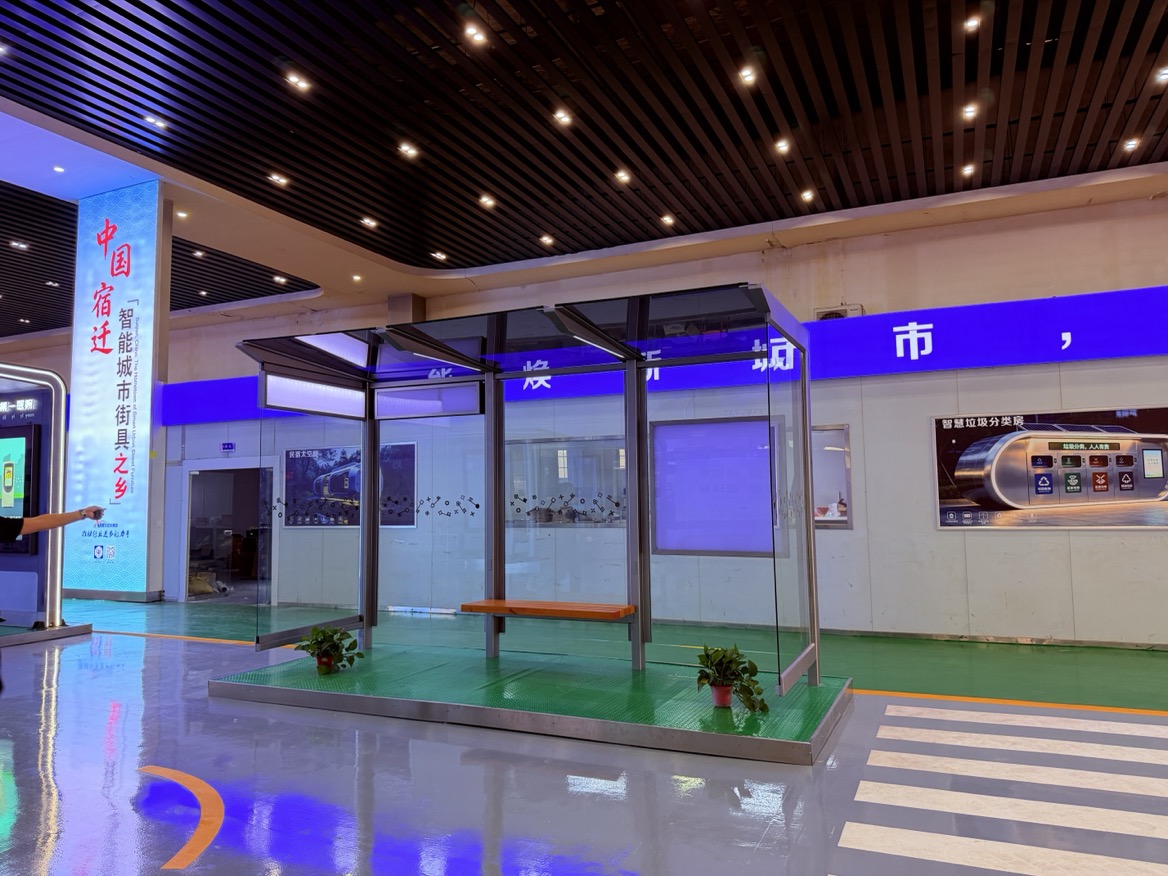
The figures below should be treated as indicative sourcing information, not contractual specifications. Actual output, MOQ, certifications, and lead times depend on shelter design, steel thickness, display configuration, project location, packaging method, and installation scope.
| Manufacturer | Main Focus | Indicative MOQ | Capacity / Scale Signal | Certification Considerations | OEM/ODM Strength |
|---|---|---|---|---|---|
| Ainl | Smart bus shelters, public facilities, outdoor advertising | Project-based; discuss from pilot/sample stage | 260+ mu site; about 150,000 m² factory stated by company | Ask for current management-system and product-component documentation | Deep customization for structure, screens, lighting, solar, branding |
| Jiangsu Yongjie | Stainless shelters, advertising and public facilities | Usually project-based | Jiangsu public-facility supplier cluster | Verify ISO and material documents per order | Standard and semi-custom municipal projects |
| Jiangsu Qianli | Intelligent bus systems, solar, digital display | Project-based | Registered capital shown as RMB 10 million | Verify electrical and display compliance by destination market | Smart transit and integrated systems |
| ZEMSO | Urban furniture, advertising shelters, multi-screen designs | Project-based | Locations listed in Shanghai, Suqian, Guangzhou | Verify component-level CE/RoHS where needed | Multi-material shelter and advertising integration |
| YEROO | Bus shelters, LED displays, billboards, solar products | Commonly negotiable by project | Established 2000 per company information | CE, FCC, RoHS, ISO claims require independent validation | Strong for digital advertising and solar integration |
| Jiangsu ZM | Light boxes, shelters, billboards | One unit may be possible for sample models | Product listing cites 20,000 pcs/year; clarify unit definition | Verify coating, electrical and structural documents | Advertising light-box shelter customization |
| Bintai Machinery | Bus shelters, OEM/ODM production | Project-based | 26,000 m² factory area stated | Request current certificates and audit documents | Private-label and repeatable product programs |
| Suqian Huajun | Shelters, benches, guardrails | Project-based | Established 2014 in public listing | Verify project-specific quality documents | Combined street-furniture packages |
| Suqian Baite | Stainless shelters, signage, recycling products | Project-based | Established 2014 in public listing | Verify stainless grade and weld treatment | Integrated public-facility customization |
| Shandong Luyi | Modern and antique-style shelters | Project-based | Established 2015 in public listing | Verify material and coating system | Theme-based and decorative shelter designs |
A good bus stop shelter specification should not only say "steel frame + glass." It should define the engineering details that determine safety, lifecycle cost, and maintenance effort.
For the main structure, buyers should specify the exact material grade and thickness rather than accepting vague terms such as "high-quality steel."
Common options include:
- Hot-dip galvanized steel: Often appropriate for outdoor structural members where corrosion resistance is important.
- Galvanized sheet steel: Common for panels, light-box structures, and formed components; coating quality and cut-edge protection must be checked.
- Stainless steel: Suitable for visible decorative parts or highly corrosive conditions when the correct grade is used. Buyers should distinguish between 201, 304, and 316 grades rather than accepting "stainless steel" as a general description.
- Aluminum profiles: Useful for lightweight frames, advertising structures, and corrosion-resistant assemblies.
- Aluminum composite panels: Common for decorative cladding but should not be treated as a structural member unless properly designed.
- Tempered glass: Often used for side and rear panels. It should be correctly sized, safely edged, and installed with drainage and thermal movement in mind.
- Polycarbonate panels: Can be used for impact resistance but may require UV-stabilized grades to reduce yellowing and brittleness.
Powder coating is not automatically durable. Its performance depends on surface preparation, pretreatment, coating type, film thickness, curing quality, and installation damage control.
Ask suppliers to state:
- Steel pretreatment process
- Galvanization type and coating weight where relevant
- Powder-coat brand or technical data sheet
- Coating thickness target
- Salt-spray test standard, test duration, and whether it applies to the complete system or a material coupon
- Color code, gloss level, and UV-resistance requirements
- Touch-up procedure for field damage during installation
For coastal regions, islands, ports, or humid tropical zones, the buyer should request a corrosion-protection system specifically designed for the environmental category. A standard inland coating specification may fail prematurely in salt-laden air.
If the shelter includes lighting, digital displays, USB charging, CCTV, Wi-Fi, sensors, or real-time arrival information, request a separate electrical schedule covering:
- Input voltage and frequency
- Circuit-breaker and surge-protection design
- Grounding arrangement
- IP rating of electrical enclosures
- Operating temperature range
- Display brightness in nits
- Remote content-management compatibility
- Cooling or ventilation design for display cabinets
- Solar-panel wattage, battery chemistry, storage capacity, and autonomy calculation
- Spare modules, power supplies, controllers, and warranty terms
Do not assume that a CE mark on an LED screen automatically validates the entire bus shelter assembly. The structural frame, electrical system, signage, solar module, battery system, and display may each require different documentation depending on the destination market and project requirement.
The most overlooked issue in overseas bus shelter procurement is often the interface between the factory drawing and the final civil foundation.
A shelter can be built exactly to the approved factory drawing and still fail at the site because the anchor-bolt pattern, slab thickness, drainage slope, underground utility position, curb clearance, or roof clearance was not coordinated before production.
This is especially common when:
- The supplier assumes a generic concrete base.
- The buyer's local contractor changes the foundation layout.
- The city requires accessibility clearances that were not shown on the initial drawing.
- The shelter is installed on sloped pavement.
- Cable conduits, drainage channels, or electrical cabinets are added after structural drawings are approved.
- The project includes advertising panels or displays that shift the center of gravity.
Before production, require a foundation interface package containing:
1. General arrangement drawing with full external dimensions
2. Anchor-bolt plan with center-to-center dimensions
3. Base-plate and anchor specification
4. Foundation loading assumptions
5. Electrical conduit entry points
6. Drainage and rainwater runoff direction
7. Installation sequence
8. Fastener schedule
9. Site tolerances
10. Local engineer review where required
This document is often more valuable than a beautiful 3D rendering because it determines whether the shelter can be installed safely and on schedule.
Ask for:
- Chinese business license
- Unified Social Credit Code
- Factory address
- Export-license or trading arrangement details
- Bank-account name matching the legal company name
- Ownership relationship if the sales company and factory are different entities
Do not assume that a website brand, Alibaba storefront, and factory legal entity are the same organization.
An ISO certificate should not be accepted solely as a PDF image.
Verify:
- Certificate number
- Issuing certification body
- Accreditation status of the certification body
- Expiry date
- Scope of certification
- Registered factory address
- Legal company name
- Whether the production site shown in the certificate is the actual manufacturing location
A certificate may be valid but have a scope unrelated to shelter fabrication. For example, a certificate for trading, signage installation, or office management does not necessarily confirm the supplier's manufacturing controls for structural steel and electrical assemblies.
For a meaningful factory audit, inspect or request a live video review of:
- Raw-material storage and identification
- Steel thickness measurement
- CNC cutting and bending
- Welding quality and weld cleanup
- Surface preparation
- Powder-coating line or outsourced-coating arrangement
- Electrical assembly area
- Glass and panel handling
- Final assembly and packaging
- Quality-control records
- Completed products ready for shipment
If a supplier claims in-house production but cannot show the relevant process, clarify whether that step is outsourced. Outsourcing is not automatically a problem, but the buyer needs visibility into who controls quality and lead time.
For a large project, the best sample is not always a full shelter. A more cost-effective approach can be:
- One structural corner assembly
- One advertising light-box module
- One powder-coated test panel
- One glass or PC-panel assembly
- One bench module
- One electrical cabinet or LED-display section
- One scale drawing and bill of materials package
A prototype module allows buyers to validate materials, weld quality, paint appearance, fit-up, lighting, weatherproofing, and packaging before committing to a full container order.
Your inspection checklist should include:
- Overall dimensions and tolerances
- Steel and sheet thickness
- Material grade documentation
- Weld appearance and structural alignment
- Coating color, gloss, and thickness
- Glass type, thickness, and edge finishing
- Fastener grade and corrosion resistance
- Lighting function and electrical safety
- Display operation, if applicable
- Drainage holes and water-shedding details
- Labeling, assembly markings, and spare parts
- Packaging strength and container loading plan
For larger projects, use a staged inspection approach:
- Raw-material inspection
- First-article inspection
- Mid-production inspection
- Pre-shipment inspection
- Container-loading supervision
Bus shelters are often oversized, fragile, and modular. Freight cost and damage risk can change substantially depending on whether the shelter is shipped assembled, partially assembled, or completely knocked down.
| Shipping Method | Advantages | Risks / Limitations |
|---|---|---|
| Fully assembled | Faster installation at destination | Higher freight volume; greater risk of transport damage |
| Semi-knocked down | Balanced freight and installation efficiency | Requires clear assembly control and labeling |
| Completely knocked down | Best container utilization for repeatable models | More local installation labor and training required |
| Flat-packed panels | Efficient for light-box and cladding components | Must protect glass, corners, and coated surfaces |
| Modular frames | Suitable for large shelters and phased projects | Requires accurate bolt alignment and site preparation |
- Can the longest structural member fit in a standard 40-foot high-cube container?
- Are glass panels separately crated?
- Are coated parts protected against abrasion?
- Are components coded to match installation drawings?
- Does the supplier provide a container loading plan?
- Are spare fasteners, touch-up paint, and replacement electrical parts included?
- Does the quotation use EXW, FOB, CIF, DAP, or another Incoterm?
- Who is responsible for local unloading equipment and installation labor?
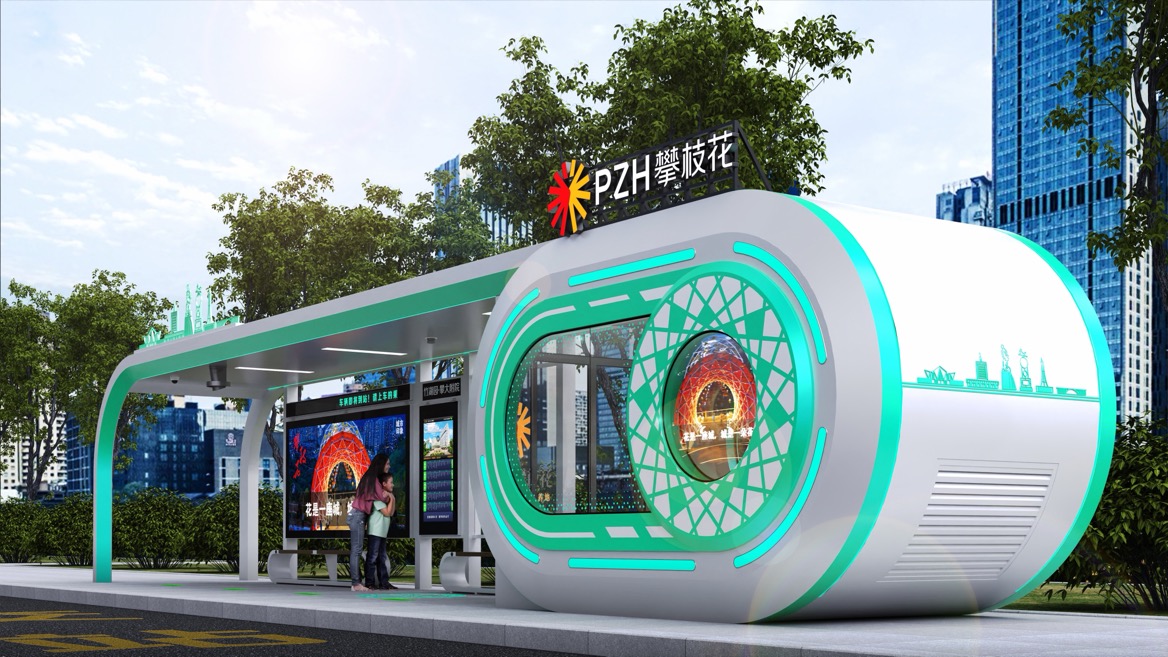
Request the certificate number, issuing body, validity date, registered address, and scope. Then verify the certificate through the certification body's public directory or directly by email. Confirm that the certificate belongs to the exact legal factory entity that will manufacture the shelters, not only to an affiliated sales company.
It depends on the destination market and product configuration. A passive steel-and-glass shelter may not be treated the same way as a shelter with LED displays, power supplies, solar batteries, charging ports, or networked electronics. Buyers should evaluate the structural product and each electrical subsystem separately with their local compliance adviser or project consultant.
There is no universal answer because it depends on shelter span, roof load, wind load, location, material grade, support spacing, advertising-panel loads, and local code requirements. A supplier should provide a structural proposal based on the project design, rather than simply quoting a thickness copied from another project.
Possibly, but only if the solar-array size, local solar irradiation, battery capacity, display power consumption, screen brightness, operating hours, and weather reserve are correctly calculated. Many suppliers can provide a solar panel and battery, but buyers should request an energy-balance calculation showing expected autonomy during low-sunlight periods.
Include a detailed bill of materials in the purchase contract. Specify steel grade, sheet thickness, stainless-steel grade, glass type, coating system, electrical brands, screen specifications, and inspection requirements. Require material certificates for critical items and inspect thickness, coatings, electronics, and labels during production—not only at final shipment.
- [General Administration of Customs of the People's Republic of China — Trade Statistics] — official import and export statistical releases. [english.customs.gov]
- [Hong Kong Trade Development Council — China Customs Statistics] — customs-statistics access by product category and trading period. [research.hktdc]
- [China Export: Furniture & Part Thereof] — customs-based monthly export data used as a broad indicator of China's export-manufacturing scale. [ceicdata]
- [Bus Stop Shelter Market Size, Future Growth and Forecast 2033] — third-party market outlook; figures should be assessed alongside tender, transit, and regional infrastructure data. [strategicrevenueinsights]
- [Bus Stop Shelter Market Outlook] — third-party market forecast and industry context. [factmr]


