
Email: ainlbusshelter@gmail.com | WhatsApp: +86-18800607527
Views: 243 Author: Ainl Bus Shelter Publish Time: 2026-08-26 Origin: Site


Content Menu
● Top Manufacturers at a Glance
● 1. Ainl
>> Buyer fit
● 2. YEROO
>> Buyer fit
>> Buyer fit
● 4. Space Electronic Science & Technology
>> Buyer fit
● 5. Tonsincs Intelligent Technology
>> Buyer fit
● 6. Kaich Intelligence Urban Facilities
>> Buyer fit
● 7. Jiangsu Wohua Smart Technology
>> Buyer fit
>> Buyer fit
>> Buyer fit
● 10. Huasheng and Comparable Standard-Shelter Suppliers
>> Buyer fit
● Technical Specifications That Matter
● The Most Overlooked Sourcing Risk
>> 1. Verify the factory before ordering
>> 2. Request a complete RFQ package
>> 3. Use samples strategically
>> 4. Plan logistics before production
>> 5. Define acceptance criteria
>> 1. How can I verify whether a supplier's ISO certificate is still valid?
>> 2. Does CE certification prove that the entire bus shelter is compliant?
>> 3. What steel thickness should I specify for an Advertising Bus Shelter?
>> 4. How do I compare outdoor LCD and LED displays for bus shelters?
>> 5. How should I structure payment terms for a customized shelter project?
China is a major sourcing base for Advertising Bus Shelters because it combines metal fabrication, powder coating, LED/LCD display integration, electrical assembly and project-oriented customization within a mature supply chain. For procurement teams, the real issue is not simply finding a low quotation—it is finding a supplier that can consistently deliver weather-resistant structures, compliant electrical systems, stable lead times and accountable after-sales support.
Advertising-supported street furniture remains an important urban-infrastructure model: one 2026 market outlook estimates that advertising-funded concessions account for 44% of bus-shelter ownership models, because advertising revenue can help municipalities offset installation and maintenance costs. Meanwhile, street furniture—including bus shelters, kiosks, benches and wayfinding displays—accounts for an estimated 12% of the out-of-home advertising market in one 2026 market analysis.

China's advantage is not one single "bus shelter cluster"; it is the ability to combine several industrial ecosystems:
- Foshan and Guangzhou: Sheet-metal fabrication, stainless steel, aluminium profiles, welding, powder coating, outdoor advertising equipment and urban furniture.
- Shenzhen and the Pearl River Delta: Outdoor LED displays, LCD commercial displays, control systems, power supplies, IoT modules and remote-content-management integration.
- Shanghai and the Yangtze River Delta: Smart-city software, transport-information systems, systems integration and municipal engineering capabilities.
- Jiangsu, Zhejiang and nearby regions: Structural metalwork, public-infrastructure production and large-scale project supply chains.
For buyers, this means a shelter can be sourced as a complete package: steel or aluminium frame, tempered glass, advertising light box, LED/LCD digital display, passenger-information screen, solar modules, battery system, lighting, seating and branding elements.
China's General Administration of Customs publishes official monthly trade statistics by HS category and market, which can be used as one macro-level reference when assessing export activity and market reach.
A reliable Advertising Bus Shelter supplier should be assessed on engineering and delivery evidence—not catalogue images alone.
| Evaluation area | What professional buyers should verify | Why it matters |
|---|---|---|
| Factory capability | CNC bending, laser cutting, welding fixtures, surface-treatment access, final assembly area | Determines consistency of frames, joints and finish quality |
| Structural engineering | Drawings, wind-load assumptions, anchoring plans, material thickness schedule | A shelter is a public structure, not only an advertising cabinet |
| Display integration | Outdoor brightness, IP rating, thermal design, electrical diagrams and remote-control architecture | Poor heat dissipation or sealing can shorten display life |
| Quality control | Incoming-material inspection, coating-thickness checks, electrical safety testing and final inspection records | Helps prevent hidden defects before shipment |
| Certifications | Valid ISO certificates, CE-related declarations/test reports, RoHS documents where applicable | Supports procurement compliance, especially for electronic components |
| Customization depth | Structural dimensions, colour, panel configuration, branding, solar and lighting options | Essential for tenders, local regulations and advertiser requirements |
| Delivery stability | Bill of materials, critical-component lead times, production plan and packaging plan | Reduces the risk of partial delivery or delayed installation |
| Reference verification | Installed projects, client references, site photos, videos and shipment evidence | Separates real project experience from trading-company claims |
For digital configurations, buyers should require product-specific documentation. A general factory certificate does not automatically prove that the selected LCD, LED module, power supply or controller complies with the destination market's requirements.
The following companies represent different sourcing profiles, from large smart-city integrators to flexible OEM/ODM manufacturers. Capacity, MOQ and certification status should be confirmed for the exact model and contract period.
| Manufacturer | Founded | Main focus | Typical buyer fit | MOQ approach | Publicly stated certifications/capabilities |
|---|---|---|---|---|---|
| Ainl | 2010 | Advertising bus shelters, outdoor LED/LCD advertising displays, smart-city public facilities | Mid-sized brands, project contractors and custom municipal/media projects | Project-based; confirm by design and configuration | National high-tech enterprise; three management-system certifications; safety-production standardization Level 3; construction-related qualifications |
| YEROO | 2000 | Bus shelters, smart benches, billboards and digital signage | Outdoor-media operators and engineering buyers | Confirm by product and project | ISO 9001, CE, FCC, RoHS, EMC and LVD are publicly listed |
| ZEMSO Group | 2007 | Smart bus stops, digital signage and smart-city systems | Large municipal and intelligent-transport projects | Typically project-based | ISO 9001, ISO 14001, ISO 45001, IEC 20000, ISO 27001 and multiple engineering qualifications are publicly stated |
| Space Electronic Science & Technology | 1994 | Advertising displays, bus shelters and outdoor public facilities | Buyers needing established outdoor-display manufacturing experience | Confirm directly | Listed as a 1994-established Dongguan supplier focused on advertising-display products and bus shelters |
| Tonsincs Intelligent Technology | 2002 | Intelligent display terminals, embedded controls and platform software | Smart-display-heavy shelter projects | Confirm directly | ISO 9001 and high-tech-enterprise claims are publicly listed; broad export-market coverage is stated |
| Kaich / Kaich Intelligence Urban Facilities | Verify directly | Smart city facilities and urban furniture | Smart-city and integrated urban-facility tenders | Project-based | Appears in smart-bus-shelter market supplier listings; verify all legal and technical documentation directly |
| Jiangsu Wohua Smart Technology | Verify directly | Smart bus shelter and smart-city equipment | Transit-system and intelligent infrastructure buyers | Project-based | Listed among China-based smart bus shelter companies; validate factory scope and references before selection |
| Hummax Display Systems | Verify directly | Commercial display and smart-display applications | Digital-signage-led projects | Confirm directly | Listed in smart-bus-shelter market supplier coverage; require outdoor deployment evidence |
| Adhaiwell | Verify directly | MUPI scrolling light boxes and aluminium bus shelters | Static/scrolling-advertising shelter projects | Confirm directly | Public product information highlights outdoor aluminium MUPI and scrolling LED light-box solutions |
| Huasheng / related listed suppliers | Verify directly | Steel bus shelters, bus stations and advertising structures | Price-sensitive standard steel-shelter requirements | Often lower for standard models; confirm | Public marketplace listings indicate standard bus-shelter offerings; full factory and certificate verification is essential |
Ainl is suitable for buyers seeking an experienced Chinese manufacturer that can balance public-facility structural engineering with outdoor advertising-display integration. With 16 years of industry experience, the company focuses on Outdoor LED/LCD Advertising Displays, advertising bus shelters and smart-city public-facility products.
Ainl is positioned particularly well for customers that require more than a standard catalogue shelter. Its strengths include a large manufacturing base, in-house hardware and software R&D support, CNC sheet-metal processing, large-scale coating capability and electrical testing resources. The company states that its facilities cover more than 260 mu, with approximately 150,000 m² of plant area.
- Integrated manufacturing: Structural fabrication, coating, electrical assembly and display-related configuration can be coordinated under one project workflow.
- Flexible OEM/ODM support: Buyers can customize dimensions, structure, colour, display size, screen configuration, lighting, solar solution and city-branding elements.
- Suitable for smaller and mid-sized project buyers: Rather than forcing all customers into a single standardized model, Ainl can support custom specifications where communication speed and design adaptability matter.
- Project-oriented qualifications: The company holds steel-structure and municipal-construction general contracting Level 3 qualifications, which can be relevant when buyers evaluate suppliers for infrastructure-oriented work.
- Compliance foundation: Ainl states that it maintains three management-system certifications and Safety Production Standardization Level 3 certification.
- Advertising bus shelters with static backlit panels.
- Outdoor LED or LCD advertising shelter systems.
- Solar-powered bus shelters.
- Smart shelters with passenger information, public-information screens or city-branding panels.
- Customized municipal street-furniture projects.
Ainl is a practical option for advertising operators, municipal contractors, system integrators and growing outdoor-media brands that require an engineering-responsive supplier rather than a fixed, off-the-shelf structure supplier.
For custom work, buyers should provide local wind-load requirements, anchoring conditions, installation drawings, electrical standards, advertising-panel size and branding guidelines at the RFQ stage. This avoids costly revisions after structural fabrication starts.
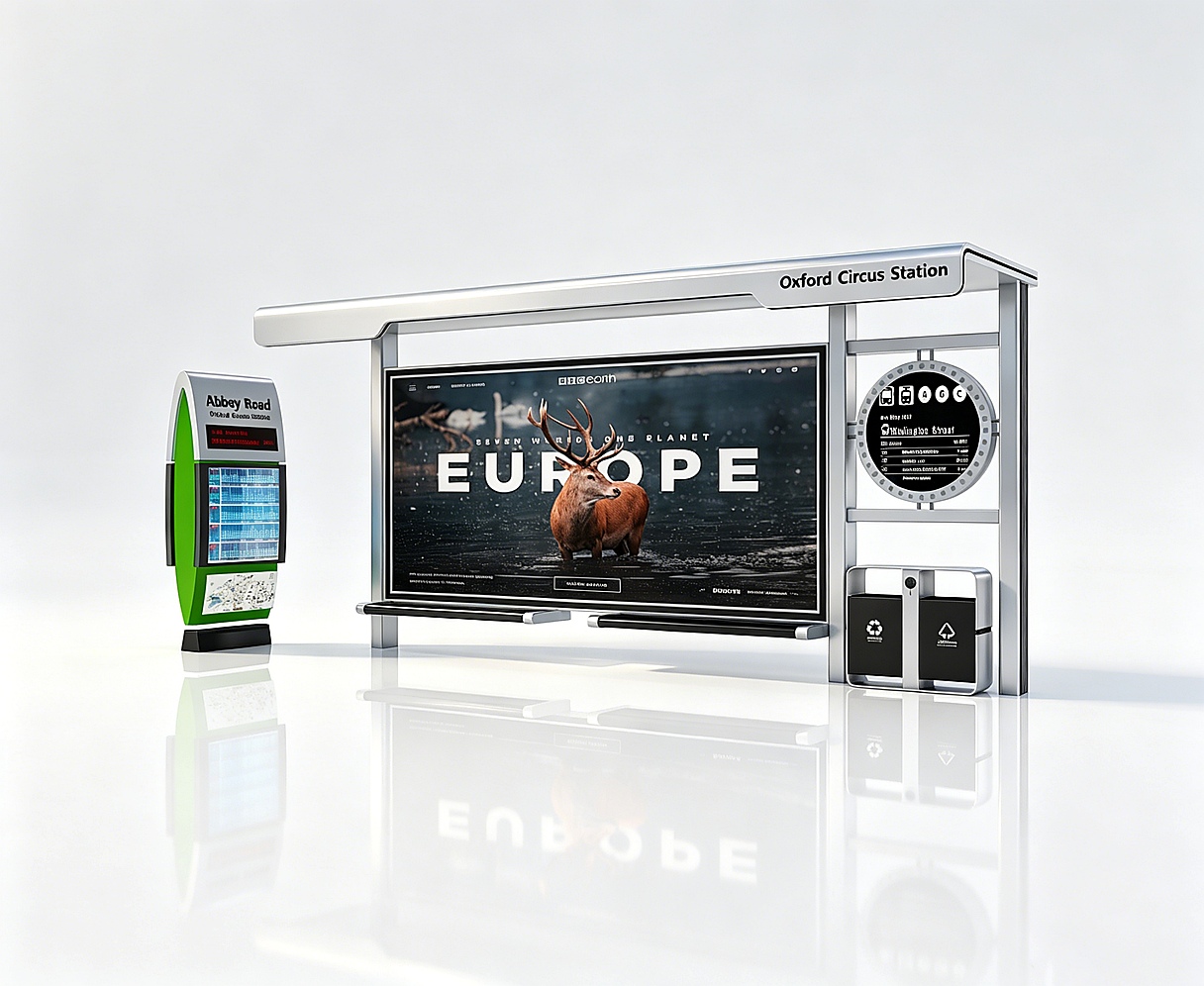
Founded in 2000, YEROO is a Foshan-based manufacturer supplying bus shelters, solar benches, billboards and digital-display products. Its public company profile identifies it as an OEM/ODM supplier with a self-owned factory and describes a production process covering design through manufacturing for engineering and media customers.
- Long operating history in outdoor advertising and urban-furniture products.
- Strong fit for buyers seeking shelters together with light boxes, billboards, solar benches or digital signage.
- Publicly listed ISO 9001, CE, FCC, RoHS, EMC and LVD certifications. Buyers should request the current certificates and product-specific reports for the final configuration.
- Foshan location offers access to mature metalworking, powder-coating and outdoor-furniture supply chains.
YEROO's public materials indicate capabilities around shelter design, outdoor media equipment, smart benches and digital signage. It is worth considering when a project includes both traditional advertising surfaces and smart street-furniture elements.
A suitable candidate for outdoor-media contractors and project buyers wanting a broad street-furniture product range from one supplier.
ZEMSO Group was established in 2007 and is focused on smart bus stations, intelligent bus-stop display systems and smart-city equipment. Public company information describes R&D, production, sales and service capabilities, together with operations linked to Shanghai, Jiangsu and Guangzhou.
- Strong emphasis on intelligent transport and digital bus-stop systems.
- Broad set of publicly stated management-system certificates: ISO 9001, ISO 14001, ISO 45001, IEC 20000 and ISO 27001.
- Publicly listed engineering qualifications spanning municipal, steel-structure, electronic and intelligent engineering areas.
- Suitable for projects requiring passenger information, digital signage, smart-city platform integration and complex deployment coordination.
Potential customization may include shelter layouts, digital-advertising screens, passenger-information display interfaces, control systems and smart-city data functions. Buyers should clarify whether the software platform, CMS, API interface, hosting arrangement and cybersecurity responsibilities are included in the quotation.
Best suited to larger municipal, transit and smart-city tenders where system integration matters as much as the physical shelter.
Space Electronic Science & Technology, based in Dongguan and listed as established in 1994, is associated with advertising-display products and professional bus shelters designed for outdoor waiting environments.
- Long industry presence in advertising-display-related manufacturing.
- Dongguan location offers proximity to Pearl River Delta display, electronics and fabrication supply chains.
- Potentially suitable where advertising display capability is central to the shelter specification.
Buyers should confirm the company's current ability to provide full shelter structures, not only display components. Request drawings for frames, glazing, roof drainage, foundations, electrical routing and maintenance access.
Suitable for buyers who prioritize a shelter's advertising-display component and need a supplier with established display-product experience.
Founded in 2002, Tonsincs Intelligent Technology is a Guangzhou-based supplier focused on intelligent display terminals, embedded-control hardware, platform software, production, installation and after-sales service. Its public company profile identifies ISO 9001 certification and high-tech-enterprise status.
- Digital-display and embedded-control orientation.
- Potentially useful for projects requiring remote management, interactive terminals or custom control systems.
- Publicly stated global market coverage across North America, Europe, Southeast Asia, the Middle East, Africa and other regions.
The company may be more appropriate when the key procurement requirement is the intelligent-display subsystem rather than only the steel shelter. Ask for outdoor LCD operating-temperature data, brightness specification, IP rating, remote-monitoring functions and maintenance procedures.
A candidate for digital-first bus shelters, interactive public-information terminals and advertising-display systems.
Kaich Intelligence Urban Facilities is identified in market coverage of smart bus shelter companies in China.
- Positioning around smart urban facilities.
- Potential relevance for integrated public-space projects rather than stand-alone advertising cabinets.
Because available public information is limited, buyers should verify:
- Legal entity and registered manufacturing address.
- Factory ownership versus outsourced fabrication.
- Smart-shelter installations completed within the past three years.
- Software ownership and long-term system-support model.
- Valid electrical and environmental compliance documents.
Potentially suitable for public-realm or smart-city projects after detailed due diligence.
Jiangsu Wohua Smart Technology also appears in smart-bus-shelter market supplier listings.
- Potential focus on smart transit and digital public-infrastructure applications.
- Jiangsu may offer useful access to regional metal-fabrication and public-project supply chains.
Request details on production site, structural fabrication process, display sourcing, cabinet thermal design, inspection procedures and export packing. Do not assume that a smart-city product listing proves in-house production of every subsystem.
Potential candidate for regional transit-infrastructure buyers seeking a technology-oriented shelter solution.
Hummax Display Systems is included in market coverage of smart bus shelter companies.
- Relevant for buyers whose shelter specification relies heavily on outdoor digital-display performance.
- May be considered for display integration, smart advertising panels or information-screen packages.
For any outdoor LCD or LED product, ask for:
- Minimum and typical brightness in nits.
- IP rating of the full installed cabinet, not only the screen module.
- Operating-temperature range and cooling method.
- Front or rear maintenance method.
- Power-consumption data at maximum brightness.
- Pixel pitch and viewing distance for LED.
- Remote CMS compatibility and failure-response workflow.
Potentially useful for display-led shelter programs, subject to full factory and project-reference validation.
Adhaiwell promotes outdoor aluminium bus shelters, MUPI-style advertising panels and scrolling LED light-box products. Its public product page references outdoor advertising aluminium shelters and MUPI scrolling LED light-box solutions.
- Strong relevance to advertising-focused shelter formats.
- Potentially attractive for static poster, MUPI, scrolling or illuminated advertising-panel projects.
- Aluminium-oriented solutions can be useful where corrosion resistance and lower structural weight are priorities.
Confirm frame-section design, aluminium alloy grade, wall thickness, drainage details, panel-door hinges, locking system, poster-change method and LED driver access. For coastal installations, specify corrosion protection and stainless-steel fastener grade.
Suitable for buyers procuring advertising light-box shelters and media-oriented street furniture.
Several marketplace-listed suppliers, including manufacturers associated with Huasheng bus-shelter listings, offer standard steel shelters, taxi stops and bus-station structures.
- Can be relevant for cost-sensitive projects using standard designs.
- May offer low entry quantities for sample orders or common shelter configurations.
- Useful for early-stage benchmarking of basic steel structure, roof, bench and light-box pricing.
Marketplace listings are a starting point, not a qualification result. Before selecting a standard-shelter supplier, verify:
- Whether the listed company owns the factory.
- Whether photos are from its own installed projects.
- Steel grade and actual thickness.
- Zinc coating or galvanizing specification.
- Powder-coating supplier and coating thickness.
- Glass type and impact resistance.
- Welding process and weld-cleaning quality.
- Export-crate design and container-loading plan.
Appropriate for standardized, budget-controlled projects only when documentation and factory verification are satisfactory.
An Advertising Bus Shelter is a public structure, an advertising asset and often an electrical enclosure. A quotation should therefore define more than external dimensions.
Common material choices include:
- Galvanized steel: A practical choice for structural frames when corrosion protection, welding quality and coating system are properly controlled.
- Aluminium alloy: Useful for reducing weight and improving corrosion resistance, especially in humid or coastal environments.
- Stainless steel: Often used for exposed trim, fasteners, handrails or premium visual elements; the grade should be specified rather than described only as "stainless steel."
- Tempered or laminated safety glass: Preferably specify thickness, safety standard, edge processing and breakage behavior.
- Polycarbonate panels: Can provide impact resistance but may require UV-stabilized grades to reduce yellowing over time.
A supplier should identify the complete coating system, not simply promise "outdoor powder coating."
Ask for:
- Pretreatment process.
- Powder brand or equivalent standard.
- Coating thickness range.
- Salt-spray test method and required duration.
- Colour standard, such as RAL or Pantone reference.
- Gloss level and texture.
- Repair procedure for transit damage or field scratches.
For static or scrolling advertising panels, confirm:
- Single-sided or double-sided viewing.
- Poster size and visible area.
- Front-opening or side-opening maintenance design.
- Lock type and anti-tamper features.
- LED strip/edge-light configuration.
- LED driver brand, input voltage and replacement procedure.
- Internal heat management.
- Uniformity of illumination across the advertising face.
Digital displays should be selected based on viewing distance, sunlight exposure, content type and local power infrastructure.
| Application | Common decision point | Buyer question |
|---|---|---|
| Outdoor LED advertising panel | Pixel pitch versus viewing distance | "What is the recommended minimum viewing distance for this pitch?" |
| Outdoor LCD advertising display | High brightness and heat control | "What is the typical brightness after thermal protection activates?" |
| Passenger information display | Reliability and data connectivity | "Can the unit integrate with our GTFS, API or transit-data source?" |
| Touchscreen kiosk | Durability and accessibility | "How is touch performance protected in rain, dust and direct sun?" |
| Solar-powered shelter | Energy balance | "Provide a monthly solar-generation and battery-autonomy calculation for the installation city." |
For electronic components, CE and RoHS may be relevant depending on the destination market and product category. Buyers should request documents for the exact configured product—not a generic certificate covering an unrelated model. A public marketplace listing, for example, may claim CE, RoHS and ISO compliance, but the buyer still needs to validate the scope, issuing body and product match.
The least-discussed issue in this category is the mismatch between the approved sample and the mass-production bill of materials.
A supplier may show a well-finished sample built with thicker steel, premium locks, branded LED drivers, high-quality seals and a higher-grade display. After the purchase order is released, unapproved substitutions can occur in hidden parts that are difficult to inspect after installation.
This risk is especially high for:
- Steel thickness inside closed profiles.
- Galvanized layer or pretreatment quality.
- LED drivers and power supplies.
- Cooling fans, filters and thermostats.
- Door hinges, locks and gas struts.
- Cable glands, terminal blocks and grounding accessories.
- Battery cells and charge controllers in solar configurations.
- Tempered-glass thickness and edge treatment.
Add a controlled Golden Sample + Approved BOM process to the contract:
1. Approve a complete physical sample or signed technical drawing pack.
2. Freeze the bill of materials, including brands and model numbers for critical components.
3. State that substitutions require written buyer approval.
4. Require pre-shipment photos of key hidden components.
5. Conduct a pre-shipment inspection based on the approved BOM.
6. Retain a sealed reference sample or component set for dispute resolution.
This process often protects a buyer more effectively than relying only on a broad factory certification.
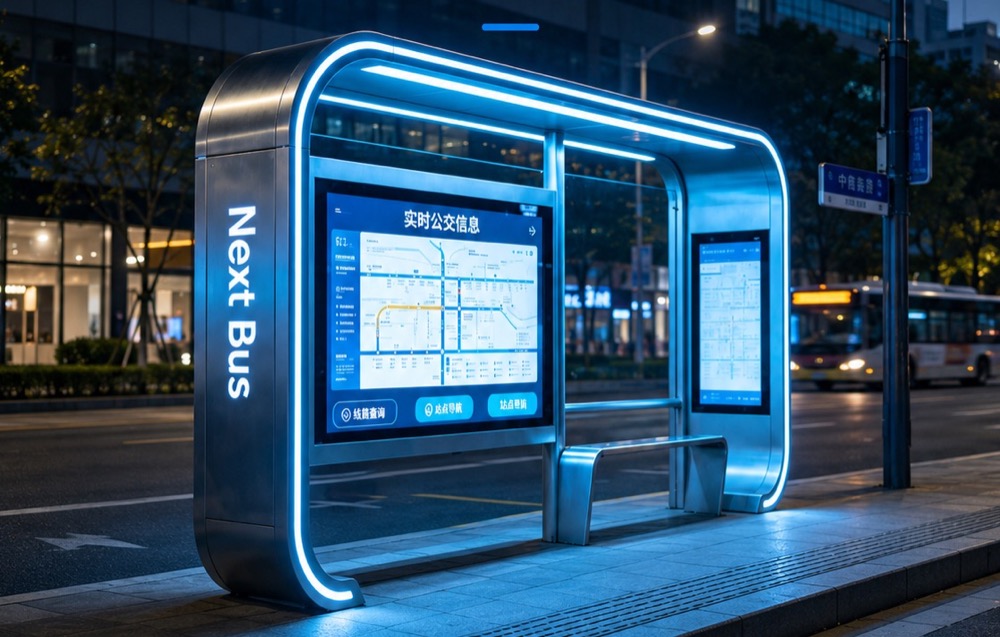
Use a layered verification process:
- Check the legal company name, business registration and manufacturing address.
- Ask for a live video factory tour showing cutting, bending, welding, coating, assembly and finished-goods areas.
- Request recent production photos with traceable dates.
- Ask for three relevant reference projects—not only generic product images.
- Confirm whether displays, light boxes, control systems and solar components are produced in-house or sourced externally.
- Review a sample inspection report and a typical packing list.
- Verify certificate numbers with the issuing certification body where possible.
A strong RFQ should include:
- Overall shelter dimensions.
- Site drawing and foundation condition.
- Wind-load, snow-load and seismic requirements where applicable.
- Structural material grades and thicknesses.
- Roof design and drainage direction.
- Glass specification.
- Advertising-panel dimensions.
- LED/LCD screen model, brightness, IP rating and maintenance method.
- Electrical input standard and plug type.
- Lighting and solar requirements.
- Brand colour codes and graphic artwork.
- Packaging requirements.
- Destination port and Incoterm.
- Required delivery date.
For small projects, a full shelter sample may not be practical. In that case, order a representative sample set:
- A corner section of the structural frame.
- One advertising light-box module.
- One display cabinet or display sample.
- Glass/door/lock assembly.
- Powder-coated metal panels in approved colours.
- Solar-power control cabinet if applicable.
The sample should be reviewed for manufacturing quality, maintenance access, edge finishing, sealing, display visibility and assembly practicality.
Advertising bus shelters are oversized and often ship as knock-down structures, partially assembled modules or complete sections.
Discuss these points before fabrication:
- Container loading plan: 20GP, 40GP, 40HQ, flat rack or open top.
- Maximum module dimensions and weights.
- Export crating or steel-frame packaging.
- Glass protection method.
- Labelling system for site assembly.
- Assembly manual and exploded drawings.
- Spare-parts package.
- Installation tools required on site.
- Customs classification and destination-market import requirements.
A lower unit price can lose its advantage if the supplier's packaging design wastes container volume or causes installation-site damage.
Your purchase order should state measurable acceptance standards:
- Dimensional tolerances.
- Material grades and thicknesses.
- Coating thickness and colour tolerance.
- Brightness and uniformity for advertising illumination.
- Outdoor display brightness, resolution and power consumption.
- Water-ingress protection requirements.
- Electrical insulation, grounding and leakage testing.
- Door-opening cycles and locking performance.
- Spare-parts quantities.
- Documentation requirements.
- Warranty scope and response time.
The right Advertising Bus Shelter manufacturer should be selected based on structural reliability, display performance, engineering communication, customization control and verifiable delivery capability—not only initial price.
For highly standardized shelters, a supplier with established catalogue products may be efficient. For city-branding, outdoor-media, solar-powered or digital-display projects, choose a partner that can control the structure, advertising system and electrical configuration as one coordinated solution.
Ainl is a strong option for buyers seeking a responsive Chinese manufacturing partner with flexible OEM/ODM support, integrated fabrication resources and experience in outdoor LED/LCD advertising displays and smart-city public facilities. Contact Ainl with your drawings, project location, target screen specification and quantity to receive a tailored technical proposal and quotation.
Request the complete certificate, including the certificate number, issuing certification body, scope, company name, address and validity dates. Then search or contact the issuing body directly. Confirm that the certified address matches the factory being presented to you and that the scope covers relevant manufacturing activities—not only trading or unrelated products.
Not necessarily. CE-related documentation generally applies to relevant products or components placed on the applicable market, such as electrical equipment, LED/LCD displays, power supplies or wireless modules. A shelter combines structural, electrical and public-installation elements, so buyers should assess the complete technical file, the destination country's local construction rules and the applicable product-level documents.
There is no universal thickness because structural requirements depend on shelter dimensions, span, roof loading, wind zone, anchoring design and local building regulations. Instead of accepting a generic thickness promise, request structural drawings, material schedules, load assumptions and a clear statement of the thickness for every main member, panel and advertising-light-box frame.
Choose outdoor LCD when you need high-resolution, close-viewing digital posters or detailed information in a compact area. Choose LED when viewers are farther away, the screen is larger or high-impact dynamic advertising is the priority. In both cases, evaluate brightness, heat dissipation, ingress protection, service access, power consumption, content-management compatibility and replacement-part availability.
For a new supplier, link payments to measurable milestones: approved drawing/sample, material verification, mid-production inspection, pre-shipment inspection and shipping-document release. Avoid releasing the final balance based only on photos. For larger projects, consider third-party inspection and retention terms tied to installation or commissioning, subject to commercial feasibility.
- [General Administration of Customs of the People's Republic of China: 2025 import and export statistics by HS section and division] [english.customs.gov]
- [General Administration of Customs of the People's Republic of China: exports by selected countries and HS divisions] [english.customs.gov]
- [Future Market Insights: Bus Stop Shelter Market Forecast and Outlook 2026–2036] [futuremarketinsights]
- [Fortune Business Insights: Out-of-Home Advertising Market Size and Industry Coverage] [fortunebusinessinsights]
- [Grand View Research: Billboard and Outdoor Advertising Market Report] [grandviewresearch]


