
Email: ainlbusshelter@gmail.com | WhatsApp: +86-18800607527
Views: 212 Author: Ainl Bus Shelter Publish Time: 2026-08-29 Origin: Site


Content Menu
● Why the Construction Method Matters for Bus Stations
● Steel Prefabricated Building vs Concrete Bus Station at a Glance
● Steel Prefabricated Buildings: Strengths for Modern Transit Projects
>> Faster Delivery With Less Roadside Disruption
>> Better Fit for Standardization and OEM/ODM Requirements
>> Easier Integration of Smart-City Equipment
>> Lower Weight Can Simplify Site Engineering
● Concrete Bus Stations: Where They Still Perform Best
>> A Strong Choice for Major Civic Terminals
>> Thermal Mass Can Benefit Enclosed Facilities
>> Concrete Requires Careful Durability Management
● Lifecycle Cost: Look Beyond the Initial Quote
● Environmental Considerations: Compare the Entire System
● Passenger Experience Should Drive the Final Decision
● A Practical Selection Framework for Buyers
>> 1. Is Speed a Critical Requirement?
>> 2. Will the Station Need Future Upgrades?
>> 3. Is the Project a Shelter Network or a Landmark Terminal?
>> 4. What Are the Site Constraints?
>> 5. What Climate Risks Must Be Managed?
>> 6. How Important Is Brand Consistency?
● The Recommended Approach for Most Transit Facilities
● FAQ
>> 1. Is a steel prefabricated building durable enough for a bus station?
>> 2. Is a concrete bus station safer than a steel bus station?
>> 3. Which option is faster to install: steel or concrete?
>> 4. Can a steel bus stop shelter include solar panels and LED screens?
>> 5. Which construction method is better for a citywide bus shelter project?
>> 6. Can a prefabricated steel bus station be customized for local branding?
>> 7. When should a buyer choose a concrete bus station instead?
For transit agencies, municipalities, developers, and outdoor advertising operators, the choice between a steel prefabricated building and a concrete bus station shapes far more than the appearance of a stop. It affects project delivery speed, passenger comfort, maintenance workload, branding flexibility, accessibility, long-term operating cost, and the ability to integrate smart-city equipment.
From the perspective of a public-facility manufacturer and project solution provider, there is no universal winner. Prefabricated steel structures generally offer stronger advantages for speed, adaptability, expansion, customization, and smart-device integration. Concrete bus stations can be the better route for landmark terminals, exceptionally high passenger volumes, or projects that require a massive and permanent architectural presence.
For most urban bus stop shelters, BRT stations, roadside transit hubs, and advertising-supported public-facility projects, a well-engineered steel prefabricated building provides the more practical balance of durability, visual quality, installation efficiency, and lifecycle flexibility.
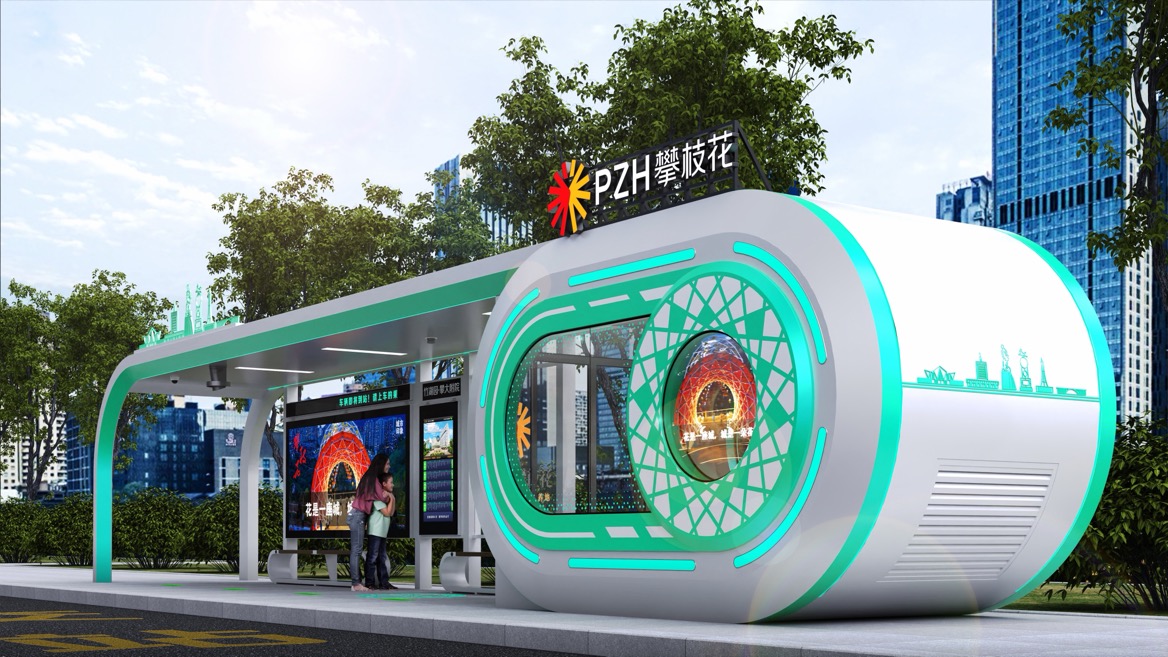
A bus station is not simply a roof over a waiting area. It is a public-facing asset used daily by passengers, drivers, maintenance crews, advertisers, city managers, and emergency responders.
Modern transit facilities may need to combine:
- Passenger shelter and seating
- Route maps and real-time arrival displays
- Digital advertising screens
- Public information systems
- Security cameras and emergency devices
- LED lighting
- Solar power equipment
- Accessible boarding space
- City branding and wayfinding
- Weather protection and drainage
- Anti-vandal and anti-graffiti materials
This is why selecting between a steel prefabricated building and a concrete bus station should not be based on upfront construction cost alone. The correct decision should reflect the station's purpose, passenger volume, site conditions, local climate, maintenance capacity, utility access, construction window, and future upgrade plans.
Transit guidance also emphasizes that shelters should support safe pedestrian movement, accessibility for people using mobility aids, orderly boarding and alighting, good visibility, lighting, passenger information, and a design language that can be consistent across a transit network while fitting the surrounding urban environment.
| Comparison Factor | Steel Prefabricated Building | Concrete Bus Station |
|---|---|---|
| Construction speed | Fast production and rapid on-site assembly | Usually slower because of excavation, formwork, curing, and site work |
| Site disruption | Lower, with more work completed in a factory | Higher, with more wet construction on site |
| Customization | Highly flexible for dimensions, finishes, screens, lighting, and branding | Flexible architecturally, but design changes can be slower and more expensive |
| Future expansion | Easier to extend, relocate, replace panels, or add modules | Difficult to alter after completion |
| Smart-city integration | Well suited to LED screens, sensors, solar systems, CCTV, and control cabinets | Possible, but retrofitting can be more complex |
| Structural weight | Lower dead load than a comparable concrete structure | High dead load; may require more substantial foundations |
| Durability | Excellent when corrosion protection, drainage, detailing, and maintenance are properly managed | Excellent in many environments, but cracking, spalling, and water ingress must be controlled |
| Visual identity | Strong potential for standardized citywide branding | Strong potential for architectural permanence and civic expression |
| Best use cases | Bus shelters, modular stations, BRT stops, commercial transit amenities, smart-city upgrades | Major terminals, permanent interchanges, large enclosed stations, landmark civic projects |
A steel prefabricated building is manufactured largely in a controlled production environment. Structural frames, roof modules, wall panels, advertising light boxes, display housings, wiring pathways, seating components, and signage areas can be prepared before the installation team reaches the site.
This approach is especially valuable when a transit project faces:
- Restricted road-closure hours
- Dense pedestrian traffic
- Active bus operations
- Limited construction staging space
- A phased rollout across multiple stops
- Tight deadlines tied to route launches or public events
Instead of performing most fabrication beside an active roadway, the contractor can focus on site preparation, foundations, utility connections, transport, assembly, and final commissioning.
For a city upgrading 100 bus stops, a standardized modular approach can also improve consistency. Components can be repeated while still allowing local adjustments in size, color, information panels, advertising formats, and accessibility features.
Transit authorities often need a unified system rather than one isolated shelter. They may specify a consistent roof form, color palette, route-map area, lighting style, digital screen size, bench design, waste-bin placement, and logo treatment across an entire city or district.
A steel prefabricated building is particularly suitable for this model because the structure can be engineered as a platform with configurable modules.
For example, one public-facility family can include:
- A compact two-bay neighborhood bus stop shelter
- A three-bay high-ridership shelter
- An enclosed BRT waiting station
- A solar-powered rural or suburban stop
- A digital-advertising shelter
- A smart station with arrival displays and security equipment
- An accessible station with expanded wheelchair circulation space
The key benefit is not only customization. It is repeatable customization. The project team can keep the core structural and quality-control logic consistent while adapting visible and functional elements to individual locations.
Smart transit infrastructure requires protected space for electrical systems, communication wiring, displays, lighting drivers, sensors, and maintenance access.
Steel-framed shelters and station buildings can be designed from the beginning with:
- Concealed cable routes
- Lockable electrical cabinets
- Screen mounting points
- LED lighting channels
- Solar panel brackets
- Battery compartments
- CCTV supports
- Passenger-counting sensors
- Emergency call buttons
- USB charging modules where appropriate
- Environmental sensors for temperature, air quality, or noise
This integrated approach is often more effective than trying to add equipment after a traditional structure is complete. It also creates a cleaner visual result because wiring, conduits, and service equipment can be planned into the architecture rather than attached as an afterthought.
Concrete has a major advantage in mass and solidity, but that same mass can create additional requirements. A concrete bus station may require heavier foundations, more excavation, longer curing periods, and more extensive site preparation.
Steel structures are generally lighter relative to their strength. For many shelter-scale applications, this can reduce foundation demand and simplify logistics, particularly where underground utilities, constrained sidewalks, bridge decks, existing pavement, or difficult access make heavy construction undesirable.
However, lighter weight does not mean less engineering. A steel prefabricated building must be properly designed for:
- Local wind loads
- Snow loads where applicable
- Seismic requirements
- Vehicle impact risks
- Roof drainage
- Anchorage and foundation conditions
- Screen and solar-panel loads
- Corrosion exposure
- Passenger crowd loading
The best results come from designing the shelter as a complete system, not as a steel frame with accessories added later.
A concrete bus station can be the right choice when the facility functions as a large, highly permanent transportation hub rather than a modular roadside station.
Typical examples include:
- Central bus terminals
- Regional interchanges
- Airport bus terminals
- Large enclosed transfer centers
- Stations integrated into commercial buildings
- Civic landmark projects
- Heavy-duty platforms supporting substantial building loads
Concrete can create a sense of permanence and architectural weight. It can also accommodate complex shapes, large slabs, underground spaces, substantial enclosed areas, and integration with larger civil works.
If the project requires a multilevel terminal, extensive interior spaces, long-span platforms combined with reinforced concrete floors, or a highly customized architectural envelope, concrete may be justified despite its longer construction process.
Concrete can moderate indoor temperature swings due to its thermal mass. In a fully enclosed bus terminal with controlled ventilation or air conditioning, this can contribute to indoor comfort when paired with proper insulation, glazing, shading, and mechanical-system design.
However, thermal mass is not automatically beneficial for an open-sided bus stop shelter. In open or semi-open facilities, passenger comfort is usually influenced more directly by roof coverage, side-panel placement, shade, wind protection, drainage, lighting, seating, and local microclimate design.
For a typical outdoor bus stop shelter, a thoughtful steel-and-glass or steel-and-aluminum design may deliver excellent passenger comfort without requiring a heavy concrete enclosure.
Concrete is durable, but it is not maintenance-free. Long-term performance can be affected by cracking, water penetration, reinforcement corrosion, freeze-thaw cycles, de-icing salts, poor drainage, and surface staining.
In coastal, humid, cold, or highly polluted environments, material selection and detailing matter greatly. The same is true for steel, which requires the right corrosion-protection system, coating quality, drainage design, and maintenance plan.
The important question is not, "Which material never requires maintenance?" Neither does. The more useful question is, Which construction method allows the city to inspect, repair, upgrade, and renew the facility most efficiently over its planned service life?
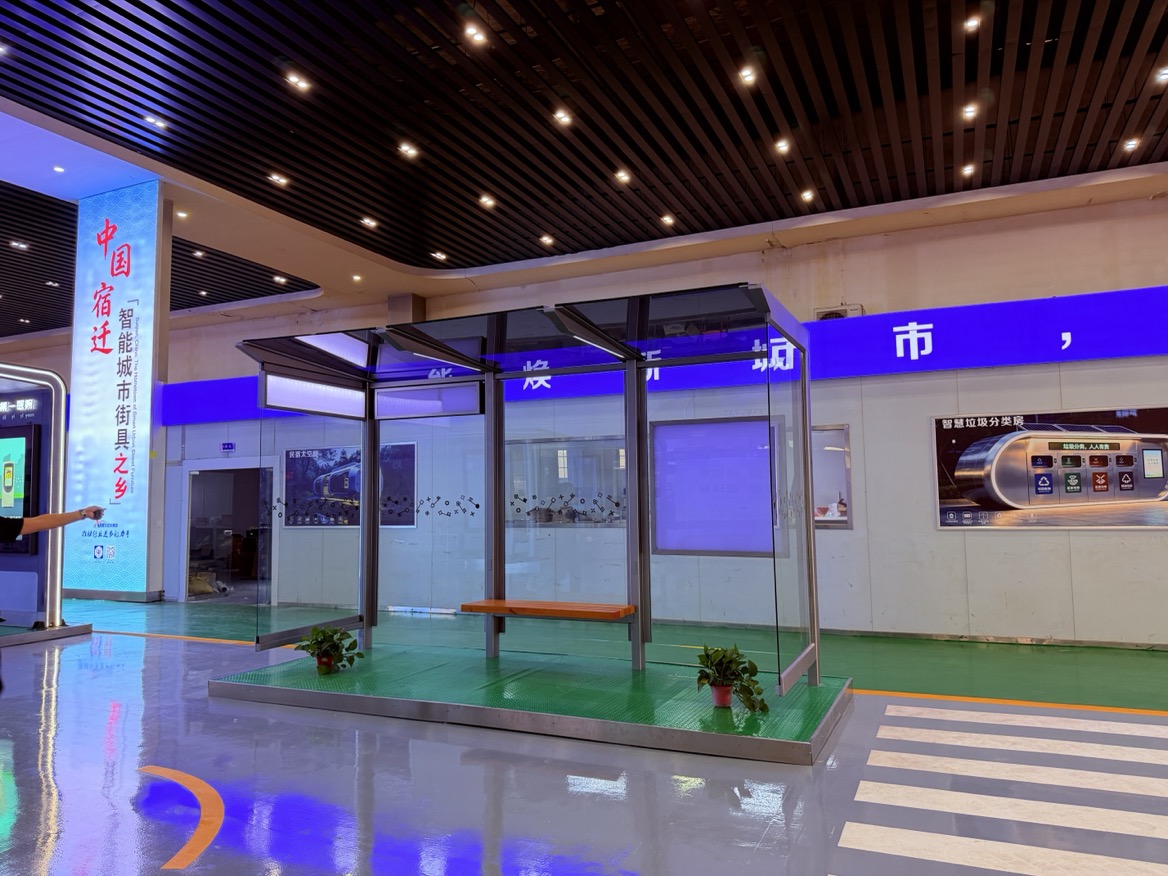
The lowest procurement price is rarely the true cost of a transit facility. A better evaluation includes the full lifecycle of planning, production, transportation, construction, operation, repair, upgrades, and eventual replacement or recovery.
Life-cycle assessment frameworks evaluate stages ranging from material production and construction through use, refurbishment, and end-of-life treatment. This perspective is especially relevant for public infrastructure because bus stops operate in exposed environments and often need to remain functional for years.
When evaluating a steel prefabricated building versus a concrete bus station, compare the following items:
1. Design and engineering cost
2. Foundation and site-preparation cost
3. Factory production and quality-control cost
4. Transport and crane or installation cost
5. Road closure and traffic-management cost
6. Electrical, solar, display, and communication integration cost
7. Cleaning and routine maintenance cost
8. Repair cost after vandalism, vehicle impact, or severe weather
9. Cost of adding future technology
10. Replacement, reuse, recycling, or relocation value
A prefabricated steel solution may cost more than a basic conventional shelter in some cases, especially when it includes premium finishes, digital screens, solar equipment, or custom fabrication. Yet its ability to reduce on-site work, improve deployment speed, standardize maintenance, and support upgrades can create better value over the project lifecycle.
Environmental decisions should not be reduced to a single material label. Steel production has significant energy and emissions impacts, while cement production is also carbon-intensive. Transport distances, material quantities, foundation sizes, fabrication efficiency, operational energy use, maintenance frequency, refurbishment, and end-of-life recovery all affect the final result.
Steel offers meaningful circularity potential because it can be recovered and recycled at the end of a structure's service life. World Steel Association materials note that high-strength steels can reduce required steel tonnage for certain structural applications, while published lifecycle profiles also account for recycling credits at end of life.
For transit projects, the most practical sustainability actions often include:
- Designing durable structures that avoid premature replacement
- Selecting corrosion-resistant materials and coatings appropriate to the climate
- Using modular parts that can be repaired instead of discarding the whole station
- Designing for future screen, lighting, and solar upgrades
- Reducing unnecessary material weight
- Improving natural daylight and energy-efficient lighting
- Using solar power where site conditions make it technically and economically viable
- Creating clear maintenance access so components can be serviced rather than abandoned
A modular steel bus station can be especially attractive when a city expects route changes, phased expansion, redevelopment, or technology upgrades. The ability to reconfigure or relocate a structure can reduce waste compared with demolishing a fixed station.
Passengers do not judge a transit facility by its structural material. They judge it by whether it feels safe, clean, legible, comfortable, and dependable.
A good bus station should provide:
- Adequate shade and rain protection
- Clear visibility of approaching buses
- Safe movement around the boarding area
- Good nighttime lighting
- Readable route and schedule information
- Space for wheelchair users and mobility aids
- Seating or leaning rails suited to expected wait time
- Surfaces that are easy to clean and resistant to damage
- A visual identity that supports trust in the transit system
Industry guidance recommends shelters at high-boarding stops and emphasizes that transit stops should include visible system or route information, appropriate lighting, safe sidewalk access, and accessible design considerations. Guidance for shelter placement also stresses avoiding conflicts with pedestrian circulation, maintaining access to buses, and considering wind protection, seating, and debris control.
This means the better structure is the one that helps the transit agency serve real passenger behavior at that location.
Before choosing between steel prefabrication and concrete construction, project teams should answer these six questions.
Choose steel prefabrication when the project must be deployed quickly, installed in phases, or completed with minimal road disruption.
Choose concrete when construction speed is less important than creating a large permanent facility with substantial civil works.
Choose steel prefabrication when digital displays, advertising panels, solar systems, security equipment, or changing branding requirements are likely.
Choose concrete when the building program is stable, fully defined, and unlikely to change significantly.
Choose steel prefabrication for citywide bus shelter networks, BRT stops, roadside stations, commercial transit amenities, and modular public-facility programs.
Choose concrete for major transfer terminals, enclosed hubs, and permanent landmark buildings.
Choose steel prefabrication when sidewalks are narrow, road closures are difficult, utility conflicts are likely, or the installation site has limited working space.
Choose concrete when the site can accommodate extended civil construction and the project requires deep foundations, heavy slabs, or integrated structural works.
Either system can perform well when properly engineered. The decision should reflect local wind, rain, snow, heat, salt exposure, humidity, seismic activity, and vandalism risk.
A steel bus stop shelter requires correct coating, drainage, sealing, and fastener selection. A concrete station requires crack control, waterproofing, drainage, reinforcement protection, and appropriate surface treatment.
Choose steel prefabrication when the city wants a recognizable family of stations with repeatable colors, signage zones, advertising formats, smart screens, and lighting details.
Choose concrete when the primary goal is a one-of-a-kind architectural statement tied to a specific terminal or civic district.
For the majority of bus stop shelters and smart transit-station projects, steel prefabricated buildings are the more adaptable construction method.
They support faster installation, scalable manufacturing, controlled quality, lower on-site disruption, easier customization, and cleaner integration of intelligent equipment. They are particularly effective for municipalities and operators that need to deploy multiple facilities while preserving a unified city image.
Concrete bus stations remain highly valuable for major terminals and large permanent interchanges. But for distributed urban mobility networks, a modular steel system usually gives decision-makers more flexibility without sacrificing visual quality or structural reliability.
Ainl supports this approach with 16 years of experience in the research, manufacturing, and delivery of bus stop shelters, smart-city public facilities, and outdoor advertising products. With large-scale production capacity, dedicated hardware and software development resources, precision sheet-metal processing, coating capabilities, electrical testing, and OEM/ODM support, Ainl can help project teams configure station size, structural form, color, screen systems, lighting, solar-power solutions, and city-branding elements around actual site requirements.
Planning a bus shelter network, BRT station, or smart-city transit upgrade? Start with a site-by-site specification review. Define passenger demand, climate exposure, utility conditions, accessibility needs, screen requirements, advertising strategy, brand standards, and installation constraints before selecting the final construction system.
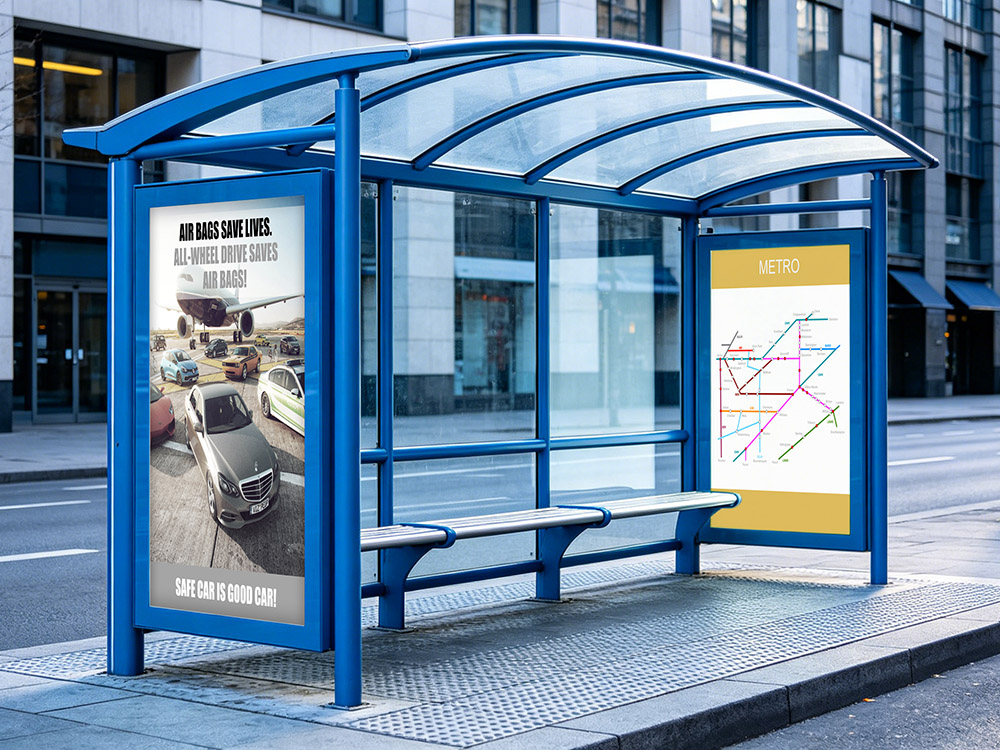
Yes. A properly engineered steel prefabricated building can be highly durable for bus stations and shelters. Performance depends on structural design, steel grade, coating system, drainage, fastening, wind-load design, foundation anchoring, and planned maintenance.
Not necessarily. Safety depends on engineering, compliance with local codes, foundation design, anchorage, material specification, fire considerations, site layout, lighting, accessibility, and maintenance. Both methods can be safe when correctly designed and installed.
Steel prefabricated buildings are usually faster because much of the fabrication is completed before shipment. Concrete stations generally require more on-site preparation, formwork, pouring, curing, and finishing.
Yes. Steel prefabricated bus shelters can be designed with mounting structures, cable routes, electrical cabinets, solar-panel brackets, battery compartments, LED display housings, lighting systems, CCTV supports, and other smart-city components.
Steel prefabrication is usually the better choice for a citywide program because it supports standardization, faster rollout, modular sizing, OEM/ODM customization, easier parts replacement, and consistent visual branding.
Yes. Customization can include colors, logos, route-map panels, advertising formats, station names, roof forms, seating, side panels, lighting, digital displays, solar systems, and other architectural details.
A concrete bus station is often appropriate for major enclosed terminals, high-capacity transfer centers, landmark civic projects, sites requiring large structural slabs, or projects integrated into broader building and civil-works programs.
- [Federal Transit Administration — Stops, Spacing, Location and Design] [transit.dot]
- [National Association of City Transportation Officials — Bus Stops] [nacto]
- [U.S. General Services Administration — Life Cycle Assessment and Buildings] [gsa]
- [World Steel Association — Circular Economy] [worldsteel]
- [World Steel Association — LCA Eco-Profiles 2024 Release] [worldsteel]
- [Project for Public Spaces — Bus Shelters] [pps]
- [PMC — Life Cycle Assessment of Seismic Resistant Prefabricated Buildings] [pmc.ncbi.nlm.nih]


