
Email: ainlbusshelter@gmail.com | WhatsApp: +86-18800607527
Views: 241 Author: Ainl Bus Shelter Publish Time: 2026-09-06 Origin: Site


Content Menu
● Why Material Selection Matters for Heavy-Duty Bus Shelters
● Steel Bus Shelter vs Aluminum Bus Shelter at a Glance
● Strength and Stiffness: The Core Difference
>> Steel Performs Better Under Heavy Structural Loads
>> Aluminum Needs a Different Engineering Approach
● Wind Resistance and Public Safety
>> Wind Loads Are a System Issue
>> Glass and Panels Must Be Considered
● Corrosion Resistance and Surface Protection
>> Aluminum Has a Natural Corrosion Advantage
>> Steel Requires a Complete Protection System
● Weight, Logistics, and Installation Efficiency
>> Aluminum Reduces Transport and Handling Loads
>> Steel Supports Larger Integrated Systems
● Digital Advertising and Smart-City Equipment Loads
>> Steel Is Often Preferred for Equipment-Intensive Shelters
● Accessibility and Passenger Experience
● How to Choose Between Steel and Aluminum
>> Choose a Steel Bus Shelter When:
>> Choose an Aluminum Bus Shelter When:
>> Consider a Hybrid Shelter When:
● Ainl's Heavy-Duty Shelter Approach
● FAQ
>> 1. Is a steel bus shelter stronger than an aluminum bus shelter?
>> 2. Does aluminum rust in outdoor bus shelters?
>> 3. Which material is better for coastal bus shelters?
>> 4. Can a steel bus shelter support digital advertising screens?
>> 5. Are steel bus shelters more expensive than aluminum bus shelters?
>> 6. What surface treatment is best for a steel bus shelter?
>> 7. Can Ainl customize bus shelters for city branding?
>> 8. Is a hybrid steel and aluminum bus shelter a good option?
When cities, transit authorities, developers, and outdoor media operators compare a steel bus shelter vs aluminum bus shelter, the decision should extend far beyond appearance or initial material cost. In heavy-duty transit applications, the shelter frame must perform reliably under wind, rain, snow, UV exposure, vibration, passenger traffic, vandalism risk, advertising loads, electrical equipment, and years of public use.
For high-traffic urban corridors, BRT stations, roadside advertising locations, and smart-city infrastructure projects, steel bus shelters are generally the stronger option for demanding structural applications. Aluminum bus shelters, however, can be a practical solution where low weight, corrosion resistance, modular installation, or simplified maintenance is the priority. The best choice depends on the local climate, wind-load requirements, shelter size, installed equipment, maintenance capacity, and expected service life.
As a professional manufacturer and solution provider of smart-city public facilities, Ainl has worked with the real engineering variables that affect long-term shelter performance: frame geometry, connection design, surface treatment, anchoring, glass or panel systems, LED displays, solar systems, passenger safety, and municipal visual identity. With 16 years of experience, a large-scale manufacturing base, precision sheet-metal capabilities, coating facilities, electrical testing resources, and OEM/ODM customization support, Ainl helps project owners select materials based on operating conditions—not simply on material labels.
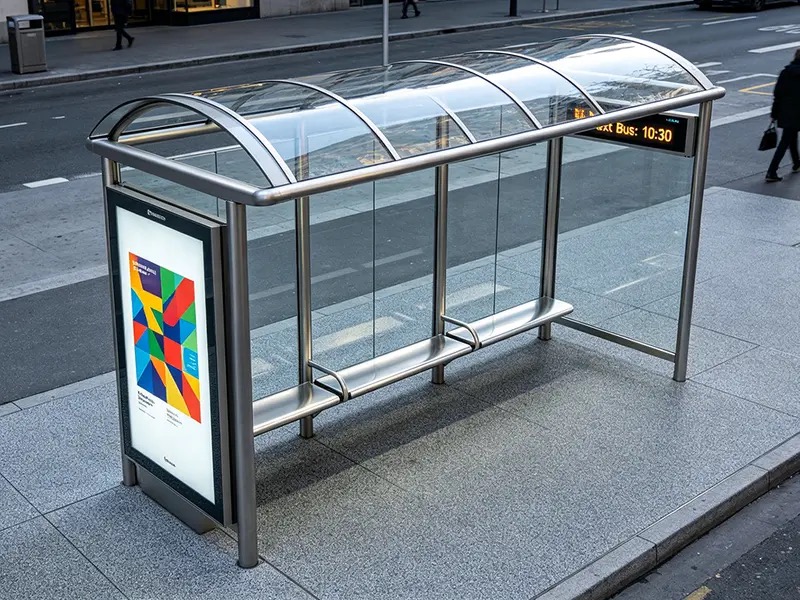
A bus shelter is not just a roof and a few side panels. It is a public-facing structure located in a highly exposed environment. It may need to support:
- Large roof spans and cantilevered canopies
- Tempered glass, laminated glass, or polycarbonate side panels
- Advertising light boxes and digital signage
- LED route information displays
- Surveillance cameras and communication equipment
- Solar panels, batteries, and lighting systems
- Benches, accessibility elements, and map frames
- High wind pressure and uplift forces
- Repeated vibration from buses, trucks, and nearby traffic
- Impacts, graffiti, tampering, and daily public use
For these reasons, a proper steel bus shelter vs aluminum bus shelter comparison must evaluate structural behavior, not only visual preference.
The Federal Transit Administration emphasizes that shelters should support safety, accessibility, pedestrian circulation, and efficient passenger movement. Its guidance also highlights the importance of durable, vandal-resistant, and graffiti-resistant materials for bus-stop environments.
A structurally weak shelter can lead to costly reinforcement, visible deformation, early coating failure, damaged digital equipment, difficult maintenance, and a poor public perception of the transit system. A well-engineered shelter, in contrast, can become a durable part of a city's transport network and visual brand.
| Comparison Factor | Steel Bus Shelter | Aluminum Bus Shelter |
|---|---|---|
| Structural strength | Very high, especially for large spans and heavy loads | Good, but usually requires larger sections for equivalent stiffness |
| Structural stiffness | High resistance to bending and deflection | Lower stiffness than steel; deflection must be carefully managed |
| Weight | Heavier | Much lighter |
| Corrosion resistance | Requires proper galvanizing, coating, and maintenance strategy | Naturally corrosion resistant, though not immune in every environment |
| Heavy advertising loads | Highly suitable | Suitable for lighter-to-moderate installations with engineered reinforcement |
| Digital screen integration | Strong support for large displays, cabinets, and equipment | Possible, but load paths and connections need more attention |
| Wind-load performance | Excellent when properly designed and anchored | Can perform well, but member size and connection design are critical |
| Fabrication flexibility | Excellent for welded structural frames and custom geometry | Excellent for extrusion-based modular designs |
| Repairability | Straightforward welding and component replacement in many projects | Repair can be more specialized, especially for welded sections |
| Long-term appearance | Depends strongly on coating quality and corrosion protection | Often retains a clean appearance with less surface-treatment dependency |
| Best-fit project type | Heavy-duty municipal, roadside, BRT, advertising, smart-city shelters | Lightweight, modular, coastal, low-to-medium-duty shelters |
The critical distinction is not that one material is universally better. Instead, steel provides more structural capacity per section size, while aluminum provides a lower-weight and corrosion-resistant alternative that can be highly effective when carefully engineered.
For heavy-duty transit applications, strength is only one part of the engineering decision. Stiffness is equally important.
A shelter frame must not bend excessively under its own weight, roof loads, wind loads, attached advertising panels, solar modules, or digital displays. Excessive deflection can create practical problems even before structural failure becomes a concern. For example, glass panels may become misaligned, doors or access panels may bind, water drainage angles may change, and LED display housings may experience added stress.
Steel has a much higher elastic modulus than aluminum. In practical terms, steel members are significantly stiffer at the same geometry. This means a steel tube, column, beam, or canopy support can often resist bending with a slimmer or more economical structural profile than an aluminum member designed for the same load and span.
For a large smart bus shelter, this can matter greatly. Consider a shelter with:
- A long roof overhang
- Double-sided illuminated advertising panels
- A real-time arrival display
- CCTV cameras
- Solar-powered lighting
- Tempered glass sidewalls
- A high-wind roadside location
In this situation, steel usually offers a more robust structural foundation. The shelter can carry concentrated loads more efficiently, maintain tighter alignment, and provide a stronger base for anchored equipment.
Aluminum is not a weak material. It is widely used in transportation, architecture, rail systems, marine products, and outdoor structures. However, its lower stiffness means designers often need to use larger profiles, deeper extrusions, additional bracing, or more frequent support points to control deflection.
This is especially important for long-span roofs and large-format advertising structures. An aluminum bus shelter may be fully suitable, but it should not simply copy the dimensions of a steel design. The frame geometry, joint design, wall thickness, and anchoring method must be adjusted for aluminum's mechanical behavior.
The Aluminum Association's design guidance recognizes the importance of material properties, connection design, and weld-affected strength when aluminum structures are engineered for load-bearing applications.
For procurement teams, the practical question is: Does the supplier provide load calculations and structural drawings for the exact shelter configuration? This is more important than relying on a generic claim such as "heavy-duty aluminum frame."
A shelter's wind resistance does not depend on the frame material alone. It depends on the full structural system:
1. Local design wind speed and exposure category
2. Shelter height, width, roof shape, and overhang
3. Open, semi-enclosed, or enclosed configuration
4. Glass-panel area and panel thickness
5. Advertising light-box dimensions
6. Foundation type and anchor-bolt design
7. Connection details between roof, columns, panels, and base plates
8. Installation quality and site conditions
A bus shelter located on an open boulevard, coastal road, elevated transit route, or large commercial plaza can experience significantly different wind forces from a shelter placed between high-rise buildings.
For heavy-duty projects, steel frames are often selected because they can provide high resistance to wind-induced bending and uplift while maintaining compact structural sections. Properly designed steel columns, roof trusses, base plates, and anchor bolts can create a stable system for demanding locations.
An example from a custom mass-transit shelter project showed a steel-based structure designed to withstand wind loads up to 140 mph, while incorporating solar lighting, custom design elements, and vandal-resistant construction. This demonstrates how steel is frequently used as the primary structural material when performance requirements are high.
A heavy-duty bus shelter should be evaluated as a whole assembly. Even a strong steel frame can become unsafe if glass panels, clamps, gaskets, fasteners, or panel supports are underspecified.
For high-traffic transit environments, project owners should assess:
- Tempered versus laminated safety glass
- Glass thickness and panel dimensions
- Wind-pressure rating of panel supports
- Anti-shatter film requirements
- Edge protection and drainage details
- Tamper-resistant fasteners
- Panel replacement procedures
- Visibility markings to reduce accidental collisions
Transit guidance recommends transparent sides for visibility and security, while also noting that glass panels should be marked with distinctive patterns to make their presence more visible to passengers.
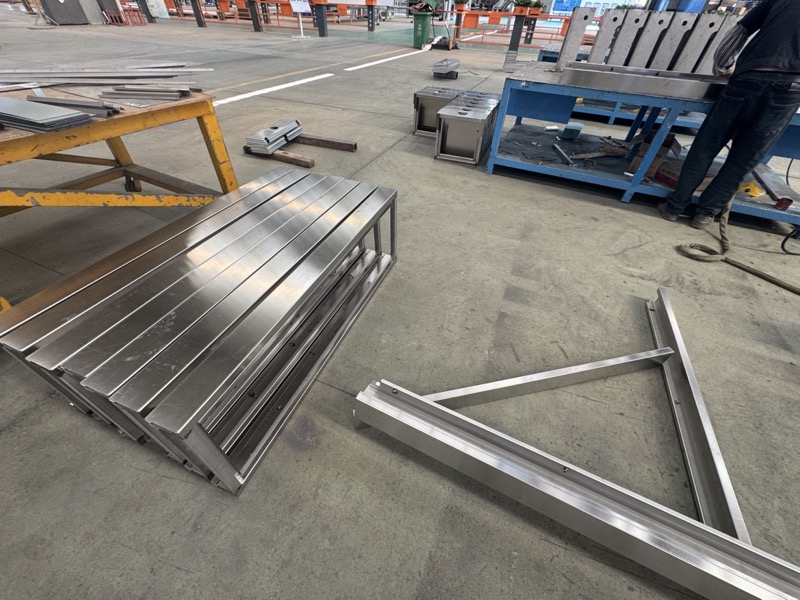
One of aluminum's strongest advantages is its ability to form a protective oxide layer. This makes aluminum attractive for wet climates, coastal regions, and projects where minimizing repainting is a priority.
Aluminum bus shelters can be especially suitable for:
- Coastal cities with salt-laden air
- High-humidity areas
- Lightweight modular installations
- Locations where rapid installation is required
- Projects with a strong preference for extrusion-based designs
- Architecturally clean, modern, minimal-profile shelters
However, "corrosion resistant" should not be interpreted as "maintenance free." Aluminum can still experience surface staining, galvanic corrosion when paired incorrectly with other metals, and degradation around poorly designed connections. Coastal projects need careful selection of fasteners, isolation materials, sealants, and drainage details.
Steel bus shelters require disciplined corrosion protection, particularly in coastal, industrial, humid, snowy, or high-pollution environments. A high-quality system often includes:
- Surface preparation
- Hot-dip galvanizing or zinc-rich primer protection
- Powder coating or fluorocarbon topcoat
- Sealed joints and drainage paths
- Protected weld areas
- Stainless-steel or suitably treated fasteners
- Repair procedures for scratches or impact damage
The advantage is that a properly protected steel shelter can deliver a long service life while retaining high structural capacity. AASHTO and the National Steel Bridge Alliance have published guidance on hot-dip galvanizing as a best-practice corrosion-protection approach for transportation-related steel structures.
For Ainl projects, material selection should be paired with a clear surface-treatment specification. The frame, roof, side panels, fasteners, base plates, electrical cabinets, and advertising modules should be reviewed as one coordinated outdoor system.
Aluminum's lower density can reduce shipping weight, simplify manual handling, and support modular assembly. This can be valuable for projects with:
- Limited crane access
- Remote installation sites
- Small crews
- Frequent shelter relocation
- Export logistics constraints
- High installation-volume requirements
A lighter shelter may also reduce some foundation demands, although foundation design must still account for wind uplift, overturning, equipment loads, and site-specific soil conditions.
Steel is heavier, which can increase transport and handling requirements. Yet the same weight can be an advantage when a shelter needs greater structural stability. Steel frames can support large canopies, heavy advertising panels, and integrated smart-city equipment without relying on excessively bulky profiles.
For cities investing in long-term infrastructure, the installation decision should consider total installed value, not simply freight weight. A lighter shelter may save on transport, while a stronger structural system may reduce later reinforcement, repair, and replacement costs.
Modern bus shelters increasingly serve as information, energy, advertising, and safety platforms. They may include:
- LCD or LED passenger information displays
- Digital out-of-home advertising screens
- Wi-Fi or communication equipment
- USB charging modules
- Emergency call devices
- Smart lighting
- Passenger counting sensors
- CCTV cameras
- Solar photovoltaic panels
- Battery storage cabinets
These additions change the structural and electrical requirements of the shelter.
A steel bus shelter is commonly the stronger choice when the design includes large display cabinets, double-sided media panels, rooftop solar modules, or multiple mounted devices. Steel provides a dependable load path from equipment brackets through the frame and into the anchored foundation.
This does not mean aluminum cannot support smart equipment. It can. But every installed device must be considered in the structural calculation. The weight, wind area, vibration, cable routing, maintenance access, and heat dissipation requirements all need to be included.
For example, a digital advertising screen creates both dead load and wind load. A large display also creates a cantilever effect if mounted away from the main support line. If the frame is aluminum, the design may need deeper profiles, reinforced internal sections, or additional vertical supports. With steel, the same load can often be supported through a more compact heavy-duty frame.
Material selection must not distract from the shelter's primary purpose: helping passengers wait safely and comfortably.
Accessibility guidance for new or altered bus shelters includes providing clear floor space within the shelter and connecting it through an accessible route to the boarding and alighting area. New or altered boarding areas should have firm, stable surfaces and specified minimum dimensions for accessible use.
A well-designed shelter should provide:
- Clear wheelchair access and turning space
- Adequate opening width
- A direct accessible path to the bus boarding area
- Seating or leaning rails where appropriate
- Weather protection without blocking passenger movement
- Good lighting and visibility
- Readable route information
- Safe clearances around the shelter
- Smooth drainage and slip-resistant surfaces
The Federal Transit Administration also recommends maintaining a 36-inch minimum shelter opening for wheelchair passage and preserving clear circulation around the shelter.
From a user-experience perspective, the strongest frame is not automatically the best shelter. The best shelter balances structural durability with visibility, accessibility, comfort, information clarity, city aesthetics, and easy maintenance.
Use this practical decision framework before specifying a material.
- The project requires large spans or long roof overhangs.
- The shelter will support digital screens or heavy advertising light boxes.
- The location has high wind exposure.
- The project includes solar panels, batteries, CCTV, or multiple smart devices.
- The shelter is intended for BRT, airport, railway, highway, or major urban-corridor use.
- The municipality requires a robust, anti-vandal public structure.
- Custom steel fabrication and branded architectural detailing are needed.
- The owner prioritizes stiffness, impact resistance, and long-term structural capacity.
- Low weight is a major logistical advantage.
- The design is modular and standardized.
- The structure has short spans and relatively light equipment loads.
- The installation location is highly corrosion-prone and maintenance resources are limited.
- The project needs rapid assembly or relocation.
- Clean extrusion-based architectural styling is preferred.
- The structural design has been specifically engineered for aluminum members and connections.
In many high-value municipal projects, the best answer is neither all-steel nor all-aluminum.
A hybrid design can combine:
- A galvanized and coated steel structural frame
- Aluminum decorative trims or roof elements
- Stainless-steel hardware
- Tempered or laminated glass panels
- Aluminum composite panels for branding
- Powder-coated aluminum advertising frames
- Integrated solar and LED systems
This approach places each material where it performs best. Steel provides the main load-bearing structure, while aluminum contributes lighter architectural elements and corrosion-resistant details.
Ainl designs and manufactures bus stop shelters and smart-city public facilities for transportation, municipal, commercial, and outdoor advertising applications. For demanding projects, the material decision is developed together with the structural layout, functional modules, production process, and final installation requirements.
A tailored Ainl solution can include:
- Customized shelter dimensions and structural configuration
- Steel, aluminum, or hybrid material recommendations
- CNC sheet-metal fabrication and precision processing
- Powder coating and weather-resistant surface finishing
- Digital screen and advertising-panel integration
- Smart lighting and electrical-system configuration
- Solar-powered shelter solutions
- City-logo, color, and visual-identity customization
- Bench, signage, route-map, and accessibility configurations
- OEM/ODM support for different urban environments
With large-scale production facilities, dedicated R&D resources, electrical testing capabilities, and construction qualifications, Ainl can help buyers move from concept design to manufacturable, installation-ready shelter systems.
For heavy-duty transit applications, a steel bus shelter is usually the better choice when structural strength, stiffness, wind resistance, advertising loads, digital equipment integration, and long-term public durability are the primary priorities.
An aluminum bus shelter remains a strong option for lightweight, modular, corrosion-sensitive, or lower-load applications. But it should be engineered specifically for aluminum rather than treated as a direct substitute for steel.
The most reliable procurement strategy is to define the real operating conditions first: wind zone, roof span, passenger volume, equipment load, corrosion environment, accessibility needs, maintenance plan, branding requirements, and expected service life. Then select the frame material and finish system that match those conditions.
If you are planning a municipal bus-stop project, BRT shelter, roadside advertising shelter, or smart-city waiting station, contact Ainl for a customized steel, aluminum, or hybrid bus shelter proposal. Our team can support concept development, structural customization, visual branding, manufacturing, and integrated smart-equipment solutions for your market.
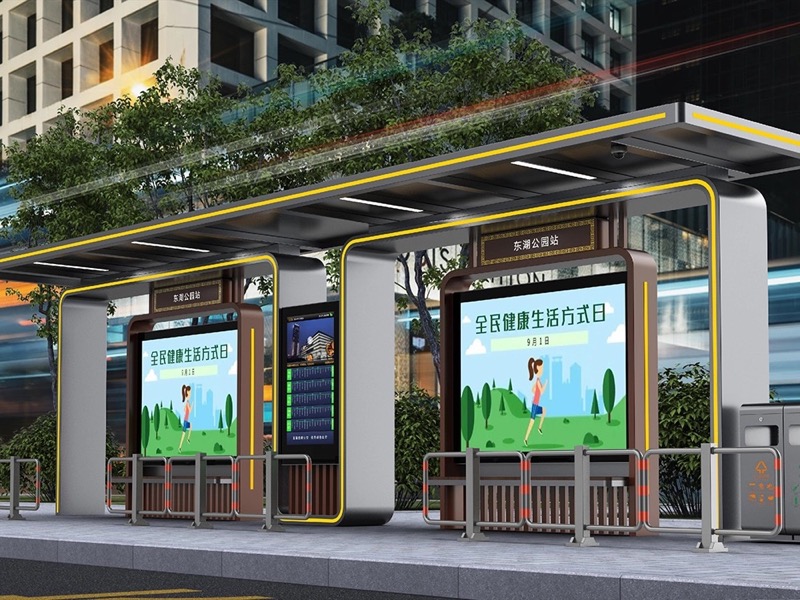
Yes. In most heavy-duty structural applications, steel provides higher strength and substantially greater stiffness than aluminum. This makes steel especially suitable for large shelters, long roof spans, high-wind locations, and equipment-heavy smart bus stops.
Aluminum does not rust in the same way as carbon steel. It naturally develops a protective oxide layer. However, it can still suffer from staining, pitting, galvanic corrosion, or connection-related corrosion in harsh environments if the design and fastener selection are poor.
Aluminum can be attractive in coastal environments because of its inherent corrosion resistance. However, galvanized and properly coated steel can also perform very well when the coating system, drainage, joint sealing, and maintenance plan are designed for salt exposure.
Yes. Steel is particularly well suited for supporting digital advertising screens, LED passenger-information systems, CCTV equipment, solar panels, and other smart-city components because it provides strong and stiff load-bearing support.
Not always. The final cost depends on material thickness, structural design, surface treatment, roof type, glass specification, advertising equipment, transportation, installation, and local wind-load requirements. Aluminum may reduce shipping weight, while steel may reduce the need for oversized structural profiles in heavy-duty designs.
For demanding outdoor applications, a common high-performance approach is hot-dip galvanizing combined with a suitable coating system, such as powder coating or other weather-resistant finishes. The correct system depends on the climate, project standards, desired color, and expected maintenance cycle.
Yes. Ainl supports OEM/ODM customization for shelter dimensions, structure, colors, logo elements, advertising panels, LED screens, lighting systems, solar-power solutions, seating, route-information modules, and other city-branding details.
Yes. A hybrid solution can be highly effective. Steel can be used for the primary structural frame, while aluminum can be used for trims, roof details, decorative panels, and lighter architectural components. This balances strength, appearance, corrosion resistance, and weight.
1. Federal Transit Administration. "Bus Stop Optimization Final Report." [Read the report].
2. Federal Transit Administration. "Stops, Spacing, Location and Design." [Read the guidance].
3. National Rural Transit Assistance Program. "Vehicle and Facility Accessibility." [Read the accessibility guidance].
4. AASHTO Journal. "AASHTO–NSBA Issue Hot-Dip Galvanizing Specification Guide." [Read the article].
5. Structure Magazine. "The 2020 Aluminum Design Manual." [Read the article].
6. Project for Public Spaces. "Bus Shelters." [Read the article].
7. SPENFAB. "Custom Steel and Aluminum Bus Shelter." [View the project example].


