
Email: ainlbusshelter@gmail.com | WhatsApp: +86-18800607527
Views: 238 Author: Ainl Bus Shelter Publish Time: 2026-09-10 Origin: Site


Content Menu
● Stainless Steel vs Aluminum Bus Shelter: Quick Comparison
● Why Material Choice Matters for Public Bus Shelters
● Stainless Steel Bus Shelter Advantages
>> Higher Strength for High-Traffic Locations
>> Better Resistance to Dents and Vandalism
>> Strong Performance in Challenging Environments
>> Premium Appearance for Landmark Projects
● Aluminum Bus Shelter Advantages
>> Lightweight Construction and Easier Installation
>> Good Corrosion Resistance in Normal Outdoor Conditions
>> Flexible Extrusion Profiles and Modern Design
● Durability Comparison: Which Shelter Lasts Longer?
>> Choose Stainless Steel When Strength Is the Priority
>> Choose Aluminum When Weight and Deployment Matter Most
● Maintenance Comparison: What Will Operators Need to Do?
>> Stainless Steel Maintenance Requirements
>> Aluminum Maintenance Requirements
● Hidden Factor: Fasteners, Welding, and Drainage Design
>> Material Selection Must Include Connection Design
● Expert Selection Guide by Project Type
● Practical Buyer Checklist Before Ordering
● Final Verdict: Stainless Steel or Aluminum?
● FAQ
>> 1. Is stainless steel better than aluminum for bus shelters?
>> 2. Does aluminum rust in outdoor bus shelters?
>> 3. Which material needs less maintenance?
>> 4. Can stainless steel bus shelters be used in coastal areas?
>> 5. Are aluminum bus shelters strong enough for LED screens and solar panels?
>> 6. Can a bus shelter use both stainless steel and aluminum?
>> 7. What information should I send to a bus shelter manufacturer?
Choosing between a stainless steel bus shelter and an aluminum bus shelter is not simply a question of appearance or initial purchase price. For municipalities, transit operators, outdoor media companies, contractors, and smart-city project developers, the material choice directly affects structural durability, corrosion resistance, installation efficiency, maintenance workload, public safety, visual quality, and total ownership cost.
From a manufacturer's perspective, material selection should begin with the shelter's real operating environment. A compact shelter in a low-traffic residential area faces very different demands from a digital bus stop shelter on a coastal boulevard, a busy downtown interchange, or a commercial outdoor advertising site. Stainless steel generally provides stronger impact resistance and a more robust structural feeling, while aluminum offers lower weight, easier transportation, and excellent resistance to ordinary atmospheric moisture.
At Ainl, a professional manufacturer and solution provider for bus stop shelters, smart-city public facilities, and outdoor advertising products, we have seen that the most suitable material is the one that matches the project's climate, passenger volume, structural design, advertising equipment, maintenance resources, and expected service life. With 16 years of manufacturing experience, integrated R&D capability, precision sheet-metal processing, large-scale coating facilities, electrical testing support, and OEM/ODM customization capacity, Ainl helps buyers build material strategies rather than simply purchase a standard shelter.
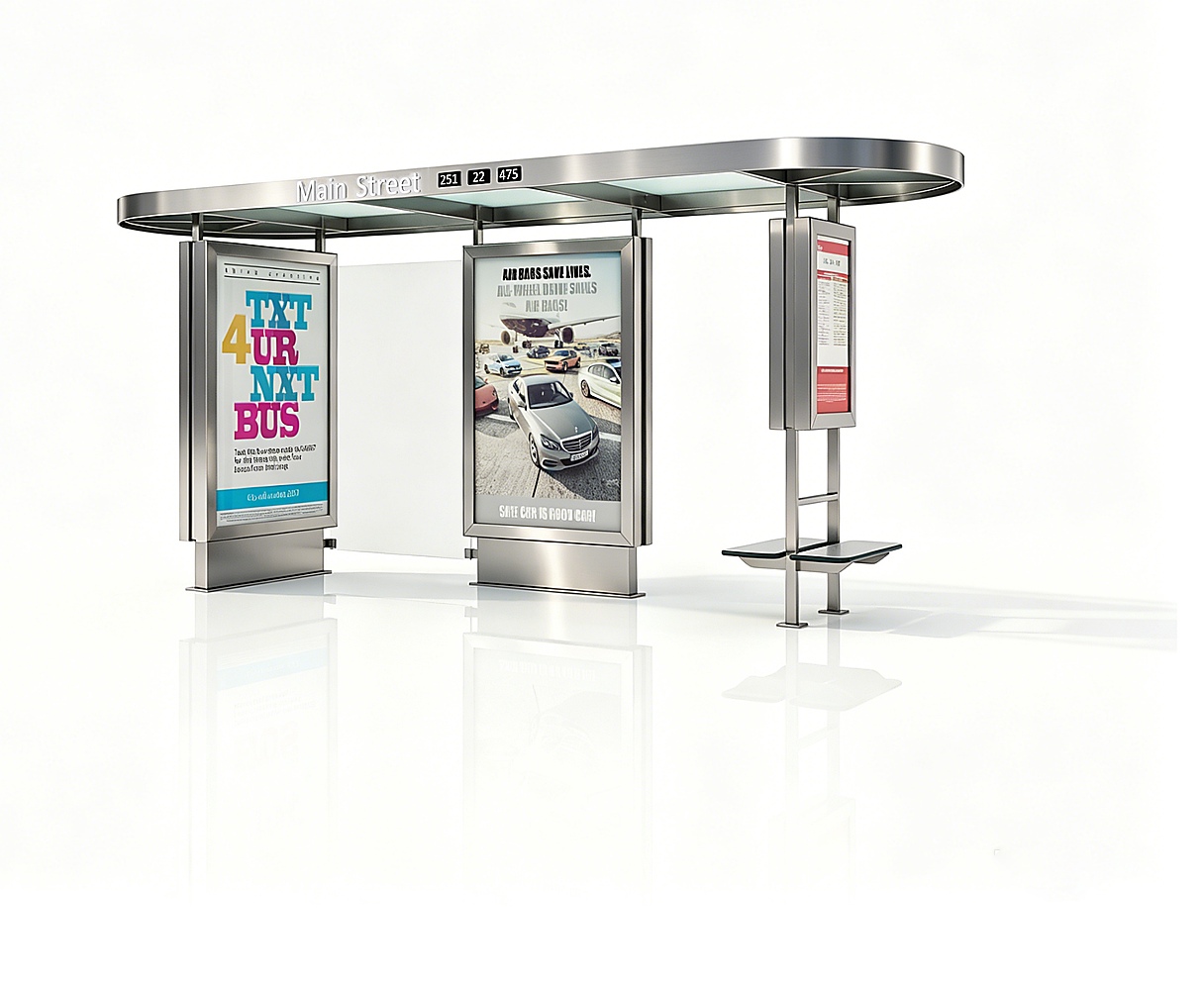
| Comparison Factor | Stainless Steel Bus Shelter | Aluminum Bus Shelter |
|---|---|---|
| Structural strength | High strength and strong resistance to impact | Lower strength than stainless steel in many comparable structural applications |
| Weight | Heavier, requiring more consideration during logistics and installation | Lightweight and easier to transport, lift, and assemble |
| Corrosion resistance | Excellent when the correct grade, fabrication, and surface finish are selected | Naturally corrosion-resistant through its oxide layer, but can be affected by aggressive environments and galvanic contact |
| Vandal resistance | Better resistance to dents, deformation, and repeated public use | More susceptible to dents, scratches, and deformation from impact |
| Surface appearance | Premium, solid, modern, and suitable for high-end urban projects | Clean, contemporary, and well suited to lightweight modular designs |
| Maintenance demand | Usually low, but cleaning and inspection remain essential | Usually low in normal climates; finish protection and connection details require inspection |
| Installation efficiency | Heavier components may increase lifting and foundation planning needs | Faster handling and potentially lower installation labor requirements |
| Best use cases | High-traffic stations, downtown areas, coastal zones, premium city projects, heavy-duty advertising shelters | Modular shelters, remote locations, projects with transport limits, lightweight structures, rapid deployment projects |
Both metals can be suitable for a modern bus stop shelter, but they solve different project challenges. A successful specification must evaluate the full system, including the frame, roof, glazing, seating, lighting, digital screen enclosure, fasteners, foundations, drainage design, and surface treatment.
A bus shelter is a public asset exposed to a demanding combination of weather, human activity, cleaning chemicals, pollution, vibration, advertising equipment loads, and long-term visual expectations. It must protect passengers from rain, wind, sun, and snow while continuing to look orderly and professional within the streetscape.
The material selected for the main structure influences more than the shelter frame. It can determine:
- How well the shelter withstands repeated passenger contact
- Whether the frame resists dents and deformation
- How easily the shelter can support digital signage or LED displays
- How frequently surface repairs may be needed
- Whether fasteners, joints, and dissimilar metals create corrosion risks
- How easily the shelter can be shipped and installed
- How the product performs in humid, coastal, industrial, or snowy locations
- Whether the shelter maintains its city-brand appearance over time
Public-space shelter structures should be durable, easy to clean, weather-resistant, and designed to resist vandalism. Well-designed structures commonly use strong load-bearing members combined with replaceable panels, rather than relying only on decorative external parts.
For this reason, purchasers should avoid comparing materials based on a single claim, such as "aluminum does not rust" or "stainless steel is stronger." Both statements are incomplete without considering material grade, thickness, structural geometry, welding quality, coating system, and environmental exposure.
A stainless steel bus shelter is often selected for projects requiring a high degree of structural confidence, premium appearance, impact resistance, and long-term public-space durability. Stainless steel is an iron-based alloy containing at least 10.5% chromium, which forms a protective passive oxide layer that improves resistance to rust, oxidation, and staining.
Stainless steel typically provides stronger structural performance than aluminum for a similar profile size. This is especially valuable when a shelter includes:
- Large roof spans
- Thick laminated or tempered glass panels
- Heavy-duty benches
- Wind-resistant side panels
- Digital information displays
- LED lighting systems
- Solar panels and battery enclosures
- Outdoor advertising light boxes
- Expanded roof canopies
For busy city centers, transportation hubs, airport shuttle zones, school transit stops, stadium surroundings, and commercial advertising corridors, stainless steel frames can provide a more solid and stable structure.
A stronger material does not automatically mean an oversized shelter. A capable design team can optimize section sizes, joint connections, internal reinforcement, and anchor points to achieve a balanced solution. However, stainless steel gives engineers more confidence where long spans, higher loading, or public misuse are likely.
Urban furniture must withstand more than natural weather. It may experience bicycle impacts, luggage strikes, skateboard contact, intentional damage, improper cleaning, and frequent use by passengers.
Compared with aluminum, stainless steel is generally better suited to locations where impact resistance is a priority. Aluminum can be durable, but it is relatively softer and may dent or deform more easily when hit. This does not mean aluminum shelters are weak; it means their design should include appropriate wall thickness, reinforced profiles, protected corners, and replaceable panels.
For highly visible public projects, the ability to preserve a clean exterior after years of use can have a major influence on the city's public image.
Stainless steel can provide outstanding corrosion resistance when the right grade is chosen for the environment. Lower-alloy grades may suit ordinary atmospheric exposure, while grades containing molybdenum are often selected where chloride exposure, coastal air, or more aggressive conditions are present.
This makes stainless steel an attractive choice for:
- Coastal cities with salt-laden air
- Regions using de-icing salt during winter
- Industrial zones with airborne pollutants
- High-humidity tropical locations
- Transport terminals exposed to frequent cleaning
- Bus shelters near roads with heavy vehicle spray
However, "stainless" does not mean "maintenance-free." Dirt, salt deposits, construction dust, and pollutants can remain on the surface and reduce visual quality. Routine cleaning and inspection still matter.
A brushed, hairline, bead-blasted, or polished stainless steel surface can create a refined, modern look. For municipal gateways, central business districts, tourism areas, premium commercial developments, and branded transit projects, stainless steel can communicate permanence and quality.
It also integrates well with glass, perforated metal, timber-look materials, LED lighting, city logos, route maps, and digital advertising screens. When combined with a thoughtful lighting design, a stainless steel frame can give a smart bus shelter a strong day-and-night identity.
An aluminum bus shelter is often chosen when low weight, modularity, corrosion resistance, and efficient installation are the leading priorities. Aluminum naturally develops an oxide layer that helps protect its surface from ordinary atmospheric corrosion. It does not rust in the same way as carbon steel, although it can still oxidize or corrode under certain conditions.
The greatest advantage of aluminum is its low density. An aluminum shelter can reduce handling requirements during manufacturing, loading, transport, lifting, and on-site assembly.
This is valuable when projects involve:
- Remote installation sites
- Limited access roads
- Fast deployment schedules
- Existing pavements with restricted loading capacity
- Smaller installation crews
- Modular or knock-down shelter designs
- International shipment cost control
For export projects, a lower-weight aluminum bus shelter may help reduce freight costs, particularly when the design uses modular components that can be efficiently packed in containers.
Aluminum performs well in many ordinary urban and suburban outdoor environments. Its natural oxide layer provides a degree of corrosion protection, and powder coating, anodizing, or fluorocarbon finishes can further improve visual durability and color retention.
For a standard passenger shelter in a moderate climate, aluminum can provide long-term performance with relatively simple maintenance. Manufacturers commonly use corrosion-resistant aluminum profiles in lightweight modular shelter designs.
However, project teams should not assume that every aluminum alloy and every connection detail performs the same way. Aluminum can experience pitting or galvanic corrosion in certain conditions, especially where it contacts dissimilar metals in the presence of moisture or salt.
Aluminum extrusion allows manufacturers to create precise profiles that integrate channels for glazing, LED strips, drainage paths, cable routing, signage brackets, and concealed fasteners. This can make aluminum especially attractive for minimalist shelters with clean lines and modular assembly.
A well-designed aluminum structure can support:
- Curved roof systems
- Slim-profile glazing frames
- Integrated LED lighting channels
- Modular advertising panels
- Interchangeable route maps
- Compact smart-city sensor housings
- Lightweight solar roof components
For cities that prioritize fast deployment and visual consistency across many locations, aluminum's design flexibility can be a major advantage.
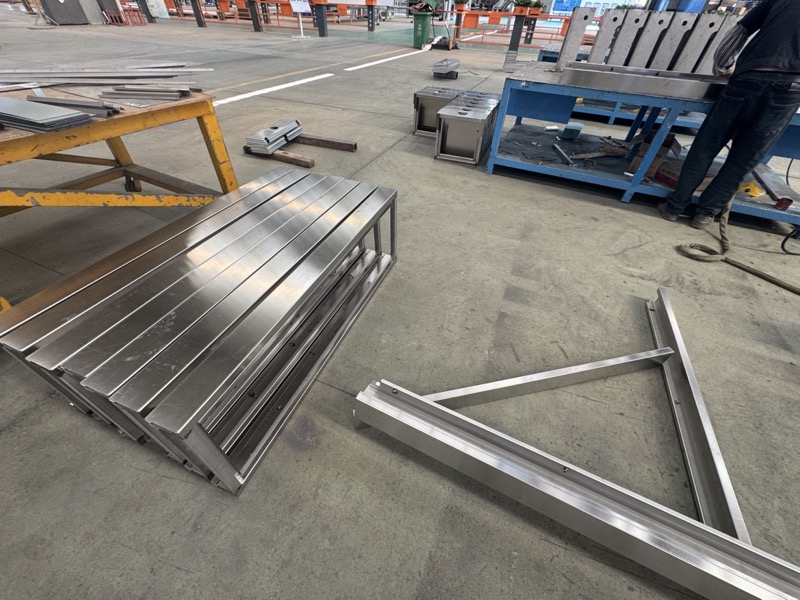
The answer depends on what "durability" means for the project. Durability includes corrosion resistance, mechanical strength, resistance to impact, coating longevity, joint performance, structural stability, and ease of replacing damaged components.
A stainless steel bus shelter is usually the stronger choice when the project requires:
- High resistance to dents and impact
- Larger structural spans
- Heavy glass or advertising equipment
- High passenger volume
- High vandalism risk
- Exposure to road salt or coastal contamination
- Premium long-term visual quality
- Stronger support for heavy smart-city equipment
Stainless steel is especially suitable when shelter failure, deformation, or frequent repair would create a public-safety issue or damage a city's visual identity.
An aluminum bus shelter is usually the more practical choice when the project requires:
- Lightweight shipping and installation
- Modular or prefabricated construction
- Faster on-site assembly
- Lower lifting requirements
- Good performance in ordinary climates
- Flexible extruded design profiles
- Easier relocation or expansion
- Cost-efficient deployment across many stops
In many projects, the best solution is not entirely stainless steel or entirely aluminum. A hybrid design may use a stainless steel primary frame for strength and an aluminum roof, decorative trim, equipment housing, or advertising module to reduce weight.
Neither material is truly maintenance-free. The best maintenance strategy is preventive: remove contaminants early, inspect joints regularly, repair coating damage quickly, and replace damaged panels before minor issues become larger structural or visual problems.
Stainless steel maintenance is generally straightforward, but it must be consistent.
Recommended practices include:
1. Wash surfaces regularly to remove dust, salt, exhaust residue, and bird droppings.
2. Use non-abrasive cleaners that are compatible with the specified stainless steel finish.
3. Avoid carbon-steel contamination, such as steel wool or unclean fabrication tools, which can leave particles that later rust.
4. Inspect welds, edges, and drainage areas for trapped moisture or debris.
5. Check fasteners and mixed-metal joints to confirm that insulation and sealing remain intact.
6. Repair scratches or surface damage according to the finish specification.
In coastal or high-pollution environments, cleaning intervals should be more frequent. Stainless steel has excellent corrosion resistance, but chloride deposits and pollutants should not be allowed to accumulate indefinitely.
Aluminum shelter maintenance also begins with regular cleaning and inspection.
Recommended practices include:
1. Clean powder-coated or anodized surfaces with mild detergent and clean water.
2. Inspect for scratches, chips, and finish wear, especially around doors, advertising frames, and bench supports.
3. Check drainage paths to prevent standing water inside roof channels or profile cavities.
4. Inspect fasteners and isolated joints where aluminum meets steel, stainless steel, or other metals.
5. Replace damaged panels quickly to preserve the overall appearance of the shelter.
6. Review coating condition in coastal, industrial, or chemically exposed locations.
The biggest maintenance concern for aluminum is often not rust. It is surface damage, galvanic corrosion at poorly designed connections, and the gradual visual wear of a coating system.
A shelter's service life is often determined by its weakest detail, not its main material. A high-quality stainless steel frame can still develop problems if water becomes trapped inside a joint. An aluminum shelter can perform poorly if incompatible fasteners are used without isolation.
Project teams should confirm the following before approving a bus shelter design:
- What stainless steel grade or aluminum alloy will be used?
- What is the profile wall thickness?
- Are the primary load-bearing members welded, bolted, or both?
- Are dissimilar-metal contacts electrically isolated?
- Is the drainage system visible and easy to clean?
- Are hidden cavities protected from water accumulation?
- Are replacement parts standardized?
- Is the coating system suitable for local UV, humidity, salt, and pollution conditions?
- Can the structure support future digital displays or solar equipment?
- Are foundations designed for local wind and snow loads?
This is where an experienced manufacturer adds meaningful value. Material decisions should be reviewed alongside fabrication methods, structural calculations, surface treatment, electrical integration, logistics planning, and future maintenance access.
| Project Scenario | Recommended Material Direction | Reason |
|---|---|---|
| High-traffic downtown bus station | Stainless steel or reinforced hybrid structure | Better strength, impact resistance, and premium long-term appearance |
| Coastal city bus shelter | Higher-grade stainless steel or carefully engineered aluminum system | Salt exposure requires close attention to grade, finish, joints, and cleaning frequency |
| Rapid municipal rollout across many stops | Aluminum modular shelter | Lower weight and faster transportation and installation |
| Smart shelter with LED displays and solar system | Stainless steel main frame or hybrid structure | Supports heavier equipment and improves structural confidence |
| Temporary or relocatable shelter | Aluminum structure | Lightweight handling and easier relocation |
| Outdoor advertising shelter in a commercial district | Stainless steel or hybrid design | Stronger support for illuminated advertising panels and frequent public interaction |
| Low-traffic suburban station | Aluminum or stainless steel, based on budget and climate | Both can work when correctly designed and maintained |
| Vandalism-prone urban location | Stainless steel frame with replaceable panels | Better impact resistance and more robust public-space performance |
Before requesting a quotation, prepare a clear project brief. This helps the manufacturer recommend the correct material and avoids unnecessary changes after production begins.
Include the following information:
- Installation city and climate conditions
- Coastal, industrial, or snow-region exposure
- Expected daily passenger volume
- Shelter dimensions and passenger capacity
- Required roof style and glazing type
- Bench configuration and accessibility requirements
- Outdoor advertising panel size
- LED screen, route display, CCTV, Wi-Fi, USB charging, or emergency-call requirements
- Solar power requirements
- City logo, colors, and visual identity guidelines
- Wind load, snow load, and foundation conditions
- Packaging, shipping destination, and installation support needs
- Expected service life and maintenance plan
For example, a city may initially request a lightweight aluminum structure to simplify installation. After reviewing local wind conditions, digital screen weight, coastal salt exposure, and anticipated passenger traffic, the final recommendation may become a hybrid shelter: a reinforced stainless steel base structure with aluminum roof trim, tempered glass side panels, powder-coated exterior elements, integrated LED lighting, and corrosion-isolated fasteners.
That type of design decision can improve both field performance and long-term maintenance control.
For projects focused on maximum structural durability, impact resistance, premium appearance, and demanding urban conditions, stainless steel is usually the stronger long-term option. It is particularly suitable for high-traffic stations, heavy-duty advertising shelters, smart bus shelters with integrated equipment, and locations exposed to vandalism, road salt, or coastal air.
For projects focused on lightweight construction, modular deployment, transportation efficiency, and standard outdoor environments, aluminum is often the more practical option. It can provide excellent corrosion resistance and a clean modern appearance when the alloy, profile design, coating, and connection system are properly specified.
The most effective decision is often based on total ownership value rather than initial material cost. Consider structural design, manufacturing quality, transportation, installation, replacement parts, cleaning schedules, climate exposure, and future technology upgrades.
Ainl can provide customized OEM/ODM bus shelter solutions with options for stainless steel structures, aluminum structures, hybrid frames, solar power systems, LED lighting, digital displays, outdoor advertising panels, city branding, customized dimensions, colors, and functional configurations. Contact Ainl with your project drawings, site conditions, technical requirements, and destination market details to receive a tailored material and shelter configuration recommendation.
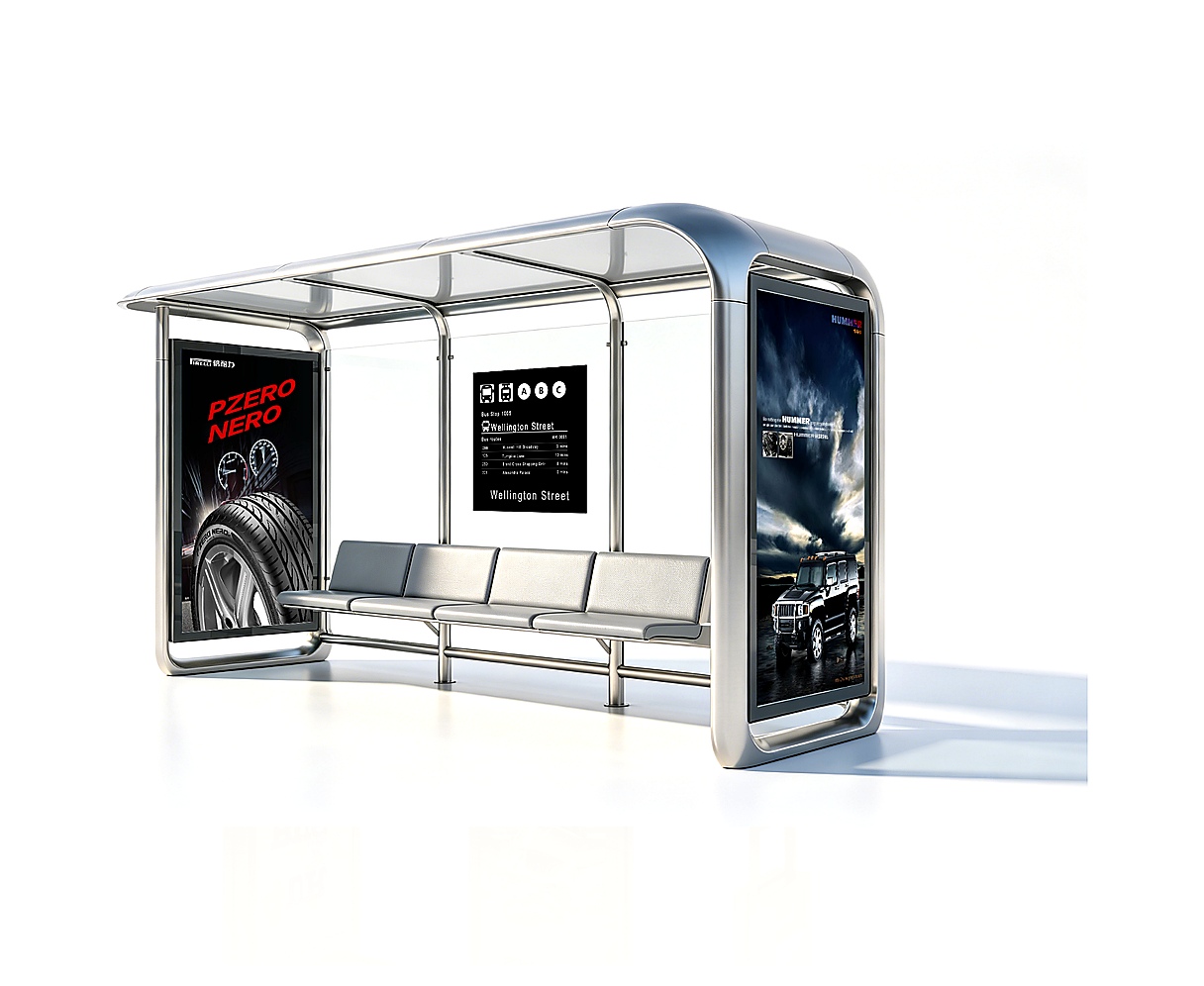
Stainless steel is generally better for high-strength, high-traffic, vandalism-prone, and heavy-equipment applications. Aluminum is better when lighter weight, faster installation, and modular transport are the main priorities.
Aluminum does not rust like carbon steel because it develops a natural oxide layer. However, it can still corrode, pit, or suffer galvanic corrosion in aggressive environments, especially near saltwater or when it contacts incompatible metals without proper isolation.
Both materials require regular cleaning and inspection. Aluminum may require less attention to rust-related issues in ordinary environments, while stainless steel can offer stronger long-term resistance to physical damage. Maintenance frequency depends heavily on climate, coating quality, drainage design, and public use.
Yes. Stainless steel is often suitable for coastal applications, but the grade must be selected according to chloride exposure, and regular cleaning remains important. Higher-performance grades may be needed in severe marine conditions.
They can be, provided the aluminum profiles, wall thickness, reinforcement, joints, and foundation are engineered for the required load. For larger screens, heavy advertising light boxes, or extensive solar equipment, a stainless steel or hybrid structural frame may offer greater design flexibility.
Yes. Hybrid bus shelters are common and practical. A project may use stainless steel for primary load-bearing members and aluminum for roof trims, decorative elements, equipment housings, or modular advertising components. Dissimilar-metal connections should be properly isolated to reduce corrosion risk.
Send the site location, dimensions, passenger capacity, climate conditions, wind and snow requirements, preferred material, roof design, glazing requirements, seat layout, lighting, advertising panel needs, digital-screen specifications, solar requirements, logo artwork, color standards, and shipping destination.
1. [Project for Public Spaces — Bus Shelters]
2. [Xometry — Stainless Steel: Meaning, Properties, and Uses]
3. [Stalatube — Difference Between Stainless Steel and Aluminum Bus Structures]
4. [Unified Alloys — Stainless Steel vs. Aluminum]
5. [Clinton Aluminum — Stainless Steel Uses in Architecture]
6. [Polished Metals — What Is the Best Metal for Outdoor Use?]


