
Email: ainlbusshelter@gmail.com | WhatsApp: +86-18800607527
Views: 264 Author: Ainl Bus Shelter Publish Time: 2026-10-10 Origin: Site


Content Menu
● Snow Resistant Bus Shelter vs Standard Bus Shelter: What Is the Difference?
>> Comparison of Essential Winter Features
● Which Structural Features Improve Winter Transit Safety?
>> Site-Specific Snow Loads Matter More Than Roof Appearance
>> Pitched Roofs Are Not Automatically Safer
>> Foundations Complete the Safety System
● Drainage and Ice Control: The Overlooked Safety Priority
>> Route Meltwater Away From Passenger Movement
>> Combine Suitable Surfaces With Active Maintenance
● Wind Protection, Visibility, and Accessible Boarding
>> More Enclosure Is Not Always Better
>> Accessibility Must Survive the Snowstorm
● Lighting, Materials, and Smart Shelter Equipment
>> Prioritize Visibility Over Decorative Brightness
>> Specify Corrosion Protection as a System
>> Size Solar Power for Winter Conditions
● Three Expert Insights for Better Winter Shelter Procurement
>> 1. Audit the Entire Passenger Journey
>> 2. Evaluate Neighboring Structures and Snow Sources
>> 3. Measure Operational Performance
● A Practical Winter Bus Shelter Procurement Checklist
● When Should You Choose Each Shelter Type?
● How Ainl Supports Customized Winter Shelter Projects
>> Is a Snow Resistant Bus Shelter Completely Snowproof?
>> Can a Standard Bus Shelter Be Upgraded for Winter?
>> What Snow-Load Rating Should Buyers Request?
>> Is a Sloped Roof Better Than a Flat Roof?
>> Can Solar-Powered Bus Shelters Operate During Snowy Winters?
>> Who Should Clear Snow Around the Shelter?
A snow resistant bus shelter and a standard bus shelter may look similar, but their winter performance depends on more than appearance. Roof strength, drainage, wind protection, accessible boarding space, and maintenance access all influence whether passengers can wait and board safely.
From a manufacturing and project-planning perspective, the most important distinction is verified performance. A shelter described as "snow resistant" should have documented structural capacity and a practical winter maintenance plan—not simply thicker panels or a sloping roof.
For transit agencies, municipal buyers, and infrastructure contractors, the right choice starts with local weather conditions, site constraints, and operating responsibilities.
A standard bus shelter typically provides overhead protection, seating, visibility, and space for passenger information or advertising. Its suitability for winter depends on the specific design and project specifications.
A snow resistant bus shelter is configured for the snow, ice, wind, and maintenance conditions expected at its installation site. This can involve engineered roof supports, suitable foundations, controlled meltwater discharge, and components selected for low-temperature service.
"Snow resistant" is not, by itself, a universal certification category. Buyers should request measurable design criteria and supporting documentation.
Likewise, a standard shelter is not automatically unsafe in snow. A conventional-looking structure can perform well when its engineering and maintenance arrangements match the location.

| Feature | Standard Bus Shelter | Snow Resistant Bus Shelter |
|---|---|---|
| Structural capacity | Depends on the original specification | Explicitly designed for site-specific winter loads |
| Roof configuration | Often selected for appearance and basic weather protection | Evaluated for accumulation, drifting, and snow discharge |
| Drainage | May provide basic runoff control | Directs meltwater away from entrances and boarding areas |
| Wind protection | General-purpose panel arrangement | Layout considers winter wind and wind-driven snow |
| Accessibility | Must meet applicable project requirements | Preserves accessible circulation during winter operations |
| Materials and finishes | Suitable for the specified environment | Selected with salt exposure and winter maintenance in mind |
| Lighting and electronics | General outdoor configuration | Operating temperature and winter power demand are checked |
| Maintenance planning | May be addressed separately | Integrated into the shelter layout and procurement brief |
These are procurement distinctions, not fixed characteristics of every product.
The first question I would ask when reviewing a winter shelter proposal is: "What loading conditions was this exact configuration designed to withstand?"
A credible answer should identify:
- The applicable structural standard and locally adopted requirements.
- Ground snow conditions and the resulting roof design loads.
- Relevant drifting, unbalanced accumulation, and sliding snow effects.
- Wind loads and applicable load combinations.
- Roof span, support spacing, connections, anchors, and foundations.
In the United States, ASCE/SEI 7 addresses structural loads and their combinations. Its snow-load provisions distinguish between conditions such as balanced accumulation, drifting, sliding snow, and rain-on-snow effects. Other markets require their own applicable standards.
A snow-load figure without units, design assumptions, or a connection to the supplied model is insufficient for procurement.
Sloped and curved roofs can influence snow accumulation and shedding. However, releasing snow above an entrance, sidewalk, or boarding position creates a separate hazard.
Flat roofs can also be engineered for substantial snow loads. Their performance depends on structural capacity, drainage, and the design conditions—not the label "flat."
The practical objective is controlled behavior:
1. Support the required loads.
2. Manage snow retention or shedding appropriately.
3. Keep discharge zones away from passengers.
4. Provide safe inspection and maintenance arrangements.
Roof-mounted solar panels and advertising equipment must also be included in the structural assessment.
Strengthening roof beams alone does not establish overall winter resilience.
Loads travel through roof connections, columns, base plates, anchors, and foundations. Ground conditions, drainage, and local frost requirements therefore belong in the installation design.
Buyers should establish who supplies foundation calculations and who verifies site conditions. This prevents responsibility gaps between the manufacturer, installer, and local engineering team.
A shelter can remain structurally sound while its entrance becomes difficult to use.
Melting snow, dripping roof edges, blocked drains, and subsequent freezing can create slippery areas precisely where passengers walk or board. Winter safety therefore requires attention to water movement as well as snow accumulation.
A winter-ready drainage review should trace water from the roof to its final discharge point.
Ask whether:
- Gutters and outlets can be inspected and cleared.
- Downpipes discharge outside accessible circulation routes.
- Roof edges drip over entrances or seating.
- Snowbanks could obstruct drainage.
- Nearby street runoff could enter the shelter.
Do not assume that adding a gutter solves the problem. A blocked or poorly positioned outlet can simply relocate the hazard.
Specify firm, stable surfaces suitable for pedestrian use, with slip resistance appropriate to the project. Avoid implying that any surface remains safe under every ice condition.
Maintenance crews must still remove snow, address ice, and inspect drainage. Select deicing products and cleaning methods compatible with the shelter's finishes, paving, and local environmental requirements.
Heated paving or drainage components may be considered for particular sites, but they introduce energy, control, and servicing obligations.
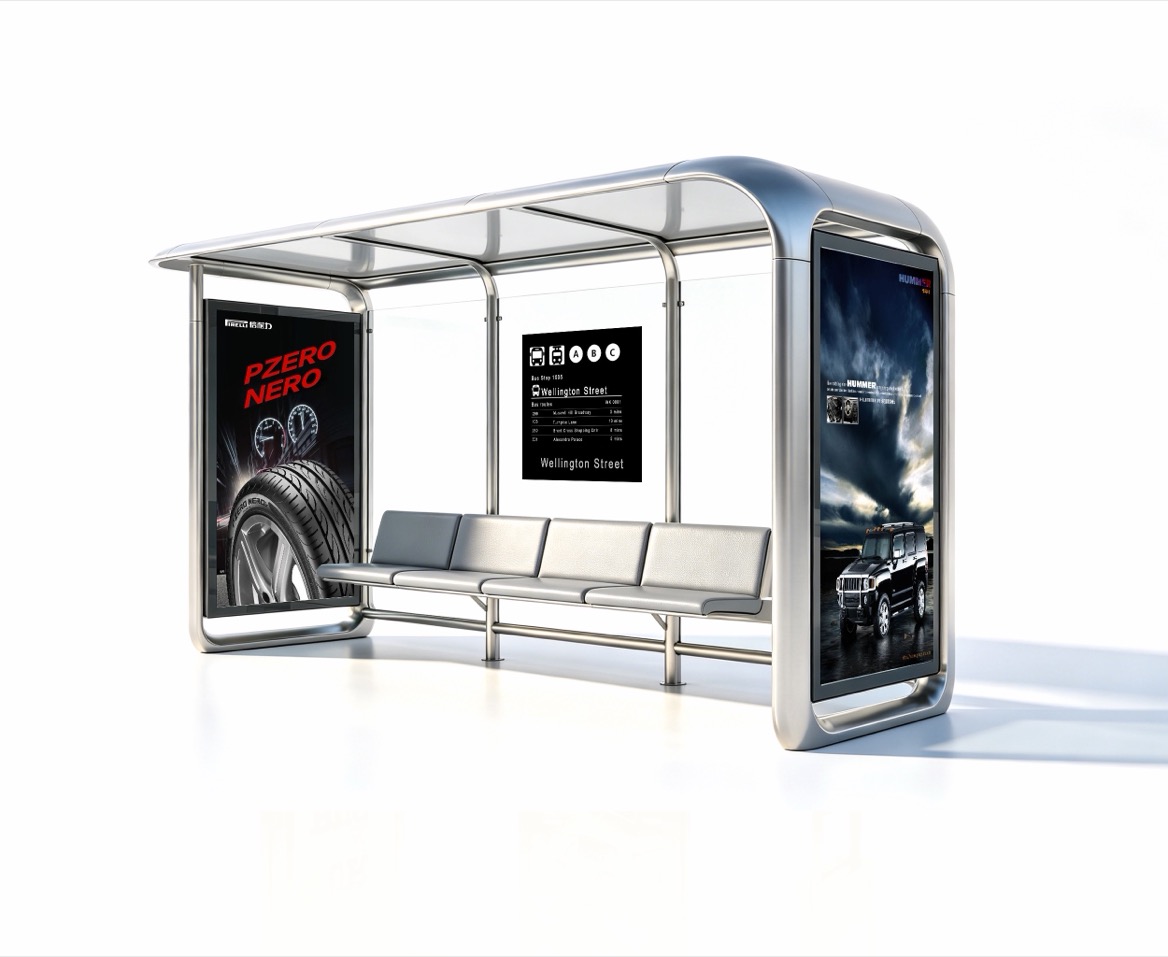
Side and rear panels can reduce exposure to wind-driven precipitation. Their arrangement should consider prevailing winter winds, shelter orientation, and passenger circulation.
However, additional enclosure can also obstruct sightlines or create narrow entrances. Panels may influence local snow drifting, so enclosure design should not be treated as a simple "more panels equals more protection" decision.
Transparent panels can support visibility, but passengers and drivers still need clear views after snow accumulation and cleaning operations.
An accessible layout on a drawing can become unusable when plowed snow blocks the entrance or boarding pad.
For relevant U.S. projects, the ADA Standards specify a bus boarding and alighting area at least 96 inches perpendicular to the roadway edge and 60 inches parallel to it. They also require an accessible connection and clear space within the shelter.
These dimensions are jurisdiction-specific references, not worldwide rules. Public-right-of-way projects may involve additional applicable requirements.
The operational lesson applies broadly: preserve the entire journey from sidewalk to shelter to bus door. Do not use boarding areas or wheelchair spaces for snow storage.
Lighting should help passengers identify entrances, seating, timetable information, and boarding areas.
Specify placement and distribution rather than brightness alone. Glare, shadows, and reflections can reduce usefulness. Confirm that luminaires, controls, wiring, and enclosures suit the expected temperatures and moisture exposure.
A winter commissioning inspection after dark can reveal problems that daytime acceptance checks miss.
Deicing salts make material selection and cleaning particularly important.
Depending on project needs, manufacturers may propose galvanized steel, coated steel, aluminum, or suitable stainless-steel components. No material choice eliminates the need for appropriate detailing and maintenance.
Review welds, exposed edges, fasteners, drainage openings, repair procedures, and connections between different metals. Ask for documented finish specifications rather than accepting "weatherproof" as a complete answer.
Solar-powered bus shelters require a winter energy assessment, not just an annual sunshine estimate.
Snow and ice can limit photovoltaic production and introduce loading challenges. Battery selection must also match the manufacturer's temperature limits and charging requirements.
Calculate demand for lighting, displays, communication equipment, and any heating separately. Identify which functions must continue during prolonged low-generation periods and whether backup power is necessary.
Real-time information can help passengers understand delays, but it does not replace structural safety or snow clearance.
Inspect the approach, entrance, waiting area, and boarding position as one connected system.
A strong shelter offers limited practical benefit if passengers must cross an uncleared snowbank to reach it. Assess nearby drainage, plow routes, curb geometry, and bus-door alignment before finalizing the shelter location.
An isolated shelter and one beside a taller building may experience different accumulation patterns.
ASCE 7-22 revised ground snow information and incorporated a winter wind parameter into drift estimation. This reinforces an important procurement principle: location-specific conditions matter more than a generic regional label such as "cold climate."
Discuss adjacent roofs, walls, rooftop equipment, and snow-storage areas with the project engineer.
Product acceptance should be followed by winter performance monitoring.
Useful measures include:
- Time taken to restore accessible routes after snowfall.
- Frequency of blocked outlets or recurring entrance ice.
- Lighting and display outages.
- Damage from plowing or snow-removal equipment.
- Documented passenger access complaints.
These records help buyers improve specifications without claiming unsupported accident-reduction percentages.
Before comparing quotations, prepare one shared project brief.
1. Define the installation location, applicable standards, and expected winter conditions.
2. Map accessible routes, boarding positions, utilities, drainage, and snow-storage space.
3. Request structural documentation for the exact shelter dimensions and configuration.
4. Specify materials, finishes, electrical operating limits, and inspection requirements.
5. Assign responsibility for foundations, installation, snow clearance, and repairs.
6. Compare lifecycle costs, including maintenance, energy, replacement parts, and downtime.
Avoid requesting only a price for a "heavy-duty snow shelter." That phrase leaves too many safety-critical details undefined.
A standard bus shelter can be appropriate where its documented capacity meets local requirements and winter exposure is limited or manageable.
A snow resistant bus shelter is worth evaluating where sustained snow, drifting, freeze–thaw conditions, salt exposure, or difficult maintenance access justify additional design measures.
For colder locations, prioritize upgrades in this order: structural adequacy, accessible circulation, drainage, wind protection, lighting, and optional smart functions.
The best purchase is not necessarily the most enclosed or technologically complex shelter. It is the configuration that addresses the actual site risks and can be maintained reliably.
Ainl has 16 years of experience developing, manufacturing, and supplying bus shelters, smart-city public facilities, and outdoor advertising products.
Its stated capabilities include approximately 150,000 square meters of factory buildings, provincial-level software and hardware research facilities, CNC sheet-metal processing, large-scale coating facilities, and an electrical testing laboratory.
Ainl also reports national high-tech enterprise status, relevant Chinese construction qualifications, management-system certifications, and safety-production certification.
These capabilities provide context for supplier evaluation; they do not establish site-specific snow-load compliance.
OEM/ODM discussions can cover dimensions, structure, colors, screens, lighting, solar power, and city branding. Buyers should request current certificates and project-specific technical documents.
For a winter-ready proposal, send Ainl your site location, shelter layout, applicable loading requirements, accessibility needs, and power preferences. Ask for a configuration-specific technical package covering structure, drainage, materials, installation responsibilities, and maintenance access.
No. The term describes an intended winter-oriented configuration, not unlimited protection. Safety depends on the specified design conditions, correct installation, and ongoing inspection and maintenance.
Sometimes. An engineer should assess the existing roof, connections, anchors, and foundations before structural alterations. Drainage, lighting, and maintenance improvements may also help, but panels or reinforcement should not be added without checking their effects.
Request the rating required for the exact site under the applicable local standard. Ask whether the documentation addresses relevant accumulation patterns and whether it applies to the supplied dimensions, roof, and accessories.
Not universally. A sloped roof may shed snow, but the discharge area must be safe. A properly engineered flat roof can support its specified loads. Compare complete designs rather than roof shapes alone.
They can when properly designed, but snow cover and limited winter generation must be considered. Power demand, storage, component temperature limits, and backup arrangements determine whether essential functions remain available.
The project agreement should identify the responsible operator, municipality, contractor, or property owner. It should also define clearing priorities, response expectations, inspection duties, and permitted snow-storage locations.
- American Society of Civil Engineers — "ASCE 7-22." Source for the scope of structural loading requirements, load combinations, and revisions to snow-load provisions. [asce]
- Michael O'Rourke / ASCE — *Snow Loads: Guide to the Snow Load Provisions of ASCE 7-22*, published June 21, 2023. Source for distinctions among roof snow loads, drifting, sliding snow, rain-on-snow surcharge, and ponding. [ascelibrary]
- U.S. Access Board — "Chapter 8: Special Rooms, Spaces, and Elements," Section 810, Transportation Facilities. Source for the cited U.S. boarding-area dimensions, accessible connections, and shelter clear-space requirements. [access-board]
- Federal Highway Administration — *Guide for Maintaining Pedestrian Facilities: Research Report*. Source for winter pedestrian-access problems, including plowed snow obstructions, blocked drainage, and ice hazards. [highways.dot]
- U.S. Department of Energy, Federal Energy Management Program — "Solar Photovoltaic Hardening for Resilience – Winter Weather," published May 4, 2023. Source for photovoltaic snow-cover limitations, winter loading concerns, and resilience considerations. [energy]


