
Email: ainlbusshelter@gmail.com | WhatsApp: +86-18800607527
Views: 281 Author: Ainl Bus Shelter Publish Time: 2026-08-31 Origin: Site


Content Menu
● Smart Waste Bin vs Standard Garbage Bin: Core Differences
● Why Fixed Collection Schedules Cost Cities More
● How Intelligent Monitoring Reduces Collection Costs
>> Fill-Level Monitoring Replaces Guesswork
>> Dynamic Routing Reduces Unnecessary Truck Travel
>> Alerts Protect High-Visibility Areas
● Smart Waste Bin Technology: What Cities Should Evaluate
>> Connectivity and Platform Integration
>> Solar Power and Energy Management
● The Real Cost Comparison: Purchase Price vs Lifecycle Cost
● A Practical Smart Bin Rollout Framework
>> 1. Identify High-Cost and High-Visibility Areas
>> 2. Define Measurable Project Outcomes
>> 3. Select Hardware Based on Site Conditions
>> 4. Run a Pilot Before Scaling
>> 5. Adjust Thresholds and Routes
● When a Standard Garbage Bin Is Still the Better Choice
● How Ainl Supports Smarter Public Waste Infrastructure
● FAQ
>> What is the main difference between a smart waste bin and a standard garbage bin?
>> Can smart waste bins really reduce collection costs?
>> Which locations are best for smart waste bins?
>> Do smart waste bins require solar power?
>> Are solar compacting bins suitable for all waste types?
>> What data should a city collect before purchasing smart waste bins?
>> Can smart waste bins support recycling programs?
>> Can Ainl customize smart waste bins for municipal projects?
For city managers, transit authorities, property developers, and waste-service contractors, the choice between a smart waste bin and a standard garbage bin is no longer only about waste capacity or exterior design. It is a decision about operating costs, public-space cleanliness, service reliability, data visibility, and the long-term performance of urban infrastructure.
A standard garbage bin provides a basic, familiar function: it stores waste until a scheduled collection vehicle arrives. A smart waste bin adds intelligent monitoring, connectivity, alerts, and—in some configurations—solar compaction, digital displays, lighting, sorting guidance, and public-information functions. When deployed as part of a well-managed collection system, intelligent monitoring can help cities replace fixed, inefficient collection schedules with demand-based service.
For an experienced public-facility manufacturer and solution provider such as Ainl, the opportunity is not simply to produce connected bins. It is to engineer durable, attractive, configurable city assets that fit the realities of municipal streets, transit stations, parks, commercial districts, campuses, tourism areas, and outdoor advertising environments.
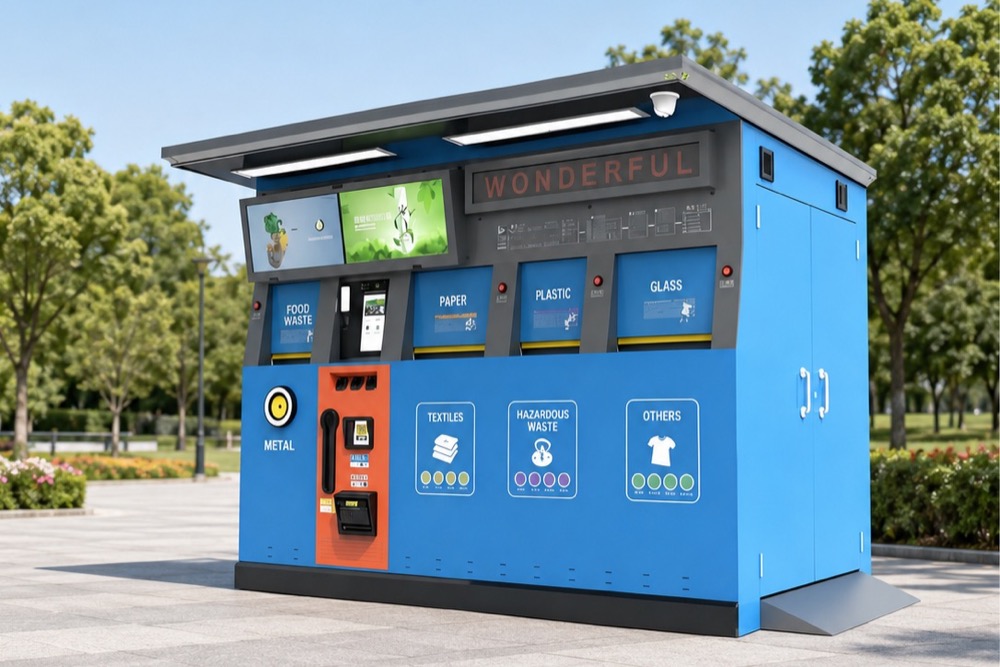
At first glance, both products may appear to perform the same job. They collect public waste. In practice, their management value is very different.
A standard garbage bin is generally a passive container. Its collection schedule is normally set by routine, historical assumptions, or visual inspection. A crew may empty it whether it is nearly full, half full, or almost empty. Alternatively, an unusually busy location may overflow before the next planned collection round.
A smart waste bin becomes an active node in a connected waste-management system. Sensors can measure fill level, while communication modules transmit status information to a management platform. Operators can view bin status, receive alerts, prioritize high-demand locations, and plan collection routes based on actual need rather than guesswork.
| Comparison Factor | Smart Waste Bin | Standard Garbage Bin |
|---|---|---|
| Fill-level visibility | Real-time or scheduled remote data reporting | Manual checks or fixed collection schedules |
| Collection planning | Demand-based, data-led routing | Predetermined routes and frequencies |
| Overflow prevention | Alerts can trigger timely collection | Often identified only after overflow occurs |
| Labor efficiency | Fewer unnecessary site visits may be possible | Crews may service underfilled containers |
| Route efficiency | Routes can be adjusted around actual demand | Vehicles often follow the same route regardless of bin status |
| Public experience | Can include lighting, sorting guidance, screens, and branded elements | Primarily waste storage |
| Waste compaction | Available in selected models | Usually unavailable |
| Data for decision-making | Usage, fill patterns, exception alerts, and service history | Limited operational data |
| Upfront investment | Higher due to electronics, connectivity, and system integration | Lower initial purchase cost |
| Lifecycle value | Potentially higher when operational savings and service quality improve | Depends heavily on manual operations |
The key point is simple: a smart waste bin does not automatically reduce costs just because it contains a sensor. Savings happen when cities use reliable bin data to change collection frequency, vehicle dispatching, crew allocation, maintenance processes, and asset planning.
Traditional waste collection usually relies on a calendar. A truck may visit the same locations every day, every two days, or every week. This approach is easy to administer, but it assumes waste generation is stable.
In real public environments, it is not.
Passenger traffic at a metro station changes by hour. A park may be quiet on weekdays and crowded during events. A commercial street may generate more packaging waste during promotions. Tourist districts may experience seasonal surges. Weather, festivals, sporting events, and nearby construction can all alter disposal patterns.
This creates two expensive outcomes:
- Underfilled-bin collection: Trucks, drivers, and collection crews visit containers that do not yet need servicing.
- Overflow incidents: Busy bins become full before the scheduled visit, creating litter, odor, pest issues, citizen complaints, and additional street-cleaning work.
A pilot study involving remotely monitored outdoor bins found that connected monitoring can provide actionable insight for optimizing collection processes, preventing overfilled bins, and improving user experience. The monitoring approach used wireless nodes and ultrasonic sensing to measure available space in bins.
For city operations teams, the real cost is not only the cost of collecting waste. It includes:
- Fuel and energy consumption.
- Driver and crew hours.
- Vehicle depreciation and maintenance.
- Overtime and emergency dispatches.
- Street-cleaning callouts.
- Complaint handling.
- Reputational damage in high-visibility public spaces.
- Lost value from poorly separated recyclable materials.
A standard garbage bin can still be the right choice for stable, low-traffic locations. But for high-variability public environments, treating every bin as if it fills at the same rate is an operational blind spot.
Intelligent monitoring connects bin conditions with collection decisions. The most useful systems do not merely show a fill percentage. They enable operations teams to determine which bins need service, when they need it, and which route should be used to reach them efficiently.
Most smart waste bin systems use sensors to estimate the waste level inside a container. Depending on the application, a solution may use ultrasonic, laser, infrared, or other sensing methods. The device sends information through a suitable communications network to a cloud-based or locally managed platform.
The operational team can establish rules such as:
- Collect when a bin reaches 80% or 90% capacity.
- Send an alert when a bin rises unusually quickly.
- Flag a bin that has not changed status for an abnormal period.
- Prioritize collection around transit peaks, public events, or commercial operating hours.
- Identify locations where bin capacity is consistently too small or too large.
This changes waste collection from a route-centered process to a service-demand-centered process.
A route-planning study focused on Internet-connected bins describes how real-time fill-level and location data can support dynamic vehicle routing, improving operational efficiency and conserving financial and physical resources.
Once bin status is available, route-planning software can group collection tasks geographically and prioritize urgent bins. Instead of visiting every container on a fixed list, a vehicle can focus on containers that actually require collection.
The potential operational benefits include:
- Reduced driving distance.
- Fewer unnecessary stops.
- Better truck loading.
- Less idle time.
- Fewer emergency collections.
- Lower fuel use.
- Reduced vehicle wear.
- More productive work hours per crew.
A 2023 study of smart textile-waste collection found that data-supported dynamic routing reduced total distance by 11.2%, fuel consumption by 10.21%, and waste overflow by 78% in the evaluated scenario. It also increased average bin fill level at collection from 75% to 92%.
Those results should not be treated as a universal guarantee. Every city has different road networks, service contracts, bin types, waste streams, labor costs, and collection constraints. However, they clearly show why municipalities should evaluate intelligent monitoring using their own real operating data rather than relying only on product purchase price.
Overflow is especially damaging in places where public perception matters:
- Transport hubs.
- Shopping streets.
- Tourist attractions.
- City plazas.
- Parks and waterfronts.
- Stadium surroundings.
- Schools and campuses.
- Government districts.
- Premium commercial developments.
An alert before a bin overflows gives operators time to intervene. This is important because an overflow incident often creates more work than a normal collection visit. Waste can spill onto sidewalks, contaminate recycling streams, attract pests, and require manual cleanup.
A reported deployment in San Francisco was associated with an 80% decrease in overflowing trash cans, a 66% reduction in street-cleaning requests, and a 64% decrease in illegal dumping after smart monitoring was deployed. These figures are vendor-reported and should be validated against local operating conditions before being used in procurement forecasts.
Not all intelligent bins offer the same value. A city should avoid buying technology features that cannot be maintained, integrated, or used by its operations team.
Fill-level sensing is the foundation of an intelligent monitoring system. However, cities should ask practical questions:
- How accurate is the sensor with mixed waste?
- How does it perform with irregular bag shapes?
- Can it operate reliably in rain, dust, heat, cold, humidity, and vibration?
- Does it distinguish between a full bin and an obstruction near the sensor?
- How often does it report data?
- How are false alerts handled?
- Can the sensor be serviced or replaced efficiently?
A sensor that produces unreliable data can create unnecessary collections or missed overflow events. Reliability should be verified through pilot deployment, not just technical brochures.
A smart waste bin needs a communication method appropriate for the project location. This may involve cellular networks, LoRaWAN, NB-IoT, Wi-Fi, or other available infrastructure.
The most suitable solution depends on:
- Local network coverage.
- Number of installed bins.
- Data reporting frequency.
- Battery or solar-power strategy.
- Cybersecurity requirements.
- Municipal platform compatibility.
- Long-term connectivity cost.
The platform should allow operators to see bin location, fill status, battery status, alert history, service records, and trends over time. It should also support exportable data for route planning, contract management, and performance reporting.
For outdoor public infrastructure, solar power can reduce dependence on local electrical connections. It is particularly useful for bins with compactors, displays, lighting, or more frequent data transmission.
However, solar performance is not the same in every city. A practical assessment should consider:
- Seasonal sunlight levels.
- Building shadows.
- Tree cover.
- Panel orientation.
- Local dust and pollution.
- Battery performance in heat and cold.
- Energy consumption of screens, lights, compactors, and communications devices.
Ainl's ability to support customization in solar power systems, lighting configuration, screen configuration, size, structure, color, and city-brand elements is valuable because a public bin should be designed around its deployment environment—not forced into a one-size-fits-all specification.
A solar compacting smart waste bin can increase effective capacity by compressing waste. This can be useful in high-footfall locations where traditional bins fill quickly and collection access is limited.
Yet compaction is not necessary everywhere. It may be more appropriate for airports, rail stations, parks, plazas, tourist areas, and commercial zones than for quiet residential streets.
The best solution starts with a waste audit: What is being disposed of? How often does the bin fill? Are users placing bulky items inside? Does the waste stream contain recyclable materials? Can collection vehicles access the site easily?
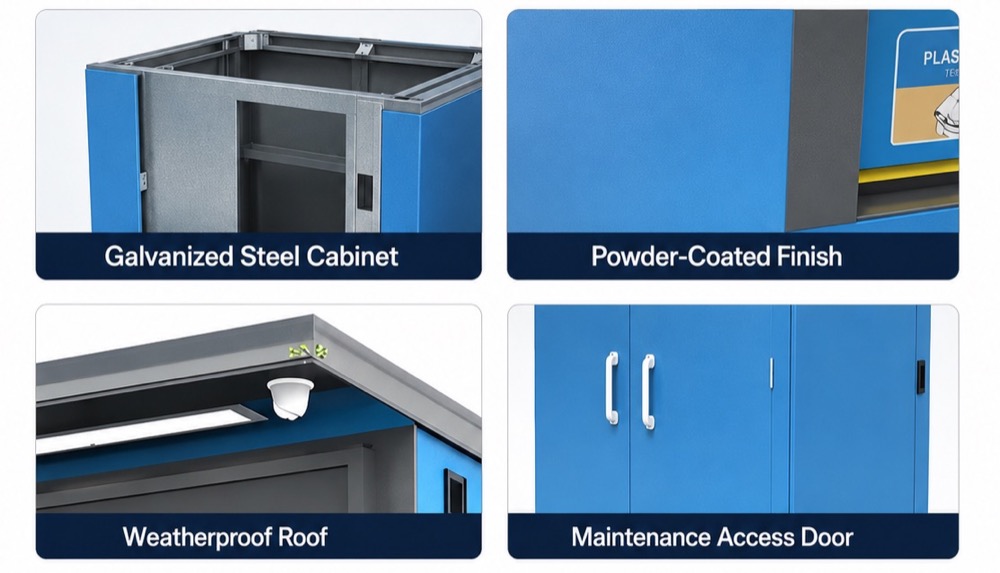
Many procurement decisions focus heavily on initial price. That is understandable, especially when public budgets are constrained. But a smart waste bin should be evaluated using total lifecycle cost, not only unit cost.
A standard garbage bin usually has a lower purchase price. It may be the more economical option where traffic is predictable, collection routes are already efficient, and there is no need for additional public-facing functions.
A smart waste bin usually requires a higher initial investment because it may include sensors, electronic controls, wireless connectivity, a management platform, power components, displays, lighting, and compaction equipment. But the additional cost may be justified when it reduces recurring collection expenses or improves public-service outcomes.
A practical lifecycle analysis should compare:
| Cost or Value Area | Standard Garbage Bin | Smart Waste Bin |
|---|---|---|
| Initial procurement | Usually lower | Usually higher |
| Installation complexity | Generally simple | May require commissioning, connectivity, and platform setup |
| Collection labor | Based on fixed schedules | Can be adjusted based on actual fill demand |
| Vehicle mileage | Often consistent regardless of need | May decline when routes are optimized |
| Overflow cleanup | More likely in volatile high-traffic areas | Can be reduced through alerts and proactive service |
| Maintenance | Mechanical cleaning and repair | Mechanical maintenance plus electronics, sensors, power, and software support |
| Data visibility | Minimal | Enables planning, audits, service tracking, and asset optimization |
| Public communication | Limited | May support digital information, branding, wayfinding, or advertising |
| Long-term scalability | Requires additional manual management | Can expand as a connected urban asset network |
Cities should not begin with a large procurement simply because intelligent bins appear modern. The most effective approach is a phased, measurable rollout.
Start with locations where current service problems are measurable. These may include overflow hotspots, tourist corridors, transit zones, event venues, parks, commercial districts, and areas with frequent public complaints.
Review at least several months of:
- Collection schedules.
- Vehicle routes.
- Labor hours.
- Fuel use.
- Overflow reports.
- Street-cleaning requests.
- Citizen complaints.
- Waste volumes.
- Seasonal traffic patterns.
A successful program should have operational goals, not vague technology goals. Examples include:
- Reduce overflow incidents by 30%.
- Increase average fill level at collection.
- Reduce unnecessary collection visits.
- Cut vehicle distance within a pilot zone.
- Improve collection-service response time.
- Reduce street-cleaning complaints.
- Increase recycling participation through clearer bin design and user guidance.
Choose enclosure materials, capacity, access doors, liner systems, solar options, sensors, screens, and lighting based on real use conditions.
For coastal, rainy, dusty, high-temperature, or vandalism-prone environments, durability and serviceability deserve as much attention as digital functions. Ainl's manufacturing resources—including sheet-metal precision processing, large-scale coating capacity, electrical testing, and tailored OEM/ODM engineering—support this project-specific approach.
Deploy a pilot across several different environments, such as a transit location, a commercial street, a park, and a public plaza. Compare the intelligent monitoring data against traditional collection patterns.
Track:
- Number of collections.
- Average bin fullness when serviced.
- Overflow frequency.
- Vehicle kilometers.
- Fuel or energy use.
- Labor hours.
- Maintenance events.
- Connectivity performance.
- Public feedback.
The first configuration is rarely the final one. A bin that should trigger collection at 85% in a busy station may need a 70% threshold at a food court due to odor and contamination risk. A park bin may require different service rules during weekends or event days.
The value of smart waste management comes from continuous improvement. The technology provides data; the operating team converts that data into better decisions.
Smart technology should be used where it solves a meaningful operational problem. It is not always necessary.
A standard garbage bin may be the better choice when:
- The location has low and predictable pedestrian traffic.
- Collection vehicles already pass the site frequently.
- The container is easy to inspect during routine work.
- Connectivity is unavailable or too costly.
- The site has a very limited maintenance budget.
- The project needs simple, durable street furniture without data requirements.
- The expected operational savings cannot justify the higher investment.
For many cities, the strongest strategy is a hybrid waste-bin network. Deploy smart waste bins in high-demand, high-risk, high-visibility locations, while using well-designed standard garbage bins in stable, low-demand areas.
This is often more cost-effective than trying to digitize every container in the city.
Ainl combines manufacturing capability with project-oriented customization for smart city public facilities, outdoor advertising products, and public-space infrastructure. With 16 years of experience, Ainl can support municipal, transportation, commercial, and smart-city projects that require durable appearance, flexible configuration, and long-term deployment practicality.
For smart waste bin projects, key customization opportunities may include:
- Bin dimensions and capacity.
- Structural design and waste-access configuration.
- Powder-coating colors and surface finishes.
- Smart screen size and placement.
- Lighting systems.
- Solar-power configurations.
- Fill-level monitoring integration.
- Recycling-stream labeling.
- City logos, public-service messages, and brand identity.
- Outdoor advertising display integration.
- Project-specific materials and weather-resistance requirements.
The objective is not merely to install a container. It is to create a public asset that supports cleaner streets, efficient operations, visual consistency, public communication, and a more responsive urban environment.
A smart waste bin is most valuable when a city needs to reduce unnecessary collection trips, prevent visible overflow, improve route efficiency, and gain operational data from high-traffic public spaces. A standard garbage bin remains a practical, economical choice for stable locations with predictable demand.
The best procurement decision is based on a site-specific lifecycle analysis. Measure current collection costs, identify overflow hotspots, run a controlled pilot, compare outcomes, and then scale the model that produces measurable value.
If your municipality, transport operator, commercial developer, or public-space contractor is planning a smart waste management project, contact Ainl to discuss a customized smart waste bin, solar compaction bin, recycling station, or outdoor digital public-facility solution tailored to your site conditions and operational objectives.
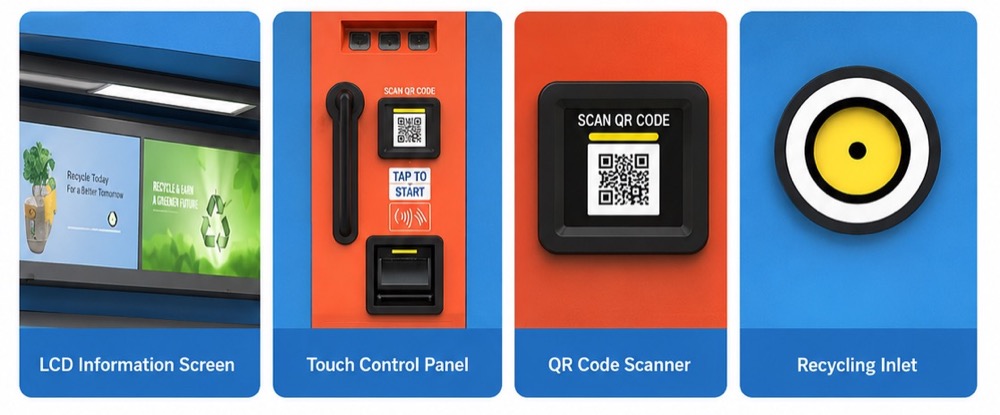
A smart waste bin uses connected technology such as fill-level sensors, wireless communication, alerts, and management software to report its status. A standard garbage bin is usually collected according to a fixed schedule or manual inspection.
They can reduce costs when bin data is used to eliminate unnecessary collections, improve route planning, reduce overflow cleanup, and allocate crews more efficiently. Actual results depend on local bin usage, route design, labor costs, vehicle access, and management practices.
They are especially suitable for busy public places with unpredictable waste volumes, including transit stations, parks, tourist zones, shopping streets, plazas, campuses, stadium areas, airports, and commercial developments.
Not always. Some systems can operate on batteries, wired power, or other energy arrangements. Solar power is often useful for outdoor locations and for bins with compactors, digital screens, lighting, or frequent data transmission.
No. They work best when the waste stream and user behavior are suitable for safe compaction. Cities should assess the presence of bulky waste, liquids, hazardous materials, recyclables, and other materials that may affect performance.
Cities should review collection frequencies, vehicle routes, labor hours, fuel costs, overflow incidents, complaint records, street-cleaning costs, site traffic patterns, bin capacity, and seasonal waste variations.
Yes. A smart recycling bin can combine separate waste streams, clear user guidance, fill-level monitoring, and collection alerts. Good physical design and clear labeling remain essential because technology alone cannot guarantee correct sorting.
Yes. Ainl can support OEM/ODM customization for dimensions, capacity, structure, colors, surface finishes, screen configuration, lighting, solar-power solutions, monitoring integration, recycling guidance, and city-brand identity elements.
1. [Florida Institute of Technology — Dynamic Route Optimization for Waste Collection in Smart City]
2. [University of Hawaiʻi at Mānoa — Smart Cities: A Case Study in Waste Monitoring and Management]
3. [ScienceDirect — Smart Textile Waste Collection System: Dynamic Route Optimization]
4. [Plastic Smart Cities — Waste Collection Digitalisation]
5. [Telit Cinterion — A Guide to Smart Waste Management]
6. [Sensoneo — Route Planning Software for Waste Pickup and Hauling]
7. [Sensoneo — More Efficient Waste Collection Resulting in Cost Savings]


