
Email: ainlbusshelter@gmail.com | WhatsApp: +86-18800607527
Views: 241 Author: Ainl Bus Shelter Publish Time: 2026-09-13 Origin: Site


Content Menu
● What Is a Smart Bus Shelter?
● What Is Smart Street Furniture?
● Smart Bus Shelter vs Smart Street Furniture at a Glance
● Where Smart Bus Shelters Create the Most Value
>> 1. Better Passenger Confidence
>> 2. Improved Safety and Accessibility
>> 3. Stronger Transit Media Opportunities
● Where Smart Street Furniture Creates the Most Value
>> 1. Better Public Spaces Beyond Transit Stops
>> 2. More Flexible Deployment
>> 3. Greater Cross-Department Value
● The Value Decision: Focused Infrastructure or Urban System?
● A Practical Investment Framework for Buyers
>> Step 1: Map the User Journey
>> Step 2: Define the Value Model
>> Step 3: Design for Maintenance Before Installation
● Expert Insight: Technology Should Follow the Street, Not Lead It
● How Custom Manufacturing Improves Project Outcomes
● Smart Bus Shelter vs Smart Street Furniture: Final Recommendation
>> 1. What is the difference between a smart bus shelter and a regular bus shelter?
>> 2. Can smart bus shelters operate with solar power?
>> 3. What types of smart street furniture are most useful for commercial districts?
>> 4. How can a city make smart public infrastructure easier to maintain?
>> 5. Are smart bus shelters suitable for small cities?
>> 6. Can bus shelters and street furniture be customized to match city branding?
>> 7. Which provides better advertising value: a bus shelter or smart street furniture?
For city planners, transit authorities, developers, and urban project contractors, the choice between a smart bus shelter and broader smart street furniture is not simply a product-selection decision. It affects passenger experience, public-space quality, operating efficiency, advertising potential, accessibility, and the long-term identity of a city.
A smart bus shelter is a focused, high-impact transport asset. Smart street furniture is a wider urban infrastructure system that can include benches, kiosks, digital information displays, smart bins, charging points, wayfinding signs, lighting, bike facilities, and public seating. Both can create meaningful value. However, the right investment depends on the city's mobility priorities, installation locations, available budget, maintenance capacity, and desired public-service outcomes.
From a manufacturer's perspective, the highest-value projects usually do not treat these products as isolated metal structures. They treat them as durable, connected, visually consistent urban assets designed for decades of public use.
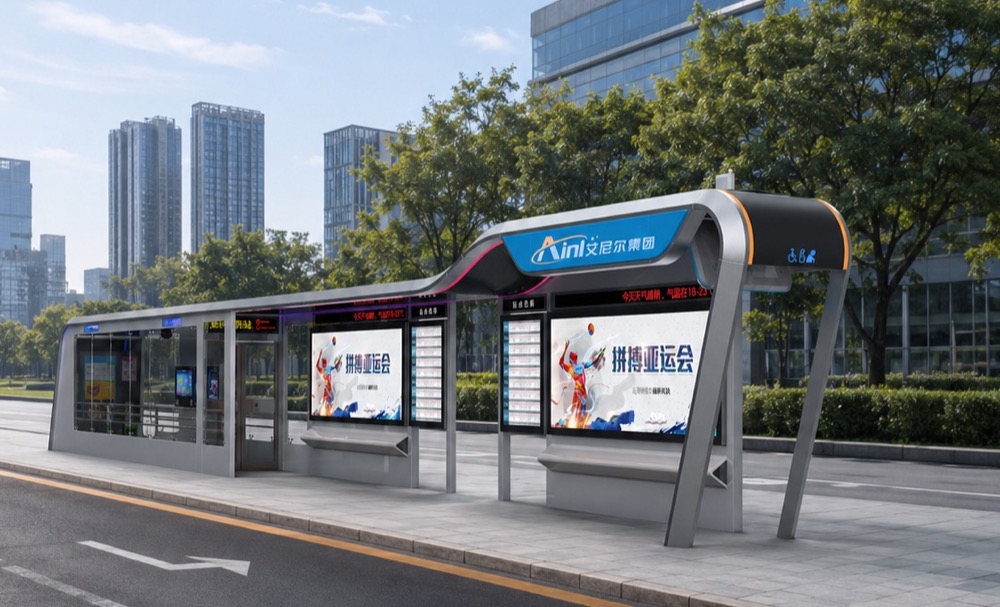
A smart bus shelter is a passenger waiting facility that combines weather protection, seating, route information, lighting, advertising space, and optional digital technologies. Compared with a conventional bus stop, it is designed to make public transport easier, safer, more comfortable, and more reliable.
A well-designed smart bus shelter may include:
- Covered waiting space for rain, wind, heat, or snow
- Stainless steel, galvanized steel, aluminum, or other durable structural materials
- LED lighting for nighttime visibility
- Real-time bus arrival displays
- Digital route maps and passenger information screens
- LCD or LED outdoor advertising displays
- USB or wireless charging points
- CCTV, emergency call systems, or public safety features
- Solar power systems for off-grid or energy-saving operation
- Barrier-free access and wheelchair-friendly layouts
- City branding, local culture, route color systems, and custom graphics
The primary function remains clear: serve public transport users at the point of waiting. Every component should support that purpose.
A smart bus shelter manufacturer must therefore balance engineering, visual design, electrical integration, structural safety, maintenance access, and local transit requirements. A shelter that looks modern but cannot withstand rain, corrosion, vandalism, frequent cleaning, or high passenger volume will not create lasting value.
Smart street furniture is a broader category of connected public infrastructure installed in streets, parks, plazas, commercial districts, campuses, transit corridors, waterfronts, and community spaces.
It may include:
- Smart benches with charging and Wi-Fi capability
- Interactive information kiosks
- Outdoor digital displays
- Smart waste bins with fill-level monitoring
- Public seating and modular rest areas
- Smart lighting poles
- Directional signs and digital wayfinding systems
- Bike parking, bike repair stands, and mobility hubs
- Planters, bollards, public tables, and landscape accessories
- Public safety devices, environmental sensors, and emergency communication points
The key difference is scope. A smart bus shelter is a specialized transport facility. Smart street furniture creates a network of public-space services across different urban environments.
For example, a commercial street may use digital wayfinding, benches, smart lighting, public charging, and advertising displays to increase visitor dwell time. A transit interchange may use these same elements together with smart bus shelters, ticketing kiosks, bicycle facilities, and pedestrian guidance systems.
| Comparison Area | Smart Bus Shelter | Smart Street Furniture |
|---|---|---|
| Primary purpose | Improve the public transport waiting experience | Improve multiple public-space experiences |
| Typical location | Bus stops, transit corridors, terminals, interchanges | Streets, plazas, parks, campuses, commercial zones, transport hubs |
| Main users | Bus passengers, transit operators, advertisers | Pedestrians, residents, visitors, retailers, city departments |
| Core functions | Shelter, seating, route information, lighting, real-time arrivals | Seating, navigation, charging, lighting, waste management, advertising, public information |
| Project scale | Often route-based or transit-network based | Often district-wide, city-wide, or place-making based |
| Revenue potential | High where advertising panels and digital media are permitted | Varies by asset mix, footfall, media rights, and commercial locations |
| Operational complexity | Moderate to high when connected transit data and digital screens are included | Can be high because multiple products, systems, departments, and maintenance routines are involved |
| Best use case | Public transport upgrades and mobility-focused investment | Comprehensive urban renewal, commercial streets, parks, and connected public realms |
| Customization priorities | Passenger flow, sightlines, service information, weather protection | Visual consistency, modularity, site-specific function, public-space integration |
The most important finding: a smart bus shelter often produces deeper value at a specific transport node, while smart street furniture produces broader value across an urban district.
A smart bus shelter becomes especially valuable when a city needs to increase public transport confidence. Waiting is often the least comfortable part of a bus journey. Passengers may face rain, direct sunlight, traffic noise, unclear arrival times, limited seating, poor lighting, and uncertainty about whether they are at the correct stop.
A properly planned shelter reduces these friction points.
Real-time arrival information can reduce uncertainty. Even when a bus is delayed, passengers benefit from knowing what is happening. This makes public transport feel more predictable and professional.
A visible electronic display can show:
- Bus route number
- Estimated arrival time
- Destination
- Service disruptions
- Temporary route changes
- Public announcements
- Weather alerts
- Emergency notifications
This is particularly valuable at high-volume stops, transfer points, hospitals, schools, tourist areas, railway stations, and major employment districts.
A shelter is not only a roof and a bench. It is an important public-safety asset.
Effective designs typically consider:
- Open sightlines for passengers and drivers
- Bright, energy-efficient lighting
- Non-slip flooring and drainage
- Seating heights suitable for older passengers
- Space for wheelchairs, strollers, and luggage
- Clear route signs and large readable text
- Accessible curb alignment
- Safe electrical protection for screens and lighting
- Durable finishes that resist corrosion and graffiti
For many cities, the most valuable benefit is not the screen itself. It is the combination of comfort, visibility, accessibility, and trust.
Bus shelters are naturally located where people pause and look around. This makes them attractive for static posters, backlit advertising panels, and digital out-of-home media.
Advertising can potentially help offset installation, operation, or maintenance costs, depending on local regulations and commercial agreements. However, media should not overpower the passenger function.
A practical design principle is simple: passengers should be able to locate route information instantly, even when advertising content is active.
Transit shelters often become repeated visual landmarks across a city. When shelters use consistent color, roof profiles, logo placement, map layouts, lighting styles, and local cultural elements, they strengthen the city's public identity.
For a historic district, this may mean subdued colors and heritage-inspired detailing. For a technology park, it may mean modular steel-and-glass structures, digital displays, solar power, and contemporary branding.
Smart street furniture creates greater value when the city's challenge extends beyond public transport. It is ideal when planners want to improve walkability, public comfort, retail activity, public information, streetscape quality, and civic identity across an entire area.
Not every important urban space has a bus stop. Parks, plazas, shopping streets, waterfronts, universities, tourist districts, and pedestrian zones all need public amenities.
A coordinated street furniture program can provide:
- Rest areas for elderly residents and visitors
- Public charging locations
- Wayfinding for tourists and pedestrians
- Digital community information
- Waste collection support
- Shade and landscape integration
- Safer nighttime environments
- Consistent visual identity across a district
In this situation, a single smart bus shelter may solve one mobility problem, but smart street furniture supports the wider public realm.
Street furniture can be deployed in smaller phases. A city can begin with benches, signage, lighting, planters, or digital kiosks in a priority district, then expand after evaluating public use and maintenance needs.
This flexibility is valuable for redevelopment projects where roads, retail occupancy, landscaping, and pedestrian flow may change over time.
A smart street furniture program may support several city departments at once:
- Transportation departments can use wayfinding and mobility information
- Public works teams can manage waste bins and maintenance access
- Tourism agencies can share visitor information
- Commercial districts can display event promotions
- Emergency services can distribute alerts
- Environmental teams can use air-quality or weather monitoring equipment
The trade-off is coordination. More functions may create more value, but they also require clearer responsibility for power supply, data security, content management, cleaning, repairs, and replacement parts.
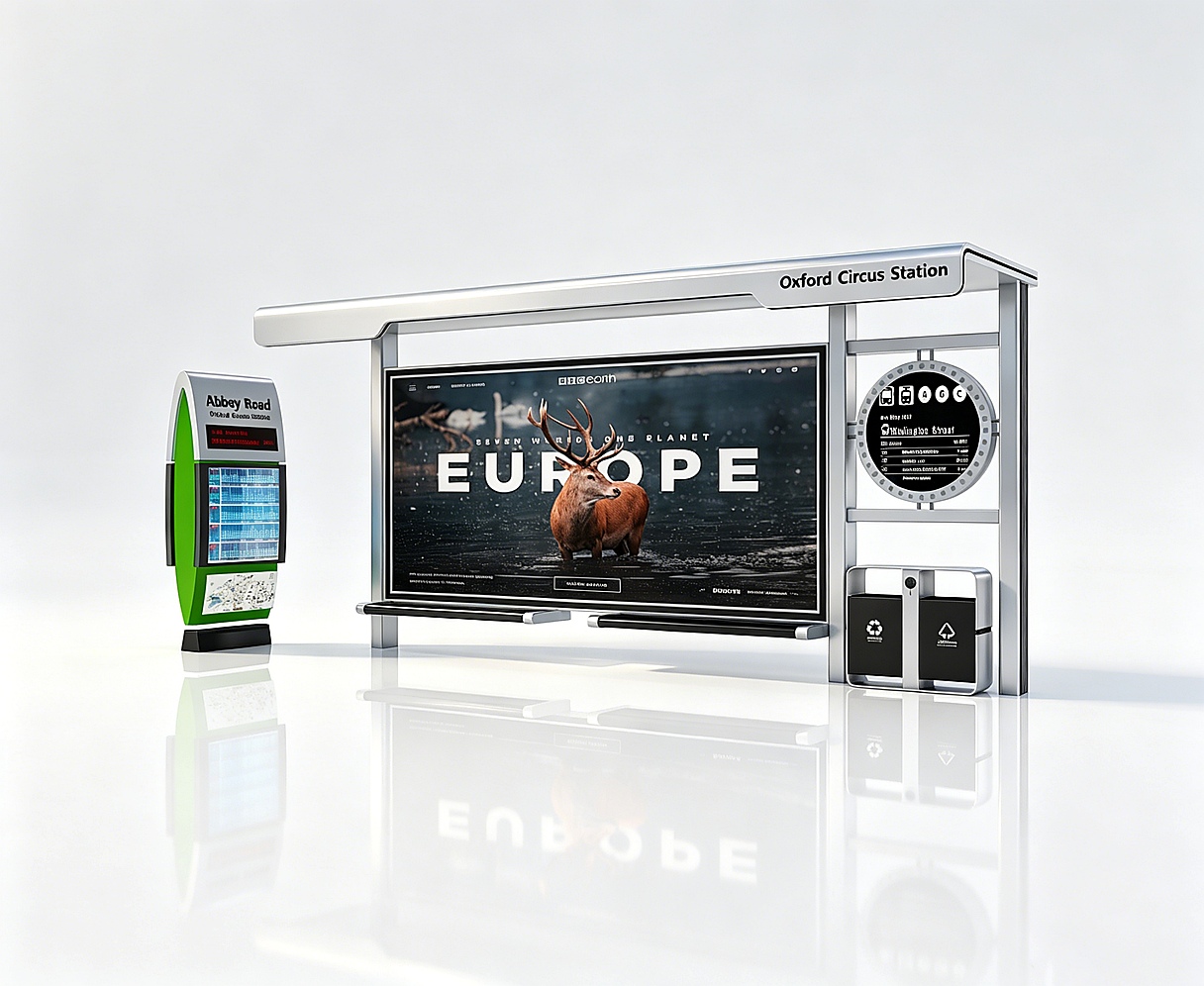
The decision should not be framed as "which product is better?" The more useful question is: which infrastructure solves the city's most urgent public-service problem?
Choose a smart bus shelter first when the city needs to:
- Improve bus passenger satisfaction
- Upgrade poor waiting conditions
- Increase visibility of public transport services
- Support transit-oriented development
- Add real-time arrival information
- Build a route-based advertising network
- Standardize shelters across many bus stops
- Improve accessibility at high-demand transit locations
Choose smart street furniture first when the city needs to:
- Improve a commercial street, plaza, park, campus, or tourist district
- Create more comfortable pedestrian environments
- Add public seating, charging, lighting, or wayfinding
- Build a unified urban design language
- Support multiple city services in one public-space program
- Improve visitor experience beyond bus travel
- Introduce infrastructure gradually in phases
In many major projects, the strongest answer is a combined approach. Smart bus shelters become the transit anchors, while smart street furniture extends the same visual and functional language into surrounding streets and public areas.
Before selecting equipment, project teams should define the operational goal. A product catalog alone is not enough. The procurement process should connect physical design with long-term use.
Start with the people who will use the infrastructure.
For bus shelters, assess:
- How many passengers wait during peak hours?
- How long do they typically wait?
- Is the stop exposed to sun, rain, wind, or heavy traffic?
- Do passengers need route information in multiple languages?
- Are there elderly, disabled, student, tourist, or commuter user groups?
- Is night visibility a concern?
For street furniture, assess:
- Where do pedestrians stop, sit, charge devices, seek directions, or dispose of waste?
- Which areas have the highest foot traffic?
- Are public amenities equally distributed?
- Does the district require a stronger visual identity?
- Is there available electrical infrastructure?
- Can solar-powered units reduce installation constraints?
Not every project should use the same return model. A municipal transport project may prioritize passenger satisfaction and operational efficiency. A commercial district may prioritize visitor dwell time, advertising, and brand visibility.
Common value categories include:
| Value Category | Smart Bus Shelter Contribution | Smart Street Furniture Contribution |
|---|---|---|
| Passenger comfort | Very high | Moderate |
| Public transport efficiency | Very high | Moderate |
| Pedestrian comfort | Moderate | Very high |
| City image | High | High |
| Digital advertising | High | High, depending on location |
| Tourism information | Moderate | High |
| Accessibility | High | High |
| District-wide visual consistency | Moderate | Very high |
| Installation scalability | High for route programs | High for modular public-space programs |
This is one of the most overlooked parts of an urban infrastructure project.
A smart unit should be easy to inspect, clean, repair, and upgrade. Buyers should ask about:
- Access doors for electrical components
- Screen replacement procedures
- Drainage and water-management design
- Powder-coating quality and corrosion resistance
- Spare-parts availability
- Structural connection details
- Cable routing and protection
- Remote monitoring compatibility
- Cleaning access for glass, screens, roofs, and advertising panels
- Local climate suitability
A visually impressive unit can become a burden if maintenance teams cannot safely service it.
From the perspective of urban infrastructure manufacturing, the best smart public facilities begin with the physical environment.
Before selecting screens, sensors, Wi-Fi modules, cameras, or charging systems, project teams should evaluate:
- Climate and corrosion conditions
- Local wind load and snow load
- Pedestrian volume
- Vehicle impact risk
- Electrical reliability
- Installation space
- Accessibility requirements
- Local content and advertising rules
- Maintenance staffing
- Expected product lifespan
Technology should solve a visible public problem. For example, a real-time arrival display makes sense at a busy interchange. A solar-powered lighting system can be useful where grid connection is difficult. A digital wayfinding kiosk can help in a tourist zone with multiple attractions.
By contrast, adding complex electronics to a low-footfall location without a clear maintenance plan can increase cost without delivering proportional benefit.
The strongest smart infrastructure is useful even when the screen is off. It should still provide shelter, seating, safety, comfort, and a high-quality public presence.
Urban infrastructure rarely succeeds as a one-size-fits-all purchase. Cities differ in climate, transit patterns, available land, architecture, regulations, and public expectations.
Custom manufacturing gives buyers more control over the following elements:
- Overall dimensions and passenger capacity
- Steel structure thickness and material selection
- Roof style and drainage design
- Side-panel configuration
- Seating type and quantity
- Glass, perforated metal, aluminum, or advertising-panel options
- LED, LCD, or outdoor display specifications
- Solar panel and battery configuration
- Lighting temperature and brightness
- Route map formats
- Color, logo, and city-brand elements
- Modular components for faster installation
- Packaging and export requirements
For projects requiring transport shelters, digital advertising units, public seating, signage, or integrated streetscape products, it is often more efficient to work with one manufacturing partner capable of coordinating structural fabrication, surface finishing, electrical integration, quality inspection, and customized branding.
Ainl provides custom bus shelter design, manufacturing, and OEM/ODM options for public transport, municipal, and smart city projects. Its product offering includes smart urban infrastructure such as bus shelters, electronic bus-stop displays, outdoor advertising screens, planters, modular buildings, and smart outdoor seating.
A smart bus shelter typically creates more immediate value where public transport is the city's priority. It directly improves the daily experience of passengers, supports accessible mobility, provides a platform for real-time information, and can create advertising opportunities at high-visibility locations.
Smart street furniture typically creates broader value where the goal is public-realm improvement. It can make streets, parks, plazas, campuses, and commercial districts more comfortable, connected, navigable, attractive, and functional.
The best choice depends on project intent:
- Choose smart bus shelters for transport corridors, bus networks, interchange upgrades, commuter routes, and passenger-focused mobility programs.
- Choose smart street furniture for district regeneration, public-space upgrades, pedestrian environments, tourism areas, parks, and mixed-use development.
- Choose an integrated program when the city wants mobility infrastructure and surrounding public spaces to operate as one coordinated system.
For long-term results, prioritize structural durability, site-specific design, maintainable technology, accessible layouts, consistent city branding, and a manufacturer that can support customization from concept through production.
If you are planning a public transport, municipal, commercial, or smart city project, share your site dimensions, local climate, preferred functions, drawings, installation location, and target quantity. A tailored smart bus shelter or smart street furniture proposal can then be developed around your operational goals rather than a standard product specification.
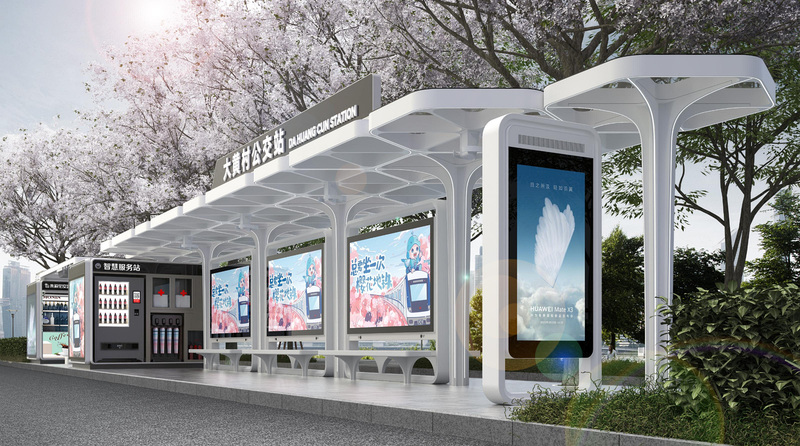
A regular bus shelter mainly provides a roof, side panels, seating, and a route sign. A smart bus shelter can add real-time arrival displays, LED lighting, digital advertising, charging ports, solar power, CCTV, emergency communication, and other connected functions.
Yes. Solar power can support lighting, display systems, charging functions, and other low-to-moderate electrical loads when the site has sufficient sunlight and the system is correctly sized with appropriate batteries and power-management components.
Commercial districts often benefit from public benches, wayfinding signs, digital information kiosks, outdoor advertising displays, smart lighting, charging facilities, planters, waste bins, and modular seating areas. The final selection should reflect pedestrian volume, visitor behavior, available maintenance resources, and local branding needs.
Cities should specify durable materials, weather-resistant finishes, protected electrical systems, accessible service panels, replaceable components, clear cable-routing designs, drainage provisions, spare-parts support, and routine inspection requirements before installation.
Yes. A small city does not need to install complex technology at every stop. It can begin with high-priority locations, such as city centers, hospitals, schools, rail stations, government buildings, and main commercial streets, then expand based on passenger use and budget.
Yes. Customization can include dimensions, structural style, powder-coating color, city logo placement, advertising-panel layout, route-map design, lighting, seating, solar configurations, digital screens, and local cultural design elements.
A bus shelter often provides stronger advertising value at high-traffic transit stops because passengers have a natural waiting period. Smart street furniture can also provide strong media value in retail streets, tourist districts, plazas, and event areas. Location, pedestrian dwell time, local media regulations, and screen visibility determine the final value.
1. [Ainl Bus Shelter — Custom Bus Shelter Manufacturer & Smart City Infrastructure]
2. [Ainl Bus Shelter — Custom Bus Shelter Manufacturing and OEM/ODM Services]
3. [Ainl Bus Shelter — OEM/ODM Customization Services]
4. [Ainl Bus Shelter — Solutions and Cases]
5. [Ainl Group — Smart Urban Infrastructure Product Overview]
6. [United Nations — Sustainable Development Goal 11: Sustainable Cities and Communities]
7. [World Health Organization — Global Status Report on Road Safety]
8. [International Transport Forum — Public Transport and Urban Mobility Resources]


