
Email: ainlbusshelter@gmail.com | WhatsApp: +86-18800607527
Views: 282 Author: Ainl Bus Shelter Publish Time: 2026-08-15 Origin: Site


Content Menu
● The Quick Answer for Municipal Buyers
● What Counts as a Prefabricated Bus Shelter?
● What Is a Custom-Built Bus Shelter?
● Why Prefabricated Shelters Usually Install Faster
>> Factory Production Runs in Parallel
>> Less Work Happens on the Sidewalk
>> Standard Interfaces Reduce Rework
● Where Custom-Built Shelters Can Cause Delays
>> Design Changes Have Wider Effects
>> Site Tolerance Becomes More Sensitive
>> More Trades Need Coordination
● Installation Time Depends on Site Readiness
● A Practical Municipal Selection Framework
● Smart Features Without Slowing the Project
● How Ainl Supports Faster Shelter Deployment
● FAQs
>> 1. How long does it take to install a prefabricated bus shelter?
>> 2. Are prefabricated bus shelters less durable than custom-built shelters?
>> 3. Can a prefabricated bus shelter be customized for city branding?
>> 4. What must be prepared before bus shelter delivery?
>> 5. Is solar power suitable for a smart bus shelter?
>> 6. When should a municipality choose a custom-built bus shelter?
>> 7. Do bus shelters need accessible clear space?
For municipal teams working against tight construction windows, the choice between a prefabricated bus shelter and a custom-built bus shelter can materially affect installation speed, traffic disruption, and project coordination. In most repeatable, properly prepared sites, a prefabricated bus shelter reduces on-site installation time because the main fabrication, finishing, electrical integration, and quality checks are completed before delivery.
However, faster installation does not automatically mean the right solution is fully standardized. A well-designed prefabricated system can still incorporate city branding, digital displays, lighting, solar power, accessibility features, and site-specific dimensions. The real decision is whether the project benefits more from a repeatable modular platform or from a one-off structure built around an unusually complex location.
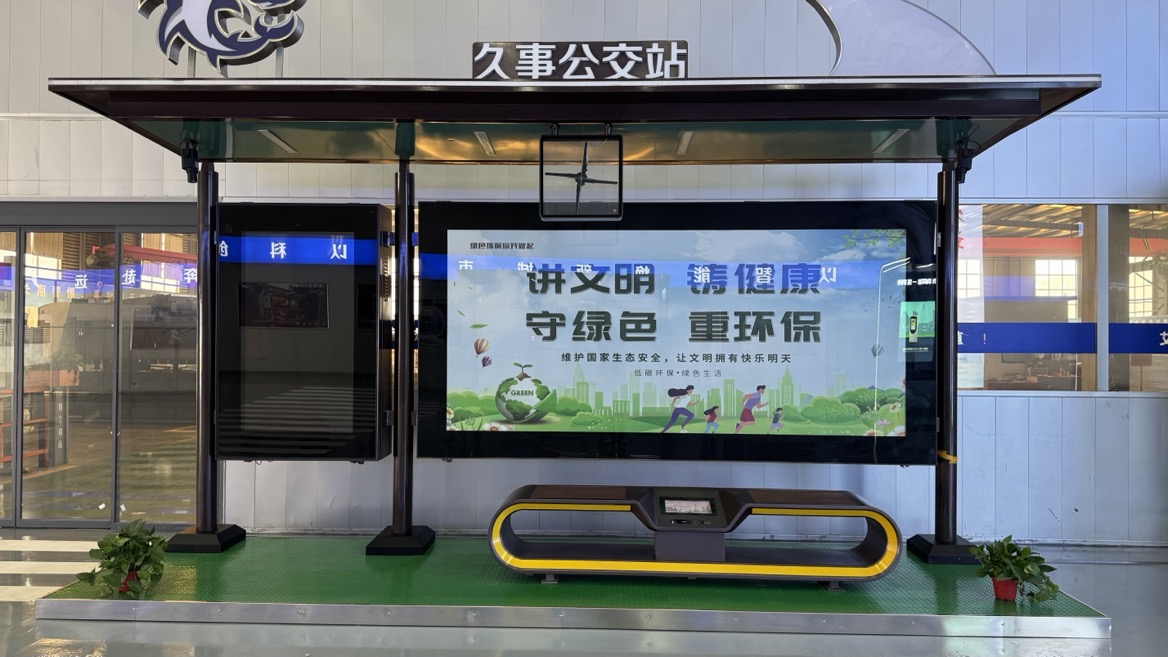
Prefabricated bus shelters usually shorten field installation time when municipalities have confirmed foundations, utility routes, access conditions, and approval requirements before delivery.
A custom-built bus shelter is often more suitable when the site has constrained sidewalks, historic-district requirements, unusual passenger volumes, integrated landscape elements, or non-standard smart-city equipment. Yet custom construction typically creates more work at the project site, increasing exposure to weather, coordination delays, street-access limits, and labor variability.
The most efficient option for many citywide projects is not "standard versus custom." It is a modular prefabricated shelter with controlled customization.
| Decision factor | Prefabricated bus shelter | Custom-built bus shelter |
|---|---|---|
| Main fabrication location | Completed in a controlled factory environment | Often completed partly or largely at the project site |
| On-site installation duration | Usually shorter after foundations and utilities are ready | Usually longer due to on-site assembly and finishing |
| Weather exposure | Lower | Higher |
| Quality consistency across multiple stops | High when using repeatable modules | Can vary between locations and construction crews |
| Design flexibility | Strong with modular OEM/ODM options | Highest for unique one-off designs |
| Best use case | Multi-stop rollouts, corridor upgrades, standard site conditions | Landmark stations, highly restricted sites, unusual geometry |
| Disruption to pedestrians and traffic | Typically lower | Can be higher due to longer site occupation |
A prefabricated bus shelter is manufactured in advance as finished modules or pre-assembled components. Its steel or aluminum structure, roof, seating, glass or polycarbonate panels, lighting, signage frames, advertising panels, and smart equipment interfaces can be produced and tested before shipment.
At the site, the work normally focuses on:
- Foundation inspection and anchor verification
- Delivery and lifting coordination
- Mechanical assembly or placement
- Electrical and communications connection
- Final safety, accessibility, and operational checks
This method transfers a large share of project work away from the sidewalk and into a controlled manufacturing process. That distinction matters because urban sites are rarely simple. Road closures, pedestrian diversions, buried utilities, noise restrictions, and limited work hours can all turn a small field task into a scheduling risk.
Ainl's manufacturing model is designed for this kind of project logic. With integrated sheet-metal processing, coating capacity, electrical testing capability, and hardware/software development resources, the aim is to complete as much work as practical before a shelter reaches the city site. That helps municipal project teams receive a more installation-ready product rather than a collection of components requiring extensive field fabrication.
A custom-built bus shelter is designed primarily around a particular stop, station, streetscape, or architectural concept. It may use unique dimensions, non-standard roofing, curved steelwork, specially selected materials, integrated landscaping, bespoke furniture, or complex digital and advertising systems.
Custom-built does not always mean entirely fabricated at the site. A specialist manufacturer can pre-fabricate many custom parts. But the more unique the structure becomes, the more likely the project will require additional field measurement, adjustment, assembly, cladding, wiring, finishing, and inspection.
This approach can create a strong civic identity. It may also be necessary where a municipal shelter must fit a narrow pedestrian corridor, wrap around existing street furniture, match a heritage environment, or support an unusually large passenger queue.
The trade-off is greater coordination complexity. Every non-standard detail needs to be engineered, approved, manufactured, delivered, and installed correctly. If one interface changes—such as the foundation position, utility entry point, screen specification, or curb alignment—the construction sequence can be affected.
The speed advantage comes less from the word "prefabricated" itself and more from the degree of pre-project certainty.
With a prefabricated bus shelter program, production can proceed while the municipality prepares foundations, permits, electrical connections, and site access. These tasks happen in parallel rather than one after another.
For example, a transit agency can complete a standardized shelter design approval, then place production orders for multiple stops while local contractors prepare concrete pads. Once the foundations reach the required condition, shelters can be delivered in planned batches.
That sequencing reduces the risk of having skilled installers waiting for fabricated parts—or completed products waiting for unresolved sites.
On-site construction is usually the most unpredictable part of a municipal project. Field crews must work around public movement, traffic patterns, weather, existing utilities, nearby businesses, and limited operating hours.
A prefabricated shelter reduces the need for:
- Field cutting and welding
- On-site coating and paint touch-up
- Long assembly sequences
- Repeated material deliveries
- Extended temporary pedestrian management
- Multiple trades working in a confined public space
Los Angeles Metro has stated that, once a shelter installation is approved, the actual installation can take roughly two hours. That figure should not be treated as a universal project duration because site assessment, approvals, foundations, and utility work can take much longer. Still, it shows how short the physical placement stage can become when the project is prepared in advance.
A high-volume municipal shelter program works best when critical interfaces are defined early:
- Anchor-bolt layouts
- Concrete pad dimensions
- Cable entry locations
- Drainage requirements
- Screen mounting zones
- Solar panel connections
- Advertising panel sizes
- Accessible clear-space requirements
When these interfaces are repeatable, contractors and inspectors know what to expect. Installation crews use proven workflows instead of solving new construction problems at every stop.
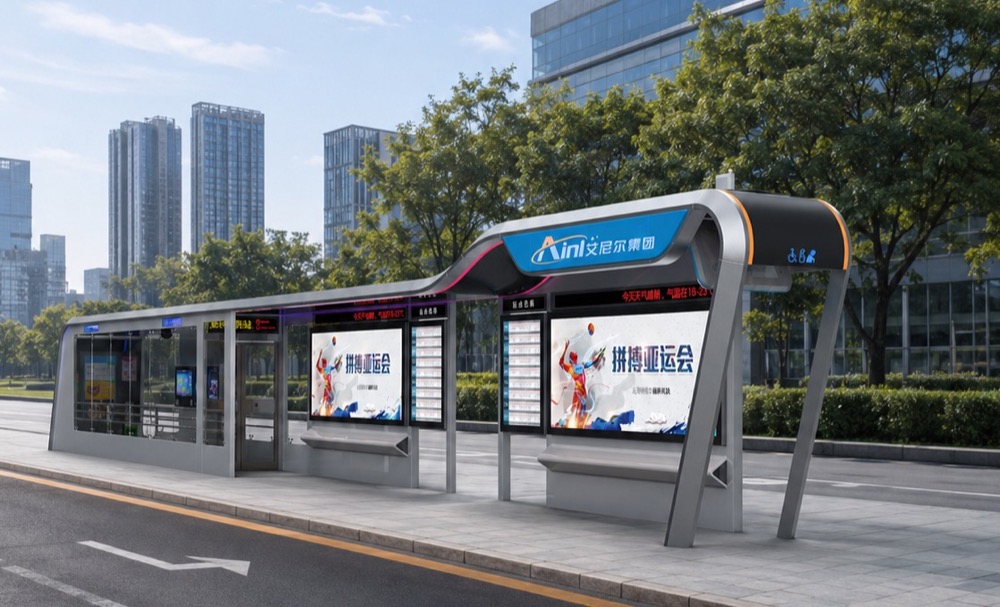
A custom-built bus shelter can be the correct strategic choice, but municipal teams should recognize the installation-time risks before procurement begins.
In a custom project, a late request to enlarge the roof, relocate a display, add solar panels, change façade materials, or revise city graphics may affect structural calculations, cable routing, fabrication drawings, foundations, transport arrangements, and installation equipment.
With a modular system, many changes can be managed through predefined options. With a one-off design, even a small revision can cascade across multiple disciplines.
Every city sidewalk has small deviations: uneven paving, unverified underground services, curb shifts, drainage slopes, tree roots, and street furniture installed over time. A standardized shelter platform can be designed with adjustable connections and known tolerances. A tightly integrated custom structure may have less room for adjustment.
This is especially important when shelters include full-height glass, cantilevered roofs, integrated LED screens, or architectural cladding. The more precise the final form, the more accurate the site preparation must be.
Custom construction may require separate structural, electrical, glazing, paving, signage, landscaping, and digital-system teams. If one trade is delayed, later work may not begin.
For municipal projects, the hidden cost is not only labor. It is the duration of public-space occupation. A longer installation window can mean more traffic management, more safety barriers, and more inconvenience for passengers.
The most important expert insight is this: a shelter cannot be installed faster than its site can receive it.
Even the best prefabricated bus shelter will be delayed if the project team has not addressed accessibility, foundations, utility coordination, delivery access, and local approvals. Transit-stop guidance emphasizes the need for accessible boarding and waiting areas, adequate lighting, passenger information, and clear circulation.
Before delivery, municipal teams should confirm:
1. Foundation status: Concrete pads, anchor bolts, curing time, level tolerance, and drainage must match approved drawings.
2. Accessibility clearance: The shelter must not obstruct wheelchair access, boarding areas, or pedestrian routes.
3. Utility readiness: Electrical, communications, grounding, and solar connections must be defined before equipment arrives.
4. Delivery planning: Crane access, truck routes, storage restrictions, and traffic-control periods must be confirmed.
5. Digital equipment interfaces: LED display, real-time information, CCTV, USB charging, Wi-Fi, and advertising hardware require protected cable paths and tested power capacity.
6. Final inspection process: Assign a clear acceptance process covering structural stability, coating quality, glass safety, electrical protection, lighting, drainage, and public information panels.
This readiness process often determines whether a shelter is installed in a short planned shift or becomes a multi-visit correction task.
Choose a prefabricated bus shelter when your program includes:
- A corridor upgrade with multiple similar stops
- A citywide replacement program
- A tight opening deadline
- Restricted road-closure hours
- A need for consistent city branding
- Repeatable smart-city equipment packages
- A need to minimize sidewalk disruption
- Standard or adaptable foundation conditions
Choose a custom-built bus shelter when your project includes:
- A landmark transit hub
- Heritage or special architectural controls
- Unusually narrow, curved, sloped, or obstructed sites
- Major integration with landscape or public-art features
- Exceptional passenger capacity requirements
- A highly distinctive civic design brief
For many projects, the recommended route is a hybrid procurement model: use an engineered modular base structure, then customize the exterior identity, dimensions, roof style, advertising format, lighting, screen configuration, and energy solution.
This approach protects installation efficiency while allowing the shelter to look specific to the city rather than generic.
Municipal buyers increasingly expect shelters to do more than provide shade and seating. They may require real-time arrival information, LED advertising, emergency communication, security cameras, USB charging, Wi-Fi, environmental sensors, and solar generation.
These features do not need to create long installation delays if they are planned as factory-integrated systems.
A practical approach is to create a pre-wired equipment architecture. Electrical enclosures, conduits, mounting points, protective housings, and connectors are installed during manufacturing. Field teams then connect the shelter to prepared utilities, test the system, and complete commissioning.
For off-grid or low-infrastructure locations, a solar-powered bus shelter can reduce dependence on trenching and grid connection. However, solar sizing must consider local sunlight conditions, battery storage, screen power demand, lighting hours, maintenance access, and seasonal performance. It should be engineered as a complete system—not added as a decorative roof accessory.
Ainl provides municipal bus shelter and outdoor advertising solutions with manufacturing and engineering capabilities intended for long-term public-space applications. The company supports OEM/ODM customization across shelter size, structure, color, lighting, solar solutions, city visual identity, display configuration, and other project details.
For buyers, the practical advantage is the ability to align customization with manufacturability. Instead of treating every new request as a completely new shelter, a professional supplier can identify which elements should remain standardized and which can be customized without undermining delivery or installation efficiency.
A productive project discussion should cover:
- Site drawings and pedestrian-clearance requirements
- Local wind, rain, snow, corrosion, and temperature conditions
- Shelter capacity and passenger-flow needs
- Digital display and advertising requirements
- Power supply or solar-energy strategy
- Branding and color standards
- Anti-vandalism, glazing, coating, and maintenance requirements
- Delivery batching and installation sequence
For a municipal project focused on reducing installation time, select a prefabricated bus shelter system with configurable modules. It offers the best balance of rapid deployment, consistent quality, lower field risk, and scalable city branding.
Use a fully custom-built bus shelter when the site or civic design brief genuinely requires it—not simply because customization is available. The right supplier should help you distinguish between necessary customization and avoidable complexity.
Planning a bus shelter rollout, smart transit corridor, or outdoor advertising project? Contact Ainl with your site drawings, target quantity, technical requirements, and installation schedule to develop an installation-ready shelter solution.
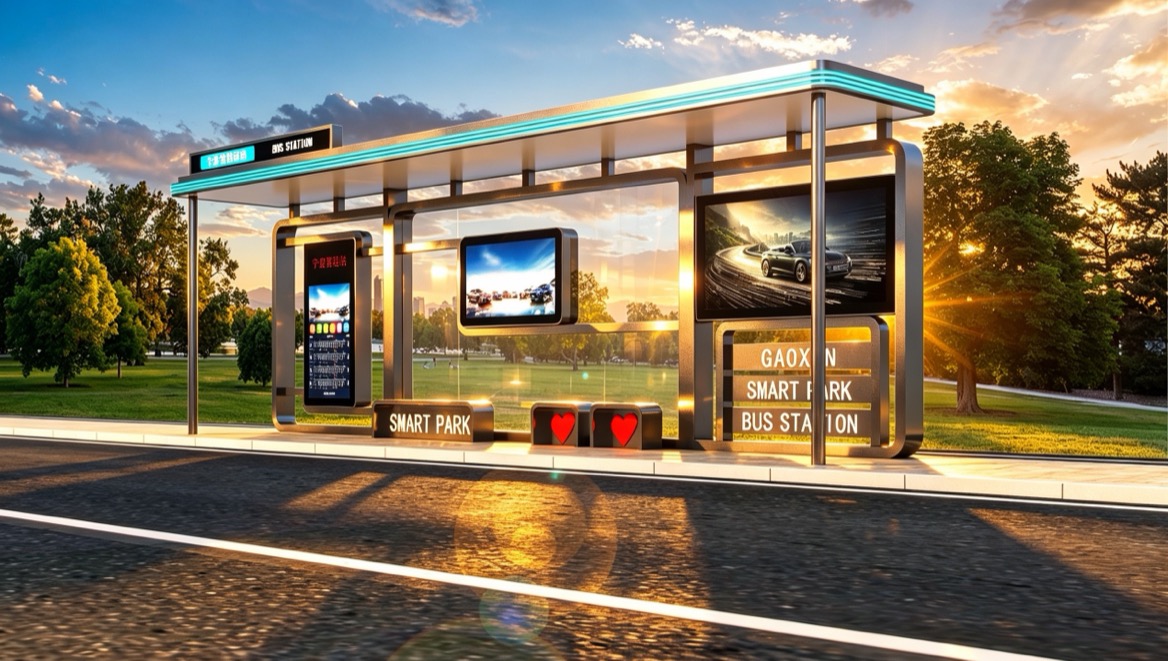
The physical installation may take only a few hours once the foundation, anchors, delivery access, utilities, and permits are ready. Total project duration is longer because it includes design approval, site assessment, civil works, utility preparation, manufacturing, transport, and final commissioning. Los Angeles Metro has reported that actual shelter installation can take roughly two hours after approval.
No. Durability depends on engineering, materials, coating systems, structural design, anchoring, glazing, and maintenance—not whether the shelter is prefabricated. Factory-controlled fabrication can improve consistency in welding, finishing, fit-up, and equipment integration.
Yes. Modular systems can be customized with city colors, logos, roof profiles, dimensions, seating, advertising panels, route information, lighting, solar power, and smart-display equipment. The key is to define customization options early so they do not disrupt production or field installation.
The municipality or contractor should verify foundations, anchor-bolt positions, drainage, accessibility clearance, utility routes, power capacity, installation equipment access, traffic management, and inspection responsibilities before delivery.
Solar power can be suitable when grid access is difficult or expensive, especially for lighting, low-power information systems, and selected charging applications. The system must be sized for local solar conditions, battery storage, electrical loads, and seasonal use.
Choose a custom-built shelter for landmark locations, heritage streets, unusual geometry, high-capacity stops, complex public-realm integration, or designs that cannot be achieved through a modular platform.
Yes. Shelter placement must preserve accessible pedestrian movement and boarding access. Transit design guidance highlights accessible landing areas, appropriate curb conditions, lighting, passenger information, and clear circulation around stops.
1. [Washington Metropolitan Area Transit Authority — Bus Stop and Shelter Improvements Program]
2. [National Association of City Transportation Officials — Bus Stops]
3. [Los Angeles Metro — What It Takes to Get a Bus Shelter Installed]
4. [New York City Street Design Manual — Bus Stop Shelter]
5. [SOM — Los Angeles Bus Shelter Program]
6. [Bay Area Transportation Study — Bus Stop Policy and Design Guidelines]


