
Email: ainlbusshelter@gmail.com | WhatsApp: +86-18800607527
Views: 238 Author: Ainl Bus Shelter Publish Time: 2026-09-17 Origin: Site


Content Menu
● What Is a Modular Bus Shelter?
>> Typical Modular Bus Shelter Components
● What Is a Prefabricated Bus Shelter?
>> Typical Prefabricated Bus Shelter Characteristics
● Modular Bus Shelter vs Prefabricated Bus Shelter: Key Differences
● When a Modular Bus Shelter Is the Better Choice
>> Choose Modular Bus Shelters When You Need Site Flexibility
>> Modular Design Supports Phased Investment
● When a Prefabricated Bus Shelter Is the Better Choice
>> Choose Prefabricated Bus Shelters When Installation Speed Matters
>> Prefabrication Reduces Street-Level Complexity
● The Most Important Decision Factor: Standardization vs Adaptability
● Total Cost of Ownership: Look Beyond the Initial Shelter Price
● Smart-City Integration: Plan the Infrastructure Before Adding Devices
>> Smart Features That Need Early Planning
>> Expert View: Build for Serviceability, Not Just Appearance
● Climate, Durability, and Material Selection
● A Practical Selection Framework for City Projects
>> Step 1: Classify Bus Stop Types
>> Step 2: Define the Core Shelter Platform
>> Step 3: Select Modular Upgrade Packages
>> Step 4: Confirm Installation and Logistics Conditions
>> Step 5: Evaluate Long-Term Maintenance
● Which Option Fits Your Project?
● Build a Shelter System, Not Just a Shelter
● FAQs
>> 1. What is the main difference between a modular bus shelter and a prefabricated bus shelter?
>> 2. Are modular bus shelters more expensive than prefabricated bus shelters?
>> 3. Can a prefabricated bus shelter include digital screens and solar power?
>> 4. Which bus shelter type is better for export projects?
>> 5. Can modular bus shelters match a city's visual identity?
>> 6. How can a city reduce maintenance costs for smart bus shelters?
>> 7. What information should a buyer provide before requesting a quotation?
For large municipal transport programs, the choice between a modular bus shelter and a prefabricated bus shelter affects far more than installation speed. It influences route-wide visual consistency, long-term maintenance, digital-system integration, logistics planning, future expansion, and the total cost of ownership.
As a manufacturer and smart public-infrastructure solution provider with 16 years of experience, Ainl has seen that there is no universal "best" construction method. The right solution depends on a city's road conditions, shelter quantity, site constraints, transport network goals, branding requirements, and planned smart-city functions. In practice, modular bus shelters often offer stronger adaptability for phased deployment and route expansion, while prefabricated bus shelters can deliver faster on-site completion when the design is standardized and site access is favorable.
This guide compares both approaches from the perspective of project planners, municipal buyers, transit operators, contractors, and urban-infrastructure investors.
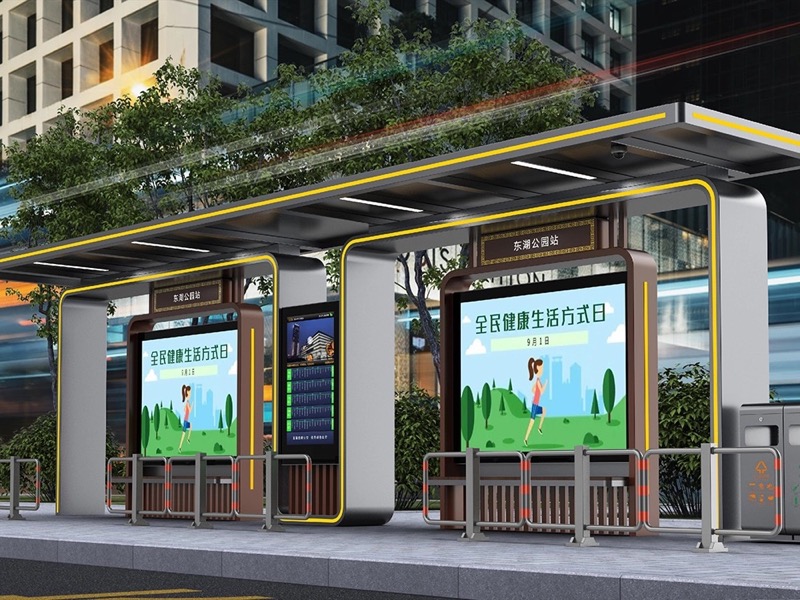
A modular bus shelter is built around a repeatable system of interchangeable components. Typical modules include structural columns, roof sections, rear panels, side panels, seating, advertising light boxes, route-information displays, solar-power units, lighting systems, and accessibility features.
Instead of treating every shelter as an entirely separate structure, the modular approach creates a platform that can be configured for different sites.
For example, a city may use the same core shelter structure across a transport network while selecting different combinations of components:
- A two-bay shelter for a neighborhood street
- A four-bay shelter for a busy commercial corridor
- A shelter with an LED route display near a transit hub
- A solar-powered shelter in an area with limited grid access
- A double-sided digital advertising unit at a high-footfall stop
- A compact shelter for narrow sidewalks or historic districts
The key idea is standardized components with flexible combinations.
A modular bus shelter is especially valuable when a municipality wants to maintain a consistent city image while adapting each installation to real-world site conditions.
A modern modular shelter system may include:
- Galvanized steel or aluminum structural frames
- CNC-fabricated metal panels
- Tempered-glass or polycarbonate side screens
- Waterproof roofing systems
- Integrated seating and leaning rails
- Outdoor LED lighting
- Digital passenger-information displays
- Static or digital advertising panels
- Solar photovoltaic panels and battery storage
- CCTV, emergency call buttons, USB charging, or IoT sensors
- Custom color schemes, logos, route maps, and city-branding elements
Because these parts are designed as a coordinated system, a project team can create multiple shelter configurations without starting the engineering process from zero for every location.
A prefabricated bus shelter is manufactured in a factory as a largely complete unit or as several large preassembled sections. It is then transported to the installation site for placement, anchoring, final assembly, and utility connection.
The term is sometimes used broadly. In the market, it may refer to:
1. A fully assembled bus shelter delivered as one unit
2. A shelter delivered in large factory-assembled sections
3. A standardized shelter kit produced in batches
4. A finished metal-and-glass structure installed with limited on-site fabrication
The main objective is to shift as much construction work as possible from the street to the factory.
This approach can reduce site disruption, improve factory-level quality control, and make delivery schedules more predictable. It is particularly suitable when the project uses a repeatable shelter design and installation locations have sufficient crane access, delivery space, and foundation readiness.
A prefabricated bus shelter is often selected for projects that prioritize rapid rollout, controlled factory production, and design consistency.
A prefabricated shelter may include most major elements before shipment:
- Completed steel frame
- Roof and drainage structure
- Installed glass panels
- Integrated benches
- Advertising display frames
- Factory-installed lighting
- Prewired electrical systems
- Digital-screen mounting structures
- Painted or powder-coated surfaces
- City logo panels and route-signage positions
On-site work is then focused on unloading, anchoring, electrical connection, digital-system commissioning, and final inspection.
Although the two concepts overlap, they are not identical. A shelter can be both modular and prefabricated. For example, a supplier may manufacture standardized modules in the factory, preassemble them into transportable sections, and complete final installation at the site.
The more important question is not whether one method is "better." It is whether the construction approach matches the operational reality of the city project.
| Comparison Area | Modular Bus Shelter | Prefabricated Bus Shelter |
|---|---|---|
| Core concept | Interchangeable components configured for each location | Factory-built shelter or large sections delivered ready for installation |
| Design flexibility | Very high | Moderate to high, depending on the product design |
| Best for | Multi-site projects with varying stop sizes and conditions | Projects with repeatable sites and a standardized shelter model |
| Future expansion | Easy to add bays, screens, lighting, or smart modules | May require replacement, extension sections, or site modification |
| On-site work | Assembly and anchoring are still required | Usually less on-site fabrication |
| Transport efficiency | Components can be packed efficiently, especially for export | Large units may require more transport volume and special handling |
| Site-access requirements | More adaptable for narrow streets and restricted locations | Requires sufficient unloading and placement access |
| Maintenance | Individual modules can be replaced | Repairs may involve larger assemblies |
| Brand consistency | Strong, with controlled module design | Strong, especially for identical standardized units |
| Digital upgrades | Easier to add or replace smart components | Possible, but may need reserved spaces and preplanned wiring |
| Project scalability | Excellent for phased citywide rollout | Excellent for high-volume repeat installations with stable specifications |
A modular bus shelter is usually the stronger option when a project requires adaptability across many different locations.
Large cities rarely have identical bus-stop conditions. Some stops are located beside wide boulevards. Others sit next to narrow sidewalks, commercial storefronts, schools, hospitals, parks, or transit stations. A single fixed-size shelter can create problems when road widths, passenger volumes, utilities, advertising rules, and surrounding architecture vary from one district to another.
A modular system gives planners more control.
A modular approach is particularly suitable when the project includes:
- Different shelter lengths across the same route
- Varying passenger volumes at different stops
- Future route extension plans
- Smart-city upgrades over several phases
- High requirements for local branding
- Mixed urban environments, such as downtown, suburbs, tourist zones, and industrial parks
- Narrow or irregular installation spaces
- Replacement of aging shelters without changing every foundation
- Export projects requiring container-efficient shipping
- Long-term operation and modular spare-parts management
For example, a city may first install basic shelters with lighting, seating, and route maps. In a later phase, the city can add digital arrival displays, solar systems, outdoor advertising screens, public Wi-Fi equipment, or emergency communication modules.
This reduces the need to remove and replace the entire shelter when technology requirements change.
Municipal budgets are often released in stages. The city may approve 50 shelters first, then add 100 more after the pilot program proves successful.
With a modular bus shelter platform, the original design can continue across later phases. The city can preserve visual consistency while upgrading selected locations based on passenger traffic and revenue potential.
A practical phased structure may look like this:
1. Phase One: Install core shelters with structure, roof, seating, and basic lighting
2. Phase Two: Add advertising light boxes or city-information panels at priority stops
3. Phase Three: Integrate electronic bus-stop displays and networked control systems
4. Phase Four: Upgrade selected shelters with solar power, surveillance, charging, or digital media systems
This approach can improve financial control while keeping the city's street furniture visually unified.
A prefabricated bus shelter is often the preferred option when speed, repeatability, and factory completion are the top priorities.
For a project involving dozens or hundreds of similar stops, factory preassembly can shorten the installation period at each site. This is valuable in areas where road closures, pedestrian disruption, noise restrictions, or weather conditions make prolonged field construction difficult.
Prefabricated shelters are often a strong fit when:
- The project uses identical or nearly identical shelter sizes
- Foundations can be prepared in advance
- Delivery trucks and lifting equipment can access each site
- The city requires rapid replacement of old shelters
- On-site labor availability is limited
- The project schedule is fixed by a public event, transit launch, or urban-renewal program
- A high level of factory preassembly is preferred
- The number of unique design variations is low
- Installation locations have predictable dimensions and utility conditions
In a standardized corridor project, prefabrication can make installation more efficient. Once the foundation layout and utility connection points are confirmed, a supplier can manufacture shelters in batches and deliver them according to a planned installation sequence.
The result is a more controlled workflow: manufacture, inspect, transport, unload, anchor, connect, commission, and hand over.
On-site construction is often more expensive and uncertain than factory production. Rain, limited work zones, traffic management, uneven ground conditions, and public-safety requirements can slow installation.
By moving welding, finishing, wiring preparation, glazing, and component fitting into a controlled factory environment, prefabricated bus shelters can reduce the amount of work carried out beside active roads.
However, the city must still carefully evaluate delivery access. A large preassembled unit may be efficient at the factory but difficult to transport through congested urban streets, under low bridges, or into tightly built commercial districts.
For large-scale city projects, the central decision is usually not modular versus prefabricated. It is the balance between standardization and adaptability.
A highly standardized prefabricated shelter may offer lower per-unit production complexity and faster site installation. But it can become inefficient if every site requires special modifications.
A highly customized modular system may serve diverse sites more effectively. But if there are too many unique options, procurement and maintenance can become harder to manage.
The best large-scale public transport projects typically create a controlled "design family."
This means the city establishes:
- A common structural language
- Approved shelter sizes
- Standard materials and finishes
- A defined color palette
- Fixed signage positions
- Standard lighting requirements
- Approved digital-display options
- Modular upgrade packages
- Spare-parts standards
- Consistent accessibility requirements
Then, each bus stop uses the most appropriate configuration within that system.
This strategy protects urban identity without forcing every location into the same physical form.
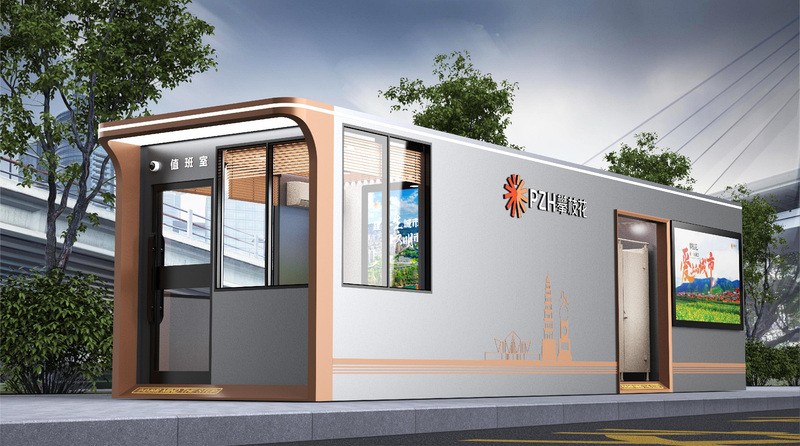
The lowest purchase price is not always the lowest project cost.
For public infrastructure, buyers should evaluate the total cost of ownership over the shelter's working life. This includes design, production, shipping, installation, energy use, maintenance, component replacement, cleaning, damage repair, technology upgrades, and eventual refurbishment.
| Cost Area | Modular Bus Shelter Consideration | Prefabricated Bus Shelter Consideration |
|---|---|---|
| Initial manufacturing | May vary based on module selection | Can be efficient for high-volume standardized production |
| Shipping | Flat-packed or sectional shipping can reduce container space | Large assembled units may increase transport volume |
| Installation | Requires structured assembly workflow | Faster placement may be possible at accessible sites |
| Replacement parts | Individual components can be replaced | Larger sections may need repair or replacement |
| Future upgrades | Usually easier to add smart modules | Requires preplanned mounting and wiring provisions |
| Maintenance stock | Standard modules simplify spare-parts planning | Standardized full units simplify repeat repairs |
| Site disruption | Moderate, depending on assembly scope | Often lower if preassembled units are delivered ready to install |
For export-oriented projects, shipping should receive special attention. A shelter design that looks efficient locally may become expensive when transported internationally. Component dimensions, packaging protection, container loading, glass safety, customs handling, and destination-site assembly capability all matter.
Ainl supports customized OEM/ODM solutions covering shelter dimensions, structure, colors, displays, lighting, solar power, and city-brand elements. For international buyers, this allows the product design to be coordinated with the project's transport route, container plan, climate conditions, and installation resources.
A shelter becomes "smart" not simply because it has a screen. A reliable smart bus shelter requires coordinated structural, electrical, communication, and maintenance planning.
Whether the city selects a modular bus shelter or a prefabricated bus shelter, project teams should define digital requirements early.
- Real-time bus-arrival information
- Outdoor LED or LCD passenger displays
- Digital advertising screens
- CCTV cameras
- Public Wi-Fi equipment
- Emergency communication devices
- Environmental sensors
- Solar panels and battery storage
- USB or wireless charging
- Remote lighting control
- Device ventilation and heat management
- Cable routing and waterproof electrical cabinets
A common project mistake is treating digital features as an afterthought. When screens, solar systems, or sensors are added after the structural design is finalized, the result may be exposed cables, insufficient maintenance access, poor heat dissipation, unstable power supply, or a cluttered appearance.
The better approach is to reserve the structural mounting points, cable channels, electrical capacity, access doors, and maintenance zones during the original shelter design stage.
From a manufacturing perspective, the most successful shelters are not necessarily the most visually complex. They are the shelters that maintenance teams can inspect, clean, repair, and upgrade without excessive labor.
For every digital display, lighting unit, advertising panel, or solar-power component, project planners should ask:
- Can technicians access it safely?
- Can a damaged module be replaced without dismantling the full shelter?
- Are spare parts standardized?
- Is wiring protected from water, dust, and accidental damage?
- Can the shelter continue operating if one component fails?
- Is there enough ventilation for electronic equipment?
- Will local maintenance teams have the tools and training required?
A modular system often performs well in this area because individual components can be removed and replaced. A prefabricated system can also perform well when access panels and maintenance paths are designed into the original unit.
Public bus shelters face constant exposure to weather, pollution, vibration, passenger use, cleaning chemicals, accidental impact, and vandalism. Construction approach matters, but material selection and engineering quality matter just as much.
A durable outdoor shelter should be designed around the local environment.
- Heavy rain and drainage requirements
- High wind loads
- Coastal salt exposure
- High temperatures and intense sunlight
- Snow and ice accumulation
- Humidity and condensation
- Sand, dust, and industrial pollution
- High passenger density
- Potential vandalism or impact damage
For steel bus shelters, corrosion protection is particularly important. Common protective methods include galvanizing, outdoor powder coating, high-quality paint systems, sealed joints, drainage channels, and controlled welding treatment.
Glass selection also needs careful evaluation. Tempered safety glass may be appropriate for many public applications, while laminated glass, polycarbonate panels, or perforated metal screens may be preferable in higher-risk areas.
The shelter should not only look attractive at handover. It should retain its appearance and structural performance after years of public use.
Before choosing a modular or prefabricated bus shelter solution, procurement teams should complete a structured assessment.
Divide locations into categories such as:
- Major transfer stations
- Central business district stops
- Residential stops
- School and hospital stops
- Tourist-area stops
- Suburban roadside stops
- Narrow-sidewalk stops
- High-advertising-value stops
This prevents the city from using one oversized or undersized shelter type everywhere.
Set the common elements that must remain consistent across the network:
- Structural materials
- Roof design
- City colors
- Branding positions
- Seating style
- Lighting appearance
- Signage standards
- Accessibility requirements
- Advertising formats
- Digital-system interface points
Create preapproved options instead of making every shelter fully custom.
For example:
- Basic passenger shelter package
- Illuminated information package
- Advertising package
- Smart display package
- Solar power package
- Premium transit-hub package
This makes procurement, maintenance, and future expansion easier.
Review:
- Foundation type
- Underground utility locations
- Truck access
- Crane or lifting access
- Road closure requirements
- Pedestrian diversion plans
- Local electrical capacity
- Installation crew capability
- Delivery sequencing
Request a clear service plan covering:
- Spare-part availability
- Surface repair methods
- Glass replacement procedures
- Electrical-component access
- Screen maintenance
- Cleaning requirements
- Corrosion-inspection intervals
- Warranty terms
- Technical documentation
Choose a modular bus shelter when your city needs flexibility, phased upgrades, varied shelter sizes, easier component replacement, and a long-term platform for smart-city expansion.
Choose a prefabricated bus shelter when your project has repeatable site conditions, standardized designs, accessible installation locations, prepared foundations, and a strong need for rapid deployment.
For many large-scale projects, the most effective answer is a hybrid model: modular shelter architecture combined with factory prefabrication. The supplier manufactures standardized structural and functional modules under controlled conditions, preassembles major sections where practical, and completes efficient installation at the project site.
This approach can provide the best balance of speed, consistency, shipping efficiency, future adaptability, and maintenance control.
A large bus-shelter project should be treated as a long-term public-infrastructure system. The shelter must support passengers today while remaining adaptable to new transit services, digital technologies, advertising opportunities, energy solutions, and city-branding goals in the future.
Ainl provides customized bus shelter, smart bus stop, outdoor advertising, and urban public-facility solutions for transport, municipal, commercial, and smart-city projects. With large-scale manufacturing capacity, dedicated research and development resources, metal fabrication capability, coating facilities, electrical testing support, and flexible OEM/ODM services, Ainl can help project teams develop a shelter configuration that matches real site conditions and long-term operational requirements.
Contact Ainl with your route plan, shelter quantity, site dimensions, climate conditions, preferred smart features, and branding requirements to receive a tailored modular or prefabricated bus shelter proposal.
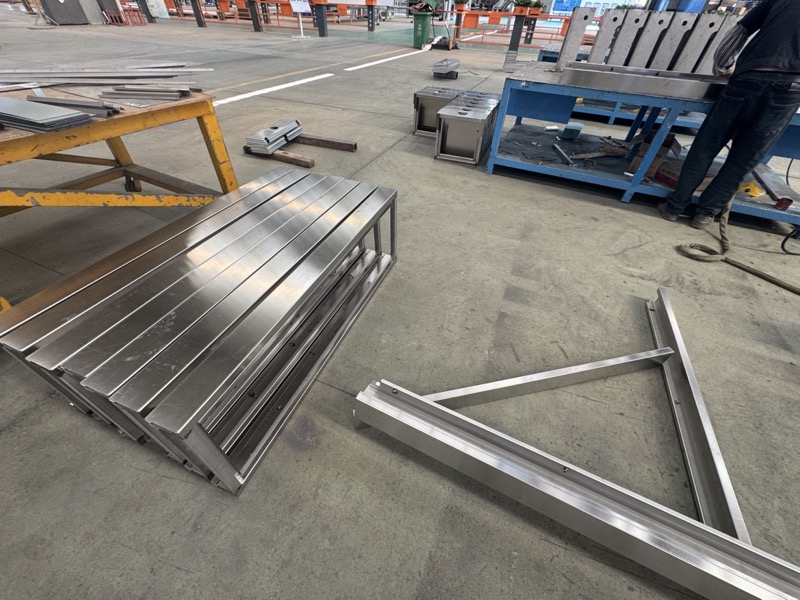
A modular bus shelter uses standardized, interchangeable components that can be combined in different layouts. A prefabricated bus shelter is manufactured as a largely complete structure or large preassembled sections before being transported to the installation site. A project can use both methods together.
Not necessarily. Modular shelters may require more design coordination at the beginning, but they can reduce long-term costs through reusable components, simplified spare-parts management, easier repairs, and phased upgrades. Prefabricated shelters may be more cost-efficient for large quantities of identical units.
Yes. Prefabricated shelters can include digital passenger-information screens, advertising displays, solar panels, batteries, lighting, cameras, and communication equipment. These systems should be designed before production so that mounting structures, cable routes, access panels, ventilation, and power capacity are properly integrated.
Modular bus shelters are often advantageous for export because they can be separated into shipping-efficient sections and packed for container transport. However, prefabricated sections can also work well when the destination has suitable delivery access and installation equipment. The best choice depends on container planning, local labor, site conditions, and customs requirements.
Yes. Modular systems can be customized with city colors, logos, route maps, lighting styles, advertising formats, decorative panels, and digital-content zones. A well-designed modular platform helps maintain a consistent visual identity across different districts and shelter sizes.
Cities should standardize key components, provide accessible maintenance doors, protect wiring and electronics from water, use durable corrosion-resistant materials, keep spare parts available, and select systems that allow individual modules to be replaced without dismantling the entire shelter.
Buyers should provide the target country or city, required quantity, shelter dimensions, drawings or reference images, installation-site conditions, climate details, preferred materials, lighting needs, advertising requirements, screen specifications, solar-power needs, branding elements, and expected delivery schedule.
- [Ainl Bus Shelter – Custom Bus Shelter Manufacturer and Smart City Solutions]
- [Ainl Bus Shelter – Custom Bus Shelter Product Page]
- [Ainl OEM/ODM Customization Services]
- [Ainl Solution and Project Cases]
- [Ainl Group Corporate Information]
- [Federal Transit Administration – Bus Stop and Passenger Facility Planning Resources]
- [American Public Transportation Association – Public Transportation Industry Resources]
- [International Association of Public Transport – Urban Mobility and Public Transport Resources]


