
Email: ainlbusshelter@gmail.com | WhatsApp: +86-18800607527
Views: 233 Author: Ainl Bus Shelter Publish Time: 2026-08-11 Origin: Site


Content Menu
● 1. A Great Bus Shelter Starts With a Clear Purpose
● 2. Durable Materials Protect Long-Term Project Value
● 3. Weather Protection Must Work From More Than One Direction
● 4. Accessibility Must Be Designed Into the Shelter From Day One
● 5. Clear Visibility Builds Passenger Confidence and Safety
● 6. Seating and Comfort Should Match Passenger Demand
● 7. Lighting and Information Turn a Shelter Into a Useful Transit Interface
● 8. Modular Design Makes Customization and Maintenance Easier
● 9. Low-Maintenance Details Matter More Than Decorative Complexity
● 10. Smart and Sustainable Features Should Solve Real Problems
● A Practical Bus Shelter Selection Checklist
● Build a Bus Shelter That Serves the Whole City
● FAQ
>> What is the most important feature of a bus shelter?
>> What materials are best for outdoor bus shelters?
>> How large should a bus shelter be?
>> Can a bus shelter use solar power?
>> What makes a bus shelter accessible?
>> Can bus shelters include advertising panels?
>> Are smart bus shelters difficult to maintain?
>> Can Ainl customize bus shelters for a city brand?
A great bus shelter is more than a roof and a bench. It is a public-facing piece of urban infrastructure that protects passengers, supports accessible travel, improves wayfinding, and can create long-term value through advertising and smart-city connectivity.
For transit agencies, municipalities, developers, and outdoor media operators, the right bus stop shelter must work in real conditions: heavy rain, intense sun, wind, high passenger volumes, constrained sidewalks, nighttime use, and continuous public exposure. The best designs combine durability, accessibility, visibility, safety, maintainability, and adaptable technology in one coordinated solution.
This guide explains the ten characteristics that define a high-performing bus shelter and how to select a design that serves both passengers and city operations over the long term.
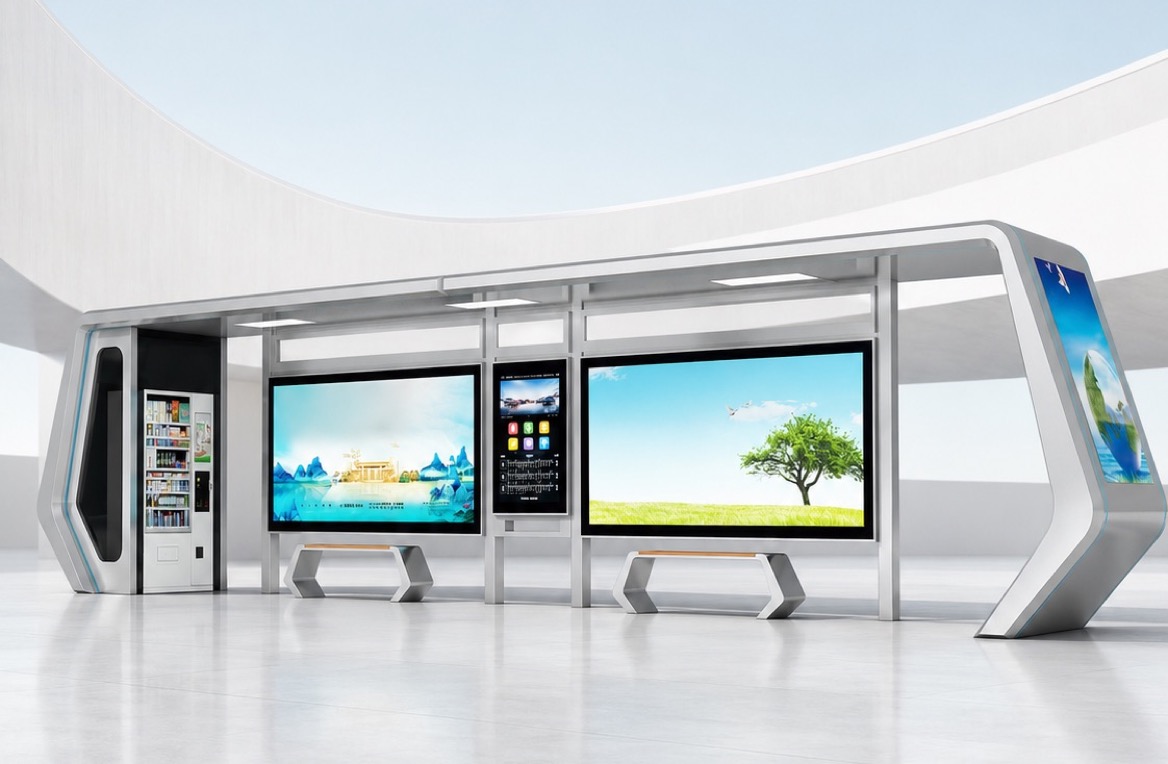
Every bus shelter should respond to the actual needs of its location. A compact shelter at a low-volume neighborhood stop has different requirements from a large transit hub beside a shopping center, hospital, school, airport, or commercial district.
Before choosing a shelter model, project teams should assess:
- Daily boarding volume and peak waiting periods
- Number of bus routes serving the stop
- Passenger profiles, including older adults, children, and people with reduced mobility
- Local climate, including sun, rain, snow, wind, humidity, and coastal salt exposure
- Sidewalk width, road layout, utilities, trees, bike lanes, and nearby entrances
- Available electrical infrastructure and solar potential
- Requirements for advertising, city branding, or digital information
A shelter should never be selected only because it looks attractive in a catalog. It must fit the site, service level, and passenger demand.
For high-ridership locations, a larger modular bus shelter may include more seating, multiple bays, real-time arrival displays, advertising panels, public lighting, and route maps. In constrained locations, a slimline canopy or compact shelter may provide weather protection without reducing pedestrian clearance.
A bus shelter is exposed to weather, pollution, vibration, accidental impacts, and frequent public use. Structural quality is therefore not an optional upgrade; it is the foundation of the entire project.
A durable bus shelter typically combines:
- Galvanized or treated steel framing for structural strength
- Aluminum profiles or panels for corrosion resistance and lighter components
- Tempered or laminated safety glass for transparent side and rear panels
- Powder-coated finishes for color consistency and surface protection
- Stainless-steel fasteners for improved corrosion resistance
- Weather-resistant roof systems with controlled drainage
- Replaceable modular components for efficient repairs
The material specification should match local risks. Coastal areas may require stronger corrosion protection. Hot climates need UV-resistant finishes and shade-focused roof geometry. Snow-prone regions need structural capacity appropriate for local loading requirements. High-wind areas require careful anchoring, structural calculations, and roof design.
A visually appealing shelter that deteriorates after several seasons creates a poor passenger experience and increases replacement costs. A well-engineered structure protects the city's investment while preserving a clean, professional appearance.
Passengers do not experience weather only from above. Rain can arrive sideways, wind can drive water through an open shelter, and low-angle sunlight can make a waiting area uncomfortable even beneath a roof.
An effective bus stop shelter should provide a balanced combination of:
- Adequate roof coverage over the waiting zone
- Rear and side panels that reduce wind and rain exposure
- Open entrance zones that allow easy circulation
- Transparent panels that preserve visibility
- Integrated drainage that directs water away from passengers
- Ventilation openings that avoid trapped heat in warm climates
- Shade-oriented roof design based on local sun direction
The goal is not to completely enclose the space. A fully enclosed shelter may create maintenance, ventilation, safety, and cleaning challenges. Instead, the design should create a comfortable micro-environment while keeping passengers visible to drivers, pedestrians, and surrounding activity.
For climates with intense summer heat, a wider roof overhang, perforated shade elements, solar panels, or high-reflectance roofing can improve comfort. In colder regions, windbreak panels and optional heating solutions may be considered for major transit hubs.
A public transit stop should serve people with different ages, abilities, luggage needs, mobility devices, and travel confidence. Accessibility is not limited to the shelter structure itself; it includes the entire path from the sidewalk to the boarding area.
A well-planned accessible bus stop shelter should include:
- A clear, level path of travel beside and through the shelter
- Sufficient space for wheelchairs, strollers, and mobility aids
- A firm and stable boarding surface near the curb
- Seating with appropriate height and spacing
- Leaning rails where full benches are not practical
- Readable route information at a usable viewing height
- High-contrast signs and clear wayfinding
- Lighting that supports safe use after dark
- No structural elements that block boarding or alighting
Shelter placement matters as much as shelter design. A large structure placed on a narrow sidewalk can create an obstacle even if the shelter itself is well manufactured. Project teams should review pedestrian routes, door swings, curb ramps, crossing locations, bus doors, utility equipment, and surrounding street furniture before finalizing the layout.
For many older passengers and people with disabilities, seating is not simply a convenience. It can determine whether waiting for public transport is physically possible.
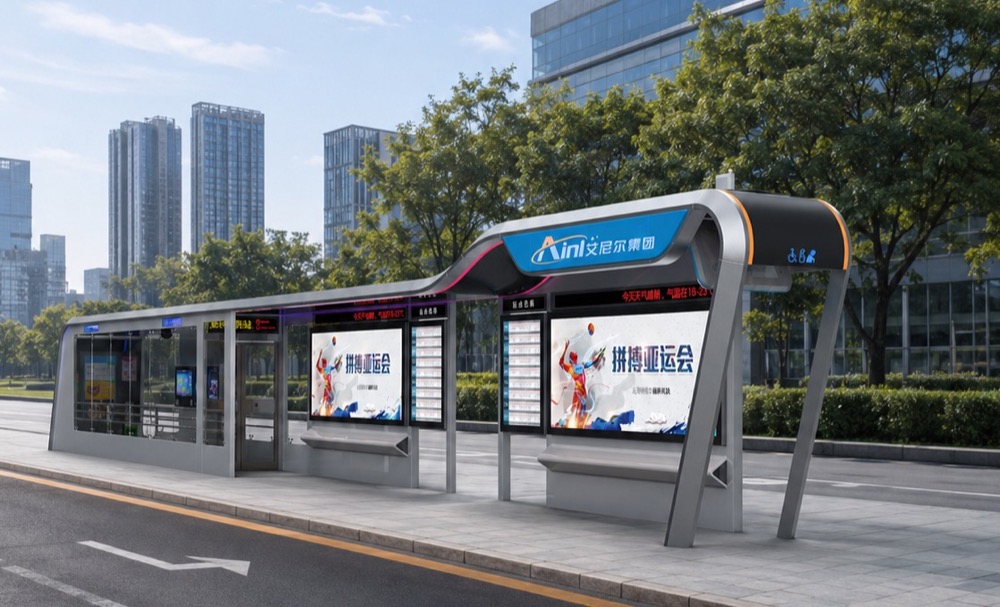
Passengers need to see approaching buses without stepping out into traffic. Bus drivers also need a clear view of waiting passengers, especially at night or in poor weather.
The most effective bus shelter designs use open sightlines. Transparent glass panels, carefully positioned posts, and unobstructed entry areas help passengers monitor the road while remaining protected from rain and sun.
Designers should avoid:
- Opaque walls that block approaching vehicles
- Oversized advertising panels facing the roadway
- Dense signage around the boarding area
- Poorly placed columns near bus doors
- Deep, dark interiors with limited external visibility
- Landscaping or street furniture that conceals the shelter
Good visibility also discourages vandalism and antisocial behavior. A shelter that can be seen from surrounding streets, shops, homes, or public spaces generally feels safer than an isolated, enclosed structure.
At higher-volume locations, integrated lighting, CCTV-ready provisions, emergency call capability, or connected monitoring systems may provide additional operational support. These features should be selected according to the local transit authority's safety policy, privacy requirements, and maintenance capacity.
Comfort is often the difference between a tolerable wait and a frustrating one. A well-designed shelter provides a place to rest without compromising accessibility, circulation, or cleanliness.
Common seating options include:
| Seating Option | Best Use | Key Advantage |
|---|---|---|
| Full bench | High-ridership stops and long waits | Supports seated rest for multiple passengers |
| Individual seats | Compact shelters and controlled spacing | Easier to clean and organize |
| Leaning rail | Narrow sidewalks or short-wait stops | Uses minimal space while offering support |
| Accessible perch seat | Stops serving older adults or mobility-limited riders | Helps passengers who cannot stand for long periods |
| Integrated modular seating | Custom city projects | Matches shelter structure and visual identity |
The number of seats should be based on passenger flow, not guesswork. High-volume stops may require a larger shelter, multiple connected modules, or separate seating zones. At smaller stops, a compact leaning rail can be more useful than overcrowding a narrow shelter with a full bench.
Comfort can also include practical additions such as a waste receptacle, bicycle parking, route map holder, USB charging point, or weather-resistant information panel. However, each feature should have a defined maintenance plan before installation.
A bus shelter should help people understand where they are, where they are going, and when their vehicle will arrive. Clear information reduces uncertainty and can make waiting feel shorter.
Core information features may include:
- Route numbers and destination names
- Timetables and service hours
- Network maps and local area maps
- Stop identification numbers
- Real-time arrival information
- Digital service alerts
- QR codes for mobile trip planning
- Audio-enabled information systems where required
- City notices, tourism information, or emergency messaging
Lighting is equally important. A bright but glare-controlled LED system can improve visibility, help passengers read schedules, and make the waiting area more welcoming after sunset.
Solar-powered lighting can be a practical solution where grid connection is difficult or expensive. For smart bus shelters with digital screens, power planning should be completed early. The system may require grid electricity, solar generation, battery storage, remote monitoring, or a hybrid configuration.
Cities rarely need one identical shelter in every location. Different streets require different lengths, roof depths, side-panel configurations, seating arrangements, display systems, and branding treatments.
A modular bus shelter system allows a project to use standardized structural components while adapting each installation to local conditions. This approach can support:
- Different shelter lengths and capacities
- Open-sided or enclosed configurations
- Advertising or non-advertising panels
- Digital display integration
- Solar roof options
- Custom colors and city logos
- Interchangeable glass, metal, seating, and lighting components
- Easier spare-parts management
- Faster replacement of damaged elements
Modularity is especially valuable for phased city projects. A municipality can begin with core shelter models, then add digital displays, solar power, advertising units, or upgraded seating as funding and operational needs evolve.
Ainl supports OEM and ODM bus shelter customization across dimensions, structure, color, lighting, screen configuration, solar power solutions, and city-branding elements. This flexibility helps project teams create a coordinated street-furniture system rather than a collection of unrelated products.
Every public shelter will require cleaning, inspection, and occasional repair. The question is whether routine maintenance can be completed quickly and economically.
A maintenance-conscious bus shelter should feature:
- Smooth, easy-clean surfaces
- Drainage paths that prevent standing water
- Protected electrical components
- Standardized fasteners and replaceable parts
- Accessible service panels
- Durable anti-corrosion finishes
- Impact-resistant glazing options
- Simple panel replacement procedures
- Space for cleaning crews to work safely
Maintenance data should inform future procurement. Agencies and operators should track common issues such as glass damage, lighting faults, water leakage, graffiti, loose hardware, and advertising-panel wear. These records help identify which materials and details perform best in the local environment.
A shelter that is easy to repair is usually more valuable than one that is difficult to service, even if both have a similar initial purchase price.
Smart bus shelters can provide real benefits, but technology should support the passenger journey rather than become a visual distraction. The most useful solutions are reliable, understandable, and maintainable.
Potential smart-city features include:
- Real-time bus arrival displays
- LED advertising screens
- Solar-powered lighting
- Public Wi-Fi
- USB or wireless charging
- Environmental sensors for air quality and noise
- Passenger counting or footfall monitoring
- Emergency communication devices
- Remote equipment monitoring
- Digital city-information displays
A future-ready shelter should allow technology to be upgraded without replacing the entire structure. Separate service compartments, concealed cable routes, modular display bays, and adaptable power systems can help cities extend the useful life of their investments.
The best smart shelter remains useful even when a screen is offline. It must still provide shade, weather protection, seating, visibility, wayfinding, and safe access.
Before approving a bus shelter design, ask these questions:
1. Does the shelter match passenger volume and waiting time?
2. Can passengers see approaching buses clearly from inside?
3. Does the layout preserve pedestrian and wheelchair clearance?
4. Are the roof, glazing, finishes, and anchors suitable for the local climate?
5. Is seating sufficient for the people most likely to use the stop?
6. Can staff clean and repair the shelter without dismantling major sections?
7. Is lighting available for nighttime safety and route information?
8. Can the design accommodate future screens, solar power, or communication equipment?
9. Does the shelter reflect the city's visual identity without obstructing information?
10. Does the supplier have the manufacturing capacity and customization experience for the project scale?
A great bus shelter improves much more than the waiting experience. It can support public transport use, improve streetscape quality, create valuable advertising space, strengthen municipal branding, and provide a platform for connected urban services.
With 16 years of experience in public facilities and outdoor advertising products, Ainl provides customized bus shelters, smart bus stops, outdoor digital displays, and urban street-furniture solutions for transportation, municipal, commercial, and smart-city projects. Its manufacturing base, research capability, precision sheet-metal processing, coating facilities, and electrical testing capacity support projects that require both dependable quality and tailored design.
Contact Ainl to discuss your bus shelter project, site requirements, preferred configuration, branding concept, and smart-feature requirements.
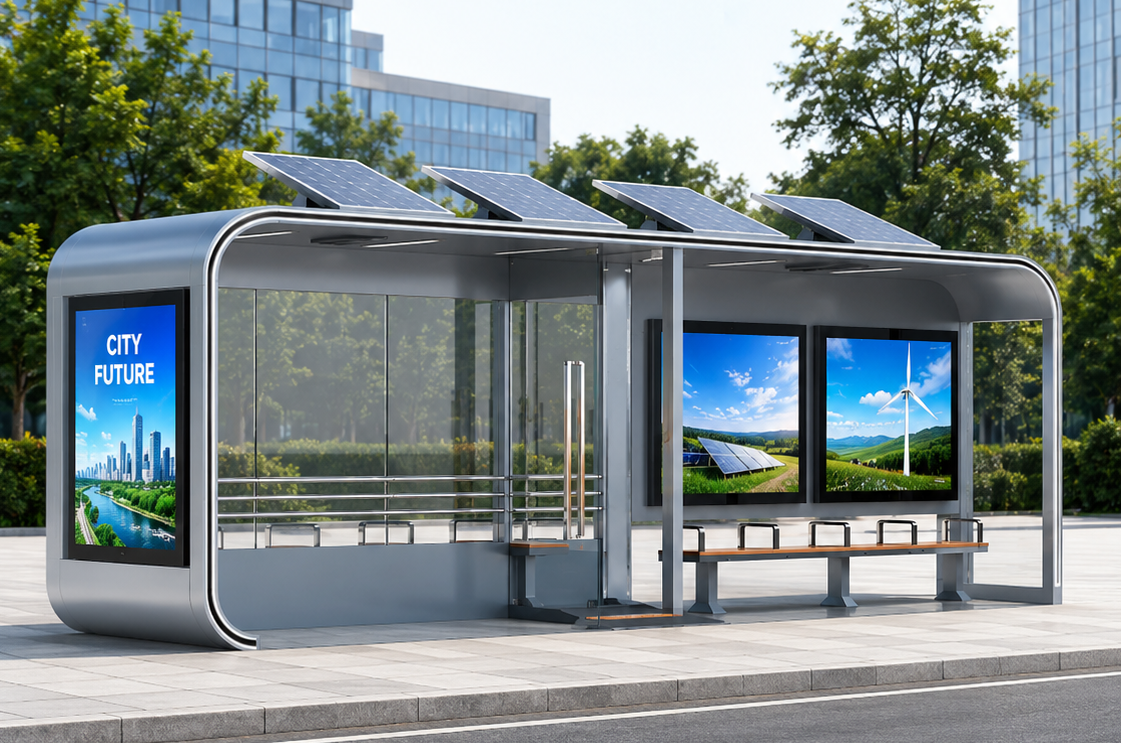
The most important feature is effective weather protection combined with safe, accessible boarding access. A shelter must protect passengers while preserving clear visibility, circulation space, and a direct path to the bus.
Galvanized steel, aluminum, tempered safety glass, stainless-steel fasteners, and powder-coated finishes are widely used because they provide strength, corrosion resistance, visual quality, and long service life.
Shelter size should be based on passenger volume, average waiting time, number of routes, sidewalk width, and local accessibility requirements. High-ridership stops often need longer or modular shelters with more seating and information space.
Yes. Solar systems can power LED lighting, digital displays, USB charging, sensors, and communication devices. The final solution depends on solar exposure, local weather, energy demand, battery capacity, and maintenance planning.
An accessible shelter provides a clear path of travel, adequate wheelchair space, stable surfaces, suitable seating, readable information, sufficient lighting, and an unobstructed boarding area.
Yes. Advertising panels can create commercial value and help finance infrastructure programs. They should be positioned carefully so they do not block passenger sightlines, route information, or accessible circulation.
They can be straightforward to maintain when the structure is designed with protected electrical compartments, modular equipment bays, accessible service panels, remote monitoring, and readily replaceable components.
Yes. Ainl can customize shelter size, structural layout, roof style, color, lighting, seating, advertising panels, digital screens, solar systems, and city-branding elements to suit local project requirements.
1. [Handi-Hut, "Every Great Bus Shelter Has These 7 Characteristics"] [handi-hut]
2. [TransitCenter, "From Sorry to Superb: Everything You Need to Know About Great Bus Stops"] [transitcenter]
3. [San Francisco Municipal Transportation Agency, "Improved Bus Shelters"] [sfmta]
4. [SMART, "Bus Stop Design Standards Manual"] [smartbus]
5. [Grimshaw, "Prototype Smart Cities Bus Shelter"] [grimshaw]


