
Email: ainlbusshelter@gmail.com | WhatsApp: +86-18800607527
Views: 288 Author: Ainl Bus Shelter Publish Time: 2026-10-15 Origin: Site


Content Menu
● Heat Resistant Bus Shelter vs Standard Shelter: What Is the Difference?
● Why Summer Passenger Comfort Requires More Than Lower Air Temperature
>> Solar Radiation Changes the Waiting Experience
>> Hot Contact Surfaces Create Another Problem
● What Field Research Reveals About Bus Shelter Heat
>> Phoenix: Large Comfort Benefits, but Not Guaranteed Safety
>> Houston: Shelter Geometry Can Undermine Cooling
● Comparing the Design Features That Matter Most
>> Roofs: Opacity, Reflectance, and Heat Transfer
>> Walls: Balance Sun Protection and Air Movement
>> Seating: Shade First, Material Second
>> Screens and Advertising: Plan Around Equipment Heat
● A Practical Summer Comfort Verification Plan
>> Step 1: Define the Passenger Areas
>> Step 2: Model Seasonal Shade
>> Step 3: Compare Under Matched Conditions
>> Step 4: Include Passenger Feedback
>> Step 5: Set Acceptance Criteria Before Ordering
● Passive Cooling vs Powered Cooling
>> Add Fans or Misting Only Where Appropriate
>> Evaluate Solar Power as an Energy System
● Cost Comparison: Look Beyond the Purchase Price
● How Ainl Supports Customized Bus Shelter Projects
● Specify Passenger Comfort Before Selecting the Shelter
● FAQs
>> 1. Is a heat resistant bus shelter always air-conditioned?
>> 2. How much cooler will passengers feel?
>> 3. Can a standard shelter be upgraded?
>> 4. Are metal roofs better than transparent roofs?
>> 5. What should a city ask a supplier to provide?
A heat resistant bus shelter can improve summer passenger comfort more effectively than a standard shelter when its design addresses sunlight, hot surfaces, and restricted airflow. However, the difference is not simply stronger materials or a more expensive roof. It is whether the shelter protects people where they actually sit, stand, and wait throughout the day.
For municipal buyers, transit operators, and outdoor advertising partners, the practical question is straightforward: which shelter delivers reliable shade without creating new maintenance or operational problems?
From a manufacturing and procurement perspective, I would start with passenger exposure rather than product appearance. A visually impressive structure can still perform poorly in afternoon heat. This comparison explains the design differences, research findings, and purchasing decisions that matter.
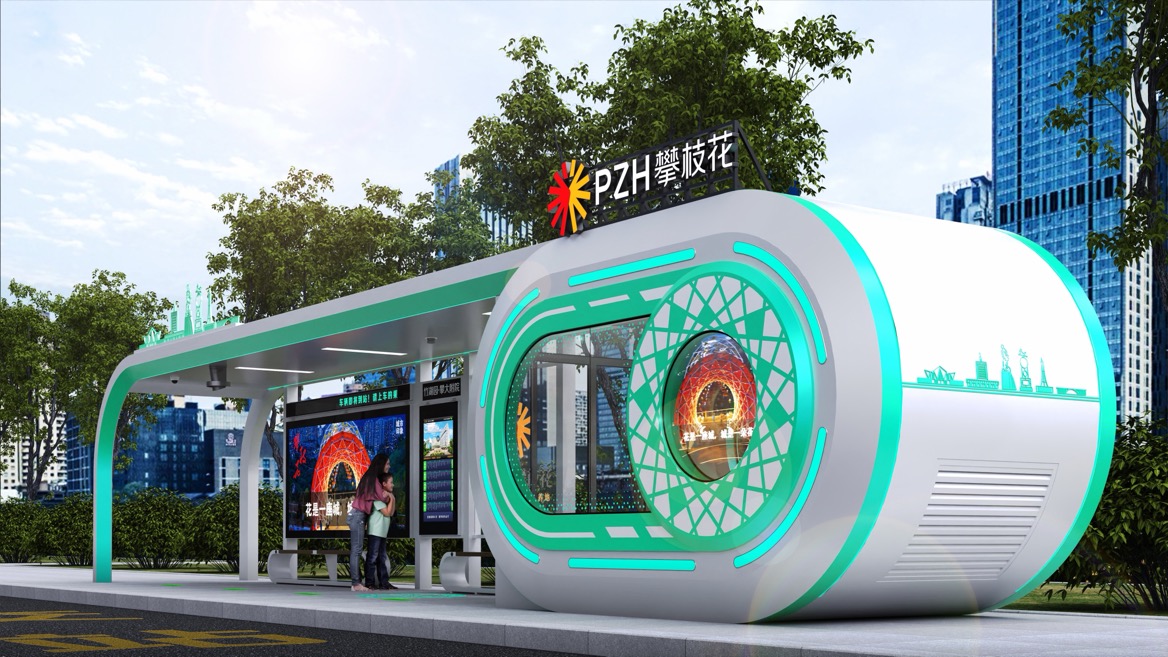
A standard bus shelter typically provides seating, rain protection, passenger information, and sometimes advertising space. Its thermal performance depends on its roof, orientation, surrounding environment, and enclosure.
A heat resistant bus shelter adds an explicit objective: reducing passengers' exposure to solar radiation and uncomfortable surface temperatures.
In this article, "heat resistant" describes a thermal-design approach, not a universal certification. Buyers should distinguish between materials that withstand high temperatures and structures that help passengers feel cooler.
Shade is the starting point. Reflective roofing, ventilation, carefully positioned panels, and protected seating can strengthen its effectiveness.
| Comparison factor | Standard shelter | Heat resistant bus shelter |
|---|---|---|
| Primary design brief | Basic weather protection and amenities | Weather protection plus reduced heat exposure |
| Roof specification | Often selected for appearance, durability, and cost | Also considers solar reflectance, opacity, and heat transfer |
| Shade coverage | May vary substantially by time of day | Evaluated against summer sun angles and occupied areas |
| Wall arrangement | Often follows a repeated standard layout | Balances solar screening with airflow and visibility |
| Seating | Basic weather-resistant bench | Bench positioning and contact temperatures receive additional attention |
| Electrical features | Lighting or advertising equipment | Equipment heat, ventilation, and cooling loads assessed together |
| Purchase decision | Frequently emphasizes initial price | Considers verified comfort performance and lifecycle costs |
These categories overlap. A well-designed standard shelter may outperform a poorly designed product marketed as heat resistant.
Two stops can have similar air temperatures but very different comfort conditions.
One exposes passengers to direct sunlight and hot pavement. Another provides continuous shade and allows air movement. The second can reduce thermal stress without substantially changing the surrounding air temperature.
That is why a claim such as "20°C cooler" needs clarification. Does it refer to air temperature, a roof surface, or a thermal-comfort index?
These measurements are not interchangeable.
Seats, armrests, and other exposed surfaces also matter.
Research at Phoenix bus stops recorded metal bench-seat temperatures above 60°C in some sun-exposed measurements. Afternoon temperatures of sampled sun-exposed manufactured materials exceeded the study's contact-burn thresholds.
Shade brought the sampled shaded surfaces below those thresholds.
The procurement lesson is practical: specify protection for touchable surfaces, not just a shaded patch on the pavement.
A Phoenix field study collected measurements at six bus stops during summer 2018. Its published findings reported that shade reduced physiological equivalent temperature, or PET, by an average of approximately 19°C.
PET expresses the combined thermal effects of environmental conditions on a person. It is not a direct measurement of outdoor air temperature.
The same research found that shaded conditions could remain thermally stressful. Average afternoon PET was 49.5°C in shade, compared with 68.2°C in sun.
For cities, this means that effective shade reduces exposure but does not make every extreme-heat waiting situation comfortable or safe.
A study published in 2025 examined trees and four shelter designs at 17 Houston bus stops.
A university account reported that tree shade reduced wet bulb globe temperature, or WBGT, by an average of 5.9°F. WBGT is a heat-stress measure that incorporates several environmental factors.
Results varied across shelter designs. One design produced higher measured heat conditions beneath its unshaded portion than in an unshaded area outside.
The useful conclusion is not that one material always wins. It is that orientation, roof geometry, enclosure, and actual shade coverage must be assessed together.
For a bus shelter for hot climates, an opaque roof is a strong starting point because it blocks direct overhead sunlight.
However, opaque does not automatically mean cool. A dark roof can absorb substantial solar energy.
Cool-roof guidance identifies two important properties:
- Solar reflectance: how much incoming sunlight a surface reflects.
- Thermal emittance: how effectively a surface releases absorbed heat.
Buyers should request measured coating properties rather than assume that any white or metallic finish performs well.
Insulation or a ventilated roof assembly may also be considered. Their benefits should be evaluated at shelter scale rather than inferred from enclosed-building energy savings.
Side and rear panels can intercept low-angle sunlight. They can also restrict airflow if positioned poorly.
The best arrangement depends on:
- Afternoon solar direction.
- Prevailing summer winds.
- Wind-driven rain.
- Passenger sightlines.
- Advertising-panel location.
- Available pavement width.
Transparent panels are not automatically unsuitable. Their performance depends on solar exposure and the overall design. Likewise, perforations do not guarantee adequate ventilation.
A supplier should explain why a proposed panel arrangement fits the site.
Changing bench material alone will not solve direct solar exposure.
A better sequence is to locate the bench inside reliable shade, then assess material conductivity, finish, cleanability, durability, and replacement needs.
Consider standing passengers and wheelchair users as well. A shelter fails its comfort objective if only seated passengers receive afternoon protection.
Digital displays and electrical enclosures introduce additional design considerations.
Ask for operating-temperature limits, ventilation requirements, maintenance access, and equipment-placement drawings.
Advertising space should not displace essential passenger shade or block useful airflow. Equipment should be selected and installed according to its manufacturer's environmental requirements.
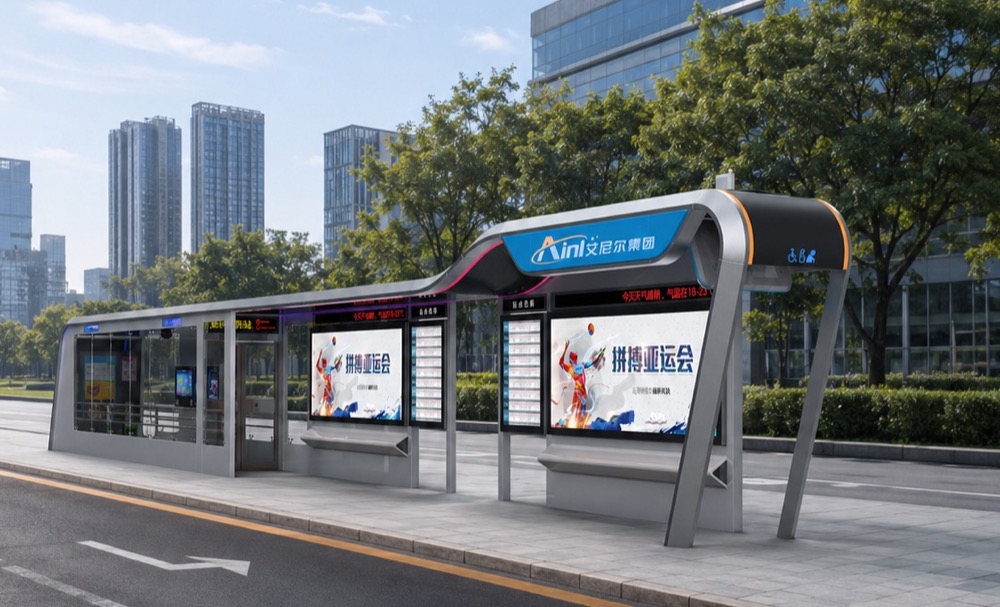
A useful purchasing approach is to compare prototype performance rather than rely on renderings.
Mark the bench, standing zone, wheelchair waiting area, and boarding path.
Agree which areas must remain shaded during the locally relevant summer waiting periods. An example assessment window might include noon through late afternoon, adjusted to the route and climate.
Request shade diagrams for representative summer dates and multiple times of day.
Review low-angle sunlight as well as midday conditions. A canopy that works at noon may leave the bench exposed later.
Measure the proposed shelter and baseline as close together in time and environmental conditions as practical.
Record:
- Air temperature and humidity.
- Wind speed.
- Solar exposure.
- Globe temperature or an appropriate heat-stress measure.
- Seat and other contact-surface temperatures.
Document instrument placement and allow sensors to stabilize.
Ask riders about shade availability, seating usability, airflow, visibility, and perceived comfort.
Treat feedback as complementary evidence, not a replacement for measurements.
Agree on measurable requirements before production.
These could include shaded-area coverage, equipment operating limits, and comparative thermal results under a defined test method. Avoid universal temperature-reduction promises detached from local conditions.
Passive measures include shade geometry, reflective roofing, suitable panel placement, and shaded seating. They do not require electricity to provide their core benefit.
That makes them a practical foundation for an urban bus shelter cooling strategy.
Fans and misting require a separate feasibility review.
Consider humidity, water availability, hygiene management, drainage, electrical protection, maintenance staffing, and local rules.
Powered cooling should supplement a sound shelter design. It should not compensate for a roof that leaves the passenger area exposed.
A solar-powered bus shelter can support selected electrical loads, but solar panels do not automatically make the waiting area cooler.
Request an energy budget covering lighting, displays, fans if proposed, battery storage, seasonal generation, and required autonomy.
Assess panel placement alongside shade and structural requirements.
A standard shelter may be the economical choice where existing trees or buildings already provide effective summer shade.
A heat resistant configuration may justify additional investment at exposed stops with long waits, heavy usage, or recurring afternoon discomfort.
Compare lifecycle costs across:
1. Purchase and customization.
2. Foundations and installation.
3. Electrical connections or solar equipment.
4. Cleaning and coating maintenance.
5. Replacement components.
6. Inspection and repair access.
7. Water and electricity, where applicable.
Do not assume that an open shelter creates building-style cooling-energy savings. Its principal benefit may be improved passenger conditions rather than reduced utility bills.
For network upgrades, prioritize stops using ridership, waiting time, existing shade, accessibility needs, and measured exposure.
Based on the company information supplied for this article, Ainl is a Chinese manufacturer and solutions provider with 16 years of experience in smart-city public facilities and outdoor advertising products.
Its reported facilities cover more than 260 mu, with approximately 150,000 square meters of factory space. Production resources include a provincial-level hardware and software R&D center, CNC sheet-metal processing, a large coating center, and an electrical testing laboratory.
Ainl also reports national high-tech enterprise status, relevant Grade III construction qualifications, three management-system certifications, and Grade III safety-production standardization certification.
These capabilities support customization, but they do not independently prove a particular shelter's cooling performance. Buyers should review current documentation and project-specific specifications.
OEM/ODM options include dimensions, structure, colors, displays, lighting, solar-power configurations, and city-branding elements.
For summer comfort, translate those options into a clear brief: required shade coverage, roof properties, panel layout, protected seating, electrical loads, and verification procedures.
The strongest choice is the shelter that demonstrates suitable performance at the intended stop—not the one with the most ambitious cooling claim.
Send Ainl your location, stop orientation, available footprint, passenger requirements, advertising needs, and power conditions. Request an OEM/ODM proposal comparing a standard shelter with a heat-focused configuration, including shade diagrams, specifications, maintenance requirements, and a verification plan.
No. The term can describe a shelter that uses passive thermal design. Air conditioning is a separate system requiring enclosure, power, maintenance, and a project-specific operating assessment.
There is no universal reduction. Results depend on sunlight, humidity, airflow, geometry, and the measurement used. Request local comparative testing rather than transferring published research values into a product guarantee.
Potentially. Roof finishes, shading extensions, panel arrangements, and seating locations may be improved. Check structural capacity, foundations, clearances, permissions, and warranty implications before modification.
Not in every configuration. Opaque roofing can block direct sunlight, while coating properties influence heat absorption. Transparent materials require assessment of solar transmission and actual passenger shade.
Request shade diagrams, material specifications, roof-performance data, structural documentation, electrical requirements, maintenance instructions, and a proposed thermal-verification method. Ask which claims apply to the exact configuration offered.
Source for the Phoenix field measurements, PET findings, surface temperatures, rider perceptions, and limitations of shade protection. [link.springer]
Primary research identified in the university-provided account below; the Houston findings used here were checked against that account. [phys]
Source for the Houston sample, WBGT explanation, reported shade benefits, and differences between shelter configurations. [phys]
4. [United States Environmental Protection Agency — "Using Cool Roofs to Reduce Heat Islands."]
Source for solar reflectance, thermal emittance, coating considerations, and reflectance-related cleaning requirements. Building-scale benefits are not presented here as shelter-specific guarantees. [epa]


