
Email: ainlbusshelter@gmail.com | WhatsApp: +86-18800607527
Views: 217 Author: Ainl Bus Shelter Publish Time: 2026-09-12 Origin: Site


Content Menu
● What Is the Difference Between a Bus Stop Shelter and a Transit Shelter?
● Bus Stop Shelter Design: Strengths for Everyday Urban Routes
>> Why Bus Stop Shelters Remain Highly Effective
>> When a Bus Stop Shelter Is the Better Choice
● Transit Shelter Design: Built for Transfers, Information, and Higher Demand
>> Why Transit Shelters Work Better at Transport Nodes
>> Features That Matter Most in a Transit Shelter
● Bus Stop Shelter vs Transit Shelter: Passenger Requirements Compared
● Design Criteria That Decide Which Shelter Performs Better
>> 1. Passenger Volume and Peak Demand
>> 2. Climate and Local Exposure
>> 3. Site Width, Road Safety, and Accessibility
>> 4. Information and Power Requirements
● Expert Insight: Build a Shelter System, Not a Single Structure
● Practical Selection Checklist for Buyers and Planners
● Which Design Should You Choose?
>> 1. Is a transit shelter the same as a bus stop shelter?
>> 2. Which is better for a standard city bus route?
>> 3. When should a city install a larger transit shelter?
>> 4. Can a bus stop shelter include digital passenger information?
>> 5. What materials are best for outdoor bus shelters?
>> 6. How can a shelter improve accessibility?
>> 7. Can shelters be customized for a city's brand identity?
>> 8. Can bus shelters use solar energy?
Urban passengers do not judge a public-transport stop by its name. They judge it by a simple experience: Can I find the stop, stay protected, understand when my vehicle will arrive, and feel safe while waiting? That is why the discussion of bus stop shelter vs transit shelter matters to city planners, transport operators, advertisers, contractors, and public-facility buyers.
Although the two terms are sometimes used interchangeably, they often point to different project scopes. A bus stop shelter is usually designed around a single bus boarding location. A transit shelter is generally a broader concept. It may serve buses, BRT lines, trams, shuttles, rail-transfer points, or a larger multimodal passenger environment.
For most standard roadside routes, a well-designed bus stop shelter remains the most efficient choice. For high-volume corridors, interchanges, and smart-city transport networks, a transit shelter can offer greater capacity, information integration, and long-term flexibility. The correct design depends on passenger flow, site constraints, climate, accessibility needs, operating model, and the city's visual identity.
As a manufacturer serving municipal, transportation, commercial, and smart-city projects, Ainl has seen one principle repeatedly confirmed in real procurement discussions: the best shelter is not necessarily the largest one—it is the one that matches the stop's actual passenger behavior. Ainl provides custom bus shelter design, manufacturing, and OEM/ODM support for public transport and municipal projects.
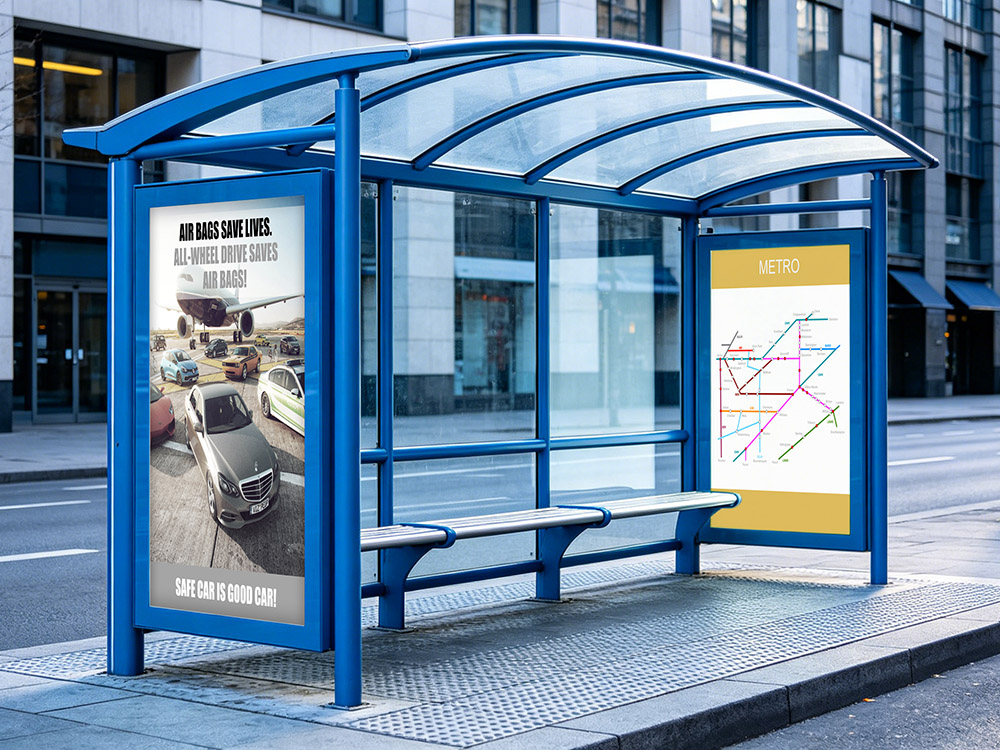
A bus stop shelter is a covered waiting structure installed at a bus stop. Its primary role is to improve comfort and visibility for people waiting for local, regional, school, airport, or commuter bus services.
A transit shelter is usually a more comprehensive passenger facility. It may still look like a shelter, but its planning purpose is often wider. It can include passenger-information displays, larger waiting zones, boarding management, advertising systems, wayfinding, lighting, accessibility features, ticketing interfaces, charging points, surveillance equipment, and integration with several transport modes.
The distinction is not always technical. In some markets, "transit shelter" is simply a preferred procurement term for a bus shelter. However, for design and tender planning, it is helpful to treat the two concepts differently.
| Comparison Area | Bus Stop Shelter | Transit Shelter |
|---|---|---|
| Typical location | Standard roadside bus stop | Hub, transfer point, BRT station, rail connection, major corridor |
| Main transport mode | Primarily bus | Bus, BRT, tram, shuttle, rail connection, multimodal transfer |
| Passenger volume | Low to medium, sometimes high | Medium to high, often peak-intensive |
| Typical footprint | Compact to medium | Medium to large |
| Core function | Weather protection and waiting comfort | Passenger circulation, information, safety, and transfer support |
| Digital systems | Optional | Commonly expected |
| Customization level | Size, materials, branding, advertising, lighting | Structural modules, screens, power systems, signage, passenger technology |
| Capital cost | Generally lower | Usually higher due to scale and integrated systems |
| Best fit | Local routes and distributed city stops | Strategic transport nodes and high-demand public corridors |
A bus stop shelter is often a product. A transit shelter is more often a passenger-system component.
For many cities, the bus stop shelter is the foundation of a practical public-transport environment. It provides immediate passenger value without requiring a large construction footprint or highly complex infrastructure.
A basic shelter may include a roof, rear panel, side panel, seating, route sign, and lighting. A higher-specification model can add an advertising light box, real-time passenger information display, LED route map, solar power, CCTV provisions, USB charging, emergency call equipment, and accessible seating zones.
The strongest advantage of a bus stop shelter is its adaptability. It can be installed along dense commercial streets, residential neighborhoods, suburban routes, industrial parks, campuses, tourist destinations, airports, and municipal roads.
A well-specified bus shelter can deliver the following benefits:
- Rain and sun protection for waiting passengers
- A recognizable boarding point that improves route visibility
- A smaller installation footprint than a larger station structure
- Lower project cost per location when cities need broad route coverage
- Flexible advertising integration for outdoor media programs
- Easy modular expansion when ridership rises
- Consistent city branding across hundreds of stops
- Custom materials and finishes for different climates and streetscapes
For a municipality upgrading a large bus network, this matters. Instead of concentrating the budget on a few premium stations, a city can improve passenger comfort across dozens or hundreds of daily-use stops.
From a manufacturing perspective, the design must not be evaluated only by appearance. Structural durability, drainage, corrosion resistance, glass safety, maintenance access, anchoring, and spare-part availability are equally important.
Choose a bus stop shelter when the site has:
- One main boarding zone
- Predictable passenger volumes
- Limited pavement width
- Short average waiting times
- No major modal transfer requirement
- A need for fast rollout across many locations
- Budget priorities focused on route-wide coverage
- A local visual-design requirement that can be applied repeatedly
For example, a residential district may need 50 shelters along several bus routes. A modular bus shelter program can use common structural components, while varying roof length, seat quantity, color, advertising panels, and information-display specifications according to each stop.
This approach helps city authorities maintain a unified image while controlling procurement complexity.
A transit shelter becomes more valuable when passengers are not simply waiting for one bus. Instead, they may be changing between services, navigating a large corridor, arriving during peak periods, carrying luggage, traveling with children, using mobility aids, or relying on real-time service information.
A transit shelter may include multiple covered bays, extended canopies, separate boarding and alighting zones, digital displays, route maps, passenger-flow markings, larger seating areas, lighting zones, advertising media, and power infrastructure.
At a busy interchange, passengers need more than overhead cover. They need clarity and space.
A properly planned transit shelter can reduce confusion by separating key passenger actions:
1. Arrival: Passengers identify the stop and service area
2. Orientation: They read maps, route information, and departure notices
3. Waiting: They use covered seating or standing zones
4. Boarding: They move safely toward the correct vehicle position
5. Transfer: They continue to another platform, route, station, or mobility service
This is where a larger transit shelter can outperform a standard bus stop shelter. It supports the full passenger journey rather than only the waiting stage.
A transit shelter should be planned around operational reality, not just a decorative concept drawing. The most useful features commonly include:
- Clear wayfinding signs visible from approaching pedestrian routes
- Real-time information displays for arrivals, disruptions, and platform changes
- Wide covered areas for peak-period crowds
- Durable seating and lean rails for different passenger needs
- Barrier-free circulation for wheelchairs, strollers, and passengers with limited mobility
- High-quality lighting that supports safety and night-time visibility
- Integrated drainage to prevent slippery walking areas
- Digital advertising screens or light boxes that can support operating revenue
- Provision for CCTV, public-address systems, or emergency equipment
- Solar-power options where grid connection is difficult or sustainability targets apply
The most successful designs make technology feel invisible. Passengers should not need to "learn" the shelter. They should naturally understand where to stand, what to read, and where to board.
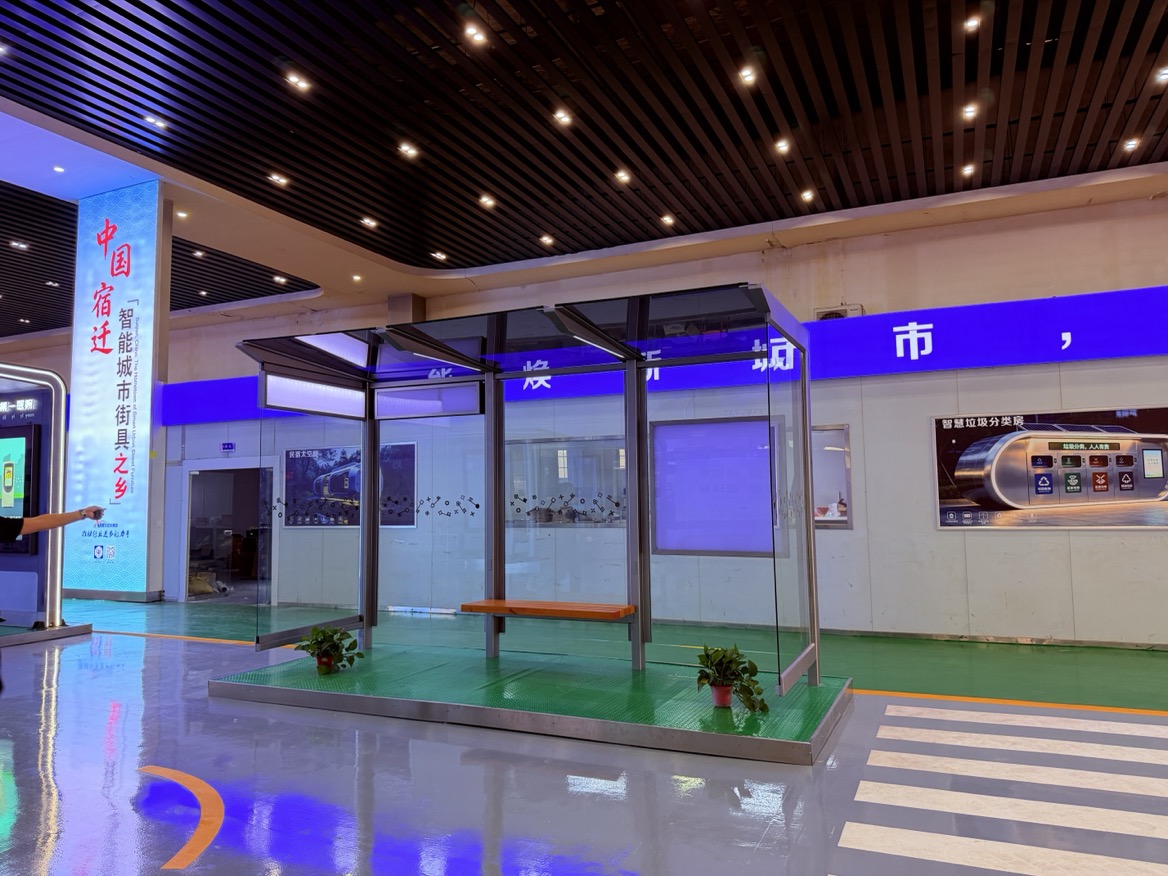
Urban passenger requirements vary by time, location, and mobility condition. A shelter that works well in a low-density residential area may fail completely at a central business district interchange.
The following comparison shows how each type responds to common passenger needs.
| Passenger Requirement | Bus Stop Shelter Performance | Transit Shelter Performance |
|---|---|---|
| Protection from rain and sun | Excellent when roof depth and side panels are correctly designed | Excellent, with more coverage for queues and transfers |
| Basic waiting comfort | Strong | Strong to excellent |
| High-volume crowd management | Limited unless expanded | Better suited to multiple boarding zones and larger footprints |
| Real-time arrival information | Optional and effective at selected stops | Highly suitable and often essential |
| Accessibility | Can be designed accessibly | Can support more comprehensive accessible circulation |
| Safety after dark | Good with integrated lighting | Better for complex locations when lighting and visibility are coordinated |
| Branding and civic identity | Highly effective for network-wide visual consistency | Strong for flagship sites and gateways |
| Advertising potential | Good for static or digital panels | Higher potential due to larger media formats and passenger dwell time |
| Installation speed | Usually faster | Often requires more site coordination and civil work |
| Future technology integration | Moderate to high | High, especially for smart transport and multimodal systems |
The conclusion is not that one is universally superior. A transit shelter provides more capability, but a bus stop shelter often provides better value per stop.
The most common procurement mistake is to choose a shelter based only on visual style or unit price. A more reliable decision uses measurable criteria.
Count passengers during normal and peak periods. A shelter designed for 10 waiting passengers may become unsafe and uncomfortable if 35 people routinely gather during the morning rush.
Consider:
- Peak boarding demand
- Average waiting time
- Service frequency
- Queue length
- Passenger luggage or shopping bags
- School, hospital, stadium, and business-district traffic
- Seasonal ridership changes
Design for the busiest realistic operating period, not the quietest hour of the day.
Shelter geometry should reflect the climate. A roof alone may not protect passengers from wind-driven rain. In hot climates, transparent materials may increase heat if they are not combined with proper shading and ventilation.
Key climate questions include:
- Does the site experience strong crosswinds?
- Is the location exposed to heavy rain or snow?
- Is intense solar radiation a concern?
- Is the city coastal, humid, industrial, or highly polluted?
- Are corrosion-resistant materials and coatings required?
For coastal and high-humidity areas, material selection and surface treatment should be treated as a long-term maintenance decision, not a cosmetic detail.
A shelter must not obstruct pedestrians, cyclists, people using wheelchairs, shop entrances, utility access, or emergency routes.
Before finalizing the design, project teams should review:
- Pavement width
- Curb position and bus-door alignment
- Accessible boarding space
- Pedestrian clear path
- Utility locations
- Tree roots and drainage channels
- Sightlines for approaching buses and vehicles
- Space for maintenance access
A narrow sidewalk may require a slim bus stop shelter with a cantilevered roof, rear-mounted advertising unit, or reduced-depth seating arrangement. A transit hub may need a larger modular structure with multiple bays and defined passenger circulation.
Not every location requires a digital screen. However, locations with complex services, long headways, or high visitor traffic can benefit greatly from real-time information.
A practical planning method is to divide stops into three levels:
| Stop Type | Recommended Facility Level |
|---|---|
| Local neighborhood stop | Shelter, route sign, seating, lighting, basic advertising panel |
| Busy corridor stop | Extended shelter, illuminated information, digital arrival display, larger seating capacity |
| Major interchange or BRT stop | Transit shelter with multiple bays, real-time information, wayfinding, CCTV provision, power distribution, accessibility planning, and optional digital media |
This tiered method prevents both underbuilding and overbuilding.
In public-infrastructure projects, the strongest results come from standardization with controlled customization.
A city may use one recognizable shelter family across its network, while applying different modules for different site categories. For example:
- A 2-meter module for low-demand local stops
- A 4-meter module for standard urban corridors
- A 6-meter or multi-bay solution for high-ridership locations
- Optional advertising light boxes for commercial streets
- LCD or LED information displays for key route points
- Solar systems for locations where electrical connection is difficult
- City colors, logo panels, district themes, or cultural patterns for local identity
This system-based approach delivers visual consistency, simpler maintenance, repeatable installation, and easier future expansion.
Ainl's manufacturing capabilities support this kind of project customization, including changes to product size, structure, color, screen configuration, lighting, solar-power options, and city-brand elements. The company presents itself as a China-based manufacturer for custom bus shelters, public-transport facilities, municipal projects, and OEM/ODM requirements.
Use this checklist before selecting a bus stop shelter or transit shelter solution:
1. Define the stop's daily and peak passenger volume
2. Identify whether passengers only wait or also transfer between services
3. Measure available pavement, curb, road, and pedestrian-clearance space
4. Review climate exposure, including sun, rain, wind, snow, salt air, and dust
5. Confirm accessibility and barrier-free circulation requirements
6. Decide whether lighting, advertising, solar power, digital displays, or CCTV provisions are needed
7. Choose materials, coatings, glazing, anchoring, and drainage based on local conditions
8. Specify maintenance access for lamps, screens, advertising panels, roof components, and electrical equipment
9. Create a consistent visual language for route signage and city branding
10. Select a manufacturer that can provide engineering support, controlled production, quality inspection, and customized project delivery
A good shelter specification asks not only, "What will it cost to buy?" It also asks, "What will it cost to operate, repair, clean, power, and keep attractive for the next decade?"
Choose a bus stop shelter if your priority is route-wide coverage, efficient investment, rapid deployment, and reliable passenger comfort at standard bus stops.
Choose a transit shelter if your location is a high-volume transfer point, BRT corridor, station connection, airport route, city-center stop, or multimodal mobility hub that requires stronger information systems and passenger-flow management.
For many cities, the best answer is a combined strategy:
- Use standardized bus stop shelters across ordinary routes
- Upgrade selected high-demand sites with larger transit shelter solutions
- Keep materials, finishes, signage, and branding consistent across the entire network
- Add smart systems only where they improve passenger decisions and operational performance
The right public-transport shelter turns waiting time into a safer, clearer, more comfortable urban experience.
If you are planning a municipal, commercial, transport, or smart-city project, share your site dimensions, passenger volume, local climate, preferred materials, branding requirements, and digital-system needs. Ainl can help develop a custom bus stop shelter or transit shelter solution aligned with your installation conditions and project objectives.
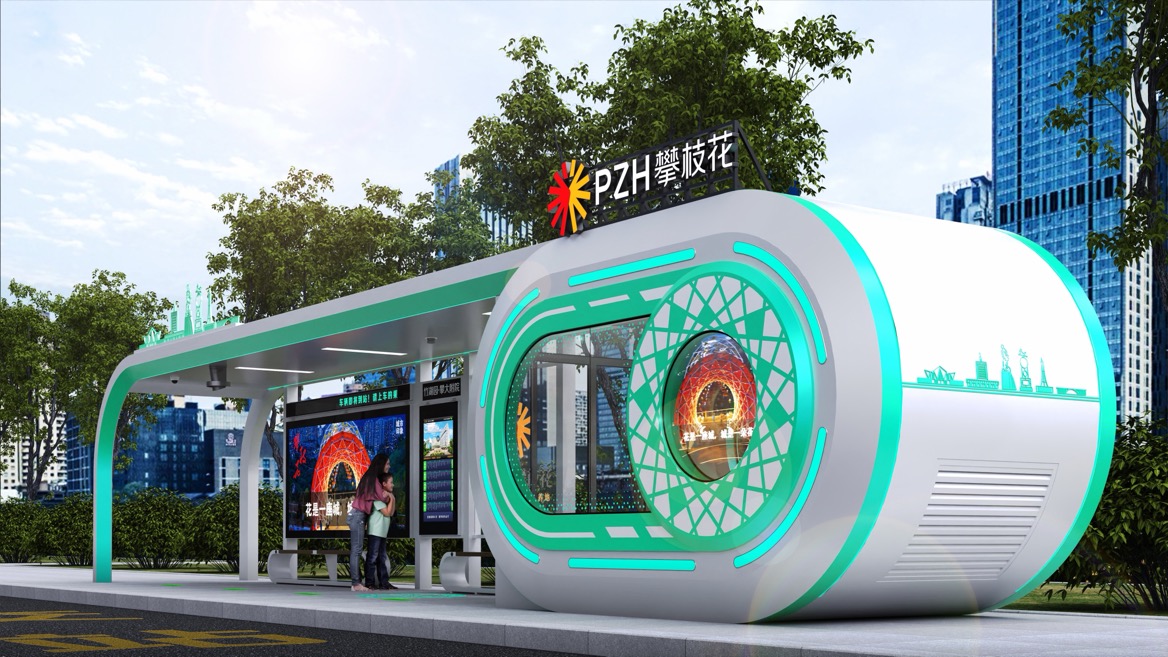
Not always. A bus stop shelter usually serves one bus boarding location, while a transit shelter often supports a larger or more complex passenger environment, such as a transfer hub, BRT station, rail connection, or multimodal interchange.
A bus stop shelter is usually the better choice for a standard route because it provides weather protection, seating, route visibility, and branding at a lower cost and with a smaller site footprint.
A larger transit shelter is suitable when passenger volumes are high, several routes meet at one location, transfers are common, real-time information is necessary, or the site functions as a major gateway to a railway station, airport, business district, university, or commercial center.
Yes. A bus stop shelter can include LED displays, LCD screens, route maps, real-time arrival information, digital advertising, CCTV provisions, lighting controls, charging functions, and solar-power systems when the project requires them.
The right material depends on climate, budget, appearance, maintenance expectations, and local engineering requirements. Common choices include galvanized steel, stainless steel, aluminum alloy, tempered glass, laminated glass, polycarbonate panels, powder-coated steel components, and corrosion-resistant fasteners.
Accessible shelter design should maintain a clear pedestrian path, provide step-free access, avoid sharp obstructions, allow wheelchair turning and boarding space, use readable signs, provide suitable seating options, and ensure lighting supports passengers with different mobility and visibility needs.
Yes. Cities and operators can customize colors, logos, signage layouts, roof forms, advertising units, screen configurations, lighting effects, panel graphics, and local cultural elements. A consistent design family can make public transport easier to recognize across the city.
Yes. Solar power can support lighting, small information systems, charging functions, and selected low-energy equipment. The final solution should consider local sunlight conditions, battery capacity, equipment load, seasonal weather, maintenance access, and backup power requirements.
1. [Ainl Bus Shelter — Custom Bus Shelter Manufacturer and Smart City Solutions]
2. [Ainl Bus Shelter — Custom Bus Shelter Manufacturer]
3. [Ainl Bus Shelter — OEM/ODM Services]


