
Email: ainlbusshelter@gmail.com | WhatsApp: +86-18800607527
Views: 212 Author: Ainl Bus Shelter Publish Time: 2026-08-08 Origin: Site


Content Menu
● What Is the Difference Between a Bus Shelter and a Bus Stop Canopy?
>> Bus Shelter: A Protected Waiting Environment
>> Bus Stop Canopy: A Lightweight Overhead Cover
● Bus Shelter vs Bus Stop Canopy Comparison
● Why Bus Shelters Offer Better Weather Protection
>> Better Protection From Wind-Driven Rain
>> More Reliable Shade During Hot Weather
>> Greater Cold-Weather Comfort
● When a Bus Stop Canopy Is the Better Choice
● High-Traffic Stops Need More Than a Roof
>> A Practical Selection Framework
● Designing a Shelter for Safety and Visibility
● Smart Functions Change the Decision
● Expert Recommendation for High-Traffic Stops
● Build a Better Waiting Experience With Ainl
● FAQ
>> 1. Does a bus shelter provide better weather protection than a bus stop canopy?
>> 2. Is a bus stop canopy suitable for a high-traffic bus stop?
>> 3. How large should a bus shelter be for a busy stop?
>> 4. Can bus shelters use solar power?
>> 5. What materials are best for bus shelters in harsh outdoor conditions?
>> 6. Can a bus shelter include digital advertising and real-time passenger information?
>> 7. How can a shelter remain safe while still providing privacy and wind protection?
For a high-traffic transit location, a bus shelter generally delivers better all-weather protection than a bus stop canopy. A canopy can be an effective, lower-profile solution where space, budget, or sightlines are constrained, but it cannot provide the same level of protection from wind-driven rain, cold, glare, and long waiting periods.
The right decision is not simply about adding a roof. A high-use stop must work as a safe, accessible, durable, and welcoming waiting environment—often while accommodating passenger information, advertising, lighting, seating, and city-branding elements. For transit operators, municipalities, developers, and outdoor media companies, the structure should be matched to passenger volume, climate exposure, available pavement width, maintenance capacity, and future technology needs.
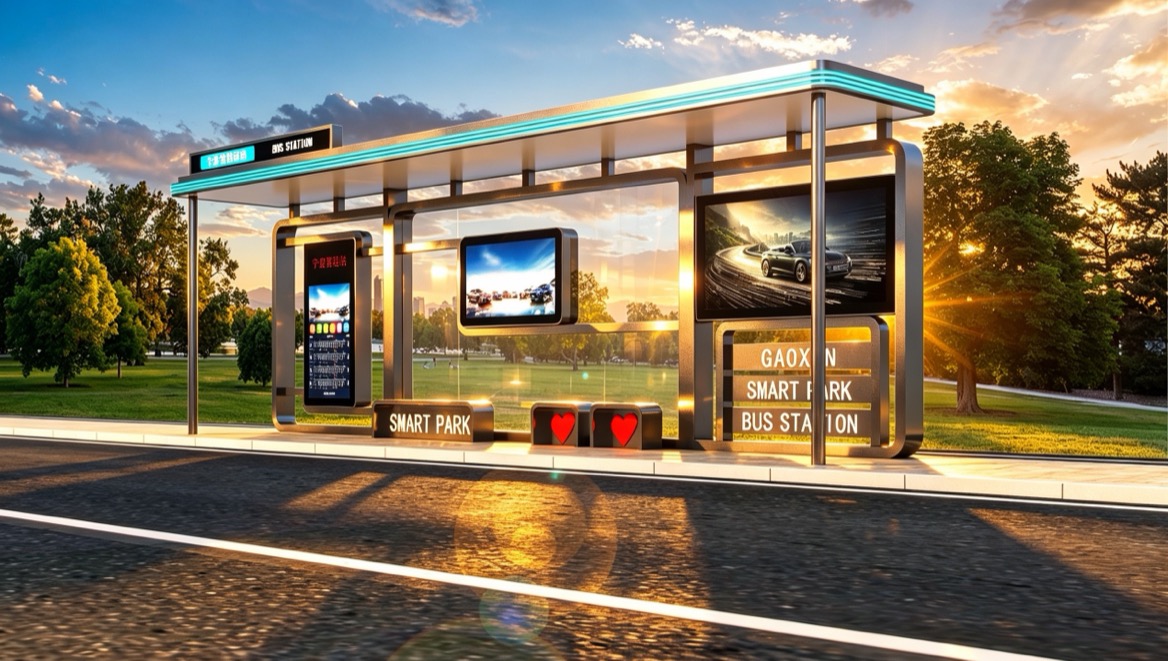
A bus shelter is a more complete passenger waiting enclosure. It typically includes a roof, rear panel, one or two side panels, and may also incorporate benches, lighting, route maps, advertising displays, digital information screens, and solar power equipment.
A bus stop canopy is usually an overhead weather-cover structure with open sides. Its core function is to shield passengers from direct sun and vertical rainfall while keeping the waiting area visually open and minimally enclosed.
A bus shelter is designed to create a defined comfort zone at the stop. The roof blocks overhead rain and sun, while rear and side panels reduce exposure to wind, splashing rain, blowing dust, and traffic spray.
For busy stops, this enclosure matters because passengers may wait longer, arrive in groups, carry bags, travel with children, or have limited mobility. A well-planned shelter also gives cities a stable platform for smart public-facility functions.
Typical bus shelter components include:
- Roof canopy with drainage design
- Rear windscreen and side panels
- Bench or leaning rail
- LED lighting
- Timetable, route map, or real-time arrival display
- Advertising lightbox or digital media screen
- CCTV, emergency button, Wi-Fi, USB charging, or environmental sensors
- Optional solar panels and battery storage
A bus stop canopy is simpler and more open. It may use steel columns, aluminum framing, a polycarbonate roof, metal roof panels, or laminated glass. It provides overhead shade and rain cover while preserving an unobstructed street appearance.
This structure is often appropriate for lower-volume stops, narrow sidewalks, heritage districts, scenic locations, or corridors where planners need to maintain broad visibility. However, its open perimeter means it offers limited protection in storms, strong winds, low winter sun, or severe heat reflected from nearby pavement.
| Factor | Bus Shelter | Bus Stop Canopy |
|---|---|---|
| Rain protection | Excellent when roof overhang, rear panel, and side panels are properly designed | Good against vertical rain; weaker during wind-driven rain |
| Wind protection | Strong, especially with side screens positioned for local prevailing winds | Limited because sides remain open |
| Sun and UV control | Strong, with opaque roofing, side panels, and deep shade coverage | Moderate; depends heavily on roof size and sun angle |
| Passenger comfort | Better for long waits, older riders, children, and people with mobility needs | Suitable for short waits and mild climates |
| Visibility and openness | Good when transparent safety glass is used | Excellent due to open sides |
| Space requirement | Requires a larger clear footprint and careful accessible-path planning | More adaptable for narrow or constrained sites |
| Smart-device integration | High capacity for screens, lighting, advertising, cameras, and power systems | Possible, but mounting and power options may be more limited |
| Outdoor advertising value | High, with enclosed lightboxes and digital display opportunities | Lower unless designed with dedicated media panels |
| Maintenance needs | Moderate to high due to glazing, equipment, and enclosed components | Lower due to fewer panels and simpler geometry |
| Best application | High-ridership urban corridors, transfer points, hospitals, schools, commercial centers | Low-to-medium ridership stops, narrow sidewalks, park-edge routes, visually sensitive streets |
For high-traffic stops, weather protection must be evaluated from the passenger's actual standing position—not only from the roof plan drawing. A roof may look large enough on paper, yet still fail when rain arrives at an angle or when afternoon sun reaches passengers below the roof edge.
Rain rarely falls straight down in real operating conditions. Wind pushes rain under open canopies, especially along exposed arterial roads, coastal corridors, elevated streets, and wide intersections.
A bus shelter performs better because its rear and side screens interrupt the wind path. The best layouts do not fully seal the structure; instead, they balance protection with ventilation, visibility, and safe pedestrian movement.
For exposed stops, consider:
- A roof that extends beyond the seating and standing area
- A rear panel that blocks traffic spray and prevailing rain
- A side panel on the windward end
- A partially open leeward side to improve airflow
- Gutter and drainage details that prevent runoff onto the boarding zone
A canopy protects riders from overhead sun, but shade performance changes throughout the day. Low-angle morning and afternoon sun can reach passengers from the open sides, while clear roof materials may allow glare and heat transmission.
A shelter with an opaque roof, correctly oriented side panels, and adequate roof depth provides more dependable shade. Yet an enclosed shelter alone is not a complete heat solution. Local tree canopy, airflow, roof color, reflective materials, and pavement conditions all affect thermal comfort.
A large study of 2,271 bus stops in Austin found that nearby tree canopy had a measurable moderating relationship with ridership during high-temperature conditions. The practical lesson is clear: combine the shelter structure with landscaping, ventilation, and solar-control design rather than relying on the roof alone.
In cold, wet, or windy environments, a bus shelter provides a meaningful difference in perceived comfort. The rear wall and side panels reduce wind chill and create a more stable waiting zone, particularly for people who are standing still for several minutes.
For winter-prone regions, specify durable materials and details that withstand snow load, freeze-thaw cycles, road salt, and moisture. The roof slope, drainage route, anchoring method, glazing type, and corrosion-protection system should all be reviewed as part of the project's climate-resilience requirements.
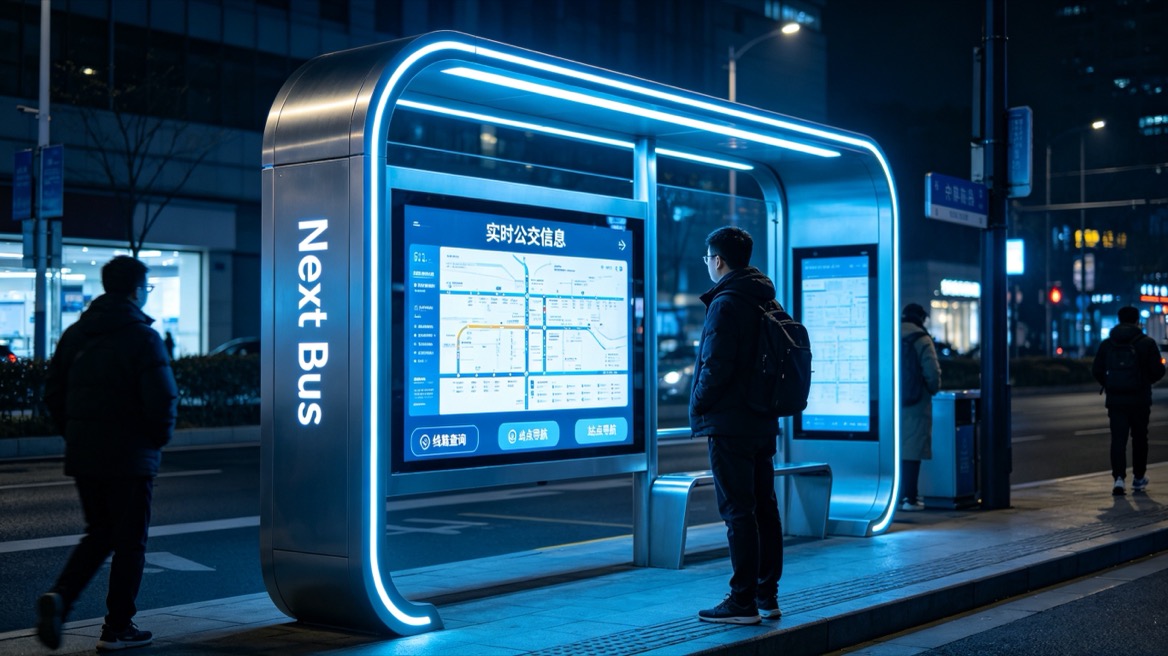
A canopy is not an inferior choice in every project. It can be the more practical structure when the operational need is mainly overhead coverage rather than enclosure.
A bus stop canopy may be preferable when:
- The stop has low or moderate boarding volume
- Average passenger wait times are short
- The sidewalk is narrow and must retain a clear pedestrian route
- Local planning rules require a visually open streetscape
- The site is sheltered by adjacent buildings, trees, or arcades
- There is limited risk of wind-driven rain
- The project needs a fast, cost-conscious installation
- The city wants a modular design that can be expanded later
For example, a neighborhood route with frequent service and a narrow sidewalk may need a slim canopy with a leaning rail instead of a full bus shelter. In contrast, a transfer stop outside a hospital, university, railway station, shopping center, or industrial employment hub usually warrants a full shelter with seating, lighting, information, and weather screens.
At busy transit points, the question is not only "shelter or canopy?" It is also "how many people need protection at the same time?"
An undersized shelter can create crowding, obstruct accessible boarding space, and push passengers toward the curb. A large canopy without side protection may leave people exposed during storms. The strongest approach is to size the structure around actual boarding patterns and peak waiting demand.
Use the following five-step method before selecting a bus shelter or bus stop canopy.
1. Measure peak passenger demand. Review boarding counts, transfer activity, service frequency, school or workplace peaks, and event-related surges.
2. Assess the microclimate. Document prevailing wind, rain direction, summer sun angle, winter exposure, road spray, nearby tree cover, and reflected heat from glass or pavement.
3. Protect accessible circulation. Maintain a clear, continuous pedestrian path and a usable boarding area for wheelchair users, strollers, and people using mobility aids.
4. Plan for operations. Confirm sightlines for approaching buses, driver visibility, passenger queuing, maintenance access, waste collection, and emergency response.
5. Allow for future upgrades. Reserve space and power capacity for lighting, real-time transit screens, advertising panels, CCTV, solar systems, and city information displays.
This method prevents a common procurement mistake: choosing a standard structure first, then trying to force it into a site that requires a different solution.
Some project teams worry that a bus shelter will reduce visibility or create a poorly monitored space. That risk is not inherent to shelters; it is usually a result of weak layout and material choices.
A high-quality bus shelter should keep approaching buses, pedestrian approaches, and adjacent activity areas visible. Transparent tempered or laminated safety glass can preserve visual openness while the roof and selected panels provide weather protection.
Key design principles include:
- Place solid panels away from critical sightlines
- Use clear glazing where passive observation is important
- Provide uniform, glare-controlled LED lighting
- Avoid hidden corners and unnecessary visual barriers
- Position seating so riders can see approaching buses
- Keep shelter columns outside the accessible boarding path
- Use anti-graffiti, corrosion-resistant, and impact-resistant finishes
- Match the structure to local wind, snow, seismic, and electrical requirements
A shelter should feel open enough for confidence and enclosed enough for comfort.
The difference between a traditional bus shelter and a bus stop canopy becomes more important when the project includes smart-city infrastructure or outdoor advertising functions.
A shelter can serve as a small public-service hub. Its structure can host LED lighting, digital arrival information, route maps, public announcements, advertising screens, surveillance devices, air-quality sensors, emergency communication, solar panels, and battery systems.
A canopy can also support selected technologies, but the available mounting surface and equipment protection are usually more limited. If the stop is expected to generate advertising revenue or support digital passenger services, a purpose-designed bus shelter is normally the more scalable investment.
For citywide projects, modularity is especially valuable. A standard structural platform can be adapted by length, panel configuration, color, branding, screen size, illumination system, seating arrangement, and energy solution without losing a consistent city identity.
For high-traffic bus stops, choose a bus shelter rather than a basic bus stop canopy whenever the site has enough clear space and passenger demand justifies the investment.
The recommended configuration is not necessarily a fully enclosed box. In many climates, the best solution is a semi-enclosed shelter with an opaque roof, rear panel, strategically located side screen, clear safety glazing, integrated lighting, accessible boarding clearance, and a layout that supports future digital upgrades.
A canopy remains a smart option for constrained or low-demand locations. However, for transfer hubs, commercial corridors, major institutions, high-frequency routes, and long-wait environments, a shelter provides a stronger combination of weather resilience, passenger comfort, civic image, and commercial functionality.
Ainl develops customized bus shelters, bus stop canopies, smart street furniture, and outdoor advertising solutions for transportation, municipal, commercial, and smart-city projects.
With 16 years of manufacturing and project experience, Ainl can support OEM/ODM requirements covering size, structure, color, screen configuration, lighting, solar power, advertising modules, and city-brand elements. Contact our team to discuss your site conditions, passenger volume, weather exposure, and smart-function requirements—and receive a tailored shelter or canopy proposal built for your project.
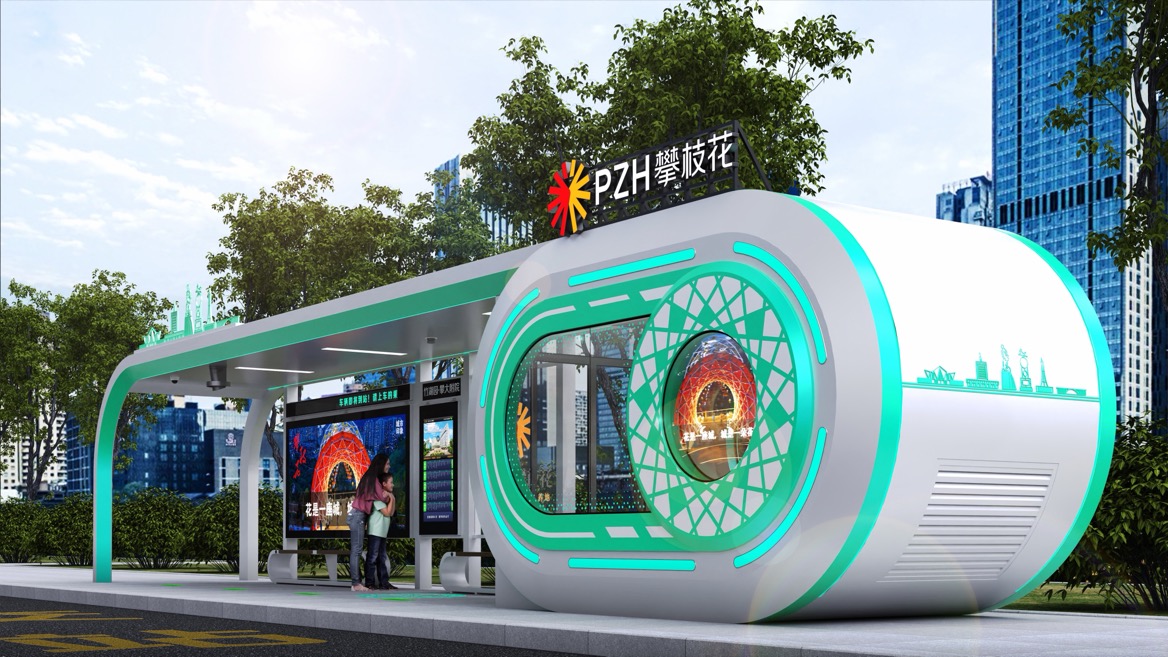
Yes. A bus shelter provides stronger protection because it combines a roof with rear and side panels that help block wind-driven rain, cold air, traffic spray, and low-angle sunlight.
It can be suitable where passenger wait times are short and the site is naturally protected. For stops with heavy boarding volumes, frequent transfers, or harsh weather exposure, a bus shelter is usually the better choice.
The appropriate size depends on peak passenger volume, service frequency, transfer activity, local accessibility requirements, and available sidewalk space. The structure should protect waiting passengers without obstructing the boarding area or pedestrian route.
Yes. Solar panels can support LED lighting, digital displays, CCTV, charging ports, and selected low-energy systems when the site has suitable solar exposure and the system is properly sized.
Galvanized steel, stainless steel, aluminum, tempered or laminated safety glass, polycarbonate, and weather-resistant coatings are commonly used. Final material selection should reflect local wind, corrosion, UV, snow, and maintenance conditions.
Yes. A modular smart bus shelter can integrate advertising lightboxes, LCD or LED screens, route maps, arrival displays, Wi-Fi, security cameras, emergency communication equipment, and other connected public services.
Use transparent glazing, open sightlines, lighting, visible seating layouts, and carefully positioned solid panels. The aim is to block weather exposure without creating hidden spaces or blocking the view of approaching buses.
1. National Association of City Transportation Officials. "[Bus Stops]." Guidance on accessible boarding areas, high-boarding stop shelters, lighting, passenger information, and stop design. [nacto]
2. Lanza, Kevin, and Casey P. Durand. "[Heat-Moderating Effects of Bus Stop Shelters and Tree Shade on Public Transport Ridership]." *International Journal of Environmental Research and Public Health*, 2021. Research based on 2,271 bus stops examining temperature, shelter presence, nearby tree canopy, and ridership. [pmc.ncbi.nlm.nih]
3. Suburban Mobility Authority for Regional Transportation. "[Bus Stop Design Standards Manual]." January 2025. Guidance covering accessibility, passenger waiting areas, amenities, technologies, drainage, resilience, safety, and shelter placement. [smartbus]
4. Omnitrans. "[Transit Design Guideline: Bus Stop Types and Shelters]." Guidance on shelter formats, space requirements, solar lighting, maps, real-time arrival boards, and premium stop amenities. [omnitrans]


