
Email: ainlbusshelter@gmail.com | WhatsApp: +86-18800607527
Views: 277 Author: Ainl Bus Shelter Publish Time: 2026-08-07 Origin: Site


Content Menu
● Why Bus Stop Shelters Are Core Smart-City Infrastructure Now
● Top Benefits of Bus Stop Shelters for Cities and Advertisers
>> 1. Measurably Increases Public Transit Ridership
>> 2. Shrinks the Passenger's Perceived Wait Time
>> 3. Creates a 24/7 Advertising Revenue Stream
>> 4. Improves Passenger Safety and Accessibility
>> 5. Enables Fast, Low-Disruption Installation
>> 6. Strengthens City Branding and Streetscape Identity
>> 7. Supports Sustainability Through Solar Integration
● Shelter Market Data: Materials, Ownership, and Regional Growth
● How to Choose a Bus Stop Shelter Manufacturer: A 7-Step Checklist
● What 16 Years of Public-Facility Manufacturing Reveals
● Ready to Specify Your Next Bus Stop Shelter?
Bus stop shelters have quietly become one of the most cost-effective pieces of urban infrastructure a city can install. A well-designed waiting shelter for bus stops does far more than block the rain: it lifts ridership, generates advertising revenue, and shapes how residents perceive an entire transit network. As municipalities and outdoor-advertising operators plan 2026 capital budgets, understanding the real, data-backed benefits of bus stop shelters is essential for making a sound procurement decision, and for choosing a manufacturer capable of delivering on that promise at scale.
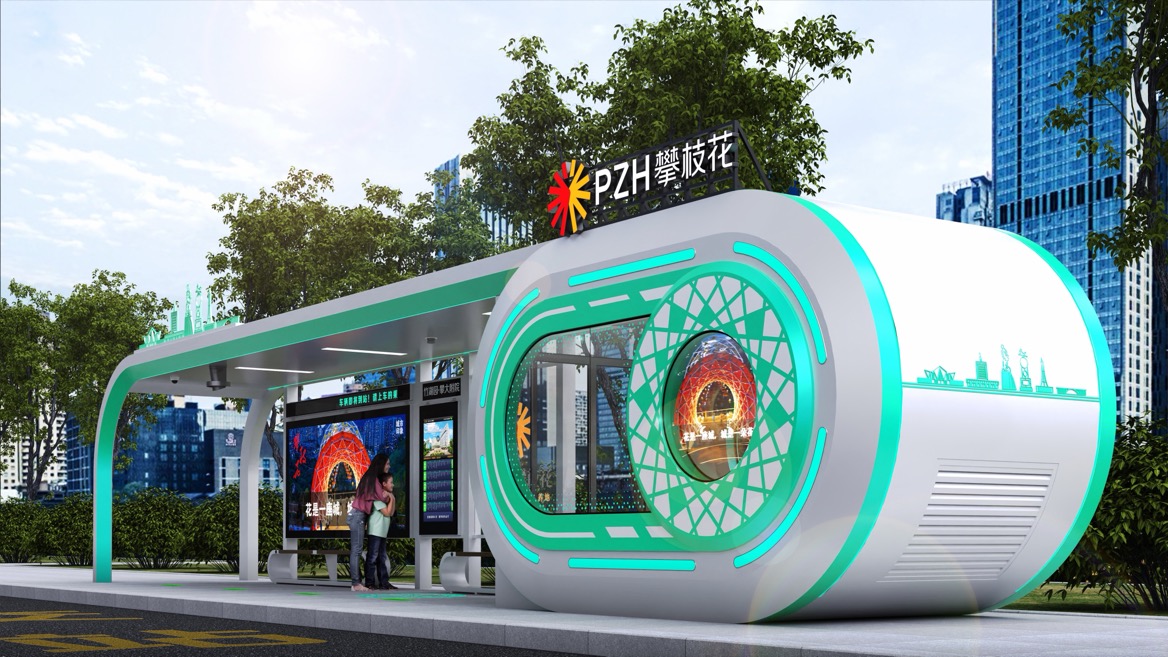
Public transit agencies no longer treat shelters as an optional amenity. The global bus stop shelter market is valued at roughly USD 3.45 billion in 2026 and is forecast to reach USD 6.54 billion by 2036, growing at a steady 6.6% a year, as cities formalize informal stops and replace aging street furniture with durable, accessible designs . Growth is fastest in India, Saudi Arabia, the UAE, Indonesia, and Vietnam, where new bus networks and heat-mitigation priorities are driving procurement.
This growth is not happening by accident. Transit planners increasingly view a shelter, bench, and lighting package as one of the cheapest ways to move the needle on ridership, safety perception, and streetscape quality at the same time. Procurement teams also report that standardized, modular shelter programs shorten deployment timelines across large corridor upgrades, which matters when a city needs to install hundreds of units within a single budget cycle rather than a handful of pilot locations.
The single strongest argument for installing shelters is ridership. A Virginia transit research council study found that bus stops receiving shelter and amenity upgrades saw ridership climb by a statistically significant 177%, compared with just 27% at stops left unchanged. Broader literature reviews cited in that study put typical stop-level ridership gains anywhere from 1.5% to 140% after basic infrastructure like shelters, benches, and lighting is added. In short: shelters are not decoration, they are a ridership lever.
Riders consistently overestimate how long they have waited when standing exposed to weather. Transit research modeling this effect found that adding a shelter and a bench makes a 10-minute wait feel closer to 6.5 minutes, and pairing that with real-time arrival displays shrinks the perceived wait even further. Because perceived wait time directly affects whether someone chooses the bus over a car, this single improvement can meaningfully shift travel behavior across a route.
Bus stop shelters double as premium out-of-home media assets. The bus shelter digital display segment alone is valued at USD 4.8 billion in 2025 and is projected to reach USD 10.1 billion by 2034, with advertising representing the largest single application at 42.5% of total revenue . Static and digital shelter panels give local businesses and national brands round-the-clock exposure to a captive, dwelling audience, and advertising-funded concessions now account for 44% of shelter ownership models worldwide, meaning many cities install shelters at little or no net capital cost .
A well-lit, transparent shelter improves sightlines to approaching buses, discourages loitering and vandalism, and gives waiting passengers a visible, defensible space. Modern designs also fold in accessibility features such as wide clear-floor areas, tactile paving, and seating at accessible heights, which municipal codes increasingly require rather than merely recommend.
Prefabricated, modular shelters are engineered for rapid deployment. Because panels, roofing, and frames arrive pre-fabricated, crews can install a standard unit in hours rather than weeks, minimizing lane closures and pedestrian detours — a critical advantage for cities juggling dozens of simultaneous corridor upgrades.
Custom colors, cladding, and signage let a shelter double as a piece of civic branding. Consistent shelter design across a corridor signals investment and coherence, reinforcing a city's visual identity in the same way branded street lighting or paving does. For commercial partners, a distinctive shelter silhouette also becomes a wayfinding landmark that shoppers associate with a specific retail district.
Solar-powered lighting, USB charging, and low-draw LED displays are now standard specification requests. Roughly a third of new smart-shelter deployments already include solar components, letting shelters operate off-grid in locations where trenching for electrical conduit would be cost-prohibitive . This is especially valuable for rural routes or newly formalized stops where grid access remains limited.
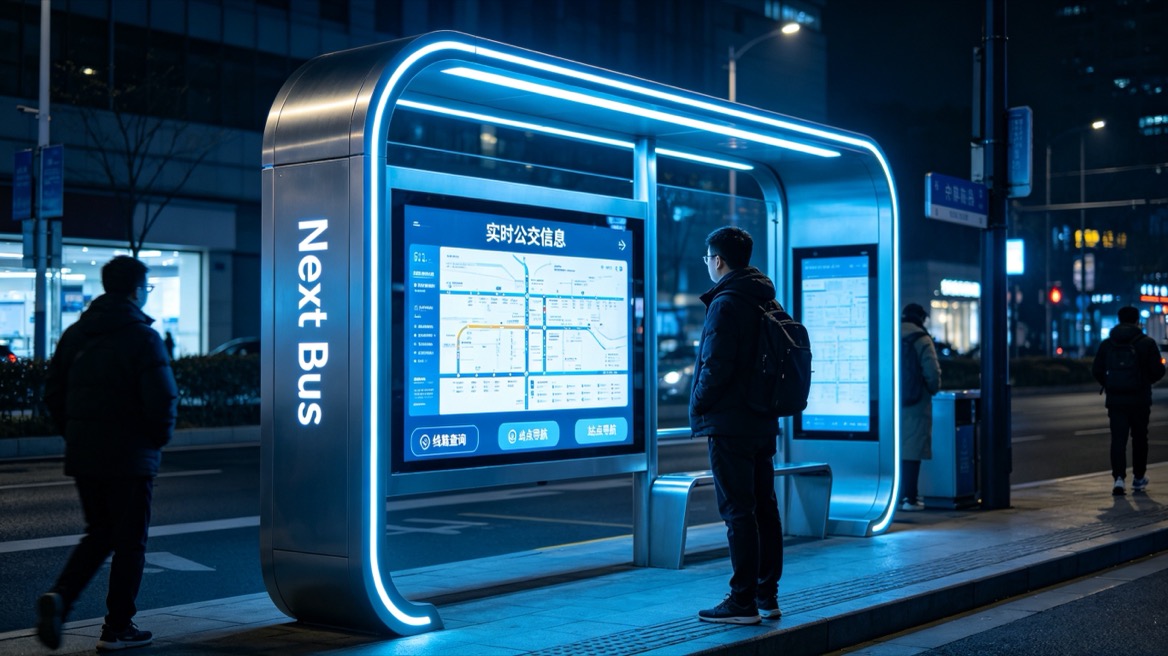
The table below summarizes the current shape of the global bus stop shelter market, useful context for anyone benchmarking a specification against industry norms.
| Market Dimension | Leading Segment | Share / Value |
|---|---|---|
| Material | Steel & glass | 58% of global demand |
| Ownership model | Advertising-funded concessions | 44% of installations |
| Fastest-growing markets | India, Saudi Arabia, UAE | 8.1%–8.8% CAGR |
| Digital display application | Advertising | 42.5% of display revenue |
| Global market value (2026) | — | USD 3.45 billion |
Two takeaways stand out. First, steel-and-glass construction remains the default specification because it balances vandal resistance, transparency, and lifecycle cost better than alternative materials. Second, advertising revenue is now structurally embedded in how shelters get funded, which is why buyers increasingly ask suppliers for advertising-panel-ready frames even on municipal-funded projects rather than treating advertising as an afterthought bolted on later .
Selecting a supplier is where most procurement teams either lock in years of low-maintenance performance or inherit a decade of warranty disputes. Use this sequence when evaluating vendors:
1. Verify manufacturing scale and certifications. Ask for factory floor area, production capacity, and formal qualifications such as steel-structure or municipal-works contracting licenses — these indicate the supplier can deliver at city scale, not just prototype quantities.
2. Inspect the finishing process. Powder-coating or wet-spray painting done in a dedicated, climate-controlled coating center resists corrosion and UV fading far longer than field-applied finishes.
3. Confirm electrical safety testing. Any shelter with lighting, solar panels, or digital screens should come from a supplier with an in-house electrical testing laboratory and documented compliance records.
4. Request OEM/ODM flexibility. Cities rarely want an off-the-shelf box. Confirm the manufacturer can adjust dimensions, structural framing, glazing color, screen configuration, lighting layout, and solar sizing to match local branding and climate.
5. Ask about precision fabrication capability. CNC sheet-metal centers produce tighter tolerances and cleaner joints than manual fabrication, which matters for both aesthetics and long-term weatherproofing.
6. Review reference installations. Prioritize suppliers who can point to shelters already operating in transit, municipal, or commercial deployments similar to your climate and traffic volume.
7. Clarify after-sales support and lead times. Export-focused manufacturers should offer clear shipping documentation, installation guidance, and spare-parts availability for markets outside their home country.
Skipping any one of these steps is how cities end up with shelters that look fine in a rendering but fail structurally within a few monsoon seasons or a handful of harsh winters.
Specifying a shelter that survives fifteen years of coastal humidity, monsoon rain, or desert UV exposure is a materials-engineering problem as much as a design one. Manufacturers with a genuine track record in this space — spanning large-scale coating centers, CNC precision sheet-metal fabrication, and dedicated electrical testing laboratories — consistently produce shelters that hold their finish and structural integrity years longer than generic street-furniture suppliers.
Companies operating at this level, such as Ainl, a Chinese national high-tech enterprise with over 260 mu of production grounds and roughly 150,000 square meters of manufacturing floor, typically also hold steel-structure and municipal-works contracting qualifications, along with recognized quality, environmental, and safety-production certifications. That combination of manufacturing depth and regulatory credentials is what allows a supplier to support full OEM/ODM customization — adjusting size, structure, color, screen configuration, lighting, solar power systems, and city-branding elements — while still meeting the durability standards transit and municipal buyers demand.
For a public infrastructure project, that depth of capability is the real differentiator between a shelter that needs replacing in five years and one that quietly performs for fifteen. Buyers evaluating export suppliers should treat factory audits, test-lab documentation, and existing municipal references as non-negotiable steps, not optional extras, before signing a purchase order for a multi-site rollout.
Whether the project is a municipal tender, a transit-corridor upgrade, or an advertising-funded rollout, the shelter's material quality, coating process, and OEM/ODM flexibility will determine its total cost of ownership for the next decade. Contact a manufacturer that can show factory-verified production capacity and public-infrastructure qualifications before finalizing a specification.
Do bus stop shelters actually increase ridership, or is that just marketing?
Independent transit research backs this up. Studies reviewed by Virginia's transportation research council documented ridership increases ranging from 1.5% to 140% at stops where shelters and basic amenities were added, with one before-after case study showing a 177% statistically significant increase.
How much does adding advertising panels affect the cost of a bus stop shelter?
In most markets, advertising-funded concession models cover a large share of installation and maintenance cost. Since advertising-funded concessions represent 44% of ownership models globally, many municipalities install shelters at reduced or near-zero net capital expense in exchange for ad space rights .
What material is best for a bus stop shelter in a coastal or high-humidity climate?
Steel-and-glass construction remains the industry default, holding 58% of global material share, because tempered glass resists corrosion better than acrylic and steel framing offers superior structural rigidity. Powder-coated aluminum is a common alternative where weight reduction matters more than raw strength .
Can a bus stop shelter run entirely on solar power?
Yes, for lighting, USB charging, and most digital signage. Solar-powered smart shelters are one of the fastest-growing categories in the market, particularly in regions without easy access to grid electrical conduit near the curb .
What is the difference between OEM and ODM when sourcing shelters?
OEM (original equipment manufacturing) means the supplier builds to a design the buyer already has. ODM (original design manufacturing) means the supplier's engineering team designs the shelter to the buyer's specifications — dimensions, branding, screen and lighting configuration — from scratch. Export-focused manufacturers with strong research and development centers typically offer both.
How long does a well-built bus stop shelter typically last?
With steel-and-glass construction, quality powder-coating, and proper electrical testing, a shelter from an established manufacturer commonly performs reliably for 10 to 15 years before major refurbishment, versus 3 to 5 years for lower-grade, generically fabricated units.
1. Handi-Hut. "Benefits of Waiting Shelters for Bus Stops." [handi-hut.com]
2. Future Market Insights. "Bus Stop Shelter Market Forecast and Outlook 2026 to 2036." [futuremarketinsights.com]
3. Market Intelo. "Bus Shelter Digital Display Market Research Report 2034." [marketintelo.com]
4. Raida, A., Ohlms, P. B., & Chen, T. D. (2023). "Improving Ridership Projections of Proposed Bus and Rail Transit Projects to Evaluate Congestion Reduction Effects." Virginia Transportation Research Council, VTRC 23-R16. [vtrc.virginia.gov]
5. Business Research Insights. "Smart Bus Shelters Market Growth Analysis 2026–2035." [businessresearchinsights.com]


