
Email: ainlbusshelter@gmail.com | WhatsApp: +86-18800607527
Views: 229 Author: Ainl Bus Shelter Publish Time: 2026-08-02 Origin: Site


Content Menu
● Why the Bus Stop Experience Now Defines Transit Success
● 12 Practical Ways to Improve the Bus Stop Experience
>> 1. Real-Time Digital Signage That Passengers Trust
>> 2. Layered Safety: Lighting, CCTV and Panic Buttons
>> 3. ADA-Compliant Shelter and Seating Design
>> 4. Smart Connectivity: Wi-Fi, USB-C and Wireless Charging
>> 5. Solar-Powered Shelters: The Economics Behind the Panels
>> 6. Digital Advertising: Turning Shelters into Revenue Assets
>> 7. Waste Management and Everyday Cleanliness
>> 8. Green Landscaping for Cooler, Healthier Waits
>> 9. Public Art and Local Identity
>> 10. Structured Community Feedback Loops
>> 11. Vandal-Resistant, Anti-Loitering Structural Design
>> 12. OEM/ODM Customization for City Branding and Climate
● Case Study: Redesigned Shelters Cut Loitering and Boosted Safety in Albuquerque
● What Transit Authorities Should Look for in a Manufacturing Partner
● Ready to Upgrade Your City's Bus Stops?
A commuter decides whether public transit feels reliable long before a bus ever arrives — the bus stop experience makes that first impression. Cracked benches, no shade, and outdated signage push riders toward cars, while a well-planned, tech-enabled shelter builds daily loyalty. This guide breaks down twelve practical, evidence-based ways cities and transit operators can upgrade bus stops in 2026, drawing on current market data, accessibility standards, and real municipal case studies.
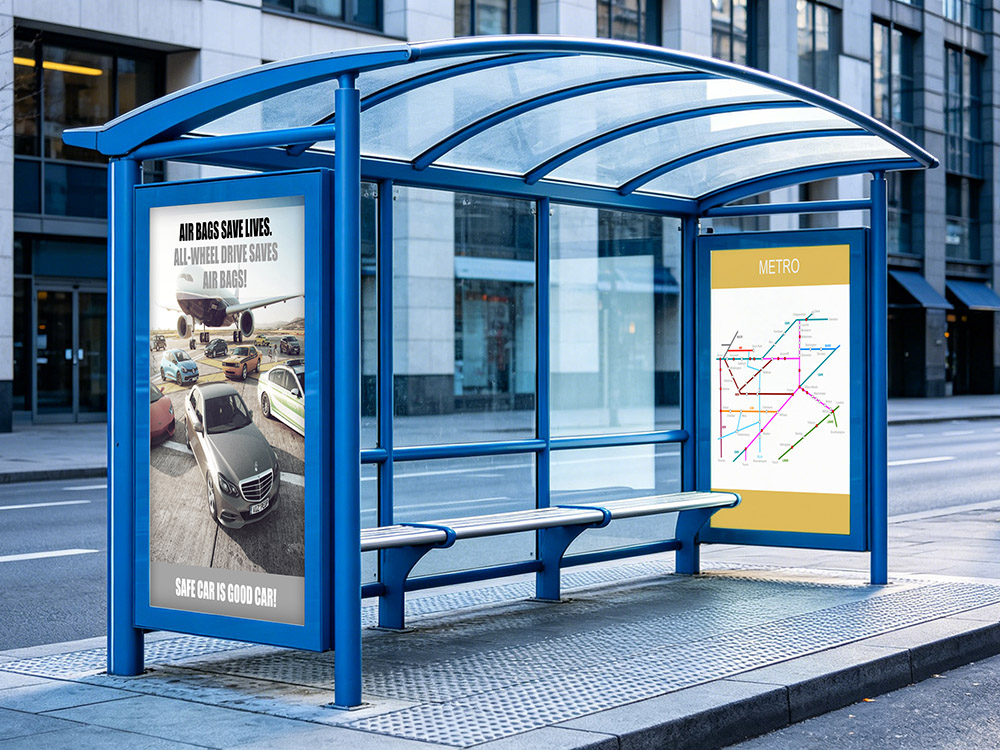
Bus stops used to be an afterthought in transit planning. That has changed. The global bus stop shelter market is projected to grow from USD 3.45 billion in 2026 to USD 6.54 billion by 2036, a 6.6% annual growth rate driven almost entirely by rider comfort, safety compliance, and accessibility upgrades rather than fleet expansion alone.
The smarter end of that market is moving even faster. The smart bus shelter segment — shelters with digital displays, solar power, and connectivity — is expected to climb from USD 2.8 billion in 2025 to USD 7.4 billion by 2034, a 12.4% CAGR. Asia-Pacific already accounts for 42.3% of global revenue, led by large-scale municipal retrofit programs in China, Japan, and South Korea.
This shift means a shelter is no longer just a roof and a bench. It is a passenger information hub, a safety asset, a revenue-generating advertising panel, and a piece of city branding all at once. The sections below cover each of these functions in practical detail.
Static timetables go stale the moment a route changes. Digital displays with live arrival countdowns reduce the anxiety of not knowing when a bus is coming, which is consistently cited as the top complaint among transit riders. Weatherproof e-paper or LED panels housed in vandal-resistant enclosures keep information accurate through rain, heat, and heavy daily use.
Best-practice signage should include:
- Real-time arrival countdowns for every route serving the stop
- Service alerts and disruption notices pushed automatically
- Multilingual and high-contrast text for accessibility
- QR codes linking to live transit apps for smartphone users
Safety is not a single feature — it is a layered system. Effective shelters combine solar-powered LED lighting, visible security cameras, and an emergency call button wired directly to a dispatch or police line. Open, transparent side panels also matter: shelters with clear sightlines make it easier for waiting passengers and passing patrols to see trouble before it escalates.
Well-lit, glass-paneled shelters with good visibility also discourage loitering and vandalism, which lowers long-term maintenance costs for transit authorities.
Accessibility is not optional; it is a legal and design baseline. Every shelter should connect to a firm, level boarding area and include clear floor space for wheelchair users. The table below summarizes core accessibility dimensions used in most municipal design manuals.
| Element | Minimum Standard |
|---|---|
| Landing pad | 8 ft x 5 ft, firm and stable surface |
| Clear floor space inside shelter | 30 in x 48 in |
| Seat height | 17–19 in above ground |
| Seat depth | 20–24 in |
| Shelter entrance width | 2 ft 8 in minimum |
| Cross slope | No greater than 2% |
Designing to these specifications from the start avoids costly retrofits later and keeps the stop usable for riders with mobility devices, strollers, and visual impairments alike.
Commuters now expect the same connectivity at a bus stop that they get at a café. Free Wi-Fi, USB and USB-C charging ports, and inductive charging pads keep riders productive during wait times and turn dead time into useful time. This is particularly valuable in cities where average wait times exceed eight minutes during off-peak hours.
Solar integration has moved from a sustainability talking point to a hard financial decision. A typical solar-powered shelter generates 3–5 kilowatt-hours daily, enough to run lighting, displays, and Wi-Fi without a grid connection.
| Metric | Typical Value |
|---|---|
| Energy consumption reduction vs. grid shelters | 70–80% |
| Annual energy savings per shelter | USD 8,000–15,000 |
| Typical payback period (energy savings only) | 6–9 years |
| Daily energy generation | 3–5 kWh |
For cities managing networks of 5,000 to 10,000 shelters, this adds up to tens of millions of dollars in cumulative savings, while also delivering uninterrupted service during grid outages — a growing priority as extreme weather events increase.

A shelter can pay for its own upkeep. High-traffic digital advertising panels generate between 15% and 25% of a shelter network's operating costs, and premium urban locations can bring in USD 150,000 to 300,000 annually per unit. This advertising-funded model now accounts for the largest ownership category in the global market, at roughly 44% share, because it lets municipalities upgrade infrastructure without straining capital budgets.
Trash cans and recycling bins seem minor, but cleanliness directly shapes perceived safety and satisfaction. Tamper-resistant, easy-to-empty bins reduce overflow and pest issues, particularly at stops with high dwell times. Pairing bins with scheduled maintenance routes keeps this low-cost improvement effective long-term.
Trees, shrubs, and green roof modules do more than beautify a stop — they cut ambient temperature, filter air pollutants, and reduce the heat-island effect around concrete boarding areas. In hot climates, shade trees paired with a roofed shelter measurably improve rider comfort during peak summer months.
A shelter that reflects local culture becomes a landmark rather than an obstacle. Murals, sculptural elements, or interactive displays created with local artists build community ownership, and residents are demonstrably less likely to vandalize spaces they feel connected to.
Surveys, public meetings, and simple QR-code feedback forms mounted inside shelters let riders flag problems — broken lights, graffiti, missing schedules — in real time. Transit agencies that formalize this feedback into a maintenance ticketing system resolve issues faster and build long-term trust.
Materials matter as much as programs. Polycarbonate glazing, perforated metal panels, and tamper-proof fasteners extend shelter lifespan in high-vandalism corridors. Open "thin-line" designs that remove hidden corners — without sacrificing weather protection — have proven especially effective (see case study below).
No two cities need an identical shelter. Coastal cities need corrosion-resistant coatings; desert cities need heat-reflective roofing and shaded seating; historic districts need designs matching local architecture. Working with a manufacturer that offers OEM/ODM customization — covering dimensions, color, screen configuration, lighting, and solar capacity — lets transit authorities match shelters to climate, budget, and brand guidelines in a single production run instead of costly one-off retrofits.
Albuquerque's ABQ RIDE program offers a concrete example of design solving a safety problem. After noticing persistent loitering and misuse at older shelters, the agency's team developed a "thin-line" model that removed hidden corners, added open sightlines, solar LED lighting, real-time arrival screens, and tamper-resistant trash cans. Manufactured by Tolar Manufacturing, the redesigned shelter was piloted at a busy intersection before a full 55-shelter rollout across two phases running into 2026.
The result: transit officials and police reported immediate reductions in loitering and improper use, alongside clearer sightlines for both riders and patrol officers. The project shows that structural design choices — not just added technology — directly influence how safely and appropriately a public space gets used.
Choosing a shelter supplier is a long-term infrastructure decision, not a one-time purchase. Based on common procurement criteria across municipal tenders, transit authorities should evaluate:
- Manufacturing scale and quality control — dedicated sheet-metal precision centers, large coating facilities, and electrical testing labs reduce field failures.
- Structural and safety certifications — steel structure and municipal construction qualifications, along with recognized quality and safety-production system certifications, indicate proven compliance capability.
- True OEM/ODM flexibility — the ability to adjust size, structure, color, screen type, lighting, and solar configuration to match each city's climate and branding, rather than offering a single fixed catalog model.
- Integrated technology capability — in-house solar, lighting, and digital display integration avoids compatibility issues between multiple subcontractors.
- Track record on large public projects — experience delivering transit, municipal, and commercial installations at scale, with documented after-sales support.
Manufacturers with over a decade of dedicated production experience in smart city public facilities and outdoor advertising infrastructure typically offer the most reliable combination of durability, customization depth, and after-sales response — three factors that matter more over a shelter's 10–15 year service life than the initial purchase price.
Better bus stops are a design decision cities make once and live with for over a decade. If you are planning a shelter procurement or retrofit program, request a customized OEM/ODM shelter proposal — covering structure, solar power, digital display, and city branding — from a manufacturer with proven production capacity and municipal-grade certifications before finalizing your specifications.
1. What is the single most cost-effective way to improve a bus stop?
Improved lighting combined with a tamper-resistant trash bin delivers the highest safety and cleanliness return relative to cost, and both can typically be added to existing shelters without a full rebuild.
2. Do solar-powered bus shelters work in low-sunlight climates?
Yes. Modern systems pair photovoltaic panels with battery storage sized for 24-hour operation, and many networks combine solar with grid backup in regions with limited daylight, ensuring displays and lighting stay active year-round.
3. How long does it take to see a return on a smart shelter investment?
Energy savings alone typically deliver payback in 6–9 years. When digital advertising revenue is included, many high-traffic shelters offset costs significantly faster, often within the first two to three years.
4. What accessibility standards apply to new bus shelter installations?
Most jurisdictions require a firm, level landing pad of at least 8 by 5 feet, a minimum 30-by-48-inch clear floor space inside the shelter, and connected accessible pathways, consistent with ADA-style guidelines used across North America and referenced by many international transit authorities.
5. Can one shelter design work across an entire city with different neighborhoods?
Rarely, and it shouldn't. OEM/ODM customization allows a base structural design to be adapted per district — adjusting color, screen size, solar capacity, and materials — while keeping installation and maintenance standardized citywide.
6. How do digital advertising panels affect shelter maintenance costs?
Advertising revenue commonly offsets 15–25% of a shelter network's operating costs, which many municipalities reinvest directly into cleaning, repairs, and security upgrades.
- Future Market Insights. (2026). [Bus Stop Shelter Market Analysis 2026 to 2036].
- MarketIntelo. (2025). [Smart Bus Shelter Market Research Report 2034].
- Business Research Insights. (2026). [Smart Bus Shelters Market Growth Analysis 2026–2035].
- City of Albuquerque, ABQ RIDE. (2025). [Bus Shelters on Central Get Smart!].
- SEEDiA. [Smart Solar Powered Bus Shelter — Product and Case Studies].
- Handi-Hut. (2023). [8 Ways To Improve the Bus Stop Experience].


